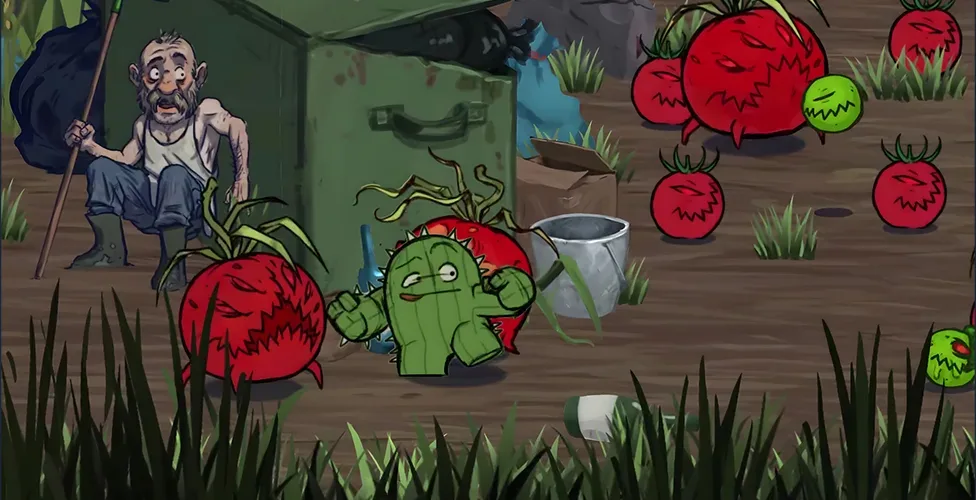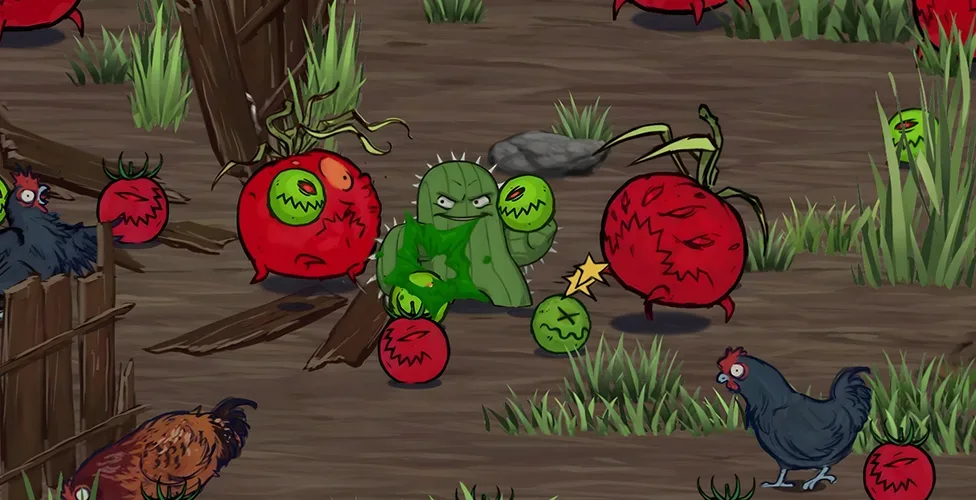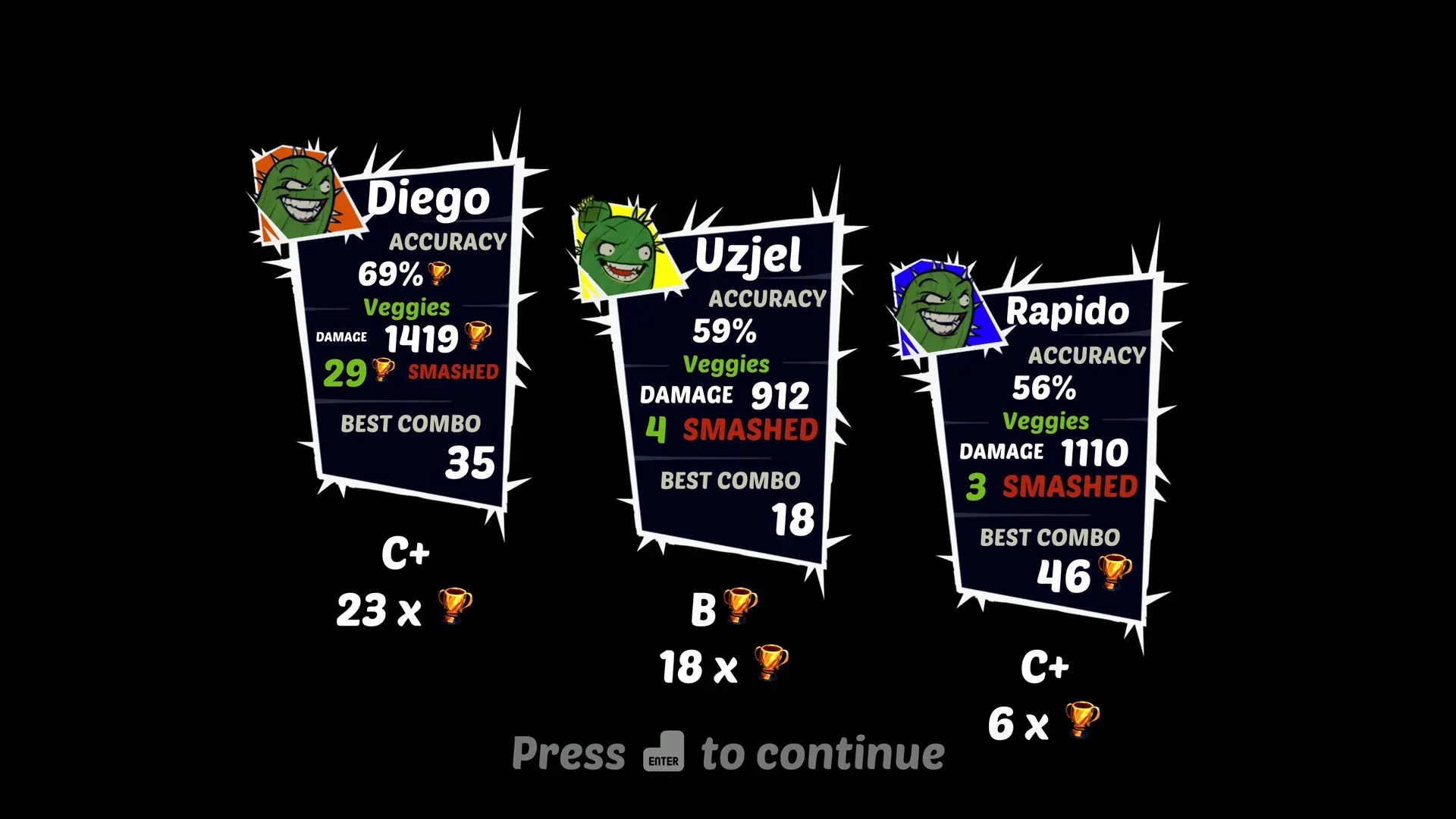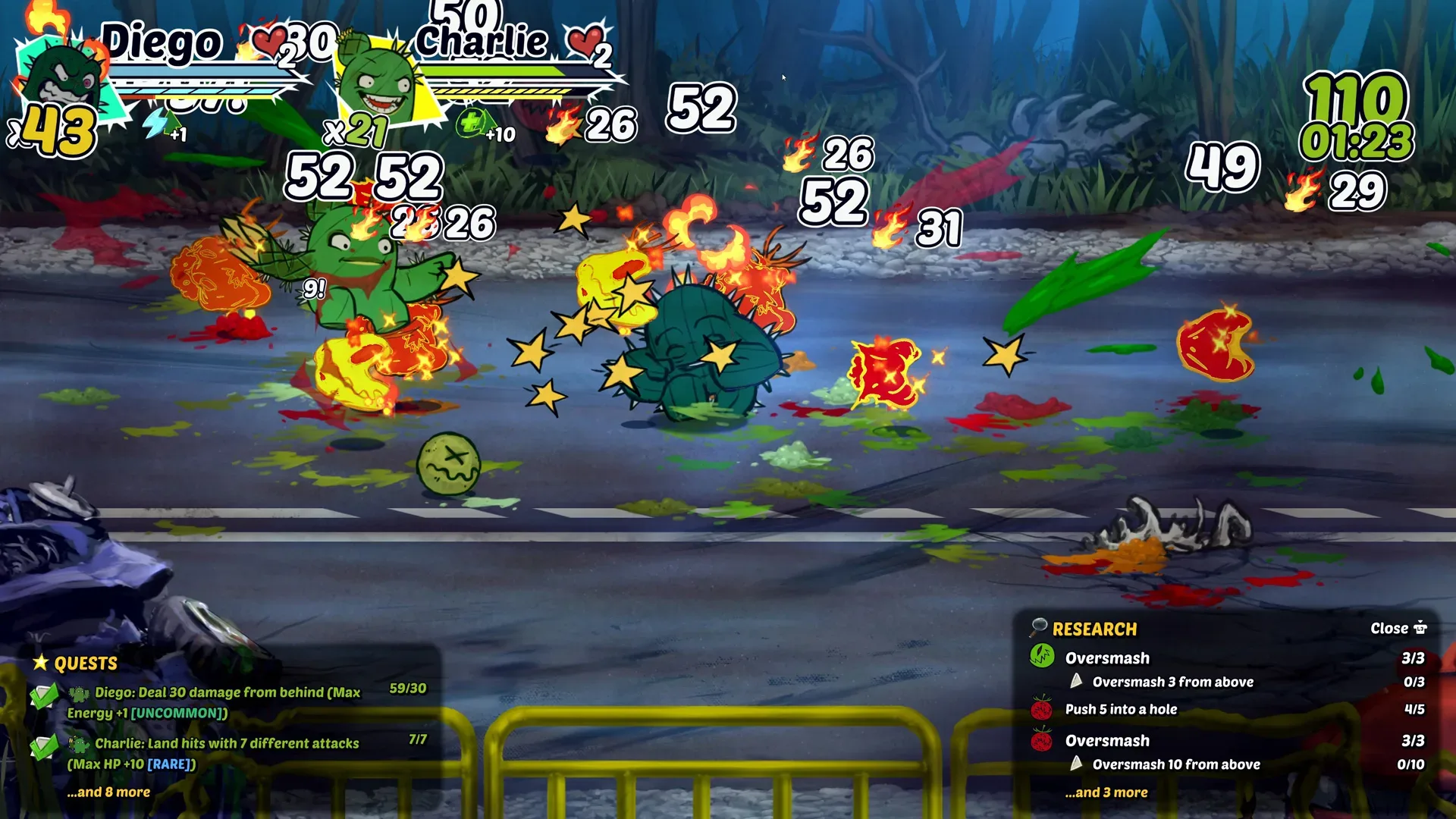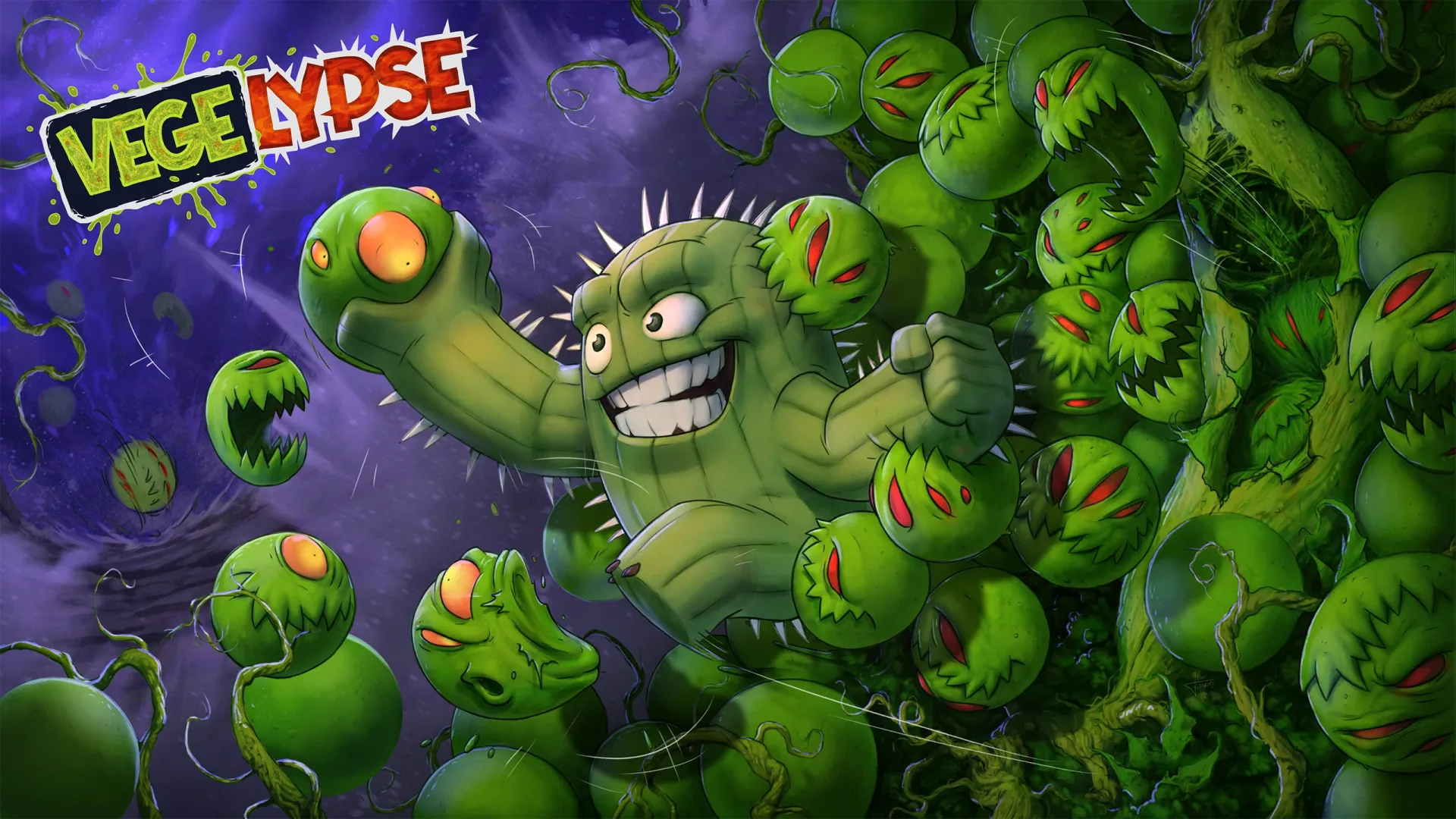
Vegelypse is opening its playtest through the end of October, offering an early look at a 2.5D beat ’em up where the enemy horde is made of violently mutated fruit and vegetables. The game casts players as members of the Hard Rock Cacti Band, sent into a countryside wrecked after an explosion in a nearby town releases the hostile produce.
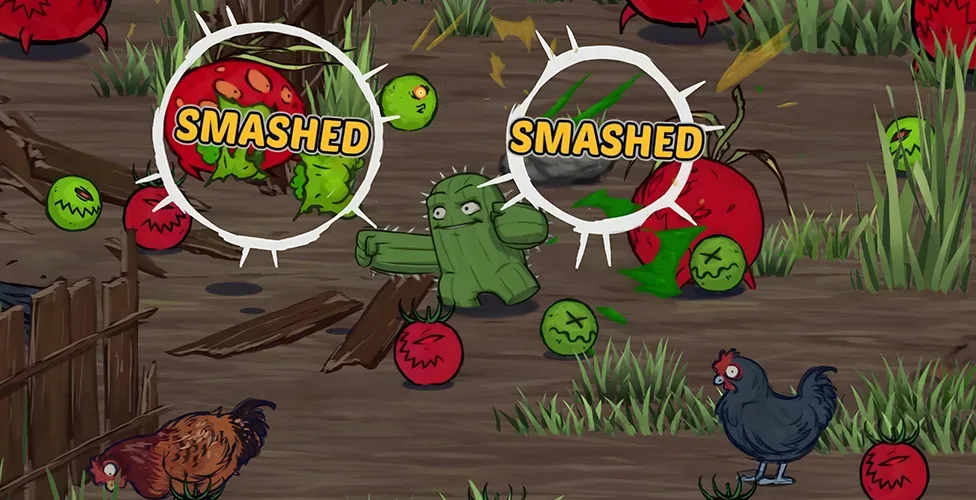
Players can select from two playable band members and fight toward the apparent origin of the disaster. Its combat pitch is deliberately direct—smashing, crushing and chopping through crowds—but Vegelypse also layers randomized systems over that traditional brawler setup. The result is a game aiming to make repeat attempts meaningfully different rather than simply asking players to replay the same stages for a better score.
What the Vegelypse playtest includes
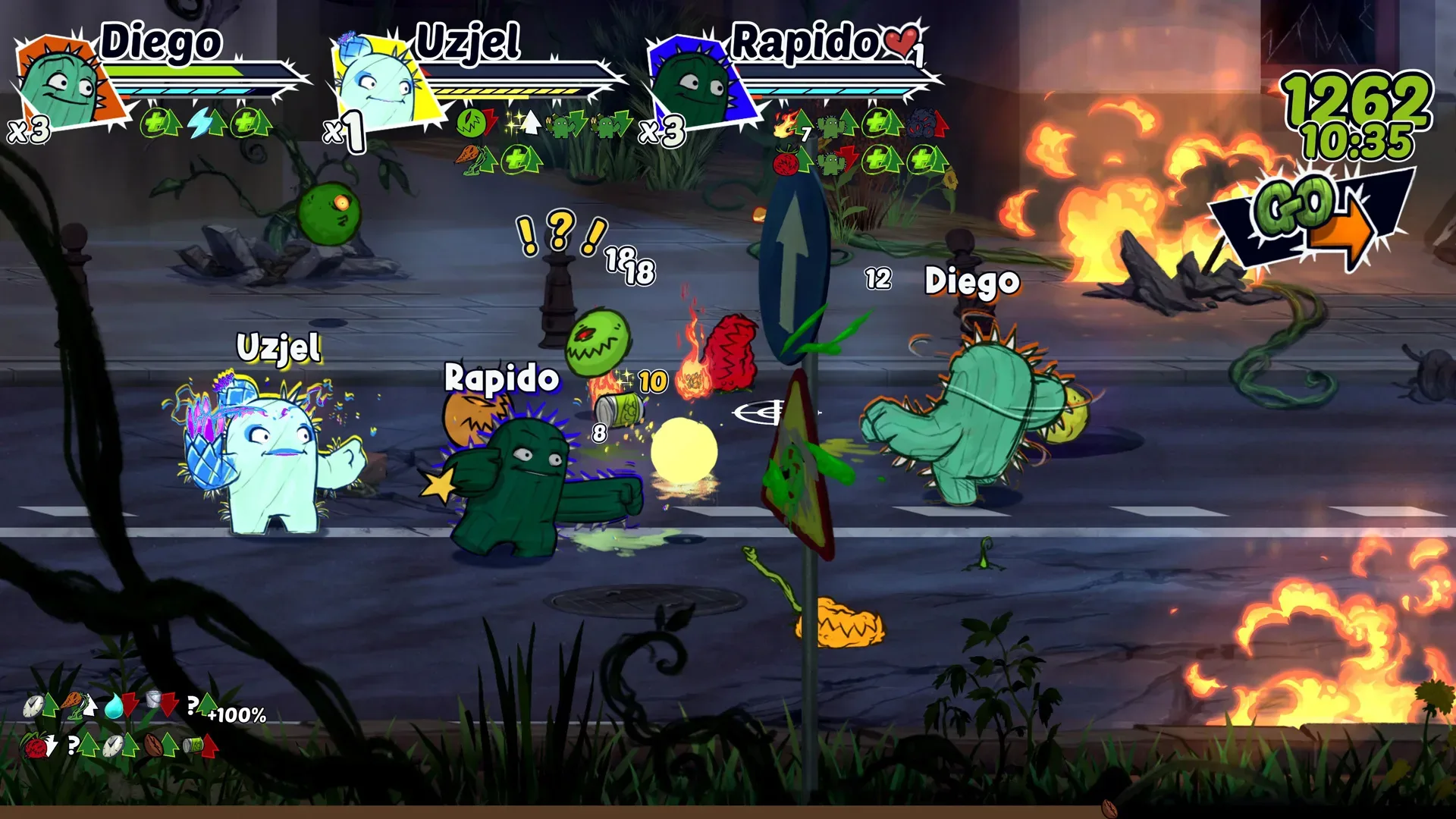
The playtest supports local co-op for two to four players. That is a significant part of the setup for a beat ’em up, a genre built around managing groups of enemies while sharing limited space with allies. Local co-op means players participate together on the same system and display setup; the provided details do not establish online multiplayer support.
The announced playtest content includes:
- 10 maps
- Three story quests
- Six enemy types
- Dozens of challenges and research objectives
- More than 100 modifiers
- An Endless mode
- Story, Arcade and Arena modes
Story Mode is the game’s narrative-focused option, following the effort to reach the source of the catastrophe. Arcade Mode is designed around high scores, while Arena Mode presents distinct challenges. Endless mode, as its name suggests, provides a format centered on continued survival or progression rather than a fixed endpoint.
Those modes give the playtest more than one reason to revisit its combat loop. A story path can introduce the setting and progression, Arcade can appeal to score-focused players, and Arena can put the emphasis on specialized encounters. The supplied information does not specify how maps, quests or characters are distributed between those modes, so players should treat the listed content as the overall playtest offering rather than a guaranteed breakdown for each activity.
A beat ’em up with roguelike systems
At its foundation, Vegelypse is a beat ’em up: an action game format usually focused on close-range attacks, crowd control and advancing through combat spaces. The game’s 2.5D label indicates a presentation that combines a side-oriented gameplay plane with visual depth, rather than a fully open 3D action structure.
Its additional roguelike elements are central to the pitch. Vegelypse uses random modifiers, Perks and an evolution system. In practical terms, a modifier is a rule or effect that changes the conditions of a run; a Perk is a player-facing benefit or upgrade. Randomization means players may need to adapt to the options and conditions they receive instead of relying entirely on a single fixed build or route.
Related coverage includes Vegelypse Playtest Opens With Co-Op Combat Against Mutated Produce.
More than 100 modifiers are listed for the playtest, suggesting variety is intended to come from combinations as much as from the stated six enemy types and 10 maps. That number alone does not reveal how dramatic individual modifiers are, how often they appear, or whether all of them are immediately available. Still, it identifies the game’s intended replay structure: the same core brawling should change as players collect different effects and develop their characters through the evolution system.
This is an interesting fit for co-op. A conventional co-op brawler asks partners to coordinate positioning, rescue each other from crowded fights and divide attention among enemies. Variable Perks and modifiers add another potential layer, because a group’s approach can be shaped by the upgrades that emerge during a run. Vegelypse’s playtest may therefore be useful not only for assessing the pace and feel of its attacks, but also for seeing whether its random systems stay readable when up to four people are fighting at once.
Hand-painted animation meets hard rock
Vegelypse’s visual identity is built around frame-by-frame, hand-painted animation inspired by classic cartoons. Frame-by-frame animation means motion is constructed from individual illustrated frames, rather than relying solely on models being moved by a skeletal animation system. The description points to a deliberately illustrated look, one that matches the absurd premise of cactus rock musicians fighting weaponized groceries.
The game is also accompanied by an energetic hard rock soundtrack, tying its music directly to the Hard Rock Cacti Band at the center of the action. The source material does not identify the band members, their instruments, the soundtrack artists or the exact combat abilities available to either playable character. What is clear is that the presentation is not incidental: the band concept, cartoon-inspired imagery and heavy musical framing are meant to give the brawler a distinct personality beyond its apocalypse premise.
That identity matters in a crowded-action format. Beat ’em ups often depend on clear animation and quick visual recognition, particularly in co-op, where every player must tell enemies, allies and attack effects apart in a busy scene. The playtest’s hand-painted art will be one of the most important elements for participants to evaluate, alongside the underlying controls and run-to-run variation.
What players can reasonably look for during the test
The October playtest is an opportunity to examine the interaction between its three major pillars: classic brawler action, procedural run changes and local multiplayer. The strongest questions are practical ones. Do the randomized modifiers create different tactical choices, or mostly produce small numerical changes? Does the evolution system give individual runs a satisfying arc? Can the visual style remain legible in four-player fights? And do Story, Arcade, Arena and Endless modes have sufficiently different purposes?
None of those questions can be answered from the feature list alone, but they explain why a playtest is valuable. Early access periods can help developers observe how players respond to balancing, challenge requirements, co-op interaction and the clarity of progression systems. For players, the upside is simple: they can sample the game’s premise and structure before its broader release plans are detailed.
The announcement invites players to sign up for the test and wishlist Vegelypse on Steam. The playtest is stated to run until the end of October. Anyone interested in the broader PC release calendar can also keep track of other upcoming offerings, including Football Manager 27’s planned free PC days before launch.
Vegelypse has a concise but appealing hook: a countryside disaster, mutated produce, cactus musicians and a lot of close-quarters fighting. Its larger ambition lies in merging that cartoon brawler spectacle with modifiers, Perks and evolutions built for repeated runs. This test should show how well those elements grow together—and whether the Hard Rock Cacti Band has the right tools to turn a produce apocalypse into a co-op party.