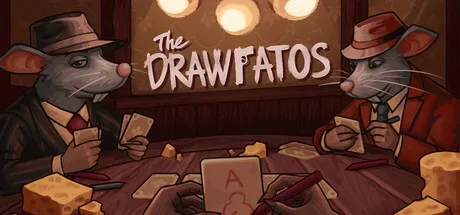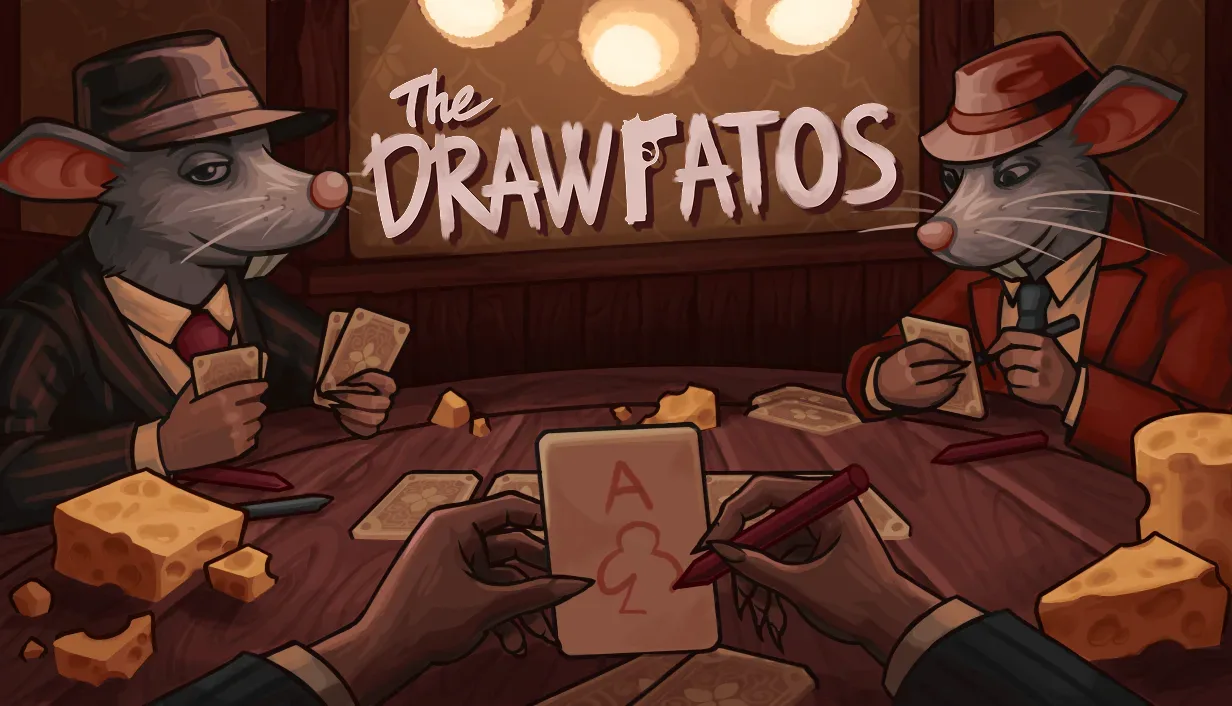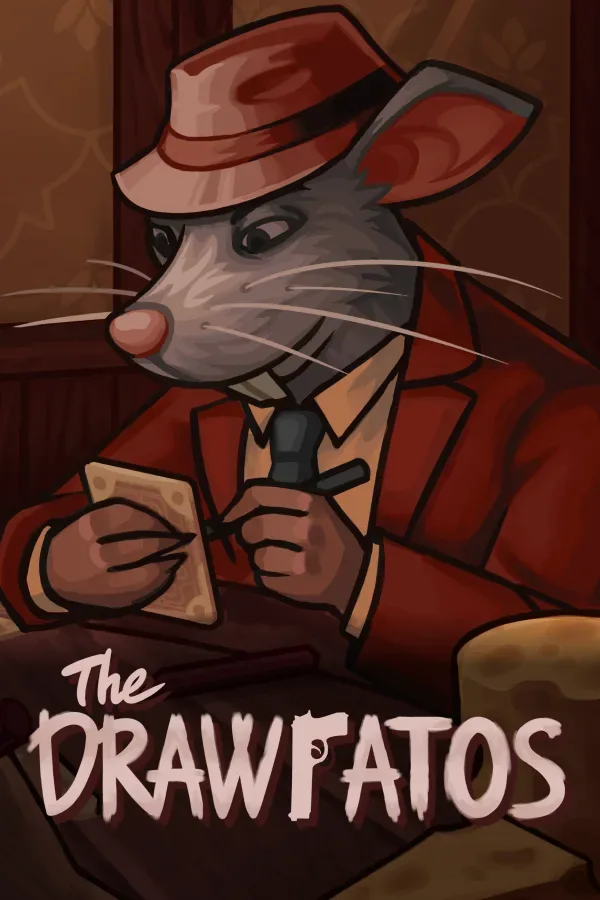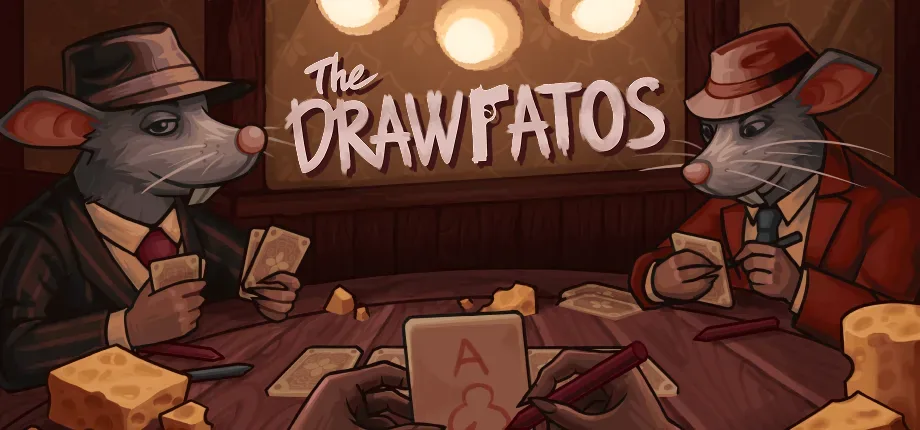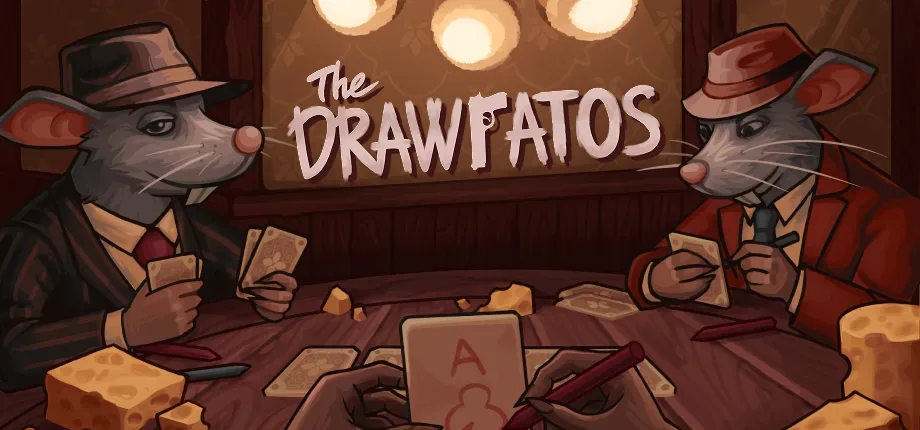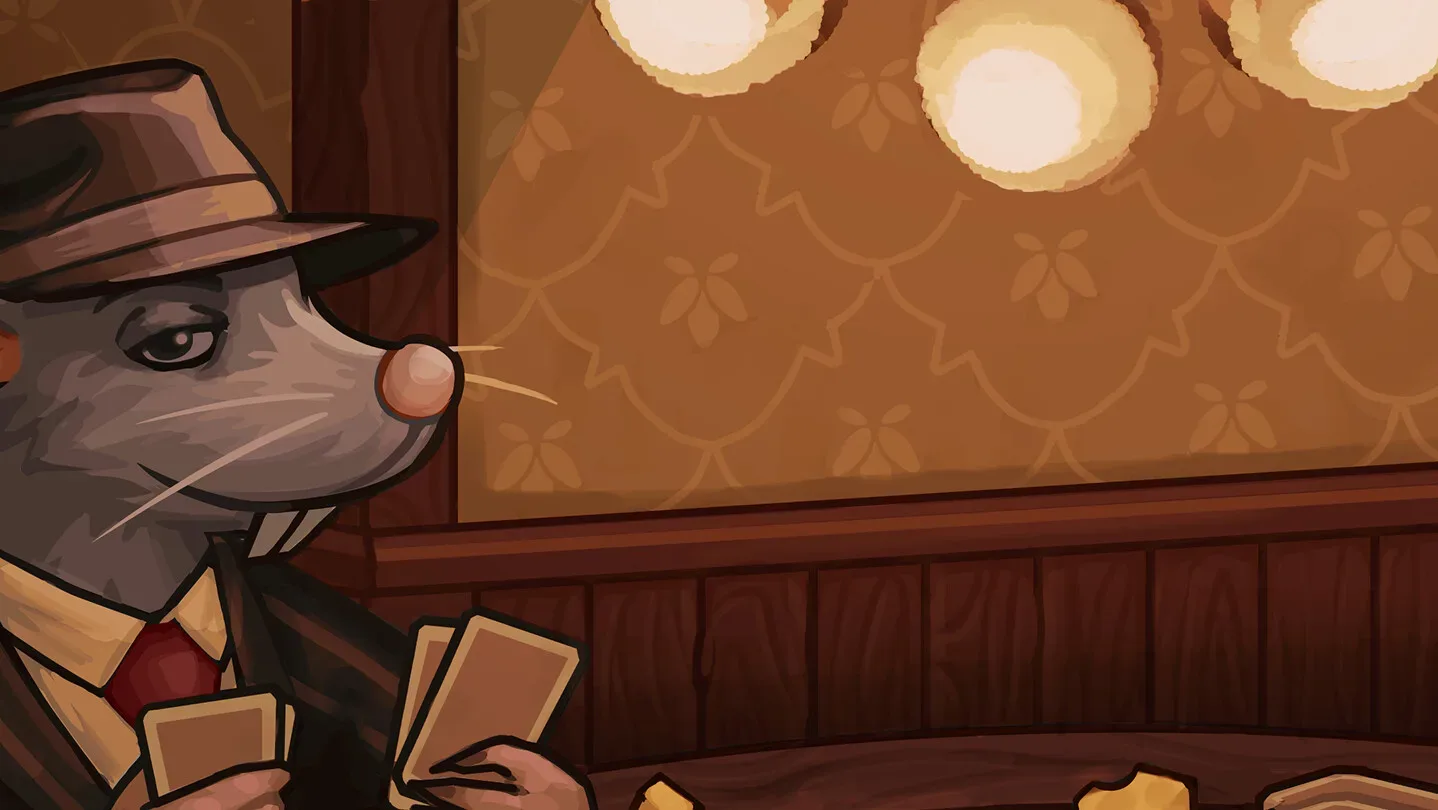
The Drawratos is bringing a marker pen to the poker table—and, apparently, to the rulebook. Indie publisher Targem Games and developer Sliva Group have announced a cooperative poker game for up to four players where cards are not fixed pieces of information. Players can draw directly on them to alter a card’s suit or rank, creating new combinations and turning a familiar hand-reading game into a contest of edits, bluffs and outright cheese-related larceny.
That last part is literal in the game’s economy: cheese is the betting currency. The stated goal is to outwit rivals and take their cheese, while the game also frames its multiplayer matches around fragile alliances and the possibility of losing everything in a single hand. A Steam playtest is due to begin shortly, with sign-ups available through the game’s Steam page. Participants will be notified when the test starts.
A poker hand that refuses to stay still
Traditional poker relies on a powerful premise: cards have a stable identity. A card is what it is, and the challenge comes from probability, betting, hidden information and reading the people across the table. The Drawratos retains the language of hands, combinations, bluffing and betting, but its central mechanic changes that foundation. If a player can alter a card’s rank or suit during a hand, the hand itself becomes mutable.
Rank means a card’s numerical or face value, such as a 7, queen or ace. Suit is its category—typically hearts, diamonds, clubs or spades in a conventional deck. The announcement does not detail exactly how card changes are limited, resolved or challenged, so it would be premature to infer a full ruleset. But the basic idea is clear: drawing on a card can transform its strategic role. A card that initially does not fit a combination may become the piece that completes one.
That has several implications beyond simply making stronger hands easier to build. In normal poker, observing a player’s decisions can help opponents estimate what they may be holding. In The Drawratos, players may also need to account for what a card could become. The information problem therefore expands from “What is in that hand?” to “What edits might be possible, and what is the player trying to persuade us happened?”
The announced ability to change suits or ranks suggests two distinct types of hand manipulation. Altering a rank can potentially reshape value-based combinations, while changing a suit can potentially affect suit-based combinations. The exact combinations supported by The Drawratos have not been specified, but the game explicitly says players can create new combinations. What matters at this stage is that the creative act of drawing is intended as a gameplay tool, not merely visual decoration.
Cooperation, betrayal and the cheese pot
The Drawratos is described as cooperative, yet its premise is deliberately less tidy than a game where four people simply pursue one shared score. Players are also expected to bluff, confuse opponents, form alliances that can change, and use tricks or scams to claim rivals’ cheese. That points to a social format in which cooperation may be tactical and temporary rather than permanent.
In practical terms, an alliance in this kind of setup could be useful because it creates room for coordination, misdirection or mutual protection. Its weakness is equally obvious: every partner is also a potential rival with access to the same card-altering systems. The announcement’s warning that a player can lose everything in one hand gives the betting side real dramatic weight, even though the specific wagering rules have not been outlined.
Cheese functions as the in-game currency used for bets, rather than as an incidental collectible. This makes it the resource at the center of every risk calculation. A player may have a promising hand but still need to consider what is at stake, whether another player is representing a stronger edited combination, and whether an apparent ally is setting up a reversal.
The result is a concept that appears designed for table talk. Poker is naturally social because bets communicate confidence, doubt or deception. Letting players visibly alter cards could add a different layer of performance: the edit itself may be useful, suspicious, misleading or provocative. Whether the final game makes changes openly visible, privately planned, freely available or constrained by other systems remains unknown. Those details will determine how much of the tension rests on deduction versus improvisation.
What the playtest can clarify
The upcoming playtest is significant because the announcement establishes the broad hook without spelling out many operational details. It confirms multiplayer for up to four players and a system for changing card suits and ranks. It does not yet explain match structure, the kinds of tricks available, the limits on modifications, or how the game judges competing claims and combinations.
Those are not minor questions for a game using poker terminology. Restrictions are usually what give a manipulation mechanic its stakes. If edits are scarce, conditional or risky, deciding when to use one can become the heart of a hand. If edits are broadly available, the emphasis could shift toward anticipating chains of changes and presenting believable bluffs. The playtest should provide the first public opportunity to see how The Drawratos balances those possibilities.
Players interested in joining can register through the Steam page and invite friends. The test’s timing is only described as soon, so there is no confirmed start date in the announcement. Targem Games also says there is no content embargo for the playtest. That means participants may stream sessions, record gameplay videos and publish reviews rather than waiting for a later permission window.
For people considering a group sign-up, that openness matters. A game built around shifting alliances is likely to be most legible when viewers can follow the conversations, accusations and reversals surrounding a hand—not only the final combination on the table. Still, prospective players should treat all playtest material as test-period material. The announcement invites public coverage, but it does not promise that every rule, balance decision or interface detail seen in the test represents the final version.
Why the drawing mechanic is more than a novelty
“Draw on the cards” is an immediately understandable pitch, but its most interesting potential is how it joins a physical-looking action to a strategic one. Instead of selecting a menu option that says “change suit,” a player’s act of marking the card is part of the game’s fiction and its interpersonal theater. It presents rule-bending as something players do to the table, in front of—or against—one another.
That idea fits the game’s focus on trickery. Bluffing is not necessarily limited to concealing the cards a player has. It can also involve making opponents misread an edit, overreact to a possible combination, or spend cheese protecting themselves from a threat that was never real. The announcement explicitly mentions confusing opponents and attempting scams, which suggests that misdirection is a stated part of the experience rather than an accidental byproduct of unusual rules.
There is also a useful distinction between chance and agency. In card games, chance is the uncertainty produced by the deal. Agency is the player’s ability to make meaningful decisions after that uncertainty appears. The Drawratos’ editable cards appear intended to give players more agency over an initially weak or awkward situation. But because every player can potentially employ similar deception, added control may create added uncertainty instead of simply reducing luck.
That is the compelling tension in the premise: making cards changeable does not necessarily make poker predictable. It could make certainty harder to achieve. A hand can be improved, but it can also be represented, challenged or eclipsed by somebody else’s intervention. The cheese wager keeps those decisions connected to a tangible in-game loss.
A distinct new PC multiplayer premise
At announcement, The Drawratos is defined less by an exhaustive feature list than by a sharp social-game idea: poker where the cards can be rewritten, alliances are unstable, and cheese is on the line. Targem Games and Sliva Group have confirmed a four-player format and a forthcoming Steam playtest, while leaving many of the rule-level details for players to discover.
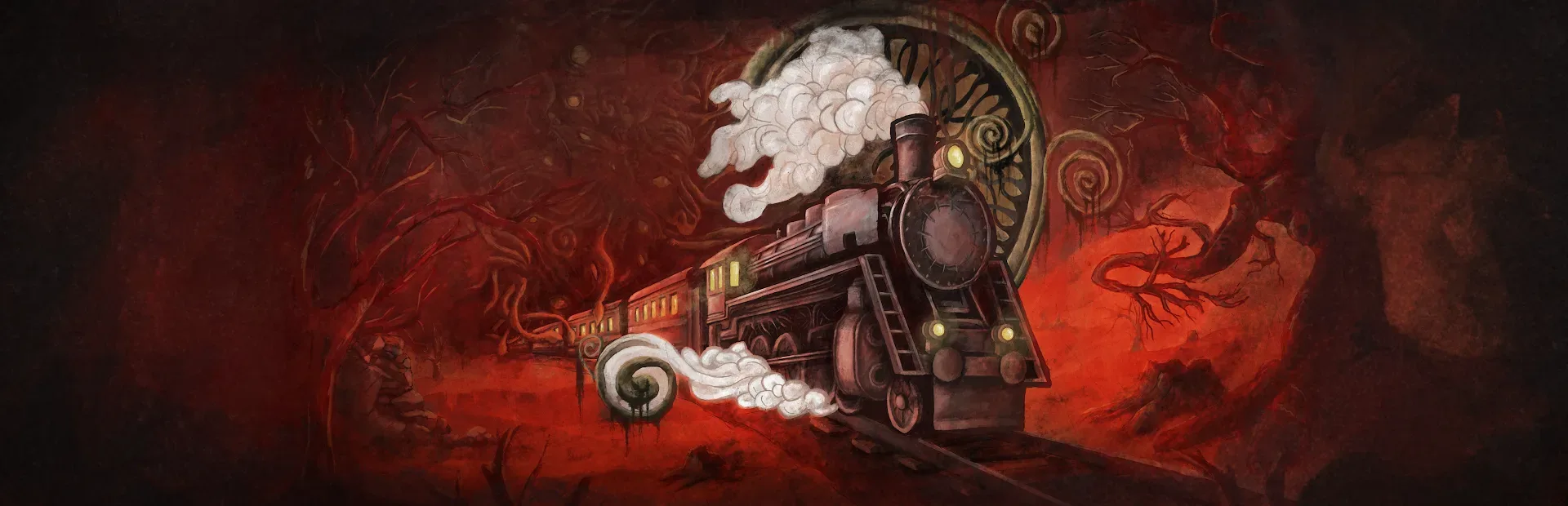
Anyone following unusual PC multiplayer concepts may also want to keep an eye on Dreadline Express and its deduction-driven horror train setup. For The Drawratos, the immediate next step is simpler: sign up for the playtest, gather a few trusted friends, and then decide precisely how trusted they remain once the cheese starts moving.