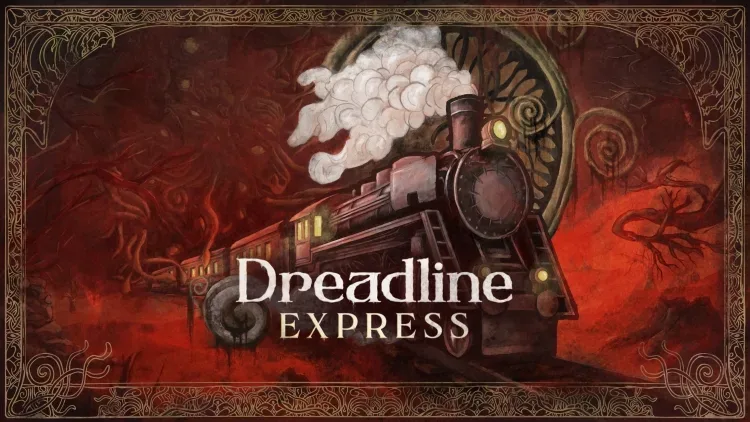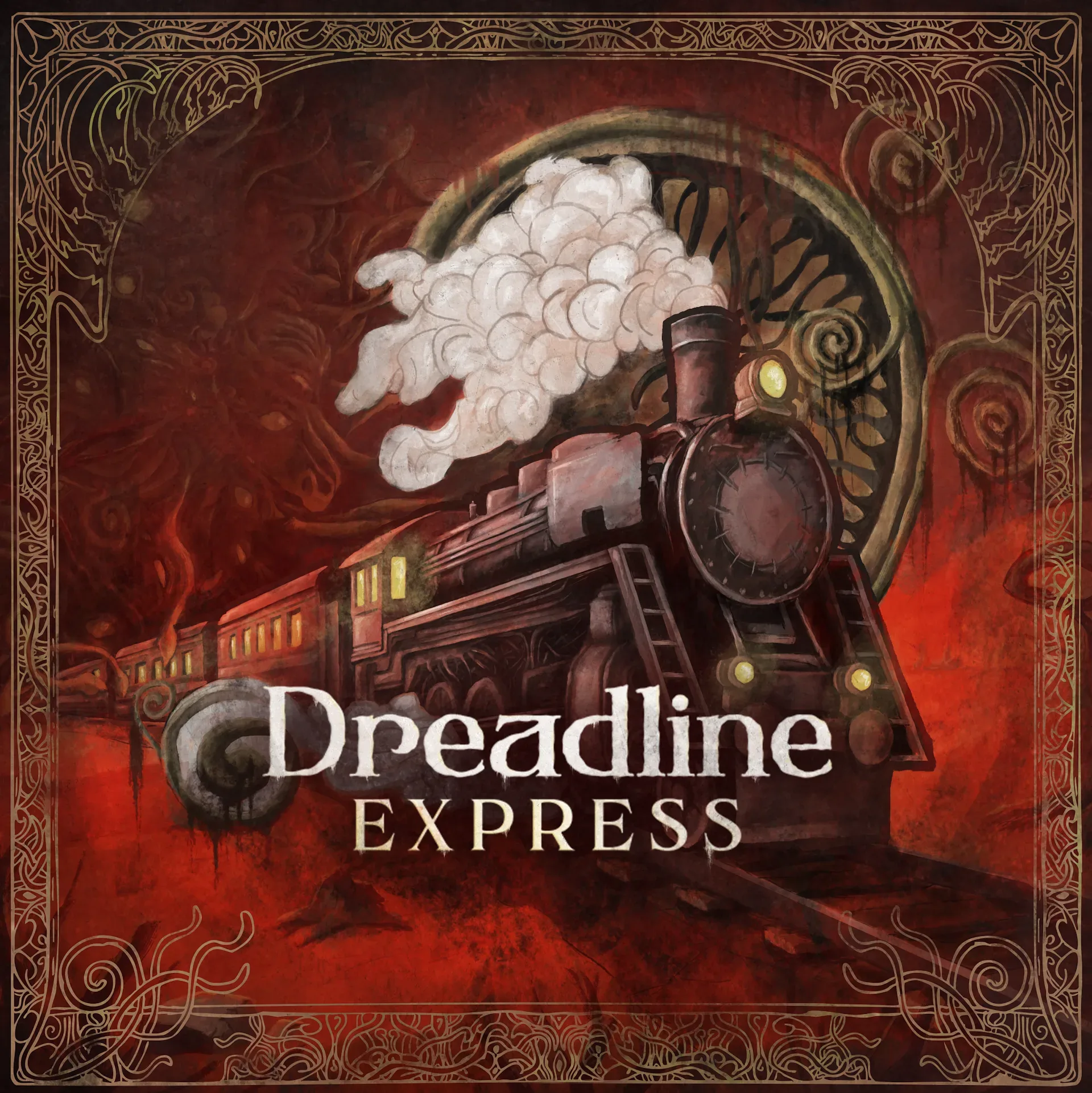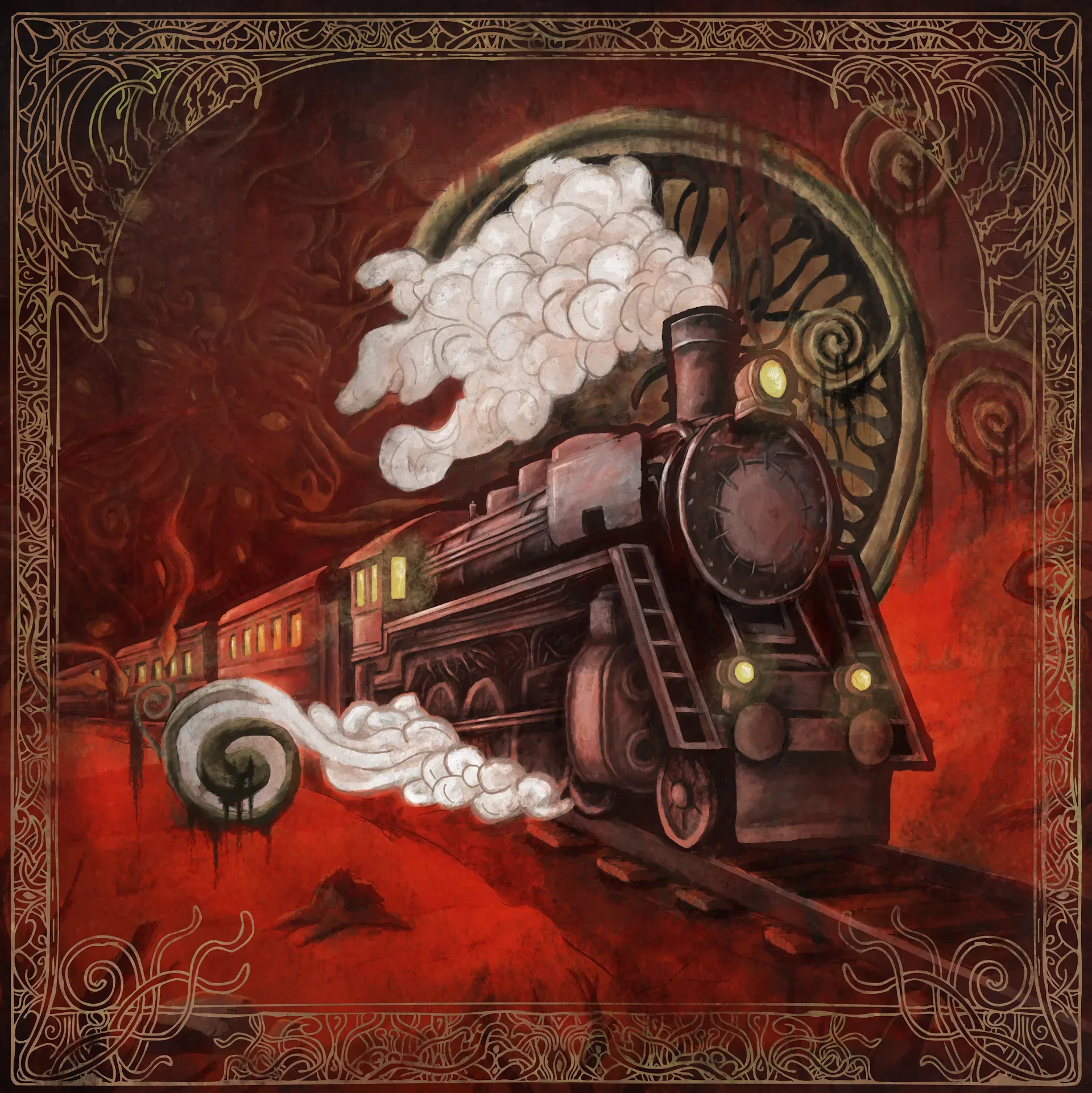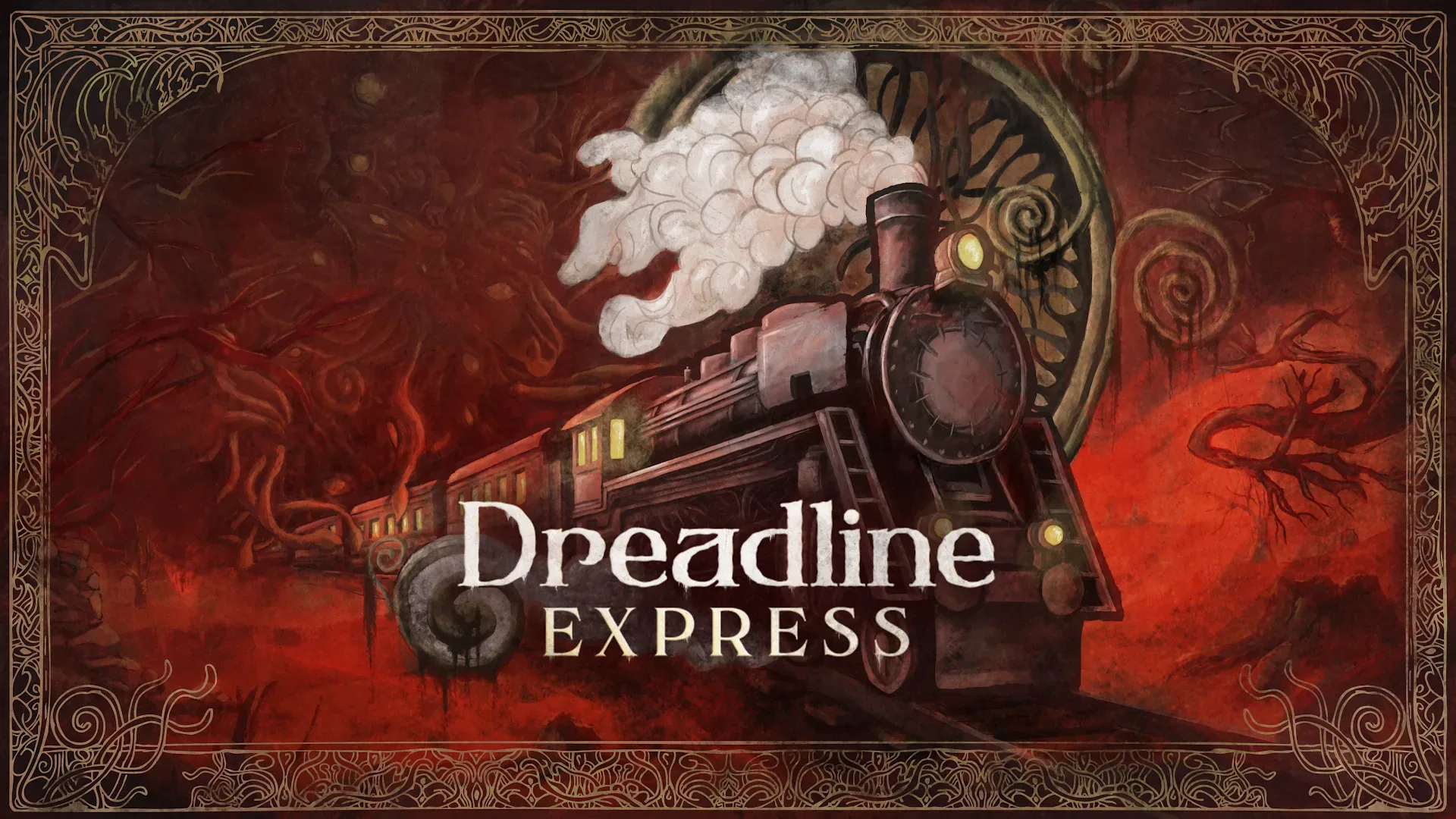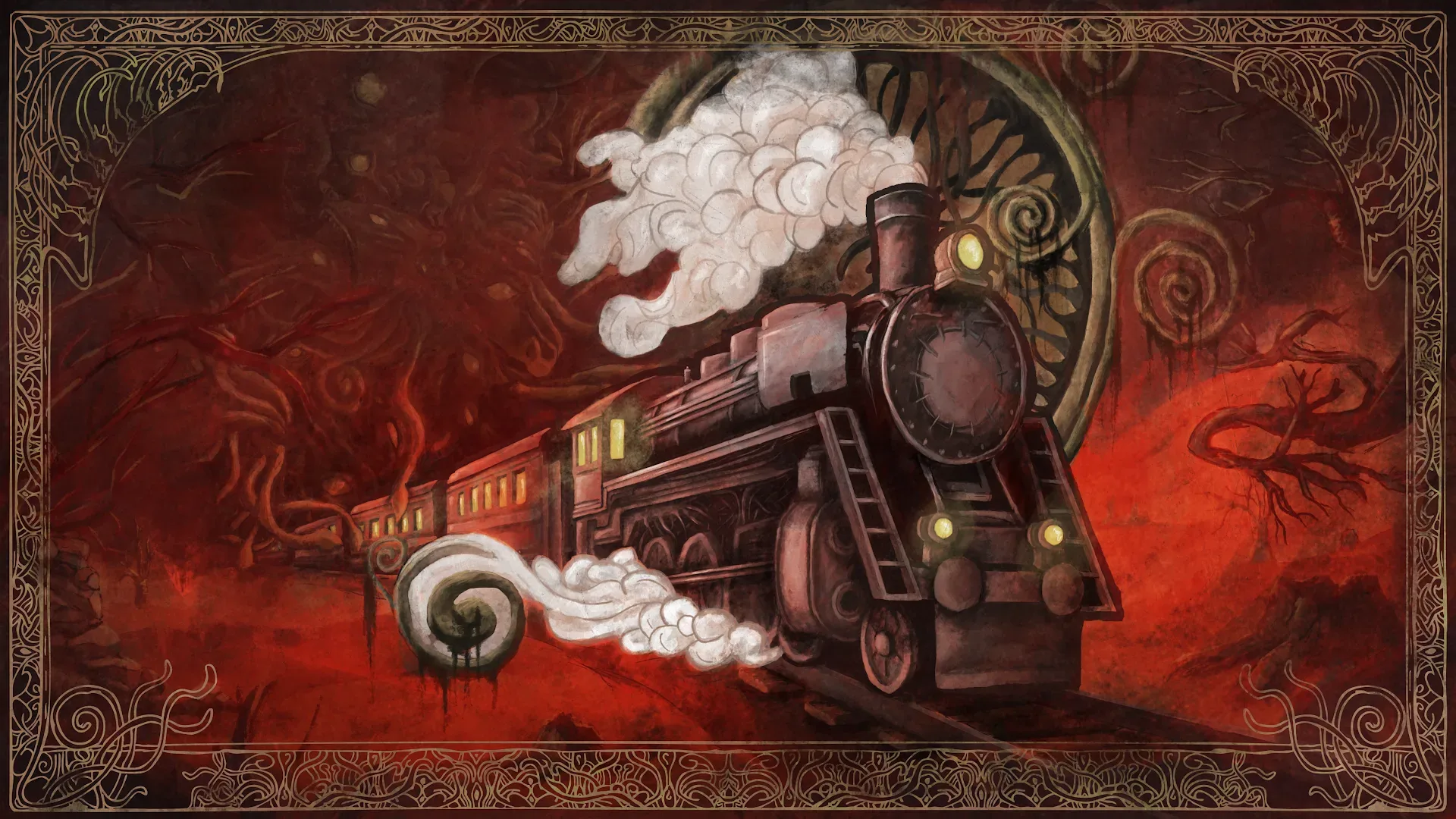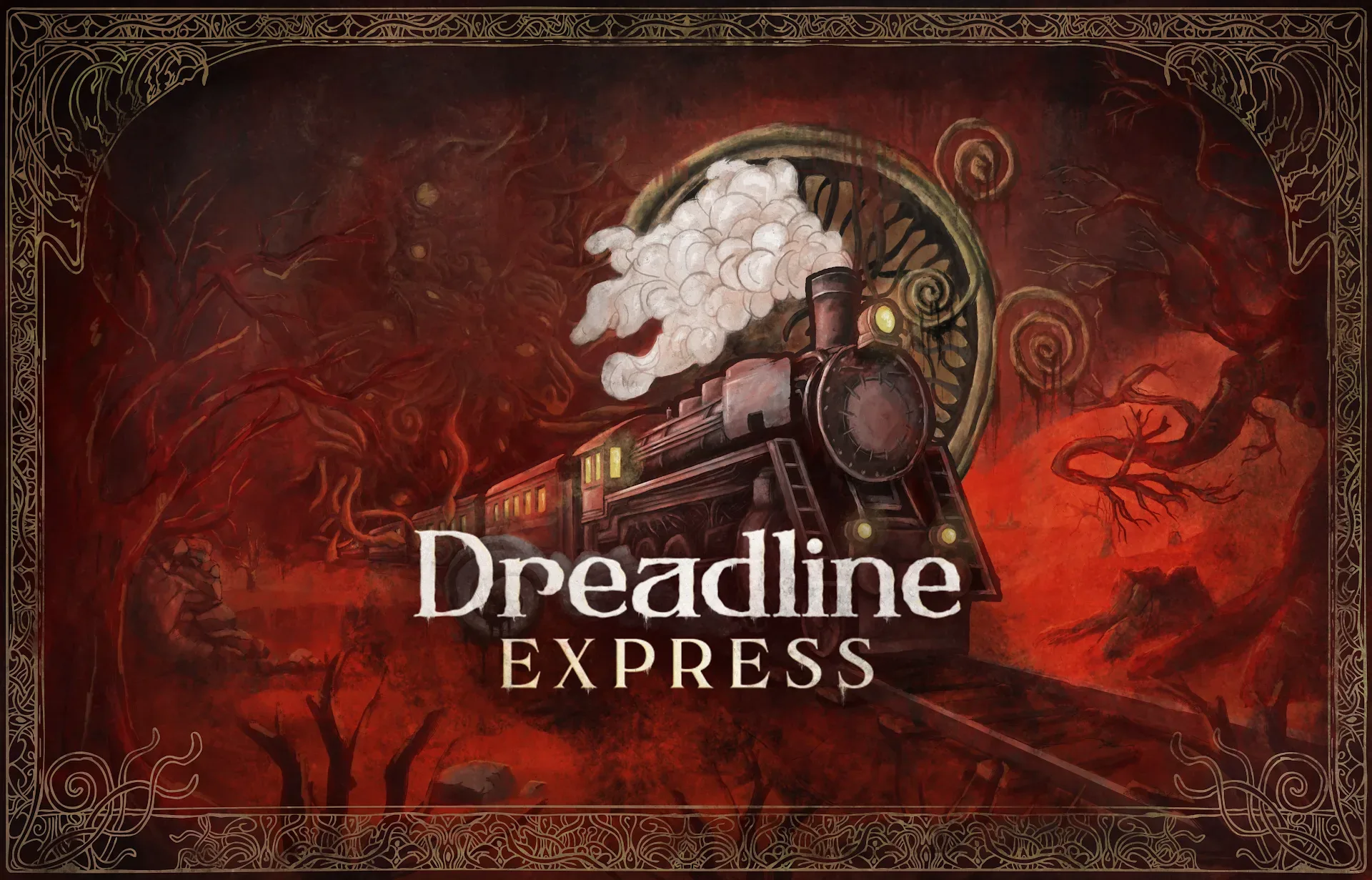
Dreadline Express is scheduled to launch for PC through Steam on October 16, 2026. Published by Shoreline Games and developed by David Konecny, the first-person psychological horror game places players aboard the last human train travelling across a scorched Earth.
Its premise is not merely a vehicle for corridors and jump scares. The train’s carriages form the setting for an exploration-focused mystery, with individual passengers, concealed information and doors that may carry consequences when opened. The game’s stated focus is on curiosity, deduction and paying attention to the environment rather than following a conventional chain of objective markers.
A limited-time demo is currently available, while the full game can be wishlisted ahead of release. Its date joins the broader PC release slate covered in our October 2, 2026 games release roundup.
A horror game built around the things players notice
Dreadline Express is described as a “metroidbrainia,” a term generally used for a game whose progression depends on knowledge and understanding rather than solely on equipment, character levels or a checklist of prescribed tasks. In practical terms, the important unlock may be recognizing why a space matters, connecting details from separate encounters, or understanding a passenger’s motivation.
That framing suits the game’s train setting. A train naturally divides a world into a sequence of compact locations, yet each carriage can contain a distinct group of people, clues and restrictions. The game says every carriage holds part of a larger puzzle. That suggests progression may be less about simply moving from one car to the next and more about deciding what information is reliable, which paths are worth pursuing, and what an apparently unreachable route requires.
The developers have also emphasized that some doors are better left shut. This is an important distinction in a horror game built around exploration. An unexplored room is not automatically a reward waiting to be collected; it can be a risk, a distraction or the start of a complication. The tension comes from the player having to judge what to investigate without the reassurance of a large objective arrow telling them exactly what is safe and necessary.
Lovecraftian undertones are part of the stated setup, but the announced details point toward psychological unease and mystery as much as overt confrontation. The scorched-Earth journey supplies an isolated, pressured setting, while the train’s passengers introduce a human layer to the investigation. Each has a story and motives of their own, so conversations and observations may be as meaningful as geography.
The card album is the central progression system
The clearest mechanical detail revealed so far is Dreadline Express’s card-based narrative system. Discoveries, encounters and achievements are turned into cards and stored in an album that changes as the player learns more.
Related coverage includes Dreadline Express Sets October 16, 2026 Steam Release.
Cards in this context should not be mistaken for a promise of a traditional collectible-card battle system. The available description instead presents the album as an organized record of narrative and investigative progress. A discovery might be significant on its own, but it can gain a different purpose once paired with another encounter or achievement. The player’s task is to find those relationships and use them to make a plan.
This approach can make information itself feel like a form of progression. In an action-focused game, progression often means acquiring a key, tool or weapon that opens a blocked route. In a knowledge-driven mystery, the player may already have access to the essential evidence but not yet understand how to apply it. The album is intended to give that evidence a tangible form while preserving the need for deduction.
The announcement says cards can reveal connections, enable plans and open paths that had seemed impossible. That wording leaves the exact interface and rules unconfirmed, but it establishes an interesting design goal: players are meant to revisit old leads with a new perspective. Rather than treating every earlier discovery as disposable flavor text, the system is designed to keep prior encounters relevant as the mystery expands.
Why this matters for exploration
Objective markers are useful for clarity, but they can narrow a mystery into a sequence of errands. Dreadline Express is positioning itself on the other side of that trade-off. It wants players to observe, retain information and form their own theories. The card album appears to be a middle ground between total obscurity and overt guidance: it records what has happened, but players must still determine which pieces belong together.
That can also make the train’s compartmentalized setting more meaningful. A player may learn something from one person, notice a detail in a different carriage, and only later realize that the two facts create an opportunity. If the game successfully supports that chain of reasoning, getting past an obstacle can feel like a conclusion reached by the player rather than an instruction carried out for the game.
There is a deliberate uncertainty attached to that design. The announcement says there is no single fixed solution to obstacles, with force, tactics and careful deduction all presented as possible approaches. It does not detail how widely those approaches apply, whether they lead to different outcomes, or how the game balances them. Still, the stated intent is clear: a blocked path should be a problem to interpret, not just a lock awaiting one predetermined key.
Different solutions, and the pressure to choose
Dreadline Express promises multiple approaches to obstacles: force, tactics or deduction. In a horror context, those options could give investigation a practical edge. Choosing force may solve an immediate issue but potentially create a different one; a tactical response implies careful positioning or preparation; deduction asks the player to understand the situation well enough to identify another route.
None of that confirms a specific combat system, stealth model or branching structure, and players should not read more into the description than has been announced. What is supported is the broader design philosophy: the game does not want every player to clear a challenge through one mandatory answer.
That philosophy is especially compatible with psychological horror. Fear often works best when certainty is in short supply. If a player is asked to make a judgment about a passenger, a door or an incomplete set of clues, the result can be more unsettling than being told exactly what to do. The uncertainty is not only about what might be in the next carriage, but about whether the player has correctly understood the current one.
“Dreadline Express is about giving players the freedom to be curious,” David Konecny said. “I wanted to make a horror game where making it through comes from paying attention, making connections, and understanding the people and places around you, rather than simply following a trail of objectives.”
That statement captures the project’s central promise. Survival is framed as an outcome of comprehension, not just reflexes. The distinction matters because it suggests the game’s horror and its puzzle structure are intended to reinforce each other. A disturbing discovery can be frightening in the moment, then later become a vital piece of context. A seemingly ordinary passenger may have motives that reshape how an earlier conversation is understood.
What has been confirmed for launch
Dreadline Express will release on Steam for PC on October 16, 2026. The release date was presented during the 28 Games Later horror showcase, alongside a new announcement trailer. The game has a limited-period demo available now and can be wishlisted on Steam.
Beyond the PC Steam release, the available information does not establish versions for consoles or other PC storefronts. It also does not specify price, system requirements, demo duration, localization options, accessibility features or the full scope of the game’s branching solutions. Those remain details to watch for closer to launch.
For now, Dreadline Express stands out through a focused pitch: a first-person horror mystery contained within the last train carrying humanity through a ruined world, where clues become cards, cards become connections, and progress is meant to come from the player’s own attention. Players who enjoy horror games that ask them to investigate rather than simply follow may find the demo the most useful early indication of how that idea works in motion.