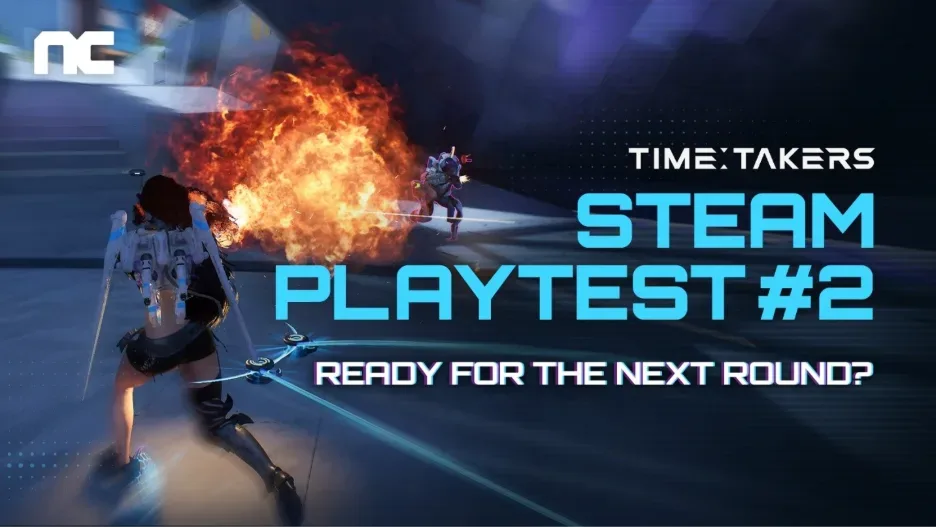
TIME TAKERS will hold its second Steam playtest on PC from November 12 through November 15 PT. The upcoming free-to-play team survival shooter is being developed by Mistil Games, with NC preparing a revised build after the game’s first PC test in September.
The next session is not framed simply as another chance to populate the servers. Its stated focus is iteration: combat balance, movement controls, combat readability, matchmaking and character personality work are all set to change. For a multiplayer shooter built around several teams colliding in the same match, those areas are closely connected. A movement adjustment can alter how quickly players can disengage; an improvement to visual feedback can make the same encounter easier to understand; and a matchmaking revision can affect whether the match itself feels competitive before anyone fires a shot.
What TIME TAKERS is
TIME TAKERS is a team survival shooter in which four squads of three compete to be the last team standing. That makes for 12 players divided among four teams. Players select a character known as a traveler, fight for time, and use in-game upgrades to adapt across battles on the battlefield.
The phrase “team survival shooter” describes a last-team-standing structure rather than a standard two-side match. Instead of one team trying to overcome one opposing side, squads must account for three potential threats. This setup can make timing, position and information especially important: a squad may choose whether to press an encounter, withdraw from it, or take advantage of another team already being occupied. The announced upgrades add another layer, allowing players to alter their approach during a match rather than relying only on their initial traveler selection.
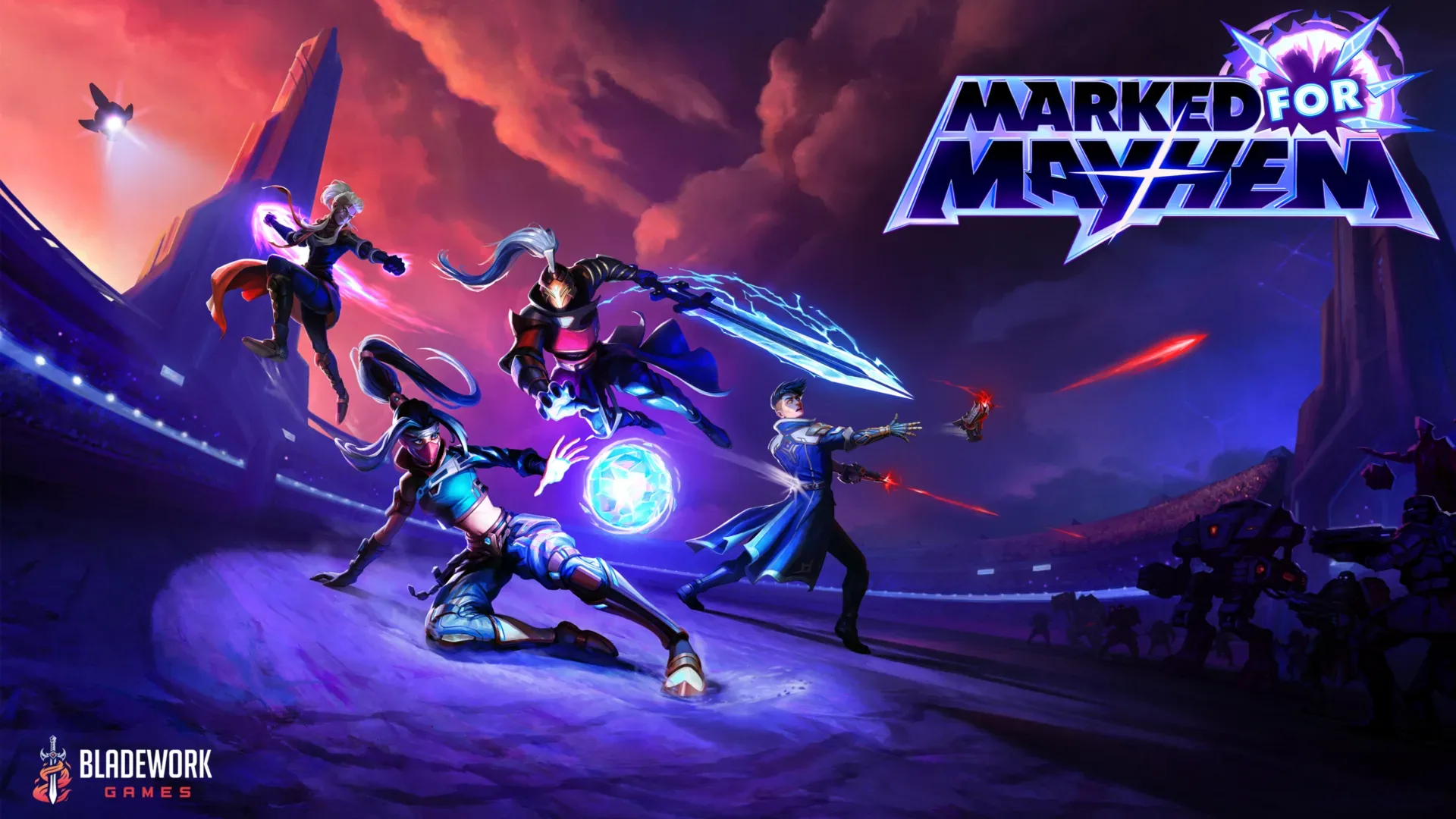
The game is planned for PC and consoles, though the November 12–15 test is specifically a Steam playtest for PC. Sign-up information and a developer video have been made available for the session. Players looking at the November playtest calendar can also see another upcoming PC test in Marked for Mayhem’s November 6–8 public playtest.
The changes planned for the second test
NC says the November build incorporates feedback from September’s first PC playtest. The team reported that player numbers and playtime rose during that earlier session, and the forthcoming build is intended to make combat more dynamic and intense while gathering another round of player feedback.
- Combat balance adjustments: Changes intended to tune the relationship between the game’s combat options.
- Optimized movement controls: Revisions to how players direct and maneuver their travelers.
- Improved combat feedback and visibility: Work aimed at making battlefield action and its outcomes clearer.
- A revamped matchmaking system: A revised process for assembling players into matches.
- Enhanced character personalities: Updates intended to give the travelers a stronger individual presence.
Why combat feedback and visibility matter
“Combat feedback” is a broad design term for the signals that tell a player what their actions have done. In a shooter, it can include cues that communicate hits, damage, impacts, abilities or other consequential events. “Visibility” concerns how easily a player can parse what is happening on the battlefield. Neither term specifies the exact implementation being added to TIME TAKERS, but together they point to a shared goal: reducing uncertainty at the moments when a player needs to make a decision.
That is particularly meaningful in a match with four squads. A player may need to determine not only whether their own team is winning an exchange, but also where another squad is engaging, whether that activity creates an opening, and whether a retreat is safer than pursuing. Clearer feedback does not necessarily make a shooter easier. It can instead make the game more legible, helping players connect an outcome with the decision that led to it.
Related coverage includes TIME TAKERS Returns to Steam for a Second PC Playtest November 12–15.
Combat balance operates on a related but different level. Balance adjustments generally seek to prevent one tactic, upgrade, character option or combat approach from consistently eclipsing alternatives. In a game where players can obtain upgrades during a match, the balance question extends beyond initial character choice. The value of an upgrade can depend on the situation: an option that helps a squad survive a direct fight may not serve the same purpose as one that aids mobility or helps capitalize on a third-party encounter.
No individual weapons, travelers, upgrades or numerical changes have been identified for the November build. Players should therefore treat the announced categories as the scope of the update, not as confirmation of specific buffs, nerfs or new systems.
Movement is more than a comfort setting
Optimized movement controls are another potentially consequential part of the test. In competitive action games, movement affects aiming, escape routes, pursuit, regrouping and access to advantageous positions. When several squads share a battlefield, it also determines how readily a team can leave one confrontation before a different opponent arrives.
Controls are distinct from the broader idea of movement balance. A control optimization can concern responsiveness, consistency or how an input translates into an on-screen action. The announcement does not provide those particulars, so it is not possible to say exactly what Mistil Games has changed. Still, placing movement controls alongside combat feedback indicates that the second playtest is addressing the fundamental feel and readability of moment-to-moment play, not solely adding content.
Matchmaking is part of the test’s competitive foundation
Matchmaking is the system that places players into multiplayer games. A revamped system can matter both before and during the action, since its purpose is to form matches in a way that supports the intended experience. The announcement does not detail its criteria, queue behavior or any ranking structure, so those specifics remain unknown.
For TIME TAKERS, a matchmaking revision arrives alongside combat and control work rather than in isolation. That is a sensible area to evaluate in a playtest: the quality of a match is influenced by the rules and combat systems, but also by whether players can get into matches and encounter opponents under workable conditions. The November session should give the development team another opportunity to collect feedback on that overall loop.
Character personality is also on the agenda
The travelers are not merely unnamed team slots; players choose one before fighting for time. Enhanced character personalities suggest the team is also refining how those selectable characters come across. The announcement does not say whether the changes involve dialogue, presentation, backstory, animation or another method, so expectations should stay measured.
Even so, the focus is notable beside the mechanical work. A free-to-play multiplayer game needs players to understand how a match functions, but distinctive playable characters can also help players identify with a preferred role or playstyle. What that means in TIME TAKERS will depend on the details that emerge in the playtest and later updates.
What players can reasonably expect in November
The November 12–15 PT Steam playtest is an opportunity to try the updated PC build and provide feedback on the areas specifically named by the team. The confirmed changes concern balance, controls, combat clarity, matchmaking and traveler personality. The central format remains four squads of three competing as the last team standing, with players selecting travelers and adapting through in-game upgrades.
It is also important to keep the test in perspective. TIME TAKERS is still described as upcoming, and a playtest is a development phase rather than a final promise of how every system will work at release. The announced improvements are evidence that the build is evolving from the September session, while the request for fresh feedback indicates that further refinement remains part of the process.
For now, the firm details are the PC platform, the November 12–15 PT window, and the multiplayer systems being targeted in the second Steam test. Console availability is planned for the game more broadly, but no console playtest timing has been provided.