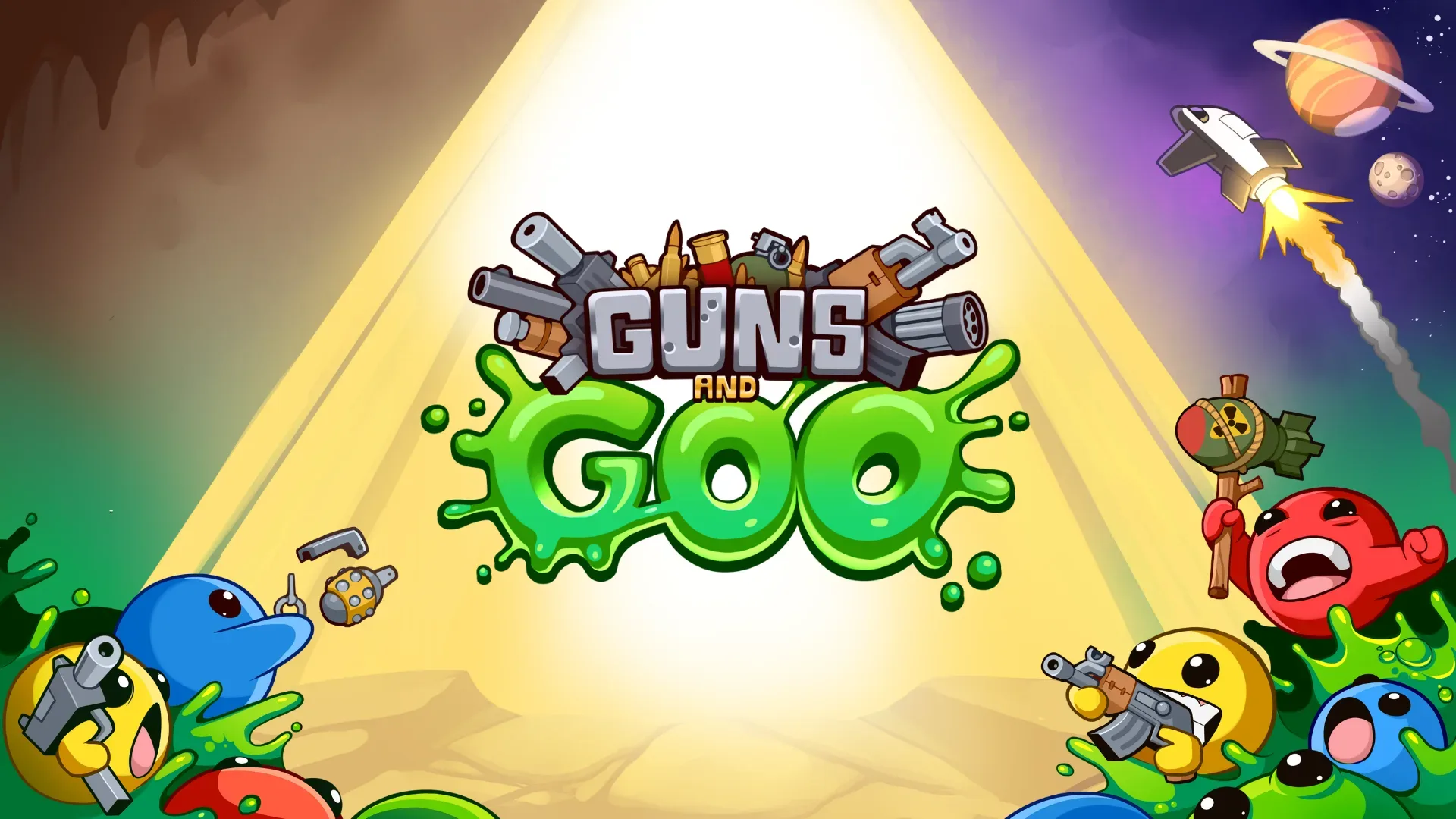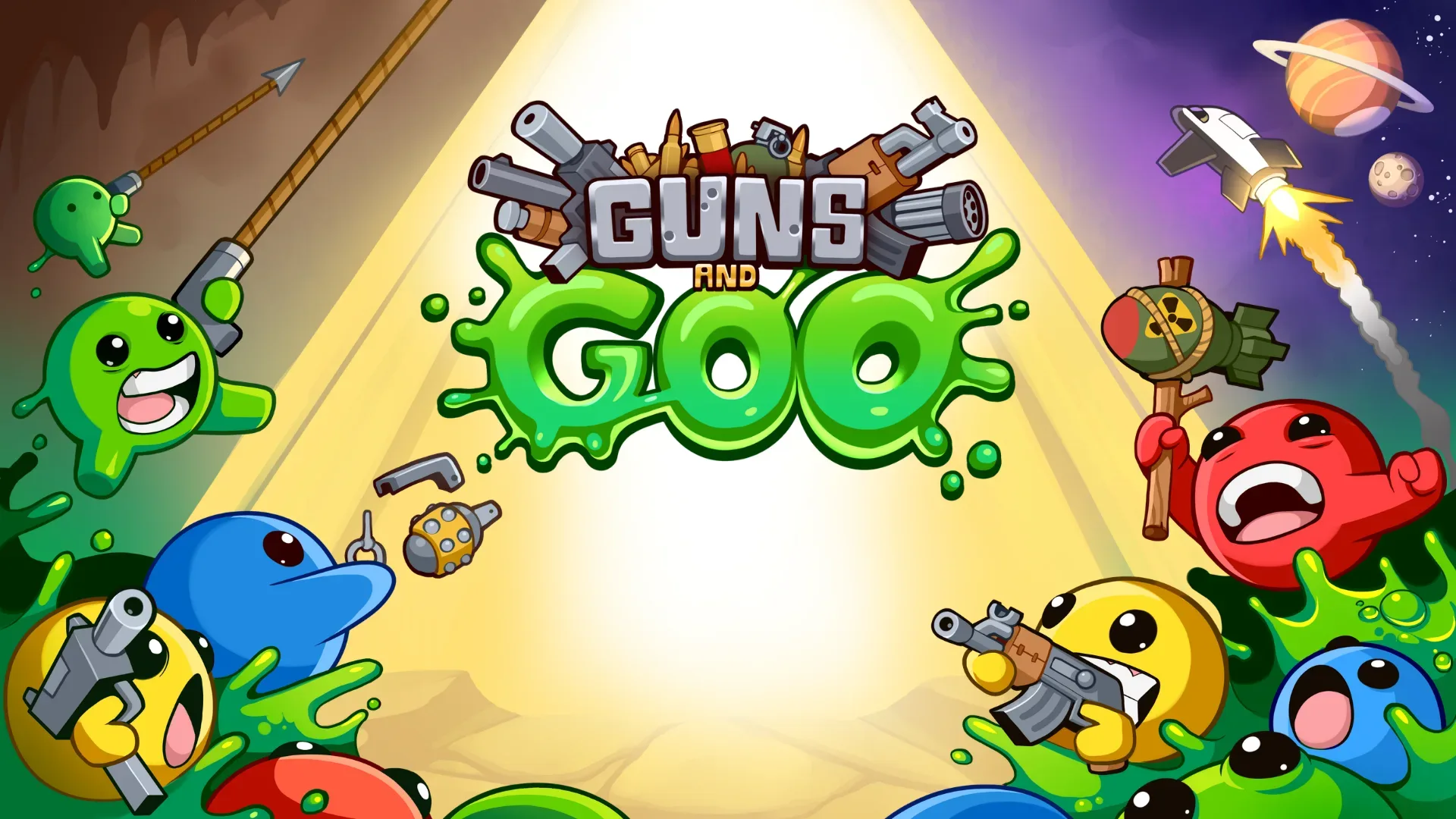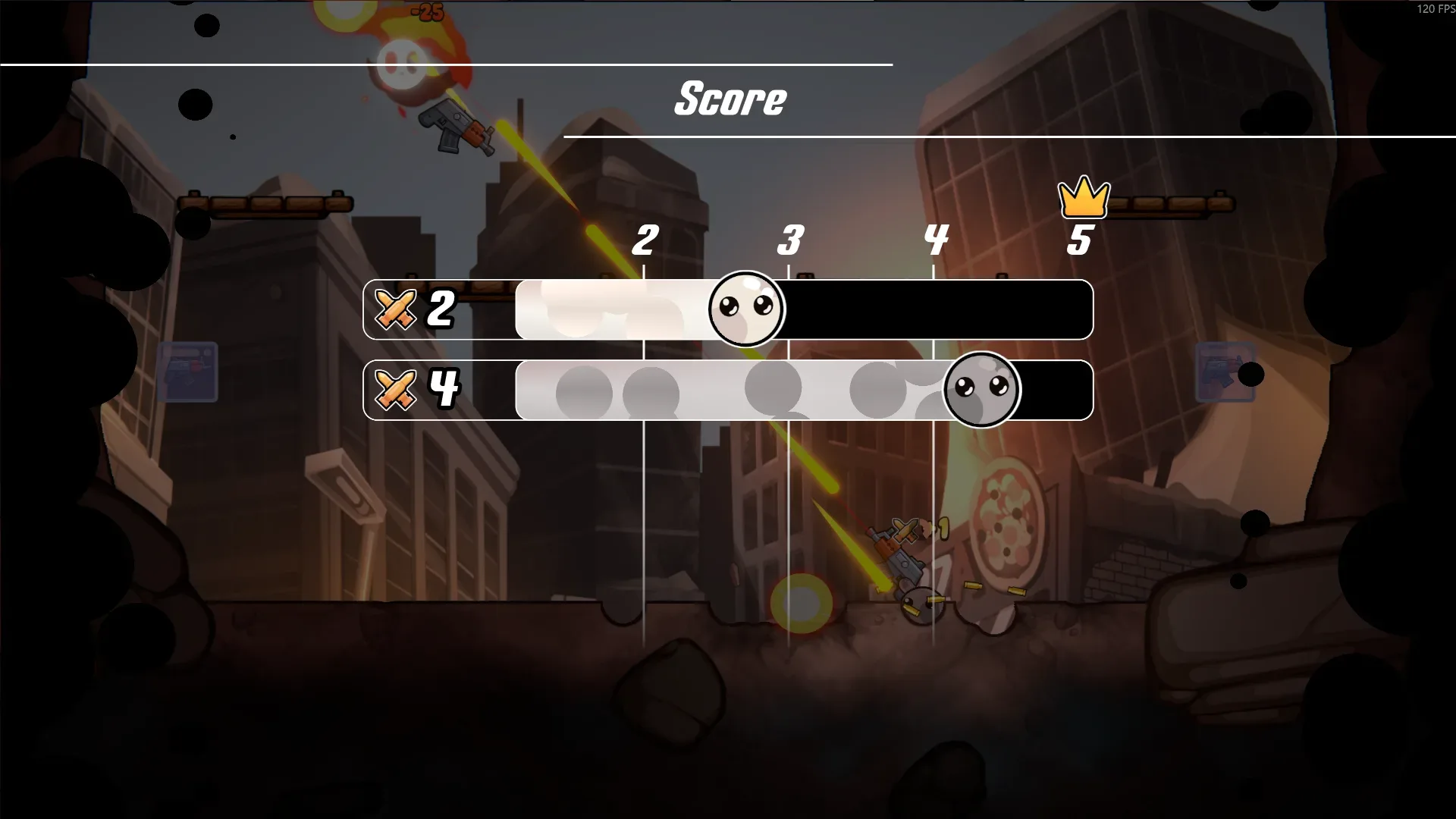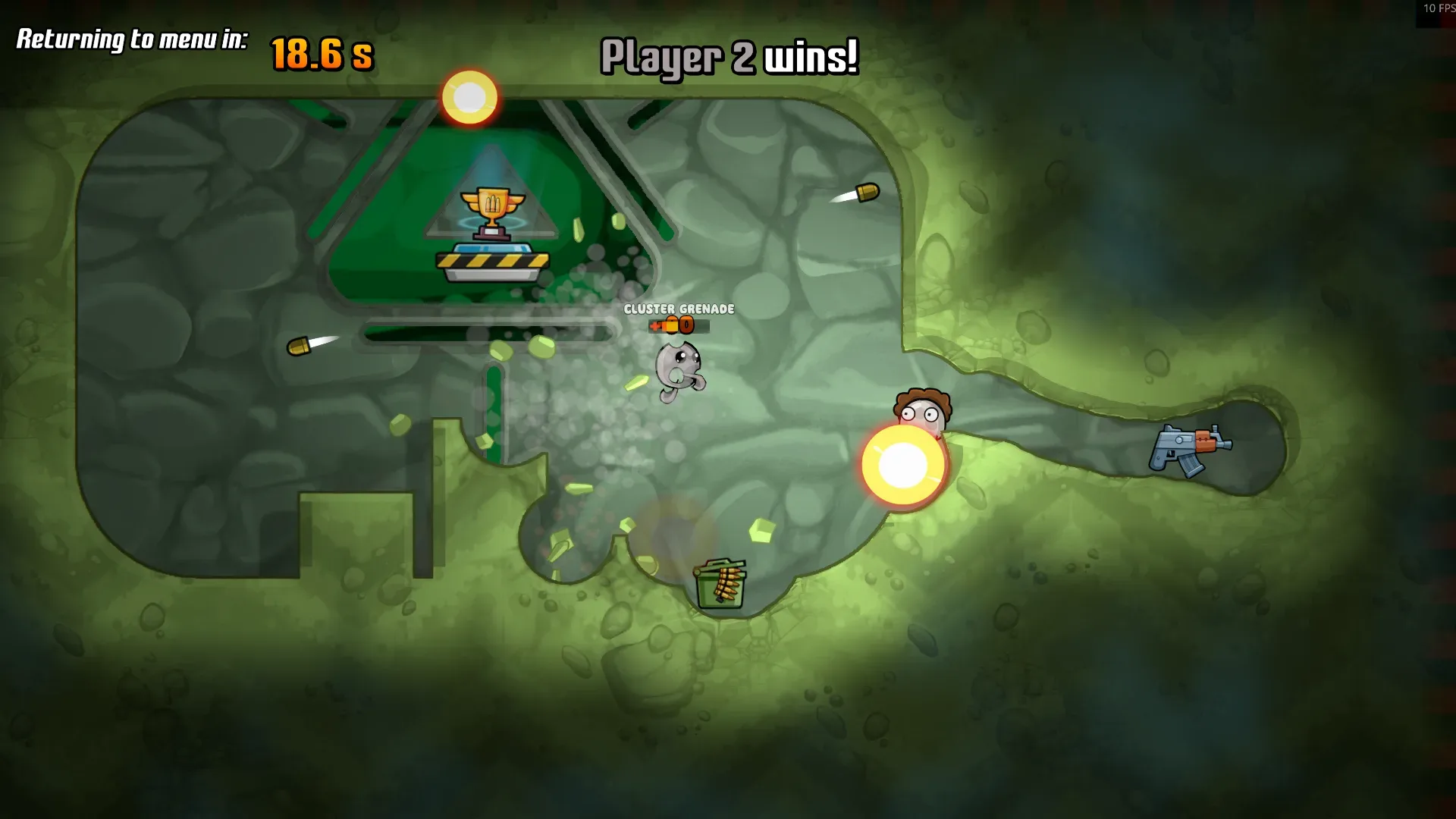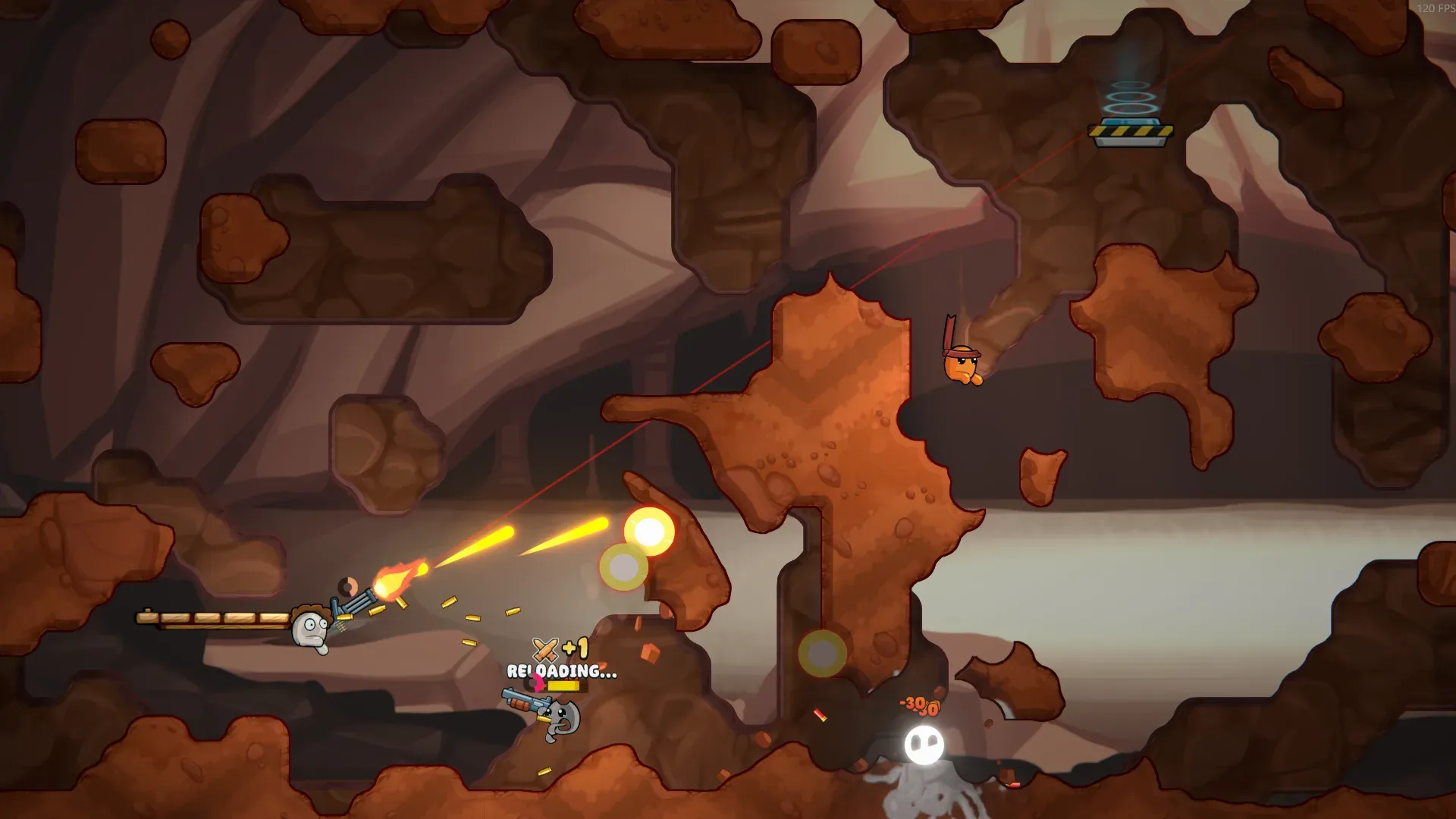
Guns & Goo is a newly announced 2D multiplayer shooter from Finnish developers John Rantala and Joona Hautala. Planned for Steam with Bonus Stage Publishing, the game is centered on frantic, single-screen battles where the arena itself is designed to change as players fight.
Its pitch puts destruction and physics at the center of the match rather than treating the stage as a static backdrop. Environments are described as fully destructible and high-resolution, while flowing liquids, chain reactions and changing match rules are intended to make individual rounds unpredictable. The developers also plan to support both cooperative and competitive play, locally and online.
The announcement arrives alongside an official trailer. It is another addition to the day’s PC game news, alongside the wider October 27, 2026 release roundup, though no release date for Guns & Goo has been announced.
Arenas That Do Not Stay Intact
The defining idea behind Guns & Goo is its fully destructible arena system. In practical terms, “fully destructible” means the geometry of a level can be damaged or removed during a match, reshaping routes, cover and safe positions as play unfolds. A player cannot necessarily rely on a favored hiding spot, a familiar wall or a particular elevated platform surviving the whole round.
That can substantially alter the rhythm of a single-screen shooter. In a conventional fixed arena, players gradually learn the map’s permanent lines of sight and movement lanes. A destructible arena adds a second layer: players must read what the level has become after damage, not simply what it looked like when the match began.
Guns & Goo’s developers describe this as every match reshaping the level in real time. The promise is not merely visual damage. The changing terrain is positioned as a gameplay system, with the potential to open paths, erase defenses and force quick adjustments. Whether that produces tactical recoveries, sudden traps or simply spectacular collapses will depend on how the weapons, destruction and movement ultimately interact.
What Physics-Driven Liquids Could Add
The game also highlights physics-driven liquids and chain reactions. Physics-driven is a term for systems that simulate behavior rather than relying entirely on pre-authored animations or fixed outcomes. Here, the stated focus is on liquids that flow and on reactions that can produce unexpected results when game elements combine.
That matters because liquids are inherently responsive to the terrain around them. If a battle destroys part of an arena, the altered shape could affect where a liquid travels. If that liquid then participates in a chain reaction, a single action may have consequences that spread beyond its original target. The developers specifically frame these outcomes as emergent moments.
Emergent gameplay refers to situations created by systems interacting with one another, rather than by a single scripted sequence. In a multiplayer setting, it can mean that a memorable moment comes from player decisions meeting the state of the arena and its physics, not from a predetermined event. Guns & Goo’s premise rests heavily on that kind of volatility: an arena changes, liquids move through the new terrain, and players must react to the result.
The announcement does not detail individual weapons, liquid types or the exact conditions that trigger chain reactions. That uncertainty is important. The broad concept is clear, but the final feel of a destructible, physics-led shooter will be shaped by specifics that have not yet been outlined.
Modifiers Aim to Keep Rounds Unsettled
Alongside environmental change, Guns & Goo will use dynamic match modifiers. A modifier is a rule variation applied to a match. The announcement describes these as rule changes meant to keep battles fresh and unpredictable, but does not identify particular modifiers or explain how frequently they occur.
Even so, the role they are meant to play is easy to understand. Destruction changes the physical space. Modifiers can change the rules governing the competition in that space. Together, those systems are intended to prevent a match from following a completely stable pattern.
There is a useful design distinction here. Randomness alone can make a party game chaotic, but rules that are readable and consistent once active can give players room to adapt. Guns & Goo has not yet shared enough information to establish where its modifiers fall on that spectrum. Still, the stated goal is clear: the developers want players to face rounds that cannot be solved through a single repeatable routine.
Local and Online Co-op, Plus PvP
Rantala and Hautala say Guns & Goo is being made from their enthusiasm for 2D art and party games. They cite games including Worms, Duck Game and the 1990s shareware title Liero as inspirations, while emphasizing that their project will put its own spin on the formula.
“We are making Guns and Goo specifically because of our love for 2D artwork and party games. It's inspired by wacky multiplayer games like Worms, Duck Game, and some 90's shareware classics such as Liero. We wanted to add our own spin to these games and offer both Co-op and PvP experiences - locally and online.” — John Rantala and Joona Hautala
The reference points help establish the intended social character: a compact 2D game designed around lively multiplayer encounters rather than a long solo campaign pitch. Crucially, the announcement calls out both co-op and player-versus-player modes, as well as both local and online play.
Co-op means participants work toward a shared objective, while PvP—player versus player—places players in direct competition. Local multiplayer generally means people can play together in the same physical setting; online multiplayer allows players to connect remotely. Guns & Goo’s stated combination gives it room to serve different groups, from a shared-screen session to remote competitive play, although mode structures and player counts have not been announced.
Map Editor and Custom Rules Put Creation in Players’ Hands
Beyond the official battle spaces, Guns & Goo is set to include a user-generated-content map editor and customizable game-mode rules. User-generated content, often shortened to UGC, is material made by players rather than solely by the development team. In this case, players are expected to be able to create and share maps and modes.
That feature is particularly relevant to a game built around destruction. A custom map is not only a layout at the beginning of a round; it is also the material that players will tear apart during the match. Creators may therefore need to consider how an arena functions after walls disappear, routes open and its shape changes. A map that looks balanced at the start may play very differently once its terrain has been extensively damaged.
Customizable mode rules could extend that experimentation beyond level design. The announcement does not specify which rules will be adjustable, so it would be premature to assume the scope of those tools. But the basic promise is substantial: players will be able to share both places to fight and variations on how those fights are governed.
For a game drawing from party-game traditions, that could be a meaningful part of its identity. Official modes establish the baseline experience, while player-built arenas and rules can give groups a way to tailor sessions to their own preferences. The same tools may also allow a community to pursue carefully constructed competitive setups or embrace deliberately absurd scenarios.
What Is Confirmed So Far
- Guns & Goo is a 2D multiplayer shooter from John Rantala and Joona Hautala.
- It is planned for release on Steam with Bonus Stage Publishing.
- Its announced features include single-screen battles, fully destructible high-resolution environments, flowing liquid physics, chain reactions and dynamic match modifiers.
- The game is planned to offer local and online play, with both co-op and PvP experiences.
- A UGC map editor and customizable game-mode rules are planned, allowing players to create and share maps and modes.
- No release date, pricing details, platform plans beyond Steam, player count or detailed mode list has been provided.
For now, Guns & Goo is best understood as a multiplayer project whose pitch is built around interlocking systems: terrain that can be destroyed, liquids that respond to that terrain, chain reactions that can escalate a fight and match modifiers that disrupt familiar routines. Its eventual appeal will come down to how clearly and enjoyably those systems communicate amid the intended chaos—but the announced focus on local and online co-op, PvP and player creation gives the game a broad multiplayer foundation.