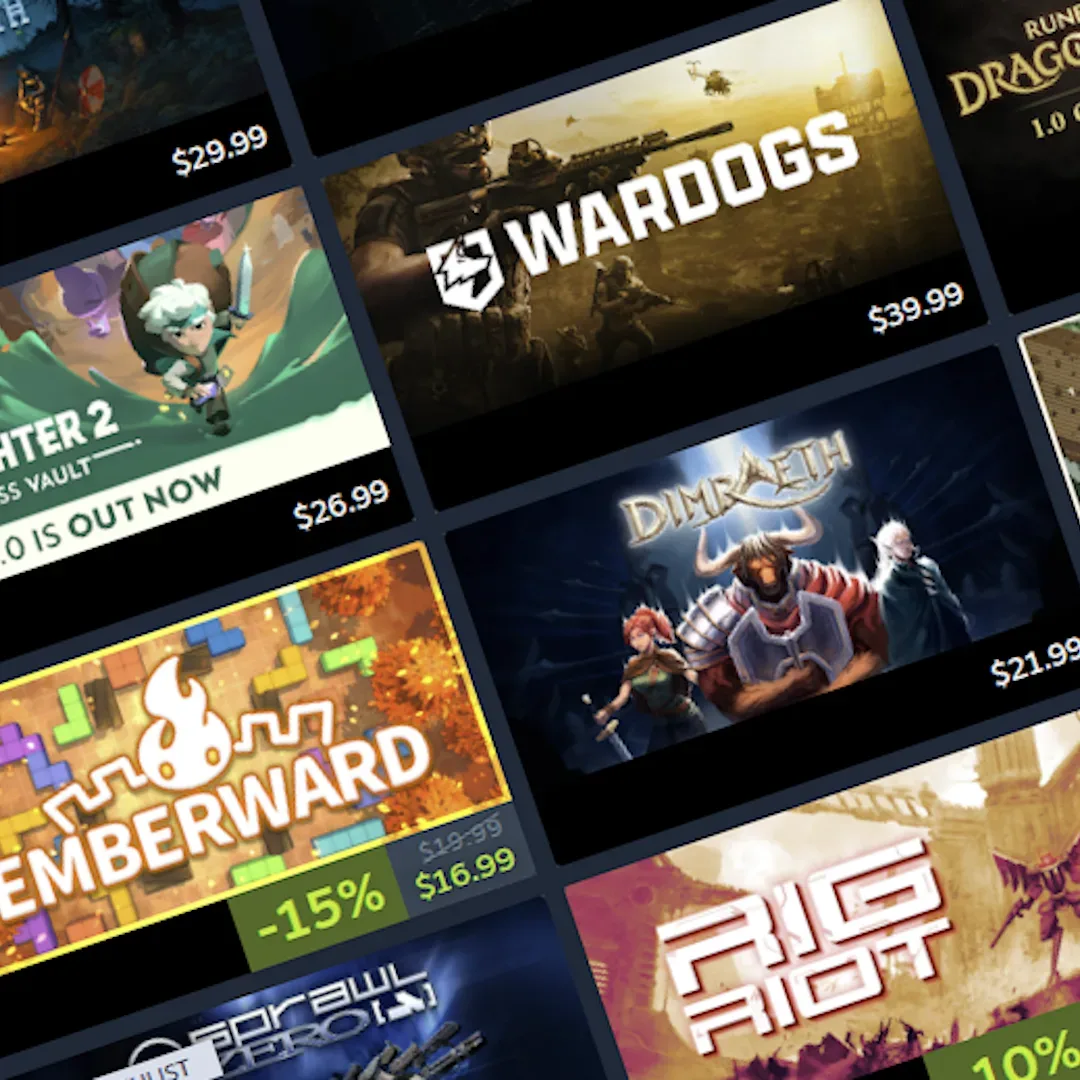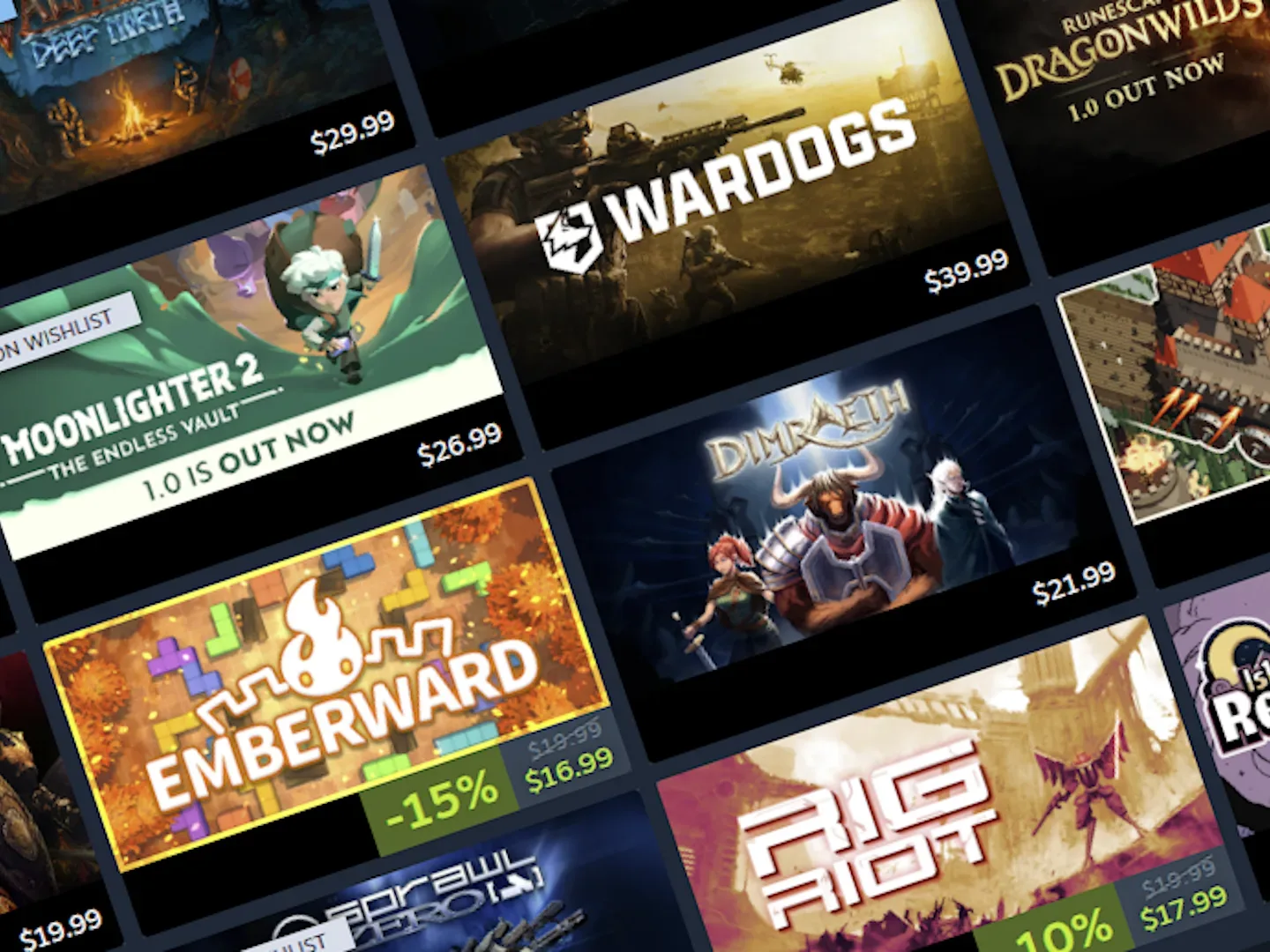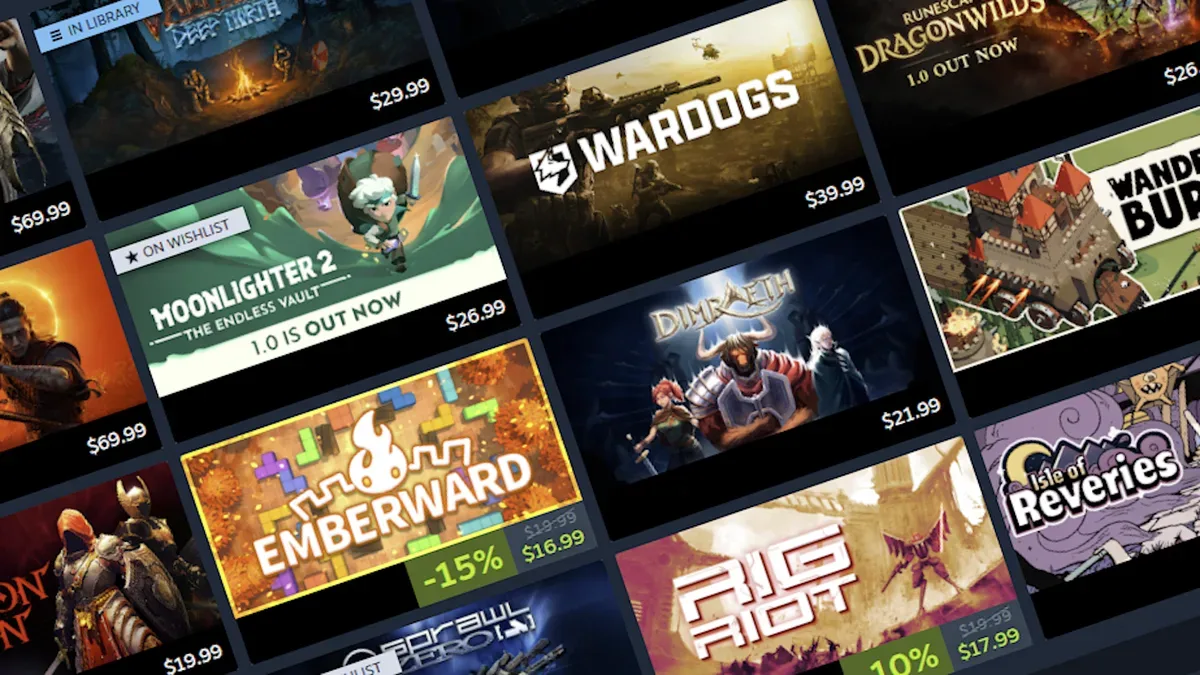
Steam Next Fest is meant to put upcoming games and their demos in front of PC players. But Chet Faliszek, a former Valve developer credited on Half-Life, Portal and Left 4 Dead, believes the event’s scale is creating a much tougher problem for independent teams: being seen at all.
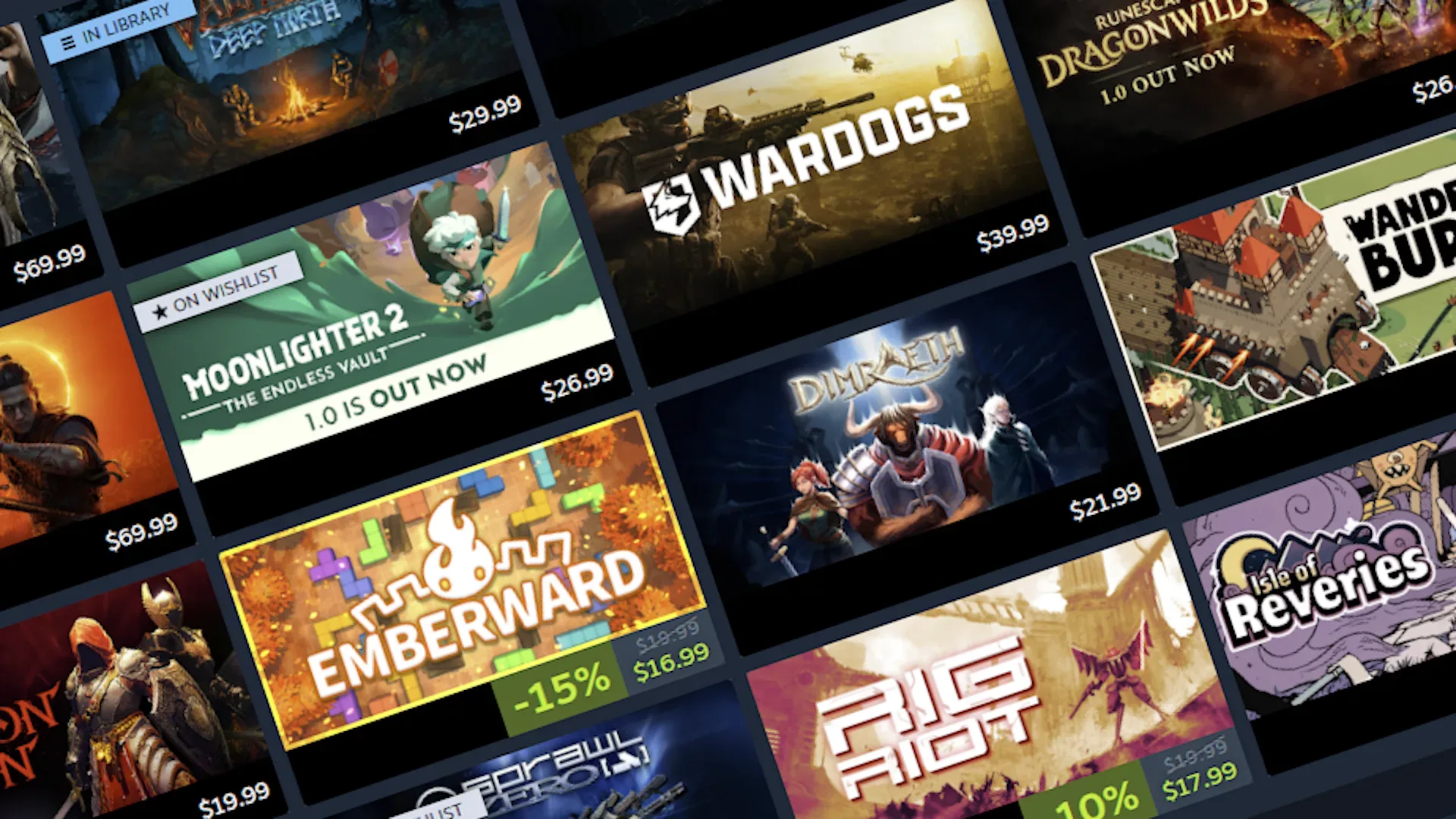
In comments about the latest Next Fest, Faliszek described the showcase as being swamped by “slop and AI crap” alongside an enormous overall volume of releases. His stated figure was more than 8,000 games. The concern is not merely that players have plenty to browse. It is that a showcase once capable of serving as an early public launch moment for a small game may no longer provide meaningful attention to every participant.
That distinction matters. A game can be technically available, have a demo ready, and still fail to reach the people most likely to care about it. In a digital storefront, availability and discoverability are not the same thing. The former means a game has a page; the latter means potential players encounter it, understand what it is, and decide it is worth downloading or following.
The central issue is discovery, not simply choice
Faliszek’s argument is aimed squarely at the indie-development side of the equation. He said that in earlier Next Fests, a developer could use the event as the beginning of a public-relations push: announce a project, build some traction, collect feedback and expand outward from there. The implication is that a centralized event gave less-established teams a relatively clear chance to enter the conversation.
With thousands of games competing simultaneously, that role becomes harder to fulfill. An event can still offer players a giant catalogue of demos, but the practical attention available from press, streamers, communities and individual players is finite. More entries means every entry has more rivals for the same clicks, downloads, wishlists and word-of-mouth.
This is especially consequential for teams without an established audience. Larger or better-known projects may enter an event with followers already waiting for a demo. A newly revealed indie game may be relying on the event itself to create that first wave of awareness. If players cannot find it amid a much larger field, the event may not produce enough early feedback or momentum to help the project move forward.
Faliszek’s formulation is blunt: the real worry is “indies finding players.” It is a useful way to frame the issue because it avoids treating storefront crowding as only a matter of taste. The question is not whether every game deserves equal praise. It is whether original work has a reasonable route to the audiences who might value it.
What “meritocracy” means in this debate
Faliszek contrasted the current situation with an ideal in which the best games gradually rise through the marketplace. He called that a meritocracy. In this context, the term does not mean that every game begins with identical resources or receives an identical number of impressions. It means quality, player enthusiasm and a distinctive design should have a meaningful opportunity to drive discovery over time.
Related coverage includes Chet Faliszek Warns Steam Next Fest's Growing Flood of AI Games Could Hurt Indies.
That is an aspiration rather than a guarantee. Even before the current flood of releases, developers needed communication, community-building and promotional work. But Faliszek’s fear is that the balance is moving further away from game design and toward what he calls a “meritocracy of user acquisition.”
User acquisition is the process of getting people to try a product. In games, that can include building a community before launch, generating coverage, making trailers, reaching creators, encouraging wishlists or otherwise creating a path between a game and prospective players. It is not inherently bad; players cannot support work they never hear about. The concern is what happens when it becomes the decisive advantage, outweighing originality or craftsmanship.
If visibility depends predominantly on a developer arriving with an audience already assembled, then a public showcase becomes less of a discovery tool and more of a megaphone for those who already have one. For a small studio, that can create a circular challenge: it needs players to build momentum, but needs momentum to reach players.
The wider creative stakes are why the concern resonates beyond one event. Industry stories regularly return to the pressure on teams trying to protect a project’s individual voice; for example, one recent report examined efforts to preserve a game’s creative identity. Discovery is a different problem, but the underlying value is similar: distinctive work needs conditions in which it can be made and then recognized.
AI is part of the volume problem, but not the entire explanation
Faliszek specifically pointed to AI-related material in the Next Fest lineup, but he also made clear that the underlying issue is broader than one technology. He connected the problem to cloned or derivative games and to patterns he sees in mobile gaming. That distinction is important because “AI” can easily become a catch-all label that obscures the actual concern.
The criticism here is not a technical definition of what a tool can or cannot do. It is about the marketplace effect of a large number of low-effort, repetitive or opportunistic releases. AI may make it easier to produce certain kinds of content at scale, but a storefront can also be crowded by non-AI copycats, novelty concepts and games designed chiefly to capture attention rather than present a new creative idea.
Faliszek cited the “Needle In A Haystack Simulator” style of clone as an example of how imitation can spread. His point is that PC distribution risks adopting the least appealing incentives associated with the mobile market: identify a successful idea, reproduce its surface features, pull in users, and focus on monetizing that traffic.
That is different from ordinary genre influence. Games have always borrowed structures and conventions from one another. A platformer is not automatically a copy because it has jumping, and a tactical game is not automatically derivative because it uses turns. The anxiety arises when a release is framed as an exploitative imitation—when the recognizable hook is treated less as a starting point for a new idea than as a shortcut to attention.
Likewise, the presence of AI-related work does not, on its own, establish that every such game is low quality. Faliszek’s warning is about aggregation: when the number of releases rises sharply, including releases perceived as cheaply assembled or imitative, the noise around a showcase can make careful work harder to spot.
Why algorithms are not a complete answer
Faliszek suggested that consumers may be less affected because storefront algorithms can sort and personalize recommendations over time. There is truth in the basic idea: recommendation systems can help a player narrow a huge catalogue by genre, popularity, prior interests or activity from people they follow.
Yet algorithms solve a different problem from the one confronting an unknown developer. They can help players process abundance after signals exist. A new game still needs signals to be surfaced: interest, engagement, conversion, community activity or some other evidence that it belongs in front of a particular audience. A project that receives little initial exposure may have less chance to generate those signals in the first place.
This is why a giant event can be simultaneously convenient for shoppers and intimidating for creators. A player who arrives looking for a specific type of game may eventually find useful recommendations. A small developer, however, is trying to ensure the game is among the options that the system and the audience consider at all.
There is also an attention issue that personalization cannot fully erase. Next Fest is a time-limited moment. Developers often hope for concentrated activity around a demo, not merely a slow trickle of discovery later. Feedback gathered during that window can inform development, while public interest can help establish a project’s identity. If a game’s moment is buried, the opportunity cost is real even if it remains available afterward.
Greenlight remains a useful reference point
Faliszek also invoked Greenlight, Steam’s discontinued community-driven program. He did not present it as a simple answer for the present, nor is it available now. Instead, it functions in his comments as a reminder that Steam’s relationship with indie discovery has changed over time.
The value of that reference is not nostalgia for one particular system. It is the recognition that storefront processes shape what kinds of games can get a foothold. When the number of releases rises and the public showcase grows more congested, creators may have to begin their promotional work earlier and work harder before they can use a major event as an amplifier.
Faliszek described this change in practical terms: an announcement can no longer necessarily be the beginning of a campaign. Developers may need a campaign simply to make the announcement register. For a small team, that adds a demanding layer of work on top of making the game itself.
What the warning does—and does not—claim
The comments are a warning about incentives, not proof that PC games have already become identical to mobile games. Steam remains a PC storefront with a vast range of games and audiences, and Faliszek acknowledged that discovery systems can help players navigate its catalogue. Nor do his remarks establish that every one of the more than 8,000 Next Fest games is derivative or uses AI.
His concern is directional. If an event becomes so crowded that original developers cannot reliably reach players without a pre-existing promotional machine, quality alone may become less effective as a route to recognition. If clones and low-effort releases can exploit visibility faster than more considered projects can build an audience, developers may be pushed toward the same behavior.
That is why Faliszek called the shift toward user acquisition the “really, really scary part.” It describes a marketplace where the most important skill is not necessarily making a memorable game, but acquiring enough attention to survive the crowd.
For players, the immediate practical takeaway is simple: browsing beyond the most visible pages, trying unusual demos and sharing genuinely promising games can make a difference at the margin. For developers, the comments underline a harsher reality: participating in a major digital festival may still matter, but participation alone is no longer a reliable discovery plan.
Steam Next Fest’s scale may be a sign of how many people want to make and publish games. Faliszek’s challenge is whether the event can still give innovative work a meaningful path through that abundance—or whether the loudest route to attention will increasingly matter more than the game at the end of it.