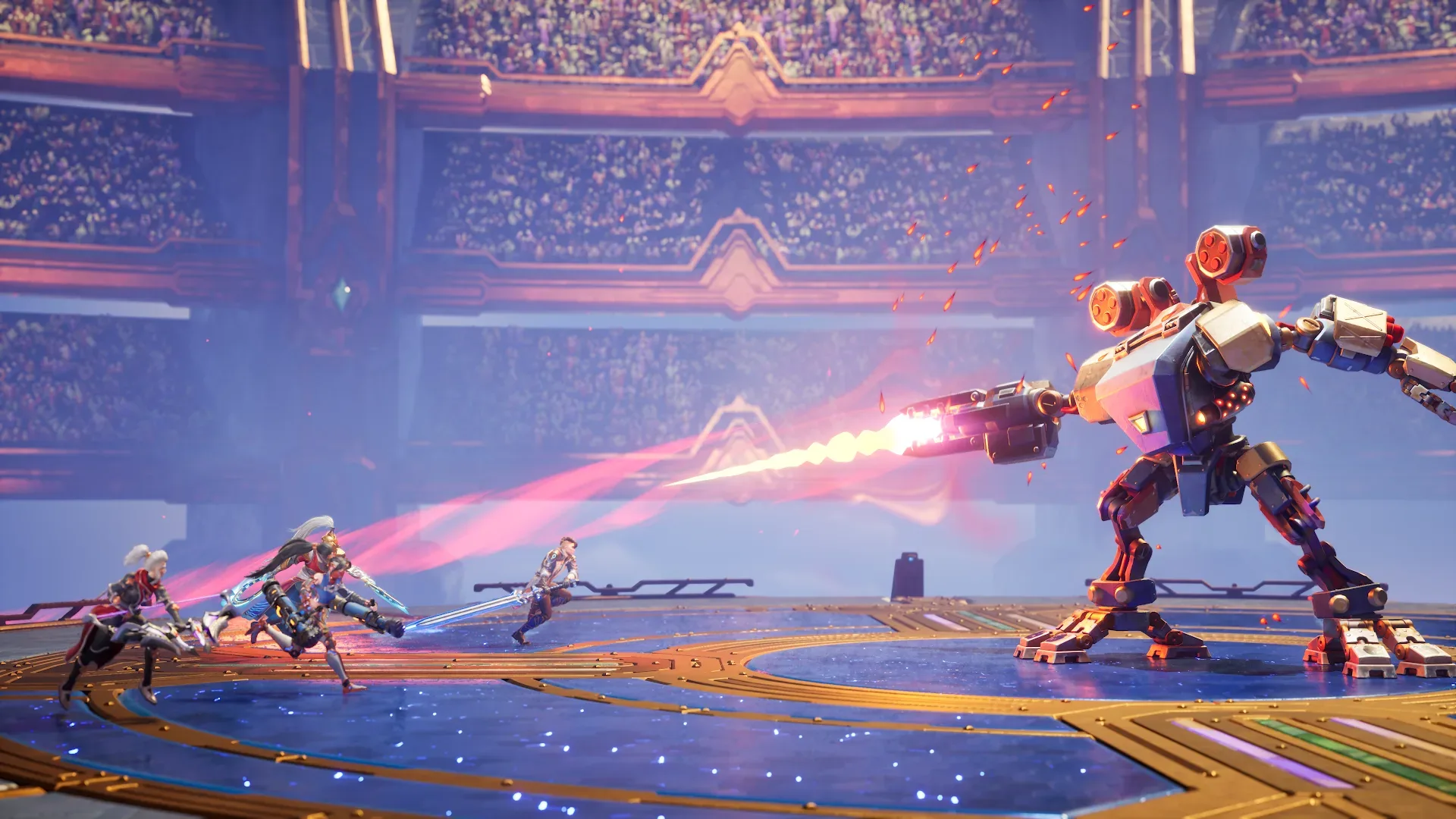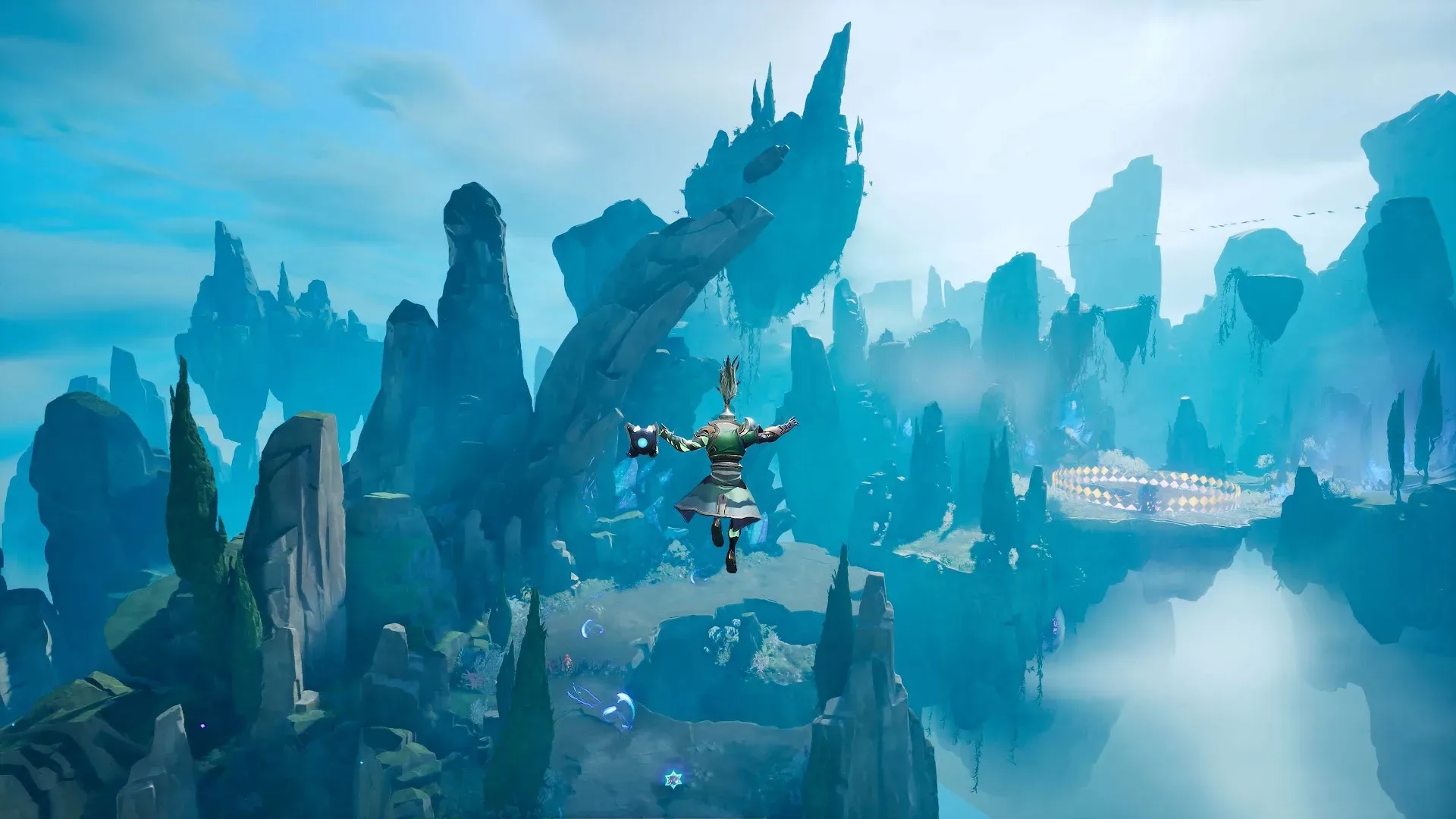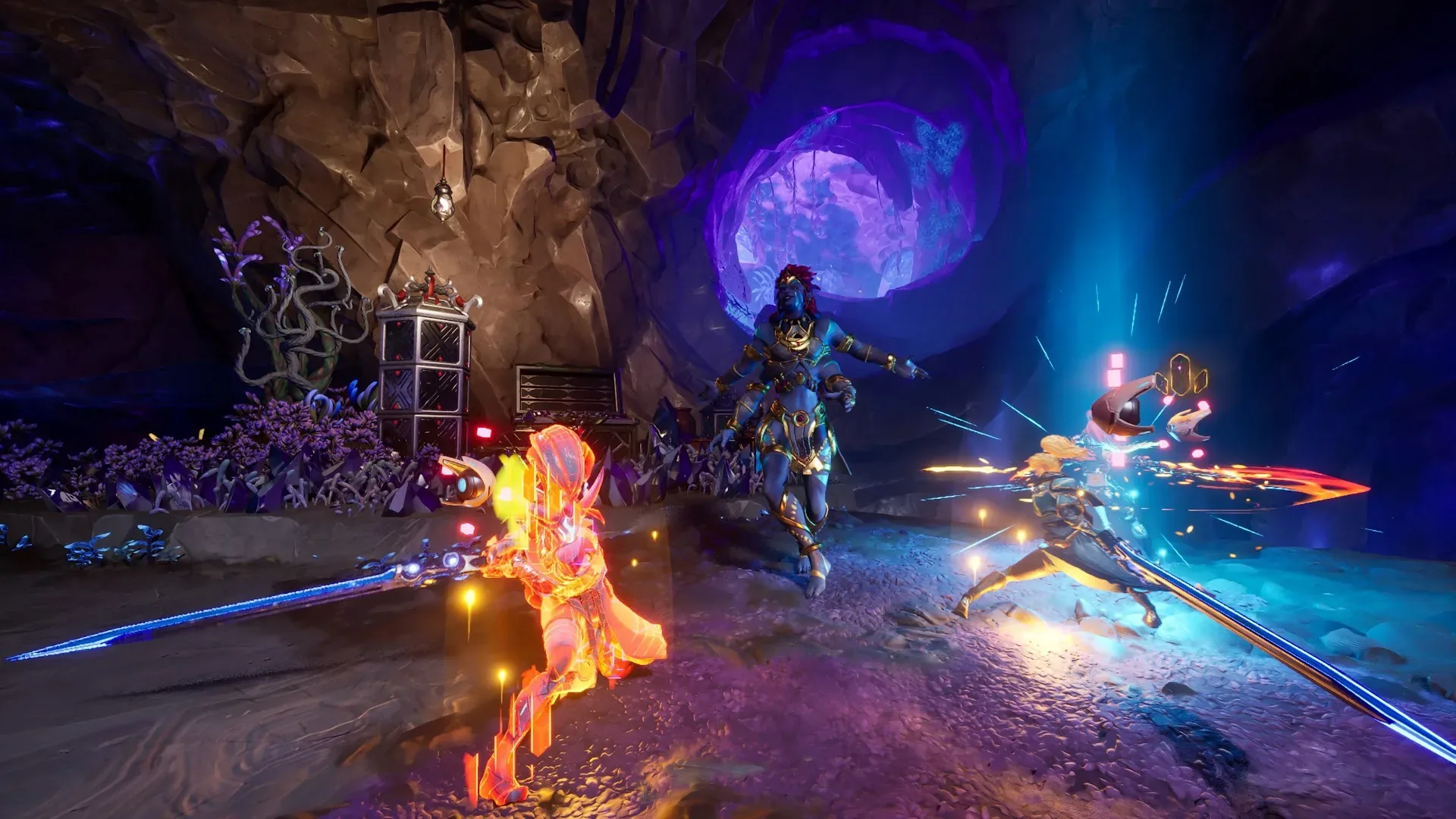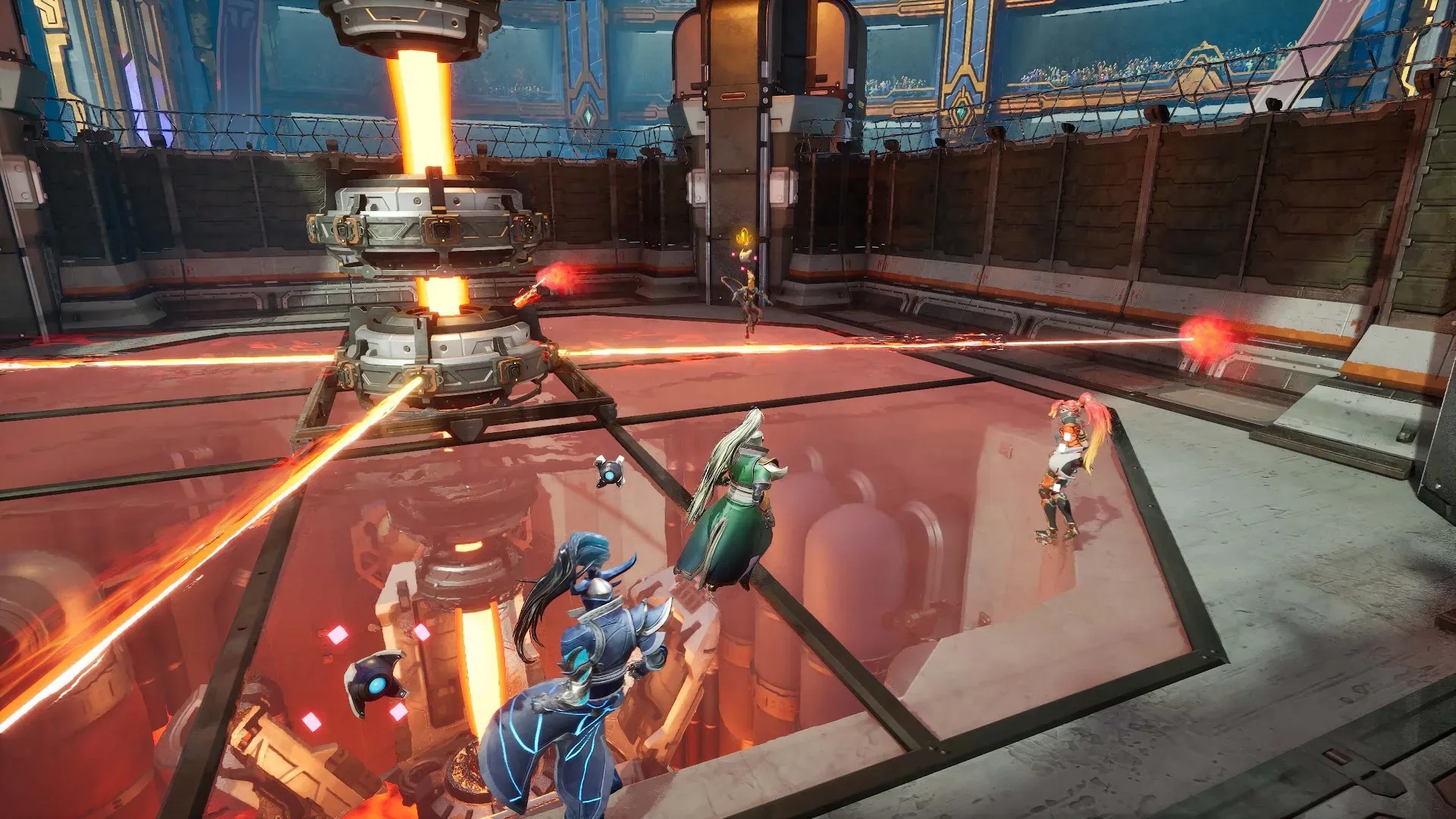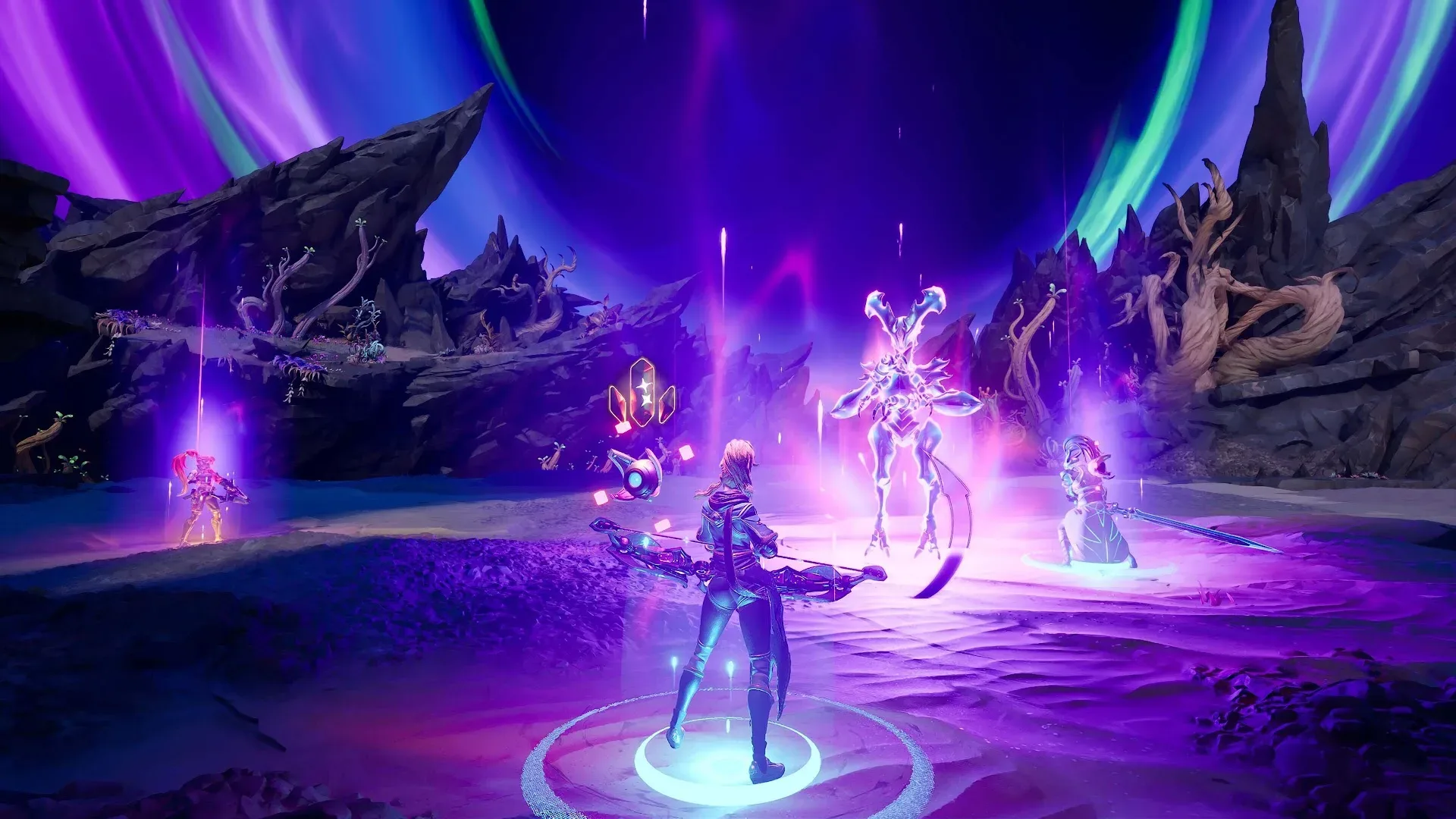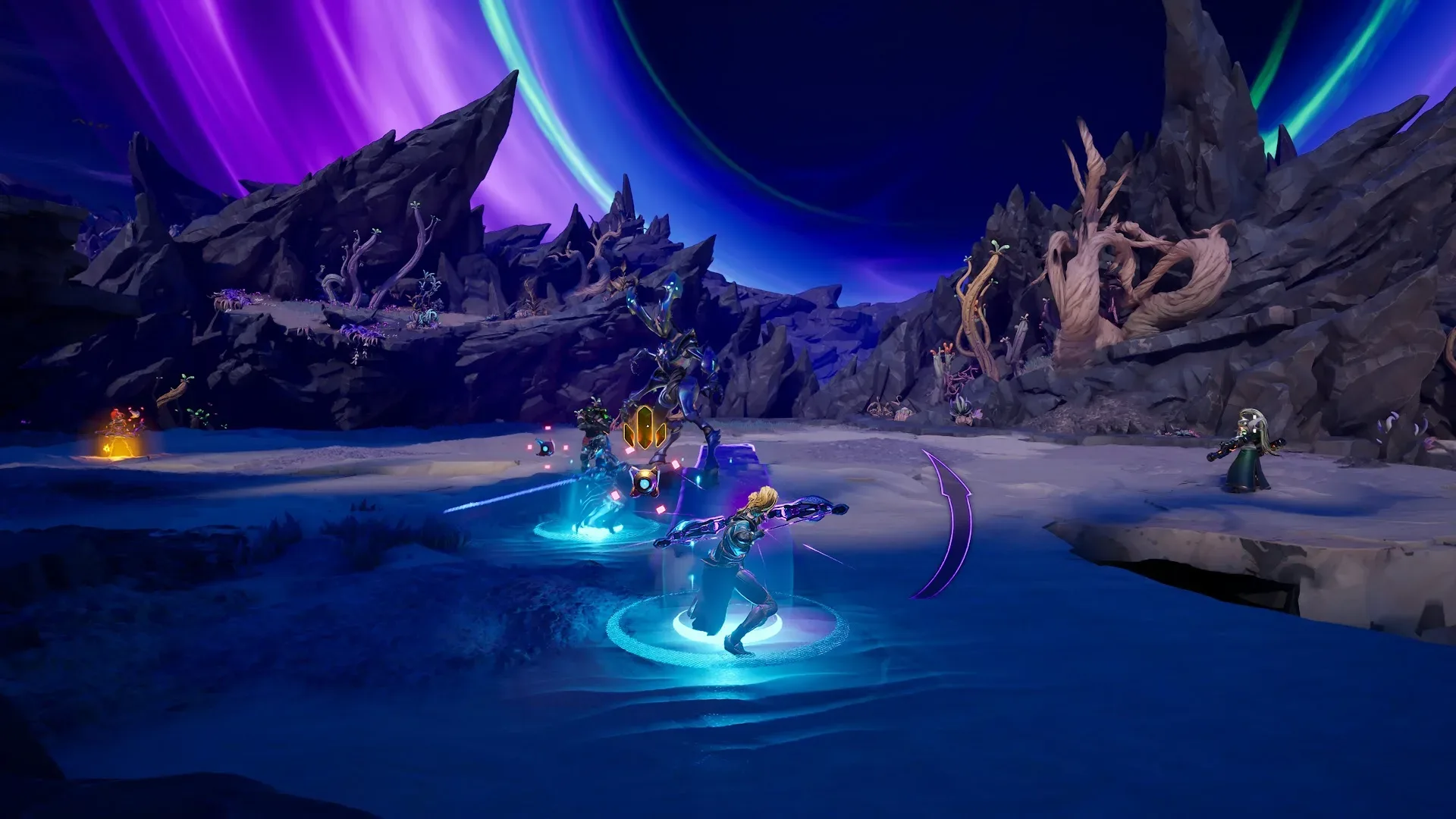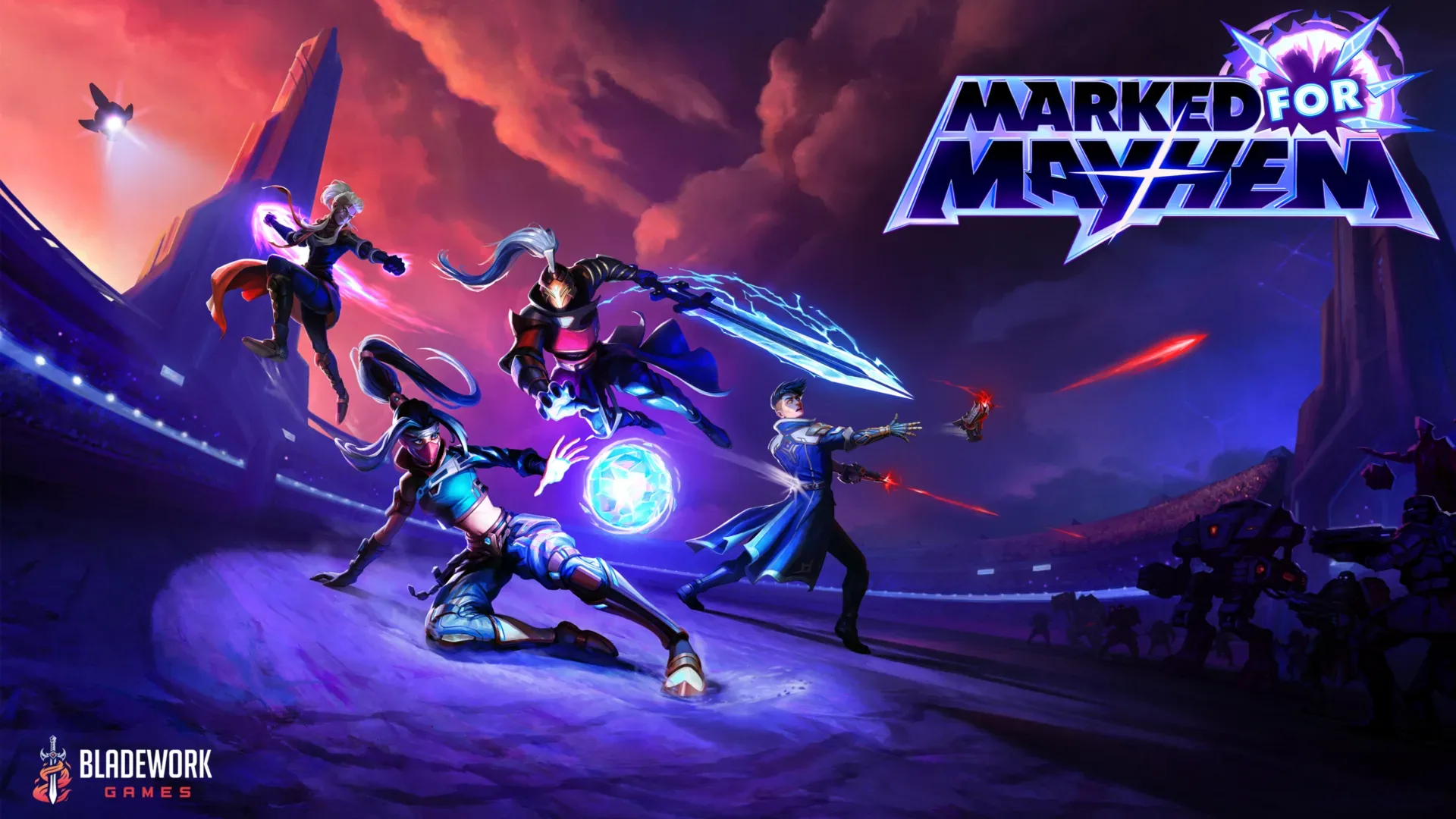
Marked for Mayhem, the competitive multiplayer dungeon runner from Bladework Games, will hold its first public playtest from November 6 through November 8, 2026. The game made its trailer debut during the PC Gaming Show Tokyo Direct, offering an early look at a format built around a deliberately unruly idea: four players are working toward the same objective, but only one can truly own the bragging rights.
That tension is at the center of the pitch. Players take the role of Operators moving through shattered dimensions, tackling combat encounters and chaotic challenges as a team while also chasing medals and leaderboard standing for themselves. Cooperation matters because the group needs to make forward progress; competition matters because individual performance is not merely decorative.
The short test will be an early opportunity for prospective players to see how well that balancing act holds together in motion. Bladework Games describes it as a preview of an online multiplayer experience intended to evolve after launch, with more enemies, biomes, weapons, Disruptors and other content planned as part of that ongoing expansion.
A co-op mission with competitive incentives
Marked for Mayhem is described as a four-player multiplayer action dungeon runner. “Dungeon runner” is a useful shorthand here, but it should not be mistaken for a promise of a particular structure beyond what has been outlined. The confirmed setup is a fast-paced action game in which a squad pushes through dangerous dimensional spaces. The defining wrinkle is that each Operator has reason to help the group and reason to outscore the people beside them.
Medals and leaderboard positioning give the game its competitive backbone. In a conventional cooperative mode, success is generally measured at the team level: the party wins or fails together. Here, completing the mission is still shared, but the individual score race remains active. A player might be pleased that the squad survived an encounter while being considerably less pleased that a teammate picked up the points needed to pass them.
That design can create a more animated form of co-op than a purely collaborative game. It also raises a difficult design challenge. If the personal competition is too mild, the rivalrous premise becomes background flavor. If it is too punishing, players may decide that helping allies is an actively bad strategy. The key question for the public test is not simply whether the combat feels quick, but whether the game gives players enough reason to alternate naturally between teamwork, opportunism and interference.
There is some clear intent in the announced feature set. Operators will be able to sabotage rivals and steal points using Disruptors. Rather than treating player-versus-player friction as an accidental side effect of scoring, Marked for Mayhem makes it an overt part of the toolset.
What Disruptors could mean for a match
Disruptors are the named tools associated with stealing points and disrupting other players. Bladework Games has not detailed individual Disruptor effects, their limitations or how players obtain them, so it would be premature to assume exactly how they function. Still, their stated role tells us something important about the intended match flow: a leaderboard lead is not necessarily safe simply because a player earned it first.
Related coverage includes Marked for Mayhem Sets First Public Playtest for November 6–8.
In practical terms, a disruptive mechanic can change decision-making in several ways. A player who is far ahead may become an obvious target. Someone trailing could have an avenue to recover rather than merely hoping for more enemies or opportunities to appear. Players may also need to consider timing: using an interference tool at the first available moment may be less valuable than saving it for a medal opportunity, a hectic challenge, or a rival’s high-scoring push.
Those possibilities are analysis rather than confirmed system details, but they explain why the mechanic matters. A shared-goal game with direct score theft has to make competition legible. Players need to understand when they lost points, who altered the situation and whether they had reasonable counterplay. If that information is clear, a loss can feel like a narrow escape or a memorable betrayal. If it is unclear, it can feel arbitrary.
The November playtest is likely to be useful precisely because these systems are social systems as much as combat systems. A Disruptor that sounds good in a feature list must work when four people are moving through combat, making rapid decisions and reacting to one another in real time.
Weapons, abilities and modifiers point to on-the-fly builds
Bladework Games also says players can alter their approach during play by mastering iconic weaponry and combining abilities with modifiers. The announcement does not list weapons or explain the available combinations, but the terminology suggests that an Operator’s options will not be limited to one fixed combat role.
An ability is generally an activated action available to a player, while a modifier is an element that changes how another mechanic performs. The latter can affect a tool’s behavior, purpose or tactical use without necessarily being a wholly separate move. Marked for Mayhem has not yet confirmed its exact rules, so players should treat that as broad terminology rather than a finalized explanation of builds.
What has been confirmed is the broader aim: players can customize their approach while matches are underway. That is particularly relevant in a game that combines team progression with individual scoring. One player may want a setup that helps the squad get through an encounter reliably; another may prioritize opportunities to secure medals; a third may look for combinations that make interference more potent. Whether those approaches complement one another or collide should be part of the game’s central personality.
The game supports playing socially with friends as well as matchmaking with other Operators. Those two settings may bring out very different behavior even if the underlying rules are identical. Friends may plan around the competition, trade playful sabotage and build informal rivalries over repeated sessions. Matchmade groups may place a greater premium on clear objectives, readable scoring and systems that discourage a single player from undermining everyone else simply to chase personal standing.
Why a brief public test matters
A public playtest is not the same thing as a launch window, a complete feature list or a guarantee that every shown system will remain unchanged. It is a limited opportunity to gather players into the game before release. For a multiplayer title, that can be especially meaningful because player count, networked interaction, scoring pressure and social behavior are core to the experience rather than optional extras.
The announced test lasts three days, from November 6 to 8. That is a narrow window, so anyone interested should watch the game’s official channels and store pages for participation details. Players are being encouraged to wishlist Marked for Mayhem on Steam and the Epic Games Store, and to join its official Discord for a chance to take part. The announcement does not specify wider access requirements, test times, regional availability or the full selection process.
That uncertainty is worth keeping in mind. A wishlisting prompt and Discord invitation are clear ways to follow the project and potentially pursue entry, but they do not by themselves confirm automatic access. Likewise, the playtest should be viewed as a snapshot of the game’s development rather than a final accounting of its future content.
Bladework Games has said the online experience is expected to grow after launch with additional enemies, biomes, weapons, Disruptors and more. A biome, in this context, generally refers to a distinct environmental setting or gameplay space. More biomes could give the shattered-dimensions premise a broader range of settings, while new enemy and equipment additions could alter how players approach the recurring contest between collective progress and individual glory. Specific post-launch content, timing and scale have not been announced.
The early pitch: help the squad, watch your score
Marked for Mayhem’s appeal will depend on how confidently it turns a familiar multiplayer contradiction into something entertaining: players often want their team to win, but they also want to be the person who made the winning play. By attaching medals and leaderboard standing to a four-player action run, then providing explicit sabotage and point-stealing tools, the game is putting that contradiction front and center instead of smoothing it away.
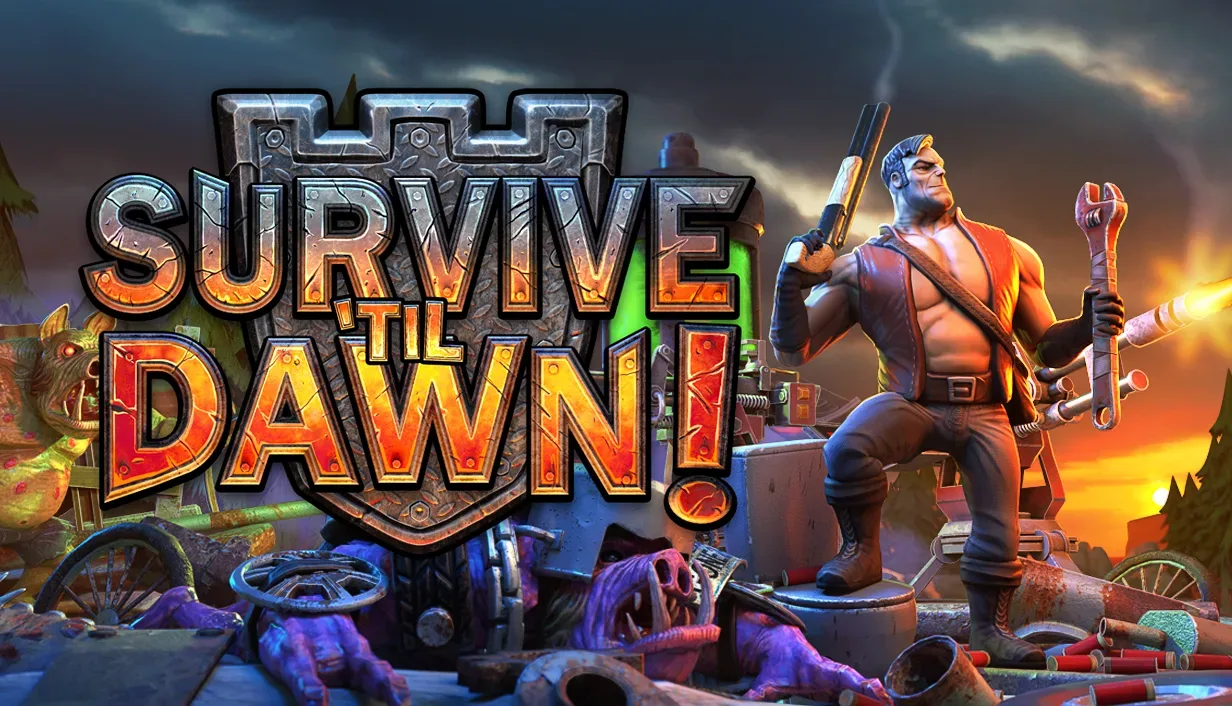
It is a different flavor of multiplayer chaos from straightforward survival-focused co-op. For another upcoming example of four-player-adjacent mayhem built around working together against threats, see Survive ’Til Dawn! and its scrap-built defenses, co-op and mutant pressure. Marked for Mayhem, however, is explicitly asking players to keep one eye on the mission and the other on the person currently sitting above them on the leaderboard.
For now, the major confirmed milestone is the November 6–8 public playtest. It should offer the first broader indication of whether the game’s weapons, ability-and-modifier combinations, medal chase and Disruptor-driven reversals produce the kind of competitive camaraderie its premise promises.