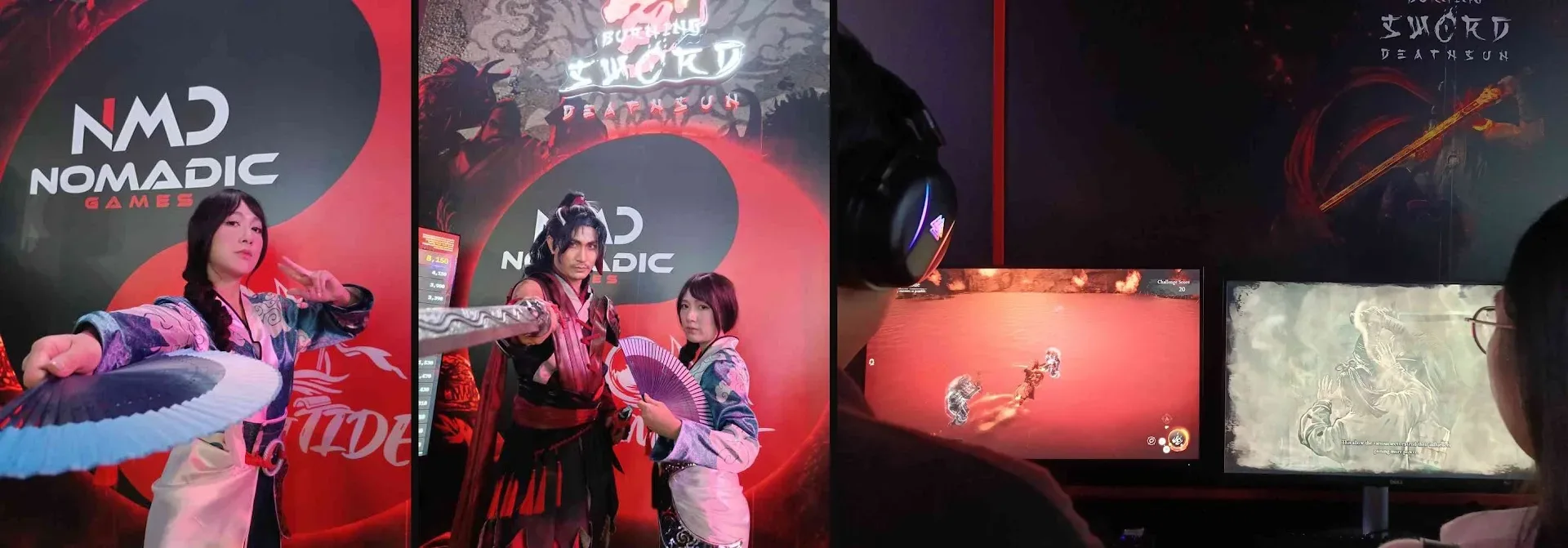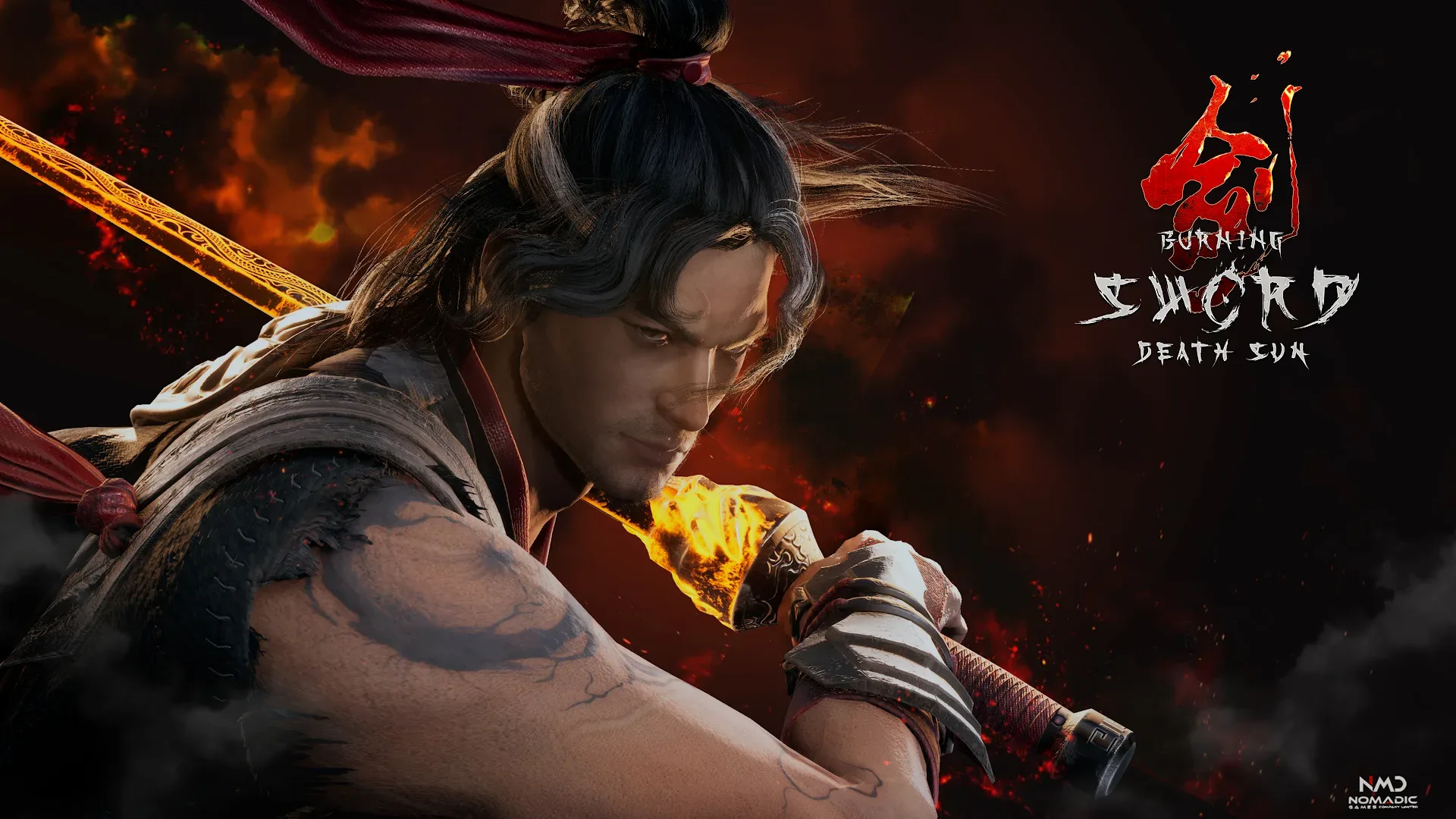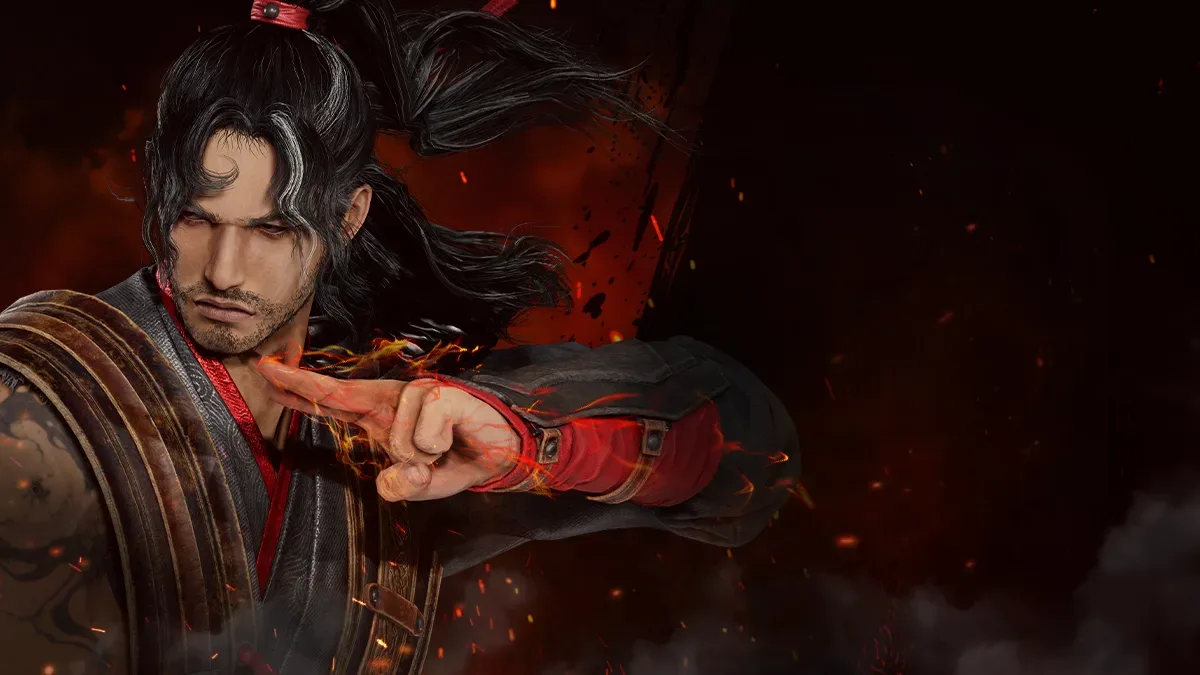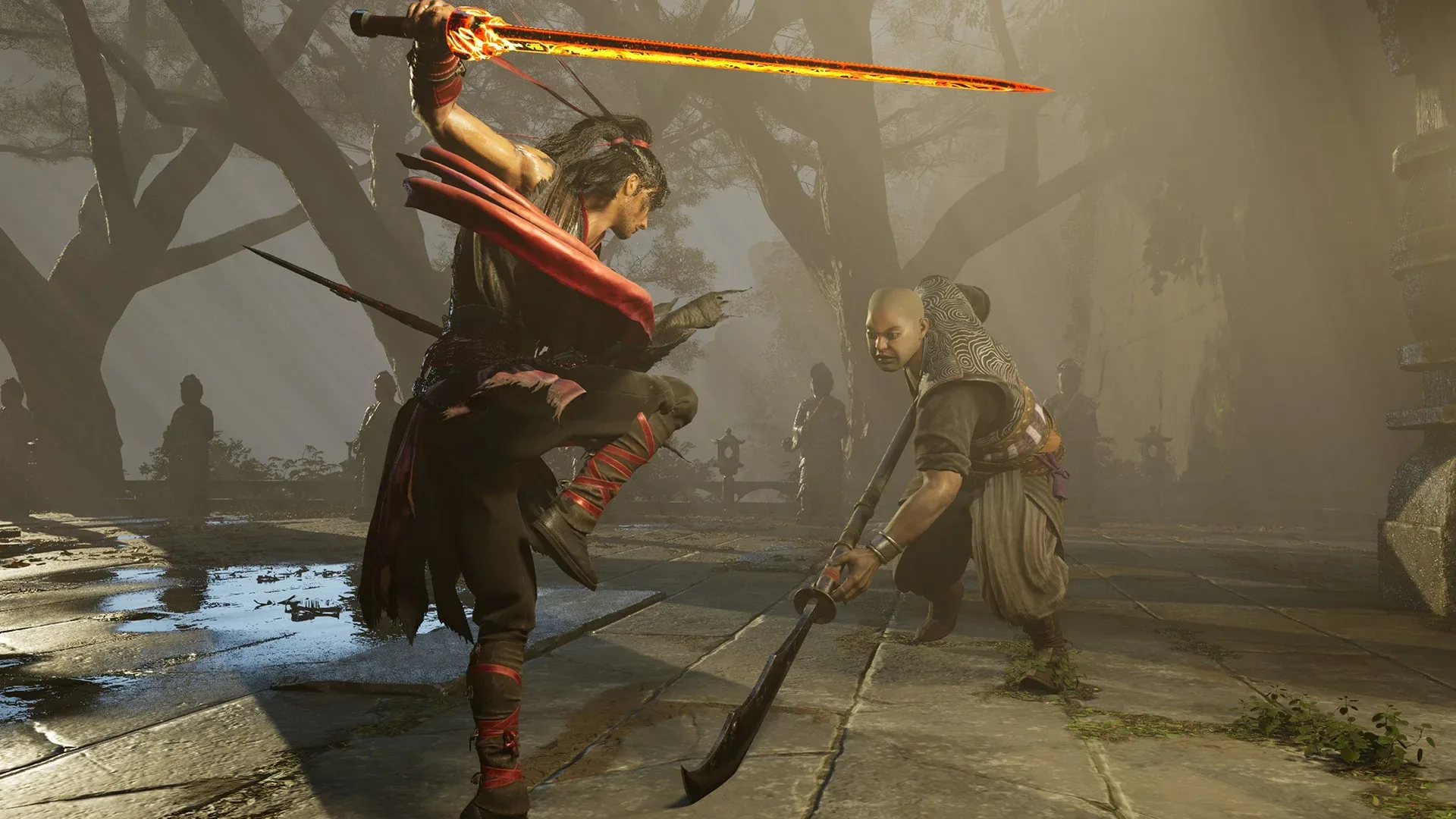
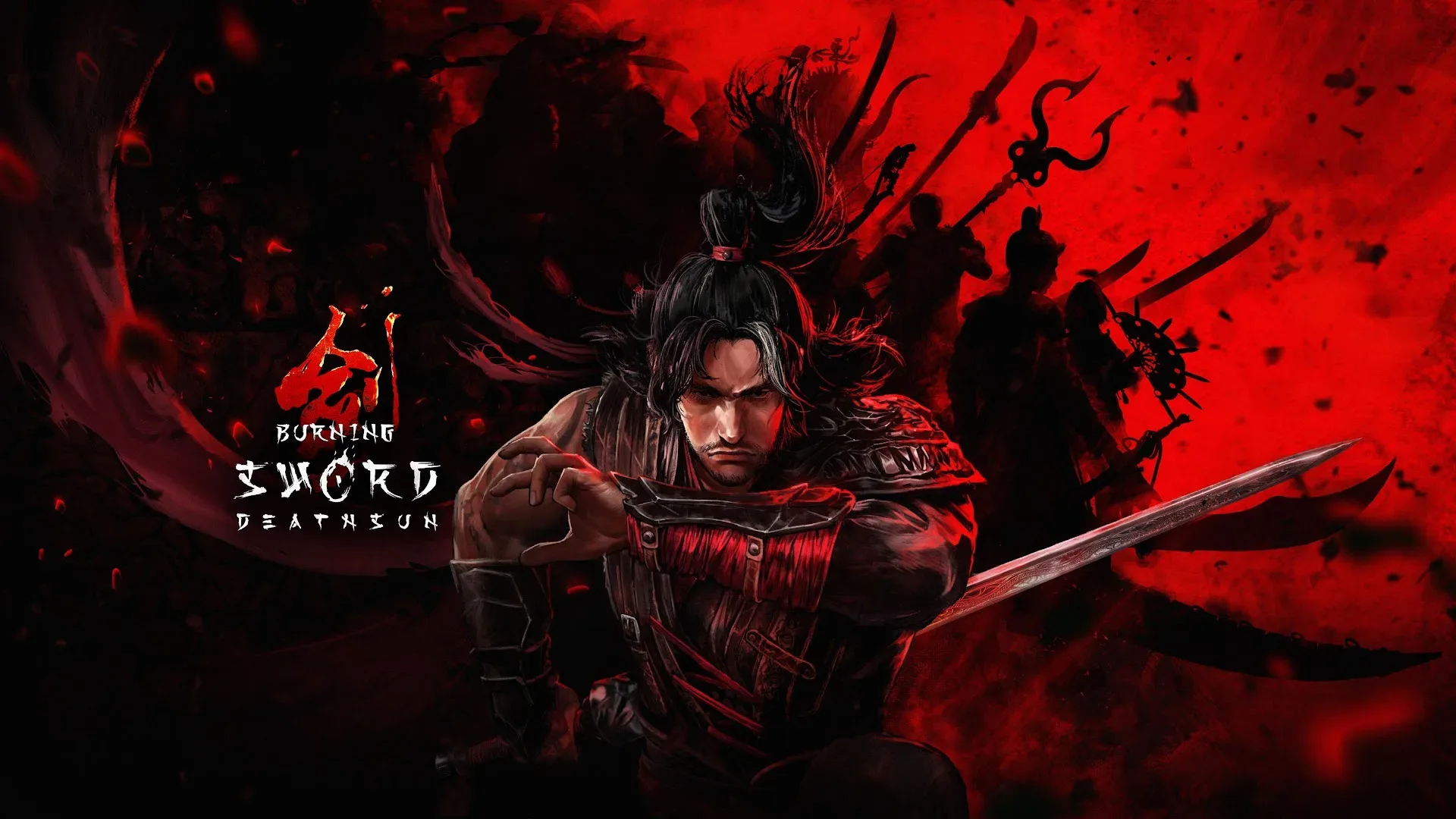
Burning Sword: Death Sun, developed by Nomadic Games and published by Rising Tide, is now available in Steam Early Access for PC. The release arrived roughly a day and a half later than intended while it awaited Steam approval, and the team is marking that disruption with a 10% discount for 10 days. That reduces the listed price to $17.99.
The timing also puts the game’s Early Access arrival alongside the console release of Grand Theft Auto VI, a launch-week collision the studio itself acknowledged. For the broader context around that huge release, see Joking Joystick’s coverage of GTA 6 developers celebrating years of work reaching players. Burning Sword: Death Sun is, however, setting out with a substantially different proposition: a stage-based action game built around handcrafted levels, combat encounters and repeatable score-chasing rather than an open-world structure.
What is playable now
The currently playable protagonist is Zhang Yixian, who is available immediately; no preload is required. The Early Access build contains five handcrafted, linear stages. “Linear” here means the intended route through each level is structured rather than freely open-ended, but the stages are not presented as purely corridor-to-corridor runs. Secrets sit away from the critical path, giving attentive players reasons to look beyond the direct route.
Boss encounters are central to the current package. Nomadic Games lists five bosses and two secret bosses, while also noting “six counting the one that launched today.” That phrasing leaves the precise counting relationship unclear, but the material establishes that both regular boss battles and concealed encounters are part of the Early Access offering. Players looking for every encounter should therefore expect to investigate the stages instead of assuming the mandatory route contains all of the game’s major fights.
The release also includes the game’s complete combat-system foundation. Its named components are:
- Power Gauge
- Ignite
- Quick Shot
- Qi Drain
- Additional skills
The announcement does not set out the detailed inputs, numerical values or exact interactions for those mechanics, so it would be premature to treat the names as a full combat guide. Still, their inclusion matters because it signals that the initial build is intended to provide the core action toolkit, rather than a narrowly limited combat preview waiting for fundamental systems to arrive later.
What those systems suggest—and what remains unknown
Some terminology benefits from a little careful unpacking. A gauge in an action game generally refers to a resource meter that changes during play and is spent or activated for an ability; Burning Sword: Death Sun specifically calls its system the Power Gauge. That label alone does not confirm what fills the meter, what it enables, or whether it is shared with other abilities. Likewise, “Qi” is a term commonly associated with vital energy, but the announcement only confirms the existence of a mechanic named Qi Drain—not its targeting rules or effects.
That distinction is important for prospective Early Access players. A list of mechanics can indicate a game’s combat ambitions, but the quality of an action system depends on how its options connect: timing, risk, enemy behavior, resource management and the usefulness of different attacks. The available information supports the conclusion that Burning Sword has a defined suite of combat ideas; it does not yet support definitive claims about balance, difficulty, control responsiveness or long-term build variety.
Related coverage includes Burning Sword: Death Sun Opens Steam Early Access.
Outside the stages, the Early Access version has a hub for customization. The announcement does not specify whether that customization is cosmetic, mechanical, or both, nor does it describe particular upgrade paths. It is best understood as a central player-facing space for tailoring the experience, with further specifics left unconfirmed.
Arena Mode brings a repeatable score-attack option
Burning Sword: Death Sun also ships with an Arena Mode, described as an endless, arcade-style score attack. In practical terms, score attack is a format focused on repeatedly pursuing better results rather than simply completing a level once. “Endless” indicates that the mode is designed around sustained play rather than a fixed final encounter, while “arcade-style” points to an emphasis on performance and scoring.
For a combat-focused game, this kind of mode can give players somewhere to revisit the action independently of campaign progress. It may be particularly relevant for people who enjoy working on efficiency or mastering a combat loop. But the launch information does not identify leaderboards, scoring categories, rewards, enemy waves or any other Arena-specific rules, so those features should not be presumed.
The Early Access roadmap is a plan, not a finished-content promise
Nomadic Games says further stages, bosses and skills are planned through regular updates and developer logs during Early Access. The intended full game is described as having five chapters and 12 handcrafted stages. It is also planned to include nine named bosses, including Gao Tianqi, plus two secret bosses and numerous elite minibosses.
Those figures are useful for understanding the team’s direction: the finished scope is meant to expand far beyond the five stages now playable. They should nevertheless be read as plans. Early Access is a development and distribution model in which players can buy and play an unfinished game while its creators continue building it. Planned content describes the target, not a guarantee that every element is already present or that development will proceed on a particular timetable.
The promise of regular updates and devlogs is meaningful chiefly as a commitment to communicate and add material over time. No schedule, exact update cadence, release date for the completed version, or individual feature order has been provided. Anyone considering a purchase should assess the game primarily on the five stages, existing combat suite, hub and Arena Mode available at launch, while viewing future chapters and bosses as prospective additions.
What the launch discount does—and does not—change
For 10 days, the 10% launch reduction puts Burning Sword: Death Sun at $17.99. The discount was introduced in response to the Steam approval delay, rather than being described as a permanent price change. The announcement does not state the standard price after the promotion, regional pricing, or whether later sales are planned.
There is a useful consumer distinction here. A launch discount changes the immediate entry price, but it does not alter the title’s Early Access status. Players who value being part of an evolving game, exploring secrets early, and learning a combat system as new skills and opponents are added may see the current build differently from those who prefer to wait until all five planned chapters and 12 stages are complete.
A focused opening for a growing action game
Burning Sword: Death Sun begins its Early Access run with a comparatively concrete base: five handcrafted stages, off-route secrets, a named protagonist, a suite of combat mechanics, boss content, customization and a separate endless Arena Mode. That is a clearer starting point than an announcement built solely around a future roadmap.
At the same time, the roadmap is a major part of the proposition. The planned total of 12 stages and five chapters means the current release represents an early portion of the intended game, not the complete adventure. The immediate decision for PC players is therefore straightforward: jump in now for the available action systems and score-attack mode at the discounted $17.99 price, or monitor the promised updates and devlogs as the stage and boss roster grows.