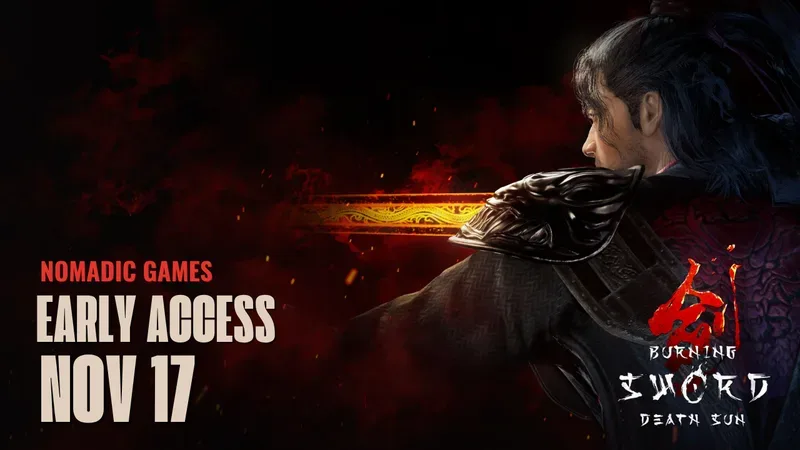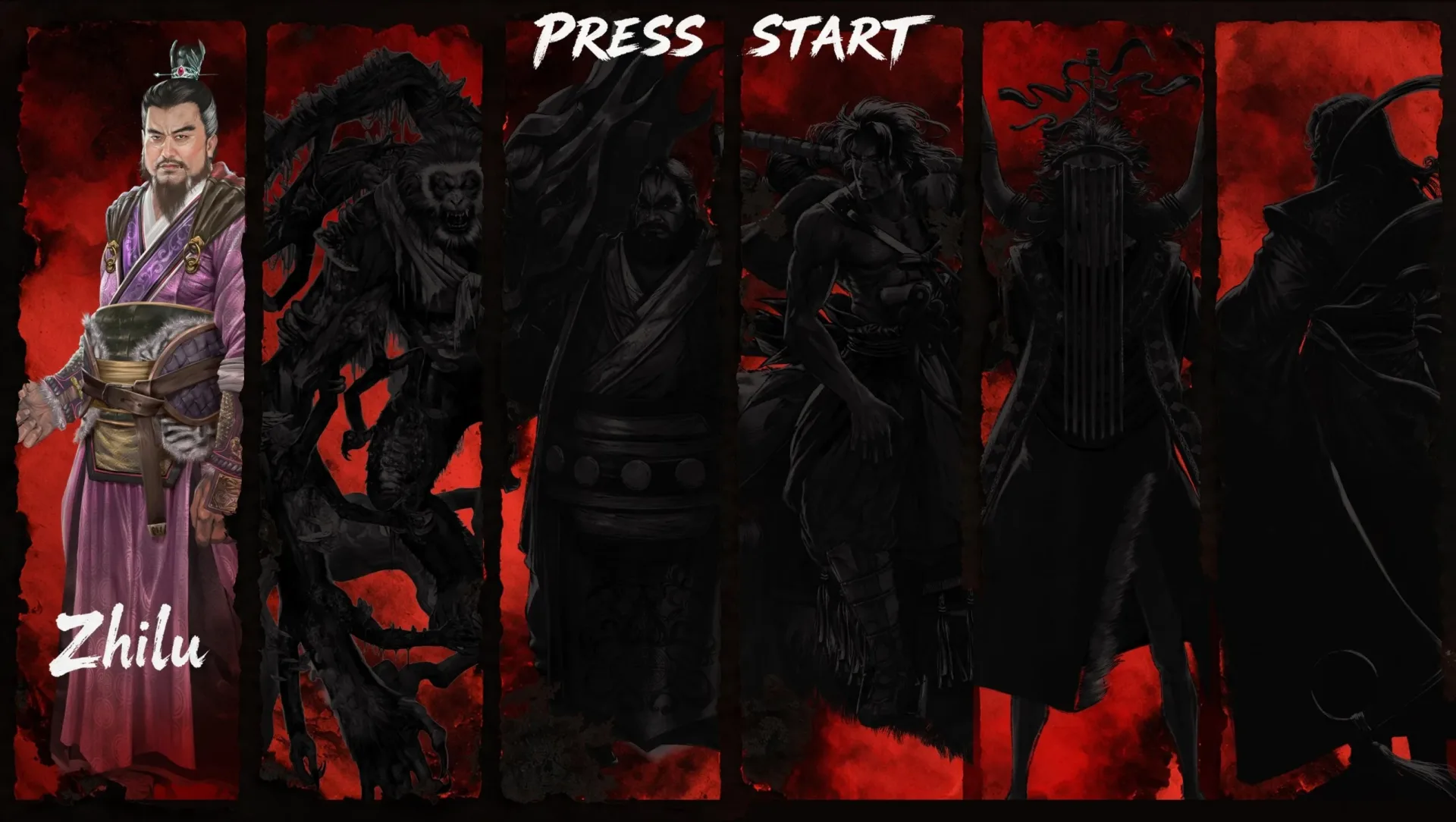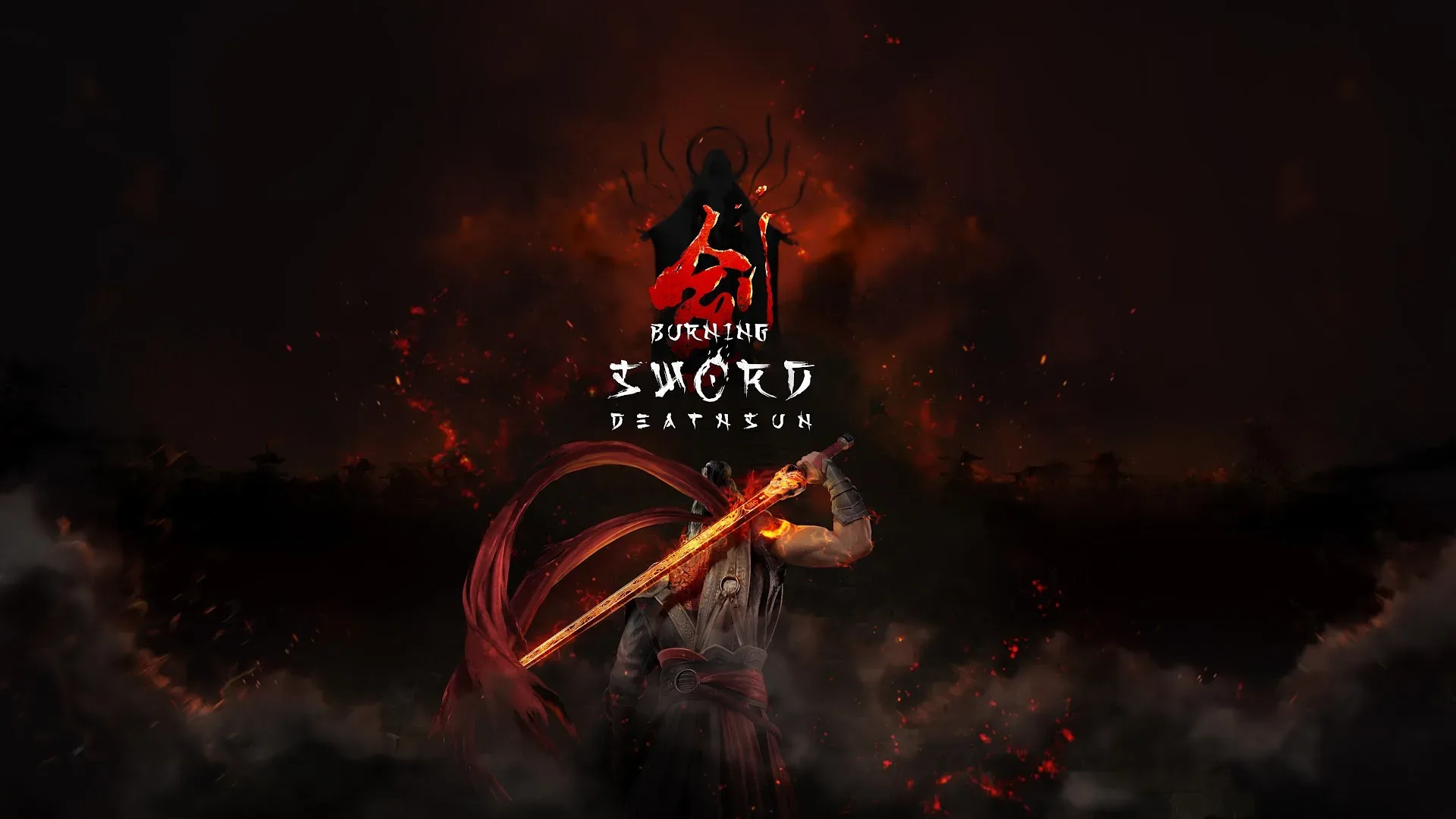
Burning Sword: Death Sun is scheduled to enter Steam Early Access on November 17, 2026. The action game begins its public development run with five handcrafted stages, five main bosses and two secret bosses, while its free demo remains available through launch.
The central promise is deliberately combat-first: stages are linear and built by hand rather than assembled through procedural generation, and the announced systems point toward an action game where routing, resource management and repeated attempts matter as much as raw reflexes. The initial Early Access build will also include Arena Mode, an endless, score-focused combat option for players who want to drill the fighting systems outside the campaign structure.
Nomadic Games is developing Burning Sword: Death Sun, with Rising Tide Publishing handling publishing. The planned completed version is substantially larger than the opening Early Access package: five chapters, 12 handcrafted stages, nine named bosses including antagonist Gao Tianqi, two secret bosses and additional elite minibosses. New stages, bosses and worldbuilding material are planned at roughly eight-week intervals during Early Access, although the detailed roadmap will arrive after the Early Access build goes live.
A revenge story designed to leave room for the fighting
Players control Zhang Yixian, leader of the Crimson Dust Demon Sect. He has returned from the edge of death with one objective: pursuing Gao Tianqi, master of the Death Sun poison. That setup establishes a martial-arts revenge framework, but the narrative is intended to be conveyed largely through subtext rather than frequent interruptions to the action.
That distinction is useful for setting expectations. A subtext-driven story is one that lets implication, environments, character encounters and the consequences of conflict carry portions of its meaning. Here, the stated design priority remains the fights themselves. The story gives those confrontations stakes, while the game’s structure appears intended to keep players moving through combat rather than pausing often for exposition.
The initial five stages should therefore be considered an opening slice of an in-progress campaign, not the announced final chapter count. The longer-term plan includes the showdown path toward Gao Tianqi, but players should not assume every planned storyline or boss will be present at the start of Early Access.
The Burning Sword is the core combat loop
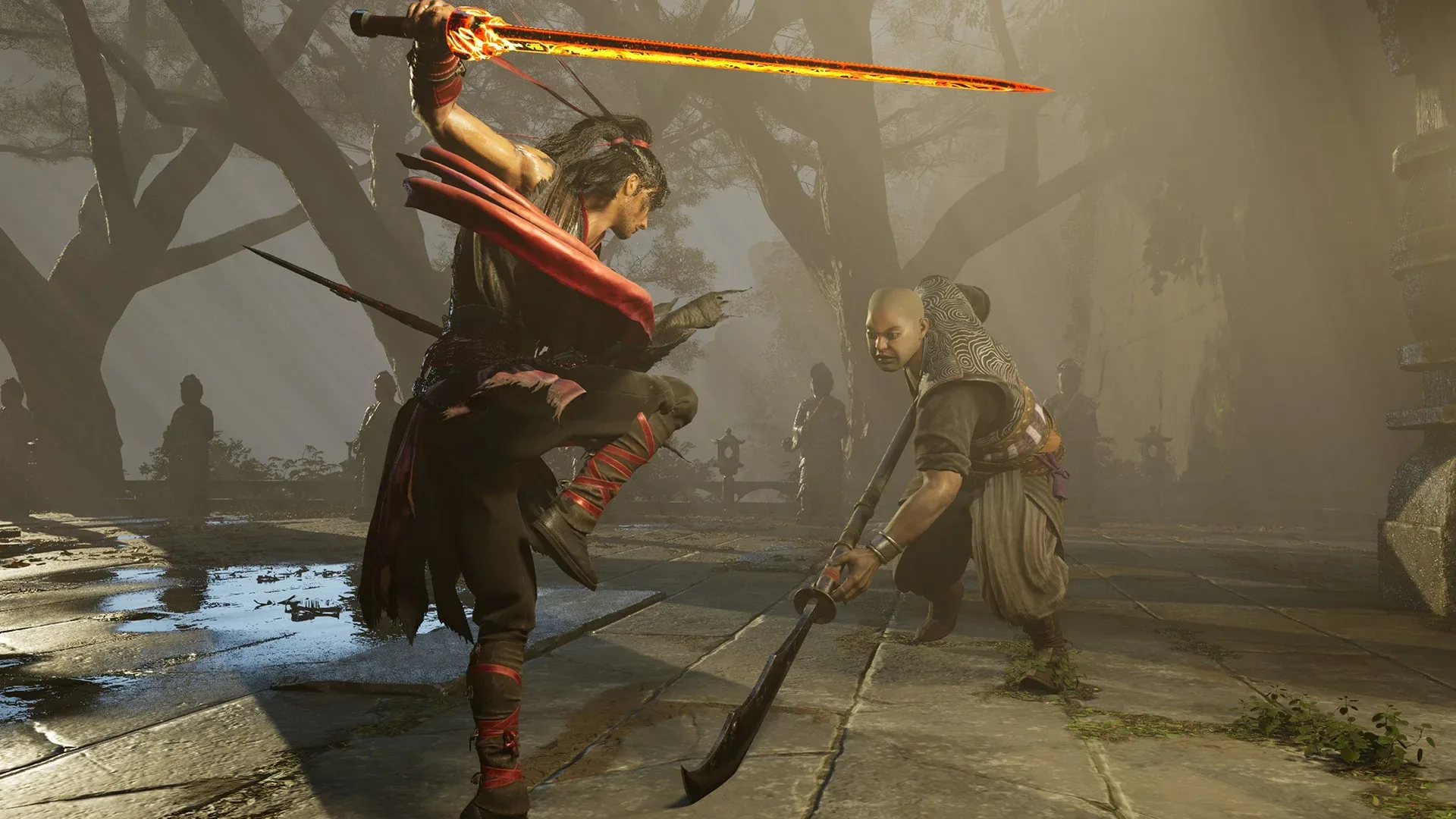
The game’s namesake weapon anchors its major risk-and-reward mechanic. Landing hits fills a Power Gauge; once that gauge is filled, Zhang can Ignite the Burning Sword. In simple terms, the sequence rewards sustained offensive success. Players first need to connect attacks, then decide how and when the resulting powered-up state fits into the encounter in front of them.
The developer’s stated aim is the familiar but compelling action-game breakthrough: a fight that initially feels impossible becomes manageable once the player understands its demands and improves. That goal puts emphasis on learning, rather than treating victory as something delivered only by accumulating stats. The exact numerical effects of Ignite, its duration and how quickly the Power Gauge fills have not been detailed, so those specifics will need to wait for the playable build.
Related coverage includes Burning Sword: Death Sun Reaches Steam Early Access November 17.
What is clear is that the Burning Sword is not the sole tool. The combat kit pairs close-range swordplay with several systems that can alter spacing, survival and combo construction.
Quick Shot: ranged pressure with limited types of ammunition
Quick Shot is a ranged attack with three ammunition types. A ranged option can serve several purposes in an action game: it can pressure an opponent outside sword range, capitalize on an opening after creating distance, or provide a safer answer to a particular threat. The presence of three ammo types suggests that players will have choices beyond a single emergency projectile, though the individual effects and availability of those ammunition types have not been specified.
For practical purposes, it is best not to presume Quick Shot will replace careful melee play. The announced design repeatedly centers on sword combat, bosses and skill interaction. Quick Shot instead looks positioned as one piece of a broader kit, especially for players learning enemy spacing and patterns.
Qi Drain: extracting a resource from marked enemies
Qi Drain allows Zhang to extract Qi from marked enemies. “Qi” is commonly used as a term for vital energy in martial-arts and fantasy contexts; here, it is a named game resource tied to a specific condition. An enemy must be marked before the drain can occur, turning the mechanic into a sequence rather than a button that can simply be used at any time.
The announcement does not define what Qi ultimately powers, how enemies become marked, or the exact constraints on draining it. Still, the basic structure indicates another layer of combat planning: identify a valid target, create the opportunity to perform the drain, then put the gained resource to work within the game’s systems. Players interested in mastery will likely want to understand when the setup is safe and whether a boss encounter changes the usual risk calculation.
Switching skills during combos could make expression a key focus
Zhang can equip three skills and switch among them mid-combo. That is one of the most important details in the announced combat design because it suggests that loadout choices will not be locked to the start or end of a single attack string. Instead, a player may be able to transition from one equipped skill to another while maintaining offensive flow.
A combo, in this context, is a sequence of attacks chained together without giving the opponent enough time to recover. Mid-combo skill switching potentially adds flexibility to those sequences: one skill might begin pressure, another might extend it, and a third might solve a positional problem. The specific skill list, inputs and timing windows have not yet been revealed, so it would be premature to declare how deep the system will be. But the ability itself is a concrete signal that experimentation with skill sets is meant to be part of play.
Bosses will also drive skill branches. A branching skill system generally means advancement can diverge into different paths rather than proceeding along one universal line. The announcement does not explain whether choices will be permanent, whether every branch can be obtained, or precisely how boss victories unlock them. It does establish that bosses are more than chapter-ending obstacles: their defeats connect to character growth and build development.
Charms, secrets and replaying hand-built stages
Every Early Access stage is hand-built and linear, with secrets, upgrades and replay value. “Linear” here means the stages follow an authored progression rather than randomizing their layouts from run to run. That should allow players to learn fixed routes, remember where unexplored paths sit and deliberately revisit areas for missed discoveries.
Handcrafted does not mean empty or one-note. The announced secret bosses and stage secrets indicate that the critical path will not be the whole package. This is also where Charms enter the picture. Charms are passive effects found in stages, and players can retain a Charm after picking that same one up three times.
A passive effect is an ability or bonus that applies without needing its own activation during combat. The three-pickup retention rule is particularly notable because it creates a long-term collection target within the stages themselves. Finding a Charm once may help on the current run, while finding it repeatedly appears to turn it into a lasting part of the player’s toolkit. The exact kinds of bonuses, how many Charms exist and whether repeats are tied to fixed locations have not been disclosed.
This structure makes replayability more concrete than a general promise. Fixed stages can support practice and exploration; secrets can reward attention; upgrades may strengthen future attempts; and repeated Charm acquisition has an explicitly persistent payoff. None of that guarantees how extensive each layer will be, but it provides clear reasons to revisit content besides simply chasing a better clear time.
Revive creates a meaningful survival trade-off
Burning Sword: Death Sun will include an unlockable Revive, but using it costs one equipped skill. That is not framed as a free extra life. Instead, it is a choice between immediate survival and retaining access to part of Zhang’s combat kit.
The consequence is easy to understand even without the remaining implementation details. A player who is revived may stay in the fight, but must continue with fewer equipped options. Since the game allows three skills and switching among them during combos, surrendering one could affect a preferred sequence, a defensive answer or the overall feel of a chosen build. This is the kind of system that can make a near-defeat more dramatic without ending all momentum immediately.
It also reinforces the broader theme of adaptation. If a player spends the Revive, the challenge does not simply reset to its earlier state; the player must adjust to a changed set of resources. Whether the lost skill can be selected by the player and how restoration works have not been specified.
Arena Mode is the score-chasing alternative
Alongside the campaign content, Arena Mode is described as endless arcade-style score combat. The key word is endless: rather than presenting a known stage endpoint, this mode is built around lasting as long as possible and pursuing a score. It offers a natural place to practice combat systems, test skill combinations and chase repeat performance without tying every attempt to campaign progression.
Score modes often reward consistency, efficient enemy handling and avoiding costly mistakes, but the scoring rules for Arena Mode have not been announced. There is no confirmed leaderboard information, reward structure or explanation of how the mode interacts with the campaign. Players should view it as a separate announced combat activity, not assume competitive online features that have not been detailed.
What the Early Access schedule means for players
The starting package is defined: five stages, five main bosses, two secret bosses, the outlined combat systems and Arena Mode. The remaining planned content is expected to arrive over time, with updates roughly every eight weeks adding stages, bosses and worldbuilding material alongside continuing gameplay refinements.
“Approximately” matters. This is a plan, not a fixed guarantee of exact update dates or exact content quantities per update. The roadmap is also not yet available, so players looking for a precise order of chapters or boss additions will need to wait until it is posted after the Early Access launch.
For anyone deciding whether to try the game at launch, the existing demo is the clearest currently available route to its basic feel before Early Access begins. Players tracking other incoming Steam releases can also see another upcoming PC game arriving with a free demo.
Burning Sword: Death Sun enters Early Access with an unusually specific combat identity: build power through successful hits, ignite the central weapon, manage Qi extraction, shift between equipped skills in a combo and weigh a costly revival against a reduced toolset. The bigger question is how those systems feel together across its bosses and secrets. The November 17 launch is the first opportunity for the wider Steam audience to find out.