Valor Mortis has a setting built to carry a much stranger game than the one it finally delivers. A dead soldier wakes amid the wreckage of Napoleon’s war, hears the Emperor’s voice in his mind, and moves through an 18th-century France overrun by reanimated soldiers, cursed civilians, and worse. It is a strong launch point: military ruin, supernatural experiments, political authority made intimate and uncanny. The game’s most reliable success is not in explaining that premise, however. It is in turning the resulting nightmare into a demanding first-person combat game where a blade, a firearm, a well-timed parry, and a psychic power all need to work together.
That makes Valor Mortis a compelling, if uneven, fit for players who enjoy repeated attempts, careful exploration, and mastering an expanding toolkit. Its systems eventually create the satisfying rhythm a Soulslike needs: advance with caution, lose ground, learn an encounter, make better use of your resources, and push a little further toward the next lantern. Yet the road to that rhythm is bumpier than it should be. The opening half can feel less like a stern lesson and more like a balance problem, with little room to understand an enemy’s attack before a fatal hit ends the attempt.
A battlefield built for pressure
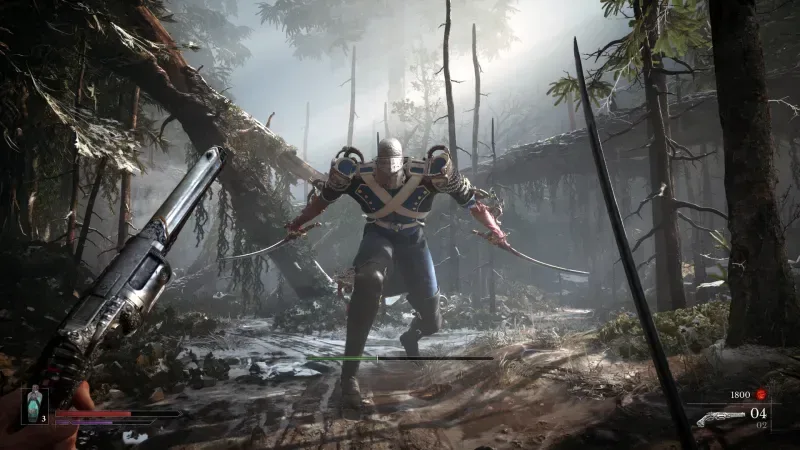
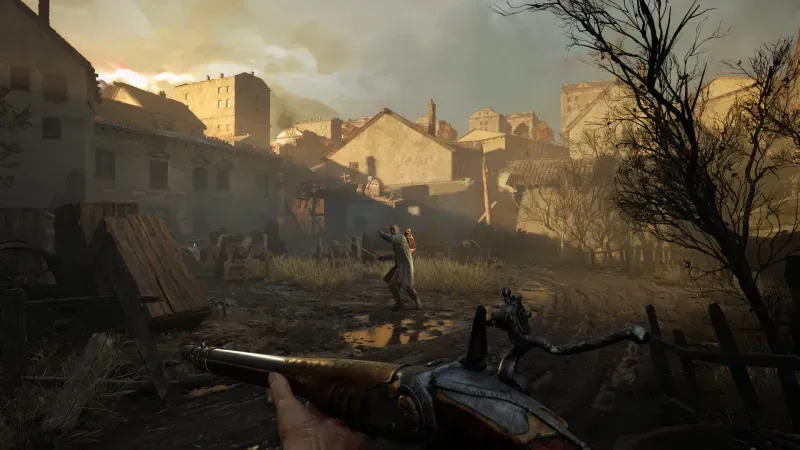
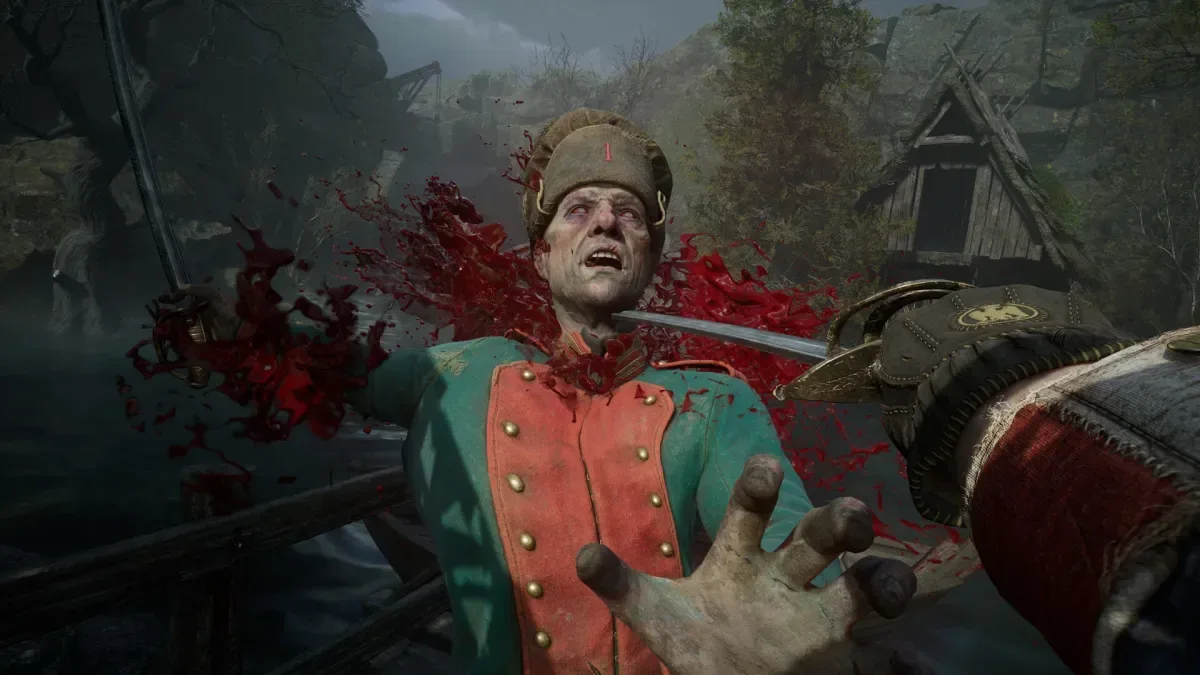
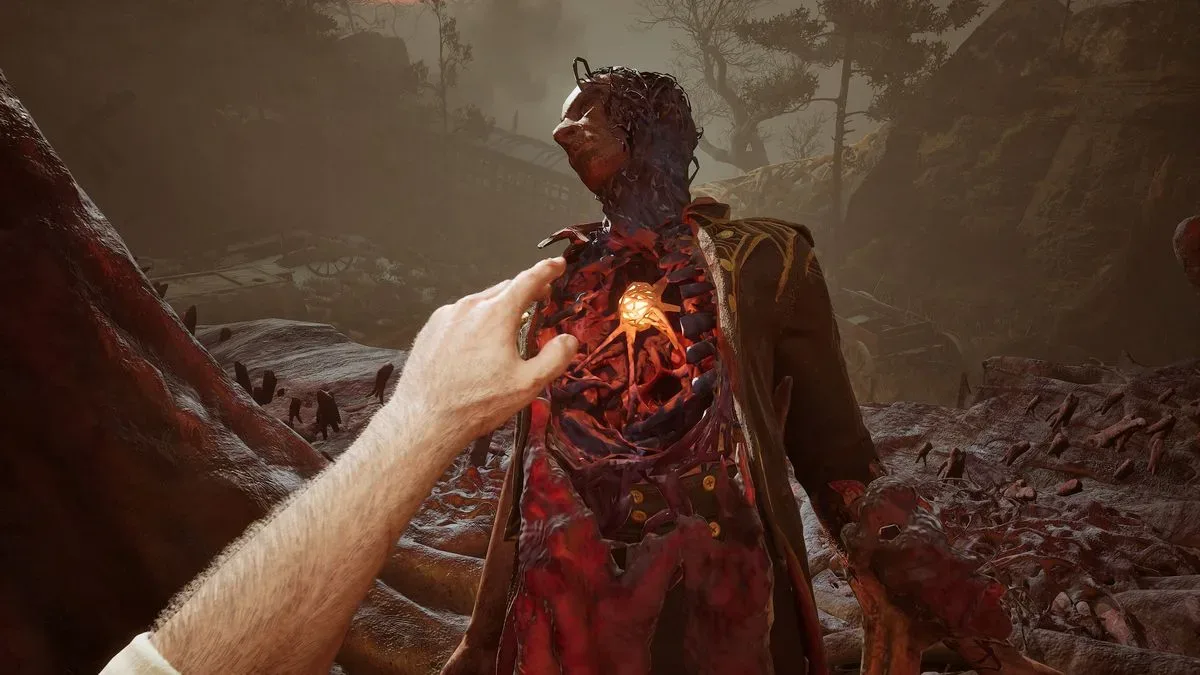
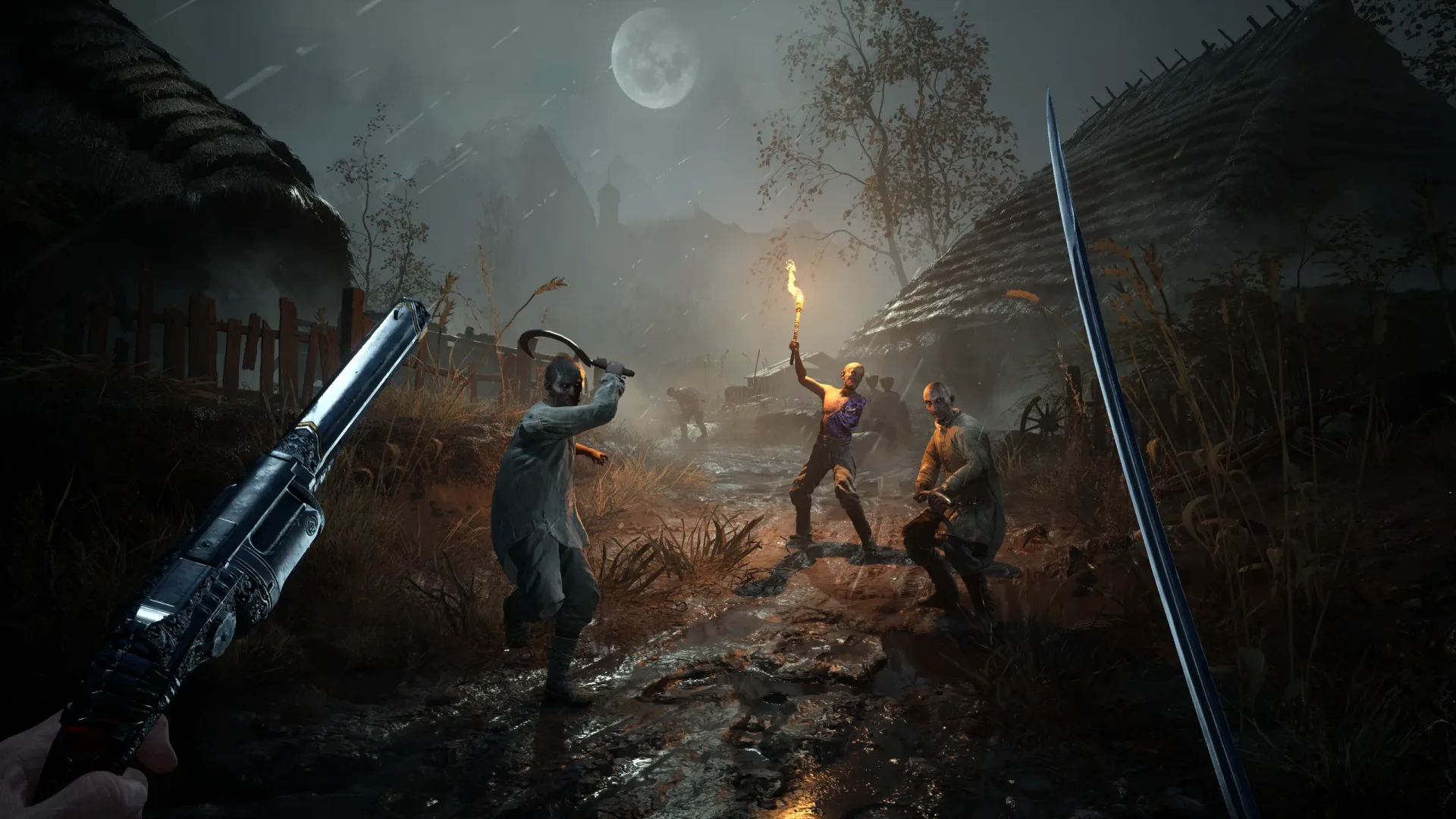
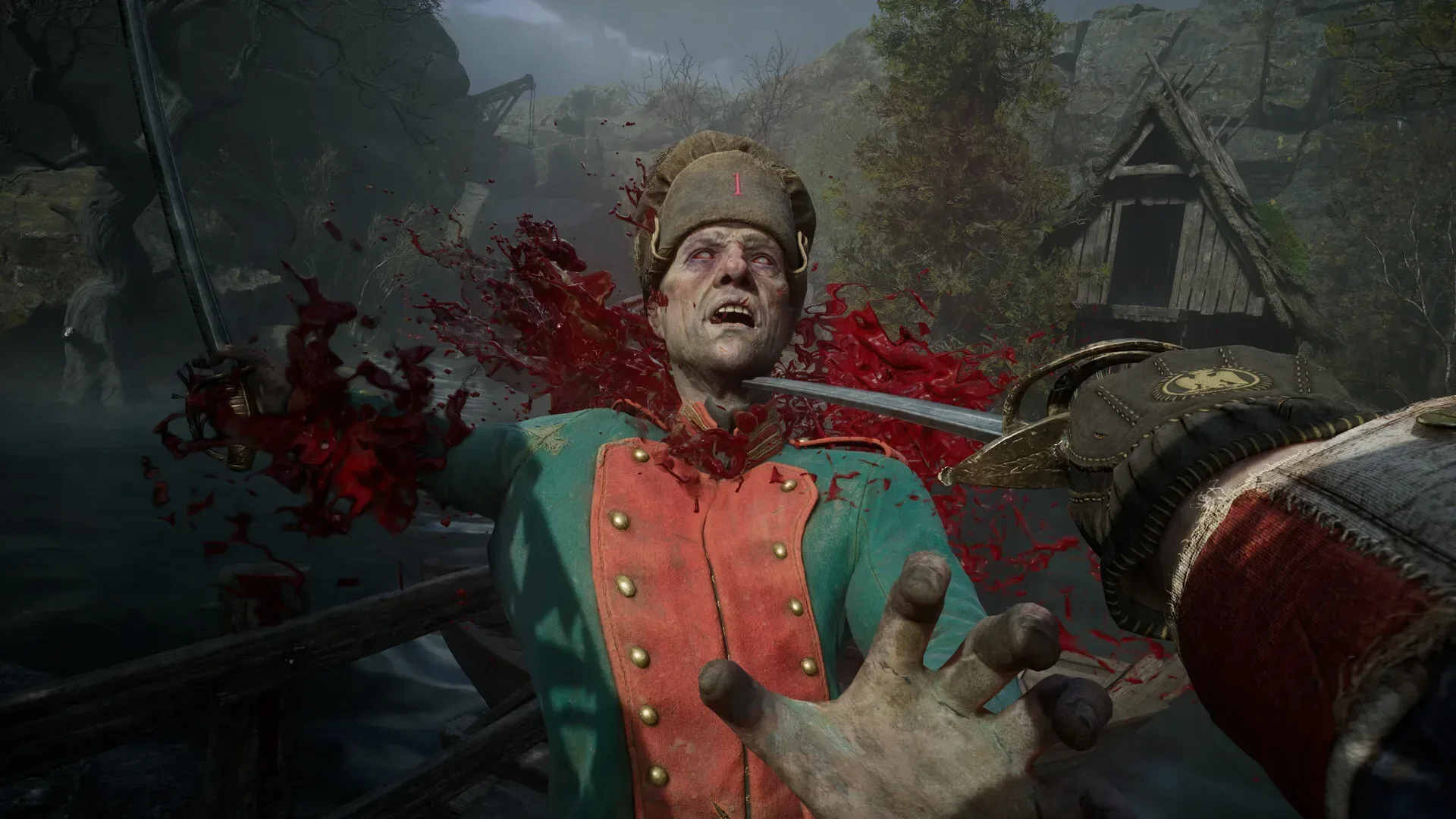
William begins as an ordinary soldier in Napoleon’s army, then returns from death on a devastated battlefield under orders from a telepathic Emperor. Over an approximately 25-hour journey, he gains a limited suite of left-hand psychic abilities, including fire and stasis, while building out an arsenal of blades and firearms. Swords, a pistol, a long-range musket, and a shotgun-like blunderbuss give the loadout practical range. Saber, rapier, and claymore options suggest differing close-range approaches rather than a single all-purpose answer.
The key is that these tools are not ornamental. Valor Mortis asks players to combine them. Fire can set foes alight, while stasis freezes enemies with explosive consequences. Guns complement melee rather than replacing it, and the choice to bring a particular blade changes the feel of close engagements. The game’s best fights create a satisfying scramble of positioning and decision-making: recognize the threat, counter it correctly, exploit an opening, and use the appropriate power before the situation becomes unmanageable.
That pressure suits the first-person viewpoint. It makes enemy proximity feel serious, particularly against hulking soldiers, zombie-like dog creatures, and failed laboratory creations. Successful parries become crucial rather than flashy. Blocking is possible, but it costs health; dashing offers escape, but is not a substitute for reading every attack. The result is combat that rewards concentration and broad familiarity with the kit. Players looking for a game that permits reliance on one favorite weapon or one safe tactic may find it restrictive. Players who want systems that insist on active adaptation should find real bite here.
The cost of a harsh first impression
Valor Mortis uses recognizable Soulslike structure: formidable bosses, currency dropped on death that must be recovered, and rest points that reset enemies. Those conventions are effective foundations for tension, but their success depends on deaths being legible. A difficult boss can be satisfying when an attempt reveals timing, range, or a neglected tool. Early Valor Mortis too often denies that clarity.
In its first half, bosses and ordinary enemy groups can appear capable of killing William with little opportunity to learn or respond. When an encounter ends after one punishing blow, the loop risks becoming irritation rather than curiosity. The issue is not simply that the game is hard. A Soulslike is expected to demand patience. The issue is that the early balance can make failure feel insufficiently informative, especially when standard enemies also seem able to produce sudden lethal outcomes.
Later on, the experience becomes more convincing. Whether because progression improves stamina, health, and weapons, or because the game’s challenge settles into a more manageable form, Valor Mortis begins to provide the “one more try” motivation it initially withholds. That improvement matters: a demanding game does not need to be gentle, but it does need to make perseverance feel productive. The later balance better supports the combat’s strengths and allows the accumulated upgrades to feel meaningful.
Exploration earns its detours
The journey is not only a procession of hostile encounters. Valor Mortis regularly encourages departures from its main route, placing grenades, powerful ammunition, minibosses, and side quests beyond the most obvious path. These detours give exploration a practical purpose and make chapters feel more like spaces to investigate than corridors to clear. Reaching optional rewards can require approaching the war-torn landscape from angles the central objective does not demand.
That approach is especially welcome in a game whose difficulty can require preparation. Optional discoveries are not merely collectible clutter; they reinforce the larger push to experiment and arrive at difficult encounters with more options. The chapter structure also appears to build from one setting into the next without losing a sense of each location’s individual identity. It is a thoughtful complement to the game’s combat focus: curiosity has material value.
There are also bursts of movement that break up the slower, deliberate fighting. William can wall-run, grapple, swing from poles, and leap from shrinking platforms. These sequences bring a faster, more immediate kind of danger, and they are an excellent reminder that the developer understands high-speed first-person action. They provide welcome contrast rather than replacing the central duel-and-survival loop. At the same time, their confidence raises a small question: the sheer clarity of these athletic set pieces can make the more uneven combat opening feel comparatively less polished.
An evocative story that stops short
Valor Mortis is easier to follow than many lore-heavy games in this space. Its central mysteries are clear: why is Napoleon speaking directly to William, what is behind the reanimation of bodies, and how did William acquire such unusual abilities? The narrative’s limitation is that its answers do not prove as compelling as the questions. The premise promises an unsettling collision of imperial war, occult science, and personal manipulation, but the story follows a relatively straightforward course rather than finding sharper or stranger implications in that material.
Side quests add useful texture. The strongest thread concerns the Mice, orphaned children seeking another kind of leadership after the destruction of their homes. Their story introduces a deliberately unclear mortality-related system and carries consequences into a few later sequences. It gives the world some needed human scale and a moral concern beyond William’s forward momentum. Still, it does not entirely solve the larger problem: the game’s narrative imagination is strongest at setup, while the resolution leaves the most provocative ideas underdeveloped.
For an adjacent example of a game review focused on how a demanding structure shapes a player’s decisions, see Deep Dish Dungeon PC Design Feature: Can Food Turn a Dungeon Crawl Into a Careful Expedition?.
Who should march into Valor Mortis?
Valor Mortis is best for action players willing to tolerate an unstable opening in pursuit of a more rewarding second half. Its combat is not a breezy power fantasy, even with guns and supernatural abilities in hand. Progress asks for defensive discipline, parry timing, intelligent use of every combat tool, and a readiness to die often. The game can repay that investment with tense fights, meaningful loadout interplay, and exploration that makes each chapter more than a route between bosses.
Those primarily interested in an unpredictable story about its alternate Napoleonic nightmare should temper expectations. The setting is memorable, and the Mice provide a promising supporting thread, but the plot does not dig as deeply into its own mysteries as the premise invites. Likewise, players who dislike sudden deaths or low-margin encounters may want to be cautious, as the early balance can turn persistence into frustration.
At its strongest, Valor Mortis proves that its first-person perspective is more than a novelty applied to Soulslike conventions. It changes the urgency of spacing, counters, firearms, and magical abilities, then asks the player to make them cohere under pressure. Its roughest encounters blur the line between stern challenge and arbitrary punishment, and its story does not fully capitalize on a potent world. But when the balance settles and the full arsenal is in play, this is a tense, distinct action game with enough confidence and craft to earn its repeated marches back into the dark.