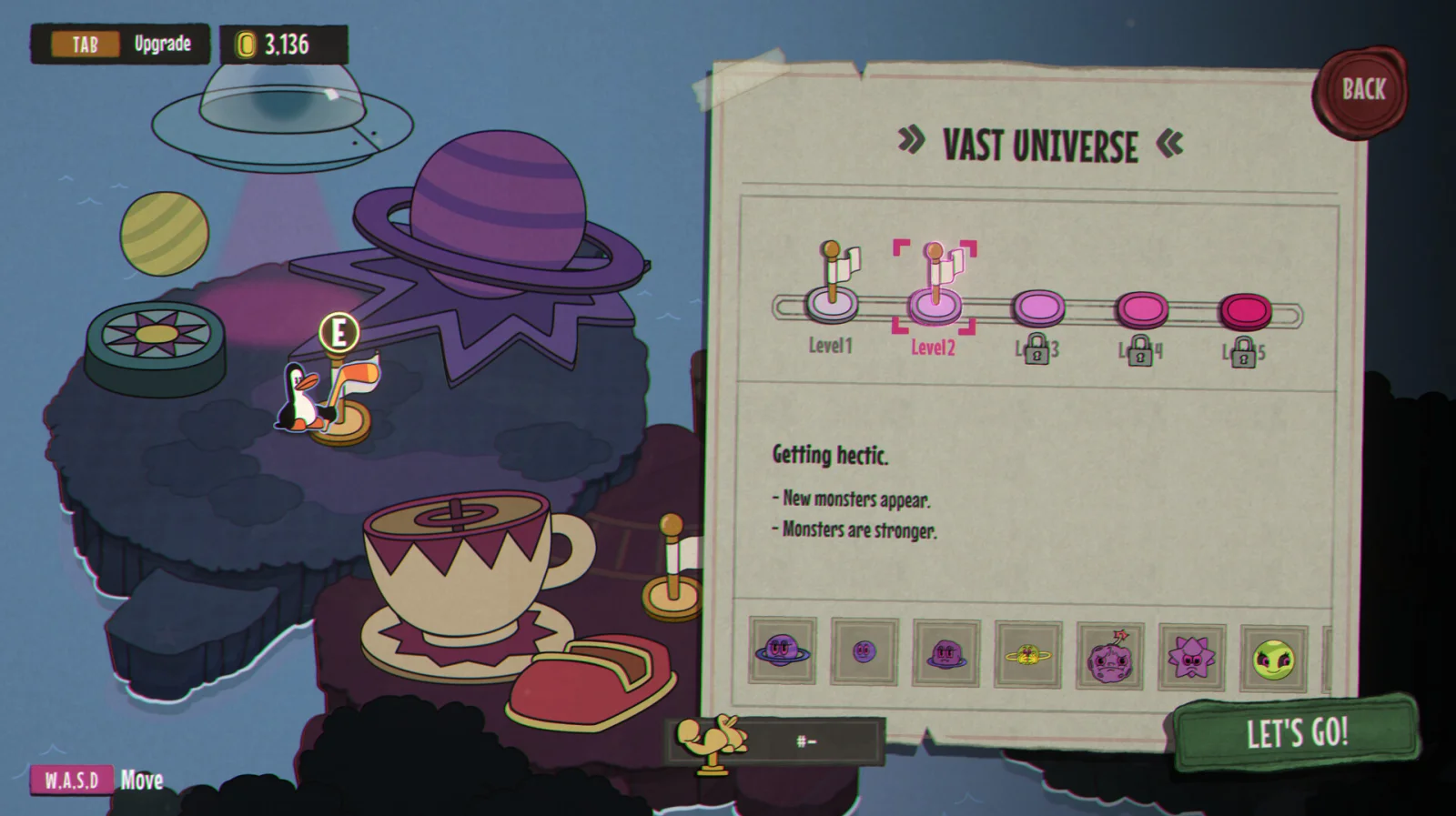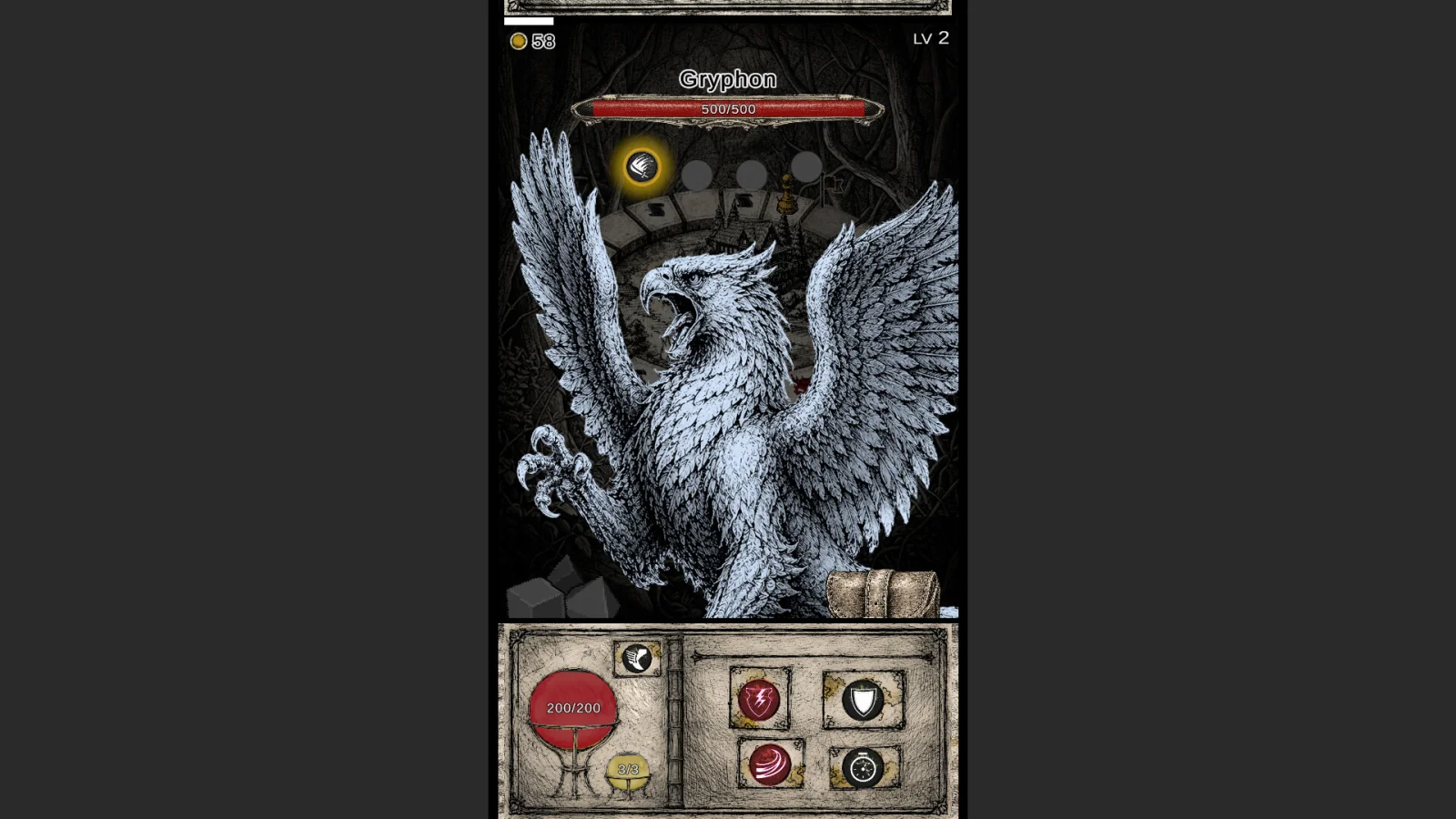
The Hunter’s Inn is a Windows PC fantasy RPG from GGD3V, released on September 7, 2026. Built for one player, it presents a focused 30-to-60-minute journey in a land threatened by a Demon King. Its central mix is unusually concentrated: an inn connects the adventurer to contracts and personal stories, dice-based board exploration introduces random encounters and events, customizable skill trees support build crafting, and simultaneous-turn combat asks players to interpret enemy patterns and timing.
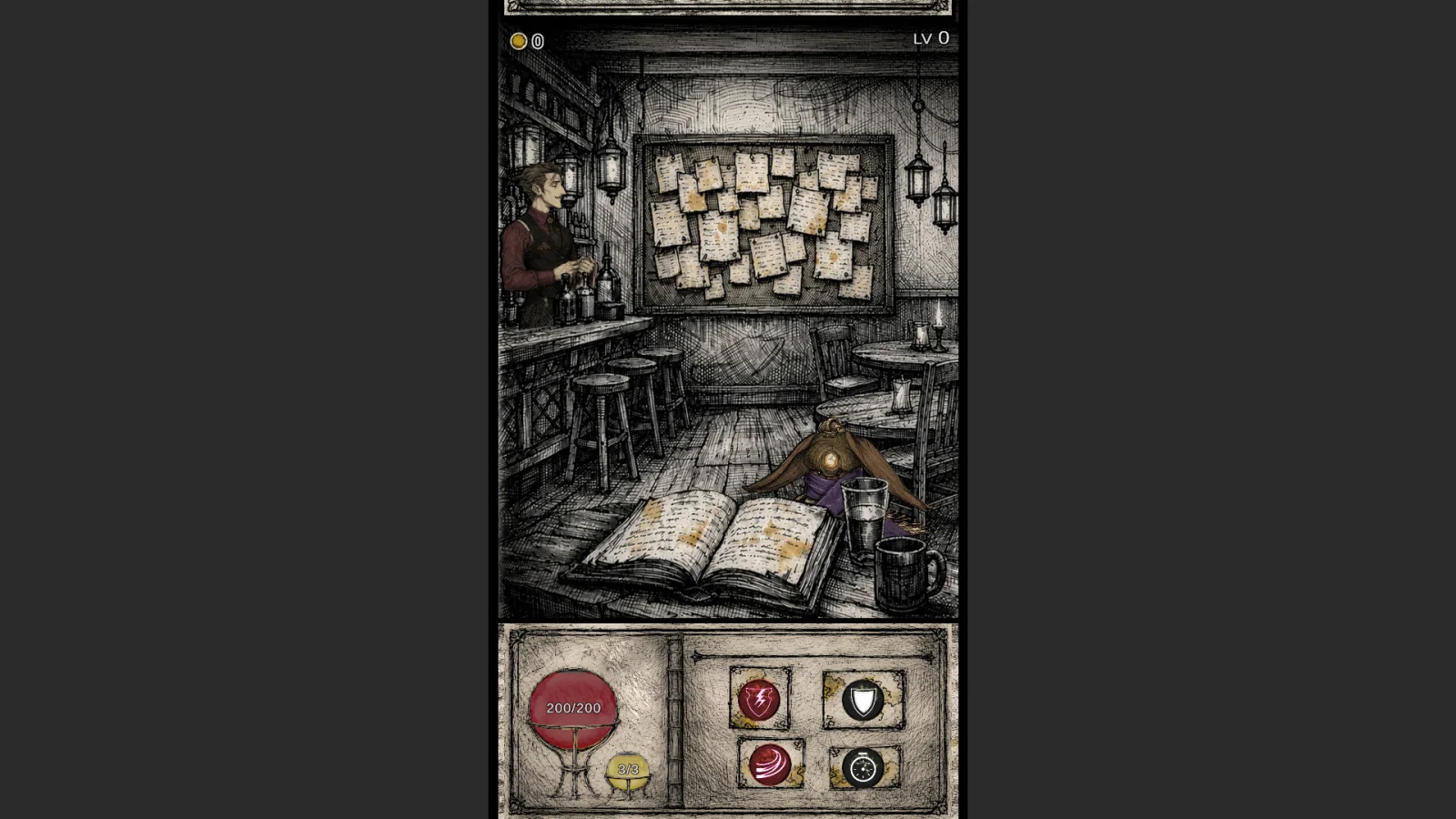
The game’s premise places an inn at the center of a troubled world rather than treating it as a brief stop between adventures. The surviving shelter is home to mercenaries, scholars, and knights. The adventurer uses that space to take work from a quest board, speak with regulars about tragedies affecting the world, and pursue personal missions tied to those histories. From there, the game moves into an exploration loop described in board-game terms before resolving encounters through its tactical battle system.
That is a lot of structure for a short RPG, but the advertised elements point in the same direction. The Hunter’s Inn is framed less as a sweeping journey across a vast fantasy realm than as a compact adventure about choosing work, gathering context, adapting to uncertain travel, and committing to tactical decisions. Detailed rules for movement, dice results, events, and individual skills are not outlined, so the clearest picture is the intended relationship between its documented systems.
An inn built around work and world stories
The Demon King provides the broad danger hanging over The Hunter’s Inn, while the inn supplies the smaller-scale human setting. Mercenaries, scholars, and knights are all gathered in the same refuge, giving the premise a natural reason for contracts, conversation, and personal concerns to overlap. Rather than setting the player apart from the wider crisis as a distant hero, the setup positions the adventurer close to people who have their own knowledge of and connections to the world’s troubles.
The quest board is the game’s stated practical anchor. Contracts give the adventurer objectives to pursue, turning the inn into a place where the next outing can be selected. Conversations with regulars serve a different but complementary role: they reveal tragedies from around the world. Personal missions are then connected to those histories. The structure suggests that contracts are not intended to exist in total isolation from the people sheltering at the inn.
For a short-form RPG, that connection matters. A long game can spend many hours establishing towns, factions, and regional conflicts. The Hunter’s Inn instead appears designed to concentrate its context in a recurring setting. The inn can function as a place where work is offered, where stories are heard, and where the stakes surrounding a mission are made more personal. If those components are clearly linked, a contract can carry both an immediate goal and a connection to the people who remain behind at the hub.
The premise also gives the game a useful contrast between shelter and danger. The inn is described as a surviving refuge, while the world outside faces a major threat and contains random encounters and events. That contrast can make each departure feel purposeful in design terms: the player leaves a known social space to confront a more uncertain board-based route. Returning attention to the inn’s regulars and their stories could then keep the larger fantasy conflict grounded in individual concerns.
A linear journey with a concentrated scope
The stated 30-to-60-minute duration defines expectations for The Hunter’s Inn. This is a focused, linear journey rather than a promise of an expansive campaign. That scale can suit a design that wants to bring multiple ideas together without asking players to commit to a lengthy RPG: contracts establish direction, conversations supply context, exploration interrupts plans with chance, and combat creates the most immediate tactical pressure.
Short duration does not erase the importance of decision-making. It can make clarity more important. A player has limited time to understand why a contract matters, what a skill-tree choice changes, how a board-game encounter works, and what enemy behavior means in battle. The game’s individual layers therefore have a strong incentive to communicate with one another. A contract selected at the inn, for example, may feel more coherent when the journey to it and the battles along the way draw on the same tactical choices.
The Hunter’s Inn is described as a roguelite, a label that sits alongside its linear journey and its random exploration events. Those details establish that uncertainty is part of the intended experience, even as the overall trip is focused rather than open-ended. A defined destination and variable travel are not mutually exclusive concepts. The journey can retain a clear dramatic direction while making the route, encounters, and immediate decisions less fixed.
This framing is particularly relevant to players who want a fantasy RPG that can be approached as a concise session. The game’s stated format suggests an adventure intended to make its identity through density rather than scale. Its appeal rests on the prospect of moving from a social hub to chance-led exploration and prediction-led combat without a long campaign separating those systems.
Dice-based board exploration and random events
Exploration in The Hunter’s Inn uses a dice-based board-game loop with random encounters and events. This establishes chance as part of travel. The player is not described simply as moving through a fixed sequence of locations or selecting a purely predetermined chain of missions; the exploration layer includes outcomes that can vary as the adventurer proceeds.
The board-game framing is notable because it gives travel a rules-driven identity of its own. In many RPG structures, travel chiefly connects story scenes and battles. Here, dice, random encounters, and events are explicitly part of the journey. That could make movement and route progression a source of uncertainty rather than a neutral gap between the inn and a contract objective.
The exact handling of the dice is not detailed. There is no established information about movement options, whether dice rolls can be modified, how events are selected, or how contracts shape the board. Still, the documented combination of dice and random events points toward a travel layer where planning has to coexist with outcomes the player cannot fully dictate. That uncertainty fits naturally beside build crafting: a flexible set of skills has the potential to matter most when the next situation is not entirely known in advance.
It also helps distinguish the game’s roguelite identity from its fantasy setting. The inn, the quest board, and the Demon King premise give the adventure recognizable role-playing foundations. The dice-based board turns the route outward into a separate decision space, one where chance can influence the sequence or nature of obstacles encountered. In a short journey, that structure could help ensure that the trip itself remains an active part of the game’s rhythm.
Simultaneous turns and the value of reading patterns
Combat is turn-based, but The Hunter’s Inn specifies simultaneous turns rather than a conventional alternating sequence. Both sides act within the same turn structure, and the game emphasizes interpreting enemy patterns and timing instead of relying on brute force. That description gives battles a distinct intended tension: decisions are made with an expectation of what the opponent is likely to do.
In an alternating battle system, a player may be able to react after watching an enemy complete an action. Simultaneous turns change that relationship. The player’s action and the enemy’s action are committed within the same exchange, making anticipation part of the tactical problem. An effective choice may depend not only on what a skill does, but on whether it is used against the right expected behavior at the right moment.
The emphasis on enemy patterns is therefore central to the combat pitch. The game is not merely described as asking for damage optimization or repeated use of a strongest attack. It is presented as asking players to observe tendencies, make a prediction, and choose an answer before the exchange resolves. This can give turn-based combat a more committed feel, because a player cannot simply wait for complete certainty before acting.
Timing is equally important in the description. It implies that the meeting point between actions matters, not just the actions selected from a menu. The specific timing rules are not provided, but the language establishes a strategic ideal in which understanding an opponent and selecting a response are closely connected. For readers looking beyond standard alternating turns, simultaneous resolution is The Hunter’s Inn’s clearest mechanical point of difference.
That distinction also creates a direct connection to the game’s compact length. A short RPG may not need a huge set of combat subsystems if each encounter asks a focused question: what is the enemy likely to do, and which available answer best fits that expectation? The design’s success depends on the final clarity of that exchange, but the intended battle identity is plainly one of prediction and commitment.
Skill trees, specialization, and build crafting
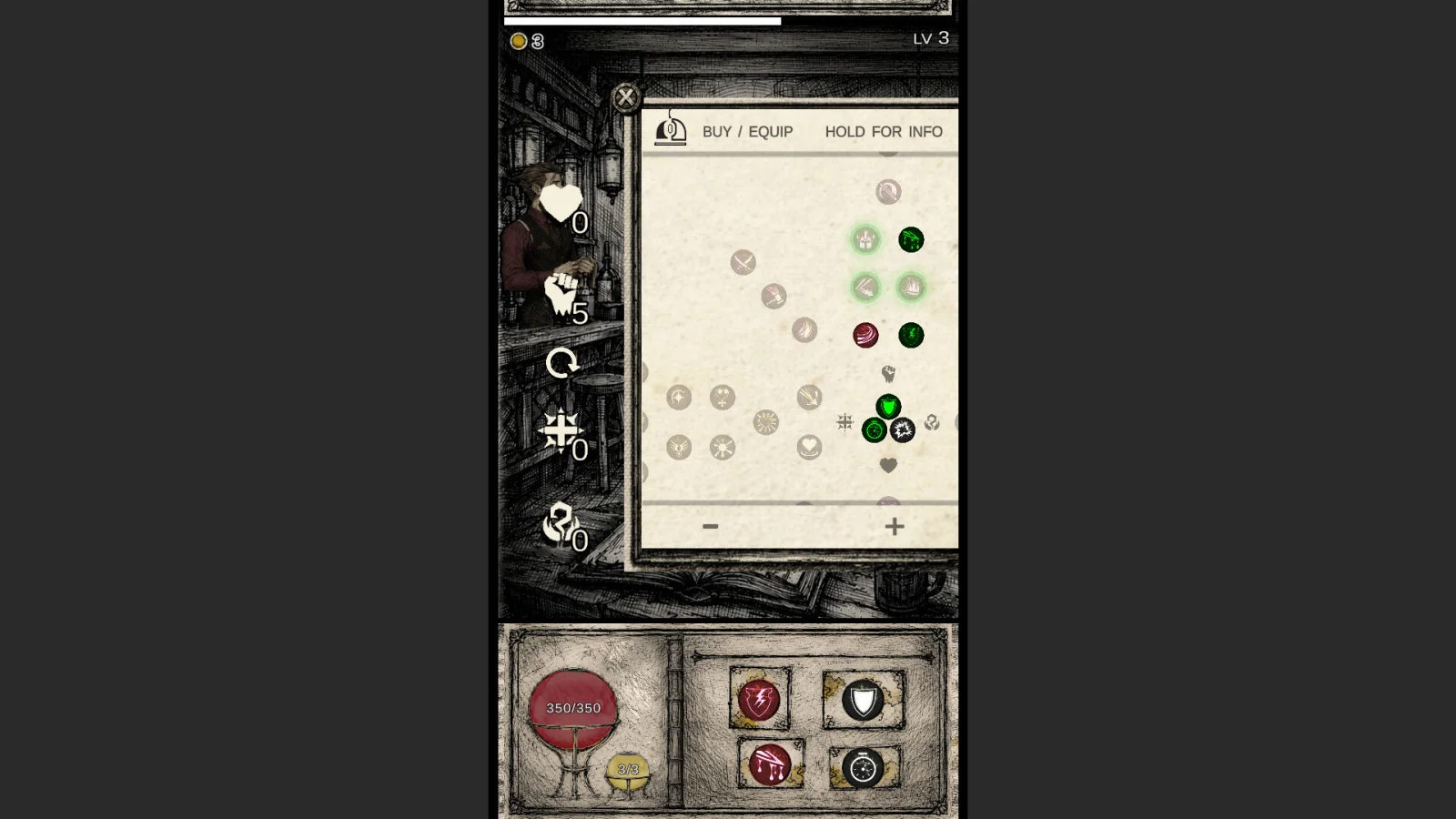
The Hunter’s Inn promises customizable skill-tree specialization rather than fixed roles. The adventurer is not presented as being permanently limited to a predefined class identity. Alongside the game’s emphasis on build crafting and skill synergies, that suggests character development is meant to shape how the player approaches encounters rather than merely adding numerical power.
Skill synergies are especially relevant to simultaneous-turn combat. A build is most meaningful when it gives a player a recognizable tactical vocabulary: different ways to answer danger, different priorities when anticipating a pattern, or different considerations when an encounter does not unfold as expected. The supplied information does not identify particular skill branches or combinations, but it establishes that specialization is a core part of the game’s stated approach.
Flexible specialization can also complement random board events. If travel can present uncertain circumstances, a player’s chosen skills may become the tools used to navigate that uncertainty. One approach might favor a particular type of tactical response while another might encourage a different one. That is a conditional design reading rather than a claim about any specific build, but it explains why the game’s exploration and combat concepts sit comfortably beside its build-crafting language.
The limited journey length adds urgency to this system. A lengthy RPG can slowly introduce classes and skill interactions across many hours. The Hunter’s Inn has a much shorter stated window in which to establish what specialization means. Its skill tree therefore appears positioned as an immediate part of the adventure’s tactical identity, not a distant endgame layer. Players interested in character expression may find the premise most appealing if they value making focused choices within a compact run of contracts, travel, and battles.
What the full structure is trying to connect
The Hunter’s Inn has a coherent advertised loop. The inn provides a hub populated by people affected by the world’s tragedies. The quest board offers work. Personal missions link back to the stories heard from regulars. Dice-based board exploration places uncertainty between the player and the next objective. Skill specialization gives the adventurer an evolving set of options. Simultaneous turns turn encounters into tests of reading and timing.
Each element addresses a different part of the RPG experience. Conversations provide context. Contracts create direction. The board supplies chance. Skills offer player expression. Combat demands tactical interpretation. The game’s compact duration means these elements are not presented as separate long-term modes; they are intended to form one concentrated journey.
For a related examination of how system clarity can shape a PC game’s broader premise, read this PC systems assessment.
The bottom line
The Hunter’s Inn arrives on PC with a specific fantasy-RPG identity. It combines an inn-based contract and conversation hub with dice-driven board travel, customizable specialization, and turn-based combat built around simultaneous actions, enemy patterns, and timing. Its 30-to-60-minute scope makes it a game for players seeking a concise, system-focused adventure rather than a sprawling campaign.
The documented design is most compelling where those pieces overlap: personal stories give contracts context, uncertain exploration complicates the trip outward, and flexible builds feed into fights built on prediction. The result is a clearly defined short-form premise whose central question is not how much territory it covers, but how tightly it brings its contracts, travel, builds, and battles together.