Finding Polka is an unscored design feature, not a review. There are no Joking Joystick gameplay notes behind this article, so it makes no claim about responsiveness, pacing, technical performance, length, difficulty, emotional impact, or overall quality. The discussion below separates the established outline supplied by public information from questions that only play can answer.
Developed by lidlocks and published by PARCO GAMES, Finding Polka is available for Windows and macOS. Its listed genres are Adventure, Casual, and Indie, and it supports controllers fully. The central premise presented publicly follows Frendy, who lives with her dog Jazz. After seeing a dog that resembles Polka, the dog Frendy knew in childhood, Frendy and Jazz set off in pursuit. That setup gives the project a simple but potentially resonant organizing question: what does it mean to follow a resemblance when memory, affection, and a present-day companion are all bound up in the search?
Established design: a search with a personal premise
The announced premise is notably direct. The player is meant to find Polka somewhere on the map. That does not establish the size of the map, how information is communicated, whether the search is linear or open-ended, or what actions the player uses to advance it. It does, however, establish a design centered on a search framed through a personal sighting and pursued alongside Jazz.
That is a useful starting point for an adventure because a search can make observation meaningful without requiring the game to spell out every emotional beat. If the finished design places convincing visual traces, character reactions, locations, or changes in the environment along the route, the act of looking could support the story’s premise. Conversely, if the clues are too opaque or too automatic, the search may become either frustrating or merely decorative. Those are conditional possibilities, not claims about the released game.
The choice to put Frendy and Jazz together at the center is also structurally important. The public description identifies Jazz as Frendy’s beloved dog, while Polka belongs to Frendy’s childhood. This potentially creates a relationship between present companionship and remembered companionship, rather than making Polka only a missing-object objective. Whether the game develops that contrast through play, imagery, character behavior, or only its premise cannot be determined from the available description. Still, it gives the announced search more emotional specificity than an abstract hunt across a map.
A ballpoint-pen world and the responsibility of visual clarity
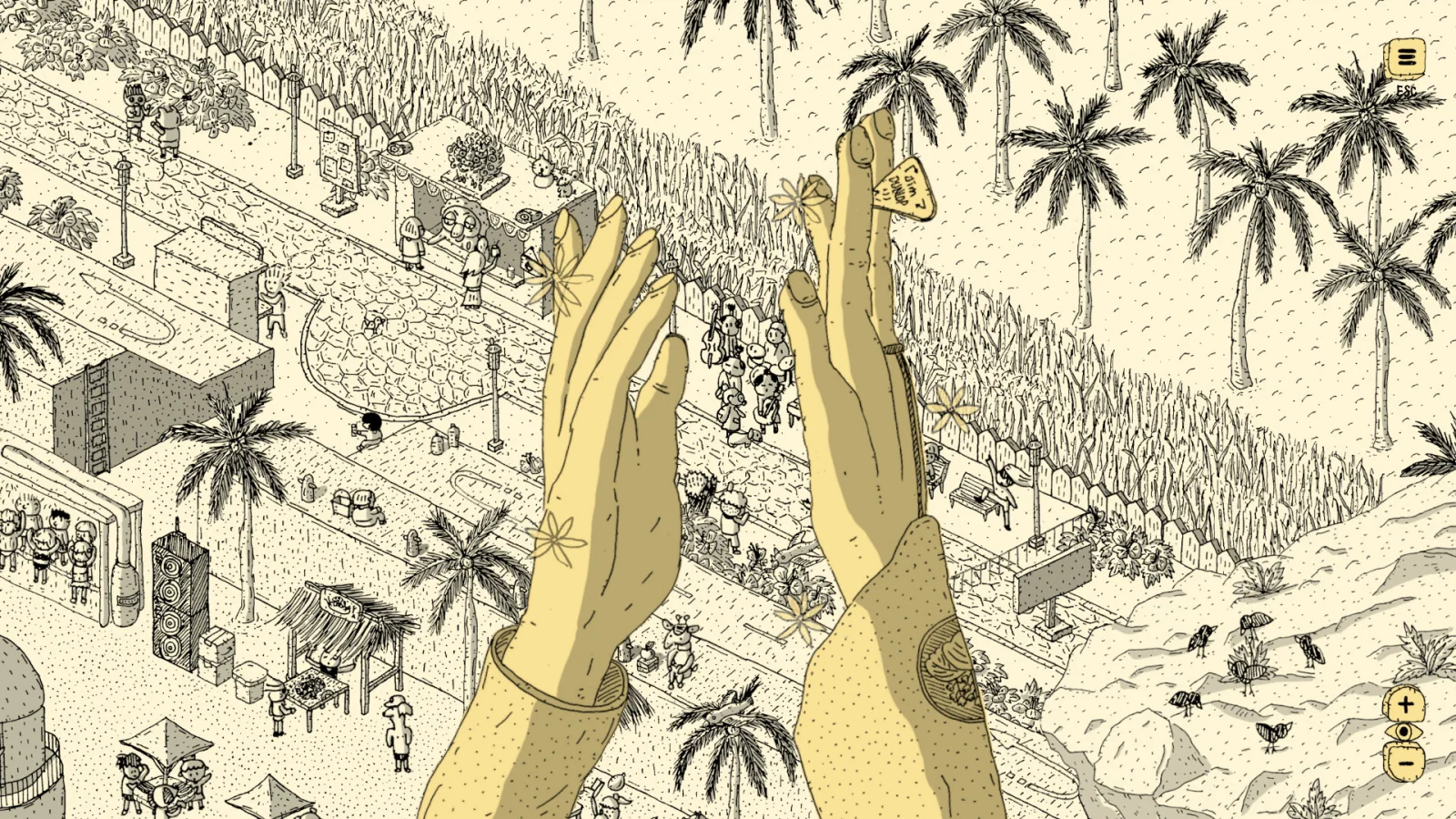
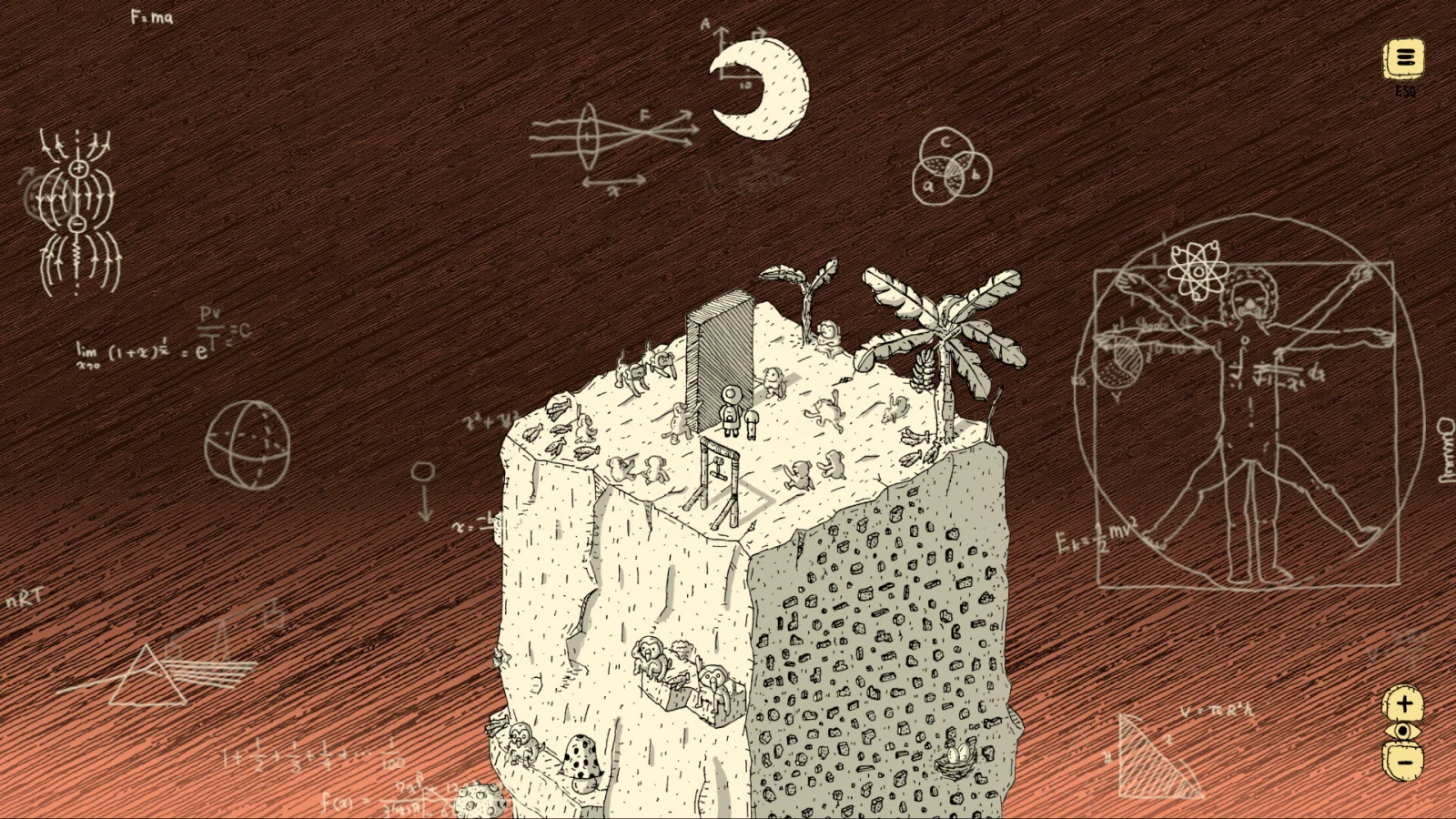
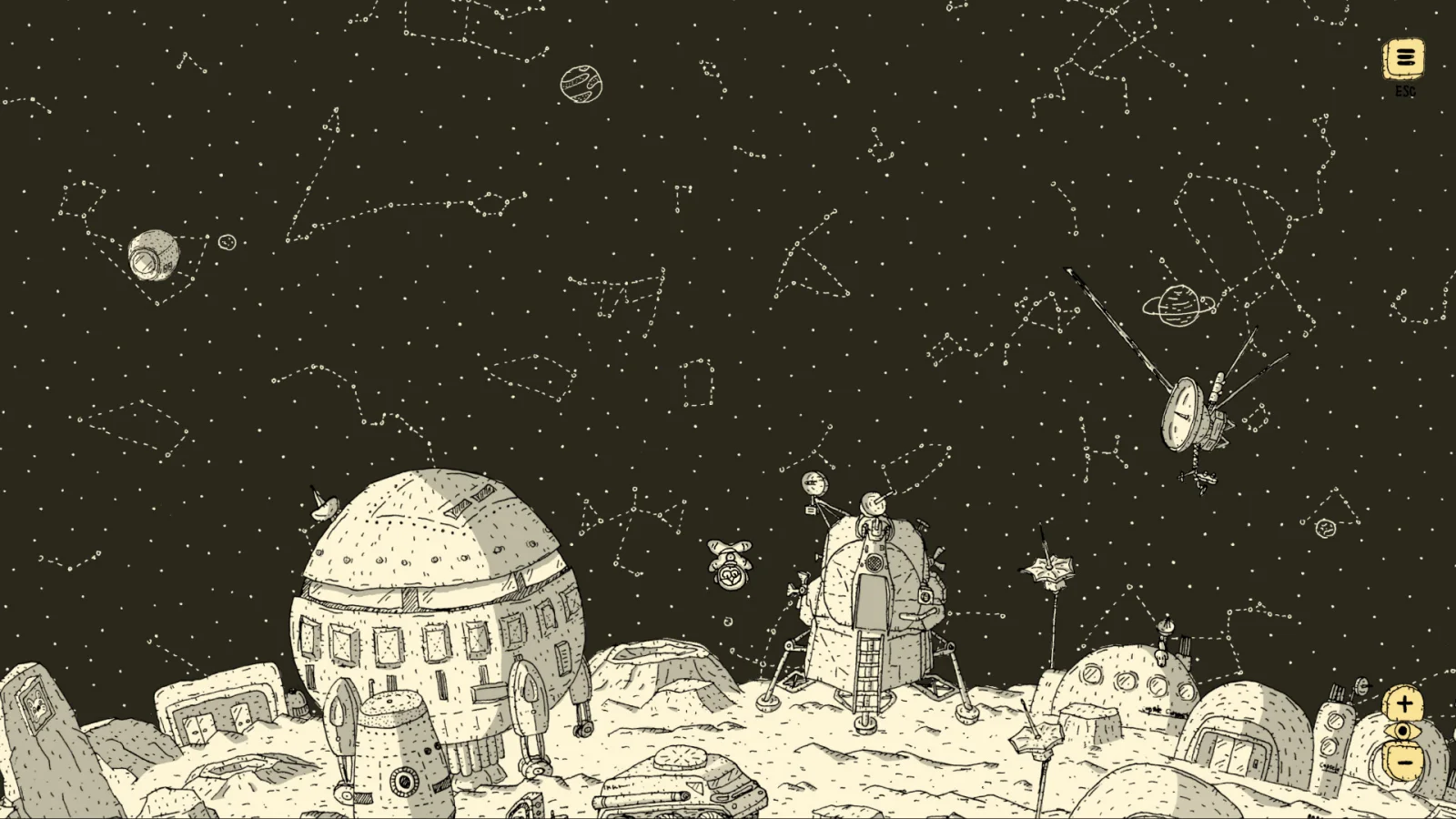
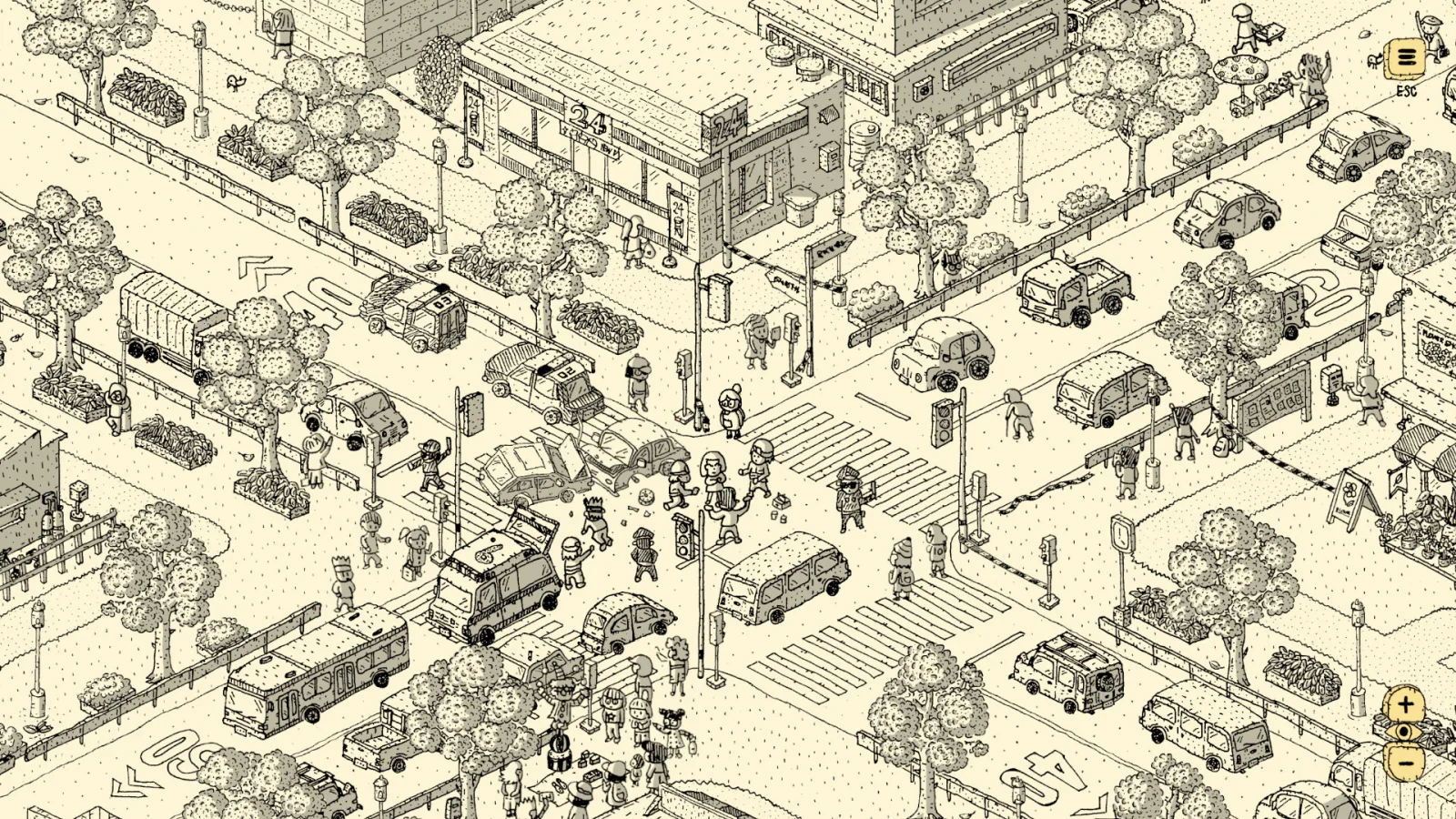
Finding Polka is described as taking place in a simple world drawn in ballpoint pen, with playful humor. A pen-drawn presentation can do more than provide a decorative identity. In a game built around finding someone, line work, silhouette, emphasis, and the readability of small details may carry practical responsibilities. Players may need to distinguish paths, points of interest, interactable people, and meaningful signs from the background. The final implementation therefore needs to balance handmade visual character with navigational legibility.
The stated look could also support the premise in a less literal way. Ballpoint pen suggests a medium associated with notes, doodles, margins, and informal record-keeping. In principle, that could make a world about childhood memory feel intimate or provisional, as though it has been recalled rather than clinically documented. Yet that interpretation is analytical possibility rather than established authorial intent. Public materials confirm the visual description; they do not establish what the art is meant to symbolize.
Playful humor may be especially valuable in this context. A search for a dog from childhood can carry melancholy, but humor can keep encounters lively and prevent the premise from being treated with excessive solemnity. The key unanswered question is tonal balance. It is not known how often humorous material appears, what form it takes, or whether it sits comfortably beside the search’s emotional stakes. A gentle visual style alone cannot guarantee that balance, but it gives the project room to attempt it.
Wordless communication is an announced system of expression
One of the clearest public design commitments is the absence of dialogue and spoken words. Characters are instead said to convey feelings through expressions, subtle gestures, and sound effects. This is more than a statement about script presentation: it assigns substantial communicative work to animation, staging, timing, audio cues, and player interpretation.
In a wordless adventure, an encounter must be understandable enough to sustain progress while remaining expressive enough to feel like more than an icon or tutorial prompt. A raised hand, a pause, a turn of the body, a startled pose, or a particular sound can indicate invitation, hesitation, alarm, gratitude, or a joke. But the result depends on context. If the environment and character animation reinforce one another, the lack of written dialogue could make interactions immediate across language boundaries. If signals lack clarity, players could misunderstand what the game wants from them or what an emotional moment is trying to convey.
This choice also raises questions about accessibility and communication that cannot be answered by the available description alone. It is unknown whether sound effects are accompanied by visual indicators, whether gestures are repeated or framed clearly, or how the game teaches its interaction language. No conclusion should be drawn either way. The important established fact is simply that the announced design places nonverbal expression at its center, and that decision makes visual and auditory readability central to the experience.
There is a potentially appealing fit between a wordless structure and a story about recognizing a dog who looks like one from the past. Recognition is not always verbal; it can be a matter of posture, movement, a glimpse, or an immediate feeling that is difficult to articulate. That parallel is not confirmed as the game’s intended theme. It is, however, a plausible reason the no-dialogue approach could complement the premise if its scenes are carefully staged.
Friends are announced as allies, but their practical role remains open
The public description says that unique characters wait at the end of the adventure, that Frendy can high-five them and become friends, and that friends are reliable allies who help and encourage the player when trouble appears. This establishes friendship as a stated part of the game’s structure rather than a purely incidental theme.
What “help” means mechanically is not specified. It could refer to guidance, contextual assistance, support during particular situations, a social acknowledgment of progress, or another form of aid. Likewise, “trouble” is not defined. It would be unsupported to turn those broad statements into claims about abilities, party systems, quests, puzzles, rewards, or failure states. The announced material supports only a narrower conclusion: interactions with characters can lead to friendship, and friendship is presented as beneficial.
That ambiguity is not a defect in itself; it is simply the boundary of what can be responsibly assessed without hands-on evidence. Design-wise, friendship mechanics often work best when the game makes the emotional logic of help legible. A character who assists because the player has understood, helped, or shared a moment with them can make support feel relational rather than transactional. If the final game instead treats friendship as a checklist, its stated warmth could have less weight. This is a question of implementation, not a verdict.
The high-five detail is small but meaningful. It suggests a physical, readable sign of connection suited to a game without written conversations. A high-five can work as celebration, greeting, agreement, or a compact payoff to a successful interaction. Whether it is frequent, optional, mechanically consequential, or purely expressive is not established. Its presence nonetheless indicates an interest in communicating social change through gesture rather than explanatory dialogue.
Optional mini-games could broaden the map without burdening the search
Finding Polka publicly lists putt-putt golf, whac-a-mole, soccer shootout, boat racing, watermelon splitting, and volleyball among the mini-games available throughout the area. The description explicitly says these activities are optional and not required for story progression. That is one of the most concrete structural facts available: the main search is not publicly presented as being gated by completion of those side activities.
The variety suggests an attempt to make the area feel like a place for diversions as well as pursuit. Sports, fairground-style tests, a boat race, and watermelon splitting imply different thematic flavors, though the description does not identify controls, rules, scoring, opponents, rewards, or repeatability. It would therefore be inaccurate to characterize any individual activity as skill-based, competitive, arcade-like, relaxing, or substantial. Names alone identify their broad concepts, not their executed design.
Optionality can be an especially useful fit for a cozy adventure. Players who want to stay focused on finding Polka may be able to do so, while players who want to linger can choose side activities. But optional content has its own design challenge: it needs to feel worth approaching without becoming so rewarding or opaque that it effectively pressures completion. Whether Finding Polka achieves that balance is unknown. The published structure at least makes a clear promise that the listed mini-games do not block story progress.
These diversions may also be relevant to the game’s social ambitions. If mini-games are situated around characters or places, they could potentially turn the map into a setting for playful contact rather than a sequence of destinations. That relationship has not been confirmed. The description says mini-games occur throughout the area and separately describes making friends, but it does not explain whether the two systems directly connect.
Questions the announced design still leaves unanswered
- How does the map communicate where to explore without dialogue?
- What player actions are used during the search for Polka?
- How are expressions, gestures, and sound effects framed so that emotions and objectives remain readable?
- What kind of assistance do friends provide, and how does the game establish those friendships?
- Are the optional mini-games integrated into specific locations or characters, or simply placed around the area?
- How does the ballpoint-pen visual approach preserve clarity during navigation and interaction?
- What role does Jazz play in the search beyond accompanying Frendy in the premise?
These are not demands that every game must answer in advance. They are the practical points on which a design based on quiet observation, character gesture, and optional play could succeed or struggle.
Where Finding Polka sits among design-first coverage
Finding Polka’s publicly described approach is compact: a personal search, a pen-drawn world, nonverbal characters, friendship, and optional local diversions. The potentially distinctive element is not any one ingredient in isolation, but the way they could reinforce one another. A readable wordless encounter may make a high-five feel meaningful; a side activity may make a location feel inhabited; a search may gain feeling from the contrast between a childhood dog and Jazz’s present companionship. None of those connections should be treated as proven until supported by play.
For another example of coverage that examines what an announced interaction model could mean without substituting speculation for evidence, see our Radiotext PC design feature. The connection is methodological rather than a claim that the games share mechanics or tone.
For now, the established picture is modest and appealingly specific. Finding Polka is a Windows and macOS adventure from lidlocks and PARCO GAMES, with a search led by Frendy and Jazz, a wordless mode of character communication, friendship-oriented encounters, and optional mini-games including putt-putt golf, whac-a-mole, soccer shootout, boat racing, watermelon splitting, and volleyball. Whether those parts produce a coherent, satisfying journey remains an open hands-on question.