Allogloom is scheduled to arrive on PC on October 13, 2026. It is announced as a hand-crafted point-and-click adventure set in Gruesome Grove, where residents are disappearing and Nora sets out to learn what is taking them. The premise establishes a local mystery with an immediate human cost: bringing the townspeople home means uncovering secrets that some within the town would prefer to leave buried.
The announced design places Nora at the centre of that investigation. A note pointing somewhere forbidden is described as her initial clue, while the wider journey involves the town’s revered, ravenous moths and monsters displaced by the wreckage of her home. That is a suitably strange collection of story ingredients for an adventure game, but their importance will depend on how they become playable problems rather than simply evocative setting details.
Allogloom’s stated puzzle vocabulary is familiar but potentially flexible: players will combine items and negotiate with characters to solve puzzles. In a point-and-click adventure, that combination can create a clear investigative loop. A conversation may expose a person’s need, fear, or contradiction; the environment may contain an object that addresses it; and an item combination may turn several individual observations into a usable solution. If the game consistently connects those stages, Nora’s search could feel like deduction performed through places, possessions, and relationships rather than a sequence of detached inventory locks.
An investigation built around a town that has changed
The announced story begins from loss. Gruesome Grove, as Nora knew it, is gone, and restoring it is framed as requiring her to break rules. That framing gives the mystery a useful tension between personal attachment and transgression. Nora is not merely asked to identify an unknown threat; she is also moving into forbidden territory and confronting a community’s buried history. The missing residents supply a practical objective, while the altered town gives the search emotional and spatial stakes.
How those two strands meet is one of the central design questions. A strong adventure mystery usually benefits when the route forward changes what the player understands about the place they are traversing. A locked location can become meaningful when its restriction reflects an old taboo. An apparently eccentric resident can become a crucial witness when later discoveries change the context of an earlier conversation. An item may matter not because it is scarce, but because it reveals which version of a local story was incomplete.
Allogloom’s premise leaves room for that kind of recontextualisation. The town has secrets, the player is asked to trace an abduction, and the deeper Nora goes, the less certain her escape with everyone she loves becomes. Those announced elements could support a mystery whose solutions steadily revise the meaning of Gruesome Grove. They do not, by themselves, establish how the story is structured, how frequently revelations arrive, or whether puzzles substantially alter the player’s understanding of particular characters and locations. Those are implementation questions rather than announced facts.
The phrase “bring it back” is also intriguing without defining a specific gameplay system. It may describe a narrative goal, the restoration of a setting, the rescue of its people, or some combination of those ideas. There is no reason to assume a rebuilding mechanic, a branching conclusion structure, or any particular form of world-state change. The more grounded expectation is simply that Nora’s objective concerns recovering what has been lost in Gruesome Grove and finding the missing residents.
Item combinations need readable cause and effect
Item combination is among the most recognisable tools in the classic adventure-game tradition. At its best, it allows a player to make an inference across separate observations: a component from one area, a clue from another, and a practical obstacle that makes the connection useful. The pleasure comes from seeing the game’s logic, not merely from trying every object on every other object until something changes.
For Allogloom, the announced setting could provide many natural routes to that logic. A mysterious note, forbidden spaces, unusual local creatures, and the aftermath of destruction are all broad premises that could justify objects with specific histories and functions. An effective puzzle chain could make an object’s origin relevant to whom it persuades, where it can be used, and why its combination with another object makes sense. In that model, inventory is an extension of Nora’s investigation rather than a collection of arbitrary keys.
The important unanswered issue is the game’s communication of puzzle rules. The announcement confirms item combination, but not the interface language around it, the scope of possible interactions, how clues are presented, or the balance between direct solutions and more lateral ones. Those details will determine whether a puzzle feels legible in retrospect and discoverable in the moment. A deliberately odd setting can support surreal solutions, but it still needs enough internal consistency for a player to form and test a theory.
Classic point-and-click design does not require every answer to be obvious. It does, however, benefit from consequences that teach the game’s particular logic. If an early task demonstrates how Gruesome Grove’s people, monsters, or moths respond to an object, later tasks can build on that knowledge. If every solution rests on a totally different kind of joke or exception, the player may have little basis for reasoning forward. The announced dark humour could make unexpected solutions memorable, provided it reinforces rather than replaces the puzzle’s causal thread.
Negotiation can make character encounters more than clue delivery
Allogloom also announces negotiation with characters as part of puzzle solving. That verb matters. It suggests that conversations may ask Nora to work around competing interests, rather than only select a dialogue topic and receive information. In a town where secrets are being kept and rules stand in the way, social barriers are a natural complement to physical ones.
There are several conditional strengths in that setup. Negotiation could give items a social function: an object might establish trust, prove a claim, satisfy a request, or expose an inconsistency. It could make the player weigh what a character says against what the surrounding environment reveals. It could also give the announced cast of humans, monsters, and animals distinct roles in the mystery, allowing their needs and perspectives to shape the route through Gruesome Grove.
None of that confirms dialogue choices, relationship systems, alternate solutions, or branching outcomes. The announced design supports only the more limited conclusion that characters will be negotiated with in the course of puzzle solving. Still, that is enough to identify the opportunity. A town-centred adventure becomes more persuasive when residents are not simply containers for clues. The disappearance plot is likely to carry more weight if people have recognisable motives, limits, and knowledge that must be approached rather than extracted.
The moths are especially notable because they are described as both revered and ravenous. That pairing immediately implies a tension between affection or ritual and danger. Whether they are participants in puzzles, elements of the story, environmental hazards, or something else has not been specified. Yet their presence gives Allogloom a chance to make the town’s mythology operational: not merely a striking piece of lore, but a force that changes how Nora can proceed.
Art direction and tone have to serve navigation
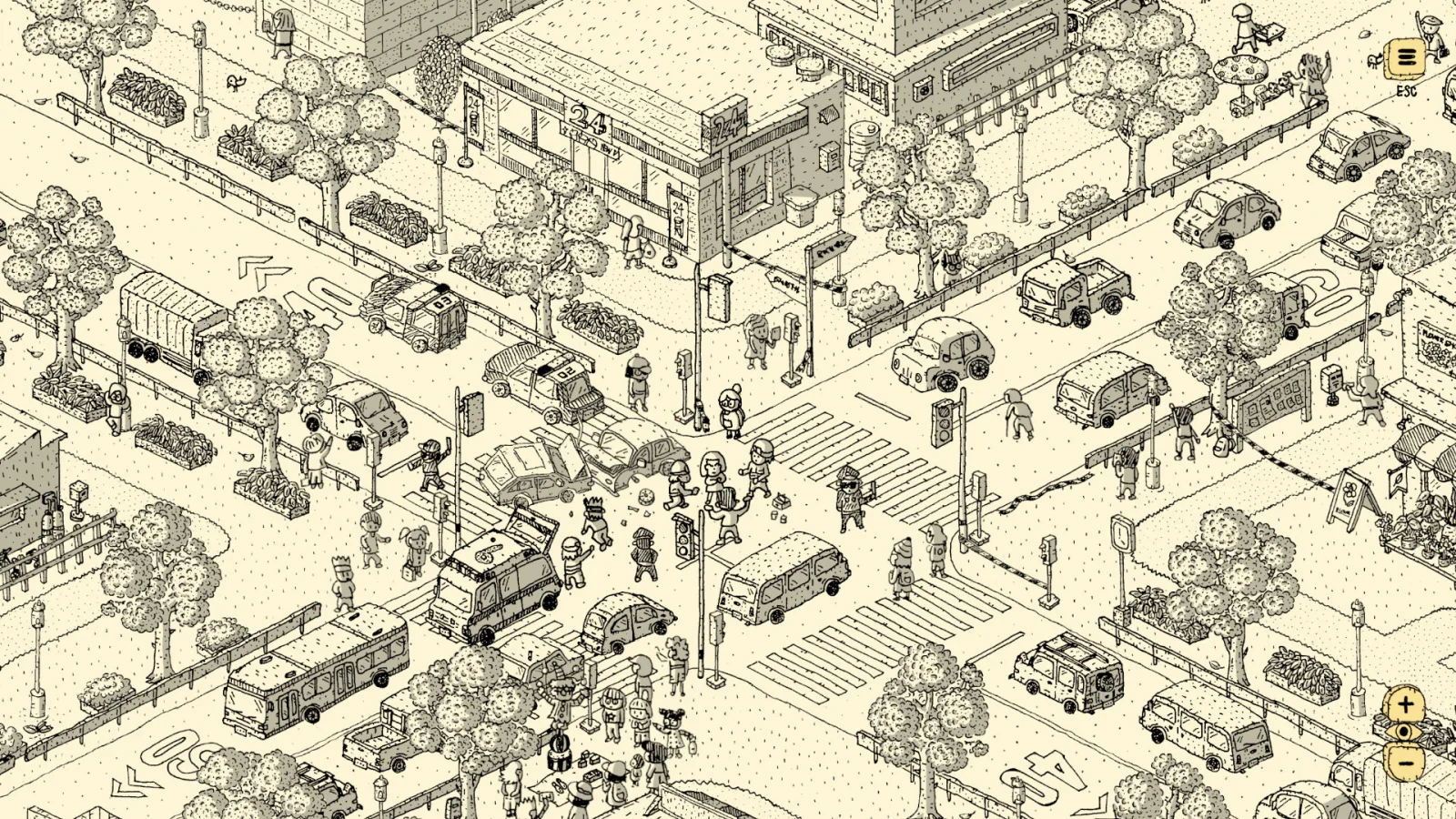
The game is announced with lush, detailed, art nouveau-inspired illustration. That aesthetic points toward curving forms, ornament, and a potentially elaborate visual field, while the premise supplies moths, monsters, wreckage, and an unsettling small town. Together, those elements could create a world that is beautiful in a way that never entirely becomes safe.
For a point-and-click adventure, visual detail has a functional challenge alongside its atmospheric appeal. Players need to parse locations, spot elements that invite attention, and remember where a lead might be useful. A dense illustrated scene can reward close looking, but it can also make important information hard to distinguish if the composition offers no visual hierarchy. The announced look is therefore not only a presentation feature; if it is carefully integrated, it could determine how naturally investigation moves from noticing to understanding.
The strongest possibility is that Gruesome Grove’s visual identity makes its clues feel embedded in the town’s culture. Art nouveau-inspired forms could make architecture, objects, and creature design appear to belong to one strange place rather than functioning as generic puzzle props. That would be especially valuable for a story about recovering a vanished version of home. A setting becomes more than backdrop when its decorative language, rules, and history all suggest the same underlying identity.
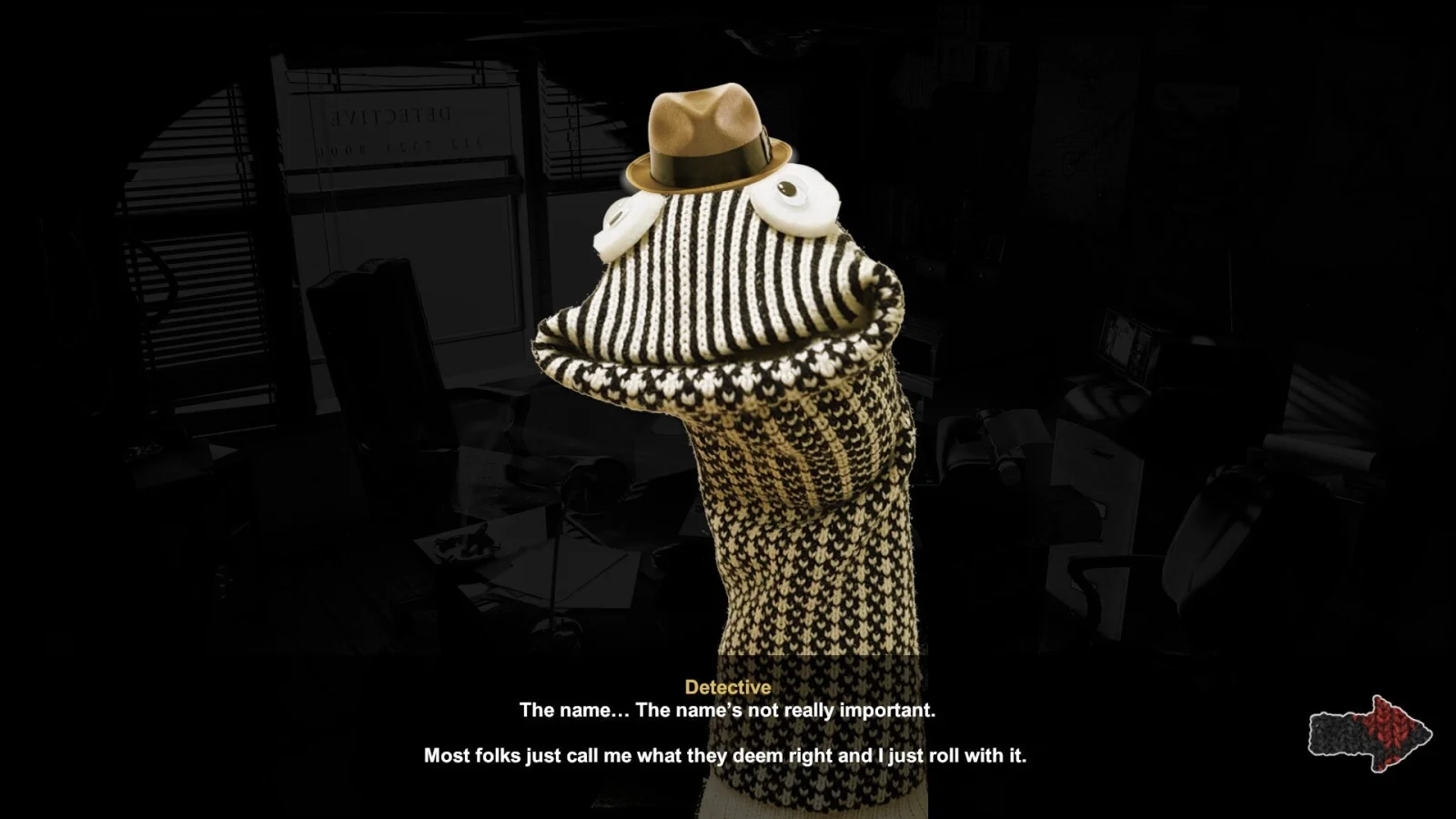
Allogloom also promises dark humour. In an adventure involving abductions and uncertainty about Nora’s ability to escape with the people she loves, humour could perform several different jobs. It might offer contrast, sharpen a character’s voice, underline the town’s absurdity, or make an unsettling detail more memorable. The tonal question is one of placement. Humour can heighten unease when it reveals how normal the bizarre has become to local people; it can also weaken tension if major stakes are repeatedly treated as weightless. The announcement establishes the intended mixture, not how that mixture will land scene by scene.
A classic framework with room for a specific identity
Calling Allogloom a point-and-click adventure inspired by the classics identifies a tradition without pinning the game to a single expected formula. The confirmed design components are a mystery-led journey, item combination, character negotiation, hand-crafted presentation, an illustrated art nouveau-inspired world, an original soundtrack by Kim Miller, and a cast spanning humans, monsters, and animals. The potential distinction lies in how closely those components are made to interact.
A mystery about a town can become generic if its places exist only as puzzle stations. Gruesome Grove has a clearer opportunity than that because the premise is explicitly about the town’s disappearance, damage, rules, and hidden truths. If the next clue frequently changes the player’s relationship to the setting, the investigation may gain momentum from meaning as well as access. If the puzzle design lets Nora’s conversations, inventory, and observations inform each other, each solved obstacle could feel like a piece of local history coming into focus.
Conversely, the announced features leave meaningful questions open. How broad is Gruesome Grove as an explorable setting? How directly will the investigation guide players between objectives? How are item-combination possibilities communicated? What form does negotiation take in play? How much do the displaced monsters influence problem solving? How often will the mystery turn on observation, conversation, inventory reasoning, or another approach? The answers will shape the practical rhythm of the adventure far more than the broad genre label alone.
For now, Allogloom’s most concrete appeal is the meeting of a familiar adventure-game toolkit with an unusually macabre civic mystery. Nora’s task is not framed as saving an abstract world; it is framed as bringing people home and confronting what Gruesome Grove has concealed. If the announced puzzles and negotiations make that responsibility tangible, the game could use classic point-and-click interaction to turn a strange town’s secrets into the substance of play.
For another upcoming-game design discussion focused on how stated systems may interact before release, see our Radiotext PC design feature.