Disclosure: Joking Joystick received a free game key for Sous Raccoon. There was no opinion or publication obligation.
No Joking Joystick gameplay notes were provided for this coverage. Accordingly, this article does not assess controls, balance, performance, stability, content quality, accessibility, or the moment-to-moment experience of playing the released game.
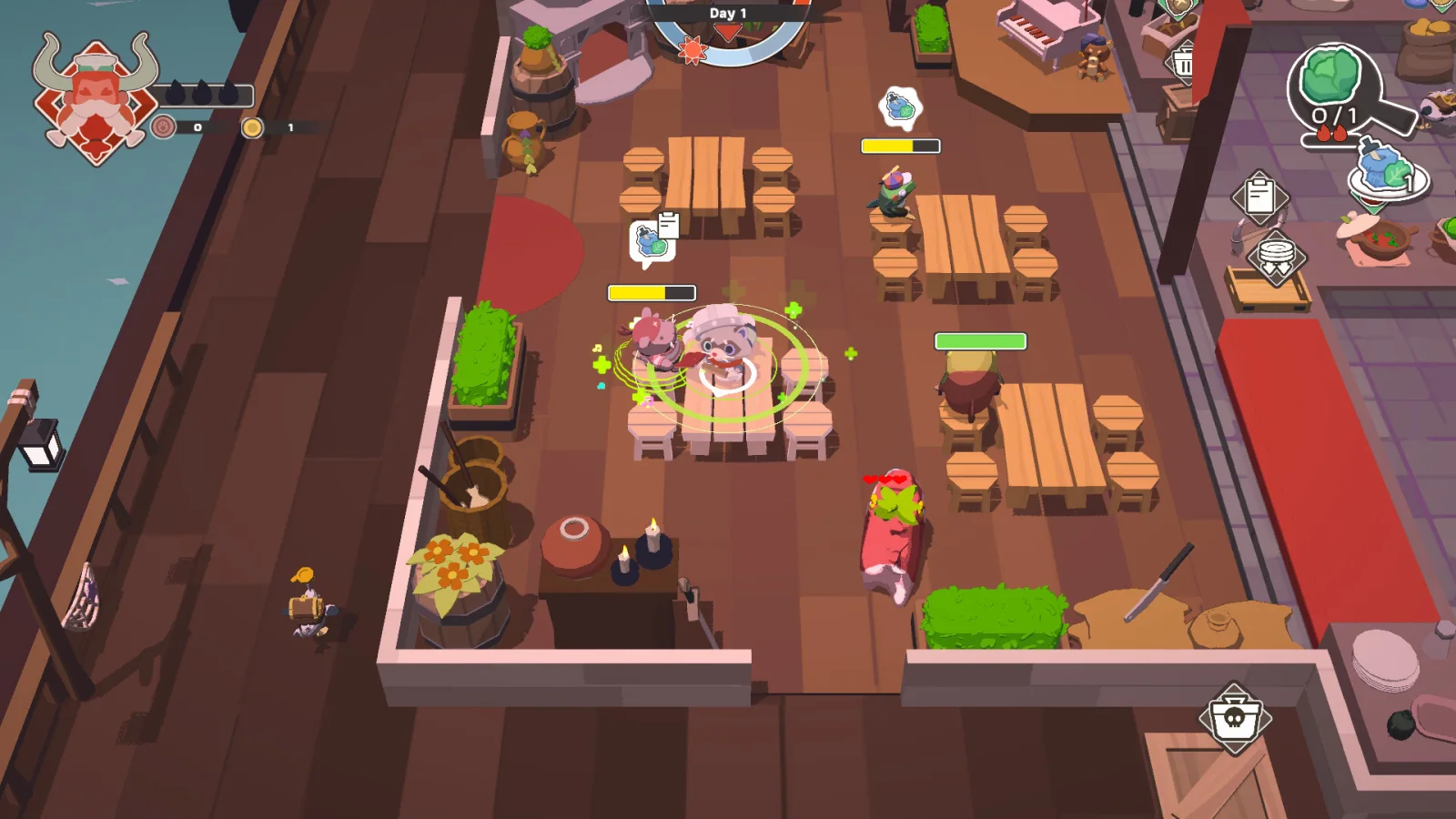
Sous Raccoon is an action and indie game developed by Novice Flow and published by Rising Tide. It released for Windows PC on October 1, 2026. Its announced premise casts the player as a raccoon hired as a sous chef by an impatient Chef. The public design outline describes repeatable restaurant shifts, changing kitchen conditions and layouts, upgrades and abilities, hostile creatures, four restaurant locations, two-player online co-op, room decoration, and a bar containing side minigames.
That is a deliberately busy outline, and the central design question is not whether it has enough ingredients. It is whether its systems can make pressure understandable. A restaurant shift can be a useful setting for overlapping demands: the player may need to move through space, respond to obstacles, confront creatures, pursue resources, and manage whatever standards or hazards Chef represents. A roguelite structure can add changing circumstances and choices to that pressure. But these ideas only become satisfying in implementation if players can identify what matters now, what can wait, and why a decision succeeded or failed.
The announced raccoon-and-Chef setup gives the game a comic identity, while the run-based structure gives that comedy a possible mechanical purpose. Failure can be funny in premise, but a repeatable game still needs failure to communicate something actionable. With no hands-on basis for judging that communication, the useful assessment here is conditional: Sous Raccoon has the components for a lively kitchen-action loop if its information, priorities, and consequences remain legible when several systems collide.
Restaurant shifts are the announced frame for each run
The public description presents restaurant shifts as the core of each run. It also says kitchens, conditions, and layouts can change, with unexpected events intended to prevent runs from unfolding identically. These are announced design intentions. They do not establish how extensive the variation is, how often it occurs, or whether each change meaningfully alters the player’s best response.
Still, kitchens offer a potentially valuable kind of variation because layout can affect decisions rather than merely appearance. If routes, work areas, obstacles, enemies, and objectives influence one another, a rearranged space could change where the raccoon goes first and which problem is worth solving. A familiar upgrade might become more or less valuable when a route becomes awkward, a hazard blocks access, or a new condition changes the immediate priority. That possibility would give changing layouts a stronger role than simple visual novelty.
For this approach to work, variation would need to arrive with enough clarity for adaptation. A player should be able to recognize that a changed kitchen creates a changed problem, rather than only noticing that a run has become more difficult. If an event affects the shift, its effects would ideally be understandable. If an obstacle changes movement or access, the player would ideally have a readable way to respond. These are design standards, not claims that the released game meets them.
The announced design includes four restaurant locations, described as distinct biomes with their own layouts, mechanics, enemies, obstacles, and challenges. Four settings could give the game room to introduce different tactical concerns without abandoning the central restaurant premise. One location might make a previously reliable habit less useful; another might ask the player to interpret a different relationship between space, threats, and tasks. The supplied information does not define those locations or their mechanics, so it cannot establish the pace, depth, or quality of that progression.
That limitation matters. “Four locations” tells readers about the stated breadth of the design, but it does not prove that they are equally developed, strategically distinct in practice, or arranged into any particular progression. The meaningful question is whether a location changes decisions instead of only changing scenery.
Upgrades and abilities need to shape choices
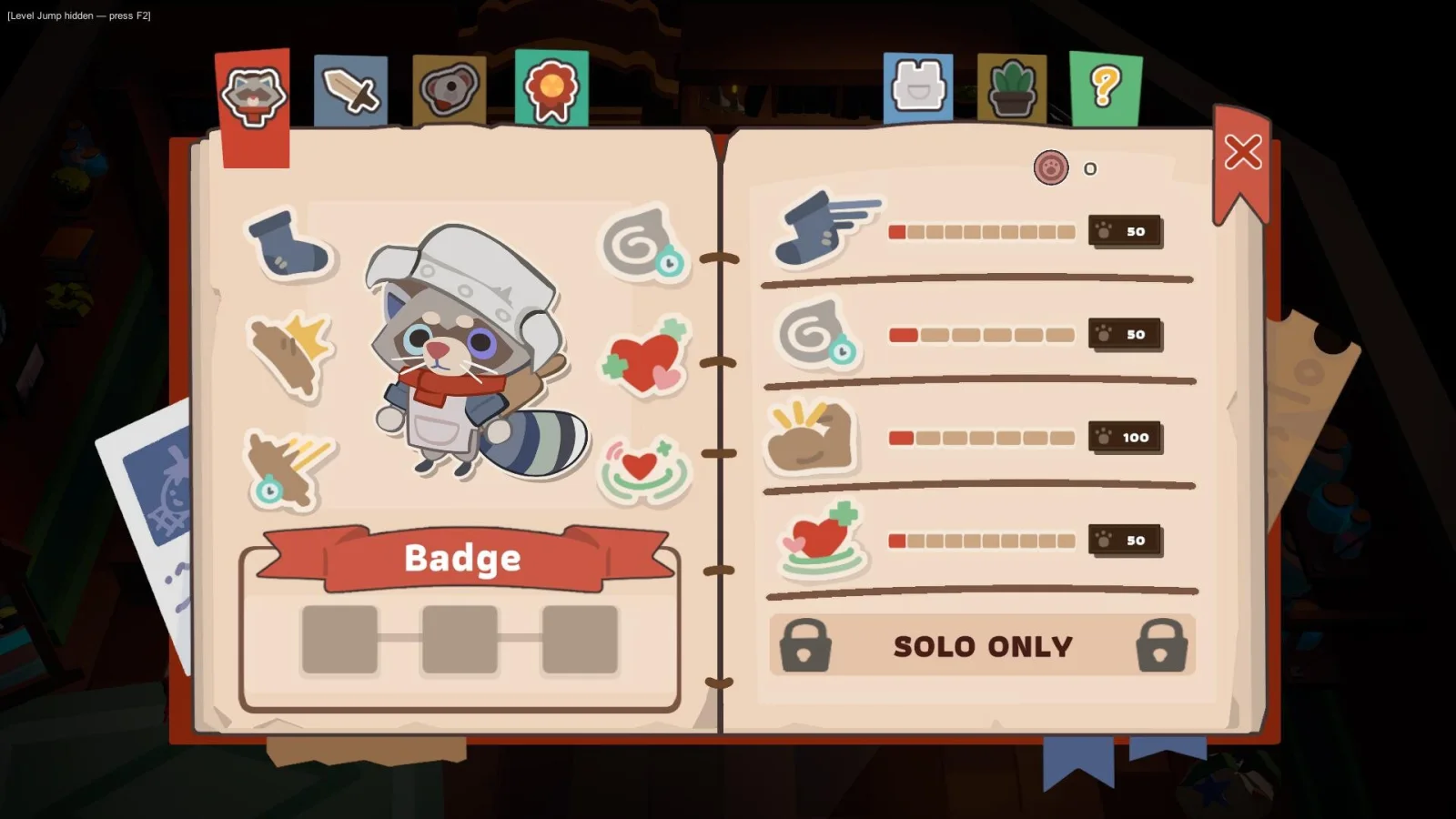
The announced design says players can collect loot and spend it on upgrades and abilities. It also specifically describes knocking coins out of birds. At the broadest supported level, this establishes an economy connected to active shifts: players can acquire resources and use them for character-improving choices.
The major open question is what those choices actually do. The public description says combinations can transform how the game is played, but it does not detail individual upgrades, abilities, currencies, selection rules, or limits. It does not establish whether upgrades are temporary to a run, persist between runs, unlock future options, or combine several of those roles. Familiar assumptions about roguelite progression would be speculation here.
In conditional design terms, the strongest version of this system would make upgrades answer different problems. An ability could theoretically alter movement, threat management, resource gathering, recovery, positioning, or the handling of kitchen-specific demands. A good combination would then create a recognizable approach rather than simply increasing an unspecified value. None of those effects have been announced as concrete mechanics. They are examples of the kind of distinct decision-making the stated build-focused concept would need to support.
The bird-and-coin detail may be especially relevant if obtaining coins competes with other demands. If pursuing currency costs time, creates risk, or pulls the player away from an urgent kitchen problem, it could produce an understandable trade-off between immediate stability and later power. If coins are gained without a meaningful cost, the same feature may instead function as a lighter reward beat. The available description does not say which model applies, how coins are spent in detail, or how resource acquisition is balanced.
That uncertainty is not a defect by itself; it is simply where the public outline stops. The announced game has upgrades, abilities, loot, and potential combinations. Whether those systems create enduring build identity remains a question for supported hands-on coverage rather than something this feature can declare.
Chef is a pressure point with rules still unspecified
Chef is central to the premise. The public description portrays him as having little patience and a magical tendency to burst into flames of fury. That fury can lead to the raccoon being fired, with the stated instruction being not to get fired.
This makes Chef an announced source of pressure, but it does not define a complete mechanical system. The available information does not specify what prompts Chef’s fury, whether the player receives warnings, how firing interacts with a run, whether it is a direct failure condition, or how frequently Chef affects play. It would be unsupported to label him a timer, boss, evaluator, or any other more precise role.
Conceptually, a visible authority figure could serve as an anchor in a crowded game. When threats, obstacles, tasks, events, and shifting layouts all compete for attention, Chef’s mood could potentially communicate an urgent priority. That would turn the comic premise into usable information. The opposite risk is also straightforward: if the relationship between mistakes and punishment is unclear, a failure system can feel arbitrary rather than instructive.
The raccoon-and-Chef contrast may also help establish a tone that accommodates setbacks. A combustible superior and an improbable animal employee give failure a slapstick framing. Yet tone cannot substitute for feedback. Repeated runs would still need to make the player’s options and errors intelligible if the announced chaos is to become learnable rather than merely noisy.
Online co-op adds a coordination question
Two-player online co-op is explicitly part of the announced feature set. The description frames it as a way for two players to tackle restaurant shifts together and find new ways to succeed or fail. For a design built around simultaneous pressures, adding another player could alter how responsibilities are handled.
The most promising possibility is division of attention. If two players can meaningfully respond to different problems, co-op could create situations where one participant addresses an immediate disruption while the other gathers resources, manages space, or handles another demand. That outcome depends entirely on the implemented rules. The public description does not establish how players share objectives, resources, upgrades, rewards, hazards, or available space.
It also does not specify difficulty scaling, communication tools, recovery options, matchmaking details, or whether solo and co-op runs follow the same structure. Those unknowns should remain unknown. Two-player online co-op is an established announced feature; its balance, depth, and practical usability are not established by the supplied information.
Co-op can be valuable when it creates coordination rather than just more activity. The eventual design will need to make shared responsibilities clear enough that players can cooperate deliberately. If responsibilities are unclear, a second raccoon could amplify confusion as readily as it creates teamwork. That is not a prediction about Sous Raccoon; it is the principal design test suggested by its announced multiplayer premise.
The bar and room decoration broaden the stated structure
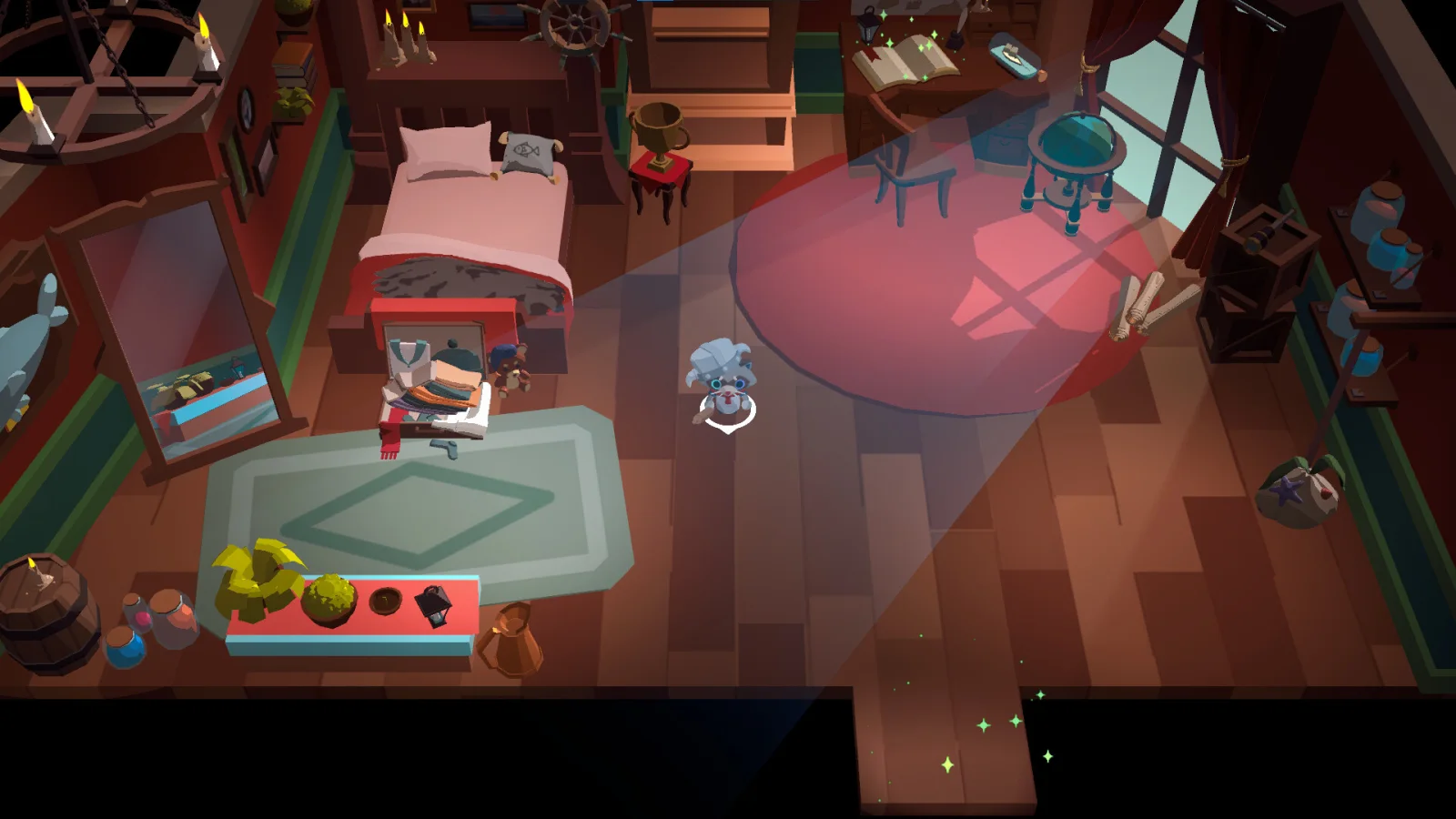
Outside restaurant shifts, the announced design includes a room-decoration feature and a bar. Players can spend earnings on decorations and swap them into their room. The bar is described as a place to wander and as the setting for side minigames that can earn extra cash for upgrades.
These systems suggest an intended rhythm beyond consecutive kitchen runs. Decoration introduces personal expression, while the bar is explicitly framed as a break from the stress of the main game. That is a coherent complement to a high-pressure premise: a game can offer intense action while also giving players a lower-stakes space and a visible way to personalize their surroundings.
However, the exact role of both systems remains open. The public information does not establish how many decorations exist, what the minigames are, how their rewards compare with other income, how difficult they are, or how often players are expected to use them. It also does not establish whether room customization affects anything beyond appearance. No conclusion about depth or value would be supported.
The minigames create a particularly interesting conditional question because they award cash for upgrades. If their rewards are substantial, they may become an economically important part of the larger loop. If they are modest, they may function mostly as an optional pace change. Either structure could be intentional, but they produce different player incentives. The announced description identifies the connection between minigames and upgrade cash without providing enough detail to judge how demanding that connection is.
What the announced design still needs to demonstrate
Sous Raccoon has a clear public outline: repeatable restaurant shifts, changing layouts and conditions, four locations, resource-driven upgrades and abilities, hostile creatures, Chef-driven pressure, online co-op, room decoration, and bar minigames. The premise is specific enough to identify the questions that matter most without pretending those questions have already been answered.
Does a changing kitchen cause players to revise their approach in understandable ways? Do upgrades and abilities produce distinct strategies? Can cooking demands, obstacles, creatures, events, and Chef pressure remain readable when they overlap? Does co-op encourage useful coordination? Do the bar and room systems supply welcome variation without creating unclear obligations? Those are implementation questions, not faults established by the current information.
For a broader design-focused discussion of repeatable sessions and meaningful spatial or resource choices, see our Medium Rare PC design preview. The connection is limited to that general analytical interest; the supplied information does not establish shared mechanics between the games.
The supported conclusion is modest. Sous Raccoon announces a cooking-roguelite framework where a raccoon sous chef faces altered restaurants, escalating pressure, upgrades, and optional activities beyond the shift. Its potential rests on whether that intentionally absurd chaos resolves into choices players can parse, adapt to, and learn from. Without Joking Joystick hands-on evidence, implementation quality remains unassessed.