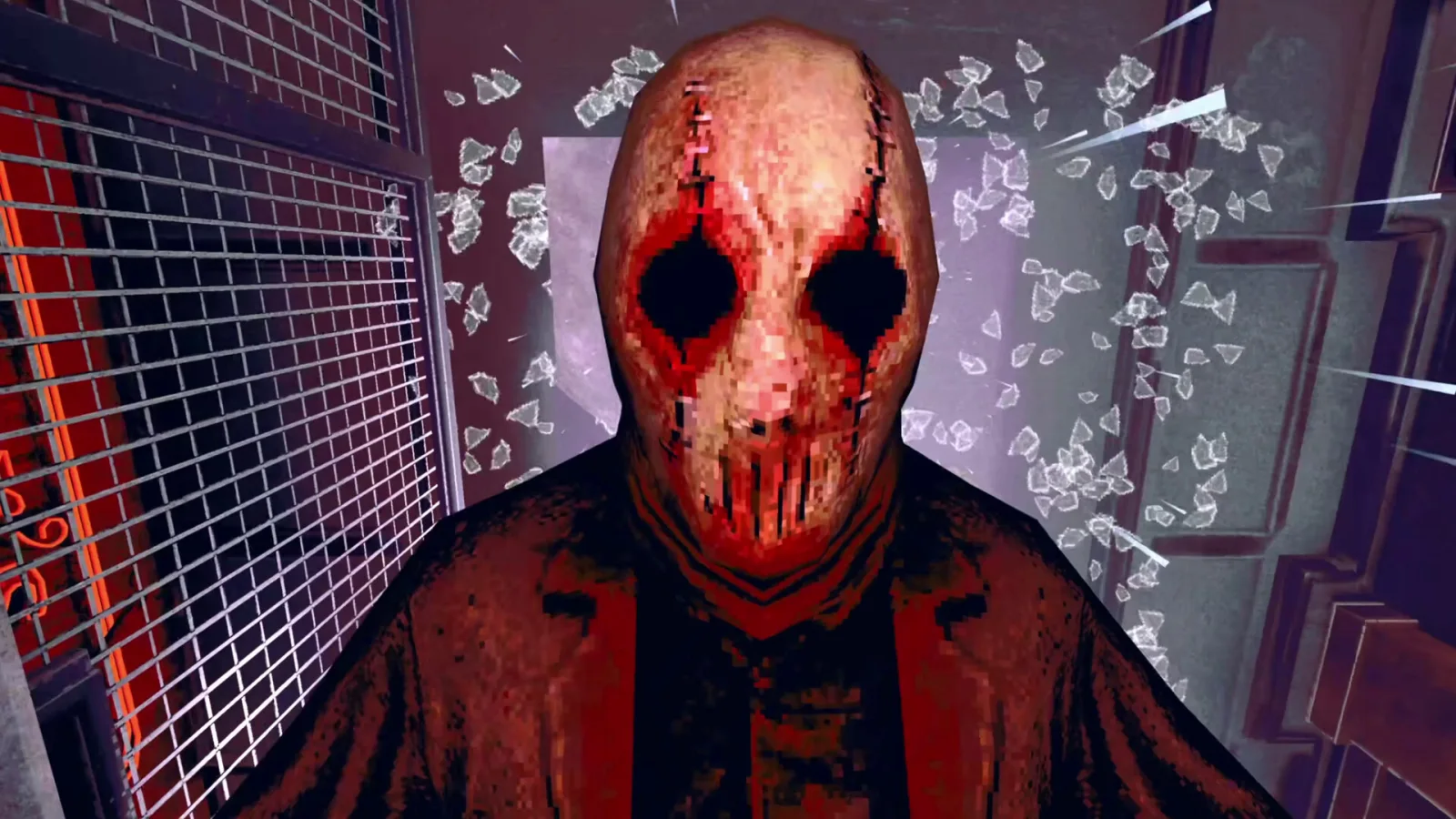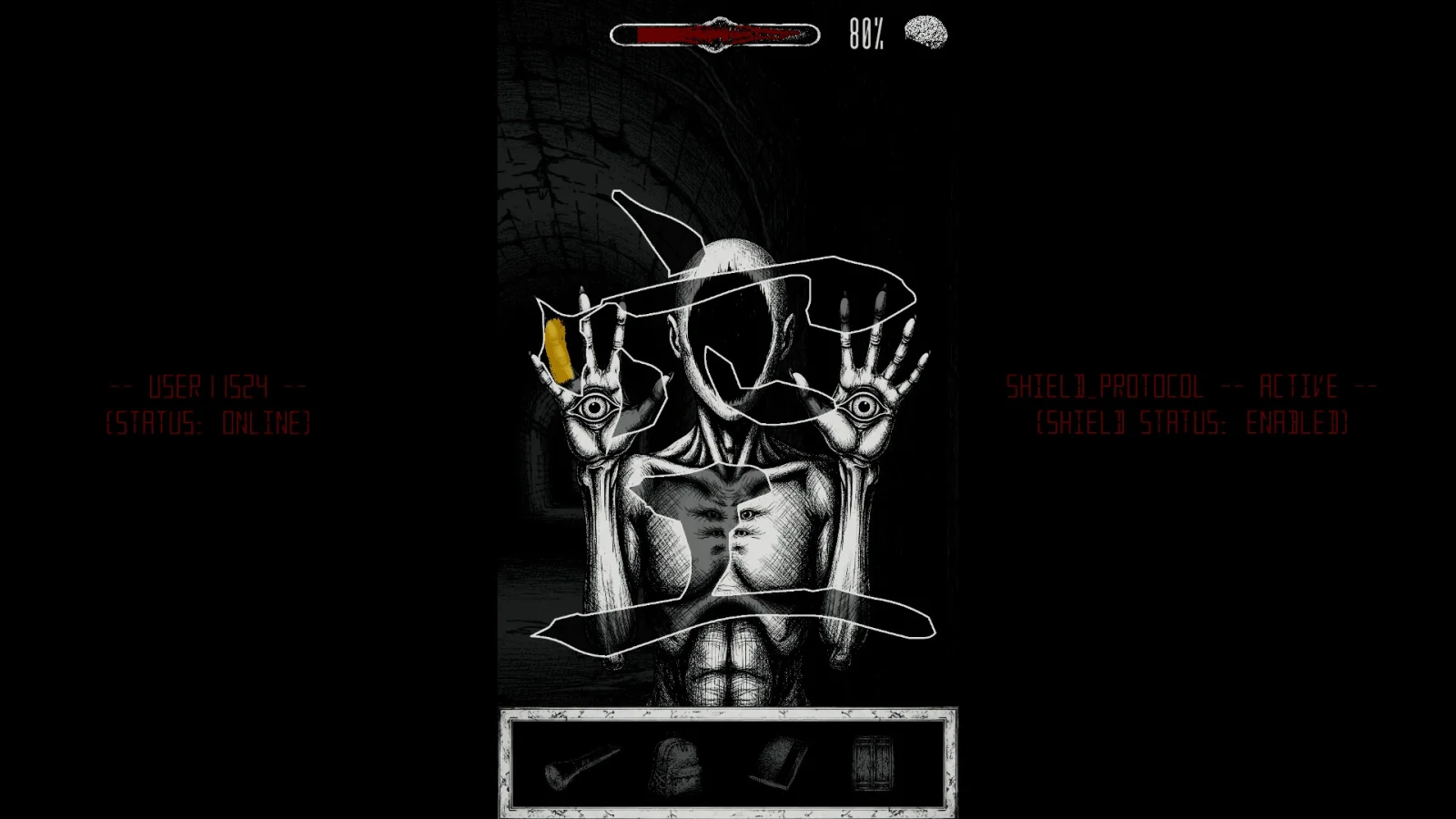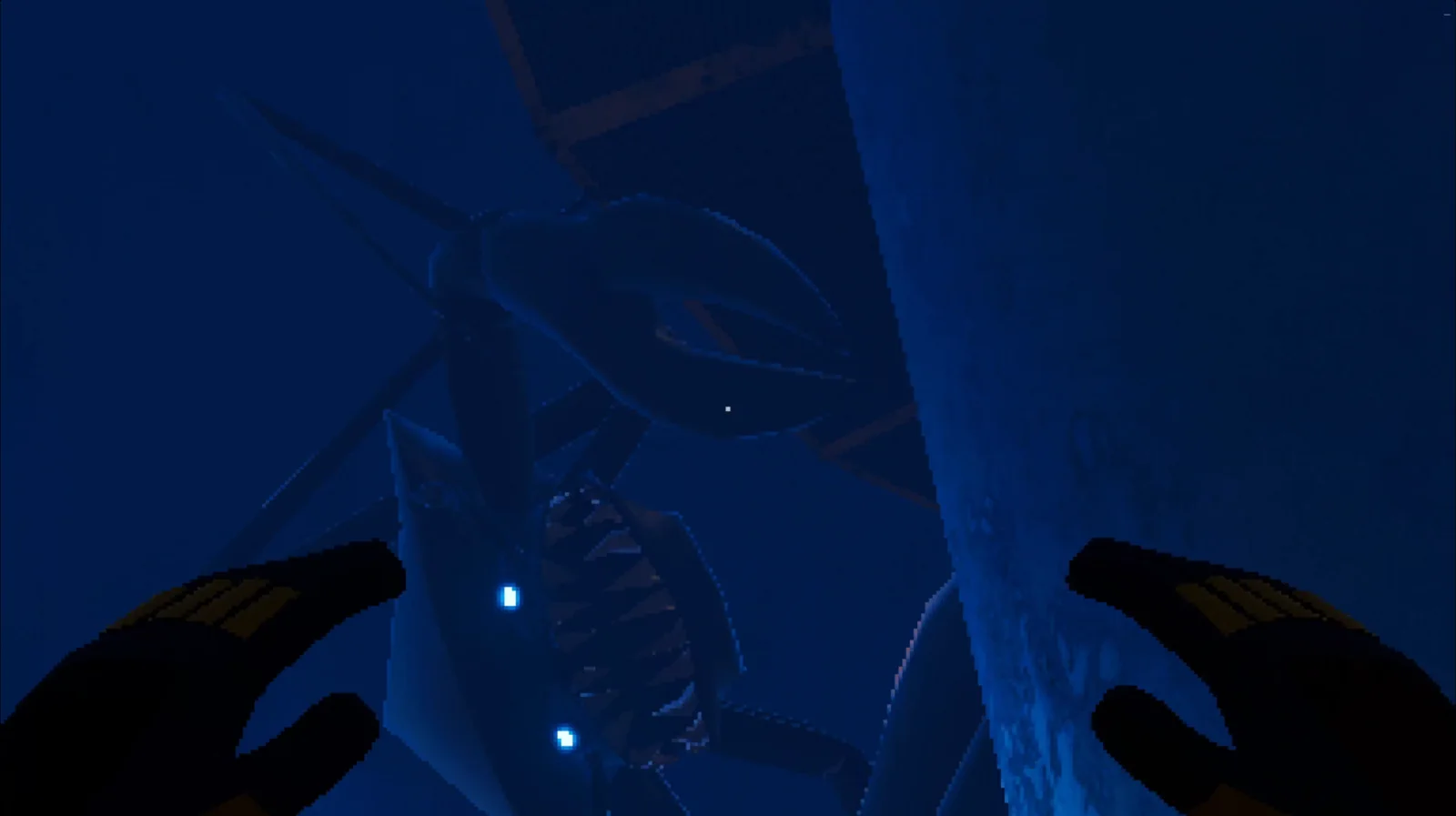
Below The Blades is an in-development first-person climbing horror game from Dillion Muse, with Ten Image Publishing listed as promoter and publisher. Its announced setting is Turbine 46, an offshore wind turbine caught in a violent storm. The stated objective is immediately practical but carries an ominous second purpose: climb the structure, diagnose and repair its failures, discover what happened to the previous technician, and evade an unknown presence somewhere on the turbine.
That is a concentrated premise. Rather than treating height as scenery around a broader adventure, Below The Blades is designed to make vertical movement, maintenance work and horror pressure occupy the same industrial location. The developer has described independently controlled hands for physical climbing, grip and stamina management, interior and exterior routes, belt-carried tools, equipment diagnosis and repair, worsening weather, and a pursuing threat. A planned PC release date of November 12, 2026 has been listed, although the project remains in development. An earlier public playtest has ended, and the developer has said it is working toward future demos, showcases and a Steam release.
Those announced elements do not yet establish how the finished game will feel in motion or how consistently its systems will work together. They do, however, give Below The Blades a clear design question: can the vulnerability of manually climbing an exposed machine make every repair task feel more consequential than a conventional objective marker?
A turbine is a strong place to build vertical horror
Offshore wind turbines are naturally imposing structures: tall, narrow, mechanical, exposed, and isolated. For a horror game, that combination can be more useful than a sprawling map. A single location can be understood in broad strokes while still withholding immediate safety. The player may know that a route continues upward or inward, yet the route itself can remain daunting because it is exposed to the storm, interrupted by damaged machinery, or complicated by the thing said to be pursuing them.
The setting also gives physical climbing a narrative role. A climb on a tower is not simply travel between authored arenas. It is the work required to reach the component that needs attention. If a failure has to be diagnosed and repaired before progress is possible, the player’s movement and the game’s premise should point in the same direction: a technician is attempting to restore a dangerous, failing site under extreme conditions.
That unity matters because horror games can lose urgency when interactions feel detached from their setting. A repair panel in Below The Blades is announced as part of a wind-turbine emergency rather than an arbitrary puzzle box placed beside a locked door. Likewise, an exterior climb has a clear spatial reason. The turbine is not merely a horror backdrop; it is intended to be the obstacle, workplace and potential refuge all at once.
There is also a productive tension in the contrast between large-scale energy infrastructure and an individual body. Turbine 46 is a vast machine built to withstand severe conditions, while the player is represented through hands, grip and stamina. That difference can make the location feel hostile without requiring constant spectacle. The tower’s scale may be enough to frame ordinary movement as exposure.
Independent hands could make movement a decision
The most distinctive announced mechanic is independently controlled hands for physical climbing. The important promise is not simply that a character climbs. It is that climbing is meant to demand direct management of contact points. Grip and stamina are also explicitly part of the design. Together, these ideas suggest a format where reaching a destination may depend on maintaining safe holds rather than triggering a contextual climbing animation.
In design terms, direct hand control can turn an ascent into a sequence of choices. Where should the next hand go? Is it preferable to move quickly before conditions worsen, or pause to preserve grip? Does an interior route offer protection at the cost of a less direct route? Those questions are possibilities rather than confirmed rules, but they show why the announced control model fits this setting particularly well. A wind turbine offers ladders, platforms, shafts, external surfaces and equipment spaces that can give similar vertical goals different kinds of risk.
The crucial challenge will be legibility. Physical climbing systems need players to understand why a hold succeeds, why stamina changes, and what recovery is possible after a mistake. If the game communicates those relationships clearly, deliberate movement can generate suspense from the player’s own decisions. If the boundaries are unclear, the same system could turn tension into uncertainty about controls. The developer has said feedback from the finished playtest informed climbing and stamina, which identifies these areas as active parts of the project’s ongoing development.
Stamina can be especially meaningful in horror because it makes time a resource without automatically relying on combat. A reduced reserve may force a reassessment of route or pace. A player who hears danger while partway through an exterior climb could face a meaningful dilemma if there is no simple way to sprint to safety. That scenario is a design implication, not a confirmed encounter structure, but it captures the strongest potential of connecting endurance to manual movement: fear can arise from being committed to an action that cannot be instantly abandoned.
Interior and exterior routes can give the structure a useful rhythm
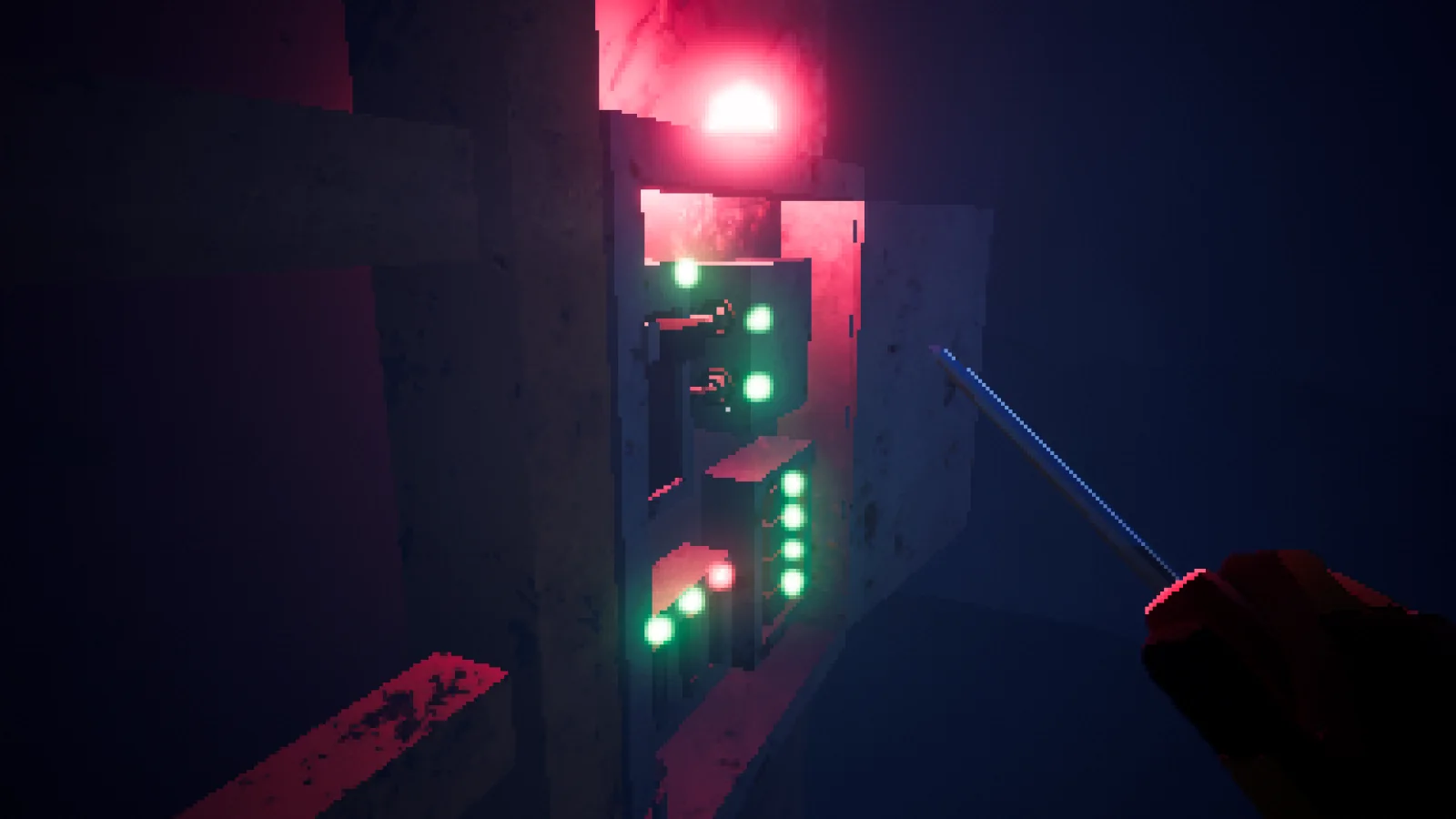
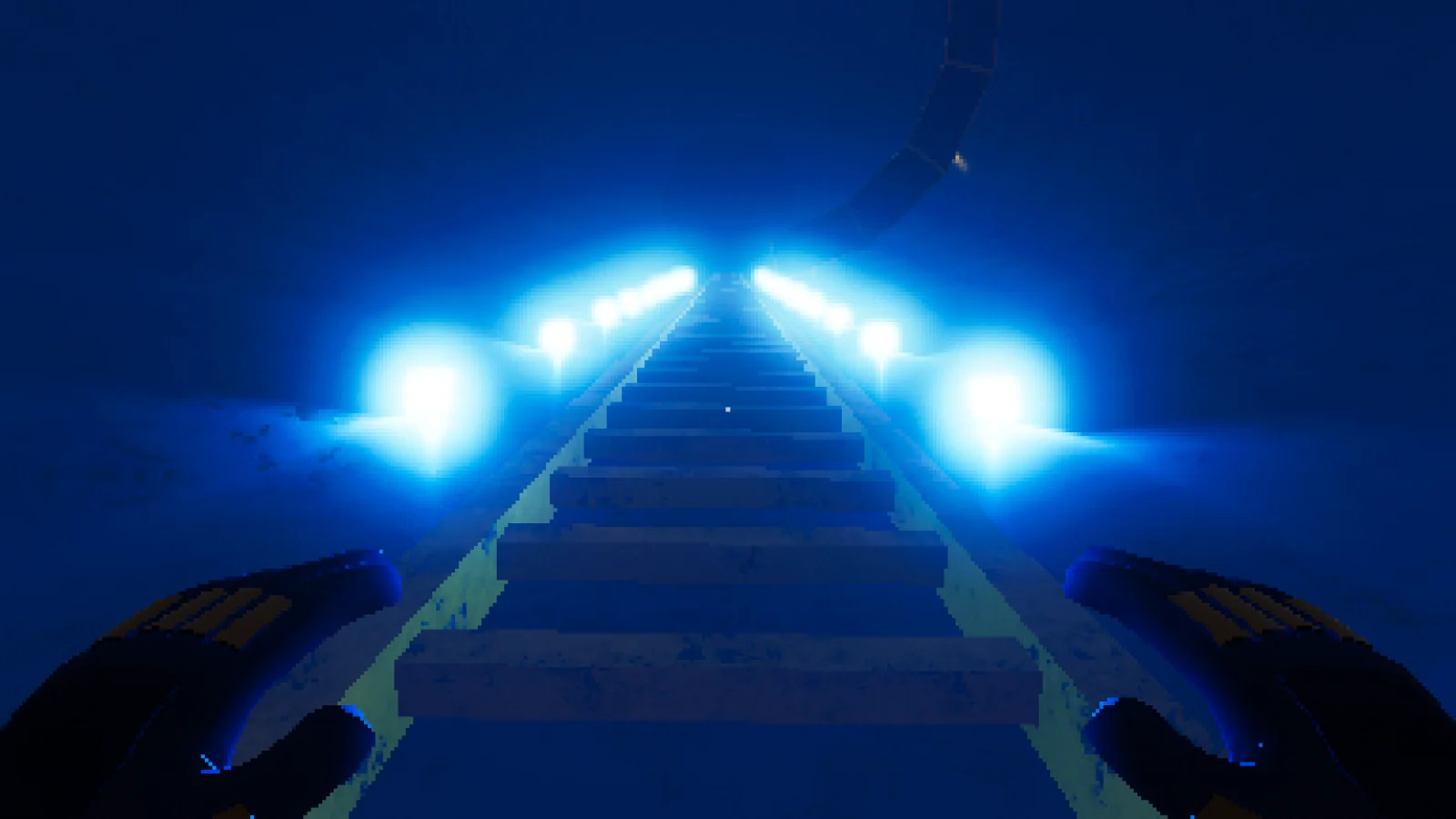
Below The Blades is announced to include both interior and exterior routes. This detail may be central to keeping one tower from feeling like one unbroken climb. The outer structure can emphasize weather, height and exposure. Interior spaces can change the texture of navigation through tighter surroundings, machinery and the possibility of temporary shelter. Neither route has been described as categorically safer, and the game should not be presumed to use them as a simple risk-versus-reward split. Still, their coexistence gives the setting an opportunity for contrast.
Contrast is valuable in horror pacing. A player may become accustomed to one kind of stress if it remains constant. Moving between wind-battered exterior sections and enclosed turbine spaces could alter the nature of attention required without abandoning the central location. The player might move from watching hand placement and weather outside to inspecting equipment and listening for danger inside. The announced pursuing threat could then matter across both modes of travel, rather than being restricted to a dedicated chase corridor.
That flexibility would distinguish the turbine from a mere vertical level. A well-connected industrial structure can function like a compact world: a place with alternate paths, work areas and spatial memory. The more clearly its routes communicate their relationship to each other, the more satisfying it could be to turn the tower from a frightening unknown into a place the player can navigate under pressure. That is not a claim that Below The Blades has such a layout; it is the opportunity created by its announced interior and exterior design.
For another example of how an announced game can put route-building and physical space at the center of its design identity, see this interactive-diorama route design feature. Below The Blades is aiming at a very different genre and perspective, but both concepts make the path through a space more important than a neutral line between objectives.
Repairs could provide the game’s most grounded pressure
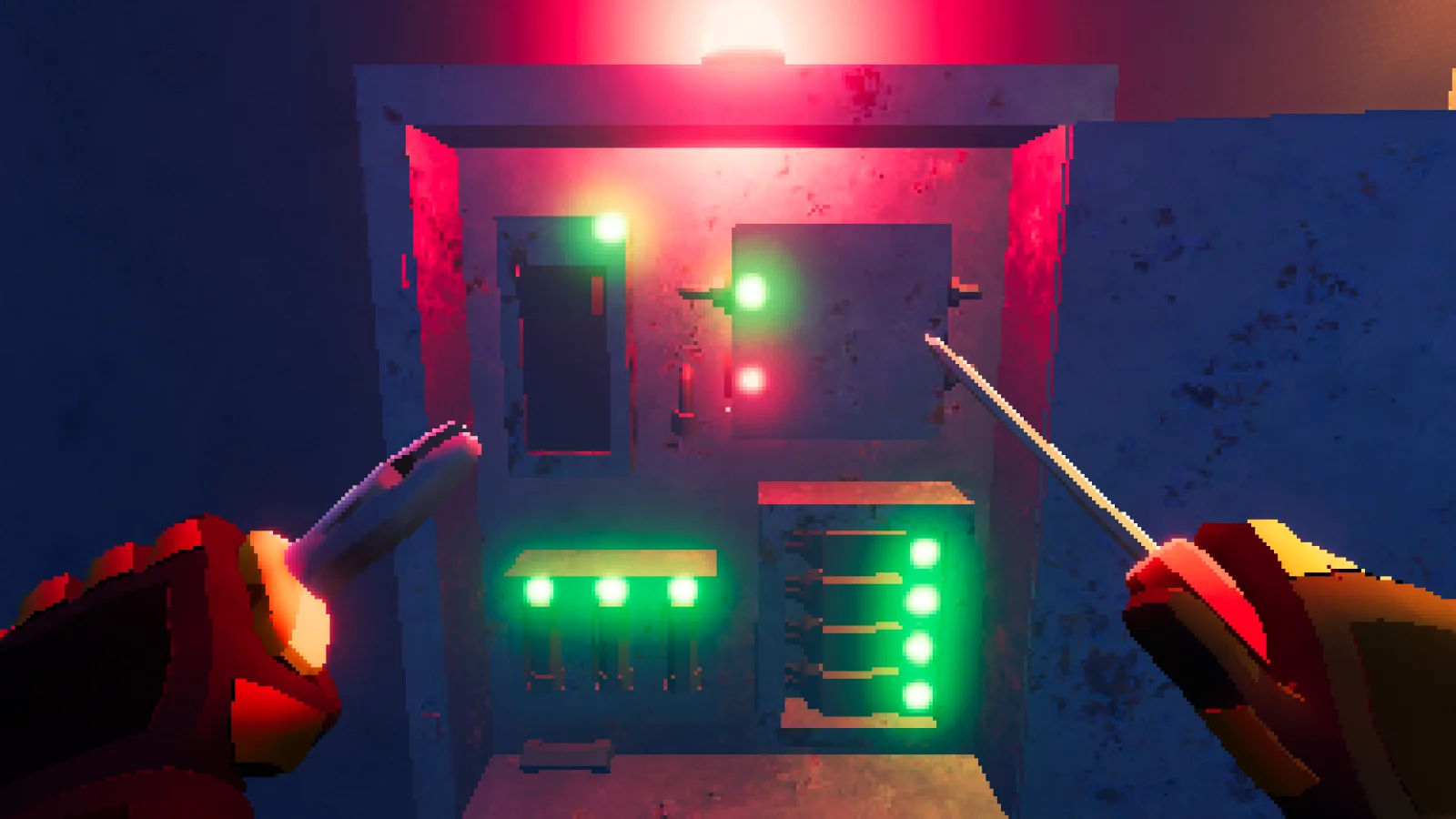
The premise says the player must repair failures, while the developer describes diagnosis and repair of failing equipment using tools carried on a belt. This makes maintenance more than story dressing. The intended activity is not solely to survive a climb; it is to perform work while survival remains uncertain.
That can give the horror a useful shape. A threat is often most frightening when it interrupts something that requires concentration. If diagnosing a failure asks the player to notice conditions, select or use a tool, and remain in a particular location, then repairs could create intervals of exposure without needing to invent reasons for the player to linger. The task itself supplies the reason. In principle, the player’s attention is divided between the immediate machinery problem and the larger danger on the turbine.
How deep the repair interactions are has not been established, so it would be premature to characterize them as puzzles, simulations or minigames. What is known is narrower and more promising: tools are carried on a belt, equipment failures are to be diagnosed and repaired, and those tasks sit within a climbing horror framework. The final design will need to make those actions understandable enough that they feel like meaningful technical work rather than opaque procedure.
There is a further tonal advantage to repairs in this setting. Restoration is inherently hopeful: a failed system can be made operational again. Horror complicates that hope. Each successful repair could potentially represent progress, but it may also ask the player to visit a more exposed part of the turbine or remain near a piece of machinery. The game does not need to turn every task into an ambush for that tension to work. The possibility that work must continue despite fear is already a strong foundation.
Weather should be more than an atmospheric effect
Worsening weather is an announced part of Below The Blades, and it is potentially the system that binds the rest together. A storm has an obvious atmospheric role on an offshore turbine, but its greater value would be mechanical and spatial. Conditions could make exterior travel feel different from interior travel, emphasize the stakes of exposed climbing, and provide a changing backdrop for the ongoing repair mission. Exactly how weather affects control, visibility, route access or threat behavior has not been specified and should not be assumed.
The advantage of a weather system is that it can make the same route carry a different emotional charge at different moments. Even without adding new spaces, worsening conditions can reframe a familiar climb as a deteriorating situation. The game’s stated premise supports that direction: the player is dealing with failures during a violent storm, not merely exploring a tower after the fact.
But weather must remain readable if it is to support the climbing. A game based on hand placement and grip has a particular need to distinguish intentional difficulty from visual noise or input ambiguity. The ideal balance would preserve the sensation of battling the elements while allowing the player to understand the consequences of their choices. That balance cannot be judged before release, yet it is one of the clearest design priorities implied by the announced feature set.
An unknown pursuer is strongest when it changes priorities
Below The Blades includes an unknown threat that the player must evade, and the story is set to uncover what happened to a previous technician. The identity, capabilities and narrative role of that threat have not been detailed. Keeping it unknown is appropriate to the premise, but it also means the game should be assessed on the question its design raises rather than on imagined monster behavior.
The strongest role for a pursuer in this kind of game would be to alter how the player approaches systems already announced: climbing, route choice and repair work. If the threat merely appears at predetermined moments unrelated to the turbine’s other demands, it risks feeling separate from the game’s most distinctive ideas. If its presence changes the perceived safety of a ladder, platform, interior passage or repair location, it could make the entire structure feel unstable.
Importantly, evasion does not have to mean uninterrupted fleeing. The pressure can come from uncertainty, preparation and disrupted plans as much as direct pursuit. That is conditional analysis, not a statement about Below The Blades’ encounter design. Still, the game’s premise is well suited to a horror rhythm where the player is never entirely free to treat maintenance as routine.
What development feedback suggests, and what it does not
The developer has said that feedback from the earlier playtest affected climbing, stamina, repairs, creature encounters, accessibility, pacing and the project’s general direction. This is meaningful because it identifies the main pillars receiving attention. It does not reveal the precise feedback, the changes made, or the final quality of any one system. Nor does the ended playtest mean that a public demo is currently available.
Accessibility deserves particular attention in a game built around physical climbing and sustained tension. The developer’s statement confirms that accessibility has been part of the feedback-informed development conversation, but no specific options or accommodations have been announced in the provided details. It would therefore be inappropriate to promise any particular settings. The broader design challenge is clear, however: Below The Blades will need to make its intended stress and physicality approachable without making assumptions about how every player interacts with demanding first-person controls.
The project’s current state is best understood as an announced design with a focused identity, not a finished object that can be scored. Its specific combination of manual climbing, grip management, repair work, worsening weather and pursuit gives it more definition than a generic “survive a storm” pitch. The remaining questions are exactly the questions that matter: whether climbing is precise, whether repairs deepen the pressure, whether routes create meaningful choices, and whether the threat reinforces rather than overwhelms the turbine’s physical drama.
Outlook
Below The Blades has chosen a setting that naturally supports its mechanics. An offshore turbine is a place where every upward movement can carry risk, every enclosed room can feel provisional, and every repair can feel necessary. The announced systems point toward a horror game in which fear is not confined to scripted shocks; it may emerge from the demands of doing a difficult job in the wrong place at the wrong time.
That promise remains conditional until the game is available in a form that shows how its controls, repairs, weather and threat actually interact. For now, the most encouraging fact is the coherence of the concept. Below The Blades is not just using a turbine as an unusual setting. Its announced design is built around the idea that this towering machine is both the path forward and the source of the player’s vulnerability.