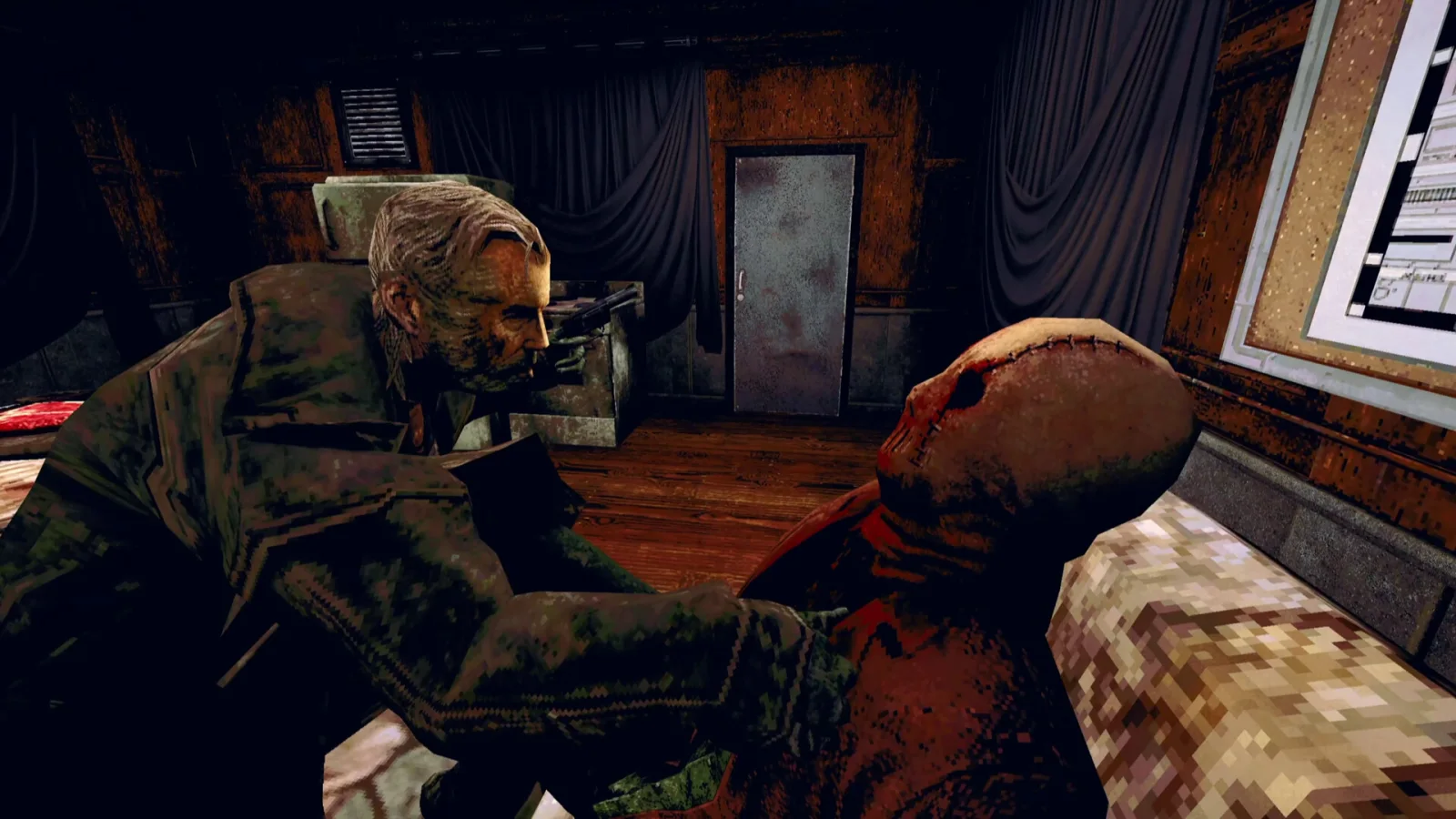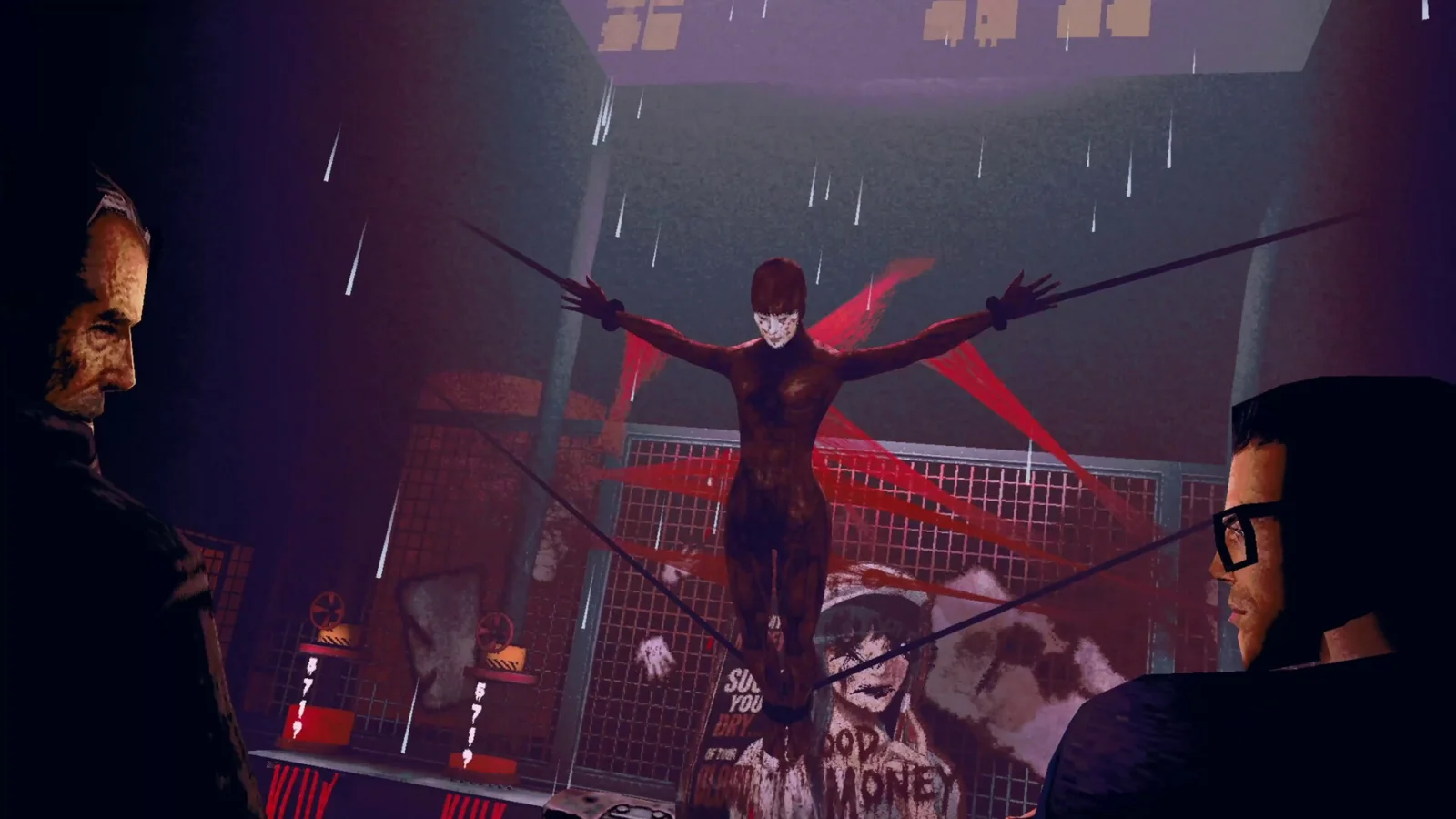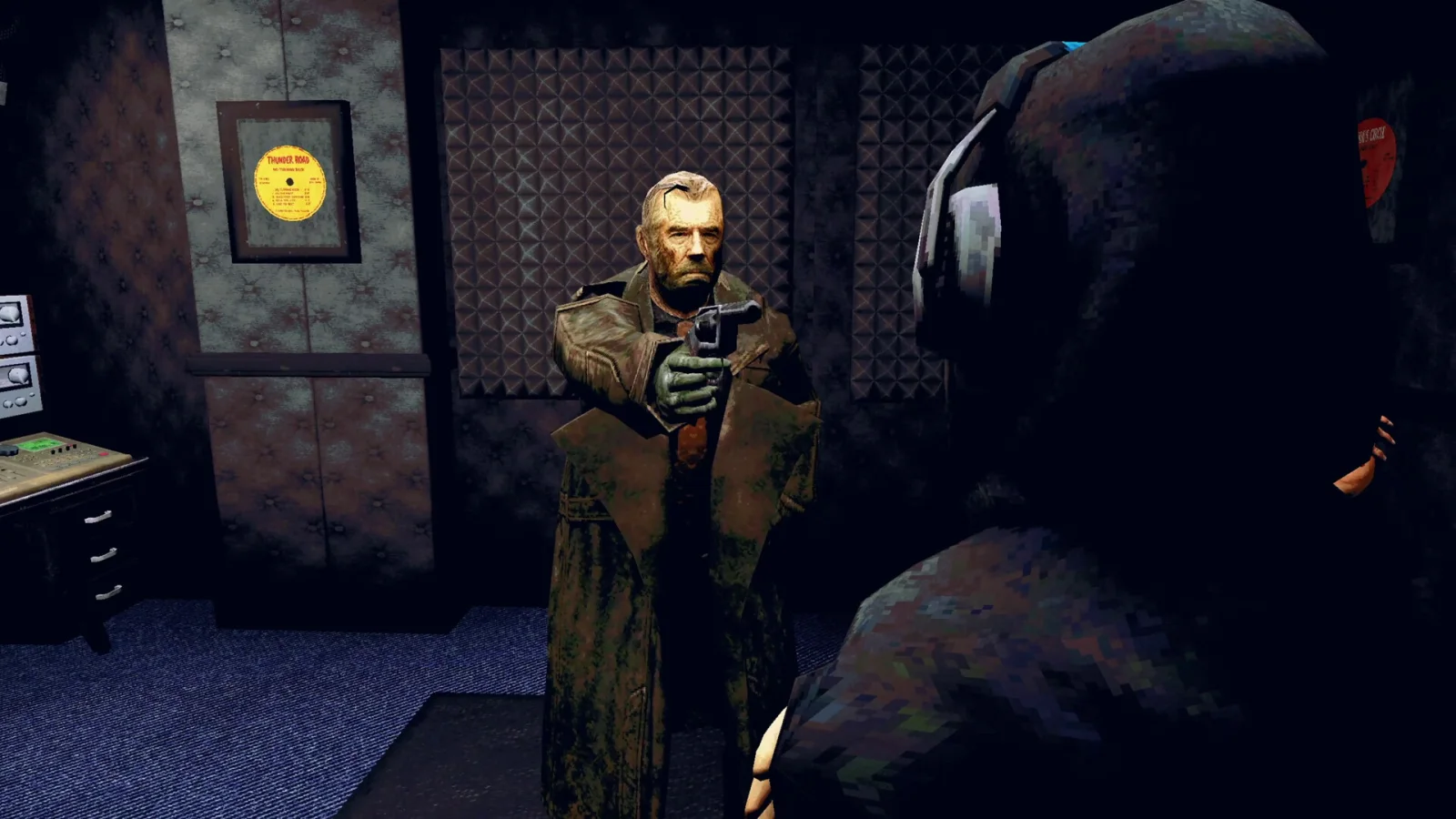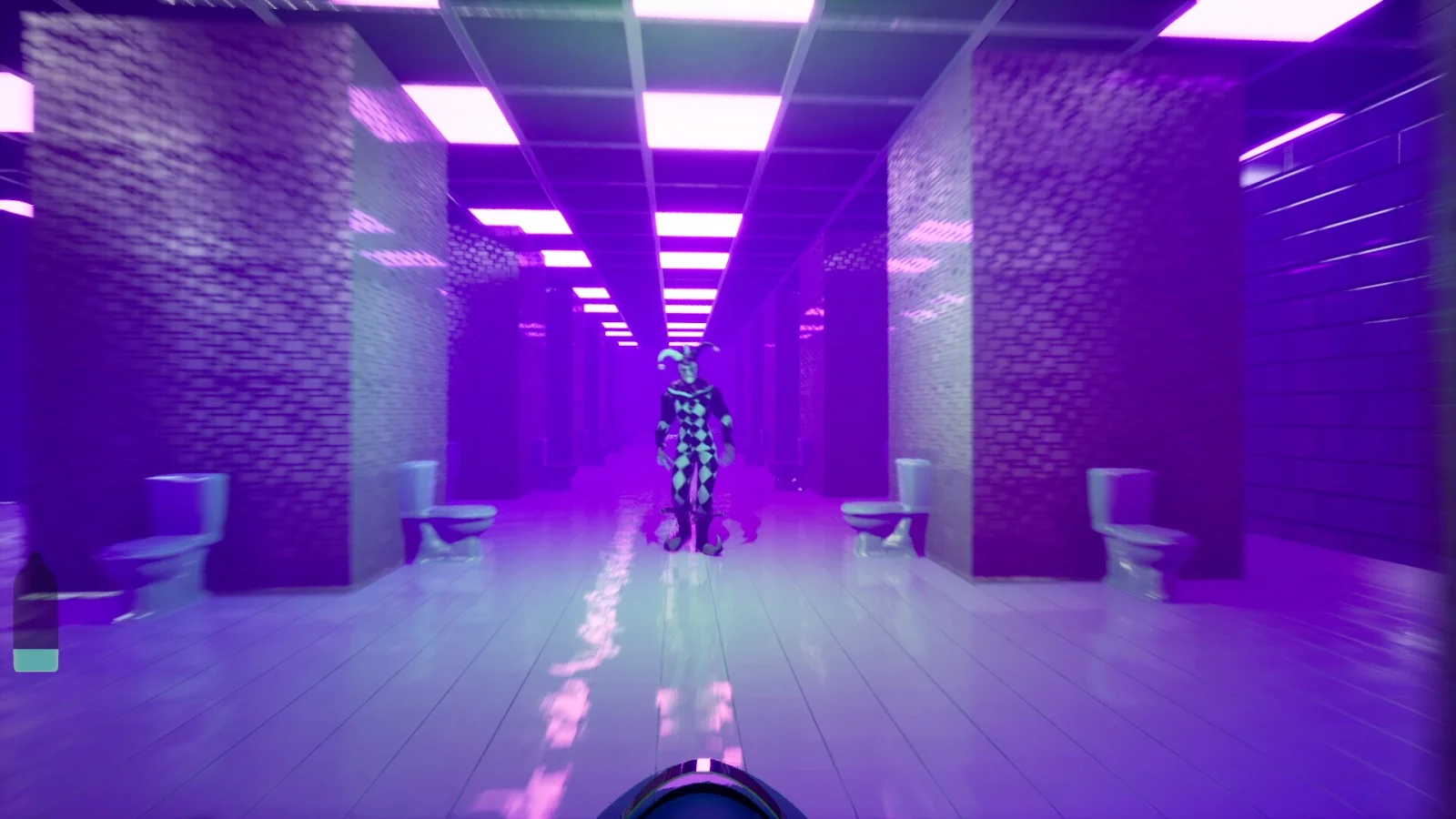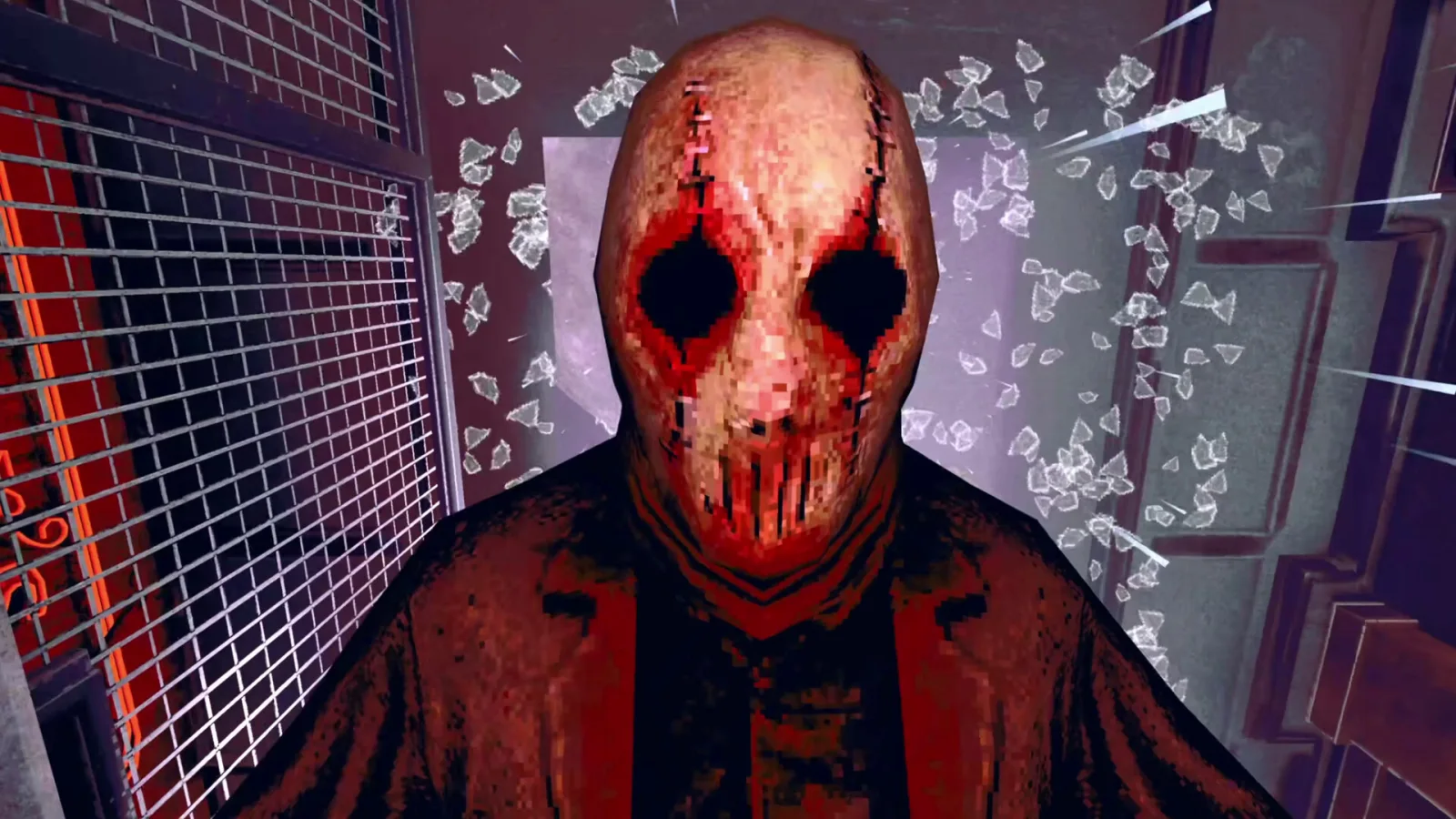
The Skin Stapler is a Windows PC action and indie game developed by Tainted Pact and published by Assemble Entertainment. It released on August 6, 2026. Its announced premise follows burned-out detective Dick Slater as he investigates a serial killer in Carrion City, while the wider structure also places players in the roles of other people caught in the killer’s reach.
This is an unscored design feature rather than a hands-on review. The available information establishes the game’s announced setup, broad activities, setting, and stylistic direction, but it does not support conclusions about controls, puzzle quality, performance, pacing, difficulty, accessibility, narrative execution, voice performances, or the moment-to-moment effectiveness of its horror. The useful question is therefore not whether those ideas have already been proven in play. It is what kind of horror structure they suggest, and where that structure has the most to accomplish.
The announced design combines several recognizable horror tools: crime-scene investigation, grisly puzzles, threatened characters, distorted audio tapes, full voice acting, and an aesthetic informed by 1980s VHS horror and exploitation cinema. Taken together, those details point toward a game interested in more than a single investigative viewpoint. Dick Slater can follow the consequences of violence after it has happened; other playable characters are positioned nearer to the immediate danger. That split could give Carrion City a useful dramatic shape, moving between a detective assembling a pattern and people who may not yet understand the pattern closing around them.
A case built from aftermath
Dick Slater’s role supplies The Skin Stapler with a clear horror-thriller foundation. He is investigating murders committed by a killer known as the Skin Stapler. The announced material describes victims being skinned, with their flesh stapled to nearby walls, while distorted tapes taunt the police and imply that the city contains darker buried secrets. Crime-scene investigation is specifically identified as one of Slater’s activities.
A detective premise can change the texture of horror. The investigator often reaches a location after the central violence has occurred. Instead of confronting only a visible monster or an immediate escape route, they confront residue: an altered room, a missing person, an object placed with intention, or a detail whose importance is unclear until much later. That arrangement can turn setting into evidence. A home, workplace, or street does not merely provide a backdrop for scares; it can potentially show what has changed, what has been removed, and what a killer wants others to notice.
There is an important limit on that analysis. The announced information does not define the game’s deduction systems. It does not establish an evidence board, interrogations, dialogue choices, clue ranking, branching cases, inventory-based deduction, or any other particular investigative mechanic. It would be inaccurate to assume that Slater’s work follows the model of a procedural detective game. Crime-scene investigation could involve active player inference, guided interactions, environmental discovery, or a combination of approaches. The presence of the detective role is established; its mechanical depth and structure are not.
That uncertainty is where much of the game’s design interest resides. If a scene asks players to compare details, question an apparent answer, or carry knowledge between locations, investigation could become a source of agency as well as atmosphere. If progression is more directed, the scenes may instead depend primarily on writing, staging, and the accumulating horror of what Slater finds. Neither possibility is inherently lesser, but they produce different kinds of involvement. One asks the player to build the case; the other asks the player to inhabit its unsettling revelations.
The tapes are similarly significant without being mechanically defined. Their announced role connects them to police taunts and the city’s hidden depths. They could function as central clues, environmental discoveries, story transitions, optional material, or another form of intimidation. The available description does not establish which. What can be said is that recorded sound fits the game’s stated analogue-horror identity particularly well: a message on tape is both evidence and intrusion, carrying a speaker’s presence into a space where they may not physically be.
Several playable viewpoints, not one protected perspective
The announced use of multiple playable characters is arguably the most consequential part of The Skin Stapler’s structure. Alongside Slater, players are said to control people stalked through homes, workplaces, and dark city streets. This establishes a broader perspective than a detective story confined to one person’s investigation. Carrion City is presented as a place experienced through different positions within the same nightmare.
At a conceptual level, that creates a productive contrast between reconstruction and exposure. Slater investigates events after evidence has been left behind. A stalked character may instead face a threat while its meaning remains incomplete. The detective can potentially understand a pattern that another character cannot see; the vulnerable character can potentially show what the pattern costs before it becomes a case file. The strongest version of this design would allow those positions to affect one another rather than simply alternate.
For example, a location encountered during a stalking sequence could gain a different emotional meaning if Slater later examines its aftermath. Conversely, an investigative discovery could make a later sequence more tense if the player recognizes a danger, object, or location before the character under threat does. Those are conditional possibilities, not claims about the released game. The announced materials do not identify the additional characters, their sequence order, their objectives, their abilities, or the way each section connects to the main investigation.
That distinction matters because shifting protagonists does not automatically create a richer structure. Different viewpoints become especially valuable when they change the player’s knowledge, responsibility, or relationship to danger. One character might know too little, another might arrive too late, and the detective might possess information that is useful but emotionally detached. If the game gives those differences narrative or mechanical consequences, the city could feel interconnected rather than episodic. If the changes principally alter protagonist and location, the scenes may rely more heavily on presentation and story context to justify the transitions.
The announced locations also invite questions without answering them. Homes, workplaces, and city streets can each frame vulnerability differently. A private home may suggest violated safety, a workplace may attach fear to routine and social obligation, and a street can turn public space into exposure. But no specific gameplay patterns should be inferred from those settings. The available material does not confirm stealth, evasion, combat, chases, resource management, or how failure operates. It only establishes that stalking situations form part of the game’s intended horror mix.
Variety needs a shared dramatic purpose
The Skin Stapler is described as offering more than detective work, naming crime-scene investigation, grisly puzzles, and survival during a not-so-ordinary shift. That is a meaningful statement of variety. It does not, however, explain how those activities are divided across the game or how they connect.
No available information establishes whether puzzles are embedded in crime scenes, associated with particular characters, tied to environmental exploration, or separated into distinct set pieces. Nor does the word “survive” demonstrate a specific system. Horror games use that term for many different structures, from avoiding a pursuer to enduring a scripted crisis, and nothing in the announced material justifies narrowing it further.
Still, the combination identifies an important design test. Variety is most useful when each activity changes the significance of the others. A puzzle could do more than delay progression if solving it reveals something about a victim, the killer, or Carrion City. An investigation could gain urgency if its discoveries make later danger intelligible. A sequence with a threatened character could become more than a scare if it supplies information that the detective cannot obtain from the aftermath alone.
Under that conditional model, the game could produce a rhythm between interpreting consequences and facing danger in motion. Slater examines what remains. Other viewpoints reveal the uncertainty, panic, or limited knowledge that precedes those remains. Puzzles could bridge the two if they make places and objects part of the same case rather than detached obstacles. That would create a shared dramatic purpose even if each part of the game plays differently.
The counterpoint is also worth stating carefully. If investigation, puzzle-solving, and survival scenes do not inform one another, the experience could feel more like a series of horror scenarios held together by premise and style. This is not a conclusion about The Skin Stapler. It is the primary open question created by its announced list of activities. A feature list demonstrates range; it does not demonstrate that the separate modes develop knowledge, dread, and momentum together.
Grindhouse excess as a tonal commitment
The announced identity of The Skin Stapler is not limited to serial-killer horror. It invokes 1980s VHS horror and exploitation films, alongside stylized violence, neon-lit decay, an aggressively grim atmosphere, and humor. Dick Slater’s name also suggests a deliberately heightened, pulpy register rather than an entirely naturalistic crime drama.
That mixture could fit the multi-perspective arrangement well. A burned-out detective can support noir fatigue, grotesque comedy, and larger-than-life genre language. A person being stalked can carry immediate dread. Placing those tones together may create contrast: humor can briefly release tension, exaggeration can make the world feel unstable, and a sudden shift back toward fear can make the threat less predictable.
Yet tonal blending is among the areas that cannot be judged from an announced description. Humor can sharpen horror, but it can also undercut danger. Stylized gore can contribute to a distinct visual identity, but it does not itself establish suspense, emotional investment, or mystery. The known information supports a firm statement about intended tone: horror and comedy are meant to coexist within a VHS-and-exploitation frame. It cannot support claims about timing, writing, consistency, or whether the balance works in individual scenes.
The VHS influence should also remain an aesthetic reference rather than a stand-in for unconfirmed features. Distorted tapes and analogue-horror inspiration do not establish a particular camera style, image filter, interface, menu treatment, control scheme, or visual technology. The more useful design question is whether the game’s violence, neon decay, detective story, and jokes all reinforce one recognizable personality for Carrion City.
Voice acting and character legibility
Every character is announced as fully voiced. In a game that moves between several people and situations, that could be structurally useful. Voices may help make perspective shifts clear, distinguish people linked to the investigation, and give players a more immediate sense of how each character understands the danger around them.
Full voice acting is a concrete announced feature, not evidence of performance quality or characterization. The available information does not establish the scale of the cast, the amount of dialogue, recording quality, script quality, or the narrative function of particular voices. The relevant implementation question is whether the performances make the various viewpoints feel genuinely distinct and emotionally legible, rather than simply ensuring that dialogue is spoken aloud.
What is established and what remains open
The Skin Stapler is available on Windows PC. It is developed by Tainted Pact, published by Assemble Entertainment, and listed in the action and indie genres. Its announced design includes detective Dick Slater, Carrion City, a serial killer called the Skin Stapler, crime-scene investigation, grisly puzzles, additional playable characters, stalking situations, distorted tapes, full voice acting, stylized violence, neon-lit decay, and a horror-comedy approach shaped by VHS and exploitation-film influences.
What remains open is equally important. There is no hands-on basis here to assess the clarity or challenge of puzzles, the depth of investigation, the quality of transitions between characters, the effectiveness of stalking sequences, the structure of failure, the resolution of the story, or the balance of horror and comedy. There is also no basis to claim particular support for controllers, accessibility options, combat, stealth, progression, replayability, technical performance, or runtime.
For a separate examination of horror design centered on descent and uncertainty, see our horror design review. The Skin Stapler should not be presumed to use the same kind of structure. Its announced identity instead rests on a detective pursuit that is broadened by other playable perspectives and a deliberately lurid grindhouse tone.
Unscored design assessment
The Skin Stapler’s announced blueprint has a clear central tension: a detective pursues meaning through evidence, while other characters are described as living closer to the threat that creates that evidence. That relationship could make the investigation feel less detached than a conventional case, because the player may encounter both the aftermath of violence and the vulnerability that precedes it.
Its other announced elements could strengthen that premise if they are connected with purpose. Puzzles may turn the city’s spaces into meaningful parts of the case. Tapes may make information feel invasive rather than neutral. Voice acting may clarify a multi-character structure. Horror-comedy and VHS exploitation influences may give Carrion City a specific identity beyond generic bleakness. These are design possibilities grounded in the announced outline, not demonstrated critical conclusions.
The decisive questions are practical: whether investigation asks meaningful things of the player; whether the different characters create different forms of understanding or tension; whether puzzles and survival situations advance the same larger case; and whether jokes, violence, and fear support one another. The announced materials make the intended mixture legible. An unscored assessment cannot determine how successfully that mixture is realized without hands-on evidence, but it can identify the connections on which the design most depends.