Endless Rails released for Windows PC on September 29, 2026. Studio Monoblok developed the game, while Studio Monoblok and Maple Whispering Limited publish it. It is classified as Action, Casual, and Indie, and its verified PC information states full controller support. There are no Joking Joystick gameplay notes behind this article. The discussion below distinguishes established release information and announced mechanics from questions that require direct play to answer.
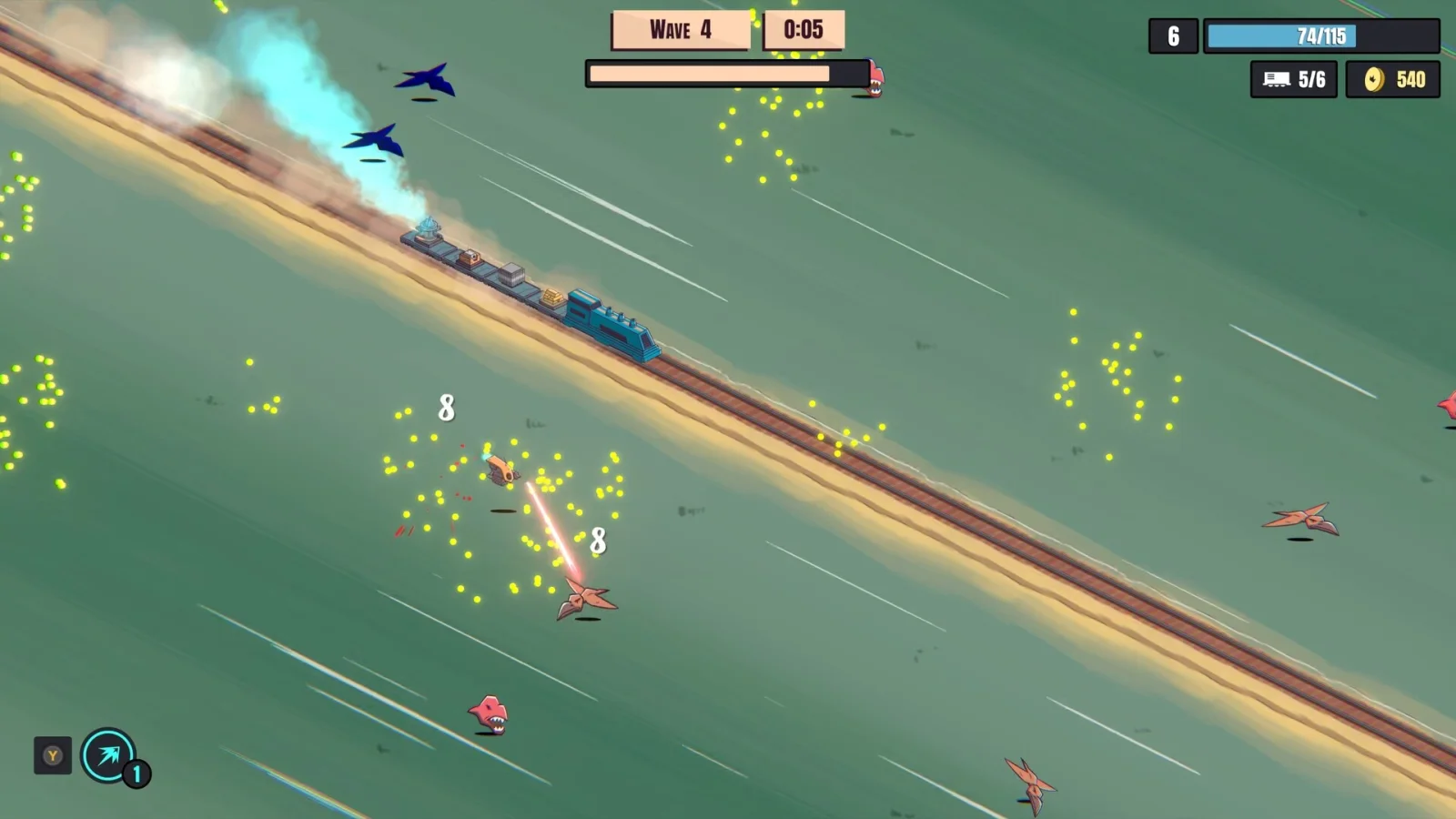
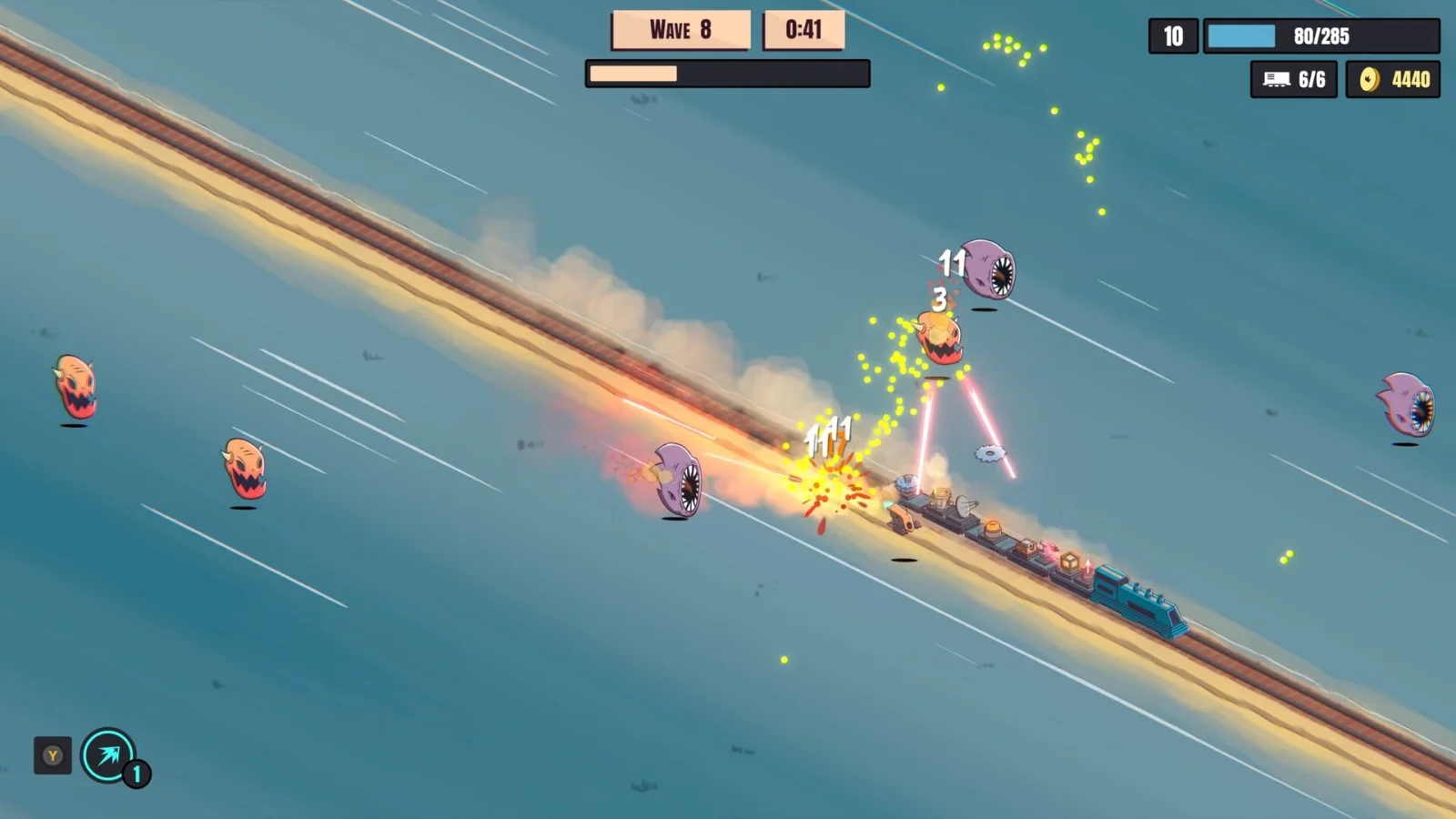
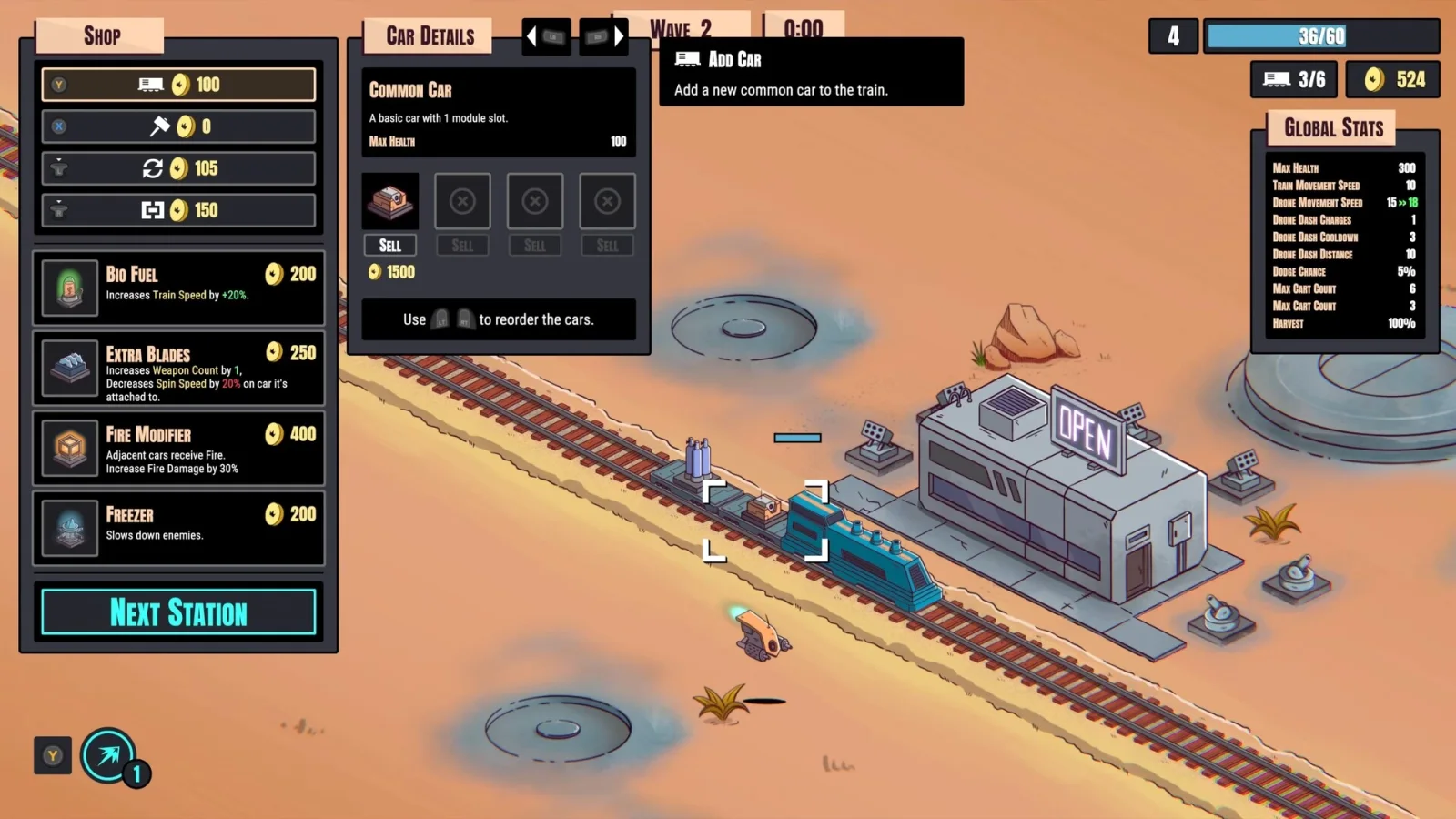
The announced premise is immediately legible: a train travels through a monster-filled wasteland, and the player is trying to survive for as long as possible. The developer describes drones as the units responsible for firing, while the player builds and adjusts a train between dangerous stretches of rail. Stations are announced to offer new cars, weapons, drone slots, and buffs in exchange for coins. Cars can be reordered or merged; merging is described as strengthening cars and unlocking more module slots. Between runs, earned resources are said to feed a permanent upgrade tree.
That is a concentrated set of ideas. Endless Rails does not frame survival solely as enduring enemy pressure. Its announced structure makes the train itself the changing object of attention. A run is intended to involve immediate survival alongside repeated decisions about the convoy’s shape, capabilities, and arrangement. The important unanswered question is whether those decisions consistently produce meaningful trade-offs rather than leading toward one plainly optimal configuration.
An announced loop built around stations
The developer says rides between stations are short, around 20 to 30 seconds, and action-heavy. If that cadence is retained in play, stations could become deliberate pauses that give each brief combat stretch context. Rather than simply waiting for an enemy group to end, the player would be traveling toward the next opportunity to revise the train.
This proposed structure has a potentially useful division of labor. Travel sections could supply urgency, while stations could support comparison, planning, and adaptation. A short interval between decisions may also make unusual purchases or experimental combinations less intimidating to try. When a game presents opportunities to experiment frequently, its available components have a better chance of feeling active rather than decorative.
Short cycles alone do not guarantee satisfying choices, however. The station economy would need to explain why coins are better spent on one category than another in a particular moment. New cars, weapons, drone slots, and buffs are all announced as purchases, but the public description does not establish their relative prices, how options are presented, whether every category appears at every station, or what constraints govern a purchase. Those details would substantially determine whether a station becomes a quick tactical judgment or an automatic shopping routine.
The announced destination is survival rather than a fixed escape. The developer identifies Station 20 as a notable threshold while saying the rails continue beyond it. That establishes an intended survival-run format in which an attempt can continue past that point. It should not be read as proof of a specific progression pace, enemy-scaling model, or late-run structure beyond the announced statement that the wasteland becomes harder farther along the route.
The train is the proposed build space
Endless Rails’ clearest announced distinction is its focus on train construction. The developer says players can acquire cars, reorder them, and merge them. Reordering indicates that placement is meant to be part of the build process, but the supplied description does not explain how a car’s position affects combat, defense, weapon function, drone behavior, targeting, or another system. That uncertainty matters. Arrangement becomes a compelling design tool only when a game communicates what changes after a car moves and why that change deserves attention.
Merging has a clearer stated purpose: it is intended to make cars stronger and unlock additional module slots. This could create tension between breadth and concentration. A player may be encouraged to add different cars to the train, or instead merge existing cars to deepen the value of an established component. If modules meaningfully interact with the available slots, merging could make construction more than a simple accumulation exercise.
However, the announced material does not identify module types, merge requirements, whether every car can merge, or whether merging carries costs or risks. It also does not establish whether an arrangement can be undone or whether a merged car can be recovered. These are central questions for a game whose proposed appeal includes build flexibility. A system can advertise many combinations while offering limited practical room to test them if experimentation is expensive or outcomes are hard to read.
The phrase “build on the fly” is therefore best treated as a stated design intention. It indicates that the train is meant to evolve during an attempt rather than remain a static loadout selected before one begins. The eventual test would be whether this evolution creates changing priorities. A late-run train could, for example, ask players to preserve a valuable arrangement, adapt around a newly available tool, or weigh greater specialization against flexibility. Endless Rails announces ingredients that could support such a curve; the available information does not demonstrate the clarity or range of resulting decisions.
Auto-firing drones shift the announced focus
The developer describes drones as auto-firing and says they do the shooting. This is an important declared boundary for the interaction model. Rather than presenting manually aimed shooting as the central action, Endless Rails appears intended to emphasize survival, train assembly, and the consequences of selected weapons and drones. The developer uses “bullet heaven” to characterize the combat, which conveys an aim toward dense enemy pressure but does not establish the exact controls or player inputs.
That focus could fit the train theme. Automating attacks may free attention for movement, positioning, timing, or construction choices, but the supplied description does not confirm which of those actions are directly controlled during a ride. It does not establish how the train moves, whether the route offers directional choice, how drones select targets, or whether players have active combat abilities. None of those details should be assumed from the genre language.
What is established by the announced design is that drones, weapons, cars, slots, and buffs are presented as a shared build vocabulary. The prospect is not merely to acquire more firepower, but to mix several tool categories during an attempt. For that vocabulary to remain interesting, its options would likely need readable distinctions. A new drone type would need a practical identity; a weapon would need to alter priorities in a way players can understand; a buff would need to offer more than a numerical increase that leaves decisions unchanged. This is conditional design analysis, not a claim that the released game succeeds or fails at those tasks.
The same limitation applies to the developer’s language about “juicy” and satisfying combat. That language establishes intended tone, not a verified result. Feedback, visual readability, sound, enemy behavior, damage communication, and behavior under heavy on-screen pressure could all affect whether combat feels as immediate as intended. Without direct gameplay evidence, it would be inappropriate to call the action responsive, polished, satisfying, or technically stable.
Permanent upgrades can support return visits—or narrow the run
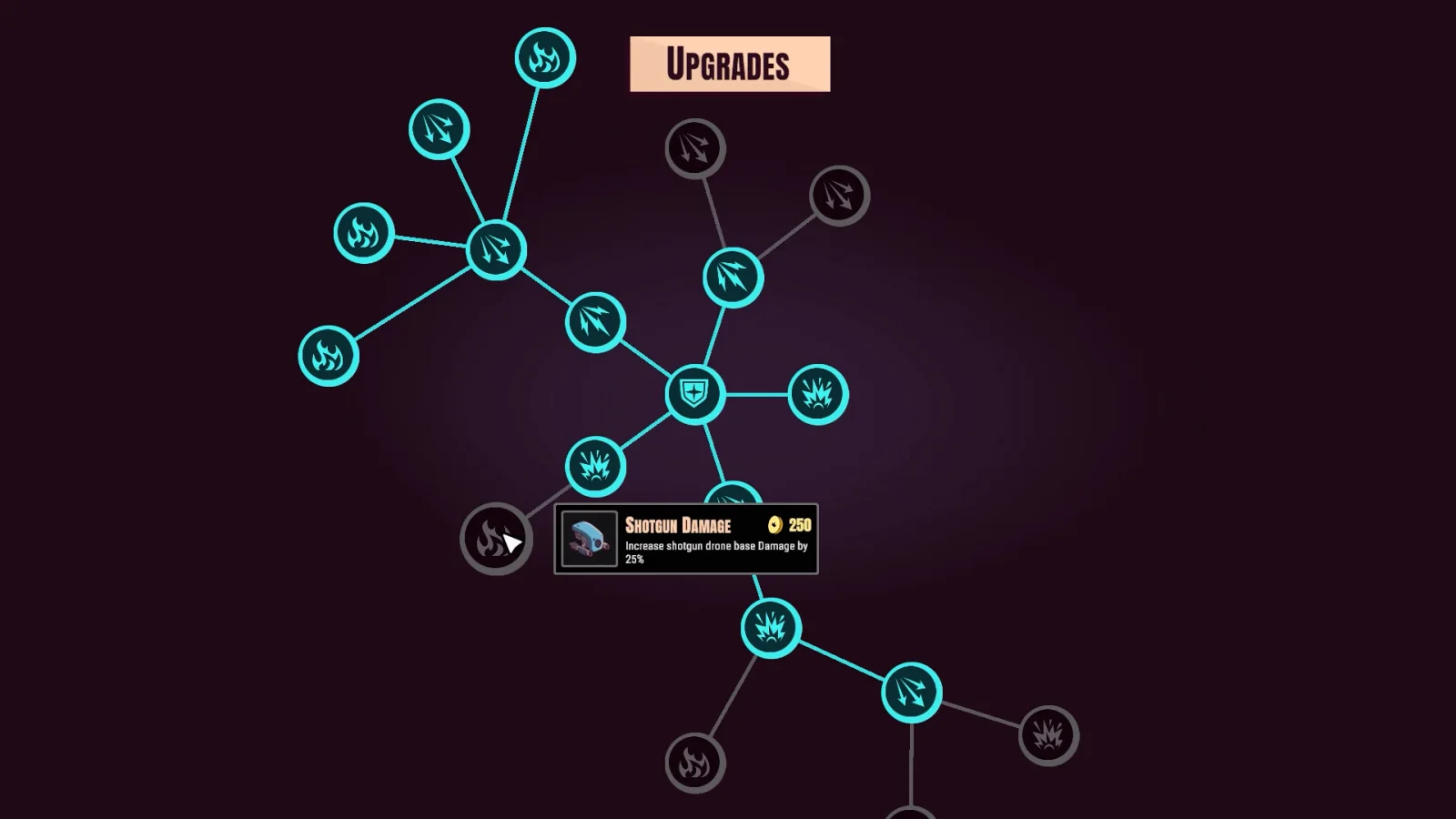
Between-run progression is another explicit part of the announced design. The developer says resources earned during attempts can be spent in a permanent upgrade tree, making later attempts start somewhat stronger. This gives Endless Rails a meta-progression layer in addition to its station-by-station build decisions.
A permanent tree can serve several purposes. It can soften early failure, provide long-term goals, introduce access to new strategic possibilities, or simply raise starting power. The supplied description confirms only the broad promise that future attempts begin stronger. It does not explain the tree’s branches, currencies, whether upgrades unlock mechanics alongside numerical gains, or how quickly progress is earned. It therefore cannot support a conclusion about whether the system respects player learning, demands extensive repetition, or produces an appropriate difficulty curve.
There is an inherent design question here. A survival game built around accumulating permanent strength still needs to preserve a role for decisions made during individual runs. If reaching farther stations chiefly depends on account-level upgrades, station choices could become secondary. If permanent progression is too slight, it may not provide the renewed momentum the developer intends. A potentially strong version would let long-term upgrades broaden approaches while leaving immediate construction and survival decisions consequential. That is a possibility, not an established property of Endless Rails.
Readers interested in another design feature concerning repeat-run structure can consult our CODEx MORTIS PC design assessment. The two games should not be treated as mechanically equivalent: the available Endless Rails material centers on trains, drones, cars, stations, and merging, while that assessment addresses a different announced setup.
What is established, and what remains open
The established picture is substantial but bounded. Endless Rails is a Windows PC release with full controller support, classified as Action, Casual, and Indie. Its announced design includes monster-filled survival runs, auto-firing drones, short rides between stations, purchasable train components and buffs, car rearrangement and merging, escalating pressure, and a permanent upgrade tree.
Several consequential questions remain open. How much control does a player exercise during a ride? How are stations populated, and how does their economy work? What practical effects follow from changing a car’s position? Which systems create the most meaningful trade-offs: drone selection, weapon selection, modules, merging, or buffs? How does the game communicate dense enemy encounters? What does a run beyond Station 20 ask that an early run does not? And how does permanent progression sit alongside run-specific decision-making?
Those unanswered questions are not defects in themselves. They are the limits of a factual design feature without hands-on verification. The announced framework has a clear identity: a survival game in which a growing train is both the player’s toolkit and the object under pressure. Its potential rests on whether that framework makes each station a genuinely interesting point of reconstruction rather than a pause between automatic increases in damage. Until direct gameplay evidence supports a stronger claim, Endless Rails is best approached as a PC action game with a defined train-building premise, not as a proven success or failure.