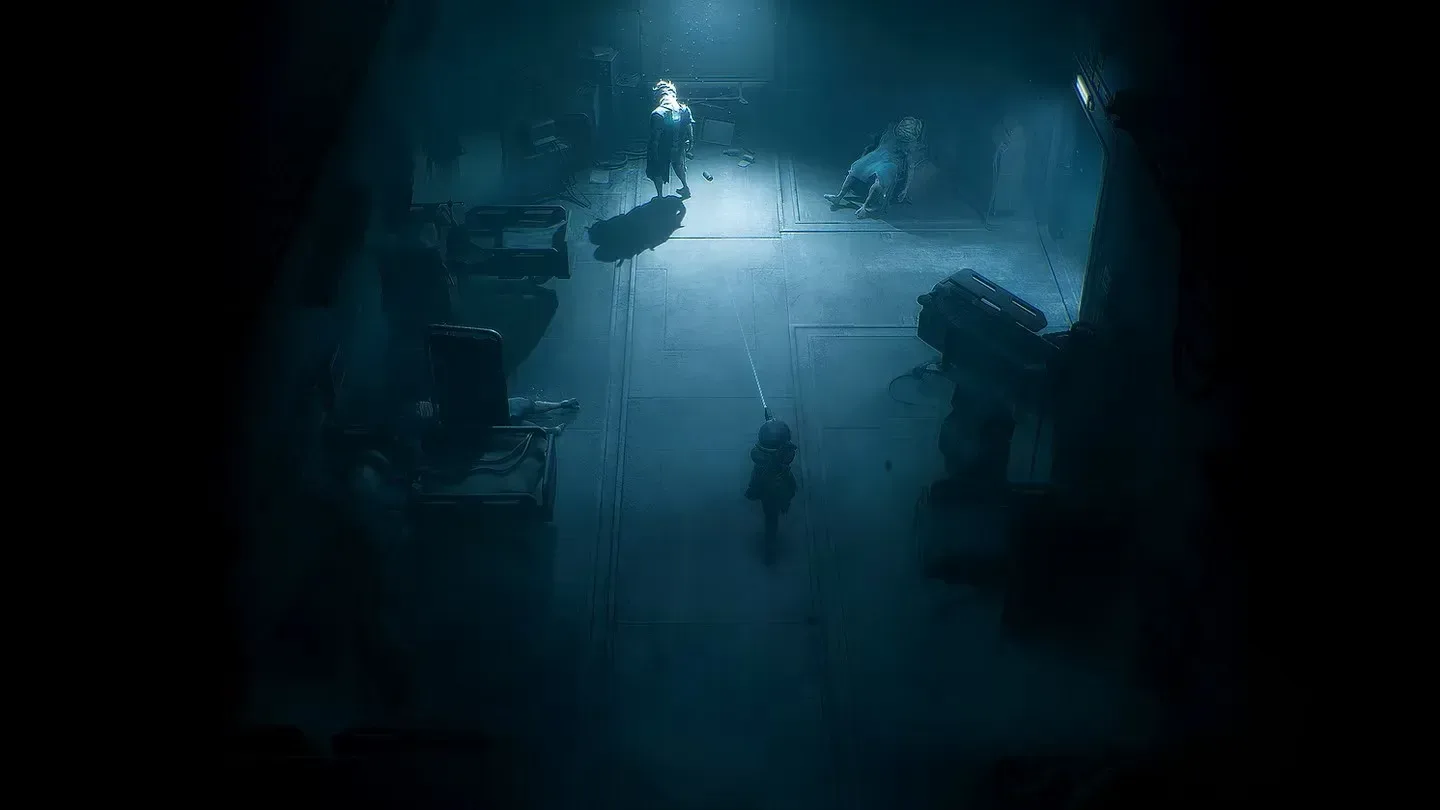
End of Abyss understands that a good facility is more than a backdrop. Its abandoned corridors are a puzzle box, a source of anxiety, and a practical network that gradually becomes legible through exploration. The game combines that winding, interconnected structure with survival-horror pressure and twin-stick shooting, creating an adventure where progress depends on observation as much as firepower.
The result is often absorbing. A technician enters the complex alongside soldiers and their captain, but this is not presented as a reassuring team operation. The environment is cold, lonely, and withholding; even the armed people nearby offer little sense of active support. Rather than delivering its narrative context directly, End of Abyss places much of it in old notes and item descriptions. That approach will not satisfy players who want a heavily foregrounded plot, but it gives the place an appealingly uncertain quality. The facility is compelling precisely because its larger purpose remains elusive.
A facility built for getting lost productively
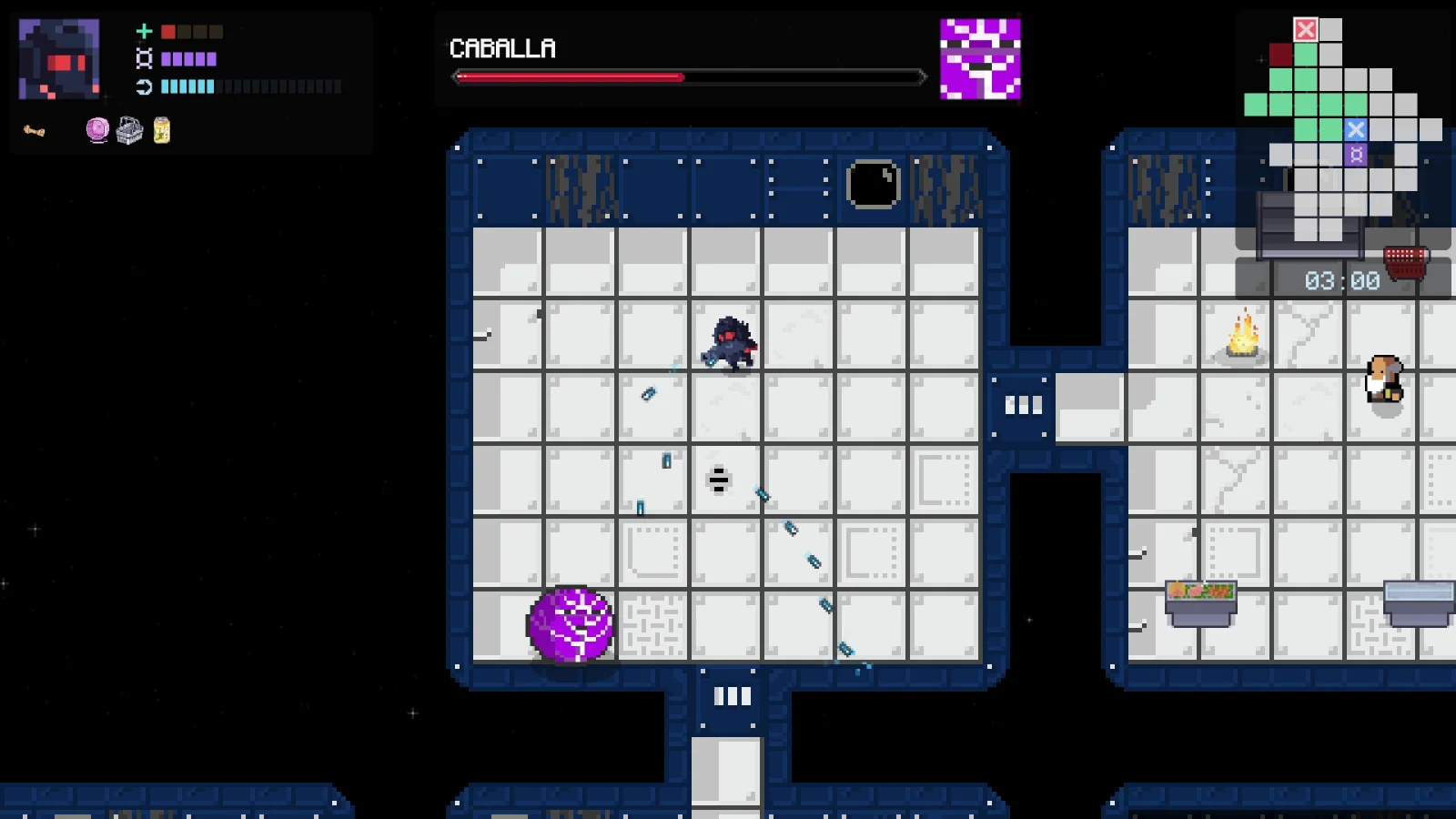
Exploration is End of Abyss at its best. Its map repeatedly curves back on itself, making a new route feel meaningful whether it reveals a shortcut to an earlier area or turns up a rare resource. That distinction matters: backtracking has a practical payoff instead of simply stretching the journey. The scale and connective tissue of the level design provide a strong reason to remain alert to doors, routes, and overlooked passages.
A scanner reinforces that curiosity. It can analyze enemies and help search the environment for the means to advance, turning the player’s attention outward rather than reducing progress to trial and error. The tool also helps marry the game’s investigative mood to its structure. Learning what is in a room, what might threaten you there, and where the route may continue all become parts of the same cautious rhythm.
That makes End of Abyss a notably environment-led game. Its strongest storytelling does not depend on spelling out the facility’s history; it comes from moving through industrial spaces that feel designed to conceal as much as they reveal. Players who enjoy deciphering a setting through documents, item text, and spatial clues should find more to hold onto here than those looking for a plot with constant momentum. For another example of a game concept that puts interpretation at the center of the experience, see Radiotext PC Design Feature: When a Radio Terminal Makes Language the Mystery.
Every shot has a place
Combat gives the exploration its nervous edge. The starting pistol has unlimited ammunition, but ammunition for other weapons must be crafted, and most of those weapons are optional finds. That arrangement makes the pistol a dependable fallback without removing the importance of conservation. Powerful tools are not merely rewards; they are limited resources that must be considered against whatever may wait ahead.
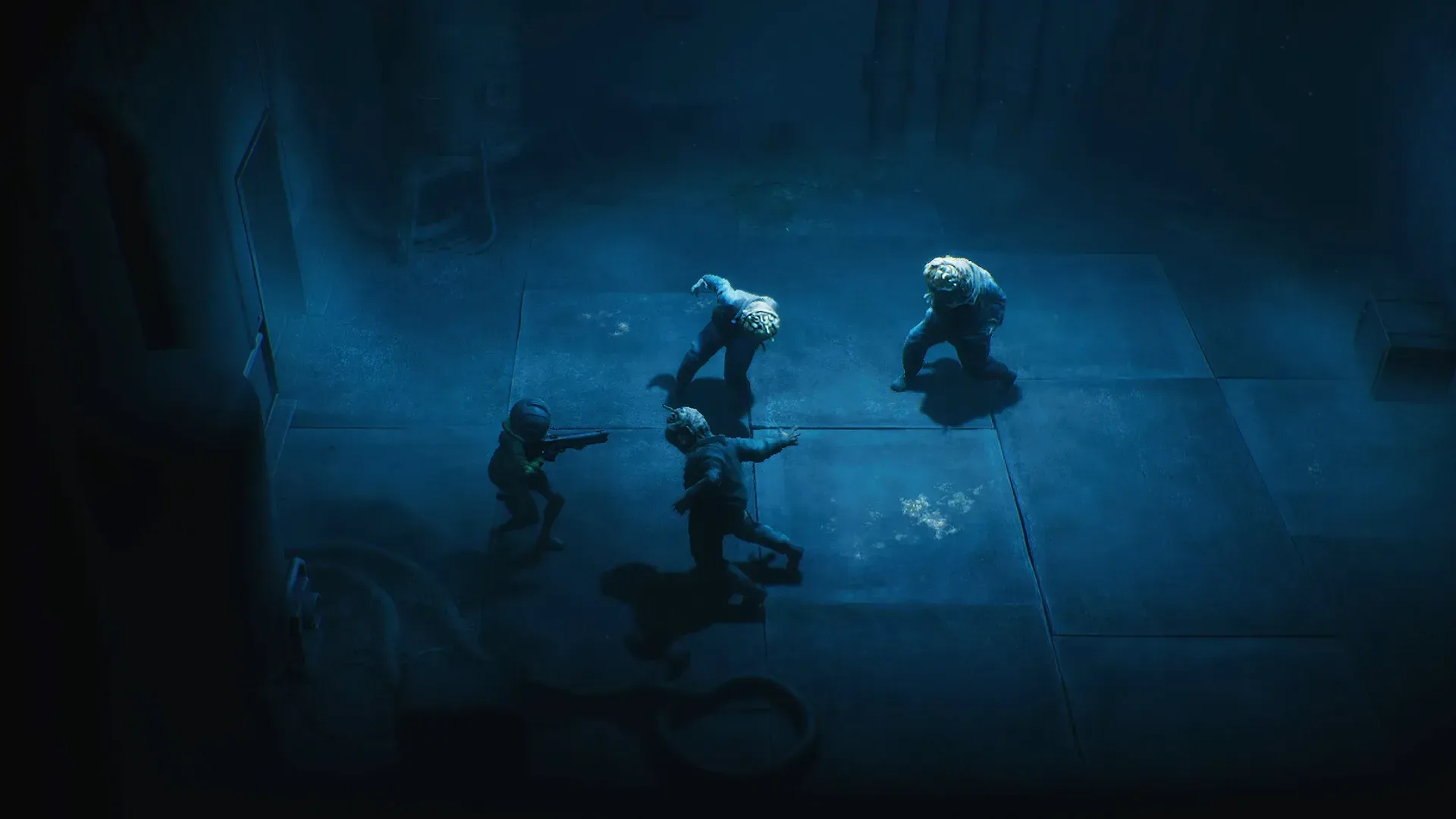
The game draws tension from that simple economy. Encounters can feel consequential because spending ammunition or grenades now may complicate the next obstacle. Enemies include zombies, bugs, and robots, and their differing weaknesses encourage use of the broader arsenal rather than a single reliable answer. This is an important strength: resource management is connected to combat decisions, not kept separate in a menu.
Twin-stick shooting also suits the premise. The player must manage positioning and offense while responding to enemies in close quarters, which supports the intended strain of surviving an unfamiliar complex. End of Abyss does not need an enormous catalogue of foes to make this work. Its enemy range appears sufficient to keep the player changing tactics and considering which ammunition should be spent.
There is a useful contrast at the heart of this design. The pistol means the game does not leave the player entirely helpless, while craftable ammunition for other guns ensures that preparedness still has value. For players who dislike games that can leave them completely unable to fight, that baseline weapon may be reassuring. For players who want survival horror to demand hard choices, the more limited ammunition and grenades create the necessary pressure.
Bosses expose the economy’s limits
Boss encounters are where this balance becomes less satisfying. Their combat tuning may be fair in a direct sense, but repeated attempts consume valuable bullets and grenades. A loss can therefore impose a resource cost that carries beyond the fight itself. When supplies run low, the player may need to grind for bullets and bombs before returning.
That is a defensible survival-horror concept in theory: preparation should matter, and a boss should test whether the player has managed resources well. In practice, the penalty risks converting a difficult fight into a tedious recovery loop. Relying on the infinite-ammunition pistol avoids the need to replenish other supplies, but large boss health bars make that alternative unappealingly slow. The issue seems to ease later, once a larger weapon selection has produced more kinds of ammunition in reserve, but an early or middle stretch of forced gathering can still blunt the game’s otherwise strong pace.
The distinction is worth stressing for prospective players. End of Abyss does not appear to treat every challenge as a reflex test alone. It expects inventory planning, crafting, and a willingness to use the weapons found along the way. Players who appreciate deliberate preparation may accept the boss friction as part of the bargain. Those who want immediate rematches with minimal attrition may find the demand to restock frustrating, especially if a particular boss takes several attempts.
Technical trouble undermines trust in the map
The largest qualification is technical reliability. Reported problems include becoming stuck in walls, invisible barriers, falling out of bounds, and map errors. A map that labels unlocked doors as locked or omits landmarks is especially damaging in a game whose exploration depends on confident navigation and informed backtracking. The more carefully a player is asked to memorize a complex, the less acceptable it is for the game’s own guidance to become misleading.
Door prompts failing to appear are more severe still, since they can block entry until the game is quit and reloaded. Frequent saves used for healing soften the consequences of a reset, so these failures do not necessarily erase substantial progress. They nevertheless interrupt the atmosphere and impose doubt at precisely the moments when the player should be focused on decoding the environment rather than questioning whether an obstacle is intentional.
Multiple patches were issued during the period reflected here, and some issues were resolved. That is encouraging, but it is not the same as a guarantee that every problem has disappeared. Anyone considering End of Abyss should be prepared for the possibility of rough edges, particularly because the reported bugs reach beyond cosmetic oddities into navigation and progression. The game’s achievements are real, but so is the possibility that its systems may occasionally obstruct the experience they are meant to support.
Who should enter the abyss?
End of Abyss is best suited to players who want a tense, exploratory survival-horror game rather than a purely action-driven shooter. Its appeal lies in navigating a large, looping facility, using a scanner to investigate threats and pathways, uncovering optional weaponry, and deciding when scarce crafted ammunition is worth spending. The story is intentionally light and distributed through environmental detail, so patience with ambiguity is an advantage.
Its central trade-off is clear. The game offers a memorable setting, strong interconnected level design, and meaningful combat resource choices, but its boss economy can demand tedious replenishment and its technical issues are substantial enough to affect navigation and access. Players willing to tolerate those risks will find a focused, uneasy descent with a facility worth learning. Players with little patience for reloads, map inaccuracies, or resource grinding may want to wait until they are confident the remaining technical problems are addressed.