Clive Barker’s Hellraiser: Revival understands one central appeal of its source material: Hell should feel tactile, cruel, theatrical, and deeply unsafe. It delivers that sensation in its best environments, where the Labyrinth’s macabre architecture and grotesque imagery give the game a distinct identity. It also makes smart use of the puzzle box as more than a storytelling prop. Yet this first-person survival-horror framework repeatedly undermines its own strongest ideas. Unreliable combat, poorly calibrated supplies, foolish opponents, restrictive controls, and a serious accumulation of technical faults make the journey punishing for reasons that rarely feel deliberate.
That contrast is the game’s defining frustration. There is a credible Hellraiser game visible beneath the malfunctioning machinery: one that appreciates the franchise’s discomfort, recognizes the appeal of its elaborate nightmare spaces, and gives players a few grisly tools with which to survive. But it is trapped inside an experience that can turn a chase into a farce, turn preparation into guesswork, and turn a major encounter into a reload requirement. The result is less a descent into carefully authored torment than an obstacle course whose ropes keep snapping.
A familiar rescue story with a memorable setting
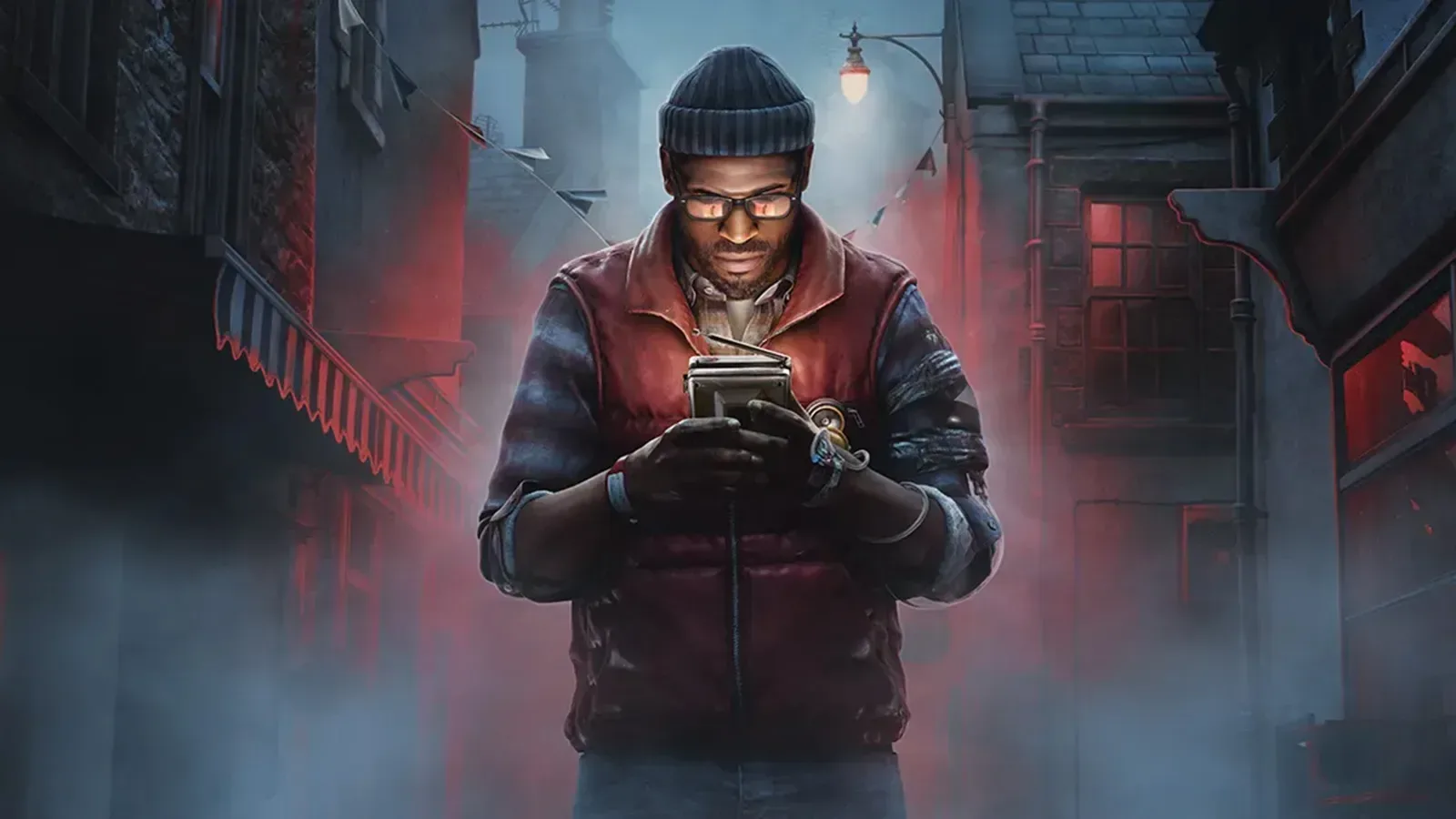
The story follows Aiden Lynch as he attempts to rescue his girlfriend Sunny after she opens the puzzle box and is taken by the Cenobites into the Labyrinth. Aiden must move between that hellish realm and the human world, where a Cenobite-obsessed cult becomes another obstacle in his pursuit. The premise is direct, and its accessibility is a genuine advantage: newcomers have a clear emotional objective and recognizable stakes without needing extensive prior knowledge.
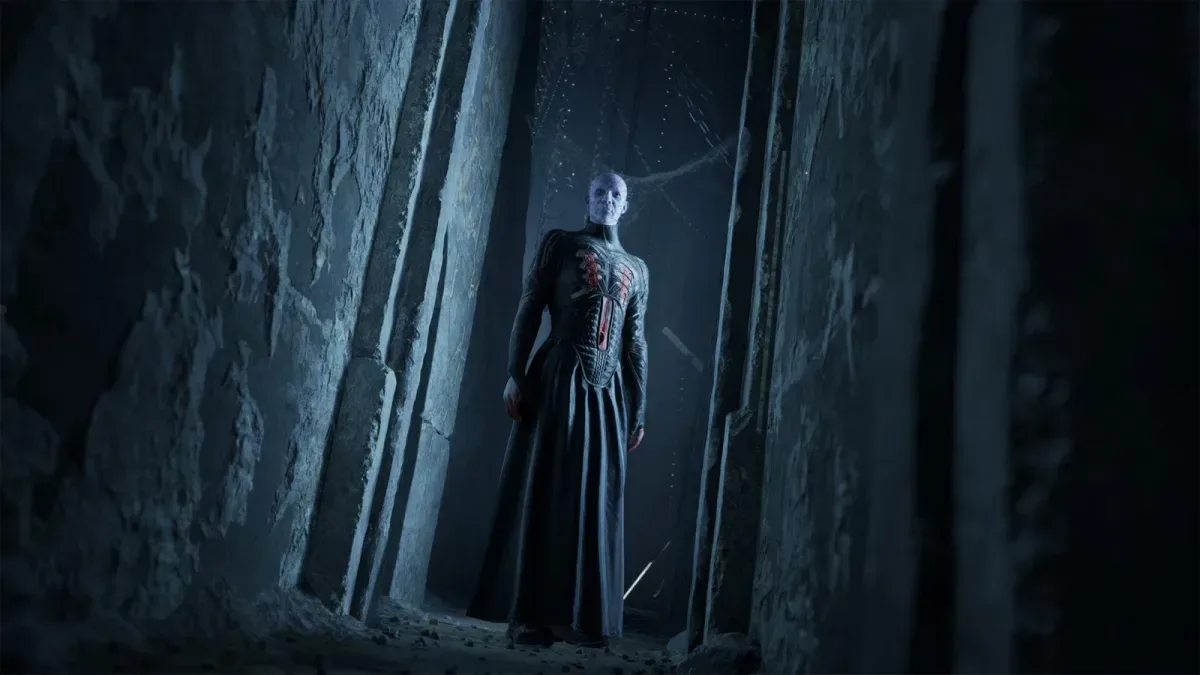
Aiden himself is the least vivid component of the setup. Events around him carry more personality than he does, while Sunny’s predicament, the cult’s fixation, the Labyrinth, and the Cenobites provide the larger hooks. Pinhead is a particular bright spot, with Doug Bradley returning to the role. The game also includes callbacks likely to reward established fans without allowing them to become a barrier to following the main plot.
The writing and presentation do find room for solid scares and unsettling situations, and the game does not sand down the franchise’s appetite for gore and sexual unease. It appears conscious of the line it is approaching, however, rather than merely escalating for shock value. That tonal commitment matters. Horror games can borrow weapons, crafting, and pursuit sequences from the genre’s familiar playbook; Hellraiser: Revival is at its most persuasive when the setting’s specific brand of bodily, ceremonial dread comes through.
Unfortunately, the storytelling is regularly weakened by execution problems. Lip syncing can look poor, quieter dialogue can be lost in muddled audio mixing, and subtitles may fail to match spoken lines or fail to appear. These are not minor blemishes in a horror game that relies on carefully delivered mood and menace. When a scene’s speech is unclear or its faces seem disconnected from the words, the tension leaks away.
The puzzle box occasionally opens better possibilities
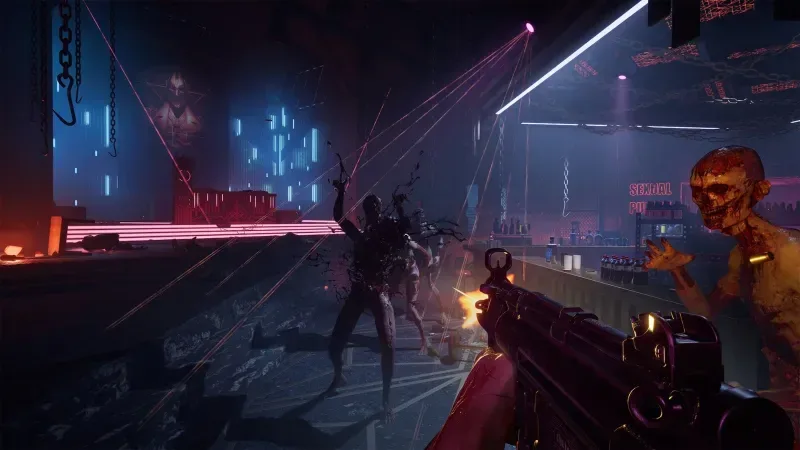
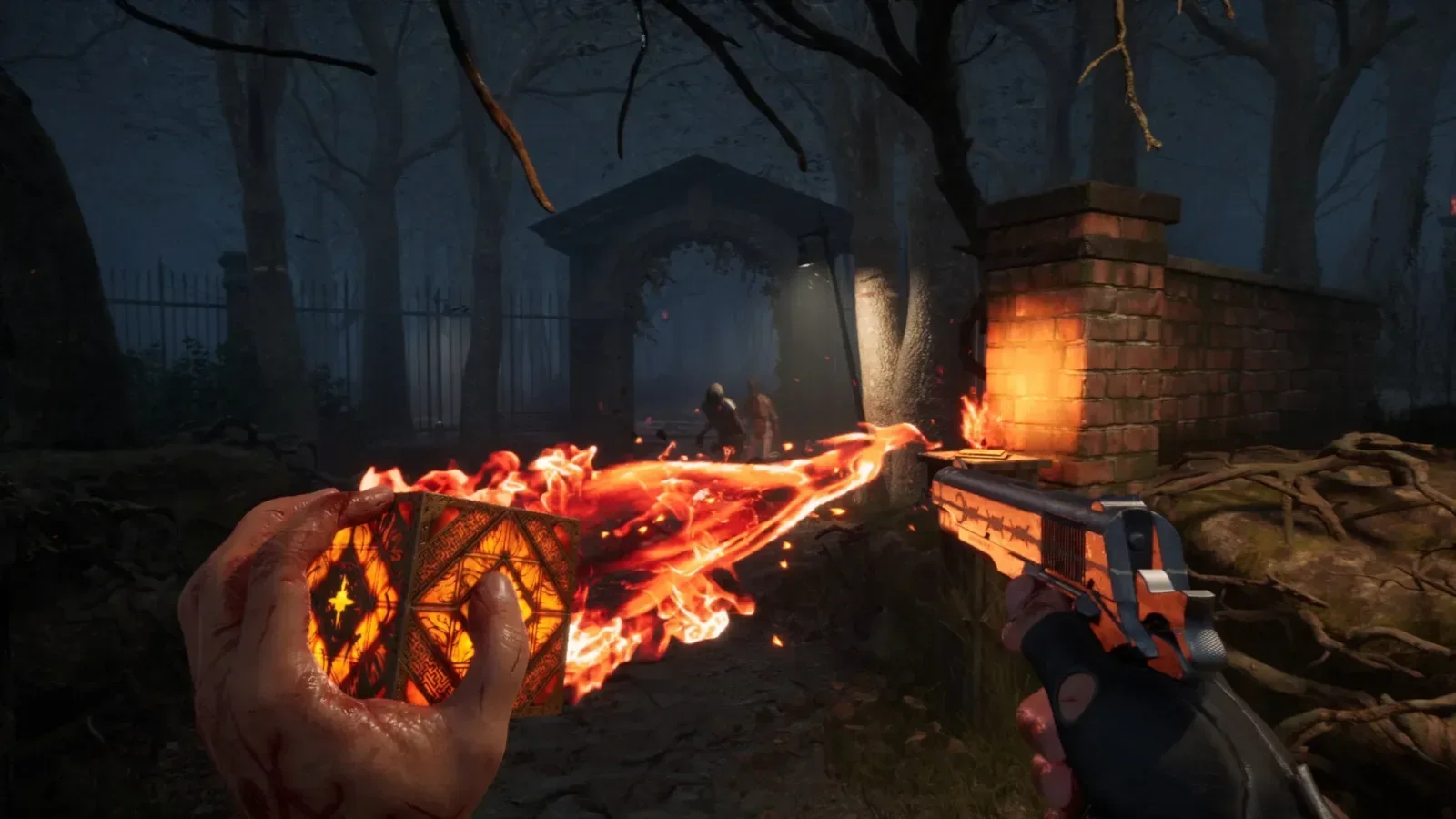
Standard combat combines firearms and melee attacks, but neither appears to have enough impact. Shooting is especially compromised by unwieldy aiming, while the basic exchanges do not establish much satisfying rhythm. The puzzle box is the more imaginative half of the arsenal. Telekinesis can be used to seize and throw objects in the environment, including saw blades that can dismember enemies. It can also absorb torchfire and return it against threats. Those interactions give the game flashes of a more reactive, malicious playground: survival horror where the room itself can become an instrument of violence.
That promise is why the ordinary combat feels so disappointing. Rather than letting the box’s powers elevate encounters consistently, the game too often leaves players wrestling with controls and enemy behavior. Quick-turning is assigned to pressing the left stick downward, an input that can be triggered accidentally while sprinting. With no remapping option described, an intended escape can become an abrupt reversal straight toward danger. Controls need not be frictionless in horror, but accidental turns are not the same thing as panic.
The cultists also struggle to provide satisfying pressure. Their behavior can include firing at walls, blowing themselves up with grenades, rarely taking cover, and giving up pursuit too easily. That makes some combat and stealth stretches unusually breezy. A horror game does not require military-grade opponents, but it does need enemies whose actions support the fantasy of being hunted or cornered. Here, their lack of urgency can make threats feel less terrifying than confused.
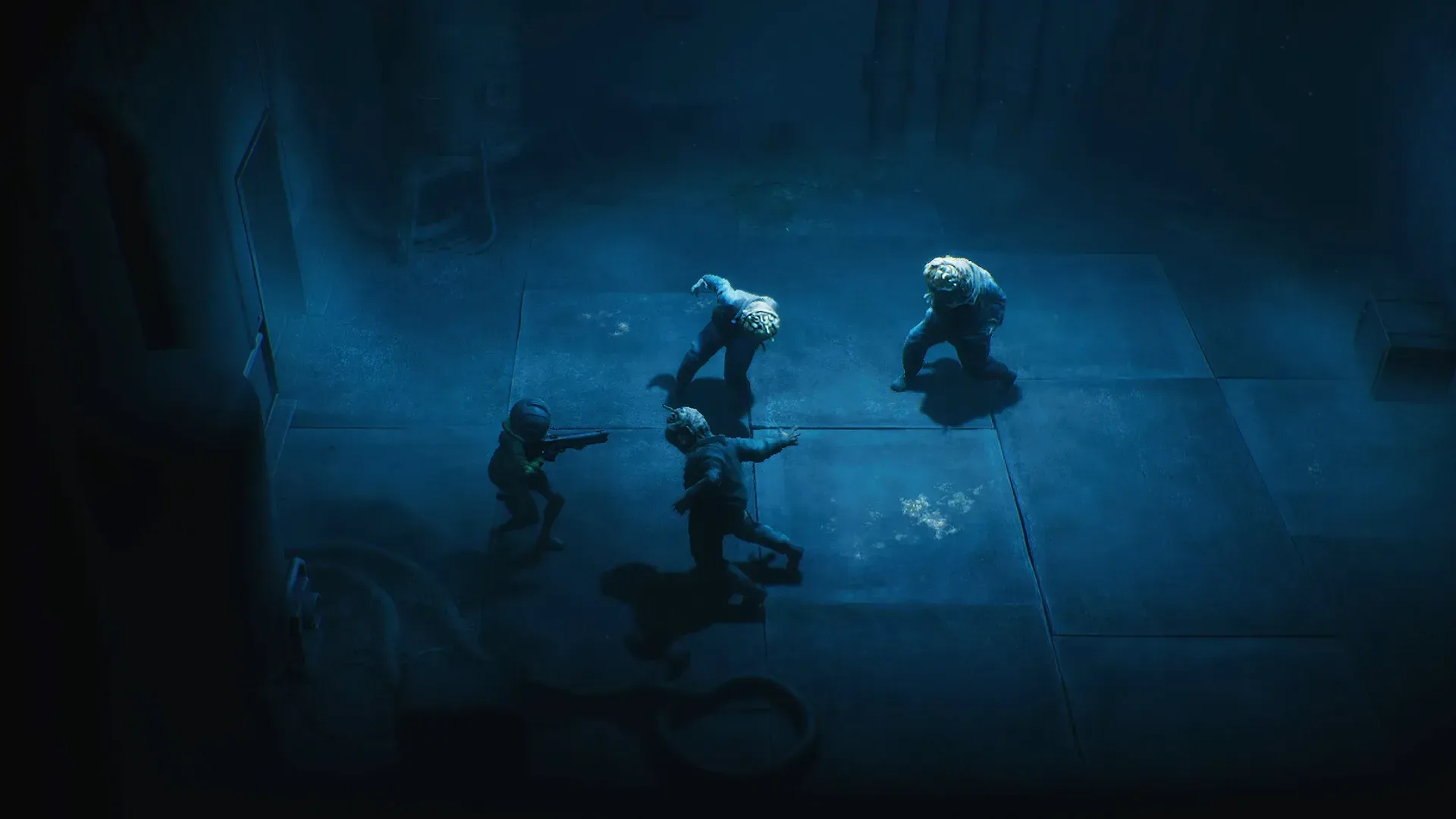
At the other extreme, encounters involving groups of mutated humans known as the Unworthy can become overwhelming. The problem is not simply that these enemies are aggressive; it is that the game frequently seems to supply too few resources to withstand them. A good survival-horror economy pushes difficult choices: heal now or save the materials, buy ammunition or another tool, run or stand ground. Hellraiser: Revival instead sounds prone to removing the foundation for those choices altogether.
Scarcity without clarity is not suspense
Resource scarcity changes sharply across the roughly 10-hour campaign. Ingredients for items such as basic bandages can be plentiful at one point and extremely difficult to find later, even with thorough searching. Money is similarly limited, leaving little margin for costly purchases before difficult fights. A store system compounds the uncertainty by making some items available at one time and absent at another, with no clear explanation of the rule behind those changes.
This is particularly damaging when a desired weapon can disappear from the shop before an upcoming battle, or when appropriate tools are unavailable for armored enemies. Entering a boss fight with almost no health or facing a heavily defended enemy without a suitable blunt melee option does not automatically produce meaningful adversity. In this case, it reads more as a system failing to communicate and support its own demands. Players who enjoy tightly rationed survival horror may appreciate pressure in principle, but should know that this game’s pressure can feel arbitrary rather than strategic.
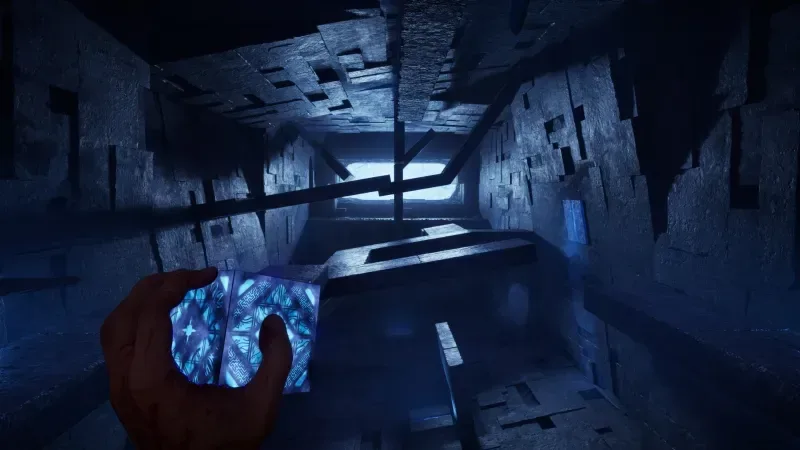
The Labyrinth offers the closest thing to a reprieve. These sections emphasize exploration, trap-dodging, and moving blocks through telekinesis to solve navigation problems. They also contain the game’s strongest art direction and most cohesive mood. Their relative lack of combat gives the environment room to work: the player can absorb the hostile grandeur of the space rather than merely circle-strafe through it. Anyone intrigued by supernatural puzzle-horror may find a more successful use of the “puzzle box” idea in Echo Weaver’s time-loop puzzle-box design, though the two games pursue very different tones and structures.
Even the Labyrinth cannot remain reliably atmospheric. Telekinesis can be finicky when guiding blocks, and a pursuit sequence involving the Chatterer can break when the enemy becomes stuck behind a stone block. Restoring the sequence requires backtracking to force a reset. This is exactly the kind of technical interruption horror cannot comfortably absorb: a threatening creature ceases to be threatening once the player has to troubleshoot its pathfinding.
A technical collapse that overwhelms the atmosphere
The game’s most serious problem is its technical state, which reportedly deteriorates as the adventure continues. Environmental pop-in and flickering characters or objects constantly disrupt the visual world. Players can fall through floors after being knocked down, exposing areas below the level before recovering. Audio can disappear during violent actions. Subtitles can linger long after dialogue ends. A healing animation may freeze in combat, creating an avoidable death, while an elevator encounter may fail to recognize that all enemies have been defeated and require a save reload.
Enemy behavior can fail just as visibly. Foes may trap themselves in geometry, a major antagonist can be defeated by simply leading him around a table while he repeats the same pursuit pattern, and a major boss can become stuck on a car during what appears to be a scripted moment. These defects do more than reduce polish. They rewrite the difficulty, damage pacing, and puncture the fiction of a world governed by terrible supernatural rules. The player is no longer facing a nightmare; they are managing failures in the nightmare’s staging.
Hellraiser: Revival has enough effective visual horror, franchise awareness, and puzzle-box experimentation to show what a stronger version might have been. But the technical instability is too pervasive to treat as background noise, and the underlying combat, AI, and resource systems are not robust enough to carry the game when the spectacle falters. Fans curious about the setting may still find isolated scenes and Labyrinth passages worth noting. For most players, though, the hazards outside the fiction are likely to be more exhausting than the ones within it.