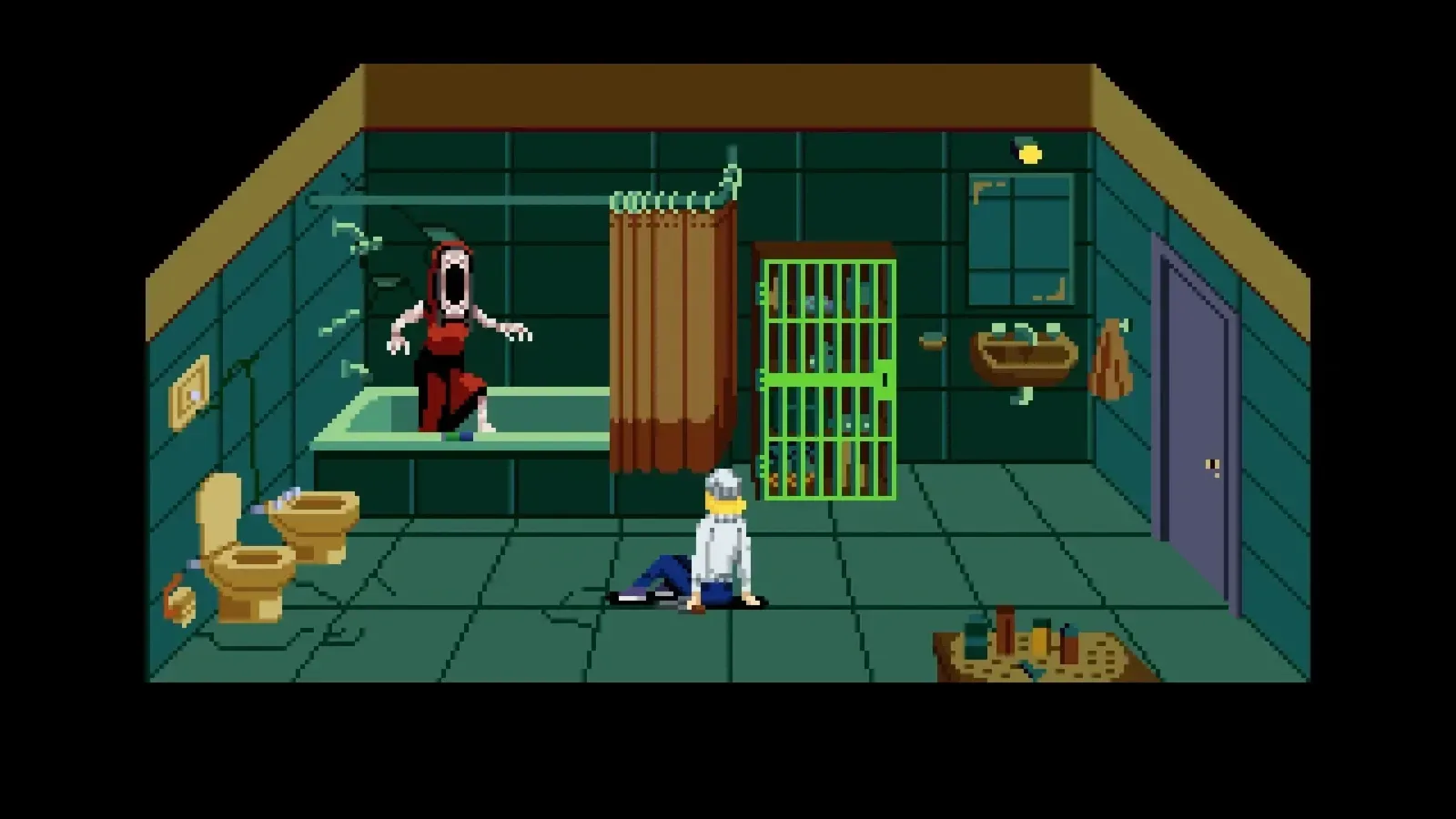
Tenebris Somnia makes an immediately unusual promise: an old-school, pixel-art adventure where live-action scenes are not merely garnish, but an active part of the horror language. That blend could easily have become a nostalgic pile-up of point-and-click conventions, survival-horror tension, and FMV interruption. Instead, it appears carefully shaped around a central idea: a nightmare should feel authored, disorienting, and personal without becoming incomprehensible.
The result is a compact horror adventure that uses its apparent limitations as strengths. Its four-story apartment-building setting keeps the journey concentrated, while its dream-world framing gives the game room to turn familiar spaces, objects, and encounters uncanny. Puzzles drive much of the experience, yet combat and boss sequences prevent the search for clues from settling into routine. Most importantly, the live-action material gives emotional definition to a story that could otherwise be forced to rely on a tiny, featureless player sprite.
This is a game for players who enjoy methodical exploration, inventory-based problem-solving, constrained resources, and an atmosphere that values dread over constant action. Its biggest potential friction points are equally clear: the presentation deliberately reaches back to older adventure games, the narrative sometimes explains its supernatural ideas too directly, and the save system is used as part of a puzzle structure. Those are not deal-breakers, but they help define the kind of patience Tenebris Somnia expects.
A nightmare rooted in obsession
The story begins with Julia visiting her former boyfriend Ivan’s apartment after recurring nightmares in which he is killed by monsters. That simple concern expands into a demonic dream world tied to Ivan’s memories, a horror film connected to the pair’s past, and a steadily escalating run of revelations. The dialogue-free approach puts considerable pressure on staging, performance, and environmental context. Tenebris Somnia largely meets that challenge by making its shifts in reality feel consequential rather than arbitrary.
Its concerns with artistic obsession and romantic fixation give the horror more substance than a string of monsters and locked doors. The game is not only interested in what lurks in the building; it is interested in why film, memory, and a former relationship can become traps. The premise of a horror film inside a game that itself uses filmed sequences is especially apt. It adds a self-reflective edge without requiring the player to separate the story into an abstract exercise.
The narrative’s main weakness is a tendency to spell out parts of its supernatural lore. There is a tension here: clarity helps prevent a dreamlike plot from becoming a confusing one, and the overall tale remains understandable even as events become increasingly strange. But explanation can reduce the potency of mystery, especially when the game’s imagery and scenario design are already doing so much evocative work. Tenebris Somnia is strongest when it lets an unnerving situation, a performance, or a visual clue carry the implication before providing the answer.
FMV with a gameplay purpose
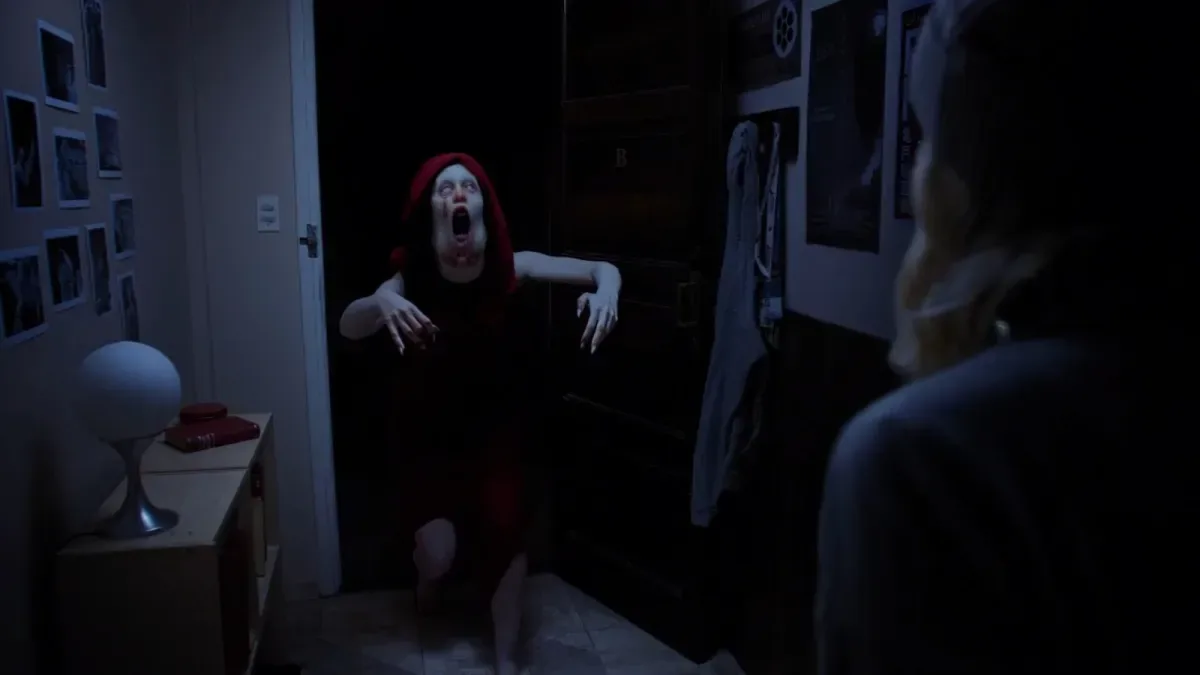
Live-action footage is the game’s most distinctive asset, and it sounds like it earns that distinction. The scenes are positioned as dramatic beats rather than lengthy breaks from play, using practical effects and a grounded physical presence to make the threats feel more immediate. A door opening into a live-action jump scare is a small but telling example of the approach: film is not placed beside the game as a reward for reaching a checkpoint; it can become the moment that delivers a scare.
That integration matters because FMV can feel disposable when it exists only to deliver exposition. Here, filmed scenes can contain visual information relevant to progression. This reinforces observation as a core skill and turns the presentation choice into part of the adventure’s design. The footage also helps sell Julia’s fear, concern, and resolve in a way that pixel art alone may not be equipped to provide. It is an effective solution to a practical storytelling challenge, and it makes the emotional stakes more legible.
There is a pleasing thematic fit between the format and the plot. Because Ivan and Julia’s past includes a horror film, the incorporation of live-action footage feels connected to the story rather than attached as a novelty. Players who prefer horror with a cinematic sensibility should find a natural companion piece in the broader genre conversation around Whalefall’s claustrophobic survival-horror descent, though Tenebris Somnia’s identity is firmly built around its own apartment-bound dream logic and puzzle-led structure.
Small spaces, inventive puzzles
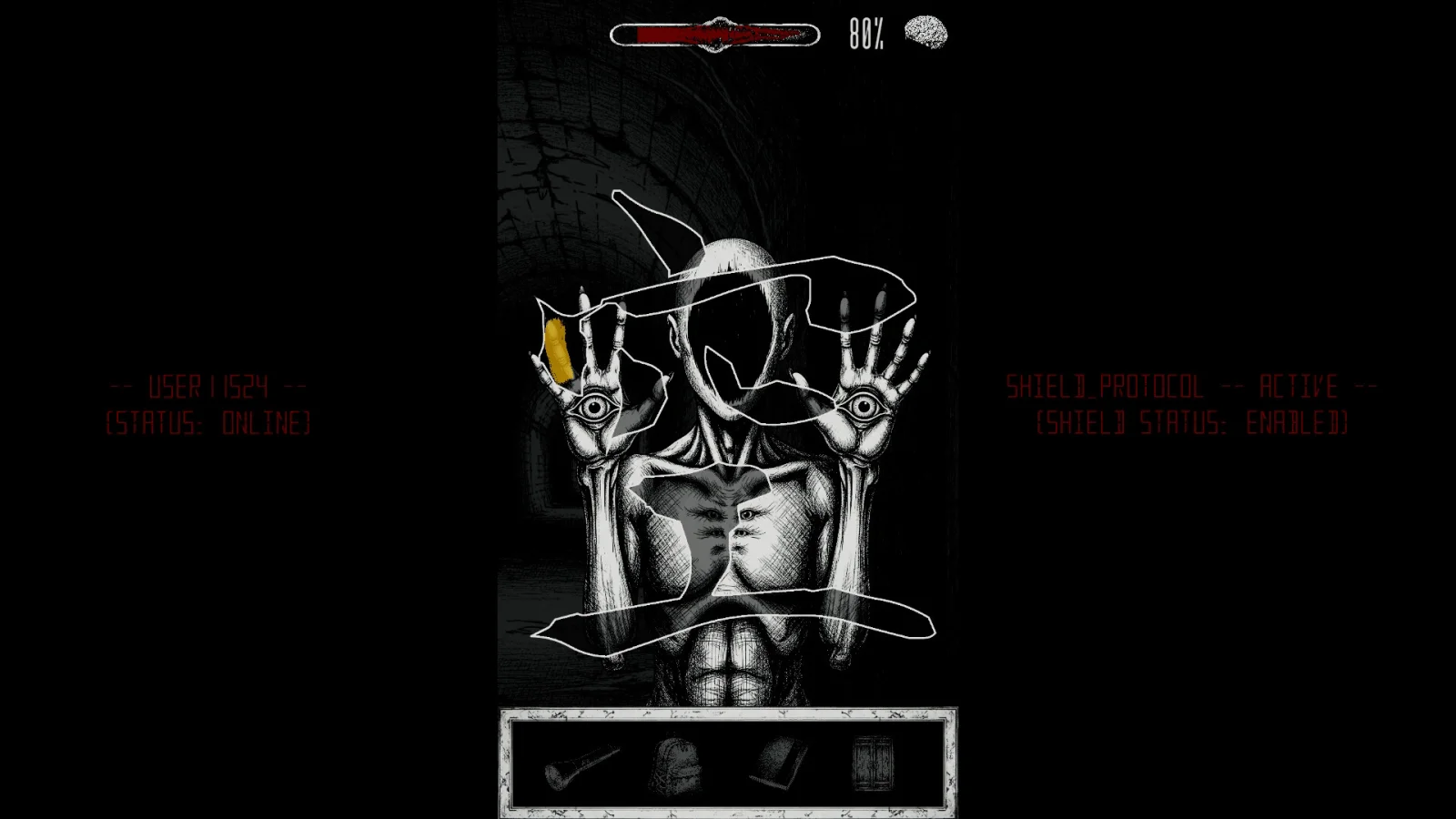
The bulk of the adventure takes place within a dreamlike version of a four-story apartment building. Rather than presenting a sprawling map, Tenebris Somnia concentrates on traversal between floors, gathering and combining objects, and interpreting clues. This is classic adventure-game territory, but the game’s value rests in how it refreshes those familiar actions. The puzzles reportedly make creative use of the modest visual format, including scenarios involving reflections in mirrors and screens.
That is a promising sign of design discipline. A low-detail presentation does not have to mean low-information spaces; it can encourage players to focus on the elements that matter. When a game builds its challenges around visual relationships and unexpected applications of a limited environment, the world feels designed rather than merely decorated. Tenebris Somnia also appears to avoid one of the genre’s more exhausting habits: puzzles that are technically solvable but so obscure that progress turns into blind experimentation.
The challenges ask for lateral thought but remain readable enough that connecting the dots feels satisfying. That balance is particularly valuable in horror, where getting stuck for too long can replace tension with irritation. One puzzle even uses the limited save points as a resource, changing how the player has to think about progress. It is a clever idea because it turns an assumed safety net into a deliberate consideration. It may also divide players who want saving to remain a purely practical convenience rather than another source of pressure.
Combat that supports the dread
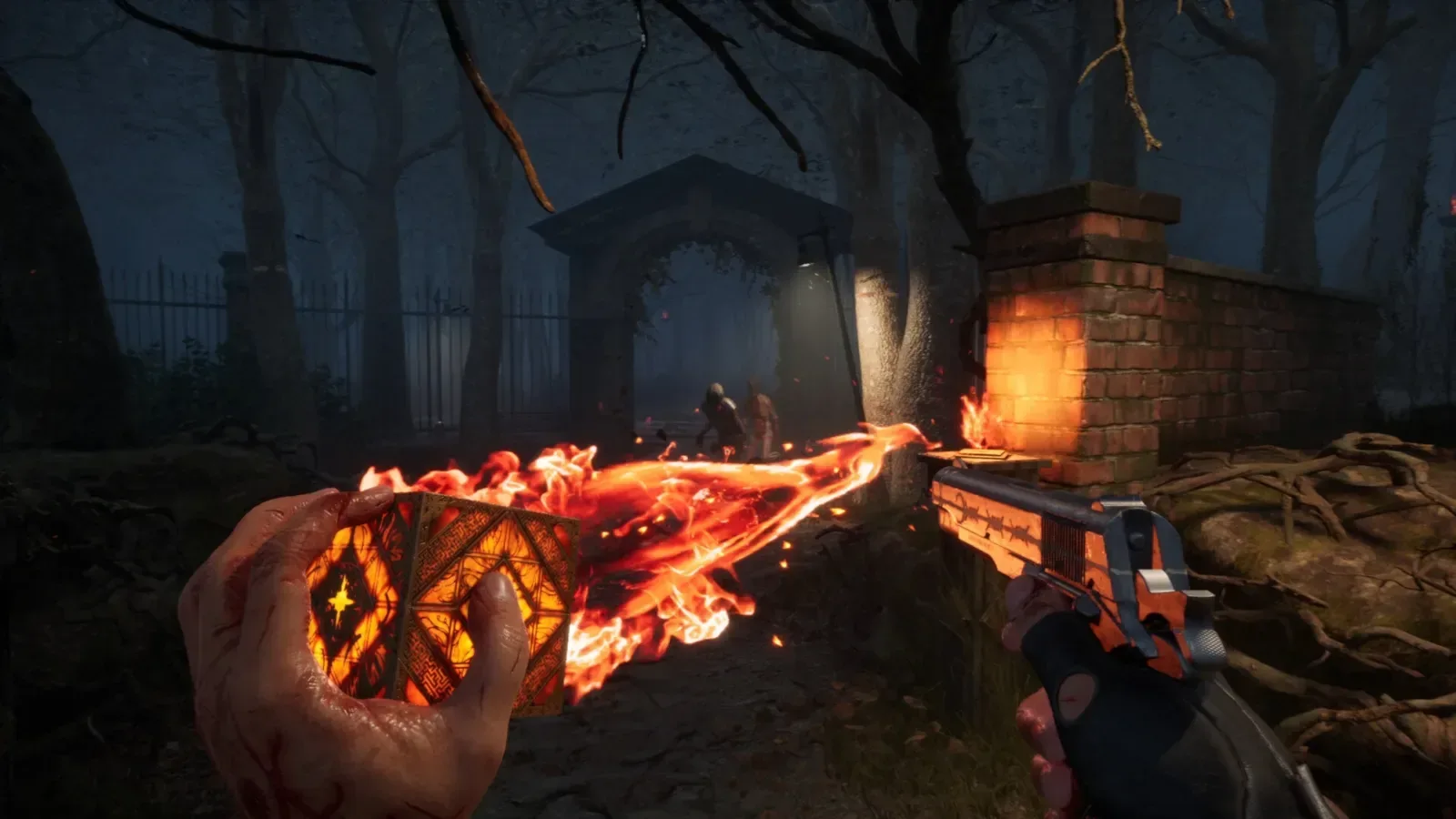
Although puzzles are central, Tenebris Somnia does not treat combat as an afterthought. Julia can use melee attacks and firearms against grotesque enemies, with deliberate animation that evokes older adventure and survival-horror games without apparently becoming unresponsive or cumbersome. A pipe and shotgun offer contrasting ways to address danger, while the ability to evade many ordinary threats gives players room to make choices instead of demanding every encounter be cleared.
That structure suits the game’s resource economy. Ammo and health are limited enough to create tension, but the pressure is not presented as relentless punishment. Cautious play is rewarded, and timely health or ammunition drops ease the worst moments of scarcity just before they become crushing. This creates a forgiving edge within an otherwise tense system: the game can make a nearly empty inventory feel alarming without necessarily stranding a player in an unwinnable state.
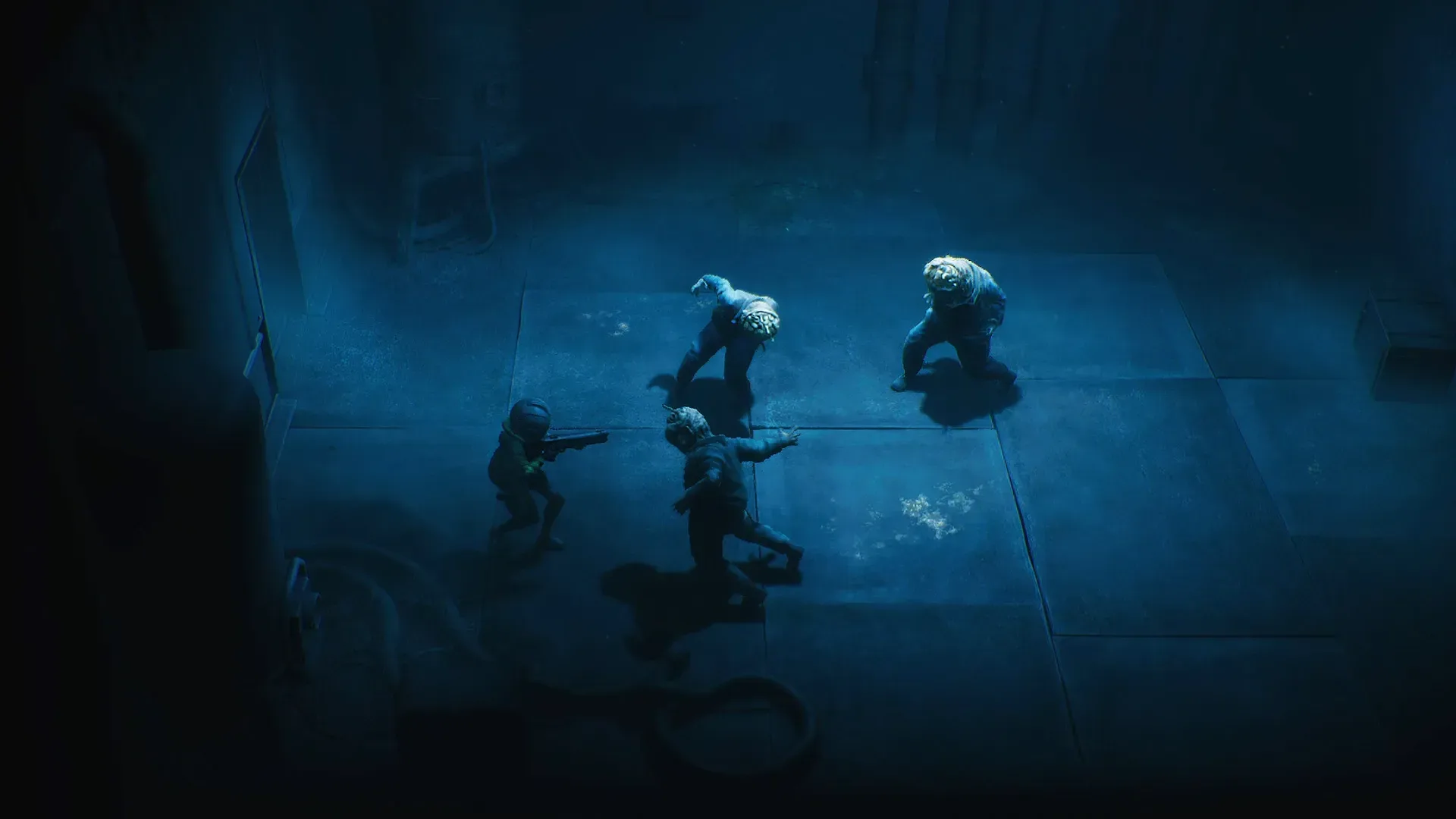
Boss battles add welcome variation. Wave-based fights against small gremlin-like enemies, a defense sequence centered on a fragile effigy, and a confrontation involving mirror images of a tentacled creature all point to encounters built around distinct scenarios rather than a repeated test of raw damage output. That is an especially smart fit for a puzzle-forward game. Bosses can punctuate the exploration with a change of rhythm while preserving the broader emphasis on unusual situations and horror spectacle.
Who should enter the building?
Tenebris Somnia sounds best suited to players who want an approximately eight-hour horror story with a clear endpoint, not an endlessly expanding campaign. Its pleasures are concentrated: a single unsettling location, evolving clues, selective fights, and live-action scenes that provide texture and shock. Fans of classic survival horror and point-and-click adventures should be especially receptive, provided they appreciate deliberate pacing and are willing to engage with inventory logic.
Players looking primarily for fast, action-heavy combat may find its old-school cadence less immediately appealing. Likewise, anyone who dislikes being asked to conserve supplies or navigate save limitations should take note of how closely those pressures are woven into the design. But for an audience willing to meet it on its own terms, Tenebris Somnia’s restraint appears to be a virtue. It understands that a memorable horror game does not need constant escalation when a locked door, a reflection, or a short filmed scene can make a familiar space feel unsafe.
Its blend of formats is more than an attention-grabbing hook. The FMV sharpens the narrative’s emotional focus, the puzzles make the apartment feel meaningfully constructed, and the combat adds danger without overwhelming the adventure. Some overexplained lore keeps the game from achieving complete ambiguity and unease, but its core is impressively coherent: a throwback-minded horror experience that uses the past as a toolkit rather than a cage.