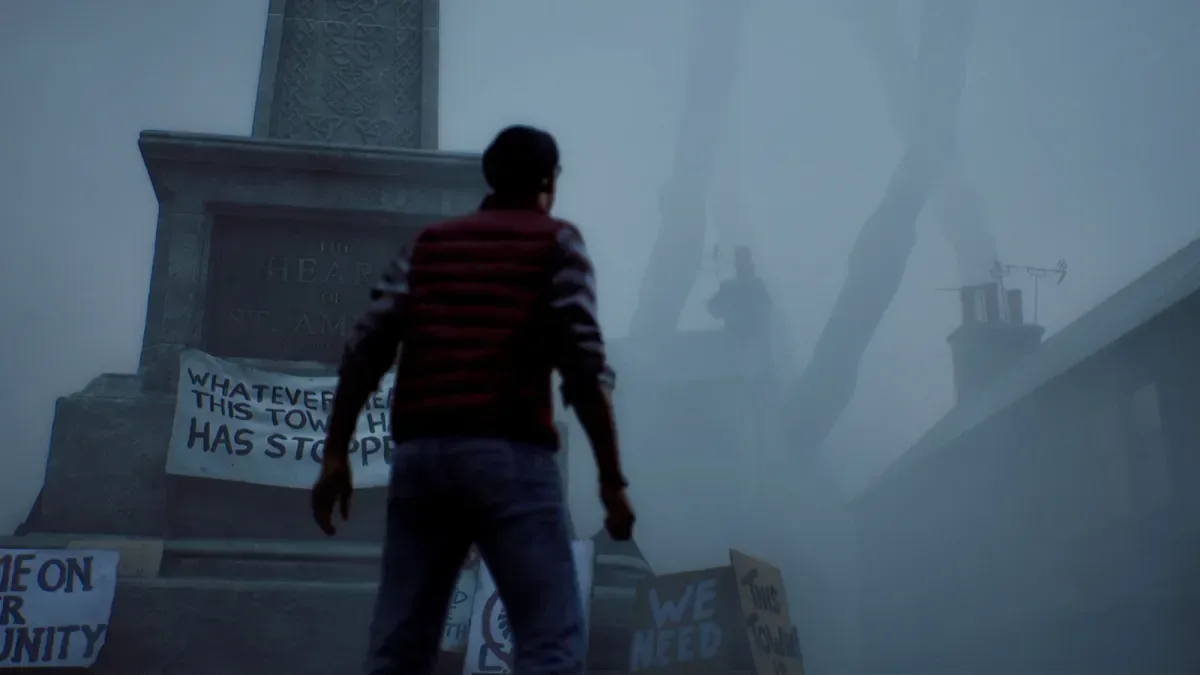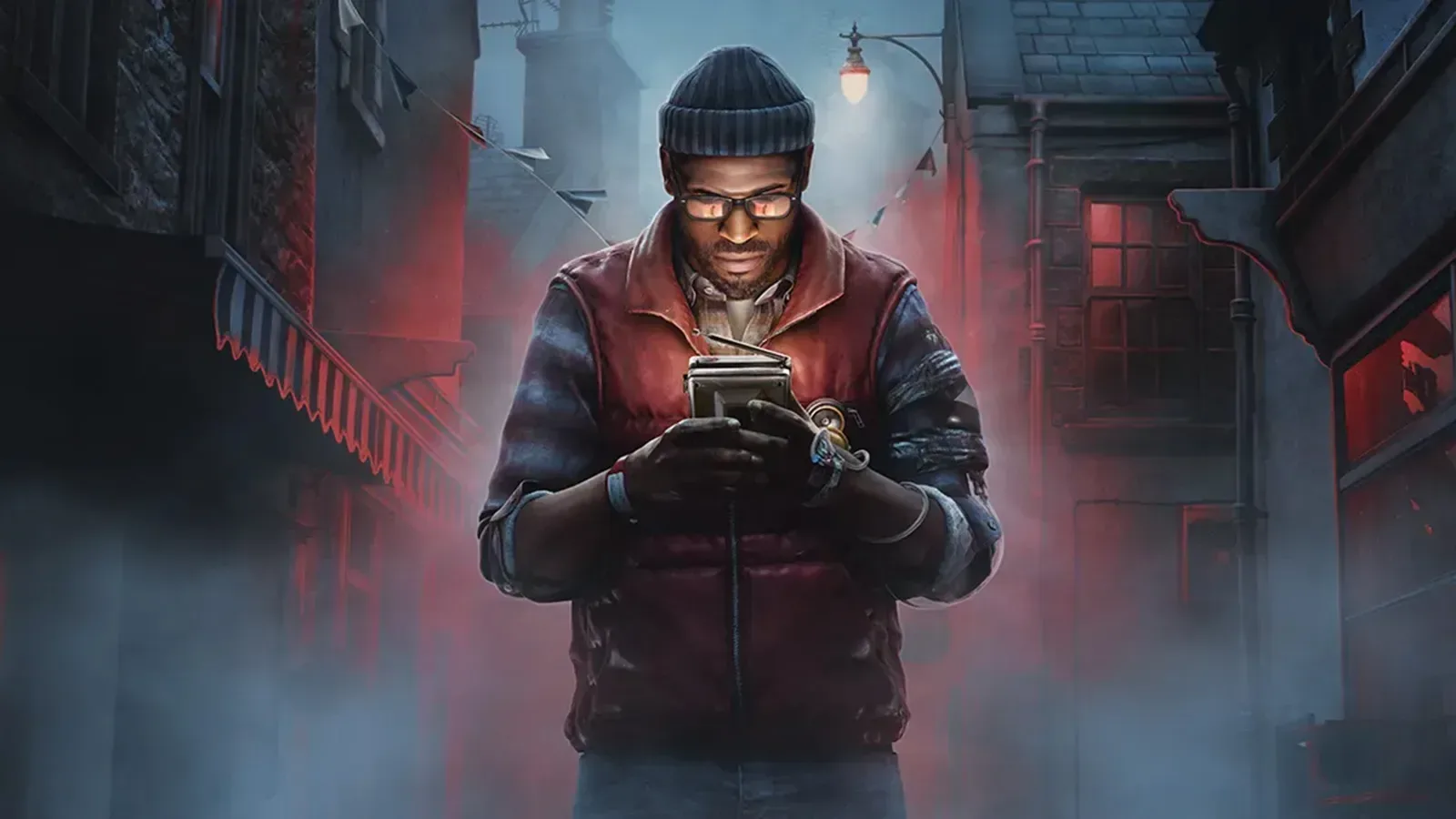
Silent Hill: Townfall understands that horror is often strongest when it makes a place feel hostile before anything attacks. Its 1996 setting, the Scottish town of St. Amelia, and its first-person viewpoint all serve that end: this is an entry built around proximity, restricted sightlines, and the uncomfortable sense that a threat may be just beyond a doorway. It is a distinctive direction for the series, and a largely effective one, even when its stealth systems make the player fight uncertainty in ways that feel more irritating than frightening.
The game follows Simon Ordell through a town whose physical state and emotional atmosphere are plainly wrong. Monsters populate the streets, reality is difficult to parse, and the route forward is inseparable from confronting personal pain. That broad shape should be recognizable to anyone acquainted with Silent Hill, but Townfall does not merely repeat familiar iconography. Moving the action to St. Amelia gives it its own location and texture while retaining the franchise’s interest in isolation, damaged people, and environments that externalize distress.
First person, closer fear
Townfall’s full commitment to first person is its defining formal choice. The perspective narrows the player’s relationship with the environment: interiors feel compressed, while outdoor fog becomes a wall that restricts certainty as much as visibility. Rather than presenting space from a comfortable distance, the game asks players to inhabit Simon’s limited awareness. That is an especially good fit for a horror story in which not knowing where danger is matters as much as the danger itself.
The setting benefits from that intimacy. Claustrophobic rooms are dense with inspectable detail, inviting players to linger even though lingering is rarely comfortable. Outside, the fog creates a tangible, oppressive presence. These visual and spatial qualities do more than decorate the story; they establish a rhythm of caution. A hallway, a closet, or a partially obscured street can become a problem to read rather than merely a route to cross.
One particularly effective tool is the peeking mechanic. It lets Simon minimize his exposure while observing a potential threat, turning a small movement into an expression of vulnerability. In horror games, defensive actions can easily become routine interface business. Here, peeking appears to preserve the sensation of someone trying not to be noticed. It reinforces the first-person approach rather than existing as a detached feature.
A clearer kind of psychological horror
Townfall’s story works from themes that belong naturally in this series: emotional trauma, loneliness, and the way inner damage changes one’s perception of the world. Simon and the other characters are grappling with their own demons, while the town remains difficult to explain in a literal sense. The game does not offer a straightforward account of why its streets are filled with monsters, and that retained ambiguity is important. The unknown keeps St. Amelia unstable and unnerving.
At the same time, the individual sources of the cast’s distress are comparatively legible. That is a meaningful adjustment. Psychological horror can become evasive when it treats basic emotional context as a twist to withhold, but Townfall seems more willing to let players understand why its characters hurt. The result is less purely dreamlike than some Silent Hill stories, yet it gives the drama a firmer human foundation. The game does not need every feeling to be a riddle for the atmosphere to remain unsettling.
That balance makes Townfall approachable for players who value mood but do not want ambiguity to substitute for characterization. It may be less satisfying for those who want the most abstract and elusive possible version of Silent Hill, but there is value in a horror narrative that trusts clarity at the character level while keeping its larger reality uncertain.
Survival depends on hiding, but the rules blur
Townfall heavily discourages combat. Ammunition is exceptionally scarce, and melee weapons do not last long. Those constraints direct the game toward evasion, tracking, cover, and patience rather than empowerment. It is an appropriate design instinct for this setting: a protagonist who can regularly solve danger with force would puncture the vulnerability established by the first-person presentation.
Simon’s portable television is central to that tension. Its static allows players to monitor monsters through the screen, creating a cautious relationship with threats that are not always directly visible. The device supports the game’s atmosphere because it gives information without turning the player into an all-seeing observer. Looking at a screen for signs of movement can be useful, but it does not make the surrounding space safe.
The problem is that Townfall’s stealth feedback does not always appear dependable. Crouching, moving slowly, and staying behind cover can sometimes avoid detection, but similar behavior may fail on another attempt without an obvious explanation. When a stealth game does not communicate what enemies can see or hear, players are liable to reload rather than adapt. That shift is costly in horror. Instead of dreading the creature in front of them, players may start testing opaque rules behind the scenes.
An invincible enemy that kills Simon immediately if caught magnifies that weakness. Hiding and watching this threat on the television can become a waiting game when it seems unwilling to move away. The intended feeling is presumably helpless suspense, but suspense requires the player to believe that careful observation can lead to a viable decision. Without that confidence, a tense encounter can flatten into stalled progress and repeated saves.
This does not erase Townfall’s best ideas. Its limited resources, observation tool, and close-quarters viewpoint form a coherent survival-horror identity. But the inconsistency matters because stealth is not an optional side activity; it is the game’s primary response to danger. Players who enjoy methodical hiding and are prepared to tolerate some trial and error may find its pressure compelling. Anyone who needs clear detection rules and reliable cause-and-effect from stealth systems should approach with more caution.
Who should enter St. Amelia?
Townfall is best suited to players seeking psychological horror led by atmosphere rather than combat. Its strongest qualities are the oppressive first-person presentation, carefully realized interiors and fogbound exteriors, and a story that treats personal anguish with more directness than its surreal circumstances might suggest. The game also demonstrates how an established horror framework can support a different perspective without losing its emotional center.
Its limitations are equally specific. Frustrating detection can interrupt immersion, and enemy sequences built around instant failure risk becoming chores when their behavior is difficult to interpret. The game’s clarity around its characters may also trade away some of the franchise’s more ethereal mystery, though the exchange often feels deliberate rather than reductive.
For readers tracking the game’s availability, the site’s Silent Hill: Townfall pre-order update provides related coverage. As a play-style proposition, however, the central point is simpler: Townfall is a tense, intimate horror experience whose vision is stronger than the consistency of the systems used to enforce it.