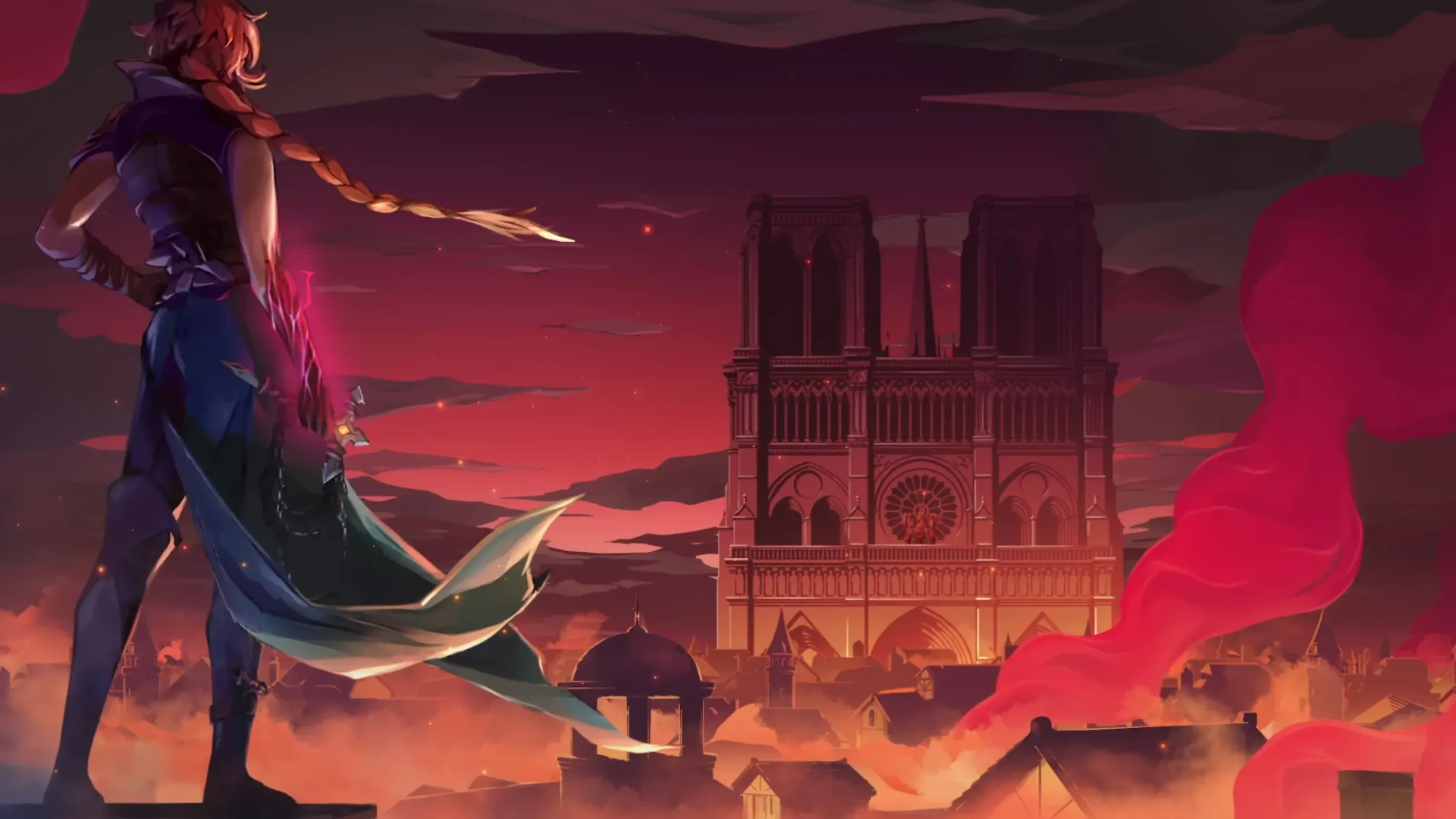
Castlevania: Belmont’s Curse returns to gothic vampire hunting with a confident sense of motion. Its central strength is not simply that it borrows familiar foundations—whips, monsters, haunted spaces and hidden routes—but that it gives those foundations a new lead character and a system of discovery that keeps expanding. Rose Belmont’s hunt through supernatural Paris combines sharp combat, ability-led exploration and tarot-card investigations into a game that repeatedly encourages the player to reconsider both their route and their loadout.
That combination matters because this is not a narrowly nostalgic exercise. Belmont’s Curse clearly values the series’ legacy, yet its most compelling moments come from building beyond it: following a cryptic clue across the map, returning to a previously closed-off space with a new traversal ability, or changing tactics in the middle of a demanding fight. It is an ambitious action adventure whose abundance of weapons, relics, spells and card objectives can become busy late on, but whose systems generally give that abundance purpose.
A new Belmont carries an old burden
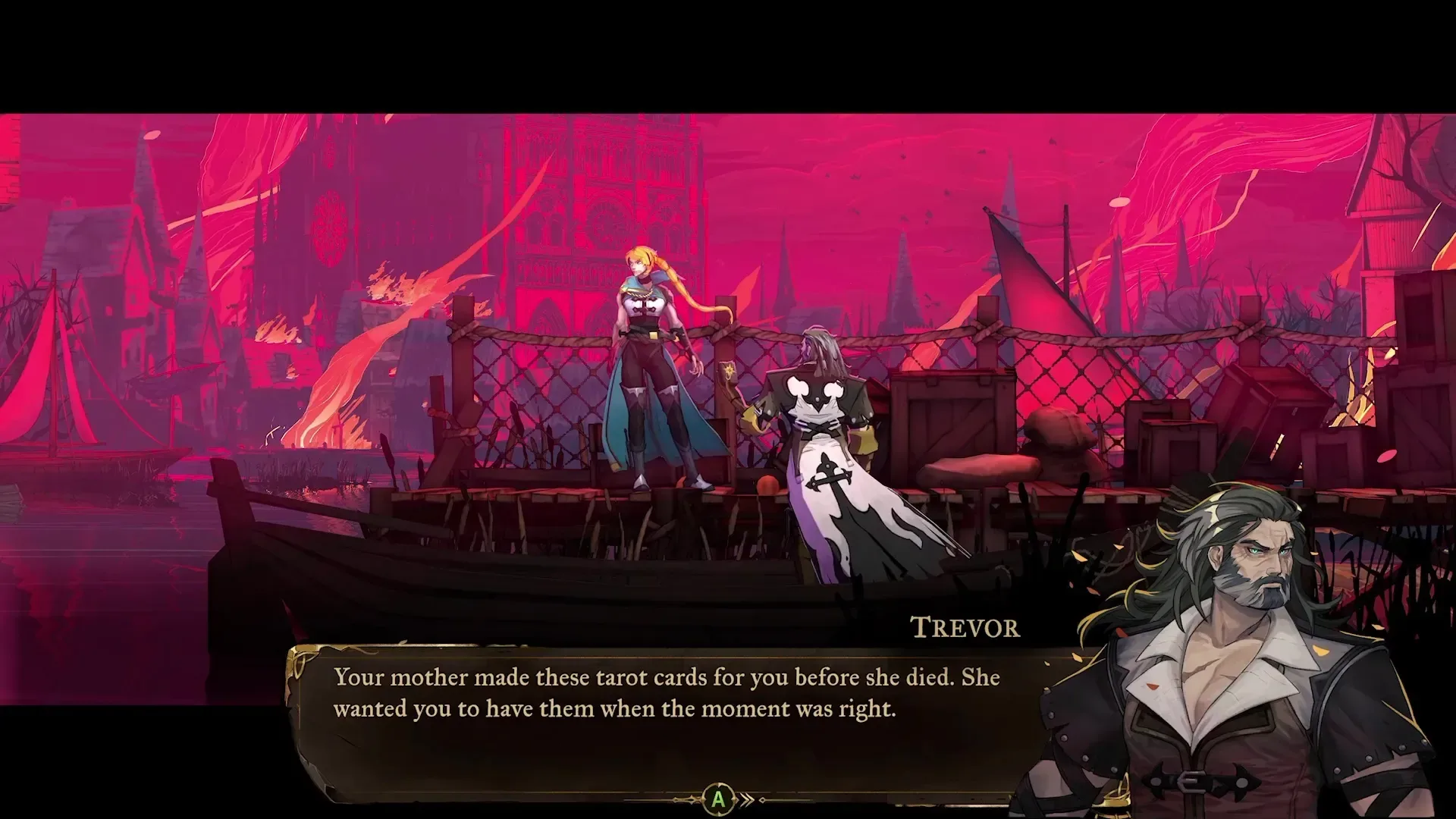
Rose arrives in Paris alongside her father, Trevor, after the city falls under supernatural siege. She has more than duty driving her forward. Rose wants to demonstrate her worth to Trevor, while pursuing revenge connected to her bewitched arm: a curse tied to Dracula and inherited through her late mother. It is a direct, functional premise rather than an especially elaborate one, but it provides a useful emotional line through the campaign. Rose’s arc has several memorable turns, and the story’s focus on a daughter stepping into a family legacy gives the adventure its own identity.
The game can be approached without prior familiarity with the broader series. Its connection to Castlevania III is present, but the immediate conflict and Rose’s motivations stand on their own. There are also clear anime-inflected qualities in the art direction and character designs, while returning voice performers, including Trevor’s, reinforce the connection between generations. The effect is less about demanding homework and more about making the transfer of focus from Trevor to Rose feel intentional.
That handover is most effectively expressed through Rose’s tarot deck, a gift from her mother Sypha. The cards are vessels for the powers of important figures in Paris, whether those figures prove to be allies or enemies. They serve as a narrative device, an investigation structure and a major component of Rose’s combat toolkit. That overlap is a smart piece of design: the game’s story progression is not sealed away from its action systems, and each new acquisition can alter how Rose thinks about the world around her.
Investigations grow from guided to genuinely searching
Rose gathers environmental clues while tracking card targets, using them either to locate someone or gain an advantage for a confrontation. The early investigations are comparatively linear and only moderately engaging. They establish the idea clearly, but do not always make the player feel like a particularly incisive hunter. Later missions are where the premise finds its bite. Clues become more cryptic, objectives can stretch across the map, and the final group of card pursuits asks for more attentive navigation and inference.
Those late-game searches sound especially well suited to players who like exploration to be more than a break between fights. They turn Paris into a place to parse rather than merely traverse. The design’s willingness to make objectives less immediate is an important counterweight to the early game’s guided structure, and it makes the final card hunts feel like earned detective work. Players looking for constant forward arrows may find that shift less comfortable; those willing to revisit locations and connect clues should find it among the game’s strongest material.
Absorbing a target’s soul into a card also gives Rose someone new to speak with. Over time, the journey fills with the voices of allies and antagonists who can comment as events unfold. It is a pleasing way to counter the isolation that can accompany a sprawling gothic quest. More importantly, it makes collecting cards feel like an expansion of the game’s social texture as well as its mechanical options.
Combat thrives on adaptation
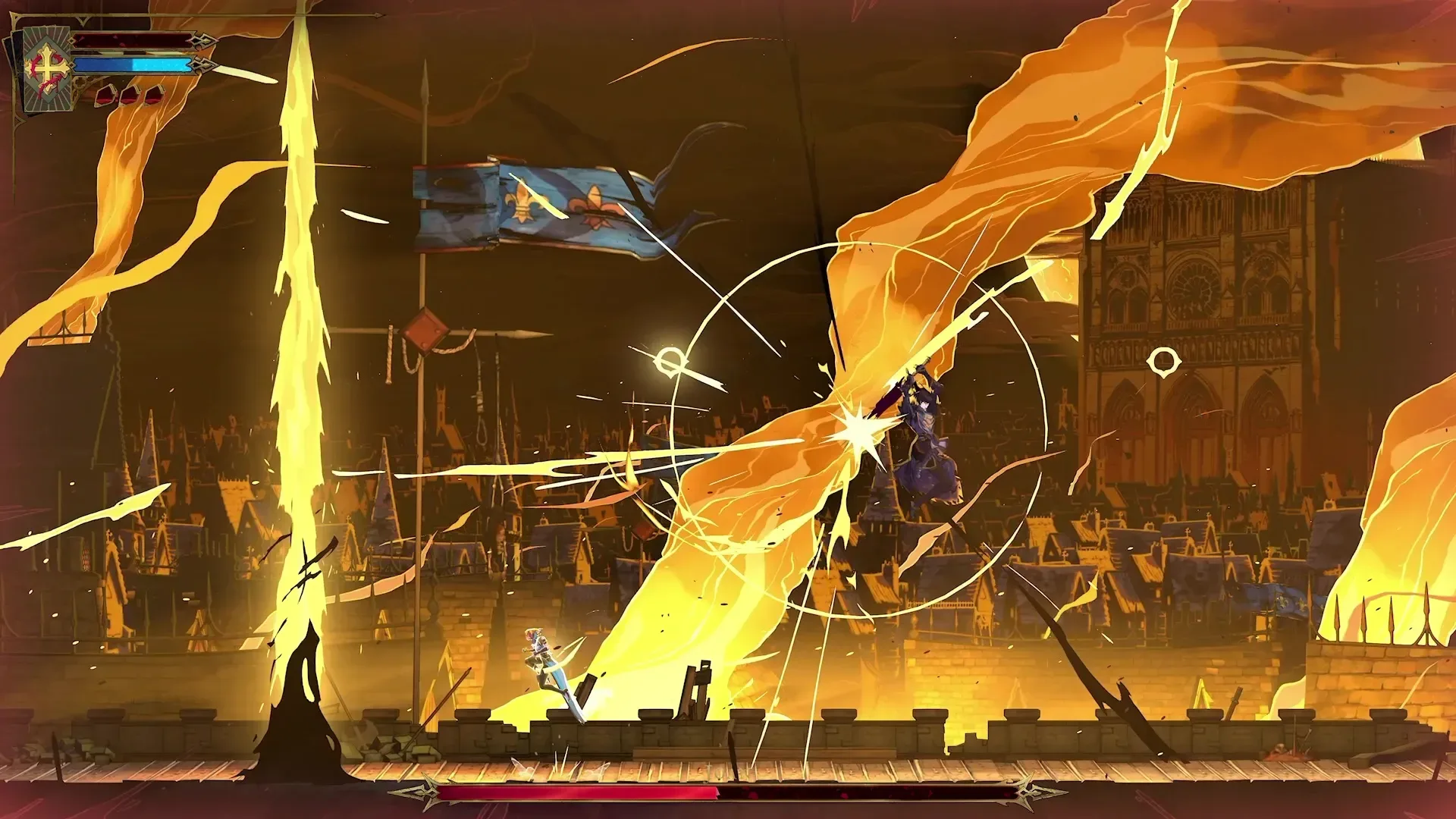
Rose is agile from the outset and gains further mobility as new abilities arrive. Combat is built around choice: six weapon categories, perk-granting relics and the tarot deck provide multiple ways to approach an encounter. The game supports swapping equipment even during fights, which is a notable invitation to react instead of settling into one permanently safe routine. A loadout that feels effective against one group of enemies may not be the answer to the next.
The cards are a major part of that flexibility. Each unlocks a spell, with examples including fireballs, a magical cross and an attack that petrifies foes. The spells are not presented as disposable novelty tools because each card also has Works of Mercy objectives that improve its associated power. These range from repeated use of a spell to enemy-specific tasks and exploration requirements such as locating every room in the Clock Tower. The structure gives players a concrete reason to test options they might initially overlook.
Works of Mercy are a particularly welcome answer to the problem of a large ability pool. Late in the game, an array of choices can invite indecision, but these goals gently direct experimentation without removing agency. A player can pursue an upgrade because they want a stronger spell, then discover that the spell itself deserves a regular place in their kit. It is progression that asks for engagement rather than simply handing out numbers.
The resulting fights are demanding without being portrayed as punishingly prohibitive. A forgiving checkpoint system helps keep failure from turning into a prolonged chore, which makes the game more approachable for players interested in tactical action but wary of excessive repetition. Boss battles against Dracula’s minions are another major draw, bringing inventive and intense confrontations to a combat system designed around movement and adaptation. Those who want a fixed, minimal moveset may find the volume of gear unnecessary; players who enjoy tuning a build to the problem at hand have a great deal to work with.
Secrets give the map a reason to linger
Belmont’s Curse makes revisiting earlier areas meaningful by placing new traversal abilities at the center of continued exploration. Previously inaccessible spaces can be reached later, and the rewards include roughly two dozen weapons, health and mana improvements, and substantial optional areas. This is not exploration for its own sake: the discoveries feed directly back into Rose’s available combat choices and her ability to endure tougher challenges.
The scale of the hunt is substantial. A reported playthrough reached 92 percent completion after 16 hours, with further secrets and optional spaces remaining. That suggests a campaign capable of supporting both a focused finish and a more completion-minded route, though completion-oriented players should expect to double back. The game appears most rewarding when treated as a map to interrogate, not a straight corridor to clear.
Players drawn to elaborate traversal puzzles may also want to see how another game handles exploration friction in Echo Weaver’s time-loop puzzle box. Belmont’s Curse takes a more combat-forward path, but it similarly understands that returning to a familiar space can be satisfying when new knowledge or movement changes its meaning.
Verdict
Castlevania: Belmont’s Curse succeeds because its many moving parts support the same core fantasy: becoming a more capable hunter in a city dense with threats, mysteries and unopened paths. Rose is a strong focal point for a story about inheritance and self-definition, while the tarot deck gives narrative progression, investigation and combat a shared center. Early clue sequences are less adventurous than the later map-spanning pursuits, and the closing stretch’s breadth of options may overwhelm players who prefer simplicity. Even so, the responsive action, flexible builds, forgiving checkpoints and generous reasons to explore make this a lively, thoughtful revival with plenty to reward beyond the critical path.