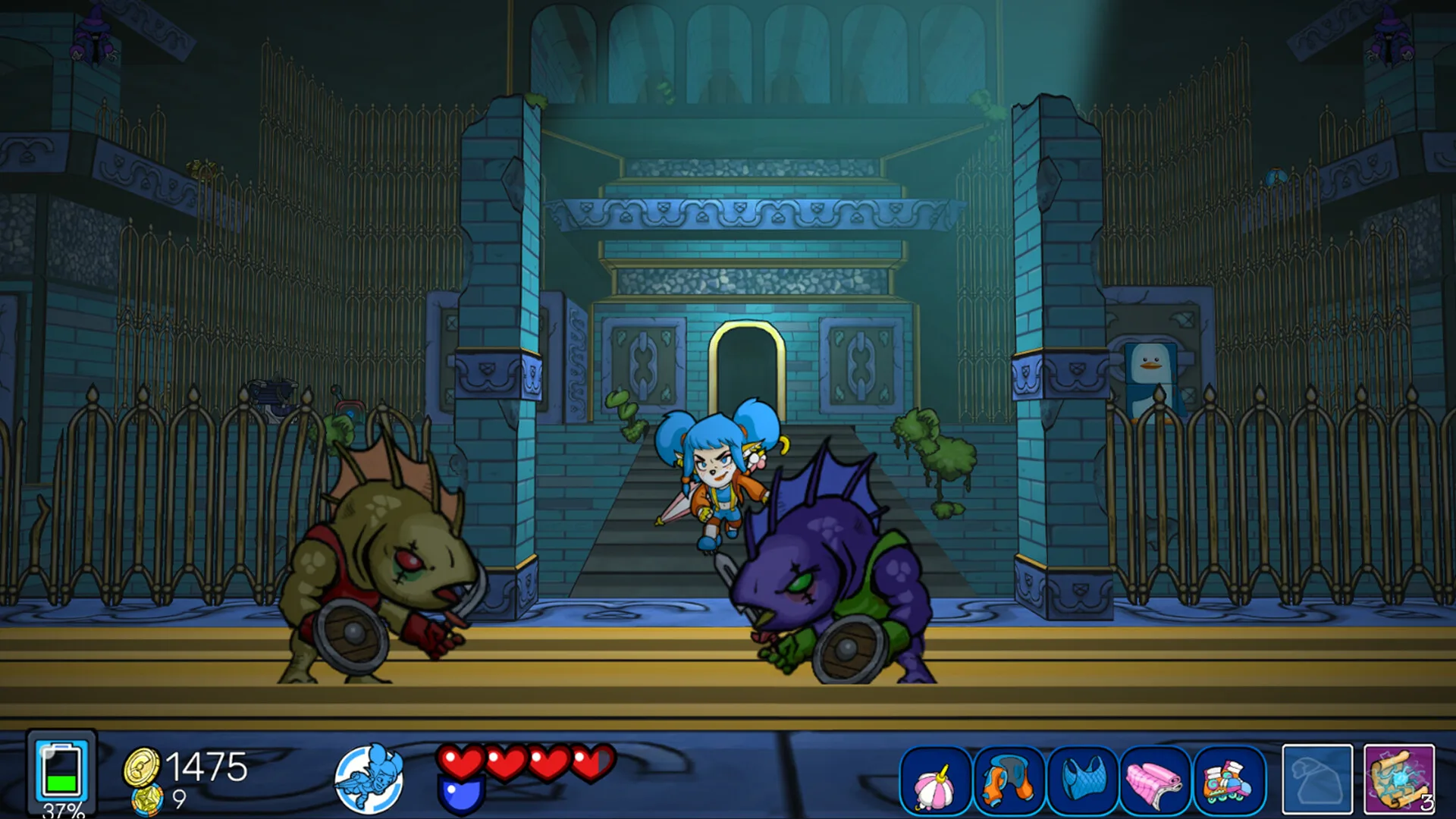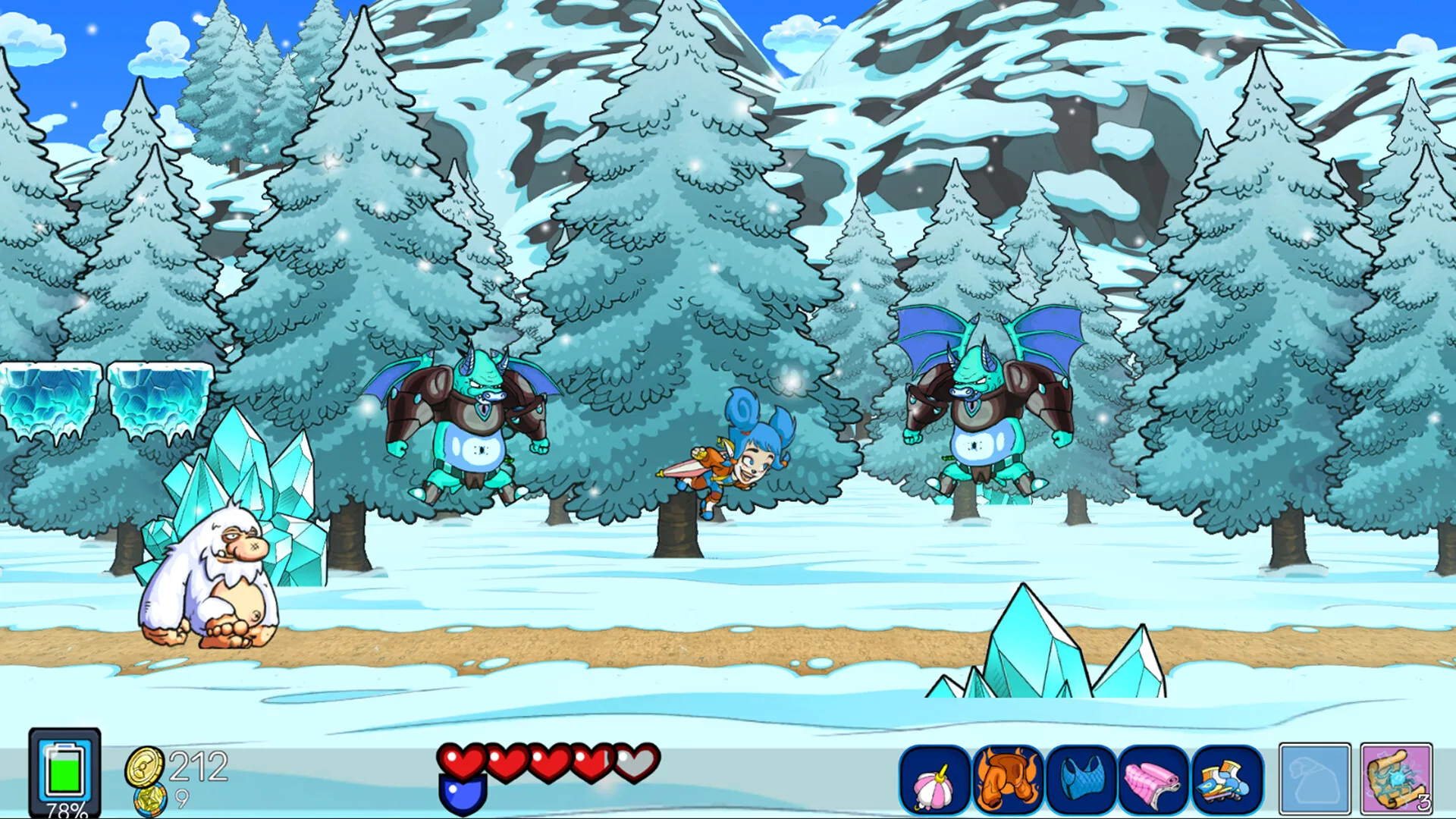
Fantasy Network gives its action-adventure premise an intentionally unruly shape. Lyn’s mother has been kidnapped, but Lyn’s route to saving her runs through Holua’s President’s Race. Winning means competing in talent-show events while building the public attention needed to advance. Raven Travel Studios’ single-player PC game therefore places a rescue objective, an election contest and a fictional social network in the same structure.
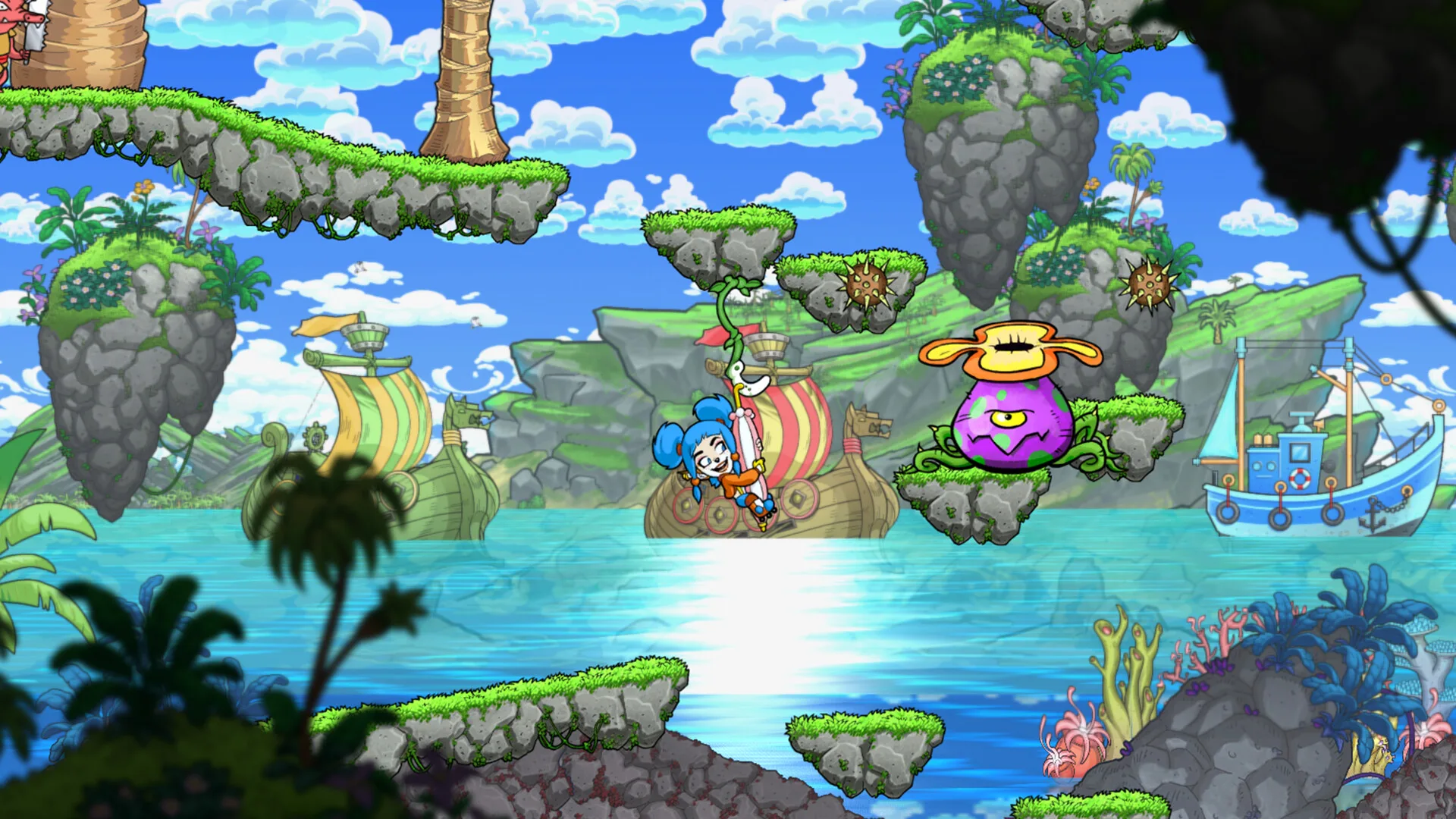
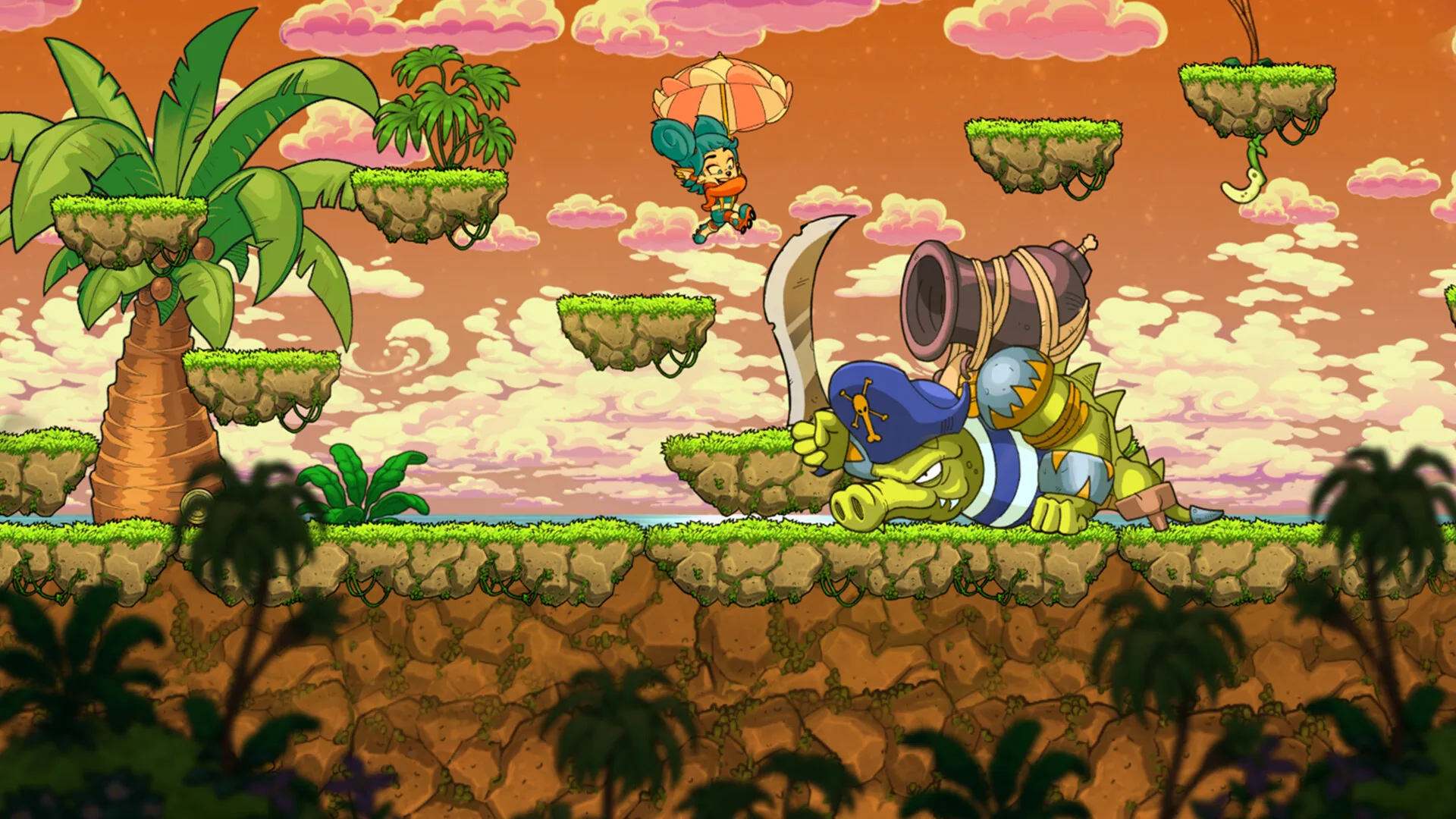
That combination is more than surface-level comedy in the premise. Fantasy Network is described as a colorful, hand-drawn action-adventure and metroidvania set in Holua. Its non-linear interconnected map includes shortcuts and secret areas; beaches, volcanoes, glaciers, temples and space are among the advertised locations. Lyn has jumping, double-jumping, somersaulting and dashing at her disposal, while combat centers on an umbrella with different configurations. Alongside all that familiar exploration language, citizen conversations, photo posts, Likes and fan growth are tied to information and progression through an in-game social network.
The compelling question is not simply whether the game contains many systems. It is whether the systems give each other a reason to exist. A metroidvania already turns geography into a puzzle of routes, barriers and returns. Fantasy Network potentially gives that process a second layer: a player may need not just the ability to reach a place, but the information that reveals why a particular person, event or destination matters. If the links are clear, Holua could be navigated through physical paths and social attention at once.
A rescue mission shaped by public performance
A kidnapped parent provides a direct personal stake. A presidential race conducted through public talent competitions is much less conventional. Combining them creates an immediate tonal challenge, but it also gives Fantasy Network a possible structural advantage. Lyn has a personal reason to pursue the race, while the race gives her a reason to become publicly visible. Fame is not merely a celebratory reward for adventure-game heroics; the premise makes public standing part of the route forward.
That could make the game’s absurdity internally coherent. In many action-adventures, a protagonist assists local characters, completes tasks and becomes increasingly recognized around the world. Fantasy Network appears to make that relationship explicit. Conversations, posts, Likes and fans are not only flavor around the main path; the described progression ties them to how Lyn gets information and advances. Holua’s citizens may consequently matter as sources of leads and local context as well as comic personalities.
There is an evident tension between the rescue plot’s urgency and the deliberately playful list of cooking, dance, fashion, racing and gaming contests. The contrast could work if the contest circuit feels inseparable from the President’s Race and the society around it. Fantasy Network also includes side quests concerning Holua’s buried history. The precise connection between those quests and Lyn’s immediate goal is unclear, but they create room for the setting’s political spectacle to have context beyond a chain of unrelated comic events.
Information as an exploration reward
The essential appeal of a metroidvania is easy to recognize: encounter an obstacle, gain a new way to approach the world, return later and reinterpret a familiar place. Fantasy Network’s listed map structure, shortcuts, secrets and movement abilities supply a clear basis for that rhythm. Jumping, double-jumping, somersaulting and dashing can support the satisfaction of making a route navigable after it first seemed out of reach.
The social-feed concept may add a useful complication. Traditional gates are mostly physical: a gap, a dangerous encounter or a blocked route raises a question that movement and combat can answer. Information presents another kind of threshold. A player might be able to enter a region yet not know that a competition, useful contact, ticket or relevant destination is there. Citizen conversations and posts could direct attention without necessarily reducing exploration to a single arrow pointing at the next task.
This makes the line between discovery and administration especially important. If fan growth amounts only to filling a number until an arbitrary threshold is met, the system risks becoming a checklist. In that outcome, a satire of internet popularity could reproduce an uninteresting quality of real engagement metrics: repeating activity because the counter demands it. If popularity instead follows from learning about Holua, helping its residents, documenting discoveries and taking part in public life, it could read as a consequence of participation rather than a separate chore.
An umbrella as a unifying tool
Fantasy Network’s umbrella is a useful anchor for a game with a broad premise. It is a comic and visually distinctive object, but it is also the basis of combat through multiple configurations. The specific functions of those configurations are unspecified, so assigning them particular offensive, defensive or traversal roles would be premature. Still, a recognizable signature tool can help establish continuity in a game moving between platforming, action, social progression and public competitions.
Lyn’s movement set can provide another throughline. Lyn’s movement set could make secret-hunting feel active between objectives. The umbrella, meanwhile, can give confrontations a recurring visual and mechanical identity even when the campaign shifts toward events with very different rules. A hybrid does not need every activity to play alike, but it benefits from recognizable foundations that make the larger journey feel like one game rather than several disconnected ideas.
The hand-drawn art direction supports the expressive side of that goal. It gives Fantasy Network a cartoon identity suited to a story where family danger, electoral ambition and variety-show competition collide. Yet any action-adventure also needs its important signals to remain distinguishable when movement and combat are active. The design issue is not whether hand-drawn art is inherently readable; it is whether terrain, threats, interactive elements, effects and Lyn remain clear in demanding moments. The balance between visual identity and play readability remains an open design question.
Talent shows as campaign landmarks
Cooking, racing, gaming, dance and fashion are a striking set of competition categories for a metroidvania. Their presence signals that Fantasy Network does not want progress to be expressed only through platforming routes and umbrella encounters. Each category can potentially illuminate a different side of Holua. Cooking can point toward local culture; racing can foreground space and movement; fashion can literalize presentation and public image; dance can frame performance as skill; and gaming naturally fits a world interested in screens and spectatorship.
The game also lists four playable retro pixel-art arcade games. Their precise role in the campaign is not specified: they could be contests, diversions or another expression of Holua’s entertainment culture. Their inclusion does reinforce the wider thematic premise, however. Entertainment appears to be one of the social languages through which Lyn participates in the world.
That does not mean every competition needs to resemble the main action. Part of Fantasy Network’s appeal is its willingness to bring incompatible-sounding activities together. The important issue is whether that variety is organized around a shared idea: earning influence in a peculiar society by understanding its people, reaching its places and joining its public rituals. If it is, talent shows can become landmarks in an adventure rather than interruptions beside one.
Crebits, apps and travel
Crebits are Fantasy Network’s in-game currency, used for equipment, apps and travel tickets. Those categories suggest that preparation, communication and movement all have a place in its economy. Equipment is familiar action-adventure language. Apps are more distinctive because they may make Lyn’s device and social-network premise part of advancement rather than merely presentation. Travel tickets likewise indicate that moving through Holua is a designed consideration alongside finding shortcuts.
The precise prices and limits on these purchases are unclear, but the thematic opportunity is clear. Crebits, Likes, fans and election success represent different forms of value: money, approval, reach and authority. Fantasy Network could feel particularly cohesive when those values intersect. Travel might shape which opportunities become accessible, while an app might affect how information is used. Even modest links of that kind could make the systems feel like parts of Holua’s social logic rather than a collection of genre features.
The balancing question is straightforward. Purchases and tickets can create meaningful choices, while a non-linear exploration game also benefits when curiosity feels welcome. The appealing outcome would preserve the pleasure of opening routes while making spending decisions purposeful. That is a design consideration to watch for, not a conclusion about how restrictive or generous the finished economy is.
Who may enjoy Holua?
Fantasy Network may appeal to players seeking a cartoon-styled action-adventure that deliberately combines exploration, combat, performance and social progression. Its distinctive promise is not simply secret areas and movement abilities, nor simply a humorous social-media premise. It is the possibility that information gathering and public attention matter alongside physical discovery. Eccentric NPCs, varied regions and a hand-drawn look give that possibility a setting with a strong identity.
For another PC fantasy-game feature, see this PC fantasy RPG assessment.
Fantasy Network’s central ambition is more interesting than a simple parody of feeds and followers. It proposes attention as a navigational resource: a means of locating leads, connecting with a community and converting an improbable political campaign into forward momentum. If its social systems, contests and interconnected map reinforce one another, Holua could make discovery feel social as well as spatial. That possibility is the game’s clearest design feature.