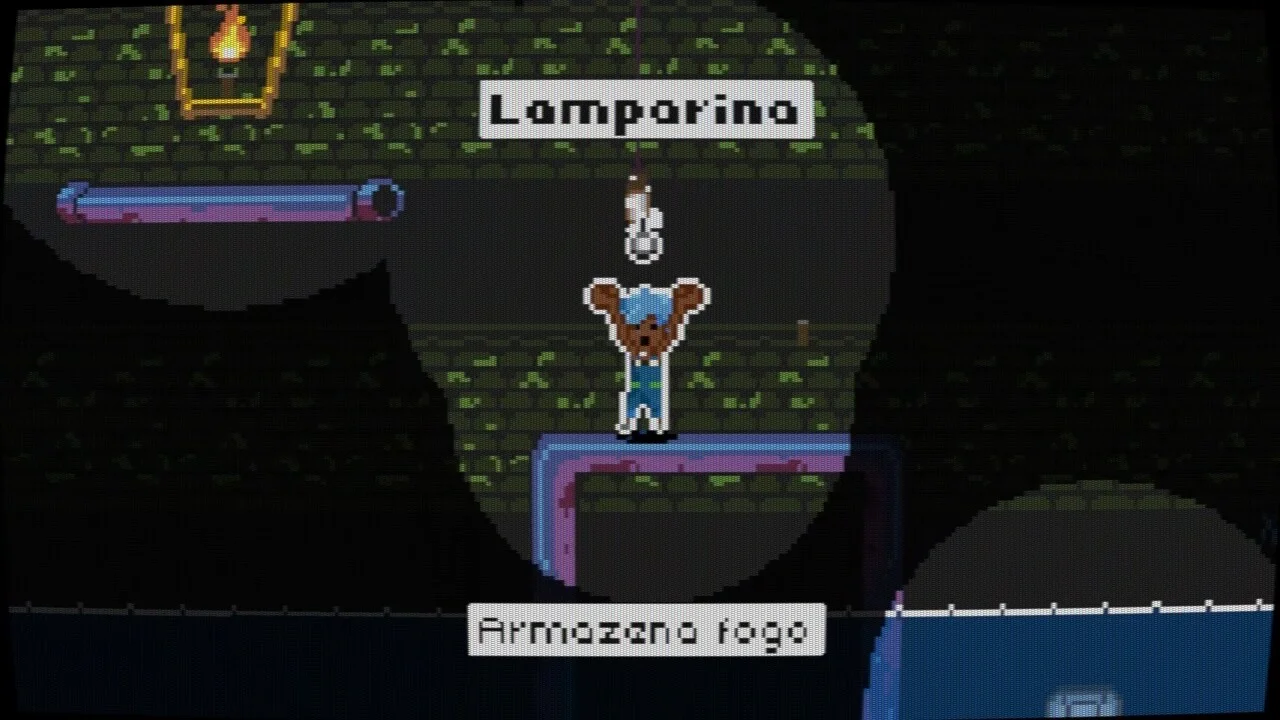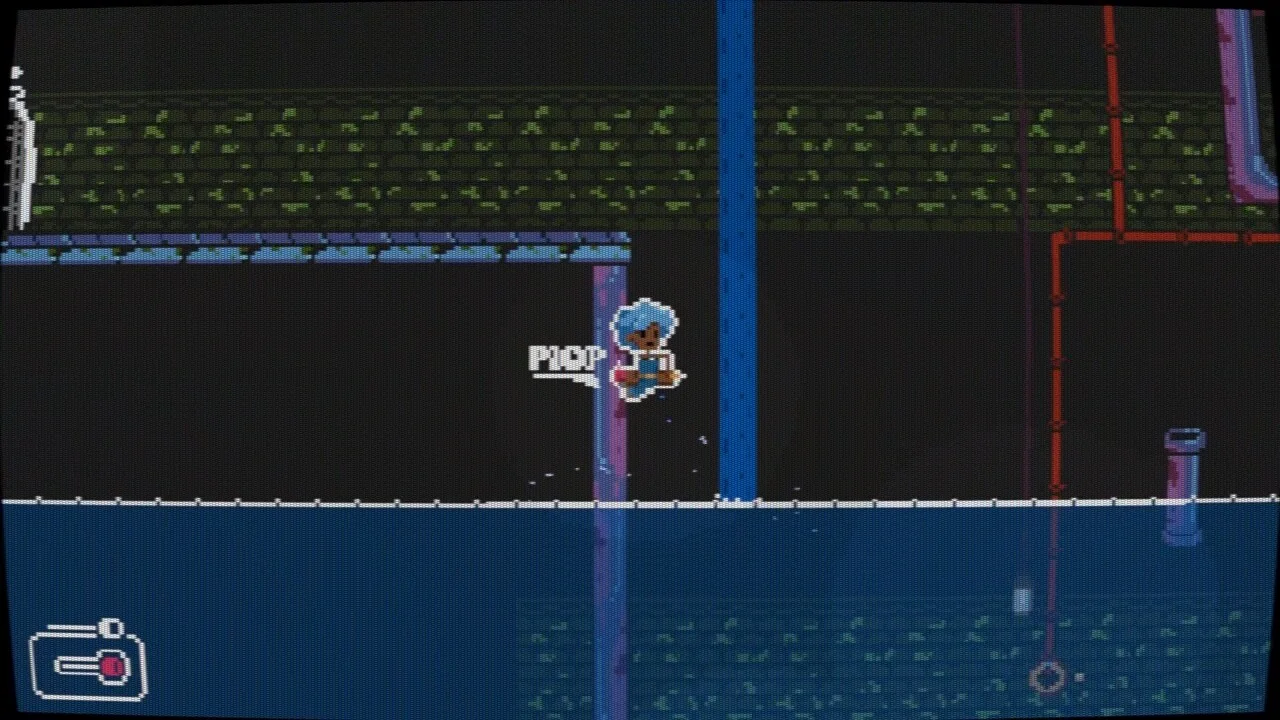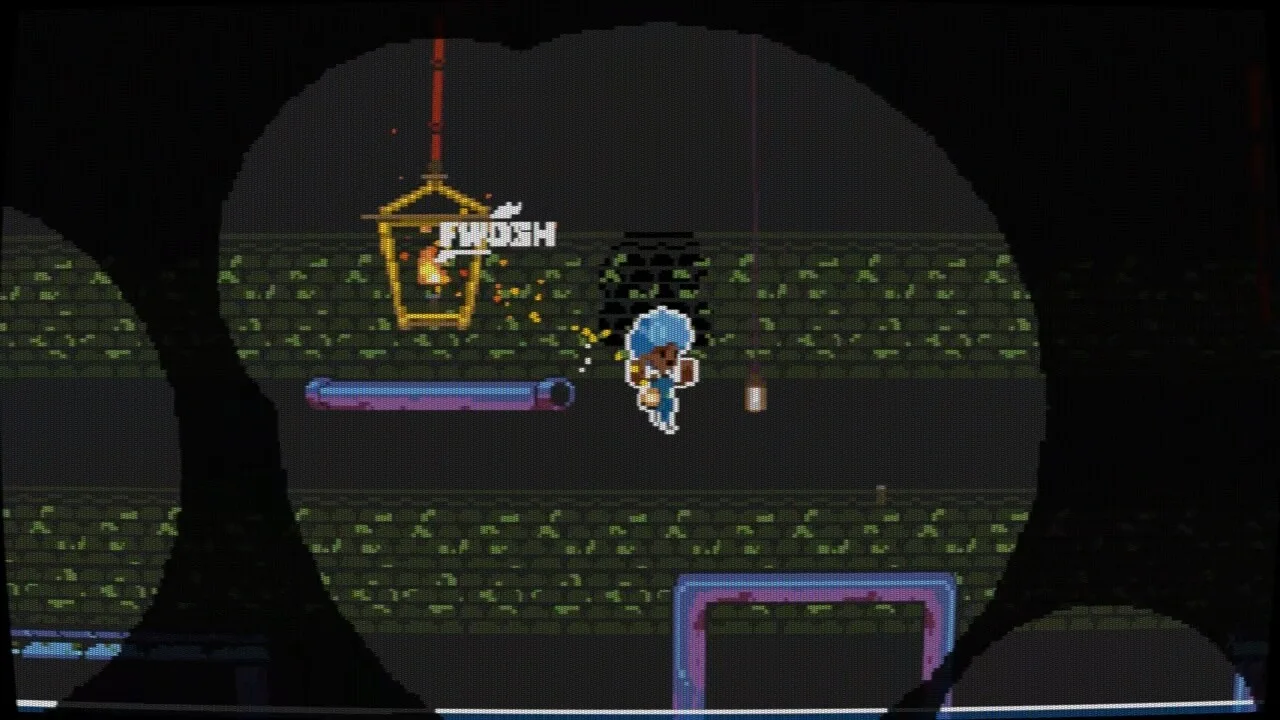
Plungeez is a Windows PC game developed by Team Zeroth and published by QUByte Interactive. It released on August 13, 2026, and its official listing categorizes it as Action, Adventure, and Indie, with full controller support. The official description presents it as a non-linear puzzle-adventure set in an underground labyrinth, where environmental manipulation, hidden passages, shortcuts, and return visits are intended to determine progress.
There are no Joking Joystick gameplay notes for Plungeez, so this article does not make claims about its controls, puzzle quality, difficulty, performance, world scale, progression pacing, or the effectiveness of its finished implementation. The game has released, but the questions below remain unanswered here because the available basis is the official listing rather than direct-play reporting.
An underground world built to be reconsidered
Plungeez’s stated premise is more specific than simply placing puzzles below ground. Its labyrinth is described as a vast, interconnected world in which players revisit places, unlock routes that were previously blocked, find shortcuts and hidden passages, and reach deeper layers through new ways of interacting with the environment. The map is therefore positioned as part of the puzzle rather than merely the place where individual puzzles happen.
That structure puts spatial memory and observation at the heart of the announced design. A player is asked to retain information about routes, obstacles, and environmental details across a non-linear world. The official pitch’s emphasis on new perspectives suggests that earlier spaces are meant to gain fresh significance as interactions change or as the player better understands the labyrinth’s logic.
In a strong implementation of that idea, a return visit would be more than retracing old ground. An obstacle noticed earlier could become understandable in light of a newly discovered interaction. A passage that initially seemed incidental could reveal a useful connection between regions. A shortcut could change the practical relationship between two distant locations. The reward would come from revising a mental map: recognizing not only that a new route exists, but why it matters within the larger underground network.
This is a demanding role for an interconnected world. A more linear puzzle game can direct attention toward one immediate problem at a time. Plungeez’s stated non-linearity potentially creates several unresolved questions at once: which blocked route is significant, which environmental clue belongs to which area, and which lead is worth pursuing next. If the game’s spaces and rules communicate clearly, that could make discovery feel driven by player attention rather than a prescribed sequence of rooms.
At the same time, a labyrinth built around revisiting areas needs to distinguish productive uncertainty from simple obscurity. A blocked route should ideally have enough context for a player to remember it as meaningful. A hidden passage needs a logic that makes discovery feel connected to observation, clues, or spatial reasoning rather than indistinct presentation alone. Shortcuts, if they are central to the structure, need to materially change the player’s movement through the world. These are not claims that Plungeez fails at any of those tasks; they are the core design burdens created by its own stated ambitions.
Puzzle progression rather than combat pressure
One of the clearest elements in Plungeez’s official description is its stated absence of combat. The game identifies itself as a “pure puzzle experience,” with logic-based challenges involving spatial awareness and environmental manipulation. Its intended friction, then, comes from reasoning about the labyrinth and changing its conditions rather than from fighting enemies.
That stated decision could give the game a particular kind of focus. Without combat as a parallel source of activity, rooms, routes, mechanisms, and thresholds carry much of the responsibility for sustaining interest. Attention can remain on what is reachable, what can be changed, what connects to another space, and what information a newly encountered feature supplies. A challenge may concern an environmental relationship rather than an opponent, while the wider labyrinth allows that relationship to matter beyond a single location.
The official description does not specify the exact interactions, objects, or puzzle rules involved, so none should be assumed. Still, any puzzle-led exploration game depends heavily on a readable feedback language. Players need to recognize when an interaction has changed something important, whether an attempted solution is relevant, and when a newly available way of engaging with the environment may apply elsewhere. How Plungeez introduces and develops those rules is not established by the listing.
There is also an important distinction between a difficult puzzle and an unclear puzzle. A demanding spatial problem can be rewarding when its solution is grounded in information that players could observe and reconstruct. By contrast, a rule that is not adequately communicated can turn an intended mystery into a search for missing information. Plungeez explicitly presents thinking ahead as part of its identity, which makes legibility especially consequential. Foresight can only be satisfying if the world provides material from which to reason.
Metroidvania progression, framed through environmental logic
The official description uses metroidvania language to describe Plungeez’s progression: players discover new ways to interact with the world and use them to reach deeper into the labyrinth. This signals a structure based on gated access and reconsidered spaces, but the project frames that structure through puzzle-solving and environmental manipulation rather than combat.
That distinction matters. A return-based map can produce very different experiences depending on how new interactions affect earlier areas. If a new method substantially expands the questions a player can ask of prior spaces, the world could become richer over time. A remembered barrier can be reevaluated; an overlooked route can gain purpose; a shortcut can turn a distant discovery into an immediate possibility. In that version of the design, progression is not only about permission to enter a new area. It is about a changed understanding of the spaces already encountered.
Another possible implementation would be more direct: a new interaction could simply correspond to an obvious obstruction waiting elsewhere. That can still be a functional exploration structure, but it creates a different kind of return visit from one built on deduction and recontextualization. The official materials establish that Plungeez includes return-based progression and environmental interaction, not how surprising, layered, or varied those returns prove to be in use.
The idea of descending through deeper layers gives the labyrinth a broad directional image without defining its exact geography, narrative meaning, or regional structure. Depth can be useful in a non-linear exploration game because it gives players a sense of moving inward or downward while still allowing branching routes, loops, and detours. Whether Plungeez’s layers feel distinctive or whether its connections build a memorable spatial whole cannot be established from the listing alone.
Pixel art and the burden of readable spaces
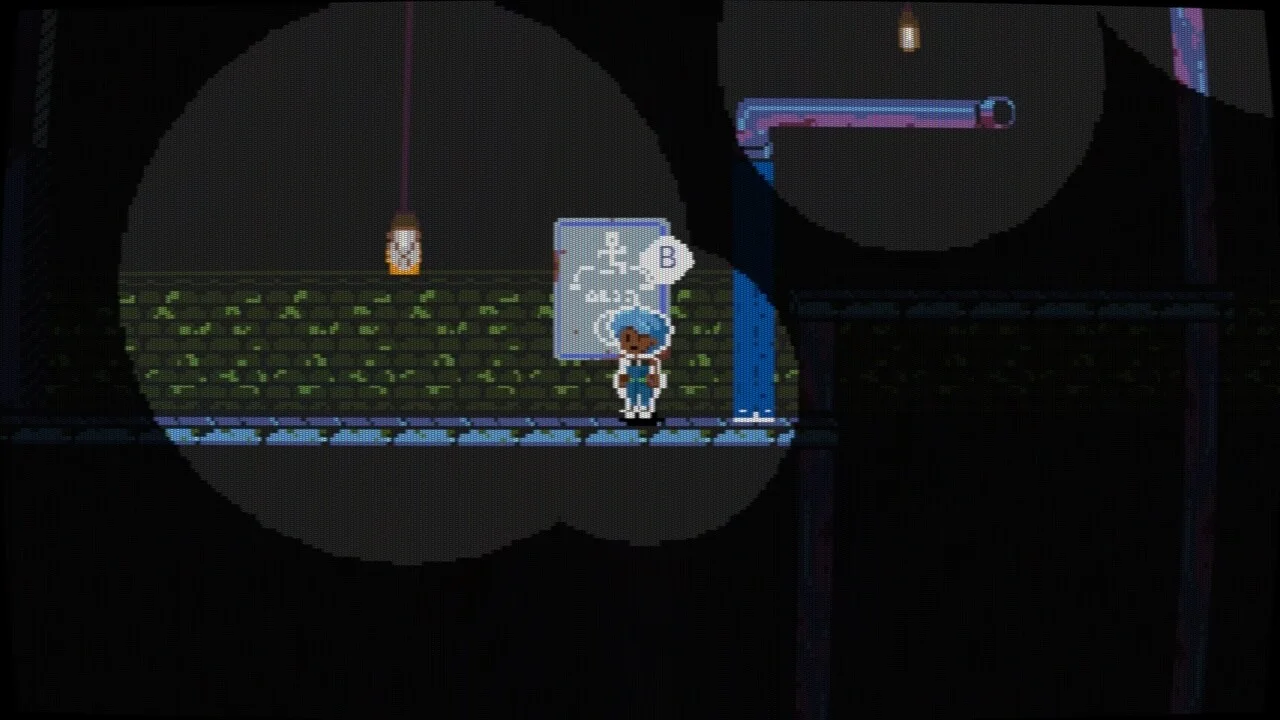
Plungeez is described as a pixel-art game with an atmospheric visual identity. That is an announced aesthetic direction, not evidence of image quality, animation quality, accessibility options, or technical performance. Yet visual communication is particularly relevant to the game’s stated focus on environmental riddles and exploration.
When a world is meant to be read closely, art has work to do beyond establishing tone. It may need to help a player separate traversable space from decoration, recognize a meaningful object or obstruction, retain the identity of a previously visited area, and notice environmental change. The official listing does not explain Plungeez’s visual language, so it would be inappropriate to claim that it achieves any of those aims. But its puzzle-first premise makes them useful areas for eventual direct assessment.
Atmosphere and clarity need not conflict. An underground setting could use contrast, silhouettes, recurring visual motifs, lighting, and changes in the environment to direct attention without turning every puzzle into an explicit instruction. The relevant design question is where Plungeez places the boundary between subtle suggestion and essential information. Its description says that curiosity is the player’s guide, and curiosity is best supported when a world offers details worth noticing and enough coherence for those details to be interpreted.
The description of the labyrinth as a living puzzle also points to a potentially productive relationship between visual design and repeat visits. If a place contains features that become meaningful later, recognition itself can become part of the reward. Returning to a familiar room could mean seeing a new connection rather than merely arriving at an old location. That is a compelling fit for pixel-art exploration, but it remains a conditional possibility rather than a demonstrated result.
What the official pitch leaves open
Plungeez has a focused stated identity: an interconnected underground puzzle-adventure with no combat, environmental manipulation, hidden routes, shortcuts, and progression through new interactions. That focus gives the project a clear conceptual center. It also means that several questions are especially important for anyone evaluating the released game through direct play.
- How are environmental rules introduced while preserving the curiosity-led exploration described by the official listing?
- What information helps players retain unresolved routes and recognize when a new interaction may be relevant to an earlier space?
- How often do return visits create fresh deductions rather than only direct application of a newly available interaction?
- What forms of reasoning are expected when players look for hidden passages and alternative routes?
- How does the visual presentation communicate navigational and puzzle information while maintaining its stated underground atmosphere?
- How does the game’s full controller support serve the movement and environmental manipulation demands of its PC design?
These are not allegations of absent features or predetermined shortcomings. They follow from the priorities established in the official description. A game that places mapping, memory, and environmental logic ahead of combat has the opportunity to make reopened routes feel like the consequence of learning. It also makes readable spaces, comprehensible rules, and purposeful revisits central to the experience.
Current assessment
Based on its official design description, Plungeez presents a coherent puzzle-first proposition. Its central promise is not merely an underground maze, but an interconnected labyrinth intended to reward return visits, environmental reasoning, and new methods of interaction. The most interesting possibility is a world where access and understanding develop together: players do not just find another path, but learn why an old path matters.
That is not a quality verdict. This feature contains no direct-play evidence about whether Plungeez’s routes are memorable, its puzzles communicate their logic, its shortcuts improve navigation, or its pixel-art spaces remain clear during play. Those matters require hands-on assessment. For another PC design feature centered on a different kind of puzzle-led mystery, see Radiotext PC Design Feature.