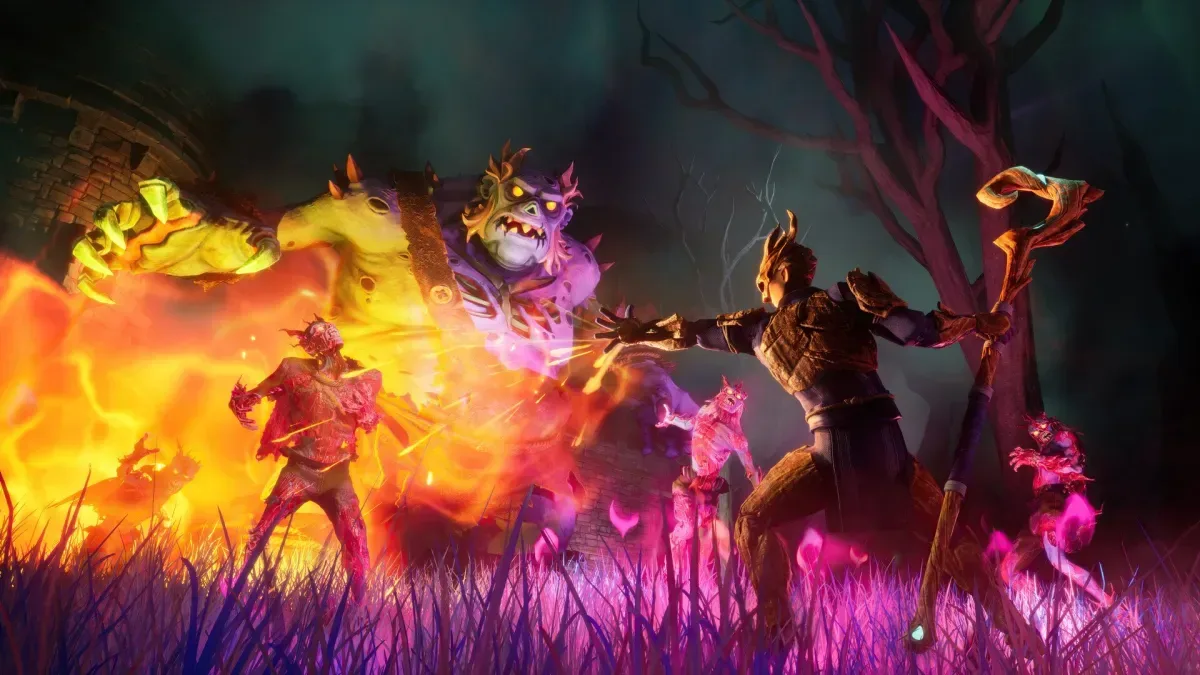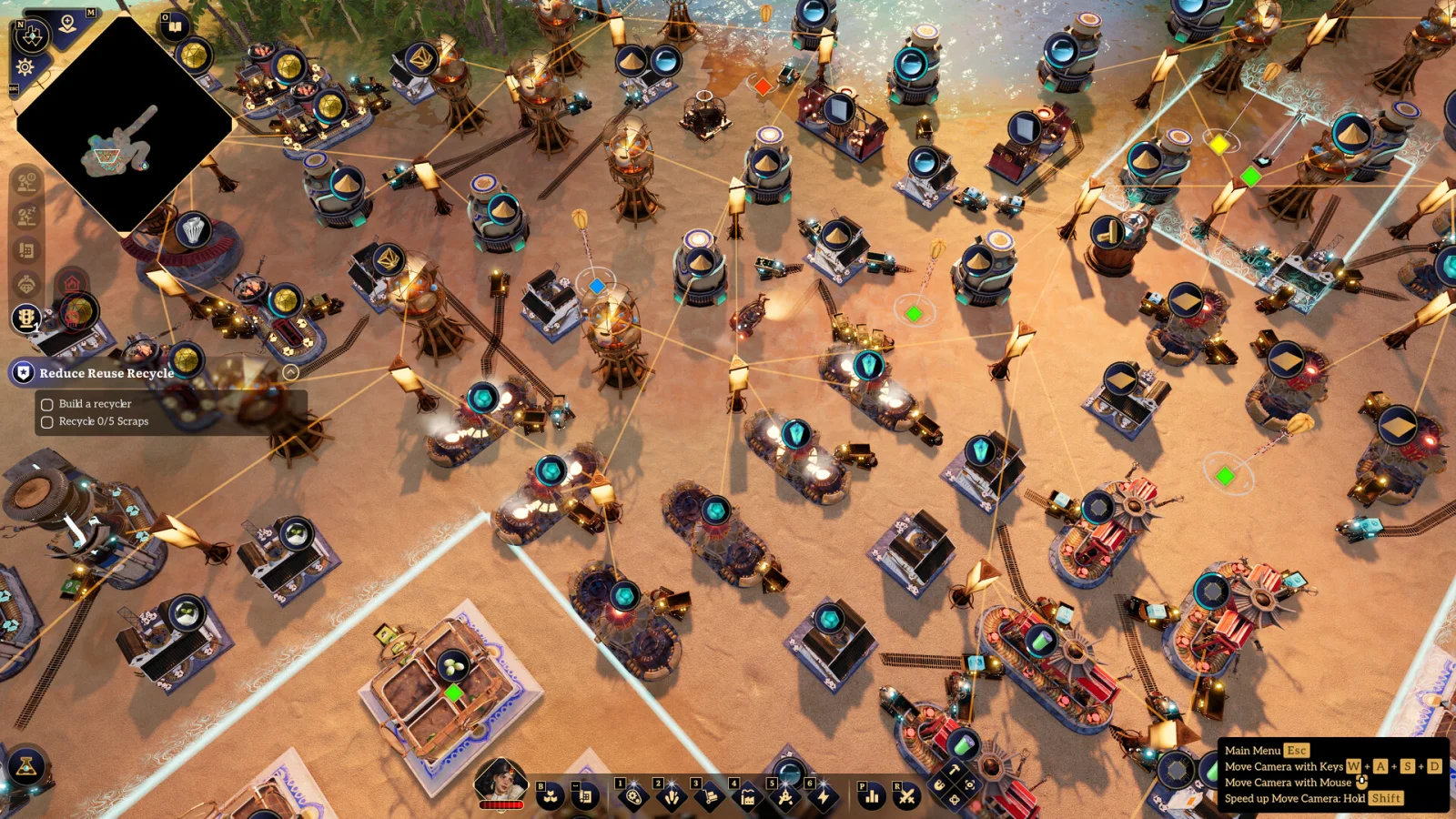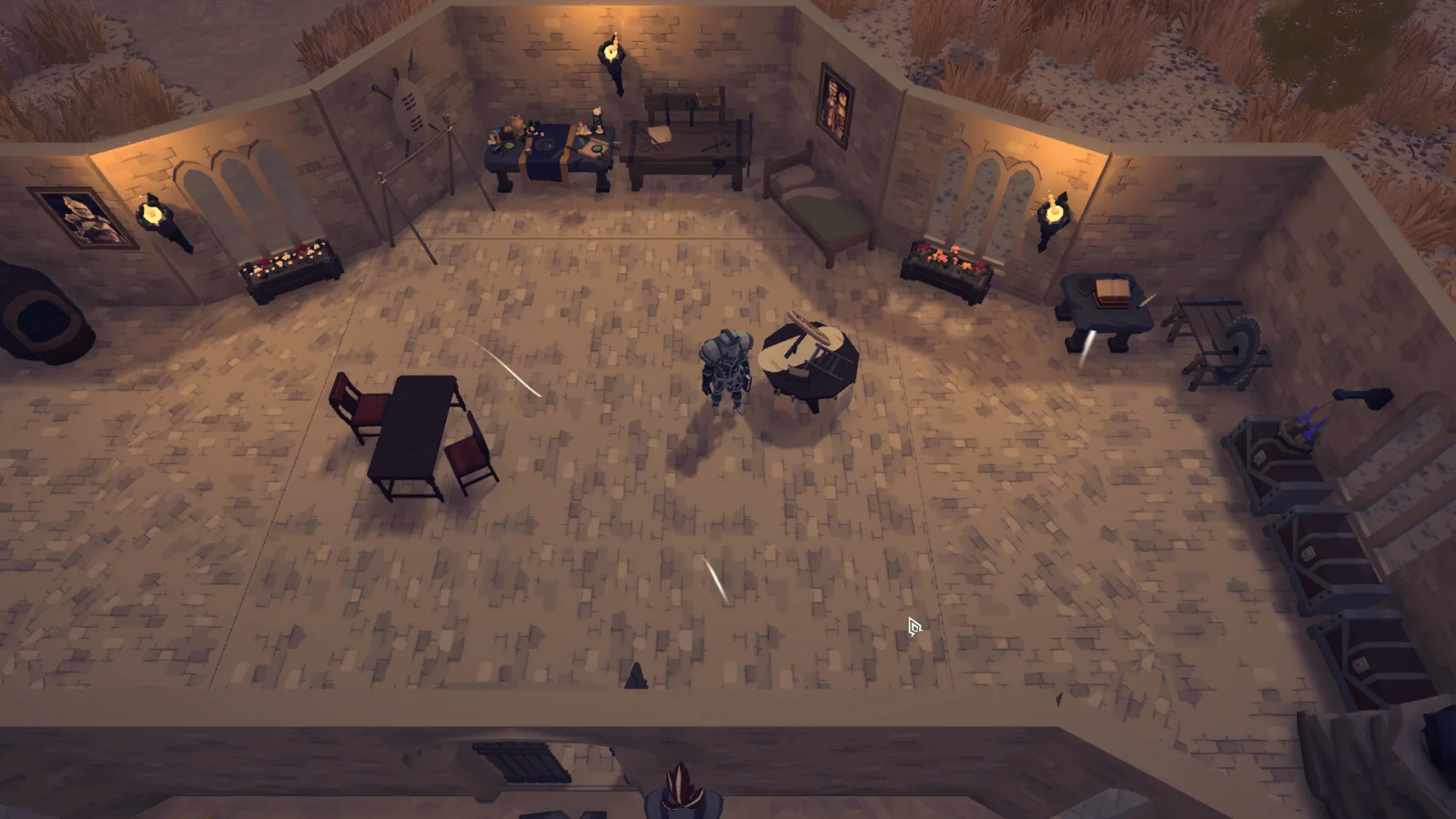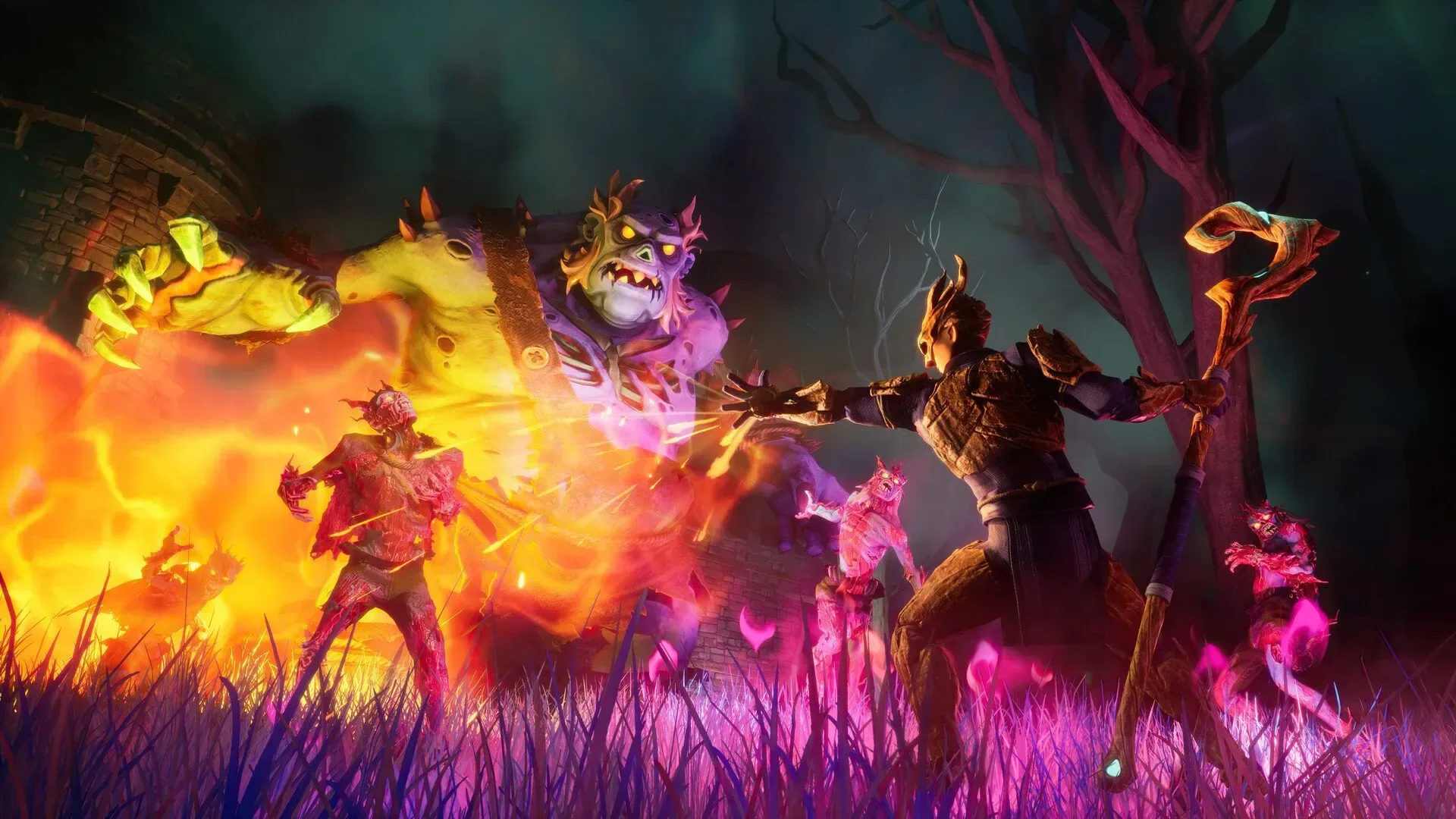
RuneScape: Dragonwilds is a survival-crafting RPG with an invitingly large ambition: turn the search for dragons across Ashenfall into an extended journey of scavenging, building, fighting, and piecing together a damaged land’s past. It has the raw material for a satisfying expedition. Its regions offer distinct discoveries, its side stories lend texture to the setting, and its systems let players build a considerable amount, from practical gear to furniture and structures.
The trouble is that Dragonwilds often treats persistence as a substitute for momentum. Progress repeatedly depends on collecting larger quantities of increasingly specific resources, processing them through a widening collection of workstations, then repeating the loop before the next dangerous outing. That rhythm will be familiar—and potentially comforting—to players who enjoy resource management as the main event. For everyone else, the game’s many hours can feel less like an adventure across a dragon-haunted continent than an apprenticeship in inventory administration.
Ashenfall has stories worth uncovering
The game’s strongest argument for taking the long route is Ashenfall itself. This dragon-infested continent is not presented as a blank survival sandbox. The history of early settlers and the conflict surrounding Dragon Queen Kuldra gradually emerge through glowing blue books and side quests. Themes of grief and greed give those fragments more weight than the basic tasks framing them, whether the immediate job is looting a temple or dealing with hostile rats.
That indirect approach suits a setting built around discovery. Dragonwilds does not merely hand over every piece of context in a straight line; it asks players to encounter lore while moving through its world and pursuing other goals. Those willing to investigate may find more personality in Ashenfall than its initially ordinary fantasy surface suggests. Familiar faces also connect the adventure to the broader RuneScape world, making established fans especially likely to appreciate the setting’s continuity.
Still, the narrative material largely functions as seasoning rather than an engine powerful enough to pull the player through every grind-heavy stretch. The central pursuit of Kuldra offers a clear destination, but the route toward it is frequently governed by what can be made rather than what can be meaningfully discovered next. The stories help justify the wandering; they do not always solve the problem of why the wandering takes so long.
Crafting is both the fantasy and the friction
Dragonwilds puts crafting at the center of nearly everything. Foraging supports food supplies, mined ore becomes better equipment, and construction expands a base. Players can make tools, weapons, armor, jewelry, furniture, buildings, and other necessities. That breadth creates a genuine sense of self-sufficiency. A base is not just decorative when it supports the next expedition, and a new piece of gear represents the accumulated effort of exploration and material gathering.
For a particular kind of player, this is the point. If chopping wood, mining ore, organizing production, and steadily improving a personal headquarters sound like satisfying goals rather than interruptions, Dragonwilds offers substantial room to settle into that routine. The game also gives players freedom to spend as much time farming materials as they want, which can make it accommodating for methodical play.
Its problem is not that it has crafting; it is that the demands of crafting appear to grow faster than the sense of payoff. Higher-level armor and weapons require escalating material investment, including processed components such as Fine Cloth and gold bars. Meanwhile, specialized stations accumulate: separate places for tools and weapons, armor, jewelry, bows and arrows, and magical weaponry. Some division of labor makes thematic sense, but the number of stations can read as busywork where consolidation would have preserved the same progression without so much maintenance.
Magic can relieve a portion of the repetition by speeding up certain tasks, yet that convenience is itself tied to skill progression and unlocking spells. This is representative of Dragonwilds at large: it sometimes offers a solution to its own tedium, but asks for a considerable investment before that solution becomes available. The result is a game whose systems are interlocked, though not always in a player-friendly way.
Combat builds offer choice, but not equal reasons to choose them
Dragonwilds avoids fixed classes. Instead, a character’s role changes with equipment, allowing a swap from armor to robes, for example, to move from melee toward magic. On paper, this is a flexible approach that should encourage experimentation without requiring a permanent commitment.
In practice, the balance described by the available evidence favors melee too strongly. A sword can handle most challenges, while bows and wands have less persuasive use cases. Encounters often involve threats attacking from several sides, making distance harder to exploit. Magic can contribute, but few creatures appear to have magical weaknesses, and melee benefits from attack speed and buffs that can make its damage output more immediately reliable.
That does not mean the gear-swapping concept is worthless. It may still appeal to players who enjoy collecting alternate loadouts or changing style for its own sake. But flexible roles need encounters that reward flexibility. When one approach is consistently easier to force through problems with, the other paths risk becoming expensive detours in a game already asking for many materials.
A long journey with a punishing on-ramp
Dragonwilds is not short on content. The first story arc can take roughly 20 to 30 hours before the first dragon falls, and Fellhollow’s story quests can demand a similar span. This is a sizeable adventure, and the scale will be a virtue for players looking for a prolonged survival RPG rather than a quick campaign.
However, each new region can bring an expected three to five hours of material grinding before an expedition from base feels survivable. That structure makes advancement predictable in the least exciting sense: arrive, gather, craft, become viable, then finally pursue the region’s objectives. Fellhollow at least adds a more distinctive exploratory wrinkle through soulrifting, which opens alternate planes and reveals invisible bridges. Such ideas show that the game can introduce region-specific novelty; it simply does not always move quickly enough to that novelty.
There is an option to ease experience grinding, and that setting may be essential for players who like the world but not the default pace. Dragonwilds also lets players disable its corpse-retrieval-style death consequence. By default, death sends the player back to the last camp and drops the entire inventory at a gravestone. The game mercifully places gravestones outside dungeons rather than forcing a return through the same enclosed danger, but recovering a lost pack can still mean revisiting an area that already proved overwhelming. Since lost gear may trigger another resource-gathering cycle, this system can turn a single mistake into a disproportionately long interruption.
These options matter because they let players tune away some of the sharpest edges. They also reveal a central tension: the default structure seems committed to making preparation and failure consequential, but its consequences can be more cumbersome than dramatic. Players seeking a harsh survival loop may welcome that pressure. Players more interested in exploration, lore, or base construction should seriously consider adjusting the available settings.
Discovery without direction is a demanding bargain
Dragonwilds embraces an old-school preference for sparse guidance. An NPC may point toward a broad destination but leave crucial requirements unstated. A quest can hinge on realizing that an Iron Pickaxe is needed to mine a dragon’s teeth, for instance. This makes progress feel earned when environmental observation and experimentation lead to the answer.
It can also lead to extended confusion. Vague instructions, unclear tool requirements, and the need to unlock materials or clues create a structure where players may spend hours investigating without knowing whether they are following the intended path. The game prioritizes the journey over frictionless quest completion, and that philosophy is defensible. Not every RPG needs to mark every answer on a map.
But ambiguity works best when the act of searching remains enjoyable. Here, an uncertain objective can collapse into repetitive gathering, especially when the player is not sure which missing resource, tool, or power upgrade will actually open the way forward. Those who enjoy keeping notes, testing possibilities, and slowly reading a world’s rules may find this rewarding. Those who want their exploration to deliver steadier narrative or combat momentum may find that the mystery runs out before the materials do.
For readers weighing other games that prize a specific mechanical idea, Joking Joystick’s Echo Weaver review similarly considers how a strong central concept can be complicated by the friction surrounding it. Dragonwilds has a comparable issue, though its friction comes from survival progression rather than platforming.
Who should brave the grind?
RuneScape: Dragonwilds is best approached as a crafting-forward survival game first and a conventional RPG second. Its substantial world, optional lore, base-building, and regional exploration offer a lot to do for patient players. RuneScape devotees may get additional pleasure from the setting and returning faces, while dedicated gatherers will likely see a satisfying routine where others see chores.
But the game makes a demanding first impression and repeatedly reinforces it with high resource costs, workstation sprawl, uneven combat incentives, opaque objectives, and punishing default death logistics. It has worthwhile discoveries beyond its crafting loop, especially in Ashenfall’s stories and Fellhollow’s soulrifting, yet too often requires players to push through a wall of preparation to reach them. Dragonwilds is a capable, content-rich survival RPG whose best qualities are real—but whose love of labor narrows the audience that will enjoy the trip.