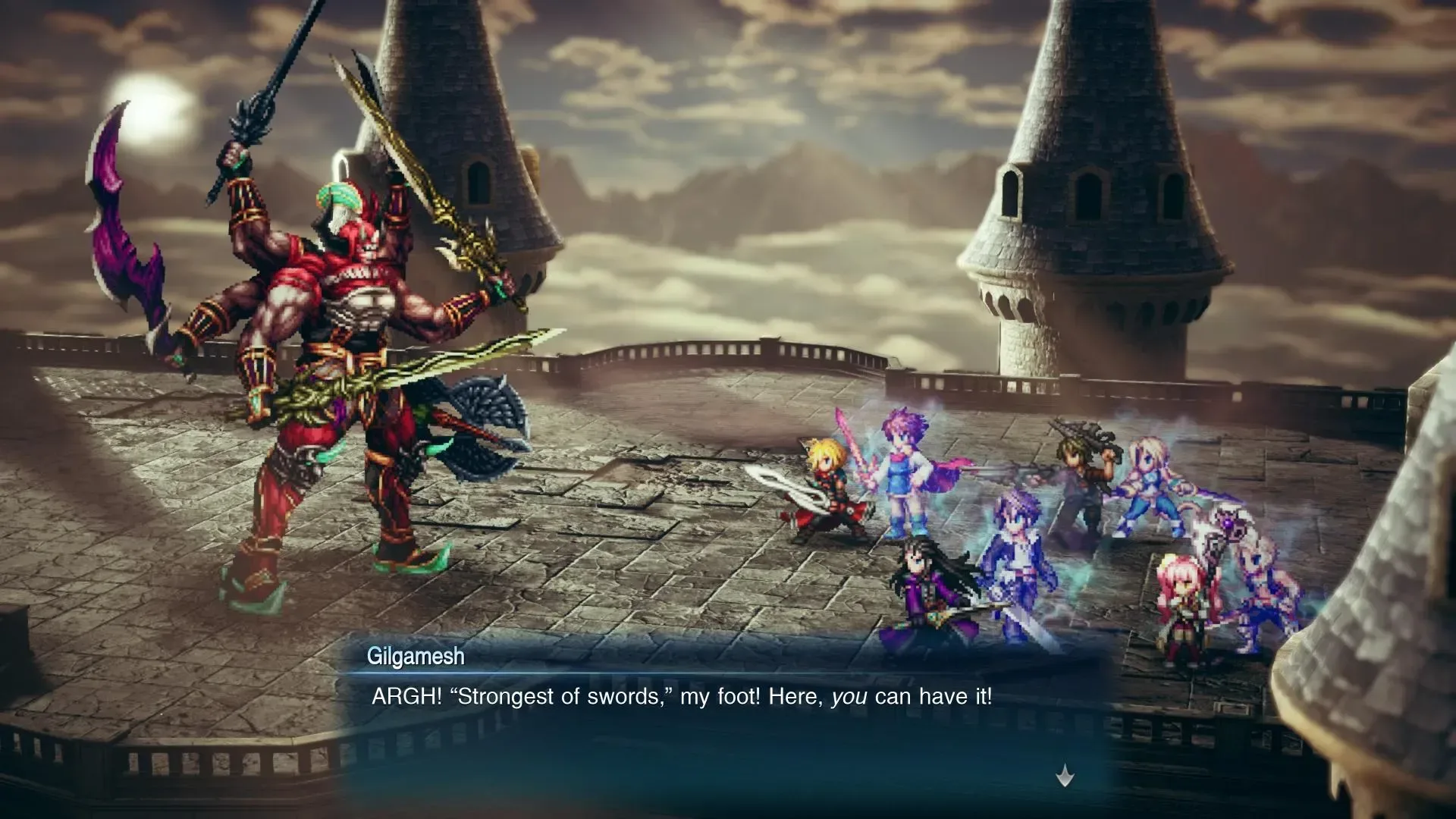
Final Fantasy Resonance has an awkward premise to overcome: it reworks the first season of the discontinued mobile game Final Fantasy Brave Exvius, while also inviting a parade of familiar Final Fantasy faces into its systems. That could easily become an exercise in recognition over substance. Instead, Resonance earns its place as a full RPG by treating its history as material rather than a crutch. The callbacks matter, but the game’s strongest idea is how it turns them into flexible character-building tools.
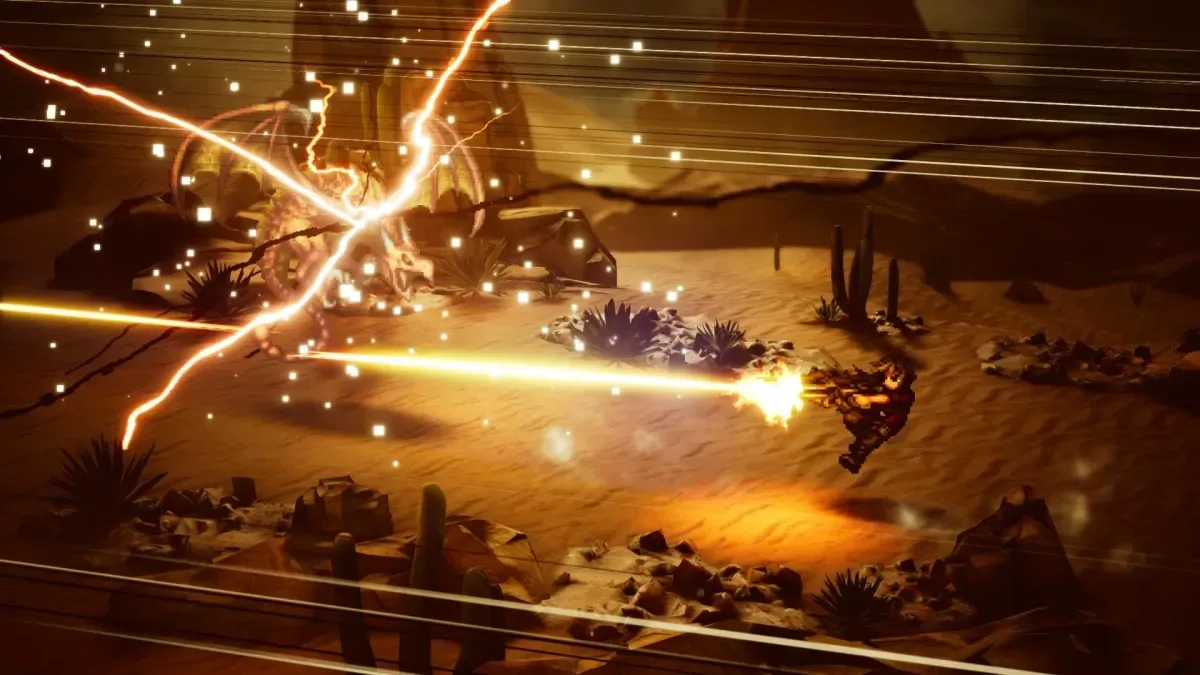
That transformation begins with presentation. Resonance adopts an HD-2D look, yet avoids feeling interchangeable with other games using that style. Detailed character sprites give its cast more personality than a broad nostalgia filter would, while occasional pixel-based cinematic scenes provide visual punctuation with genuine scale. The visual direction makes room for the game’s past without trapping it there: this is not simply a cleaner version of an older mobile release, but a more deliberately framed adventure with an identity of its own.
A new story with familiar signals
The story centers on Rain and his friend and roommate Lasswell. Rain carries recognizable heroic traits: bright optimism, spiky yellow hair, personal family baggage, and a hint that his cheerfulness may not tell the whole story. The game is willing to play with those associations, but it does not leave him as a collage of old protagonists. He remains the narrative’s anchor.
Lasswell is a stronger counterweight than a mere brooding rival. His samurai style and ice affinity establish a distinct role in battle, while his troubled sense of nobility gives the relationship between the two leads some useful friction. As more party members arrive, Resonance leans into their interactions through comedic side conversations and voice acting. That choice is important: a cast can reference a long-running series forever and still feel hollow if its members do not sound like people with a shared life. Here, the party chemistry supplies the emotional connective tissue.
Veterans will find references scattered throughout the adventure, including nods that extend beyond the most obvious entries. Crucially, these are presented with enough restraint that they can read as seasoning rather than homework. Familiarity may deepen the pleasure of catching them, but the central appeal is not dependent on identifying every allusion. Resonance wants players to enjoy Rain’s world on its own terms, and that is the right instinct for a game assembled from so much inherited material.
Visions make nostalgia useful
The Vision system is Resonance’s clearest statement of purpose. Visions are projections of characters from other Final Fantasy games, but they are not merely collectible cameos waiting to perform a signature move. Each party member can equip one, gaining access to powers, passive upgrades, and skills that can be carried forward. As a Vision grows through fighting alongside its wearer, it can provide permanent stat boosts as well.
That setup invites experimentation because it separates a character’s basic identity from the wider set of options available to them. Rain begins as a heavy hitter with innate fire attacks, but equipping Cecil Harvey can open light and dark magic. The appeal lies less in a prescribed best build than in combining a party member’s natural strengths with borrowed abilities that answer a particular need. The resulting structure should immediately appeal to players who value transferable skills and job-style customization over rigid class assignments.
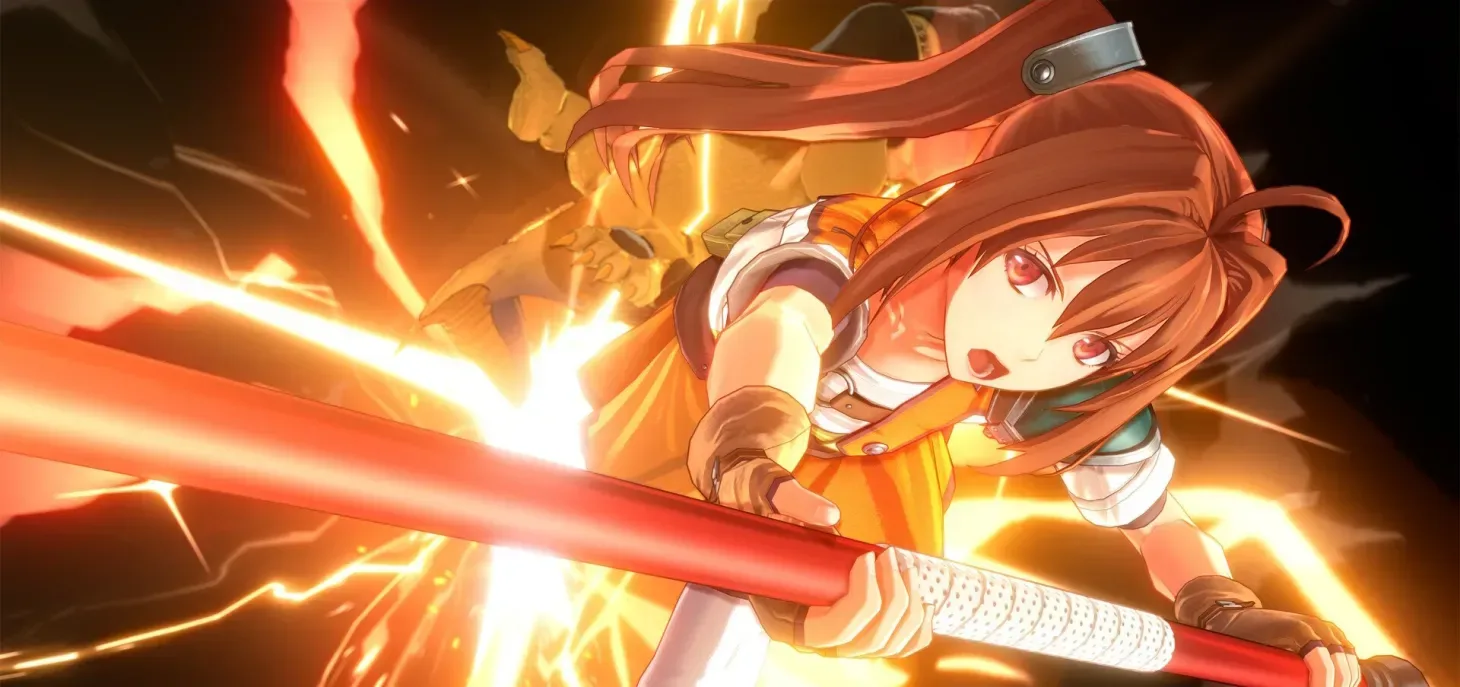
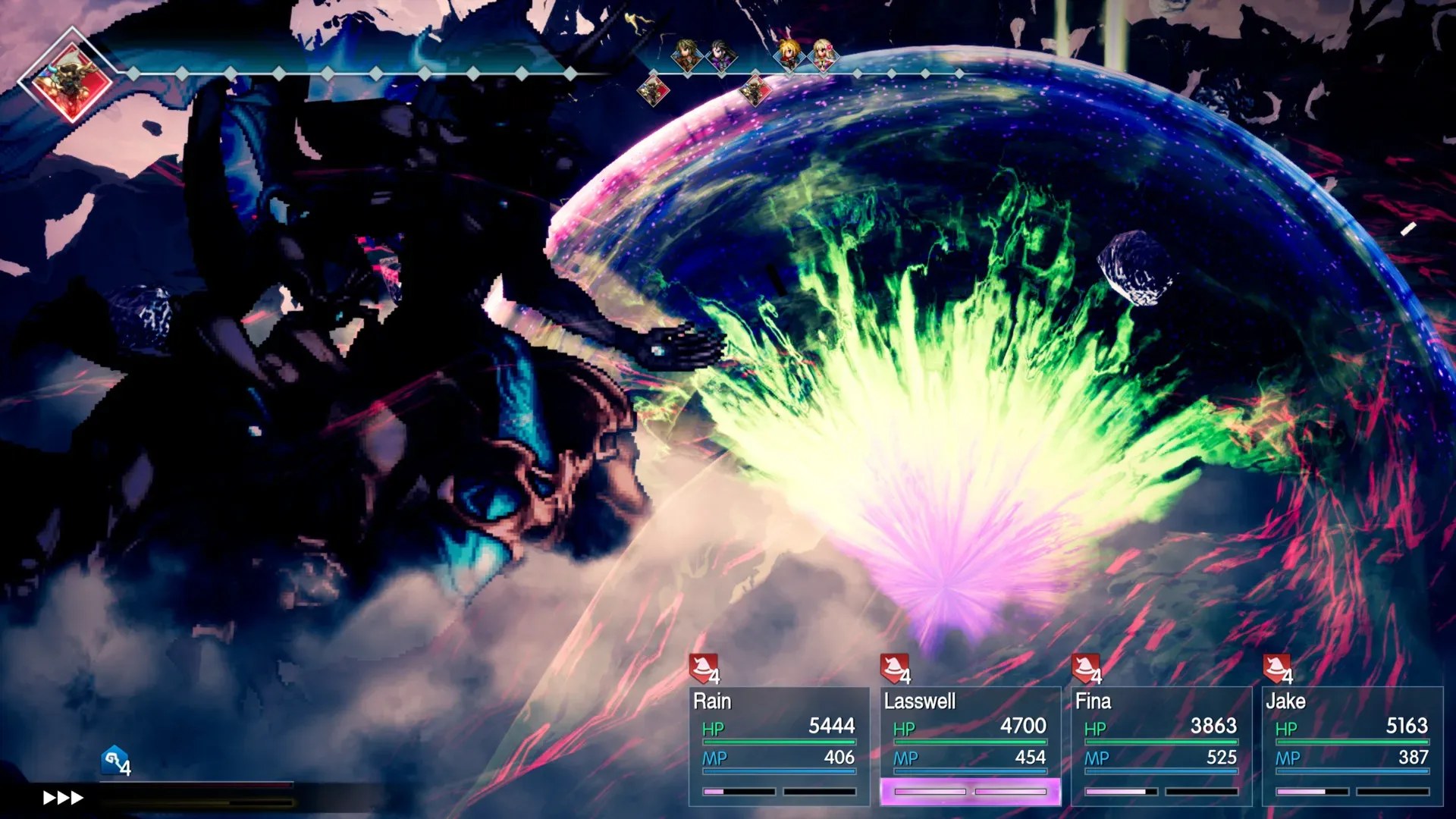
It also gives Resonance’s tribute element a practical dramatic shape. A Vision is a tool, a source of progression, and eventually a spectacle. When required conditions are met, it can be summoned for a powerful attack presented in CGI. That makes the guest characters feel integrated across several layers of play: they influence routine decisions, long-term growth, and the larger flourishes of battle. The system’s best quality is that it makes series history playable rather than simply visible.
There is a useful comparison point in The Hunter’s Inn PC assessment, another look at a compact fantasy RPG where systems and pacing matter as much as setting. Resonance approaches that balance from a far more referential direction, but its most persuasive feature is similarly mechanical: it gives players reasons to consider how their party is assembled instead of only admiring who appears in it.
Traditional battles, briskly paced
Combat stays firmly turn-based and clearly displays the coming action order. That visibility supports planning without making every encounter feel ponderous. Each character arrives with their own fighting style and elemental emphasis: Lasswell favors ice, Jake is a wind-attuned gunner, and Lid has earth-based attacks that include dropping steel chocobos on enemies. These details keep the party readable while the Vision system adds room to revise individual roles.
The overall pace is one of Resonance’s notable strengths. It is described as roughly a 40-hour RPG, an appealingly contained scale for players who want a substantial party-based campaign without signing up for an enormous commitment. Fast travel is generous, and dungeons generally conclude before they outstay their welcome. That pacing creates a valuable sense of forward motion; players are less likely to feel that every new area is demanding a lengthy detour before the story can resume.
Random encounters are present, but they are not as frequent as in older Final Fantasy games, and their placement generally avoids forcing routine grinding. Players pursuing maximum Vision development may have a reason to stay and fight longer, while those focused on the main journey are less likely to need repetition simply to remain viable. This is a sensible compromise between traditional structure and modern time awareness.
Still, the encounter design exposes one of the game’s smaller but persistent irritations. There is no stated auto-battle option, so moments when players merely want to cross an area can carry more friction than necessary. The fights may be reasonably spaced, but a feature that streamlined familiar or low-stakes encounters would better match the otherwise snappy rhythm. The game respects time in its broad structure; it is less consistent about respecting it in the short walk between destinations.
A beautiful world that needs stronger routes
Resonance’s towns make a good first impression. They are visually distinctive, populated by characters worth speaking to, and contain quest-givers who encourage a player to linger. This supports the sense that the world has personalities beyond its main cast. The trouble is what connects those appealing destinations. The overworld is thin, and the dungeons do not carry the same imaginative energy as the towns or the combat system.
That limitation matters because an RPG world is not defined only by its hubs. When the routes between them are slight and the dungeon spaces lack much pizzazz, travel can feel like a functional bridge rather than an adventure with its own discoveries. Generous fast travel prevents this from becoming a major pacing collapse, but it also highlights what is missing: the most welcoming option is often to move past the connective spaces quickly.
This does not undo the strengths of the broader package. Resonance knows how to make its destinations attractive, its party enjoyable, and its battles customizable. But players whose favorite RPG memories come from intricate dungeon concepts or an overworld that feels rich with detours should set expectations accordingly. The game’s sense of place is strongest in its crafted towns and character moments, not in its exploration framework.
Who should answer the call
Final Fantasy Resonance is best suited to players looking for a traditional turn-based RPG with substantial build flexibility and a manageable campaign length. Fans of skill inheritance, party tinkering, and elemental distinctions will have the clearest reason to engage with its Vision system. Longtime Final Fantasy followers may get added enjoyment from the references, summoning flourishes, and returning characters, but Resonance’s relative success is that it is not just an archive tour.
Players who require elaborate dungeons, dense overworld exploration, or tools to automate random battles may be more hesitant. Those weaknesses do not erase the game’s momentum, but they keep the adventure from matching the richness of its character systems. Resonance is at its best when it asks what an old series icon can contribute to a new party composition, or when Rain and his companions are allowed to become more than their echoes.
By turning familiar faces into choices instead of decorations, Final Fantasy Resonance finds a convincing wavelength of its own. Its world could use more depth between its strongest locations, yet its cheerful pace, expressive HD-2D presentation, and rewarding customization make it a notably complete RPG rather than a rescued curiosity.