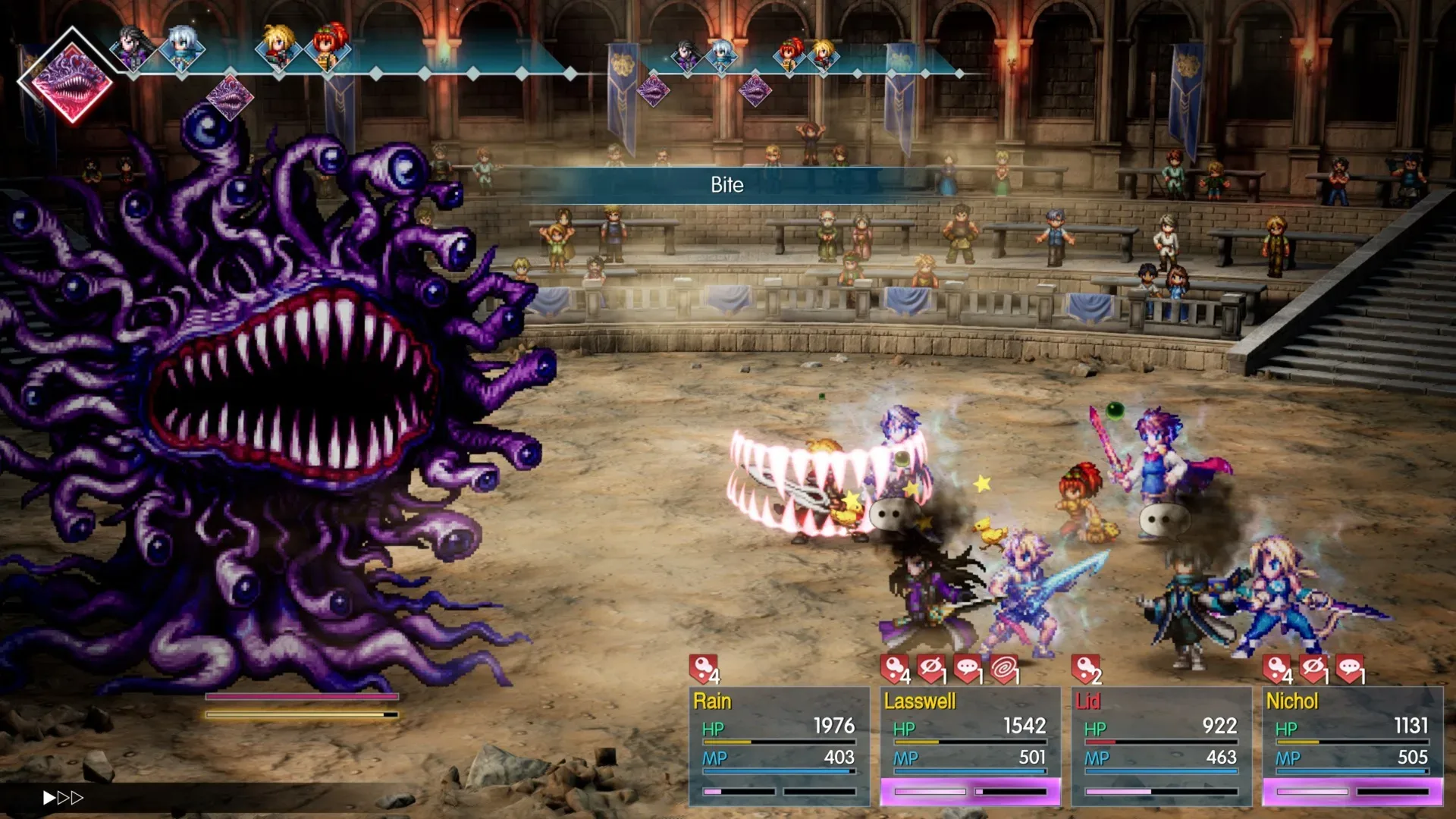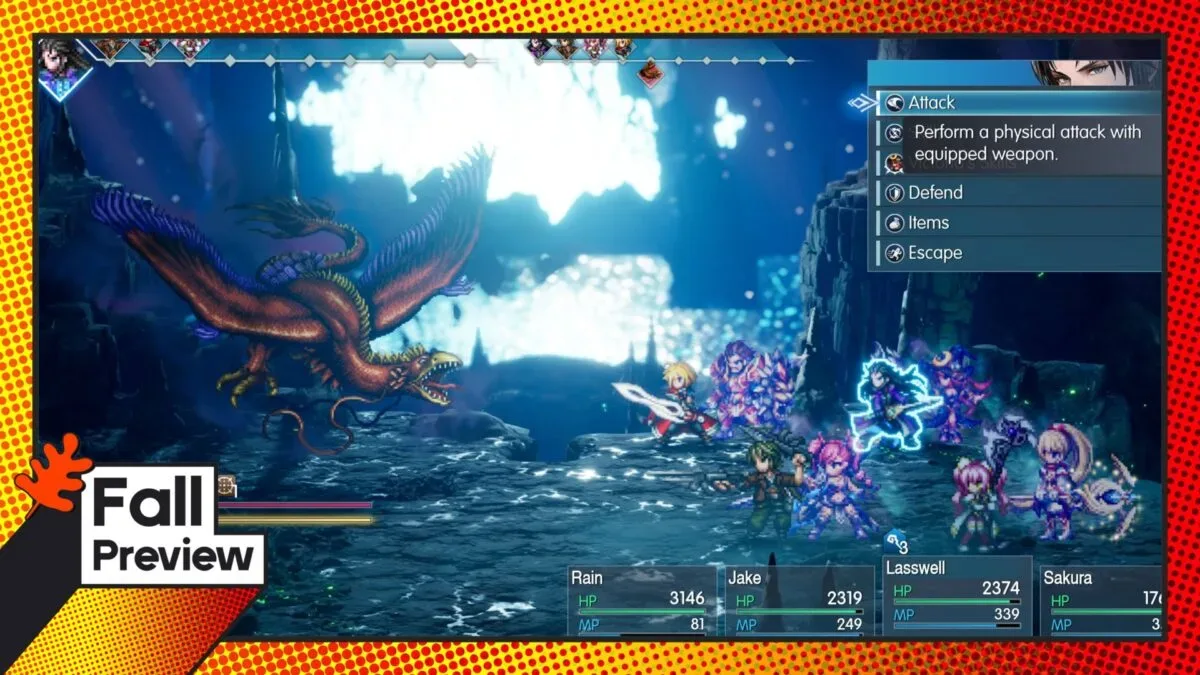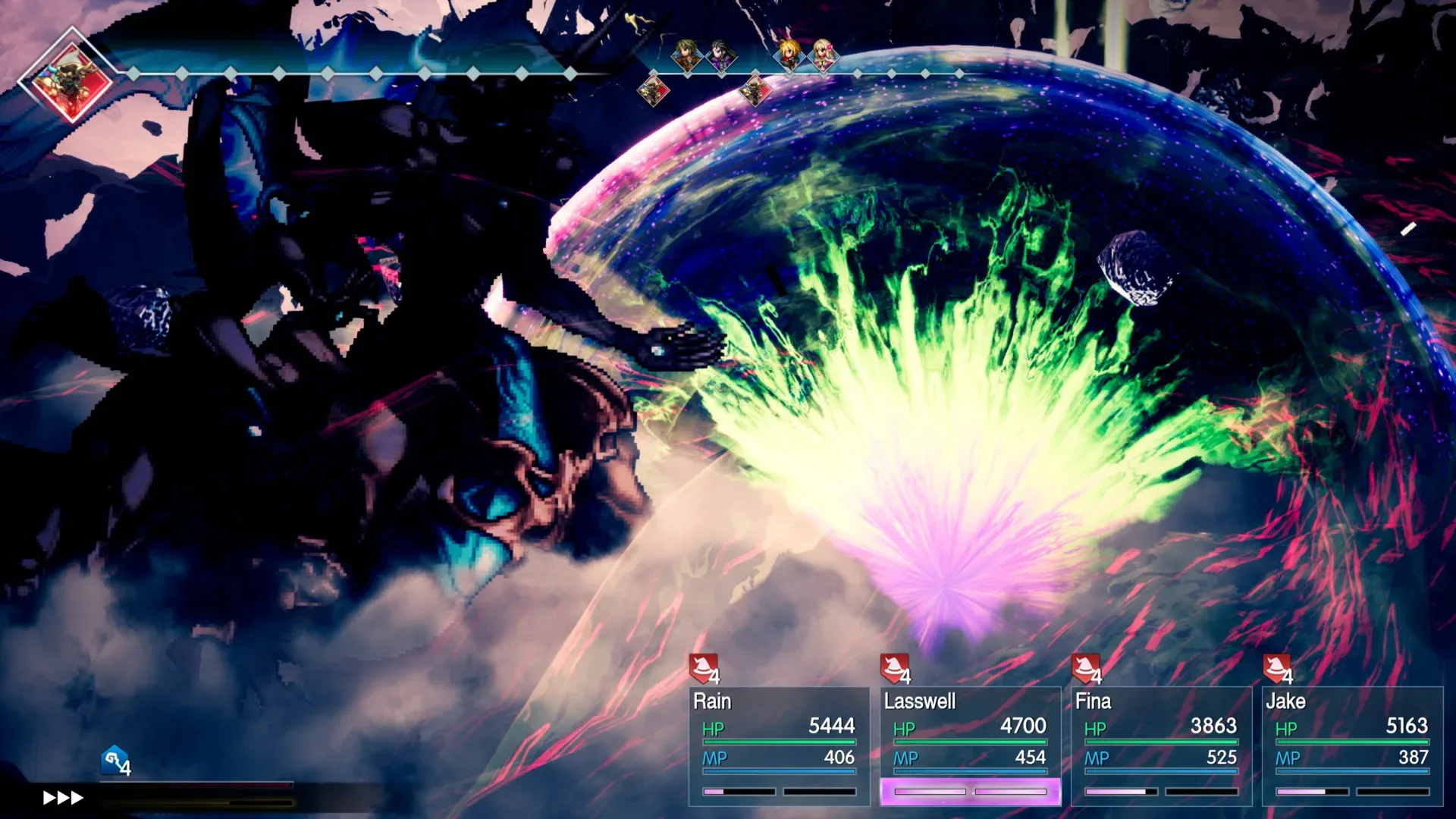
Final Fantasy Resonance is attempting a tricky bit of series alchemy: revive a turn-based single-player Final Fantasy format while avoiding a straight recreation of the past. Its developers describe the combat system as an experiment built around a simple but ambitious question—what happens when the flexible job system associated with Final Fantasy V meets the strongly individual party members associated with Final Fantasy VI?
The answer, at least in design intent, is a battle system where players can customize their approach without sanding every party member into the same all-purpose unit. The project also reworks the story and structure of the mobile game Brave Exvius into a standalone single-player RPG, preserving the overarching plot while reorganizing events, expanding locations and folding character material into the main narrative.
Resonance launches October 22. It is co-developed with Square Enix’s Team Asano and uses a pixel-and-effects visual approach related to HD-2D games, though the team stresses that it does not see one fixed visual template as the future for every project.
A battle system built around two classic Final Fantasy ideas
A job system is a framework that lets a character adopt combat roles—typically changing the abilities, equipment access or tactical function available to that character. The appeal is player agency: a party can be reshaped to fit an encounter or a preferred strategy. In Resonance, that customization is meant to sit beside characters who retain clear, distinct qualities of their own.
That second half is important. A cast designed around unique characteristics creates a different kind of decision-making than a fully interchangeable roster. Rather than treating jobs as a way to erase individual identity, Resonance’s stated goal is to preserve character distinction while providing room to build and adjust.
“What if we take the job system from Final Fantasy 5 and the unique characteristics of each character in Final Fantasy 6?” producer Keisuke Nakashima said in outlining the original concept.
The team says the system also reexamines and incorporates a stagger system. In broad terms, stagger mechanics reward players for exploiting an enemy’s weaknesses or meeting other combat conditions until that foe becomes temporarily more vulnerable. The source material does not spell out Resonance’s exact triggers, damage rules or duration, so it would be premature to assume it operates like any particular earlier Final Fantasy implementation. What is clear is that stagger is part of the intended blend of character identity and build customization.
For players, the practical promise is a turn-based combat loop with several layers to consider: who a character inherently is, which job options they carry, and how a party can create openings against an enemy. The key question ahead of release is whether those layers complement each other rather than turn every battle into menu management. The developers’ framing suggests that balance is the central challenge of the experiment, not a side feature.
Related coverage includes Final Fantasy Resonance Turns Classic Job Systems Into a New Turn-Based Experiment.
Brave Exvius becomes a single-player narrative
Resonance is an adaptation of Brave Exvius, but it is not simply presenting that mobile game unchanged on a different format. The core story remains intact, while portions have been reordered to improve flow, locations have been made larger, battles have been redesigned and new scenes have been added.
The shift matters because mobile live-service structures can distribute story details differently from a single-player RPG. In Brave Exvius, character episodes could sit apart from the main plot. Resonance instead integrates selected elements of those episodes into its central story, prioritizing the narrative beats the team considered emotionally meaningful.
Two early examples are Esper Siren and the Grandshelt knight Emma, who are integrated into Chapter 1. That does not mean every former side story has necessarily been absorbed whole; rather, specific material has been chosen and moved into the primary narrative. It is a structural adjustment intended to make character context arrive as part of the adventure instead of existing in a separate silo.
The adaptation also addresses the tone of the original. The overall plot has not received major changes, but the team has added and interspersed more neutral or positive scenes to offset a story it characterizes as notably grim. This is a measured change rather than a rewrite. Players familiar with Brave Exvius should expect its central storyline to remain recognizable, with revised pacing and added material around it.
Visions keep the wider Final Fantasy crossover intact
The game’s other major legacy component is its Visions system. Visions are equipable summons that allow players to call on Final Fantasy characters in battle. The system spans the series from the original Final Fantasy through Final Fantasy XVI, with one Vision character representing each game.
Those characters were already part of Brave Exvius and have a narrative basis there, but their inclusion was not automatic when the game was being refashioned as a single-player title. The developers considered removing Final Fantasy series characters before deciding to retain them, despite the difficulty of combining those characters’ worlds with Resonance’s own setting.
The decision speaks to the unusual dual role Visions have to play. They are not merely a nostalgia gallery; they are battle tools that are also expected to fit within the new version’s story. The developers specifically point to the appeal of using Cloud’s Cross-Slash and to the spectacle of large CG-style sequences. That makes the system a bridge between a self-contained adaptation of Brave Exvius and the broader identity of Final Fantasy as a series with recurring icons, worlds and combat traditions.
There is a useful distinction here between a cameo and a system. A cameo can be a quick visual nod. An equipable summon has to justify itself mechanically, narratively and aesthetically across a full game. Resonance’s approach places Visions in that more demanding category. Whether the execution works will depend on the precise customization rules and how often the game uses them, details that have not yet been fully outlined.
Pixel characters, 3D environments and major event scenes
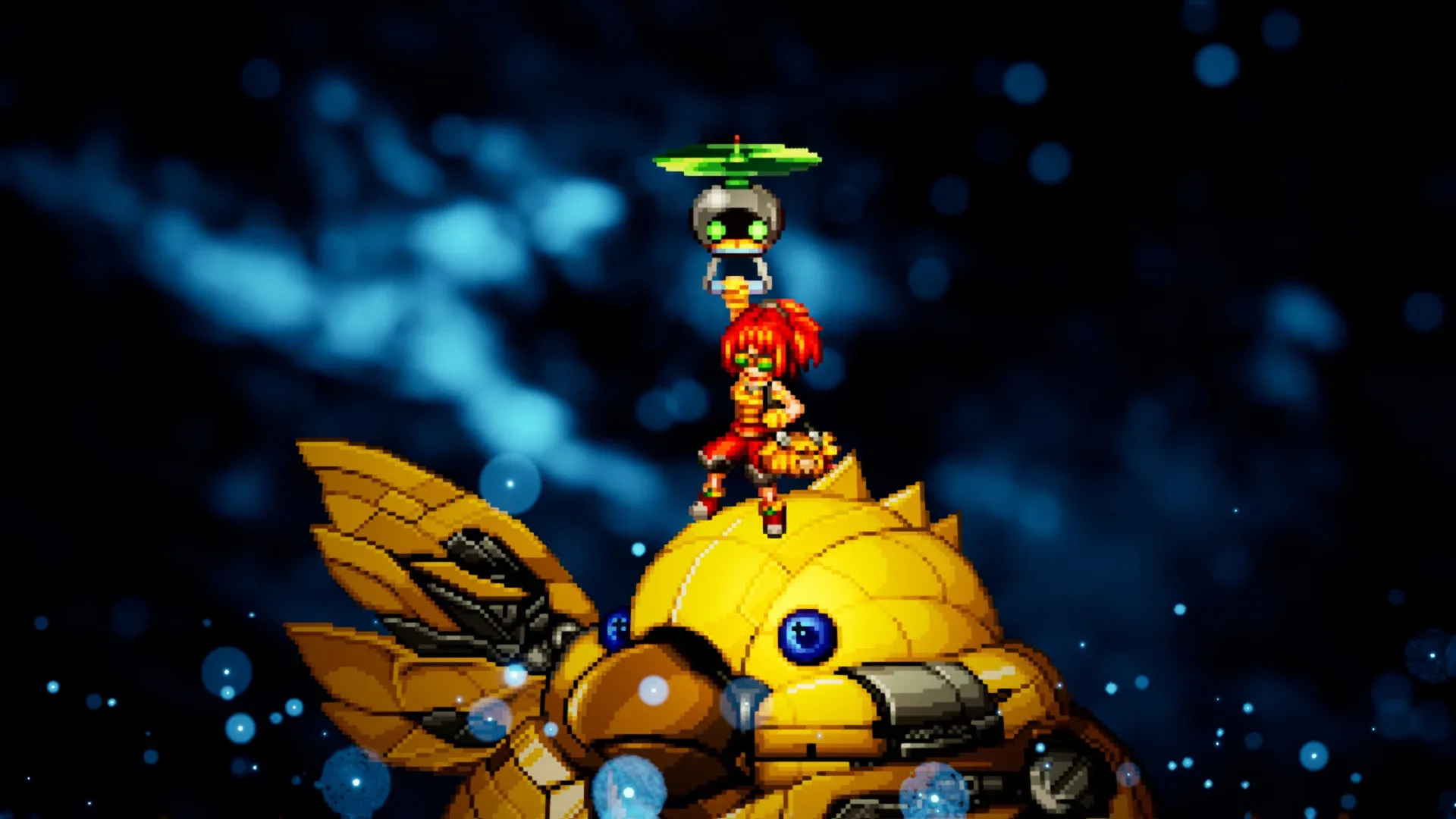
Resonance shares a broad pixel-art-plus-modern-effects lineage with Team Asano’s HD-2D work, but it is visually distinct because it grows from Brave Exvius. Its most conspicuous new presentation feature is a set of elaborate animated cutscenes for major story moments, designed to evoke the role that CG sequences played in earlier Final Fantasy games.
For these scenes, the team starts with a 3D environment, places pixel-based characters over it and then applies camera work. Character pixels are replaced in response to movement so the sprites align with the camera motion, creating a more dynamic 3D impression. Lighting, blur and shadows are added afterward as post effects.
That production explanation helps clarify why these scenes should not be reduced to “retro sprites with filters.” The aim is a composite technique: 3D staging and camera movement support pixel-based characters, while post-processing helps unify the image. The public demo opens with one of these large-scale sequences, establishing both the intended stakes and the more cinematic side of the game’s visual language.
Still, the developers do not position Resonance as a declaration that all future HD-2D games should look or move this way. Their stated view is that teams working in the space should seek fresh visual experiences rather than duplicate one another. At the same time, they acknowledge that Resonance’s event scenes raise the bar a little for related projects. That is less a promise of a common house style than a challenge to keep experimenting.
Why the design pitch matters
Resonance arrives with a highly specific mandate: bring a mobile game’s narrative into a more traditional single-player form, return to turn-based combat, acknowledge multiple eras of Final Fantasy and make the result feel like its own game. Each element can create pressure on the others. A crossover system can overwhelm an original cast; deep job customization can blur character identity; lavish scenes can look disconnected from moment-to-moment play; and story additions can interrupt rather than improve pacing.
The development team’s responses point to a consistent answer: addition and integration instead of simple replacement. The story has been retained but rearranged. Character episodes have been incorporated into the central narrative. Series icons were considered for removal but kept as Visions. Pixel art is placed in a 3D-driven cinematic process instead of being abandoned for a wholly different style. Combat joins jobs, character traits and stagger rather than choosing only one of those traditions.
That makes Resonance a particularly interesting adaptation to watch. Its premise is not that a mobile RPG must become an exact imitation of an older console Final Fantasy to work as a single-player game. Instead, it is trying to identify what is worth carrying forward from both. For more upcoming fantasy-RPG news, see Stolen Realm 2’s portal-hopping co-op reveal.
With its October 22 launch approaching, the remaining unknowns are the details that matter most in play: how broad the job options are, how strongly innate traits shape builds, how the stagger rules affect turn-by-turn choices, and how naturally Visions fit into the overall rhythm. The concept is clear, however. Resonance wants to use Final Fantasy history as raw material for a new turn-based structure, not as a museum exhibit.