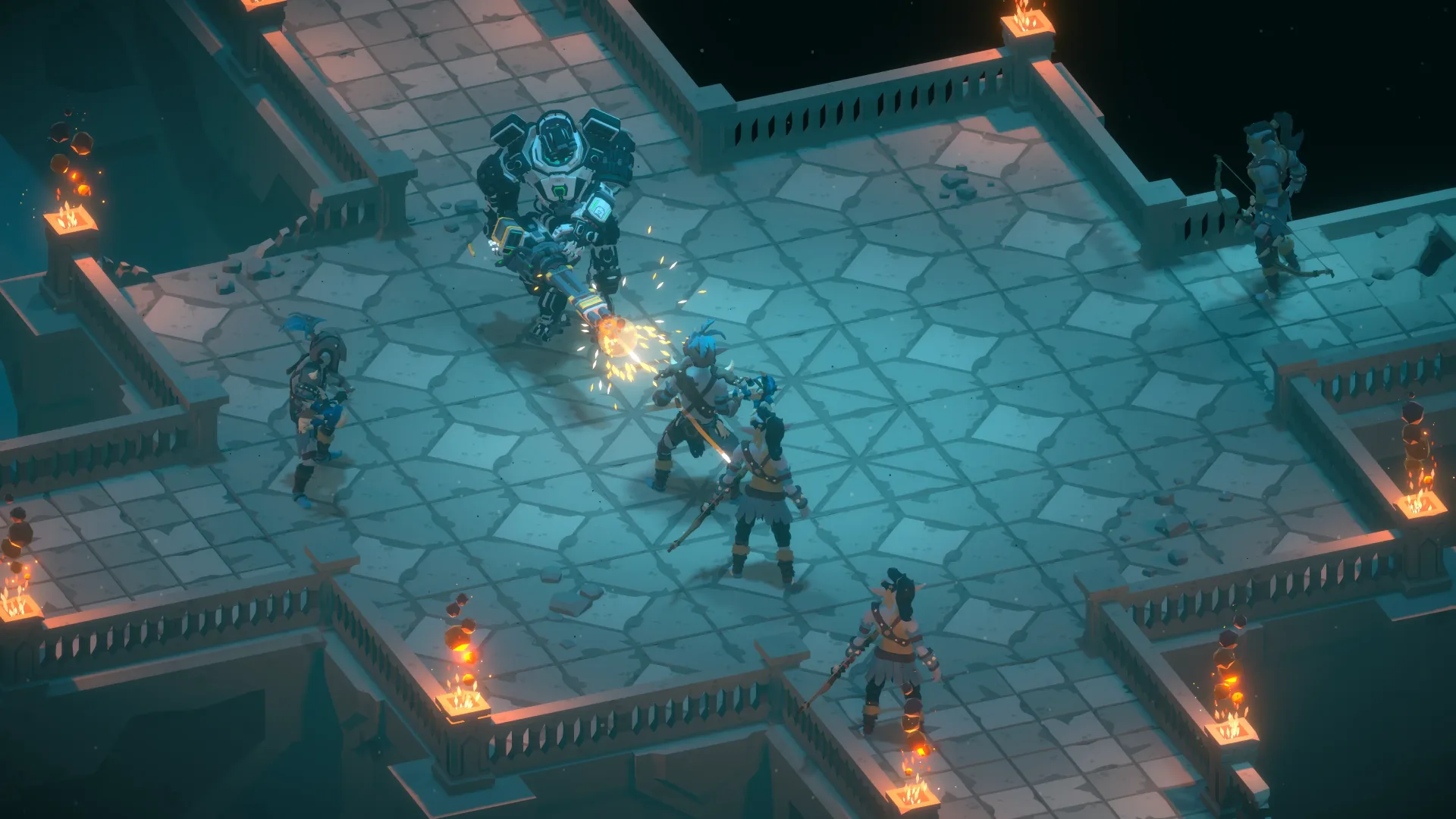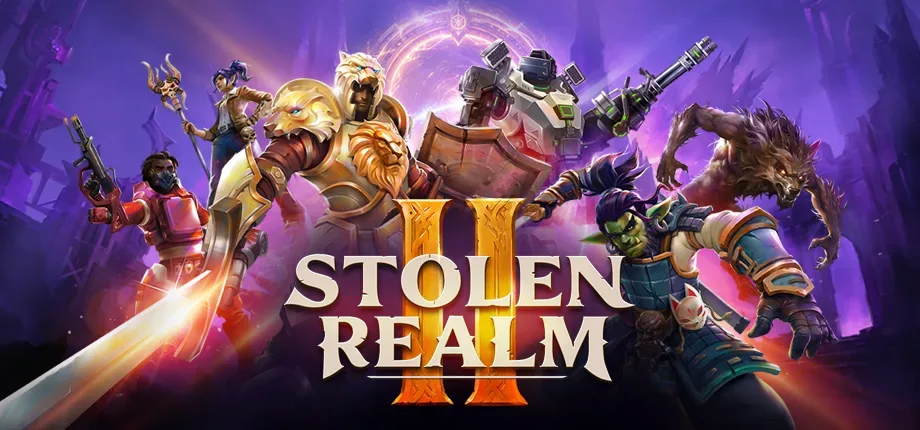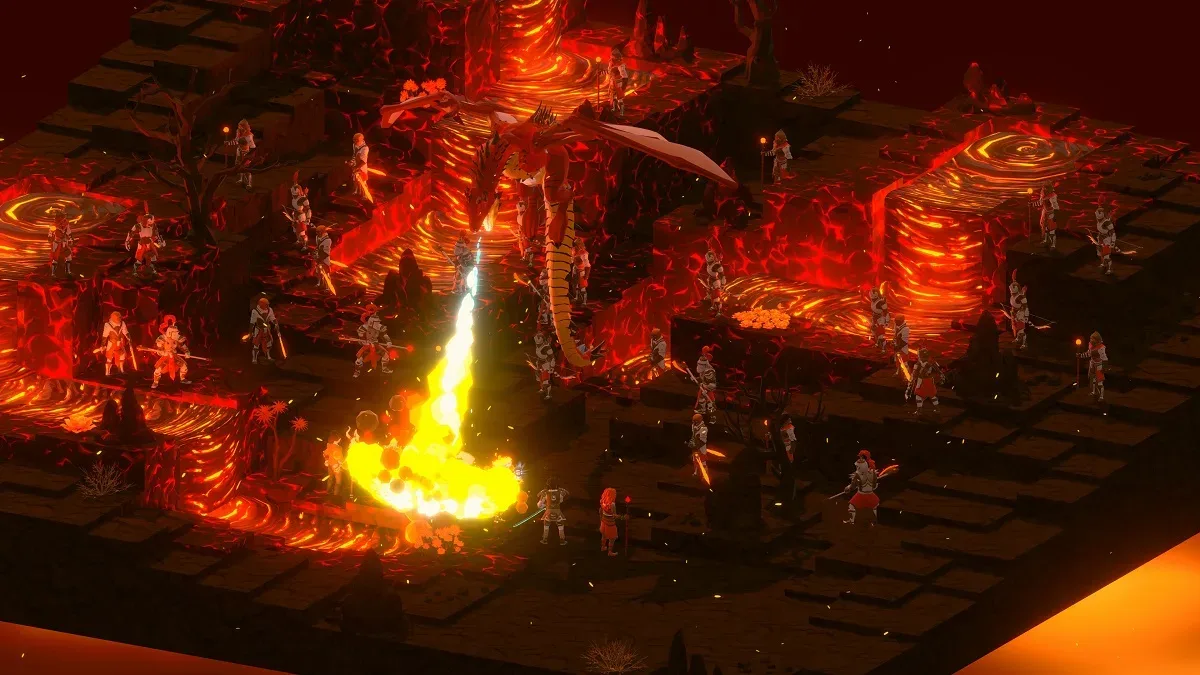
Burst2Flame Games has revealed Stolen Realm 2, a sequel to the turn-based RPG Stolen Realm. Its central premise is a very deliberate collision of genres: mysterious portals are appearing throughout the Realm, linking its traditional fantasy settings to sci-fi, post-apocalyptic, and otherwise unfamiliar worlds.
That setup makes room for enemy and environment combinations that would not ordinarily share a game world. Dragons and werewolves are part of the fantasy side of the equation, while zombies, aliens, and creatures from beyond the Realm arrive through the new connections. The developer is framing the sequel around that unstable meeting point rather than treating each genre as a wholly separate setting.
The project is being made by a team of three. Burst2Flame says the sequel will retain and expand pillars associated with the first game: turn-based combat, character creation without conventional class limits, quests with choices, online cooperative play for up to six people, and separate Campaign and Roguelike modes.
A Realm with more than one kind of apocalypse
Fantasy games often use portals as a convenient route to a new dungeon or distant kingdom. In Stolen Realm 2, portals appear to be much more foundational. They are the story device connecting settings that carry very different visual languages and enemy types: a conventional fantasy realm can sit alongside worlds shaped by science fiction or post-apocalyptic fiction.
For more context, explore Set an Auction Limit Before Bidding on a Collectible Game.
The announcement does not detail individual locations, factions, or plot outcomes. What it does establish is the game’s broad range. A player may face creatures recognizable from fantasy alongside zombies, aliens, and entities that do not belong to the Realm at all. That provides a clear justification for the game’s mixed roster without requiring every encounter to follow a single genre rulebook.
There is a practical design opportunity in that premise, too. Different settings can create different tactical contexts in a turn-based RPG, even when the announcement has not yet explained the specific mechanics. An encounter’s identity can come from the kinds of opponents it introduces and from the unusual contrast of its world. The portal concept gives the sequel a way to keep moving between those tones while maintaining one overarching Realm.
Turn-based combat remains at the center
Burst2Flame describes Stolen Realm 2 as featuring epic turn-based combat. In a turn-based RPG, participants act in an ordered sequence rather than resolving the entire battle through continuous real-time input. The appeal is usually in decision-making: positioning, ability selection, timing, party composition, and adapting to what opponents have done or may do next.
The reveal does not outline the sequel’s turn order, battlefield rules, resource systems, or specific skills. Those are important distinctions, so it would be premature to infer how closely its combat will mirror the original. Still, the confirmation of turn-based battles makes clear that combat is not being replaced by a genre-hopping action system simply because the sequel is introducing sci-fi and post-apocalyptic imagery.
Keeping that core in place matters for the rest of the announced feature set. Flexible character builds, party co-op, quests, and a repeatable Roguelike format all have to feed into the same tactical loop. The genres may be broad, but the gameplay identity described so far is focused: build characters, make choices, and take part in turn-based encounters.
What “classless” means for character building
One of the clearest returning ideas is classless character building. Traditional RPG classes place a character in a defined role, such as warrior, mage, or rogue, often with a limited set of abilities and equipment associated with that role. A classless approach removes or loosens those fixed lanes, allowing players to combine options without being permanently assigned to one archetype.
Burst2Flame characterizes the system as offering limitless builds without traditional class restrictions. That language indicates an emphasis on experimentation and customization, although it does not yet specify the exact systems that govern progression or the combinations available. It should not be read as a promise that every possible choice can be used at once; rather, the stated goal is freedom from the usual predefined class structure.
For cooperative groups, that approach could be especially significant. In a six-player party, fixed classes can quickly create expectations about who must heal, defend, or deal damage. A more open build system can let players approach those responsibilities differently, potentially making room for unconventional combinations. The important caveat is that the announcement has not shared balance details, party restrictions, or how duplicate builds might work.
That flexibility also suits the sequel’s setting. A game bringing dragons into contact with aliens and zombies has a natural reason to welcome character concepts that cross familiar fantasy boundaries. The developer has not named weapons, powers, or sci-fi equipment, however, so the thematic connection is best understood as potential rather than a confirmed list of build options.
Campaign structure and a repeatable Roguelike mode
Stolen Realm 2 will include both a handcrafted Campaign and an endlessly replayable Roguelike mode. Those labels describe two distinct ways of structuring play.
A handcrafted campaign is developer-authored content: encounters, locations, quests, and story progression are arranged intentionally rather than being presented solely as a changing series of runs. The emphasis in the reveal is on meaningful quests and choices, suggesting that authored decisions are an important component of this side of the game. No particular branching paths or consequences have been disclosed, so the extent of those choices remains unknown.
A Roguelike mode, by contrast, generally refers to a format designed around repeat play. The developer calls the mode endlessly replayable, positioning it as a counterpart to the fixed, crafted nature of the Campaign. The announcement does not confirm run structure, randomization, difficulty progression, permanent unlocks, failure rules, or whether choices carry between attempts. Those details will determine what “replayable” means in practice.
Even at this early stage, offering both modes is notable because they serve different player priorities. Someone looking for authored quests and decisions has the Campaign, while players who want repeated tactical sessions have the Roguelike option. It is a broad package for a small development team, and the reveal’s feature list makes the intended scope clear without filling in every implementation detail.
Six-player online co-op is an ambitious promise
Online co-op for up to six players is another announced feature. Cooperative play lets a group tackle the game together rather than controlling separate parties in isolation, and the six-player cap is a concrete number rather than a vague multiplayer commitment.
In a turn-based game, a party that large can create a different pace and social dynamic from solo play. More players mean more character builds on the field and more opportunities for people to coordinate decisions. It can also mean that encounter readability, turn flow, and role overlap become especially important. The developer has not explained how sessions will be organized, whether the Campaign and Roguelike modes both support every party size, or how online progression will function.
Those unanswered questions are normal for an initial reveal. What is confirmed is the target: Stolen Realm 2 is not merely a solo sequel with optional limited co-op. Burst2Flame is planning online groups as large as six players, alongside character systems designed to avoid standard class boundaries.
A small team with a wide design brief
The team size provides useful context for the announcement. Burst2Flame says Stolen Realm 2 is being developed by three people, while the game’s stated ambitions include a handcrafted campaign, repeatable Roguelike mode, choices and events, numerous potential character builds, online play, and genre-spanning worlds.
That does not tell players how long the game will be, when it will launch, or what platforms it will reach; none of those details were included in the reveal. It does make the project’s scope worth watching as more information arrives. The game is aiming to combine several systems that are individually substantial, rather than focusing only on the portal-fiction premise.
For now, the most concrete picture is of a turn-based RPG sequel that wants its fantasy foundation to be flexible in every sense. Its world will be flexible enough to connect dragons with aliens, its characters will avoid conventional class boxes, and its play formats will range from a crafted campaign to a mode intended for repeated runs. Whether those pieces form a cohesive whole will depend on details still to come, but the initial reveal establishes a clear direction for the Realm’s next journey.