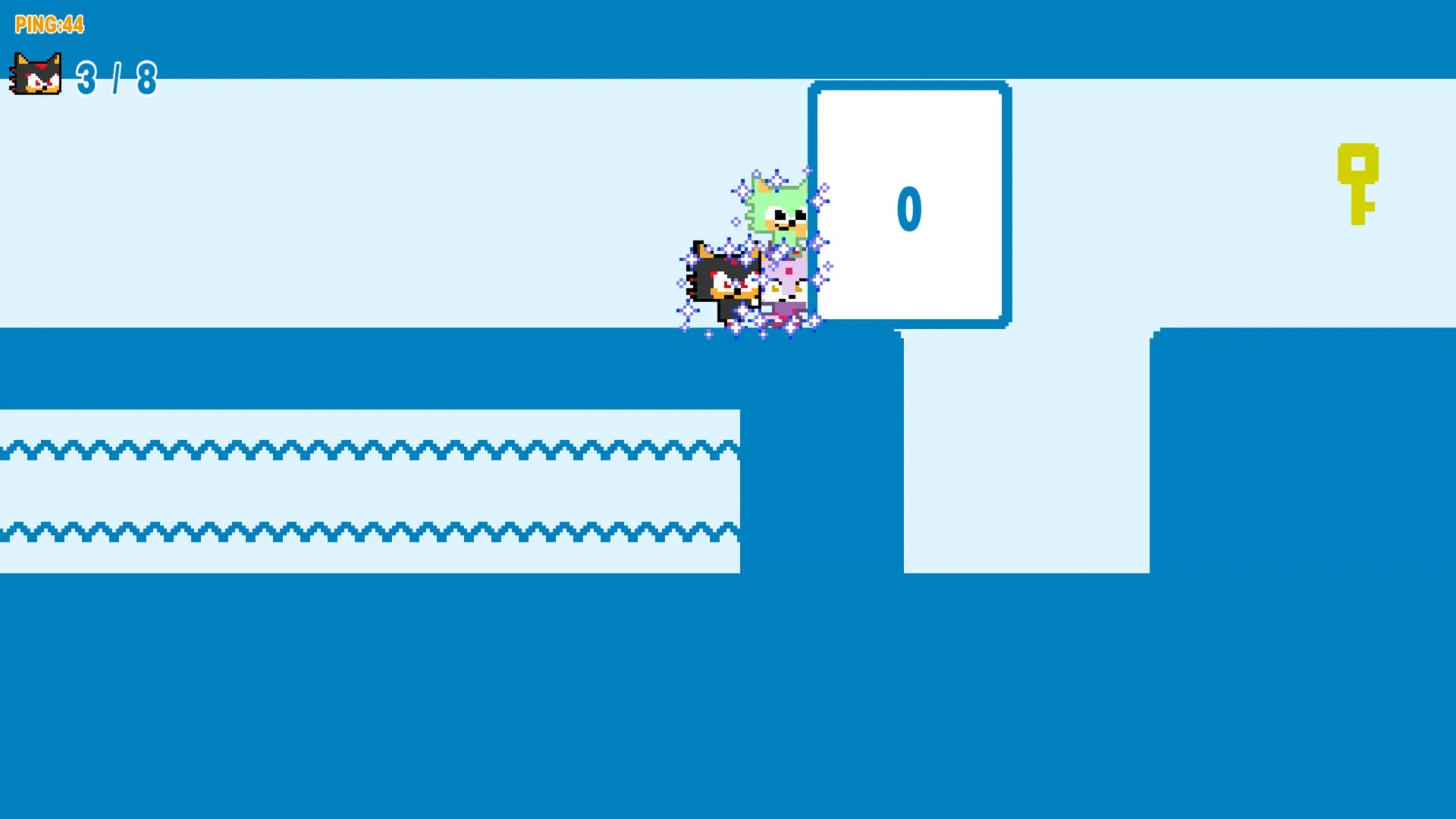
Sonic Pico Park is due to arrive on November 12, and its central proposition is wonderfully dangerous: take a co-op puzzle platformer built around precise shared movement, give players a pile of Sonic characters to inhabit, then ask everyone to communicate clearly while the screen fills with hazards, platforms, rings and bad decisions.
That format appears to be the point. A group completed the game in roughly three hours while working through dozens of puzzles, and the experience was described as a great time precisely because cooperation was never clean for very long. Players had to run together, hand a ring between teammates to survive an environmental threat, manage slow and fast movement, and navigate stages involving water, grinding and pinball-style flippers. They also found plenty of ways to turn a solution into a disaster.
It is an adaptation that seems to understand what makes a social co-op game memorable. Success matters, but the stories people repeat afterward are more likely to be the moment someone missed an obvious instruction, picked an absurd-looking character variant, got distracted, or confidently launched themselves into a hazard.
A co-op game where the group is the main obstacle
Pico Park’s basic appeal is not simply that it asks multiple people to be present. It asks them to act together. That distinction is important. In a conventional multiplayer game, one player can often carry a weak link through superior mechanics or individual knowledge. In a coordination puzzle, a single person moving too soon, stopping too late, or misunderstanding the plan can reset everyone.
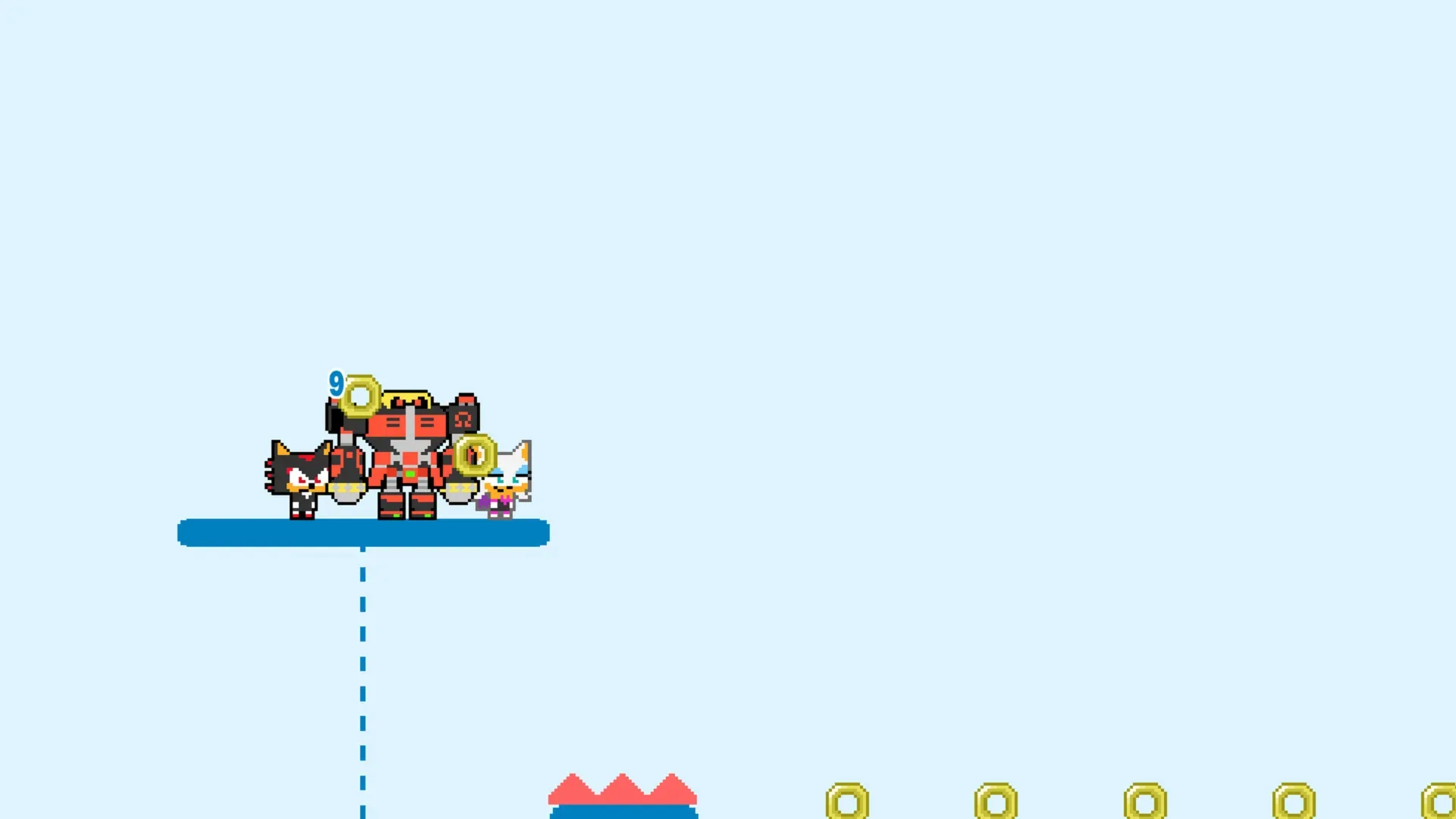
That is the kind of pressure Sonic Pico Park appears designed to generate. One puzzle required the group to move in unison. Another involved passing a ring around ahead of an incoming hazard. A pinball-themed stage gave different players responsibility for different flippers while balls threatened to drop away. Elsewhere, teammates were told to stand on another player’s head, while one participant’s accidental spin-off immediately ended in failure.
These are not necessarily difficult ideas to explain in isolation. The challenge is execution under a shared set of consequences. Co-op puzzle platforming turns timing into a conversation: someone needs to identify the task, someone needs to confirm it, and everyone needs to perform it at nearly the same moment. If even one player has mentally wandered into a story about their weekend, the plan is suddenly in trouble.
The game offers text responses, but the account of the session suggests that voice chat is likely the more practical option for a full group. Even then, it does not eliminate confusion. Voice makes it easier to coordinate, but it also gives players a faster way to joke, argue over blame and derail a carefully formed strategy. In this kind of game, communication is both the solution and a new source of chaos.
What “locking in” means in a puzzle platformer
“Lock in” is casual shorthand for focusing on the immediate objective and cutting out distractions. Sonic Pico Park seems built to test exactly how long a group can maintain that state. The instruction may be as direct as “run together,” but the actual result depends on every player interpreting timing and spacing the same way.
Related coverage includes Sonic Pico Park Turns Teamwork Into Three Hours of Glorious Chaos.
That creates a useful practical expectation for prospective groups. This is not the sort of party game where people can casually multitask for a few minutes without consequences. The strongest sessions will likely come from players who are comfortable speaking up, listening to brief directions and accepting that a failed attempt is part of the entertainment rather than a reason to make the room miserable.
The counterpoint is that rigid perfection is probably not required for fun. The reported three-hour run was full of self-sabotage, distracted chatter and repeated mistakes, yet it still landed as an enjoyable experience. A group that treats retries as setup for a better joke may be particularly well suited to it.
The Sonic roster is more than a coat of paint
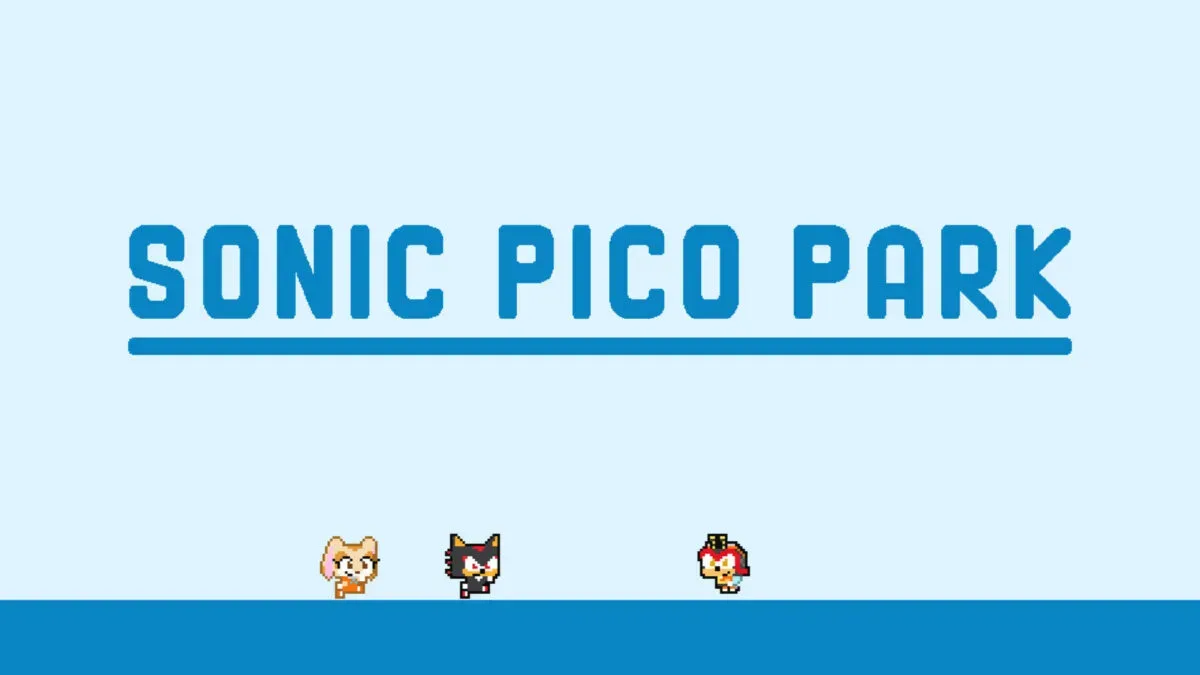
The game’s Sonic theme matters because character selection becomes a social layer on top of the puzzles. Players can choose familiar faces including Sonic, Blaze the Cat, Big the Cat, Vector the Crocodile, E-123 Omega, Silver the Hedgehog, Charmy Bee, Shadow, Cream and Rouge the Bat. The session also featured a green Sonic variant, repeatedly and uncharitably compared with a booger.
That variety provides an immediate way for a group to form tiny, unserious allegiances. A player may choose a favorite character, a visually ridiculous alternate color, or someone who will make a screenshot funnier. Silver has an idle animation that floats, one example of the smaller character-specific flourishes noticed during play. Those touches do not change the fundamental requirement to solve the next room, but they can make a lengthy co-op session feel more playful and distinct.
The bigger mechanical wrinkle comes from stages featuring oversized characters. Big the Cat can hurt teammates because of his size, and Omega also appears as a designated large character in a subsequent world. This is not merely cosmetic scale. A larger teammate becomes another moving risk the team needs to account for, which changes the mood from standard platforming coordination to a more physical form of crowd management.
That distinction is worth stressing: a character gimmick is most effective in co-op when it alters how players treat one another. Big being a “threat” is funny because the threat is not a distant enemy controlled by the game. It is a friend in the same voice chat, trying to help while occupying enough space to create fresh opportunities for collateral damage.
The large-character levels were a clear highlight for the group, which later wanted to return and show them to newly joined players. That response suggests Sonic Pico Park has room for spectacle alongside its puzzle-solving. The game can give a party a level that is memorable on its own terms, not just another checkpoint on the way to the ending.
It is a Sonic game that sometimes asks players not to go fast
Speed is the obvious joke whenever Sonic is involved, but Sonic Pico Park seems willing to make that expectation part of the challenge. At least one puzzle required careful, slow movement, prompting the realization that rushing was actively counterproductive. That is a smart fit for a puzzle platformer: it uses the cultural expectation surrounding Sonic as misdirection, then makes patience the winning play.
“Counterintuitive” does not mean arbitrary. In a shared platforming space, speed can magnify mistakes. One player racing ahead can leave another behind, disturb the group’s formation or reach a mechanism before the rest of the team is ready. Slowing down allows players to preserve spacing, read the stage and execute a shared sequence rather than a collection of individual impulses.
The game also appears willing to play games with player trust. When straightforward directions appeared, members of the group suspected a trick and hesitated rather than immediately following them. In puzzle games, that reaction often comes from learning that the environment has trained players to inspect details and anticipate exceptions. Whether that suspicion is warranted in any particular room is less important than the behavior it creates: players start debating the meaning of instructions instead of simply carrying them out.
That is exactly where a group’s personalities enter the design. The cautious player sees a trap. The impatient player sees delay. The distracted player has missed the premise entirely. Sonic Pico Park can turn those roles into the real cast of the evening.
Why the session’s chaos is useful information
Anecdotes about friends joking through a game are not a substitute for a technical breakdown of every stage, but they reveal the kind of experience a game makes possible. Here, the repeated themes are clearer than the individual one-liners: objectives can be simple but execution is demanding; characters inspire playful rivalry; the team regularly creates its own problems; and completing the game does not stop people from wanting to revisit particular levels.
The group’s jokes ranged far beyond the stage at hand, from character debates to unrelated pop-culture references. That is not a flaw in the report. It is evidence that the game can tolerate and even benefit from conversational looseness, provided everybody can refocus when a sequence demands it. The design gives friends something shared to do; their own banter supplies the rest of the evening’s texture.
Players who want a purely disciplined, quiet puzzle experience may find that atmosphere exhausting. Those who want a structured excuse to assemble friends, fail loudly and eventually figure things out may find it a strong match. The game’s reported completion time also makes it seem suited to a planned group session rather than an open-ended commitment, though a full run will still demand attention.
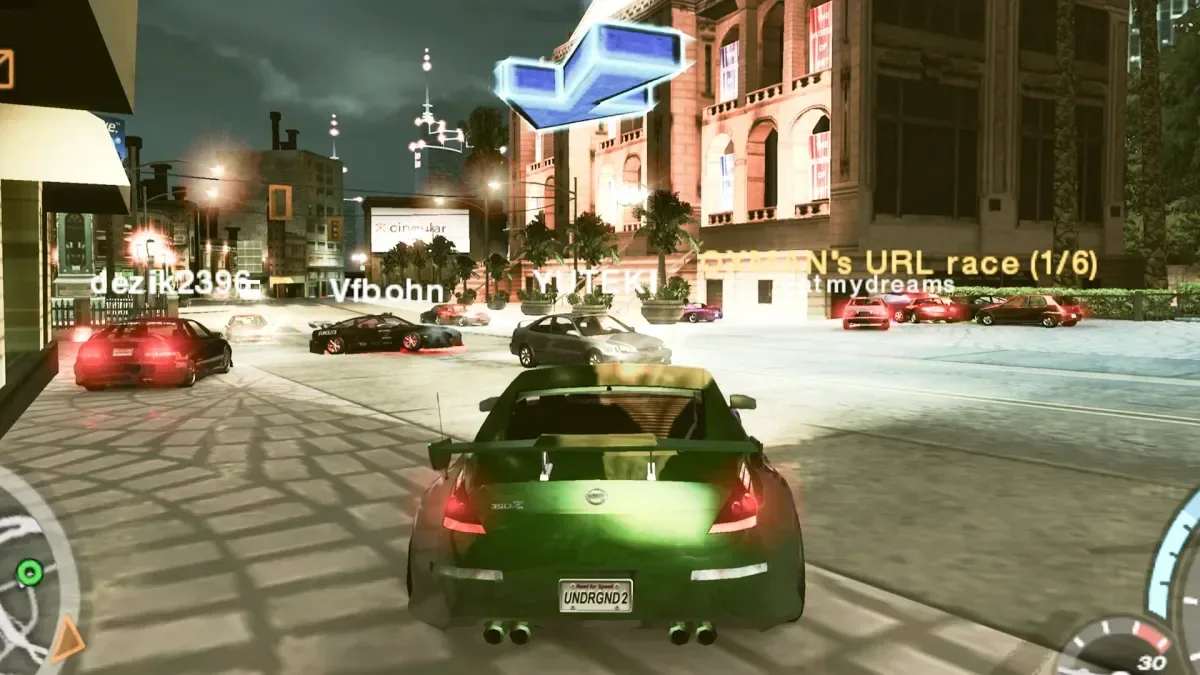
There is a broader appeal in this kind of shared obstacle course. Online multiplayer does not have to mean competition, rankings or endless progression. It can also mean putting a few people in a room with a problem that nobody can solve alone. Other multiplayer games continue to explore online gathering spaces in different forms, including a browser-based revival of Need for Speed Underground 2 with large online lobbies. Sonic Pico Park’s appeal appears much smaller in scale and more immediate: get the group through the next room, preferably before somebody walks into spikes.
What to know before bringing a group
- Expect coordination, not a solo showcase. The reported puzzles repeatedly depend on players moving, timing and reacting as a unit.
- Use clear, short callouts. A quick instruction is more useful than a long explanation when everyone has to act at once.
- Do not assume speed is always correct. Some challenges specifically reward controlled movement over rushing.
- Character choice can be part of the fun. The roster and small animation details give groups material to enjoy between puzzle attempts.
- Make peace with accidental friendly fire. Oversized characters such as Big the Cat can present a hazard to teammates.
- Budget a real session. One group’s complete playthrough took around three hours, with dozens of puzzles along the way.
Sonic Pico Park arrives November 12. Its most compelling feature may be how neatly it turns the gap between “we know what to do” and “we can all do it at once” into a party-game engine. The puzzles supply the structure; the Sonic roster supplies the flavor; and the friends in voice chat supply the inevitable chaos.