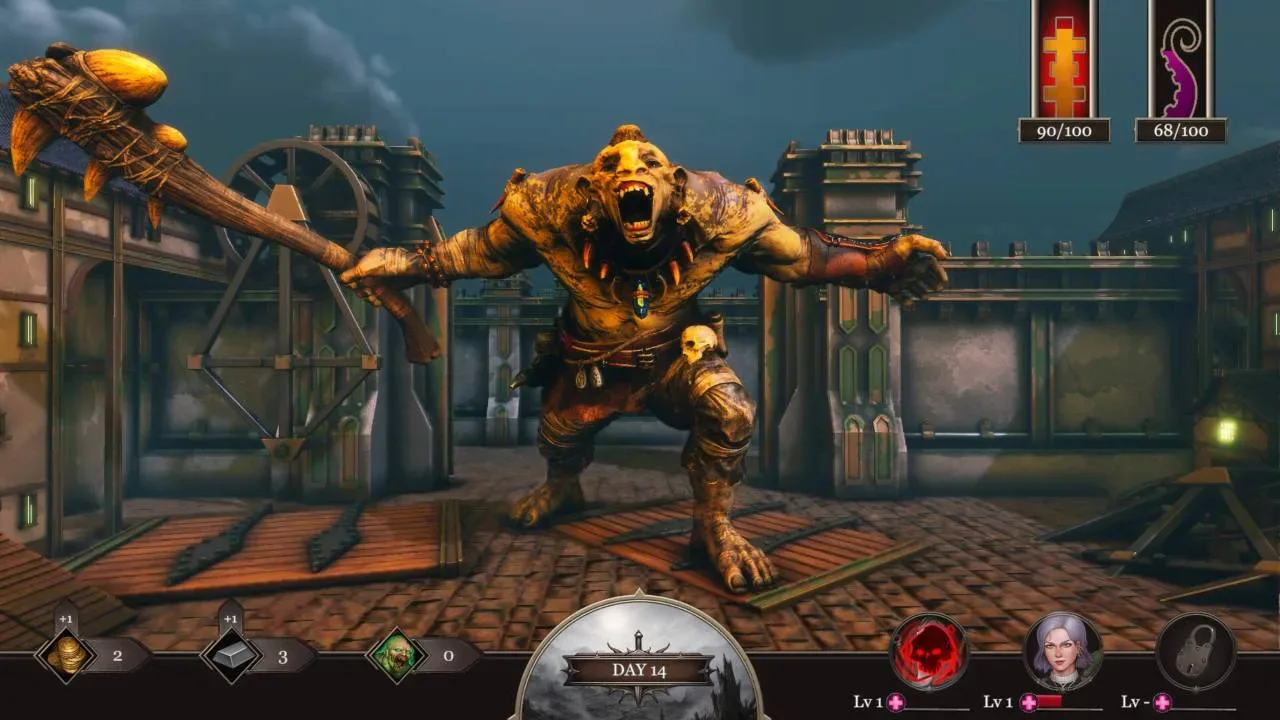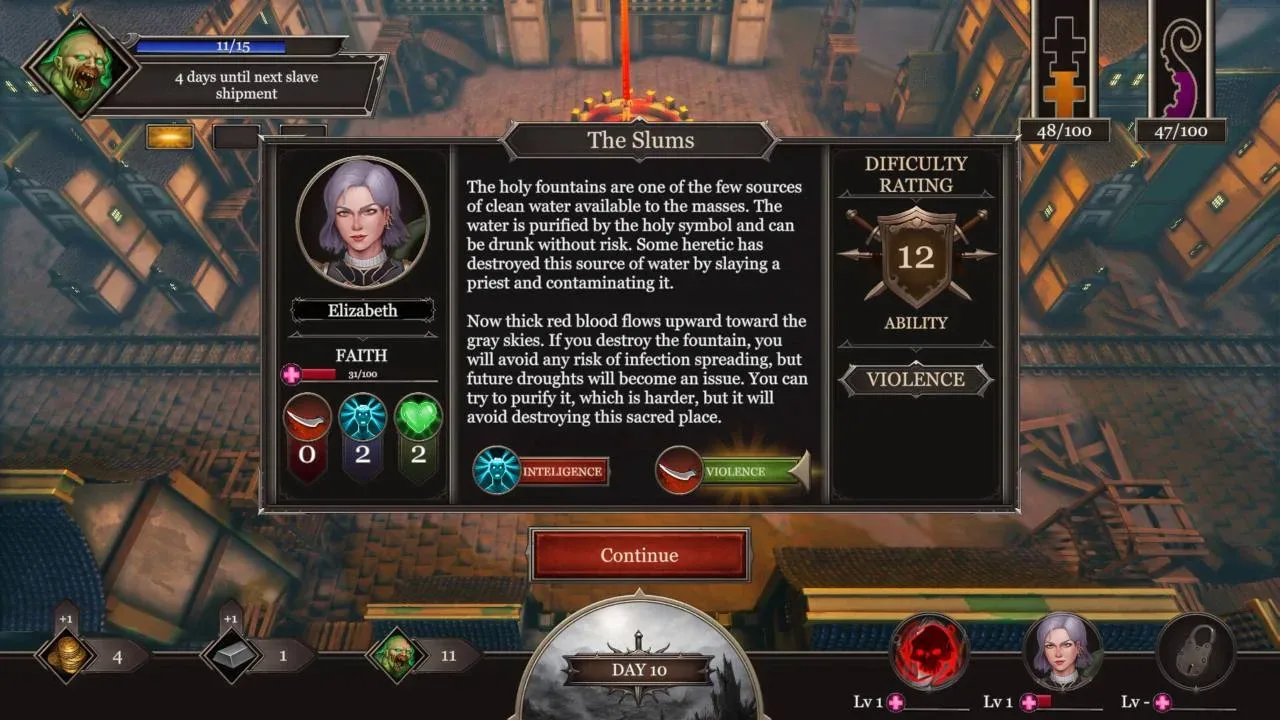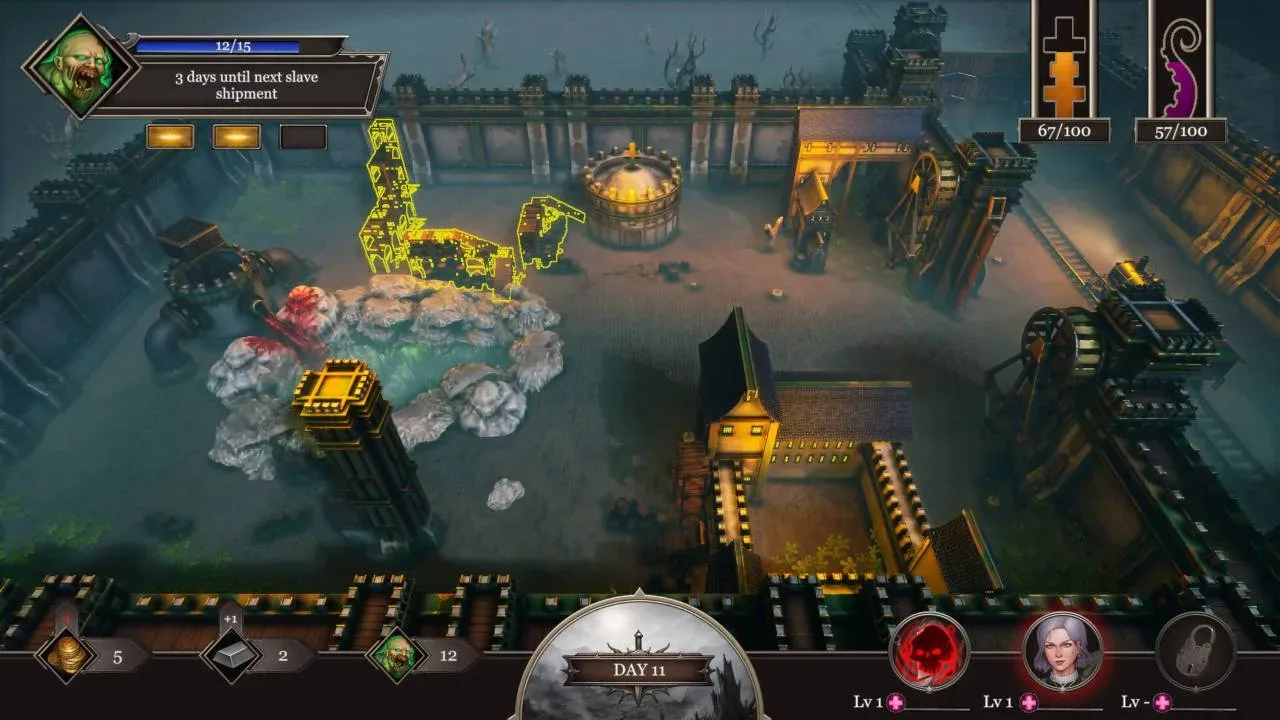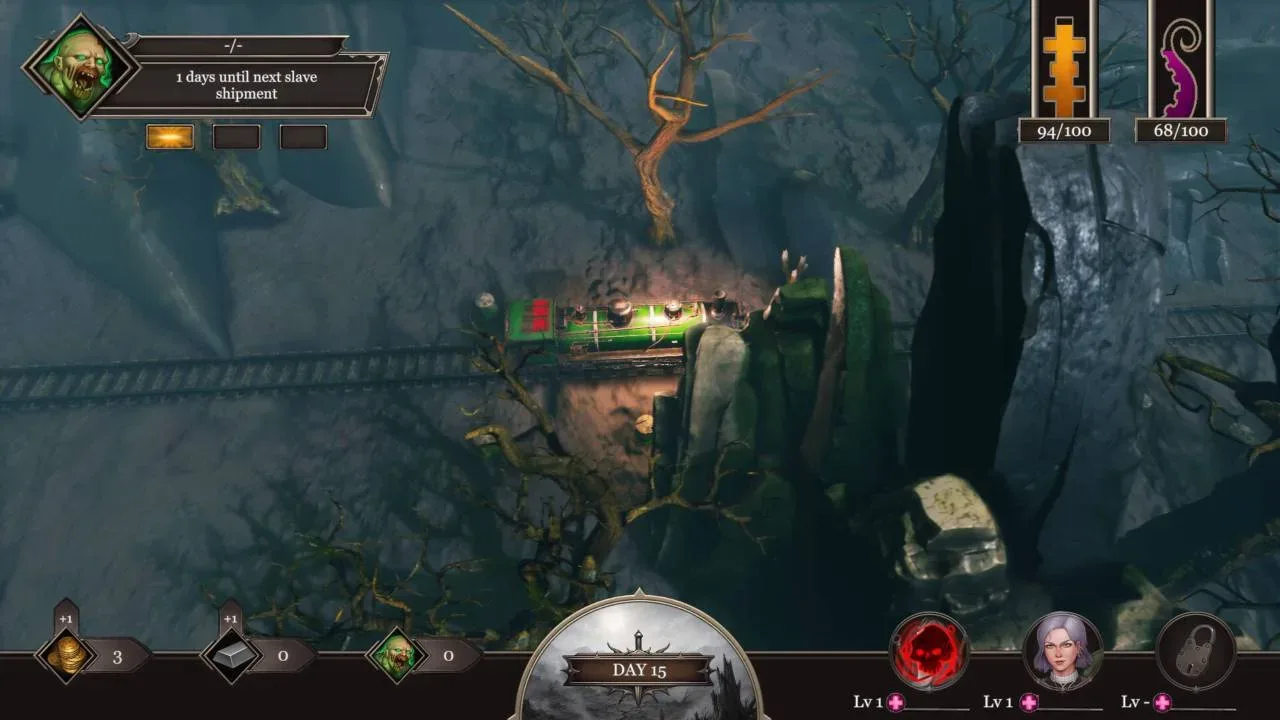
Dark Rail has launched on Steam, PlayStation 5 and Xbox. Developed by solo creator Steam Veil Games, the strategy roguelike puts the player in command of an Inquisition operating from an industrial city at the Empire’s edge, where keeping the system running is inseparable from the grim business it is built to serve.
The game’s central pressures are resource management and sanity management. Players are tasked with maintaining order, meeting prisoner-transport quotas and dispatching inquisitors aboard dangerous train expeditions. Those expeditions involve hunting heretics and confronting horrific creatures, while events in the city create a broader struggle against rebellion and corruption.
An Inquisition management game where the ledger is never neutral
Dark Rail’s premise makes its management layer more than a straightforward exercise in stockpiling materials. The player leads an institution with coercive authority, and the stated goals include moving prisoners, suppressing disorder and making morally difficult choices as madness spreads among the population.
That framing matters because it suggests the game’s decisions are intended to carry consequences beyond a simple gain-or-loss calculation. A choice may help stabilize one immediate problem while worsening another pressure elsewhere. The key survival challenge is described as balancing three linked concerns: resources, rebellion and corruption.
Resources are the practical means to keep an organization and its headquarters functioning. Rebellion represents resistance to the player’s rule and an unstable social order. Corruption, in the context presented here, is another force that threatens the Inquisition’s ability to endure. Dark Rail’s design places all three in tension rather than presenting a single route to success.
The sanity component adds another kind of instability. Madness is spreading through the population, and decisions are made under that pressure. The announcement does not specify a particular sanity meter or its exact effects, so players should not assume a precise mechanical model from the premise alone. What is clear is that mental deterioration is a core part of the game’s management theme, not merely a decorative horror element.
Trains are expeditions, not just scenery
Rail travel sits at the center of Dark Rail’s structure. Inquisitors are sent on dangerous journeys by train, creating an outward-looking counterpart to the headquarters and city-management portions of the game. The stated objectives of these trips are to hunt heretics and kill monstrous threats.
That setup gives the game two connected areas of responsibility. At home, players manage the city-facing demands of order, resources and prisoner transport. Away from home, they commit inquisitors to risky expeditions. The train is therefore both a setting and a strategic route through which the Inquisition carries out its work.
The game also includes turn-based strategy. In general, turn-based play means actions proceed in discrete turns rather than requiring continuous, real-time input. That format can suit a management-focused game built around deliberation: players can assess their position, commit to a decision, and then deal with the consequences that follow. Dark Rail’s description does not detail the combat interface, initiative system or expedition structure, but it establishes that turn-based strategic decision-making is one of its major components.
What the roguelike element means here
Dark Rail is described as a roguelike in which every journey is different. In broad terms, a roguelike structure is built around repeatable attempts, often called runs, where conditions and outcomes can vary from one playthrough to the next. Here, the emphasis is on changing journeys rather than a fixed sequence of events.
That variability is particularly relevant to a game built around several competing pressures. A reliable solution to one problem may not be enough when a later run presents different circumstances, risks or trade-offs. Instead of treating the game as a single campaign that can be solved once, the design invites players to adapt their priorities across repeated attempts.
It is important to distinguish this from a promise that every detail is random or that a run will always work in a specific way. The available information says each journey differs; it does not lay out the extent of procedural generation, persistence between runs or failure rules. Even so, the roguelike label and the focus on varied journeys establish replayability and adaptation as fundamental goals.
Inquisitors, abilities and headquarters growth
Players can train inquisitors and unlock new abilities, giving the expedition force room to develop over time. In practical terms, that suggests personnel choices will matter alongside the broader city and resource picture. Sending people into dangerous territory is not simply a matter of selecting a train route; it is tied to the capabilities of the inquisitors being prepared for the task.
The headquarters can also be upgraded through its resources. A headquarters upgrade system generally turns collected or managed resources into improved strategic capacity, although Dark Rail’s specific upgrade categories have not been detailed. The confirmed point is that the base of operations can progress, adding a longer-term management dimension to the moment-to-moment decisions around order and expeditions.
These systems make the game’s priorities easier to read. Dark Rail is not presented as a train-combat game alone, nor solely as a city builder. Its loop combines personnel development, a growing headquarters, outbound missions and political or social strain inside the city. Each part has reason to affect the others: resources support the organization, inquisitors undertake dangerous work, and the city’s deteriorating condition demands attention throughout.
A deliberately uncomfortable command position
The game’s tone is rooted in grim authority rather than heroic conquest. Taking charge of the Inquisition means accepting quotas for prisoner transport while trying to preserve order in a city where rebellion, corruption and madness are active concerns. The moral-choice element indicates that Dark Rail does not frame every strategic option as cleanly beneficial.
That is a meaningful distinction for players interested in management games with narrative weight. The question is not only whether an action is efficient, but what it costs within a setting built around institutional power and societal decline. The game’s horror is tied to horrific creatures on the rails, but it is also tied to the decisions made in the city.
The industrial setting reinforces that emphasis. Dark Rail’s city is positioned on the edge of an Empire, a location that suggests distance from the center of power while still being bound to its demands. The announcement does not provide additional history for the Empire or the Inquisition, but it establishes an environment where systems, transport and control are foregrounded.
Platforms and the strategy audience
Dark Rail is available now on Steam, PlayStation 5 and Xbox. Launching across PC and console platforms gives the game access to players who prefer strategy games at a desk as well as those who play them with a controller. No details were provided about cross-platform features, editions, pricing, subscriptions or platform-specific differences, so those points remain unconfirmed.
For Steam players watching the current strategy landscape, Dark Rail arrives alongside continuing interest in PC testing and smaller-scale strategy projects; Westlanders’ extended closed playtest is another recent example of attention around the space. Dark Rail, however, has already moved beyond that stage with its full launch on the named platforms.
The clearest pitch is for players who enjoy turn-based planning but want that planning embedded in a bleak, systemic setting. Dark Rail asks them to manage a headquarters and a troubled industrial city, develop an inquisitorial force, and send that force into the unknown by rail. Its roguelike runs mean the task is meant to remain unstable, while its sanity and morality themes ensure that survival is not framed as a purely technical achievement.