
Westlanders has extended its closed playtest through 23 November after attracting more than 20,000 access requests. Requests are still open during the added week, and players who gain entry can continue sending feedback while the test is live.
The extension is a useful early signal of interest in the project, but it should be read precisely: the figure refers to people who have requested access, not a confirmed count of players admitted to or actively participating in the test. Even so, the decision to keep the build available for another week gives the development team a longer window to collect reports across a game built around several interlocking systems.
Westlanders is in development for PC Early Access in 2027. Console versions are planned for the eventual 1.0 release, with no date provided for that launch.
A wagon-led open world with settlements to run
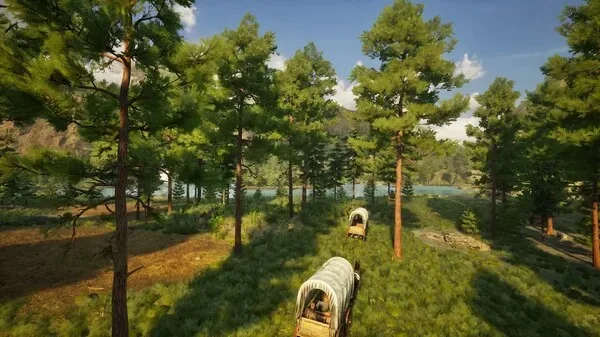
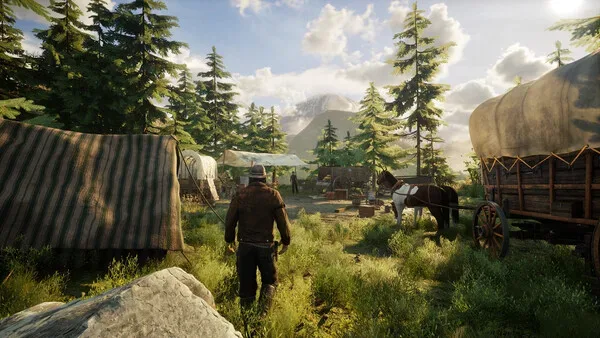
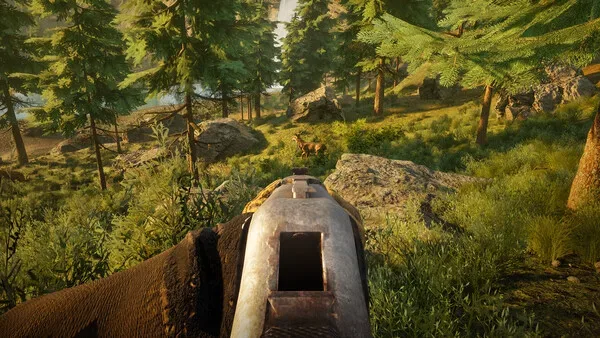
The game’s central setup combines open-world survival, exploration, crafting and settlement management. Players travel through a dynamic landscape using a customisable wagon, looking for resources, hidden places and distinct characters while dealing with the dangers present in the valley.
That wagon is more than a decorative transport detail in the stated premise. It is positioned as the player’s means of exploring broad terrain, which suggests that travel, carrying supplies and choosing where to establish a foothold will be connected parts of the experience. The game’s larger objective is to develop a network of settlements across the valley rather than simply build one isolated base.
Westlanders also promises a progression path that moves from basic tools toward more advanced equipment and structures. Its technology tree is intended to unlock stronger gear and useful buildings as players develop. A tech tree is a system in which research or advancement unlocks new options over time, usually requiring players to choose what to prioritize first. In a survival-management game, that can mean balancing immediate necessities against upgrades that make later production more efficient.
What the playtest can help examine
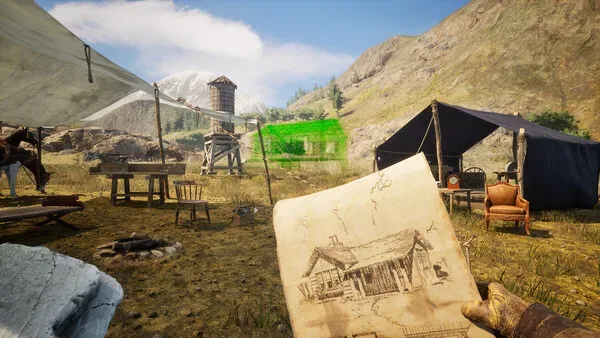
The announced feature list points to a project where feedback can be valuable well beyond isolated bugs. Players are expected to gather resources, build settlements, farm, ranch, mine and turn those materials into goods. Research and worker automation are also planned as ways to optimize production lines.
Production lines describe the chain that takes raw materials through processing and into finished goods or construction. In practice, systems like farming, ranching and mining need to feed into one another clearly enough that players understand what they are producing, why it matters, and what limits further expansion. Worker automation, meanwhile, generally means assigning workers or systems to recurring tasks rather than making the player perform every step manually. The core design question is often whether that automation removes repetitive labor while preserving meaningful planning and decision-making.
A closed playtest can help identify where those loops are unclear, too slow, too generous or difficult to understand. It can also expose friction between exploration and settlement upkeep. If players are encouraged to search a large world from their wagon while simultaneously maintaining several developing locations, the game needs a readable rhythm: when to travel, when to return, what resources are worth carrying, and which tasks can safely be delegated.
None of those questions are answered by an extension alone, and the feature list should not be mistaken for confirmation that every system is finished. That is exactly why the extra testing period matters. A build made available before Early Access can generate feedback on how the pieces work together in the version currently being tested, while leaving room for change before the wider launch path begins.
What is confirmed, and what remains open
Several points are clear. Westlanders has a closed test that now runs until 23 November; access can still be requested; feedback is being accepted; and the game is planned for PC Early Access in 2027. The project’s announced pillars are survival, wagon-based exploration, settlement building, crafting, resource production, research and worker automation.
There are also important unknowns. No specific Early Access date has been given, and there is no announced date for the console versions or the 1.0 release. The supplied information does not set out the scale of the current test population, identify how many access requests will be accepted, or explain what content is included in the playtest. Players interested in joining should therefore treat a request as an application for access rather than an assurance of entry.
That distinction is especially relevant for closed tests. A closed playtest is a limited pre-release testing period in which participation is controlled, rather than a fully open demo available to every interested player. Its role is to gather focused feedback and technical information while the game is still in active development. An extension provides more time for that process; it does not by itself establish a release timetable or guarantee that all tested features will appear unchanged later.
Why the 2027 Early Access plan matters
Early Access is a development and release model in which players buy or otherwise enter an unfinished game while updates continue. For a systems-heavy project, it can provide a broader stream of player feedback as mechanics evolve. It also means prospective players should expect the game to be in progress rather than evaluate it by the standards of a completed 1.0 release.
Westlanders’ stated order—PC Early Access first, consoles at 1.0 later—makes the current playtest a notably early step in that broader path. The immediate takeaway is not a firm promise about launch scope, but a chance for the developers to learn from a substantial pool of interested players before that PC Early Access target arrives.
For players granted access before 23 November, the most useful feedback is likely to be specific and reproducible: explain what happened, what the player expected instead, what task or system was involved, and whether it happened more than once. Clear notes on survival pressure, resource flow, settlement construction, research choices and automation behavior can be more actionable than a simple positive or negative reaction.
Westlanders is still some distance from its announced Early Access window, but the extended test gives interested players an additional opportunity to request entry and contribute feedback on its ambitious blend of wilderness survival and expanding settlement networks.
For more on how audience participation is becoming part of modern digital entertainment, see YouTube’s new slate and its viewer-participation push.