The trading-card hobby has reached a remarkable new checkpoint: the place designed to protect your pulls can now become a pull itself. Vault X is marking its 30th anniversary with a limited-time collector binder range, including randomly placed Chase Editions. In another moment, that might register as a harmless bit of anniversary sparkle. In the current TCG climate, it feels more like the scarcity machine has expanded into office supplies.
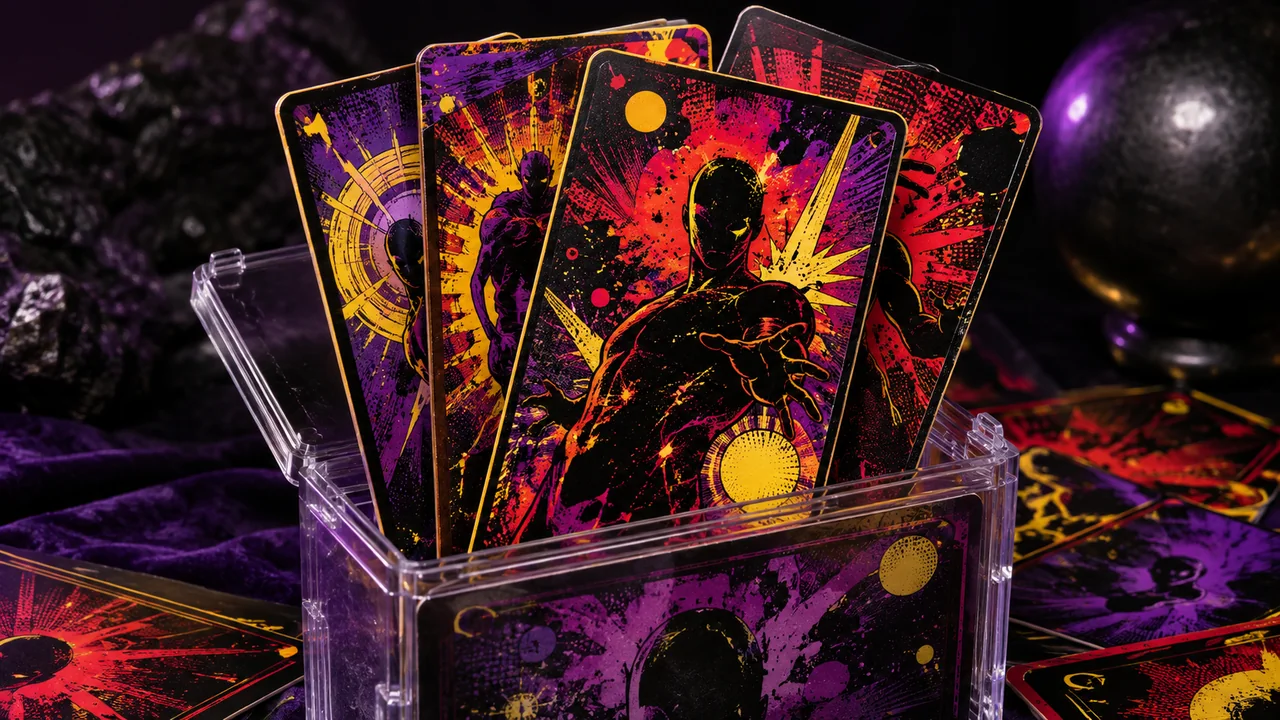
The anniversary collection is available from September 1 through September 30, and comes in 4-pocket, 9-pocket, 12-pocket, and 16-pocket configurations. The standard visual recipe sounds deliberately premium: crisp white outer material, a gold zipper, and a collector-oriented presentation. The Chase Editions, limited to 500 in each size and hidden at random, add gold detailing, gold-pattern microfiber interiors, and individual numbering.
That is not inherently a bad-looking product. Quite the opposite: a white-and-gold binder built to house a favorite set, character collection, or carefully organized trade stock has obvious display appeal. But the way the special editions are distributed changes the emotional proposition. A storage accessory is no longer simply the thing that keeps a chase card safe. It is now another object that asks collectors to accept the possibility that somebody else gets the nicer version through luck.
A collector binder should be the calm part of collecting
Binders occupy a quietly practical role in the hobby. They are where cards go after the pack-opening excitement, the trade negotiation, the deck rebuild, or the careful sorting session. They make a collection navigable. A well-chosen binder also lets someone enjoy cards that are not headline-grabbing: common artwork, favorite trainers, whole evolutions, a complete low-cost set, or the oddball promos that would otherwise sit in a box.
That stability is what makes the randomized Chase Edition concept feel peculiar. It introduces an extra layer of uncertainty into an item whose job is organization and protection. There is a joke waiting here about opening a binder and hoping for a good binder, but the broader point is less funny. When every layer of a hobby is positioned as a lottery, the hobby stops giving people many places to rest.
Collectors already understand variation. Cards have rarities, print runs, serial numbering, alternate art, special finishes, regional releases, and condition differences. Those qualities can be meaningful when they belong to the cards themselves. A manufacturer making a numbered anniversary accessory is also entirely normal. The sticking point is the random allocation. The buyer is not choosing between a regular edition and a clearly identified premium edition; the buyer is purchasing a chance at the premium edition.
For anyone who enjoys a surprise, that may be part of the fun. There is no universal rule that says collectors must dislike chance. Yet it is hard to separate this particular release strategy from a broader market mood in which access to new TCG products has often been frustrating, competitive, and shaped by fear of missing out.
The context makes the gimmick heavier
Pokémon, Disney Lorcana, and Riftbound are among the games that have been associated with difficult-to-find releases and intense attention around product availability. Whether someone is a player wanting packs for a local deck, a parent trying to find a gift, or a collector pursuing a binder page, the practical result can be the same: a basic retail purchase begins to feel like an event that needs planning, alerts, speed, and luck.
That background changes how an anniversary binder with hidden special editions lands. The product is not responsible for every supply problem in modern cards, nor is a limited celebratory item automatically predatory. It is fair for a company to make a short-run commemorative product, and it is fair for collectors to enjoy a gold-accented numbered version. The tension comes from taking the hobby’s most fatigue-inducing mechanic—random scarcity—and applying it to one more category of merchandise.
Collectors have learned to scrutinize scarcity language because it can have a powerful effect on behavior. “Limited,” “numbered,” “exclusive,” and “chase” can describe genuinely interesting products, but they can also encourage immediate purchases before buyers have asked the mundane questions: Do I need this? Will it fit the cards I collect? Do I prefer the standard version? Would I still be happy with the purchase if the special version does not arrive?
That last question matters most here. The anniversary Chase Editions are explicitly hidden at random. Anyone considering the range should evaluate the binder as though it will be the regular edition, because that is the outcome most buyers should expect. If the standard white-and-gold binder is already worth owning for its size, appearance, and intended use, the potential bonus remains a bonus. If the main appeal is the possibility of special trim and a number, it may be worth pausing rather than letting the word “chase” make the decision.
Numbered accessories can be meaningful without becoming a race
There is an alternate version of this idea that would appeal to a different kind of collector: clearly labeled standard and numbered anniversary editions, each sold transparently while stock lasts. It would still create a limited commemorative item. It would still let Vault X celebrate three decades with a more elaborate binder. And it would allow buyers to choose which object they want rather than asking them to buy into an odds-based reveal.
Of course, random distribution creates buzz. It gets people posting reveals, comparing details, and discussing whether they got lucky. That social energy has long been central to trading cards. But binders are not booster packs, and treating every collectible-adjacent purchase as an opportunity for a jackpot risks flattening the hobby into a single experience: acquire quickly, reveal, compare, repeat.
A collection is usually more satisfying when its owner has a point of view. Perhaps it is a complete set in numerical order. Perhaps it is a page devoted to one Pokémon, a carefully chosen run of Marvel art cards, or a deck collection arranged by game and format. People building Pokémon pages can get more value from understanding what they already own than from chasing every premium flourish; reading Pokémon rarity symbols in the context of the set is a more durable skill than reacting to any one product drop.
Likewise, serial numbering itself is not a verdict on collectibility. It indicates a stated limitation, but it does not guarantee demand, long-term value, or personal satisfaction. Card collectors encounter that distinction constantly with inserts and parallels. The language is familiar enough that a refresher on rookies, inserts, parallels, and numbering is useful well beyond sports cards: rarity is information, not an instruction to buy.
How to approach the Vault X anniversary drop
Vault X’s anniversary range has a defined sales window, and the Chase Edition quantities are limited per pocket size. Those are facts worth knowing, not reasons to surrender common sense. Buyers who like the design can make the decision simpler by prioritizing the practical parts first.
- Choose capacity before aesthetics. A 4-pocket binder suits a different collection and card presentation style than a 16-pocket binder. Start with the collection, not the chance of gold details.
- Assume a standard edition. Treat a Chase Edition as a possible extra, never as the basis for whether the purchase makes sense.
- Decide what the binder will hold. A dedicated theme or set gives a binder a purpose and makes it less likely to become another unopened collectible on a shelf.
- Keep the anniversary feeling in perspective. Individually numbered items can be enjoyable mementos, but the number alone does not create a personal connection.
- Do not let a thirty-day window define the hobby. Collecting is measured in the cards and memories that remain, not in how many limited drops were caught at checkout.
The accessory itself may be genuinely attractive, and some collectors will be delighted to uncover one of the special versions. That reaction is valid. So is the opposing reaction: a quiet sigh at the realization that even a binder can be framed as a chase. The two views can coexist, especially in a hobby big enough to include players, completionists, artists, organizers, flippers, and people who simply like putting cardboard into nice pockets.
For the last group, the most valuable quality of a binder may be wonderfully unglamorous: it should make a collection easier to see, protect, and enjoy. That is also why good storage matters across collectible categories. The principles behind organizing a retro game collection for access and play apply here too: ownership feels better when the collection can actually be found, used, and appreciated.
Vault X’s 30th-anniversary release puts an elegant spin on a familiar collector impulse. The question is whether the surprise Chase Editions enhance that elegance or make the product feel like one more stop on an exhausting scarcity treadmill. For buyers, the safest answer is straightforward: like the binder first. Let the gold be incidental.