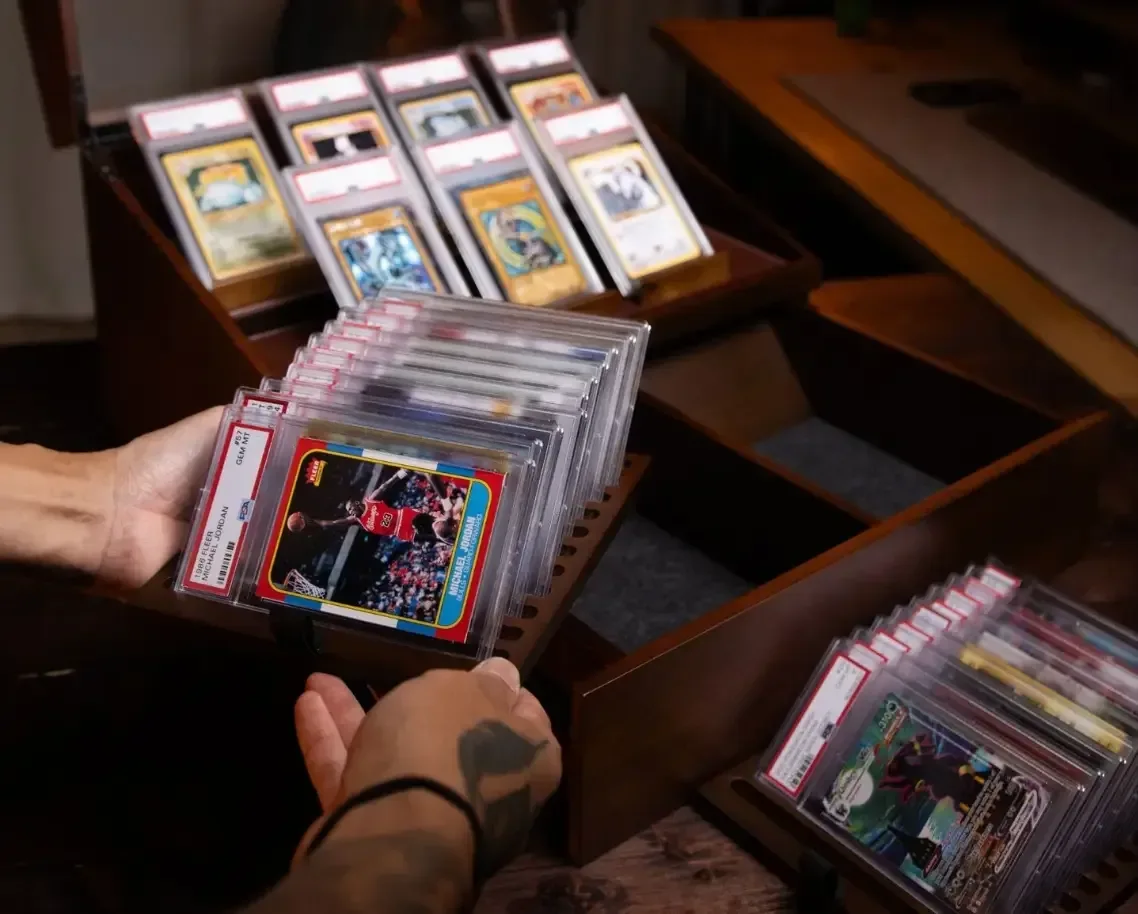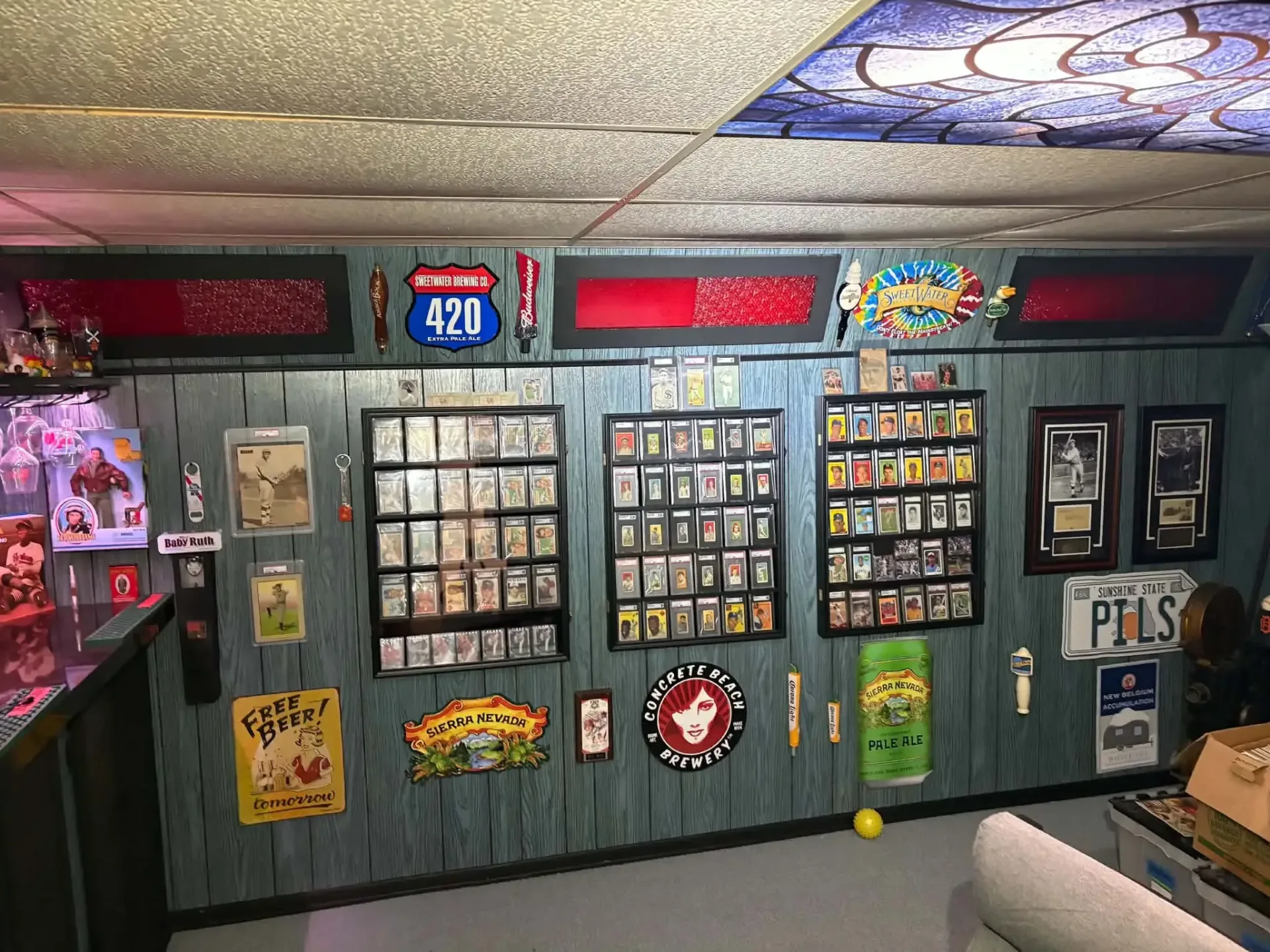
A good card-storage system does three things: protects the cards from avoidable handling, lets you find them, and makes looking at them pleasant enough that you will actually do it. The most elaborate box in the world does not help much if every card you want is buried underneath seven unrelated sets.
Start with the environment
Keep cards in a clean, stable indoor space away from direct sunlight and obvious water risks. For paper collections, the Library of Congress emphasizes appropriate storage environments and identifies polyester, polypropylene, and polyethylene as suitable plastics for sleeves. Its paper-storage guidance offers a useful material starting point, although trading cards with coatings, signatures, or unusual construction may need more specific advice.
Assess the room before buying supplies. Look for a leaking window, a shelf beside a heater, or a box stored directly on the floor. Moving the collection to a more sensible location can be more valuable than upgrading every holder while leaving those problems untouched.
Fit the holder to the card
Read the supply manufacturer’s stated dimensions and intended card thickness. A standard card, a thick memorabilia card, and an oversized promotional piece should not be forced into identical holders. Test a holder with an inexpensive representative card before reorganizing an important set.
Our practical rule is that insertion and removal should not require bending the card or pressing on a corner. Use a clean work surface with enough room to set the card down safely. If a holder resists, stop and reconsider the fit rather than treating the problem as an invitation to push harder.
Choose a browsing system
Binders suit collections you want to view in sequence. Boxes can work well for larger quantities or protected individual cards. Rigid holders may be useful for selected items, but the surrounding box still needs to accommodate them without pressure. You do not have to put every card into the same storage format.
- Set collectors: organize by checklist number and mark missing positions.
- Character collectors: record set and year even when arranging by favorite artwork.
- Sports collectors: separate player, product, year, and parallel in the inventory.
- Mixed collections: label containers with a stable location code.
Leave room to remove cards comfortably. Overfilling turns an orderly system into a repeated handling problem. Label the container or divider instead of attaching adhesive directly to the collectible.
Keep condition and location records
Take front and back photographs of cards that warrant detailed documentation. Include a note about visible creases, marks, surface defects, or signature placement. Store those notes with the exact card identity and its container location. A useful entry might say “binder M, page 4, position 2” instead of “somewhere in Marvel.”
Do not apply household cleaners, polish, or adhesive repairs to improve appearance. Unusual damage is a reason to seek appropriate conservation advice, especially for an important item. A storage guide cannot determine the safe treatment of an unfamiliar coating from a photograph.
Build a small routine
Set up one clear space for new arrivals. Identify, photograph, sleeve or house appropriately, and record each purchase before moving it into the main collection. Check storage occasionally for dust, moisture, crowding, or degraded supplies. Keep drinks and food away while sorting.
The ideal system is the one you will maintain. If you can retrieve a card without emptying a whole closet, compare it with your notes, and put it back without a struggle, your storage is doing useful work.