Vintage sports cards can invite two very different kinds of attention. One is the temptation to watch prices: which cards climbed, which became scarce, and which longtime dream purchase suddenly feels unreachable. The other is slower and more personal: finding a design that speaks to you, learning why a player or set matters, and choosing a card you will be happy to hold onto.
Nate, known online as incardboardveritas, belongs firmly in the second camp. As a co-host of Rough Cuts: Vintage Hobby Talk, alongside Jonathan, he has helped build conversations around the older-card side of the hobby. The show emerged after Nate appeared as a guest on other card programs, then began Instagram Live discussions with Matthew. Jonathan later joined those discussions, which developed into the current YouTube Live and podcast format. Matthew is currently taking a break from the program.
Its schedule is deliberately measured. Rather than pursuing a relentless release cycle, the group produces roughly 10 episodes a year, balancing the project with work, family and other interests. That restraint reflects a broader collecting lesson: participation does not need to mean constant purchasing, constant posting or chasing every market move. Time spent researching, talking with fellow collectors and refining a focus can be part of the hobby rather than time spent away from it.
A different rhythm from modern cards
Nate describes the vintage market as markedly different from the modern-card space, even as older cards have experienced significant price growth. His preferred picture is not explosive appreciation but a gradual annual rise of about 5% to 10%. In his view, that pace brings a degree of stability and makes it easier for collectors to plan.
For more context, explore Bradley Cooper Reportedly Set for Duke as Danny McBride’s G.I. Joe Film Splits From Transformers.
That is an aspiration, not a promise about future values. The important backdrop is that several sought-after vintage cards have doubled or tripled in price over the past couple of years, with some climbing even more. For people who already own those cards, a higher estimated collection value may be gratifying. For collectors still building, exactly the same movement can be a barrier.
The tension is especially sharp around a grail, hobby shorthand for a card a collector considers a defining, highly desired goal. A card that seemed attainable at $5,000 can feel like a completely different proposition if it rises to $20,000. A jump of that scale does more than change a number on a want list. It can force a collector to reconsider their timeline, narrow their focus, seek a different example or decide that a once-central goal is no longer sensible.
That is why the idea of a long game matters. A collection is not just a portfolio of things that might rise. It is a set of decisions about what a person wants to learn, see and preserve. Price can be relevant without being allowed to dictate every decision.
Related coverage includes Vintage Card Collecting Through a Long-Term Lens.
Value gains have two sides
Rapid appreciation creates a genuine trade-off. It may validate the care of collectors who bought cards because they found them historically important or visually beautiful. At the same time, it can make the hobby less welcoming to someone arriving later. A market can celebrate soaring results and still acknowledge the frustration of a newcomer who discovers that their favorite card has moved beyond their budget.
For that reason, “collect what you like” needs more substance than a slogan. It does not mean ignoring cost, history or personal limits. It means making choices from an informed preference rather than from urgency. A collector who knows why a card matters to them has a clearer foundation for deciding whether a price still makes sense.
Start with knowledge, not momentum
Nate’s guidance to newer vintage collectors is practical: find friends and mentors who are willing to discuss collecting ideas, seek out hobby content that is informative and compatible with your interests, and keep learning. In a space where prices can move quickly, community can provide something more useful than a hot tip: perspective.
A mentor is not necessarily someone who tells another collector what to buy. The better role is a sounding board. They can help a newer participant articulate what they enjoy, challenge an assumption or suggest that a purchase does not need to happen immediately. Those conversations are particularly valuable when a collector feels the pressure of a rising market.
Nate also stresses collecting from a “baseline of knowledge and belief.” Put simply, a buyer should understand their own reason for wanting an item. Are they responding to a player, a particular set, the artwork, an era of sports history, or the satisfaction of building a carefully chosen group of cards? Those answers do not eliminate risk or guarantee value. They do make it less likely that a collector will confuse somebody else’s enthusiasm with their own collecting plan.
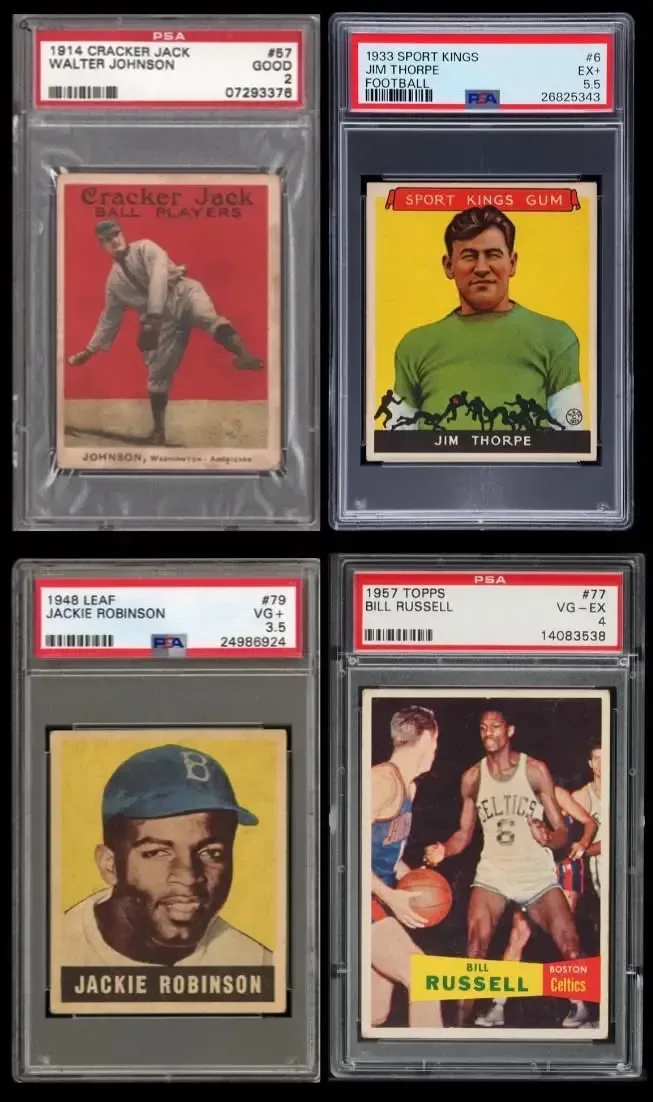
His suggested entry point is appropriately modest. Instead of immediately pursuing an expensive rookie card, he recommends trying a card such as a 1967 Mantle or a 1961 Fleer Bill Russell and seeing how it feels to own it. The point is not that either card is a universal starter purchase. It is that a collector can test their interest with a meaningful vintage example before committing to a far costlier target.
This approach reframes the first purchase as a learning experience. Does the collector enjoy the visual character of older cardboard? Do they find themselves reading about the athlete and the set? Are they energized by the search for another example, or do they feel that the financial commitment overwhelmed the fun? A smaller initial step leaves room to answer those questions honestly.
A practical framework for new vintage collectors
- Choose a reason before a target. Identify the player, era, set design or personal connection that attracts you.
- Find trusted conversation partners. Friends and mentors can help turn vague interest into more considered decisions.
- Learn continuously. Informative hobby discussion is part of building confidence, not an optional extra.
- Try the hobby at a comfortable level. A first vintage card can be a test of enjoyment rather than a declaration that you must chase the biggest available prize.
- Keep a long-term mindset. Avoid stretching beyond what is comfortable simply because prices or attention are moving quickly.
The instruction not to overextend is central. In this context, overextending means committing more money or attention than a collector can reasonably sustain. It is not a judgment on enthusiasm. It is recognition that a hobby should fit alongside family, employment and other responsibilities rather than create pressure that overwhelms them.
Cards as art, history and memory
Nate’s collecting philosophy is grounded in the physical object itself. He values old sports cards as small pieces of art and history: cardboard carrying stories and memories. That perspective gives the word curation a useful meaning. Curation is not merely acquiring more. It is choosing a collection deliberately, deciding what belongs together and appreciating the narrative formed by those choices.
For a vintage-card collector, that narrative may come from an athlete, a design, a period in sport or a family connection. The available information does not prescribe one correct collecting lane, and that is part of the appeal. An individual collection can be selective, expansive, modest in cost or centered on a single important card. What matters is that it reflects a real interest rather than an obligation to imitate someone else’s checklist.
The search itself is another source of enjoyment. Tracking down a card, learning about it and deciding whether it fits can be as satisfying as the eventual acquisition. That distinction matters when the market becomes noisy. If the only pleasure comes from buying immediately or watching a value rise, a collector may lose the slower pleasures that make vintage collecting durable: research, patience, conversation and discovery.
Passing a hobby across generations
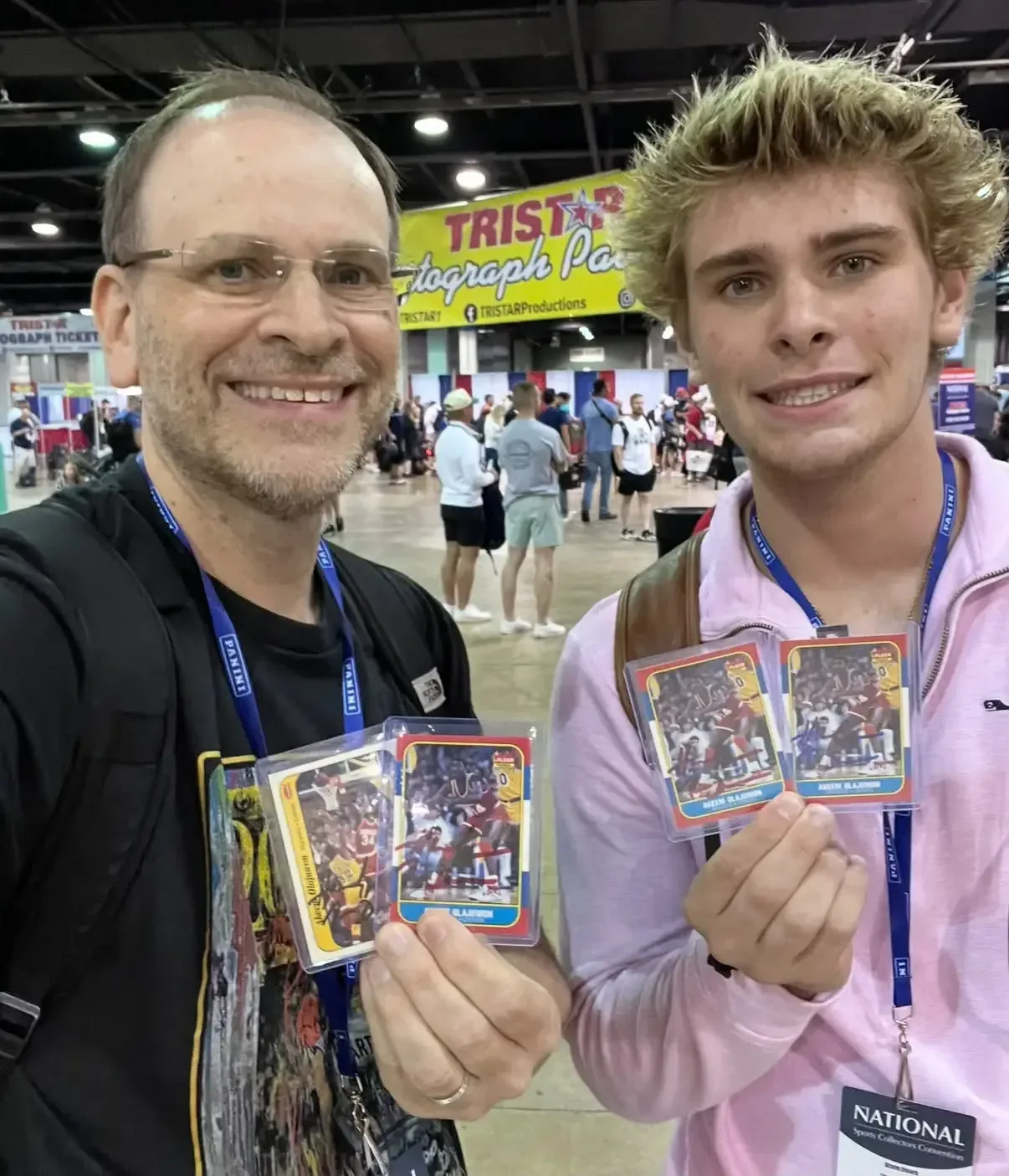
For Nate, collecting with his son gives the hobby an additional purpose. The shared time has value independent of the collection’s financial side. The cards create an occasion to talk, learn and look closely at objects with stories attached to them. They also turn collecting from a solitary pursuit into an activity that can connect generations.
That perspective helps explain why he considers these cards cultural treasures that can be passed down. Passing something on is not only about ownership. It can include passing along context: why a particular card was chosen, what it represented to the collector, and what memories became attached to the search.
For families interested in starting their own collecting tradition, the lesson is not to treat a child’s involvement as a reason to buy bigger or faster. A healthier starting point may be discussion: pick cards together, share what each person notices, and allow taste to develop. A child may care more about a favorite athlete, an image or the story behind an old card than about the hierarchy of the market. That is not a lesser form of collecting; it is often the clearest reminder of why people collect in the first place.
There is also room for collectors without a family collecting partner. Nate’s experience highlights the wider role of community: friendships built through shared interests, exchanges of ideas and the pleasure of meeting people who understand why a small piece of cardboard can hold such meaning.
Vintage-card collecting will always involve choices about money, scarcity and changing demand. But the strongest response to those pressures may be a more deliberate hobby, not a more frantic one. Learn enough to know what you want, buy at a level that works for your life, and leave space for the art, history and relationships that made the cards compelling before any price chart entered the picture.