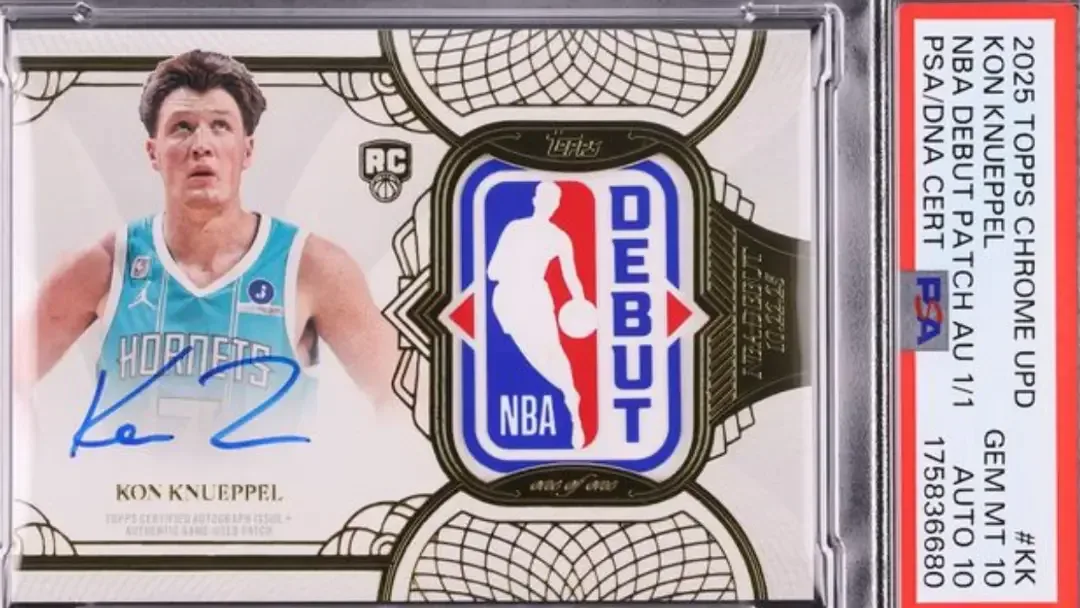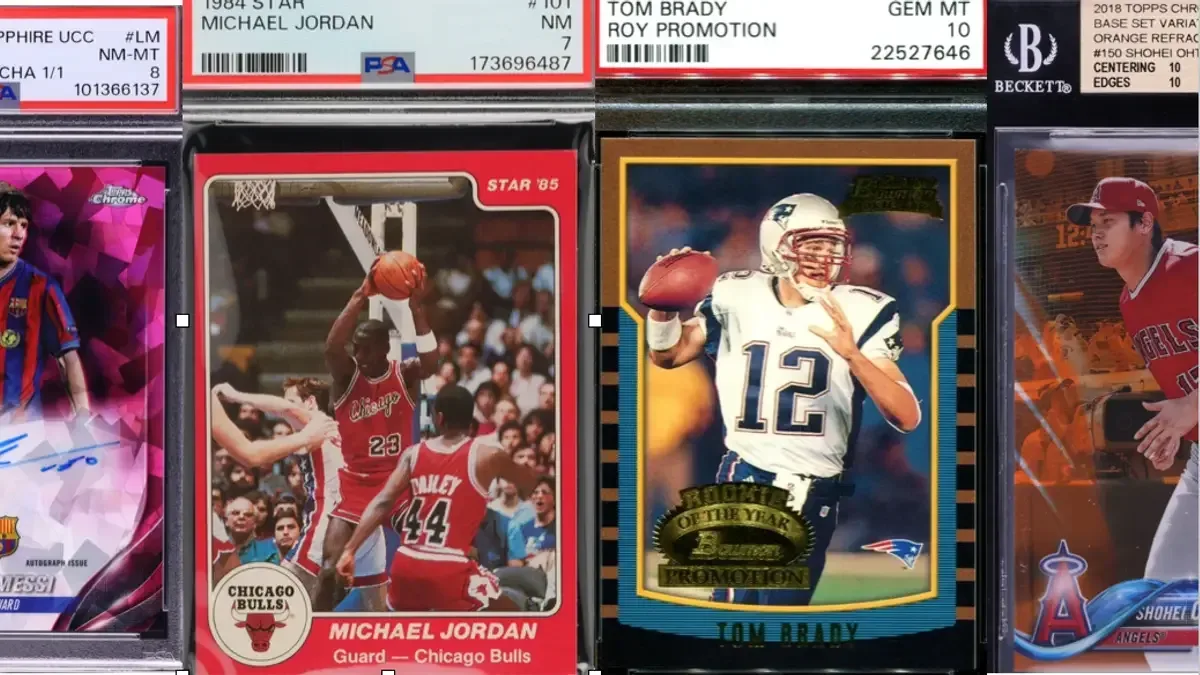
Richmond Auctions is entering the sports-card and trading-card-game market with its first Premier Sports Card & TCG Auction, scheduled for Saturday, November 7, 2026, at its Greenville, South Carolina headquarters. An in-person preview is planned for November 6, while bidders will also be able to participate live and online.
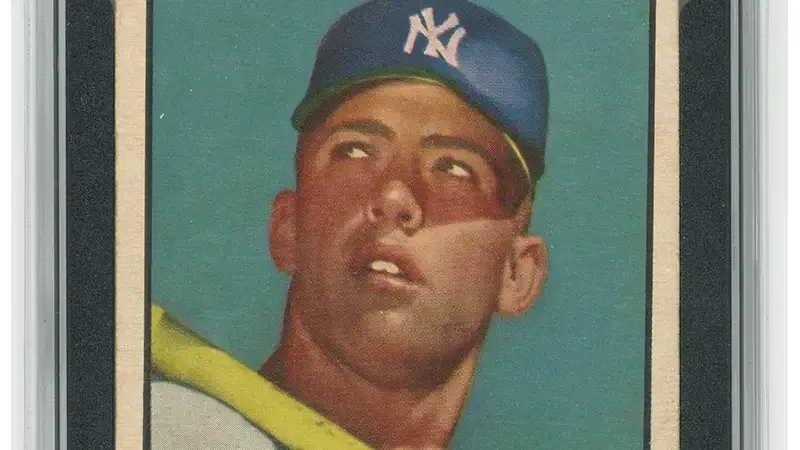
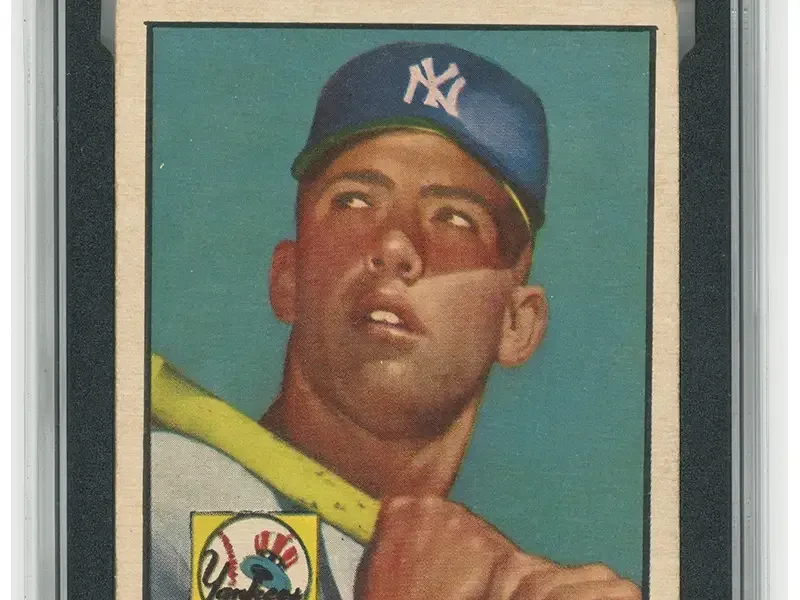
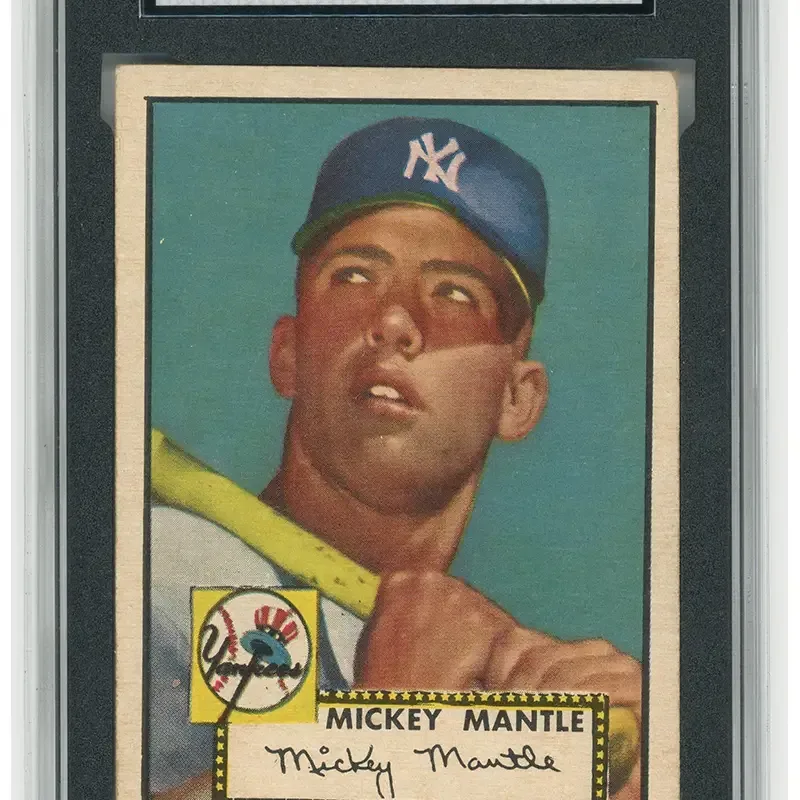
The early selection is built around high-profile, graded sports cards from distinct collecting eras. A 1952 Topps Mickey Mantle #311 graded SGC 4.5 and a 1916 M101-4 Gimbels “Shoeless” Joe Jackson #87 graded SGC 6 stand as the principal vintage baseball offerings disclosed so far. They are joined by a 1954 Johnston Cookies Hank Aaron rookie card #5 in PSA 9, plus modern and contemporary cards featuring Michael Jordan, Aaron Judge and Joe Burrow.
A new auction category with a recognizable vintage core
The November sale marks Richmond Auctions’ first dedicated move into sports cards and memorabilia. The company has operated since 2021 and reports more than $100 million in gross auction sales across categories including vintage advertising, automobilia, petroliana, historical firearms, gold and other specialty collectibles. Sports cards and TCG material are now intended to become a continuing part of its auction calendar rather than a single standalone event.
For collectors, an auction house entering a category matters less as a headline than as a practical question: what material is being offered, how clearly is it described, and how can bidders inspect it before committing? The announced preview provides an opportunity for in-person examination, while the live and online formats widen participation beyond Greenville.
The initial cards point to a catalog designed to cover several segments of the sports-card hobby at once. There is prewar material in the Jackson, postwar baseball in the Mantle and Aaron, a limited autographed basketball card of Jordan, and numbered autograph cards of Judge and Burrow. That spread does not establish the full catalog, but it does show an opening strategy centered on familiar athletes, documented scarcity and third-party grading.
The announced highlights
- 1952 Topps Mickey Mantle #311, graded SGC 4.5.
- 1916 M101-4 Gimbels “Shoeless” Joe Jackson #87, graded SGC 6.
- 1954 Johnston Cookies Henry “Hank” Aaron rookie card #5, graded PSA 9.
- 2001-02 Upper Deck Michael Jordan Buybacks autograph, numbered 1/10, graded BGS 9.5 with a 9 autograph grade.
- 2013 Bowman Chrome Draft Pick Autographs Blue Wave Refractor Aaron Judge, numbered to 50 and graded BGS 9.5.
- 2020 Panini Contenders Championship Ticket Joe Burrow rookie autograph, numbered to 49 and graded PSA 10.
The two oldest cards offer a useful illustration of how sports-card categories can differ even when both pieces are baseball staples. The Mantle is a 1952 Topps issue, while the Jackson is identified as a 1916 M101-4 Gimbels card. Their nearly four-decade separation places them in different periods of card production and hobby history. Presenting both in an inaugural sale gives bidders a choice between two major historical lanes rather than treating “vintage” as a single, uniform market.
The 1954 Johnston Cookies Aaron is another distinct type of offering. It is a regional issue, meaning its original distribution is tied to a particular promotional or geographic channel rather than a standard national card release. Its PSA 9 grade also makes condition a particularly prominent part of the listing. For buyers, the specific issue, card number and grading-company label are important identifiers; similarly named player cards can represent very different products and collecting propositions.
What the grades and serial numbers communicate
Several announced cards have been encapsulated and graded by major third-party services: SGC, PSA and BGS. In simple terms, third-party grading is an outside assessment of a card’s condition, generally paired with authentication and protective encapsulation. The stated grade is a key piece of auction information, but it is not a substitute for reading the complete lot description or closely reviewing the card and holder before bidding.
Related coverage includes Richmond Auctions Launches Sports Card and TCG Division With November 2026 Premier Sale.
The labels in the announced group also describe different elements. A card graded PSA 10, such as the disclosed Burrow rookie autograph, has the card’s numerical grade stated as 10. The Jordan card is described as BGS 9.5 with a 9 autograph, which separates the card grade from the autograph grade. That distinction is meaningful because a listing may communicate condition of the physical card and the signed element independently.
Serial numbering is another major detail. Jordan’s card is numbered 1/10, Judge’s is numbered to 50, and Burrow’s is numbered to 49. These numbers identify a stated limited production run for those particular versions; they do not, by themselves, answer every question about demand, condition, player significance or the range of other versions that may exist. Still, in a catalog that spans older cards and current-era autograph cards, serial numbers help explain why a specific parallel or insert is being singled out.
Terms such as Buybacks, Blue Wave Refractor and Championship Ticket are product descriptors that distinguish the offered cards from ordinary base-card versions. The supplied details establish the exact products and stated numbering for these lots, so prospective bidders should use those identifiers rather than relying on a player name alone when comparing cards or organizing a bidding plan.
Why condition, provenance and the story still matter
Richmond Auctions founders Jordan Richmond and Mike McCandless frame the expansion around principles that carry across collectible categories: rarity, condition, provenance and the story behind an object. In trading cards, those ideas often overlap but should be considered separately.
Rarity can come from age, a limited serial number, a specialized issue or other production circumstances. The old Jackson card and the low-numbered Jordan, Judge and Burrow cards demonstrate that age is not the only route to constrained supply. Condition is reflected in the published grading details, though a bidder may still want to assess visual presentation and the precise wording of the lot. Provenance concerns the documented history or origin of an item, particularly relevant to valuable collectibles. Finally, the player and product story can shape the appeal of a card even before a bidder weighs its grade and scarcity.
This broad approach suits an auction that includes both historic and modern material. A Mantle or Jackson card can appeal because of its place in baseball-card history, while a limited autograph of Jordan, Judge or Burrow combines player identity with a clearly stated modern-card format. The Aaron card sits between those poles: an established baseball legend on a mid-century regional issue with a high PSA grade.
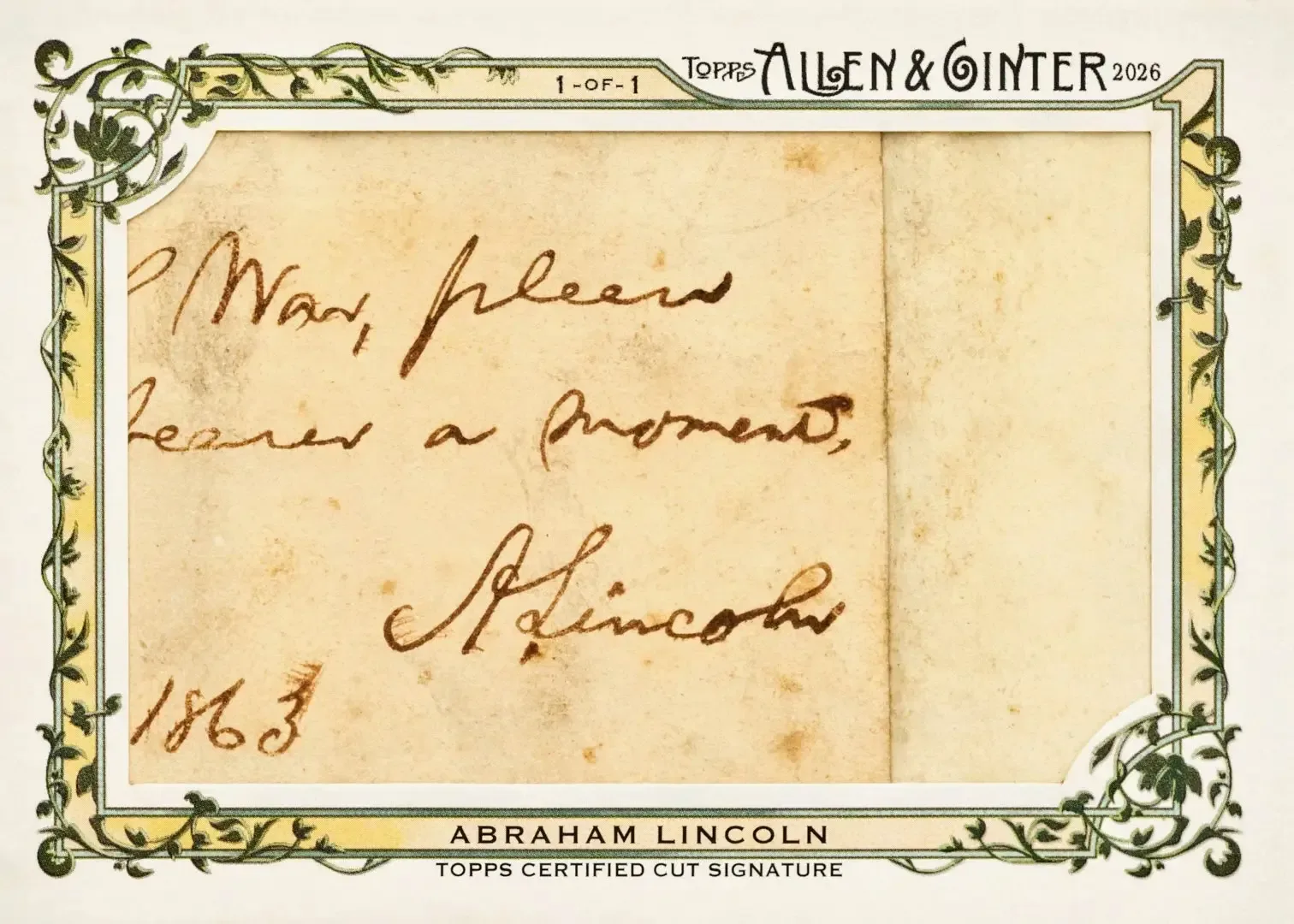
Collectors following broader card releases may also recognize how product configuration and chase elements can define attention around a set. For a recent example of a card product built around a singular, headline-grabbing insert, see the 2026 Topps Allen & Ginter chase centered on a 1/1 cut autograph. Richmond’s announced lots take a different route: an assembled auction selection across eras, sports and card formats.
What bidders can do before November 7
The strongest practical takeaway is to distinguish the event details already stated from information that may appear later in the catalog. The sale is set for November 7, the public preview is set for November 6, and both in-person and online bidding are planned. The disclosed highlights establish several major cards, but no estimates, hammer prices, full lot count or complete TCG lineup have been provided here.
That means bidders interested in the sale should review the eventual individual listings for the exact grade, card number, serial numbering, autograph information and any available provenance documentation. In-person attendees can use the preview to inspect lots directly; online participants should rely on the available catalog material and auction terms before bidding. In either case, it is sensible to identify the exact version of a card first, since a player’s name alone does not capture the issue, grade, autograph treatment or limitation stated for these pieces.
Richmond Auctions’ Premier Sports Card & TCG Auction will take place at the company’s Greenville headquarters on November 7, 2026. With Mantle, Jackson and Aaron providing historic baseball weight and Jordan, Judge and Burrow extending the lineup into more recent collecting, the first sale arrives with a deliberately wide view of what sports-card bidders may seek.