One LeBron James card accounted for nearly half the money in a remarkable five-sale stretch of sports-card auction results from November 9 through November 15, 2026. A 2003-04 Upper Deck Exquisite Collection Rookie Patch Auto numbered to 23 sold for $2,318,000 on November 15, placing well ahead of a leaderboard that also included two different Stephen Curry cards, a Michael Jordan autograph and a Kimi Antonelli Formula 1 one-of-one.
Combined, the five reported sales reached $4,680,192. James’s result alone represents roughly 49.5% of that sum. That gap is the week’s biggest story: four exceptional cards cleared the $400,000 mark, but the Exquisite rookie patch autograph operated in an entirely different price tier.
The results also offer a compact look at how elite-card demand can converge around several kinds of scarcity at once. The list includes serial-numbered rookie cards, one-of-one parallels, an autograph, a memorabilia patch, top numerical grades and a population-one Jordan. Those attributes are not interchangeable, and the prices show that the market can value different combinations of them very differently.
The five biggest reported sales
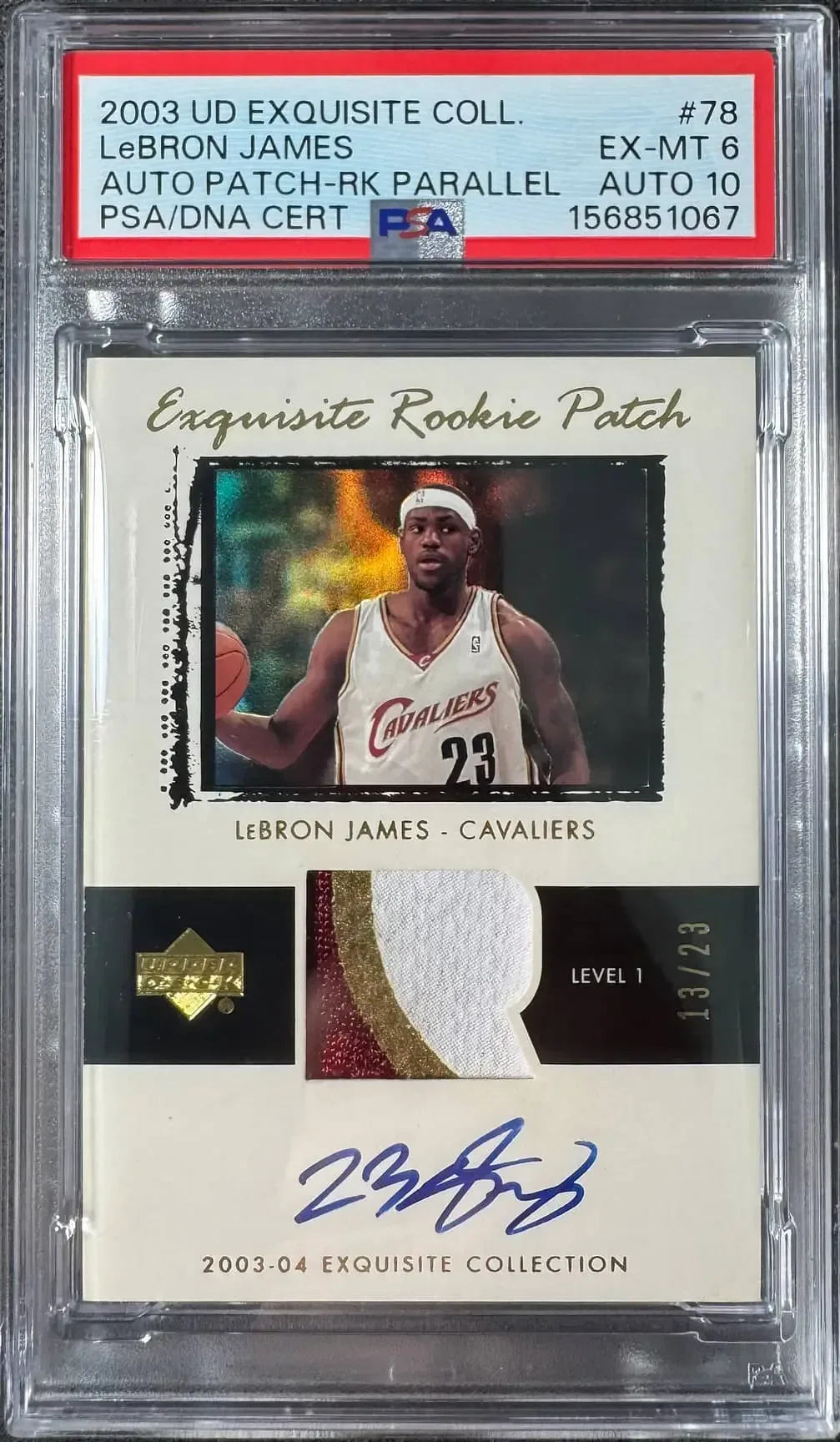
- 2003-04 Upper Deck Exquisite Collection LeBron James Rookie Patch Auto /23, PSA 6 / Auto 10 — $2,318,000
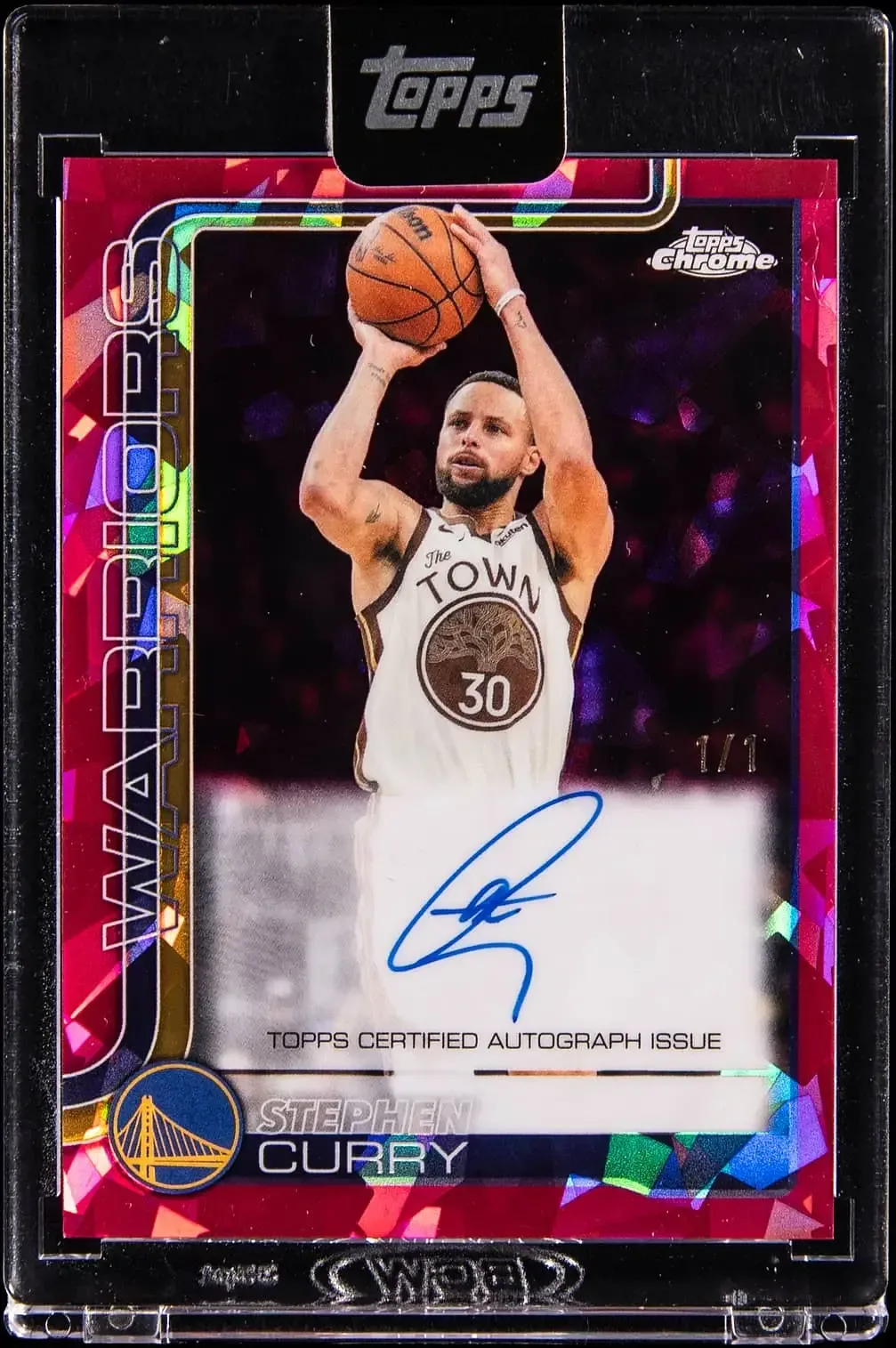
Sold November 15, 2026. - 2025-26 Topps Chrome Update Sapphire Edition Padparadscha Auto /1 Stephen Curry, Topps Encased — $732,001
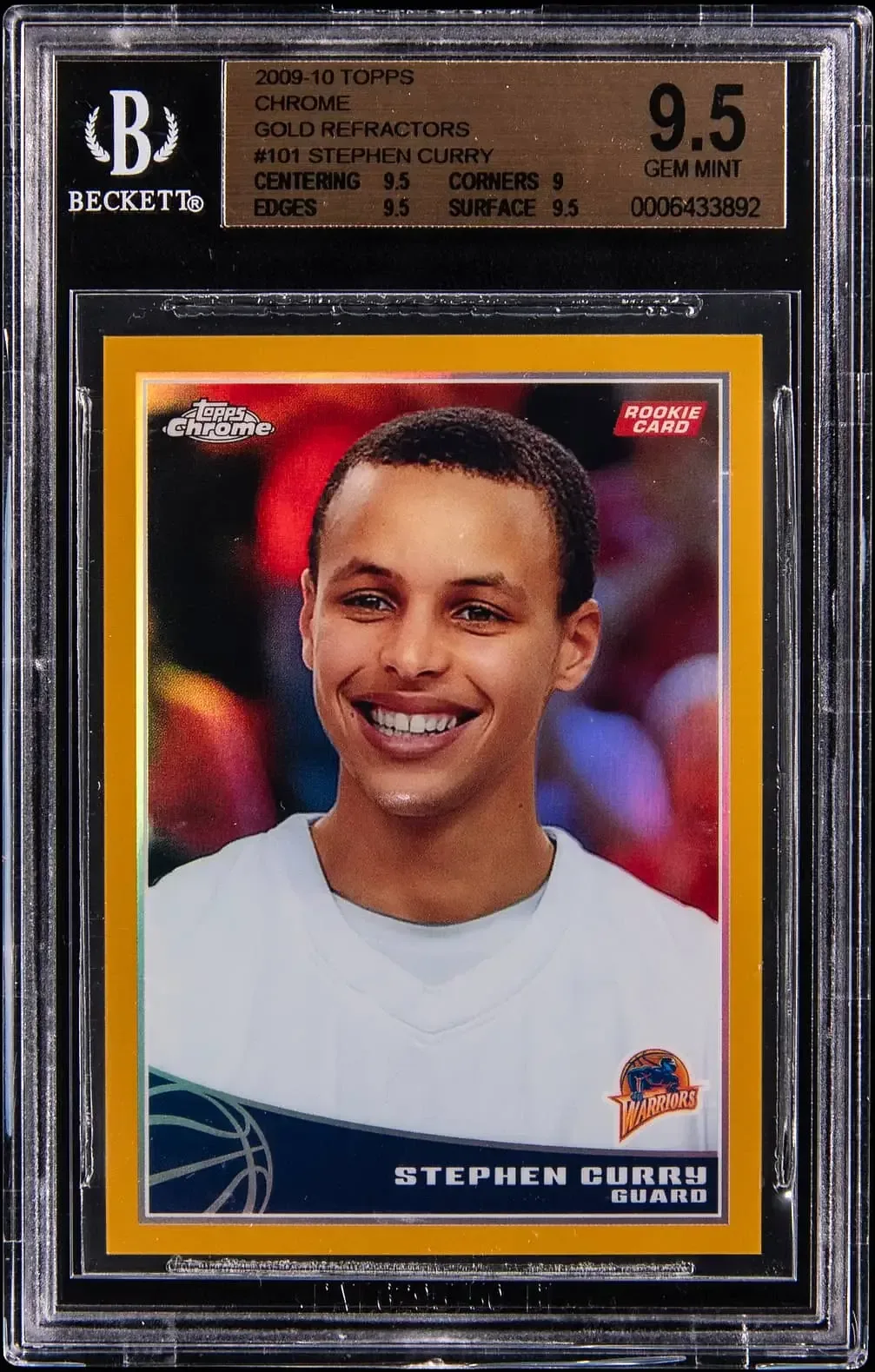
Sold November 15, 2026. - 2009-10 Topps Chrome Gold Refractor /50 Stephen Curry, BGS 9.5 — $701,500
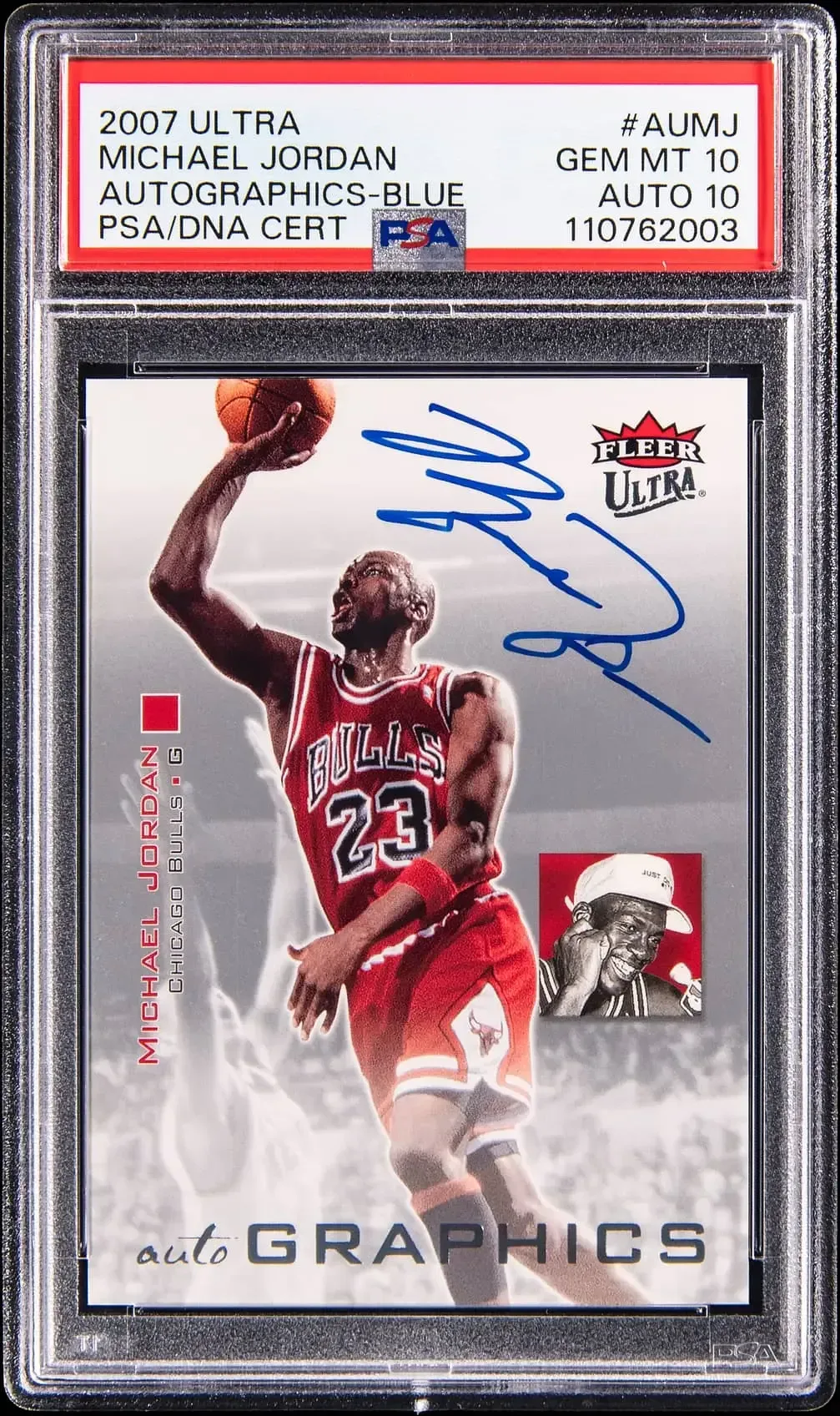
Sold November 14, 2026. - 2007-08 Fleer Ultra Autographics Blue Michael Jordan, PSA 10 / Auto 10 — $495,591
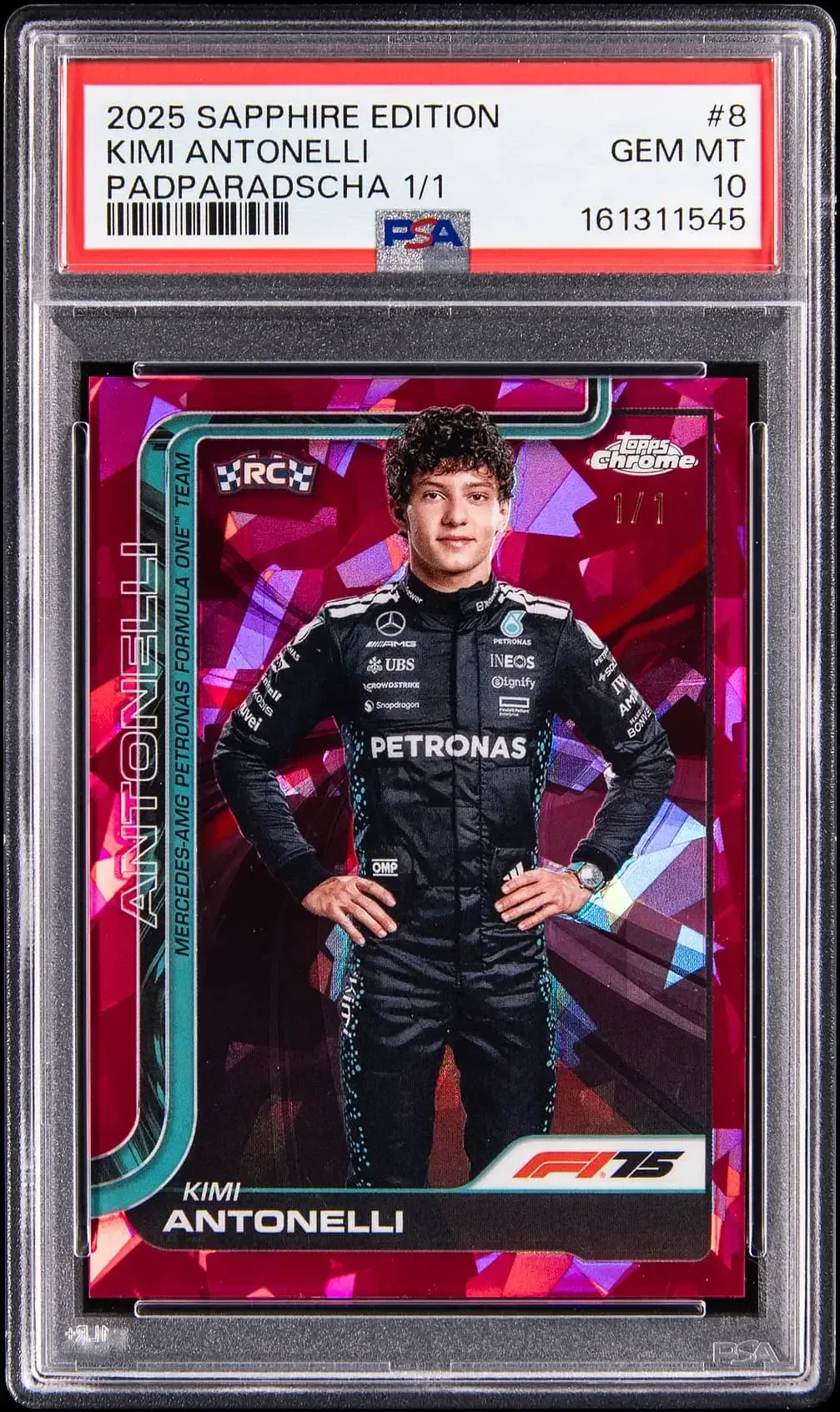
Sold November 15, 2026. - 2025 Topps Chrome F1 Sapphire Edition Padparadsha /1 Kimi Antonelli, PSA 10 — $433,100
Sold November 15, 2026.
All five sales took place through Goldin. For a concise accounting of the week’s aggregate, the combined total is just over $4.68 million.
For more context, explore Don Toliver’s Best New Artist Grammy Nod Rekindles the Debate Over What “New” Really Means.
Why the LeBron James sale stands apart
The top card is from 2003-04 Upper Deck Exquisite Collection, and it combines three of the hobby’s most recognizable premium descriptors: rookie, patch and autograph. “Rookie Patch Auto,” frequently shortened to RPA, is a collector term for a rookie-year card that includes both an autograph and a piece of memorabilia material. Here, the card is also serial-numbered /23, indicating an edition limited to 23 cards.
This particular copy carries a PSA 6 card grade and an Auto 10 autograph grade. Those two figures refer to different elements of the item. The card grade assesses the physical card, while the autograph grade assesses the signature. The result is a useful reminder that high-end cards are not valued only through a single number on a slab label. A card can receive a lower grade for its physical condition while retaining an autograph that received the top stated grade.
At $2.318 million, this James RPA outpaced the No. 2 Curry card by $1,585,999. It also exceeded the combined prices of the Jordan and Antonelli cards, which totaled $928,691, by $1,389,309. The scale of the result is especially notable because James had placed second in the comparable weekly ranking two weeks earlier; this time, the Exquisite card moved decisively into first.
Stephen Curry lands twice, through two very different card profiles
Curry was the only athlete with two cards in the top five. Together, the two sales generated $1,433,501, enough to make his combined presence the clearest recurring theme beneath James’s headline result.
The higher-priced Curry was a 2025-26 Topps Chrome Update Sapphire Edition Padparadscha autograph numbered one of one. It brought $732,001. A one-of-one, often written “1/1,” denotes that the card is the sole numbered copy in that parallel. This Curry also has an autograph and came Topps Encased, an issuer designation included with the card’s listing.
Only $30,501 behind it was Curry’s 2009-10 Topps Chrome Gold Refractor rookie card, numbered to 50 and graded BGS 9.5. That sale reached $701,500. The two results present an interesting contrast without requiring a simplistic verdict about old versus new cards. One is a contemporary, autographed one-of-one Sapphire parallel; the other is a serial-numbered rookie card from 2009-10. Both commanded more than $700,000, but their scarcity formats and collector appeal are plainly distinct.
The Gold Refractor listing also reports a population of 15 at its stated BGS 9.5 grade. In card collecting, a population figure is the reported count of cards that have achieved a particular grade from that grading company. It is useful information for comparison, but it should be read precisely: it refers to the cited grade population, rather than proving how many raw copies exist or how many cards may ultimately be submitted.
For buyers following Curry cards, the week underlines why complete checklist reading matters. “Curry,” “Topps Chrome” and a big price are not enough to establish a meaningful comparison. Year, issue, rookie status, serial numbering, parallel, autograph status, encapsulation and assigned grade all describe different parts of the card.
A population-one Michael Jordan autograph reaches nearly $500,000
Michael Jordan’s 2007-08 Fleer Ultra Autographics Blue sold for $495,591. It is graded PSA 10 with an Auto 10, and the listing identifies it as a population-one card at that PSA 10 grade.
Population one is a particularly direct form of condition scarcity: among cards reflected in the stated grading population, this is the only copy at that grade. That designation helps explain why grade language can matter even when a card is not a one-of-one by serial number. The Jordan is not presented as a numbered 1/1; instead, its singularity in the reported PSA 10 population is central to its description.
The sale lands fourth by price in the five-card ranking, despite a stray placement reference elsewhere in the sale description. The dollar figures settle the ordering: $495,591 is below both Curry results and above Antonelli’s $433,100. When assessing weekly roundups, the sale price and date are the most dependable way to reconstruct the rank.
Kimi Antonelli’s one-of-one continues a major F1 run
Kimi Antonelli’s 2025 Topps Chrome F1 Sapphire Edition Padparadsha one-of-one, graded PSA 10, completed the top five with a $433,100 sale. Unlike Curry’s Padparadscha card at No. 2, Antonelli’s copy does not have an autograph. Its central scarcity marker is the one-of-one designation, coupled with the PSA 10 grade.
The result is described as the second-highest sale for an Antonelli card and the fifth-largest F1 card sale ever. It follows an even larger Antonelli result from the prior month: a 2025 Topps Chrome Auto SuperFractor PSA 10 sold for $878,400 on October 18, 2026. The contrast between the two Antonelli sales is instructive. Both were 2025 Topps one-of-ones with PSA 10 grades, but the earlier card included an autograph and sold for substantially more.
That does not create a universal formula for every card or athlete, but it does show how an autograph can be a consequential distinction even among already-ultra-scarce cards. A 1/1 tells collectors about the specified parallel’s numbered supply. It does not mean every 1/1 has identical features, demand or market value.
What collectors can take from this week’s results
The five sales span basketball and racing, recent releases and older issues, rookie cards and non-rookie cards, autograph cards and a non-autographed one-of-one. The shared thread is not a single set, sport or grading company. It is the concentration of clearly defined premium characteristics.
- Serial numbering matters, but the number matters too. The group includes cards numbered to 50, 23 and one, each representing a different stated level of print limitation.
- Autographs can materially change the profile of a card. James’s RPA, Curry’s /1 and Jordan’s Autographics all feature signatures; Antonelli’s and Curry’s Gold Refractor do not.
- Card and autograph grades should be read separately. The James card’s PSA 6/Auto 10 label demonstrates why a single shorthand grade can leave out important detail.
- Population data is specific, not universal. The Curry BGS 9.5 has a listed population of 15, while the Jordan PSA 10 is listed as population one. Those statements concern the respective cited grading populations.
- Weekly sale rankings describe a moment, not a price guide. Each result concerns one named copy sold on one date. The list is valuable market evidence, but it is not a guarantee of what another copy will bring.
For the week of November 9-15, the hierarchy was clear. LeBron James’s Exquisite RPA was the defining sale; Curry supplied both depth and momentum through two top-three results; Jordan’s population-one PSA 10 autograph remained a major draw; and Antonelli’s PSA 10 one-of-one affirmed the high-end presence of modern F1 cards. It was a five-card snapshot of a market where rarity is important, condition is consequential, and the exact construction of the card can be just as important as the name on the front.