The NFL is roughly a quarter of the way through its regular season, and the quarterback market already has three very different stories for football-card collectors to parse. New England’s Drake Maye has supplied a dramatic correction after a rough opening stretch. Atlanta’s Michael Penix Jr. has returned from ACL surgery and helped change the tone around a struggling Falcons team. Las Vegas rookie Fernando Mendoza, meanwhile, remains a highly drafted quarterback without a regular-season start while veteran Kirk Cousins keeps the Raiders competitive.
Those cases matter because a football card is rarely valued solely on a player’s long-term ability. The hobby reacts to opportunity, game results, injury concern, team context and the speed with which a narrative changes. Week 5 does not settle any of these quarterback questions, but it creates a useful point to separate meaningful developments from the normal noise of a short NFL season.
This Week 5 card watch likewise centers the conversation on Maye, Penix and Mendoza. Their circumstances are linked by position but not by risk profile, which is precisely why collectors should avoid treating all three as the same kind of play.
Drake Maye’s Bills performance offers a needed answer, not a final verdict
Maye entered the season with substantial expectations after an MVP-caliber prior campaign that ended with New England reaching the Super Bowl. Yet the postseason also left an important concern in place: his production fell as the competition became more difficult. That question followed him into the new season, and it became harder to dismiss after an especially poor performance against Jacksonville that included three turnovers and no passing touchdowns.
For more context, explore Wardogs Season 2 Tries Paying Players to Back Lonestar as Blue Team’s Losing Reputation Becomes a Balance Problem.
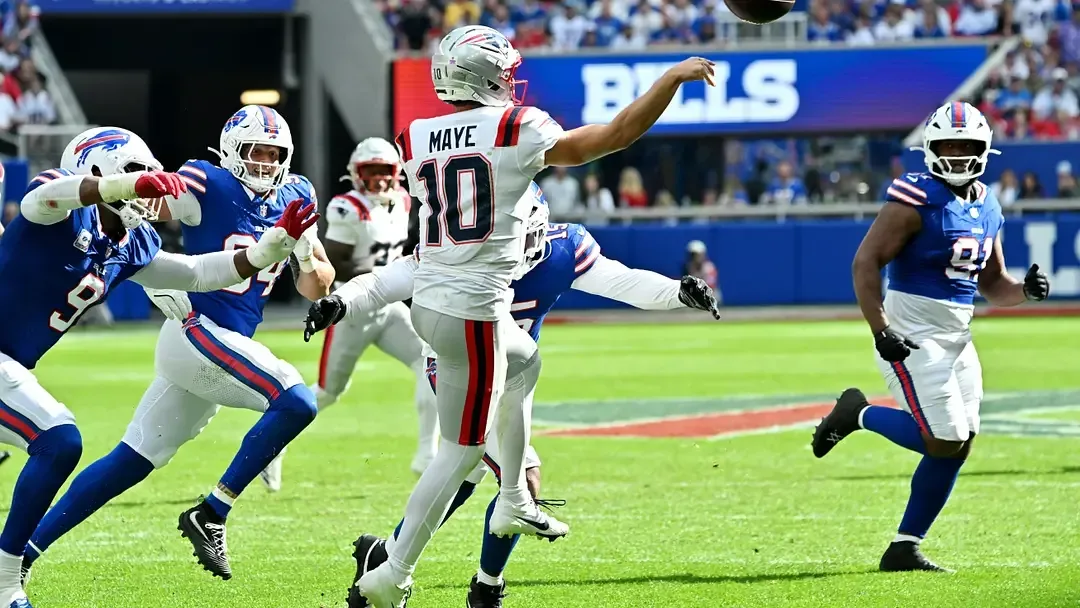
That backdrop makes the Patriots’ win in Buffalo notable. Maye again had two turnovers, so the performance was not turnover-free or beyond criticism. But he threw three touchdown passes, led a game-winning drive and finished it with a touchdown strike to Efton Chilsm, who made a standout catch. Against a Bills team on the road, it was the kind of response that can halt a negative hobby narrative.
The distinction is important: a bounce-back game is evidence, not proof. It shows that the high-end version of Maye’s play remains accessible after an ugly start. It does not erase either the Jacksonville game or the concerns created by his prior postseason decline. Quarterback card prices can move rapidly when collectors react to a nationally visible result, but a single game cannot establish that the underlying questions have been resolved.
Why holding Maye can be different from chasing Maye
For collectors who already own Maye cards, the Buffalo result provides a reasonable argument against treating the early slump as a reason to abandon the position. His prior season set a meaningful ceiling, and the three-touchdown win demonstrated that an early downturn did not make that ceiling disappear. A hold thesis rests on that combination: established upside, a significant response in a difficult setting, and the possibility that the season’s first month will look less consequential if his play stabilizes.
Related coverage includes NFL Week 5 Card Market Watch: Drake Maye, Michael Penix Jr. and Fernando Mendoza.
For a collector considering a fresh purchase, the analysis is more cautious. Buying after a bounce-back means accepting that optimism has already returned to the discussion. The sensible question is not simply whether Maye played well against Buffalo. It is whether the specific card being considered is being priced as if one strong performance settled every concern.
That is where comps matter. In card collecting, comps are recent comparable sales of similar cards: ideally the same card, parallel, grade and condition, rather than merely another card of the same player. A collector looking at Maye should distinguish between broad enthusiasm for the quarterback and the evidence available for a particular item. His early volatility makes that discipline especially valuable.
The practical case for patience is also clear. Maye has now shown both ends of the range in a short span: a turnover-heavy game without a passing touchdown against Jacksonville, then three passing touchdowns and a game-winning drive at Buffalo. More starts are needed to learn whether the latter is the beginning of a sustained correction or simply another swing in an uneven opening quarter.
Michael Penix Jr. gives Atlanta a more compelling on-field setup
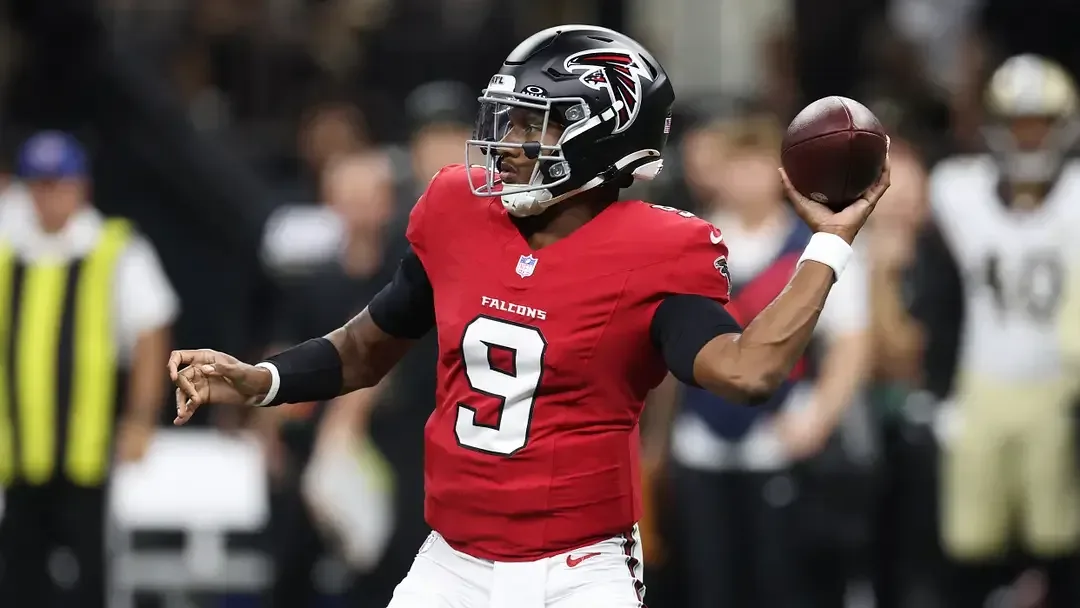
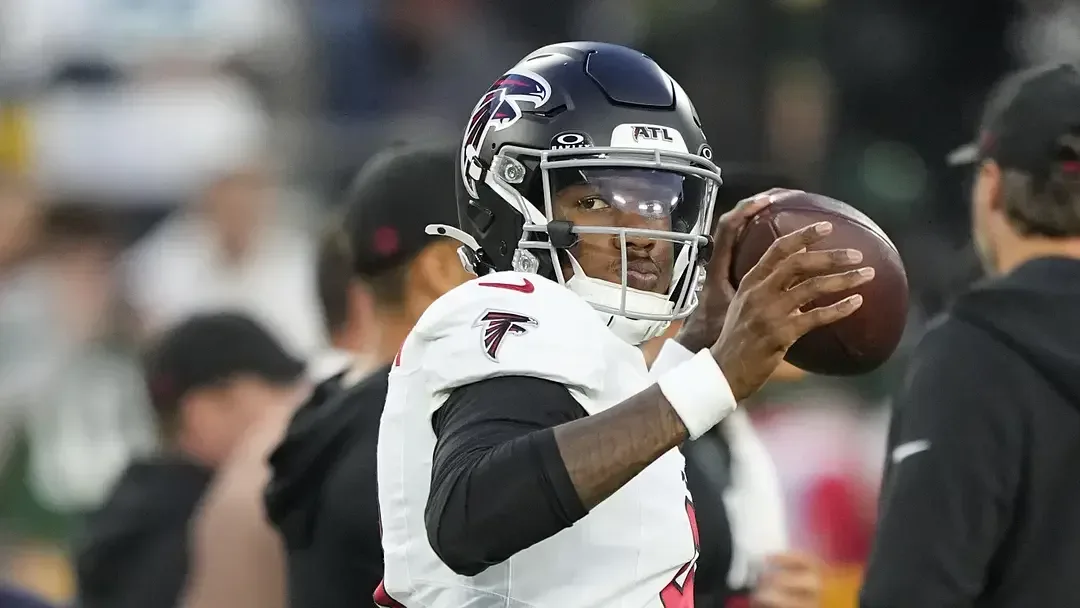
Atlanta’s story begins with an absence. The Falcons lost their first two games while relying on a third-string quarterback, and the team did not look competitive in either. That was a jarring start for a roster described as having a strong collection of skill-position players and a solid defense. Penix, the former eighth overall pick, returned in Week 3 after recovering from surgery for a torn ACL.
Since his return, Atlanta has won decisively on the road against Green Bay and New Orleans. Bijan Robinson deserves a substantial share of the credit; the running back is central to the offense and is described as an elite talent. Still, Penix has been solid in his two games under center, and the Falcons’ transformation has made the quarterback’s health and development far more consequential to the team’s outlook.
For card collectors, Penix is a classic case in which opportunity and risk arrive together. He is no longer an abstract prospect waiting for a role. He is operating an offense with Robinson, Drake London and Kyle Pitts, an environment that gives him notable skill-position support. If the Falcons continue to play well with Penix starting, his cards have an identifiable catalyst: sustained wins and credible quarterback play for a roster that now looks more functional than it did in Weeks 1 and 2.
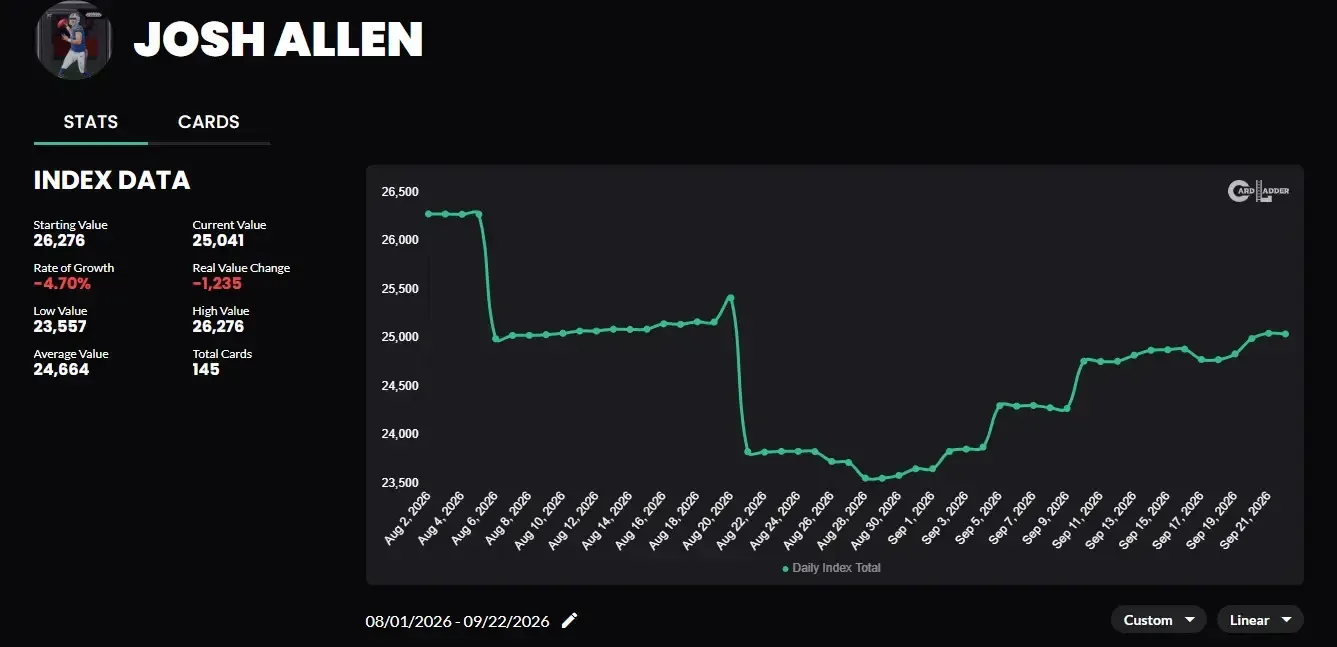
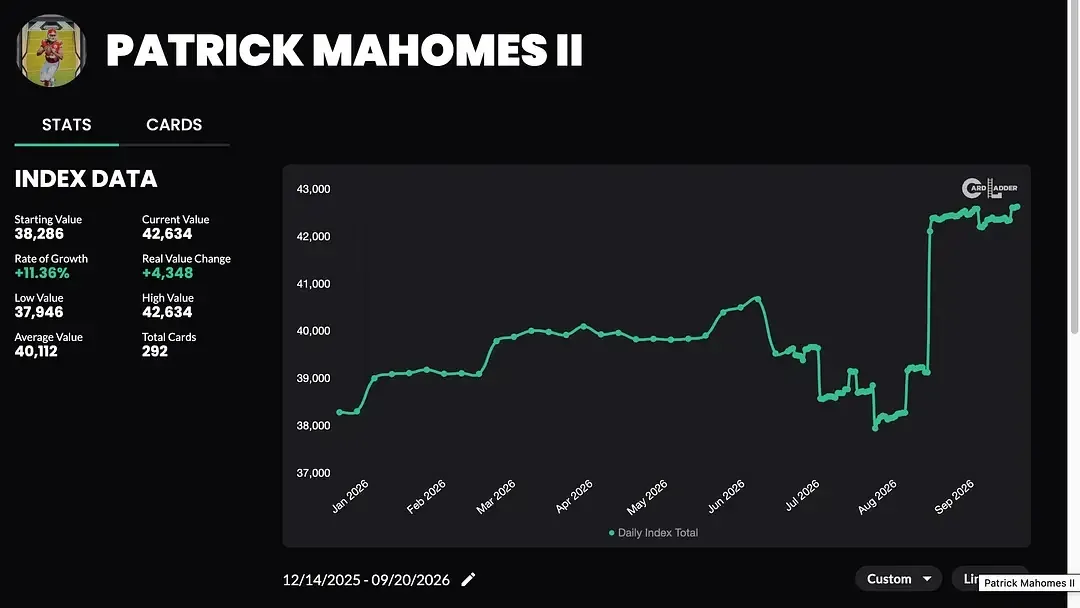
But the evidence also explains why the market has not treated the turnaround as certainty. Sales tracked by Card Ladder have remained respectable but modest, a response consistent with Penix’s injury history and an extremely limited 2026 sample. Two road wins are encouraging. They are not a large enough body of work to know whether the recent form will persist throughout the schedule.
Understanding the “buy-low” label
Calling a card a buy-low does not mean it is automatically cheap or that it must rise. It means the price may reflect a negative condition—here, injury concern and uncertainty—more heavily than the buyer believes it should. Penix’s appeal is easy to state: if he remains healthy, succeeds with Atlanta’s offensive talent and turns a two-game turnaround into a longer run of competent play, the modest current framing could look conservative.
The risk is equally easy to state. Health is not a minor footnote in this case; it is central to the entire thesis. There is also no extensive current-season record from which to separate a durable improvement from a promising opening. Collectors who pursue Penix should therefore be clear about what they are buying: not confirmation, but exposure to a quarterback whose situation could improve meaningfully if availability and performance hold.
That makes card selection matter more than the headline. A collector may prefer to focus on a card they genuinely want to retain rather than buying solely because two strong team results created momentum. In a volatile player market, enjoyment of the card itself can make patience easier when weekly results do not cooperate with the investment argument.
Fernando Mendoza has the draft pedigree, but not the playing time
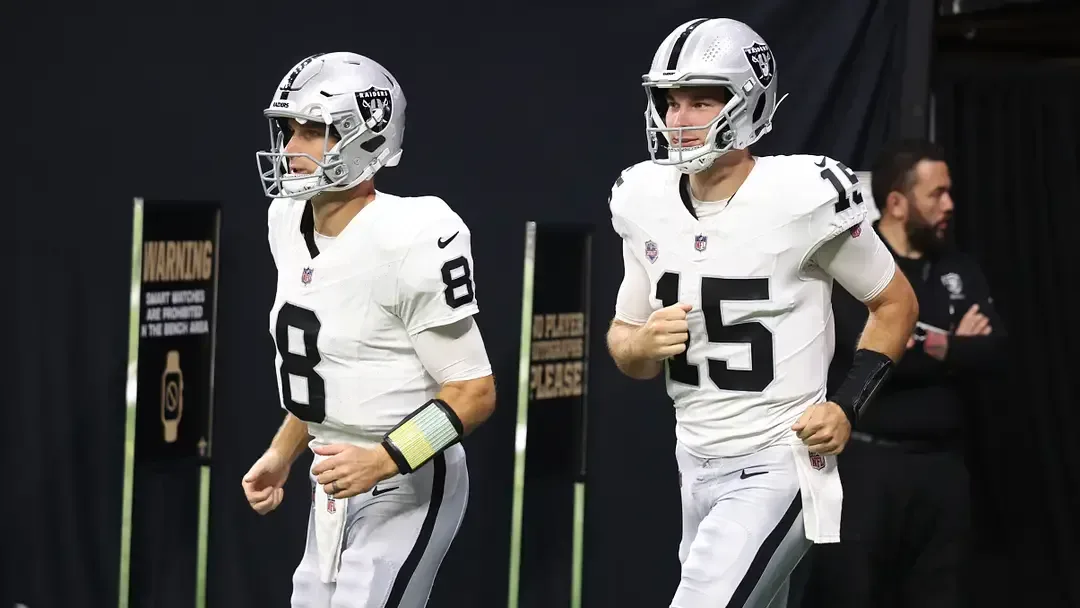
The Raiders present the opposite situation. Mendoza was the No. 1 overall pick in 2026, yet he has not started a regular-season game. That is not expected to change entering Week 5, largely because Las Vegas has opened 3-1 under Cousins. The Raiders’ only loss came against Kansas City, when the defense surrendered a late lead in a 30-27 defeat.
For a rookie quarterback collector, that creates a familiar tension. The No. 1 overall selection carries attention and theoretical upside, but the most important short-term driver of an NFL quarterback market is often playing time. Mendoza has not received that platform, while Cousins has played well enough that there is no stated competitive reason for the Raiders to make an immediate switch.
This does not make Mendoza irrelevant; it makes him dependent on events not presently under his control. An injury to Cousins, severely poor play from the starter, or a downturn by the Raiders would intensify the pressure for Mendoza to take the field. But none of those outcomes should be treated as a certainty. Las Vegas is winning more often than it is losing, and its current starter has given the team viable quarterback play.
What collectors can watch while they wait
Mendoza’s story is primarily about readiness and role, not a weekly stat line. The key practical question is simple: has anything changed in the depth-chart reality that is keeping him off the field? Until it has, collectors should recognize the difference between draft status and demonstrated NFL production.
That distinction can protect against a common rookie-card mistake: paying as though future opportunity is already present opportunity. Mendoza may eventually see regular-season action, and the Raiders’ early success does not guarantee their form will hold. Still, the current facts support patience. The quarterback has elite draft capital, but Cousins remains the starter, and the Raiders are 3-1 rather than in a clear crisis.
Three card-market lessons from one quarterback week
- Maye: A high-quality rebound can change the conversation quickly, but turnovers and a previously uneven stretch mean collectors still need a larger sample.
- Penix: Better team results and a strong offensive supporting cast create upside, while health and limited action remain the defining risks.
- Mendoza: Draft position draws interest, but starts and meaningful game action are the missing ingredients for a more evidence-based evaluation.
Week 5 will not provide a universal answer for any of the three. Maye needs continuity after his Buffalo response. Penix needs further healthy starts to make Atlanta’s two-game improvement more than a brief surge. Mendoza needs a path to the field before collectors can assess him through NFL performance rather than anticipation.
For now, the most grounded approach is to match the card decision to the actual story. Maye holders are weighing whether recent adversity was temporary. Penix buyers are weighing upside against medical and sample-size risk. Mendoza collectors are accepting that the biggest variable is the timing of his first real opportunity. Those are distinct bets, and treating them distinctly is more useful than allowing one exciting—or disappointing—Sunday to decide everything.