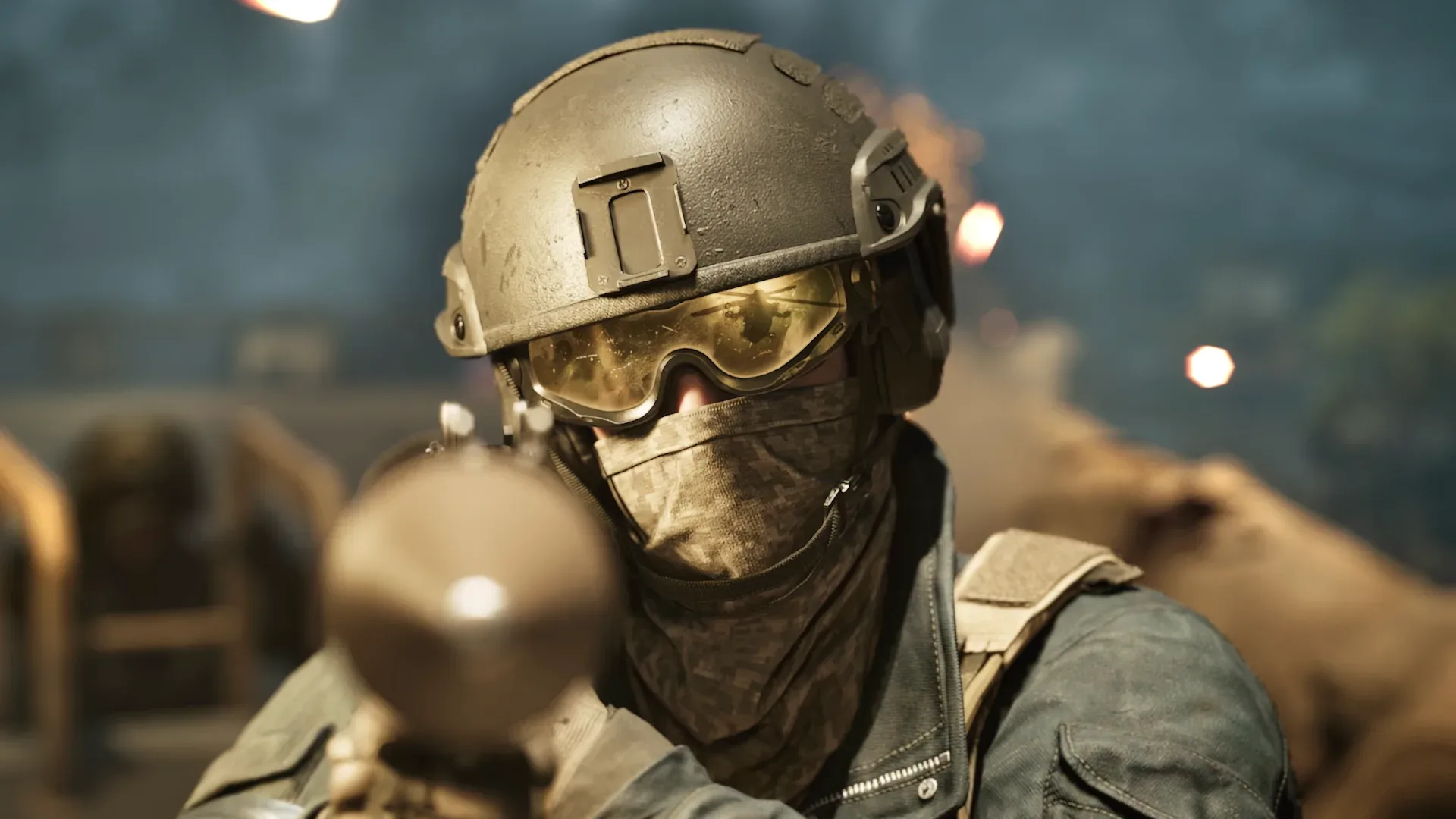
Wardogs Season 2 is treating faction balance as more than a matter of weapon numbers or objective layouts. The update targets Lonestar, the blue faction, with extra in-game rewards designed to make joining the team more attractive after it developed a notably worse win rate than the game’s other two sides.
The unusual part is that the planned remedy is not only a direct mechanical adjustment. Lonestar players will receive bonus cash and XP for a win, alongside cash and XP multipliers for teamplay actions, for Season 2. In plain terms, Wardogs is temporarily making the less popular faction more profitable to play.
That is a candid recognition of a problem multiplayer games often struggle to separate into two overlapping parts: the actual competitive disadvantage of a team, and the belief that the team is doomed. Either can influence player behavior. Together, they can create a feedback loop that makes matches worse long after the original imbalance has been identified.
Lonestar has gameplay complaints and a reputation problem
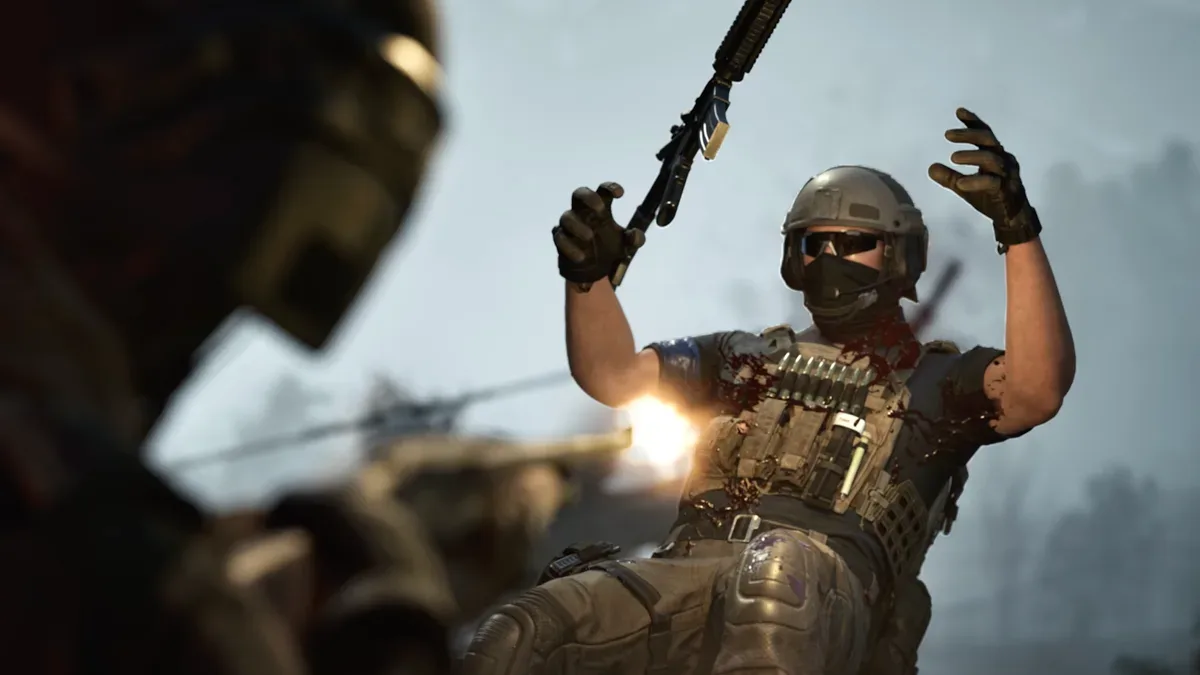
Bulkhead has acknowledged two practical issues associated with Lonestar: its uniform visibility and certain spawn positions. Both matter in a multiplayer shooter. A highly noticeable uniform can make players easier to pick out in combat, while a weak spawn position can put a faction on the back foot before it has properly entered a fight.
Season 2 addresses both areas. Lonestar’s uniforms are being made more desaturated, with the intent of making them stand out less against the environment and compared with other factions. Meanwhile, every faction spawn on Bakurani is moving. The latter point is important: rather than presenting the map change as a Lonestar-only intervention, the update shifts the broader spawn setup on that map.
But the studio’s assessment is that map geometry and visual readability are not the whole story. Player sentiment has become the biggest reason people avoid the blue team. That makes Lonestar’s situation a social matchmaking issue as much as a conventional balance issue.
Once a faction gets branded as the losing choice, players who care about winning may avoid it. That can leave the faction with fewer willing participants, fewer coordinated groups, or a player base more likely to depart when a match begins to go badly. The reputation then appears to confirm itself. Even if the underlying combat conditions improve, the team may not immediately recover because players are reacting to the expectation of failure rather than solely to the current state of a match.
Wardogs is explicitly framing its Season 2 approach as an experiment. That framing fits the problem. The update appears intended to find out whether improved incentives can alter the choices players make before and during matches—not merely whether a numerical tweak moves a win-rate graph.
Related coverage includes Wardogs Season 2 Targets Lonestar's Losing Streak With Cash and XP Incentives.
What the Lonestar bonuses are meant to do
Cash and XP are progression incentives. Cash generally refers to currency used within a game’s economy, while XP—experience points—tracks progress toward player advancement or rewards. The available details do not specify every item, rank, or system affected by Wardogs’ cash and XP, so it would be premature to judge the precise value of the bonuses. Their purpose, however, is clear: make playing Lonestar feel worthwhile enough that players reconsider avoiding it.
The bonuses are tied to two kinds of success:
- Winning as Lonestar: Players on the faction receive additional cash and XP when they win.
- Teamplay actions: Lonestar players receive multipliers to the cash and XP earned for actions the game recognizes as team-oriented.
The second element may be the more significant design choice. A flat participation reward could persuade people to queue into an unpopular team while doing little to improve its coordination. Rewarding teamplay instead aims to align the individual incentive with the faction’s collective performance. If players gain more by contributing to shared objectives or cooperative actions, the bonus may encourage behavior that can improve the team’s chances rather than simply compensate it after defeat.
There is still a delicate balance to strike. The incentive needs to be large enough to overcome Lonestar’s bad reputation, but not so generous that players choose the faction mainly to maximize rewards regardless of the match’s competitive integrity. That is likely why the boost is described as a Season 2-only measure rather than a permanent faction identity. A time-limited intervention lets the developers observe whether player participation and results change without committing indefinitely to an economic advantage.
The experiment also recognizes that a game need not be perfectly symmetrical to be healthy. Bulkhead’s stated position is that Wardogs is not intended to be balanced at every moment in an absolute sense. That is distinct from accepting a faction that players broadly view as a bad pick. Competitive asymmetry can be intentional; persistent avoidance driven by losses, visibility issues, and unfavorable spawns is a more immediate match-quality concern.
A safety net for any team far behind
Lonestar is receiving the targeted bonuses, but Season 2 adds a broader catch-up benefit for all factions. A team that is at least 40 points behind second place will get a 20% vendor discount.
The wording matters in a three-faction contest. The threshold is not simply being behind the leader. A team must be 40 or more points behind the team in second place. That makes this a measure for a side that has become seriously detached from the rest of the match, rather than a routine reward for ordinary losing positions.
A vendor discount is an economic catch-up mechanism. Rather than directly changing damage values, scores, or player skill, it reduces the cost of whatever is available through the game’s vendor. The supplied details do not establish what that vendor sells or how much a discounted purchase affects match outcomes. Still, the design intent is easy to read: a badly trailing faction gets more purchasing power, creating an opportunity to recover without making the benefit exclusive to the blue team.
That universal rule is useful because it avoids embedding the idea that Lonestar is always supposed to lose. The Lonestar bonuses address a particular faction’s participation problem. The vendor discount addresses the general experience of being far behind, regardless of color or allegiance.
Team-switch rules target late-match opportunism
Economic incentives alone would be vulnerable if players could freely move to whichever side looks safest near the end of a game. Season 2 therefore places new friction on team switching and joining matches already in progress.
When a team is more than 10 points ahead, players who join a team cannot switch again for 15 minutes. The stated objective is to stop late switches from deciding the outcome of matches. It is a targeted restriction rather than a complete ban: players can still join friends, but changing allegiances once a team establishes a notable lead carries a meaningful waiting period.
The update also restricts information and mobility for players who switch teams or arrive in an ongoing match. Their map stays obscured until they reach the control zone for the first time. They also cannot use the spawn vehicle until that first arrival at the control zone.
These limits are best understood as anti-abuse measures. An obscured map denies an immediate overview of the new team’s situation, while withholding the spawn vehicle prevents a fresh arrival from instantly gaining its movement advantage. The player must first physically engage with the control zone. That requirement preserves the possibility of joining friends, but makes a tactical late switch less immediately valuable.
In multiplayer design, friction does not necessarily mean punishment. Here, it means adding enough effort and delay that a behavior becomes less attractive when used purely to chase a winning position. The rules do not say players can never change teams. They make the timing and consequences of that choice matter more.
Why rewards also need enforcement
Bulkhead has also warned that community server hosts who exploit the Lonestar faction bonus will face punishment. That warning is a necessary companion to any reward-based experiment.
Whenever a game gives extra currency or progression for a particular choice, organized players may try to manufacture the conditions that generate those payouts. In this case, server hosts could potentially have unusual control over the setting where faction bonuses are earned. The available information does not describe specific exploit methods, and there is no need to speculate about them. What matters is the principle: incentives intended to repair ordinary matchmaking become unreliable if controlled environments can be used to farm them.
Enforcement protects more than the game’s economy. If exploitation inflated Lonestar’s rewards, it could muddy the experiment’s results. The studio would have a harder time determining whether players were genuinely becoming more willing to support the faction in competitive play, or merely exploiting a favorable payout loop.
The real test is whether perception changes
Season 2’s package is notable because it does not pretend a single adjustment will cure Lonestar’s problem. Wardogs is changing visual visibility, moving spawns on Bakurani, adding targeted rewards, providing a severe-deficit vendor discount, limiting strategic switching, and warning against reward abuse. Each measure addresses a different way an imbalanced faction can become unattractive.
The key unknown is whether these changes will change the faction’s social standing. Better rewards may draw players in, but they will only build confidence if matches feel more competitive. Improved spawns and less obvious uniforms may help results, but the reputation of a losing team can outlast the conditions that created it. That makes the Season 2 label important: it gives the team a defined period in which players can see whether Lonestar is actually worth backing.
There is a broader lesson in the update’s unusually open approach. Balance is not only a spreadsheet of wins and losses. It is also the behavior that those numbers produce: who players want to join, when they abandon a side, how they treat teammates, and whether they believe a comeback is possible. As discussions elsewhere in games regularly show, the difference between a promising system and a successful one often comes down to implementation details; the details matter here as well.
For Wardogs, those details will be visible in whether Lonestar stops being the faction players expect to lose before the match has even properly begun.