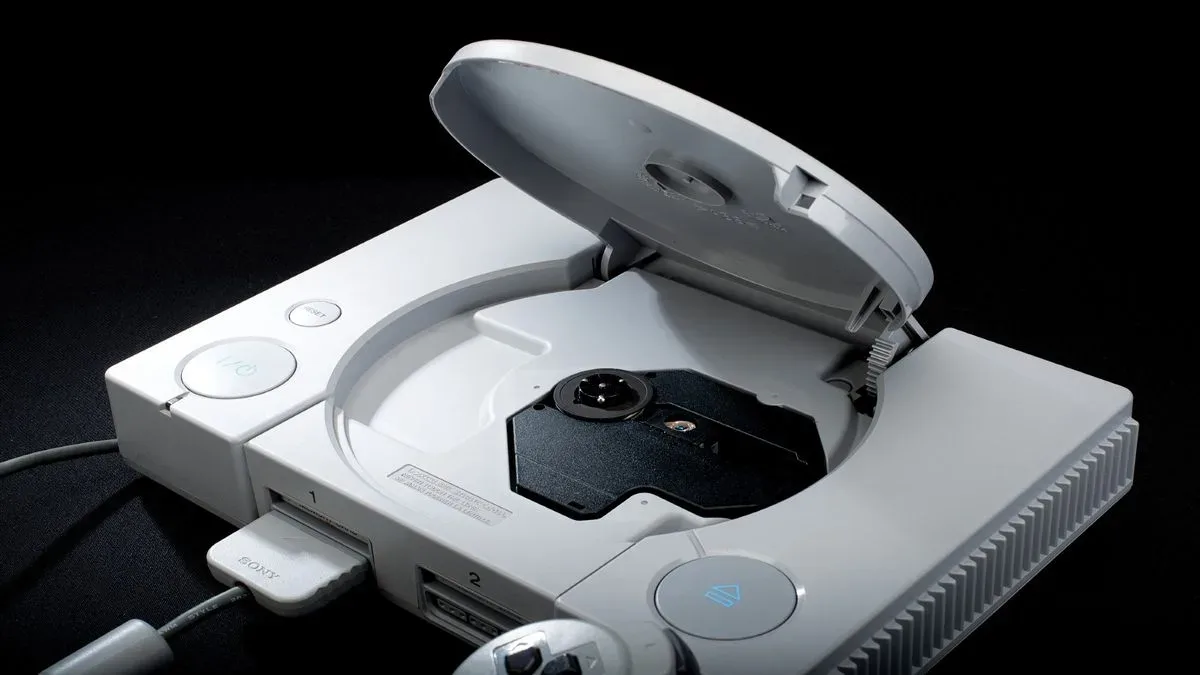
Ken Kutaragi, the longtime PlayStation architect who led development work on the PS1, PS2 and PS3, has offered an expansive vision of gaming’s next shift: a future where artificial intelligence generates content in real time and the boundary between a video game, communication and imagination begins to dissolve.
At a university panel, Kutaragi argued that AI will transform games into entertainment on a far larger scale. He put the current global game market at more than 30 trillion yen, then suggested it could potentially grow to roughly 3,000 trillion yen. At that point, in his framing, the result might no longer even be called a game.
That is a spectacular prediction, and not one that should be mistaken for a product roadmap. It is also important that the remarks have been machine-translated from Japanese, meaning fine distinctions in wording and intent may not carry over perfectly. Still, the core idea is clear enough: Kutaragi sees AI as a medium-changing technology, not merely another production tool for studios.
His case hinges on real-time generation. Kutaragi pointed to ongoing work on AI-generated video and music, and said it is predicted to run at speeds comparable to contemporary game consoles around 2028 or 2029. He envisions a point where people’s communication and imagination become content in their own right.
It is an intriguing future to picture. It is also worth separating the technical possibility being described from the cultural conclusion that games should, or will, be displaced by endlessly generated experiences.
From rendered worlds to generated worlds
Traditional games are made from designed systems and prepared assets. Developers create environments, character models, animation, dialogue, sound, objectives and rules ahead of time. Even a game with many possible outcomes generally operates within boundaries selected by its creators.
Real-time generation, in the broad sense Kutaragi is discussing, would mean software producing elements while a player is interacting with it. An AI could theoretically create imagery, music, dialogue or scenarios in response to what a person asks for or does. Instead of choosing from a fixed sequence of authored quests, a player might describe a setting or a desired situation and receive a newly generated one.
Kutaragi’s thought experiment goes further than procedural generation, a familiar game-development technique in which rules assemble content from pre-set pieces. Real-time generative AI suggests content that is synthesized during use: a new scene, a new line of conversation, a new musical cue, perhaps a new audiovisual response to an unexpected player idea.
Related coverage includes Ken Kutaragi Envisions an AI Future Beyond Traditional Video Games.
That does not automatically describe a good game. Games are not simply visual and audio material delivered to a screen. They are systems of constraints, feedback, learning, tension and choice. A climbing game has to communicate momentum and risk. A fighting game needs legible timing and reliable responses. A puzzle needs rules that hold together long enough for an answer to mean something.
Infinite generation may make an experience feel flexible, but flexibility alone does not create challenge, pacing or purpose. If every rule, setting and reward can change instantly at a prompt, the player may gain variety while losing the stable ground that lets play become mastery.
Kutaragi’s historical comparison is revealing
Kutaragi cited early 3D fighting games including Virtua Fighter and Battle Arena Toshinden as examples of an era when game technology advanced quickly. The comparison explains why he is looking for another disruptive leap rather than a marginal improvement.
The move into 3D changed what games could present and how players navigated virtual spaces. It gave designers new camera problems, new control problems and new ways to stage action. In Kutaragi’s view, the industry’s visual progress now feels slower despite studios being much larger than they were during the original PlayStation era.
That diagnosis is an argument about where novelty is coming from, not proof that conventional game development has run out of ideas. A more detailed face or a more complex lighting system may not produce the immediate sense of transformation that 3D did, but graphics are only one part of game design. The important question is whether generative technology can support the parts of games players actually value, rather than only making more content appear.
AI could be useful in carefully limited roles: helping creators prototype, providing responsive ambient material, or allowing systems to react in more tailored ways. Yet a tool that helps a team make a game is fundamentally different from a system intended to replace the authored experience with a continual stream of generated material.
“Imagination as content” raises an authorship question
Kutaragi’s most provocative claim is that communication and imagination themselves could become content. Taken generously, this could mean interactive entertainment becomes more personal. A player would not only select from menus or follow a script; they could express an idea and see a responsive digital space take shape around it.
There is genuine appeal in that proposition. People already bring imagination to games through role-playing, building, experimenting and sharing stories with friends. Better tools could make it easier to express those impulses.
But there is a practical distinction between having an idea and making something meaningful from an idea. Games are often memorable because someone made difficult, deliberate choices: what to omit, when to withhold an answer, how a level teaches a mechanic, why a character says one line rather than another. Those decisions establish perspective.
A system that can respond to any instruction may be accommodating, but accommodation is not necessarily authorship. It can be harder to encounter a distinct point of view when the experience is always reshaping itself around the user. The most compelling games sometimes challenge a player’s preferences instead of immediately serving them.
This is why discussion of AI in games cannot stop at the phrase “more content.” More is not an automatic measure of value. A finite game can reward replay because its carefully built pieces interact in surprising ways. A generated game can be vast and still feel thin if its choices are not coherent or its responses have no lasting weight.
Human-centered design is not the same thing as pandering
Kutaragi also criticized what he called overly human-centered design, arguing that interfaces which make technology easier to use can remove opportunities for people to think and leave them with less understanding of the hardware and software beneath the surface. He believes design will become AI-centered because AI must surpass humans, while people will need to learn how to communicate with AI much as they learn to communicate with other people.
There is a legitimate concern inside that argument: easy interfaces can obscure how complex systems work. But “human-centered” does not have to mean hiding every meaningful choice or treating users as incapable. At its best, it means a tool communicates clearly, helps people recover from mistakes and gives them appropriate control.
An AI-centered entertainment system could make this tension sharper. If interaction becomes primarily conversational, players may need to learn how to phrase requests, correct misunderstandings and recognize the limits of a model’s output. That is a skill, but it is not automatically the same skill as learning a game’s mechanics.
A controller asks a player to understand a designed set of verbs: move, jump, aim, block, select. A conversational system may instead ask the player to continually negotiate with software. For some experiences that could be powerful. For others, it risks replacing play with prompt management.
The incentives behind the prediction deserve scrutiny
Kutaragi left Sony in 2007 and has since led Cyber AI Entertainment, described as a consultancy helping others build AI technology, as well as Ascent Robotics, a startup working on AI-driven software and machines. That background does not invalidate his view. It does, however, make it sensible to treat his optimism as the perspective of someone deeply invested in AI’s growth.
That is not a criticism unique to Kutaragi. Every major technology debate includes people who see an opportunity for a medium to expand, and others who warn that the expansion may come at the expense of labor, craft, clarity or user control. The useful response is neither to declare AI inevitable nor to assume every application is worthless. It is to ask what a particular system enables, who directs it and what is lost if it replaces rather than assists human work.
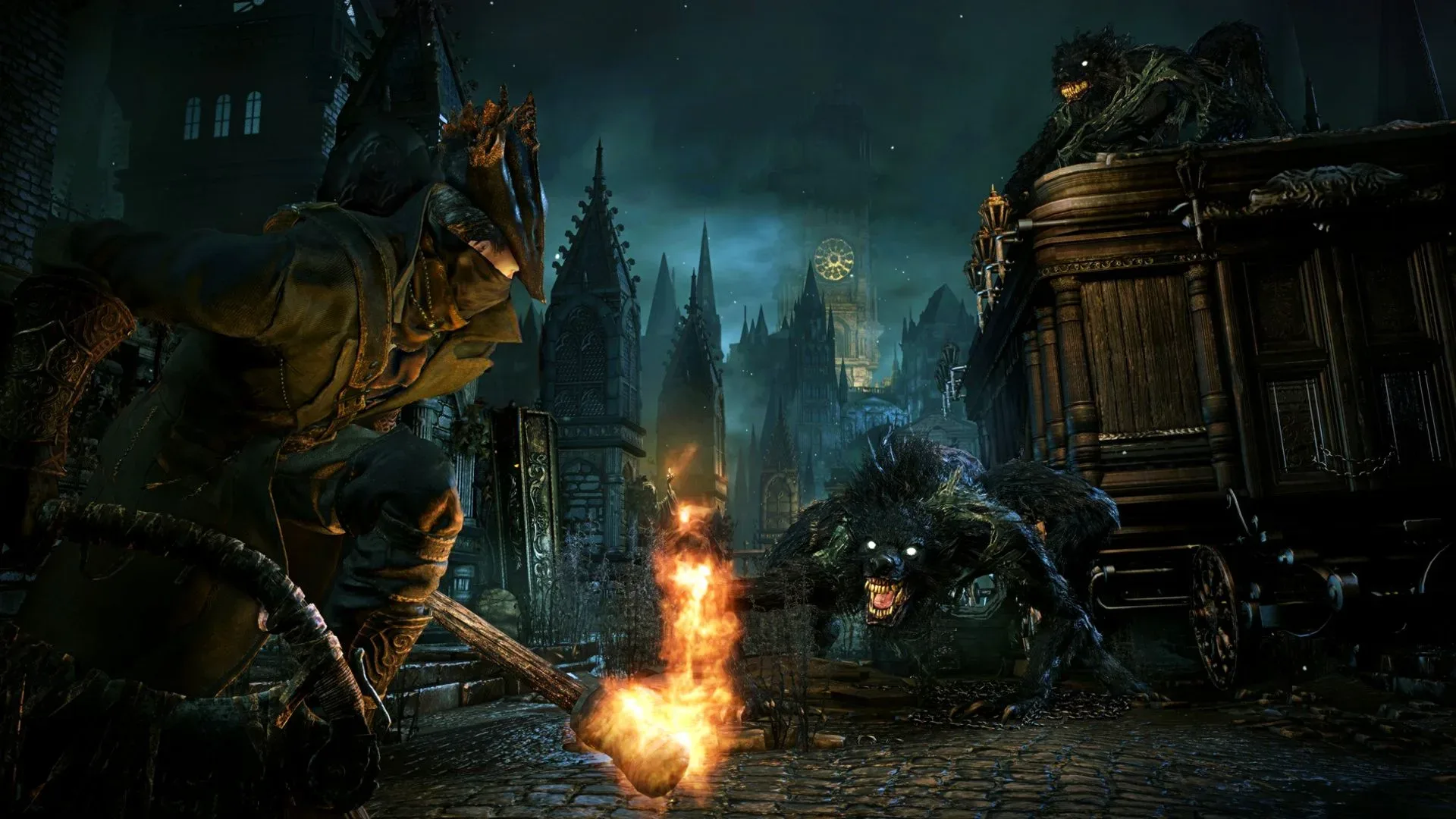
Those questions are already part of game culture. The backlash surrounding projects that invoke generative tools shows that players care about more than technical novelty; they also care about trust, ownership and whether a project respects the people and work associated with it. That wider tension is visible in the debate around the AI backlash facing a Bloodborne-related PC project.
What this could mean for players
Kutaragi’s 2028-to-2029 timeline is a prediction, not a guarantee. Even if real-time AI video and music reach the performance level he anticipates, many separate questions remain: whether outputs are reliable, whether players want them, whether they are affordable to run, and whether they produce experiences that are genuinely better than authored alternatives.
For players, the meaningful distinction may be simple. AI can expand the ways games react without replacing the reasons people play. A generated soundtrack that adapts to a match is one thing. A game that continually invents a world around a player’s requests is another. Both can exist, and neither needs to erase the crafted game with a beginning, an ending and a recognizable creative voice.
Kutaragi is right that new technology can alter entertainment dramatically; the early 3D era he invokes is evidence of that. But the next major shift will not be judged by the size of a market forecast or the amount of content a machine can produce. It will be judged by whether people find these experiences playable, intelligible, surprising and worth returning to.