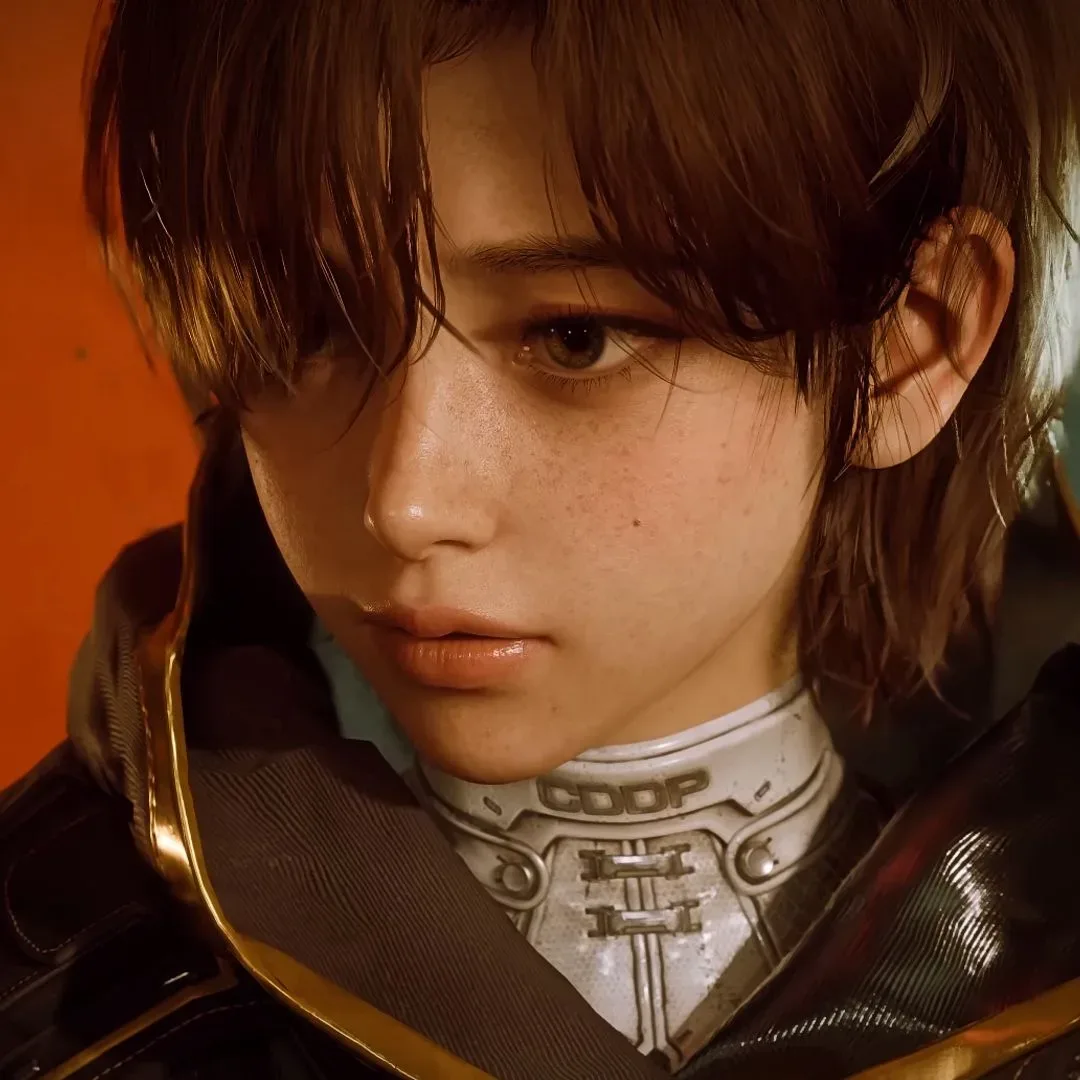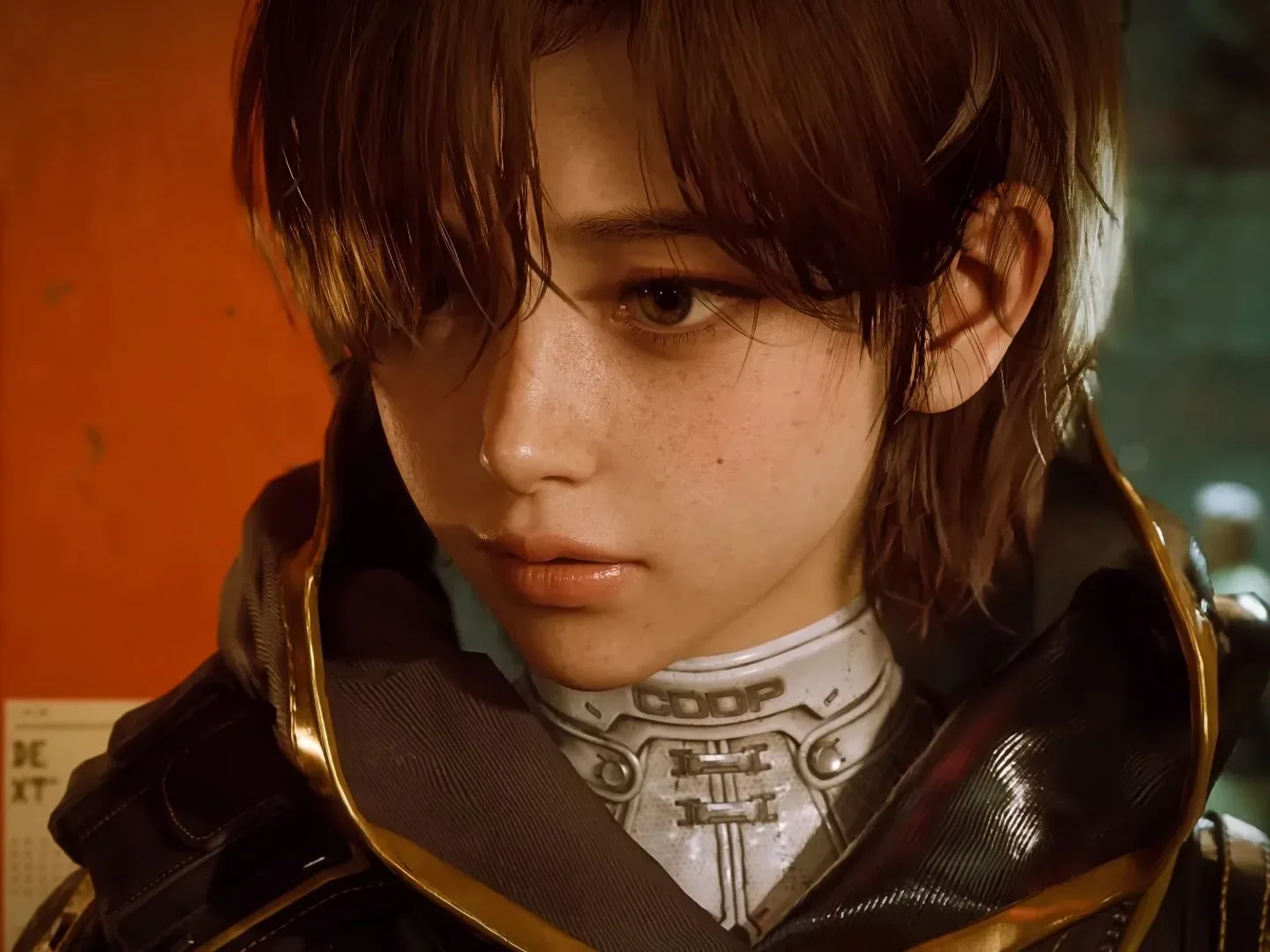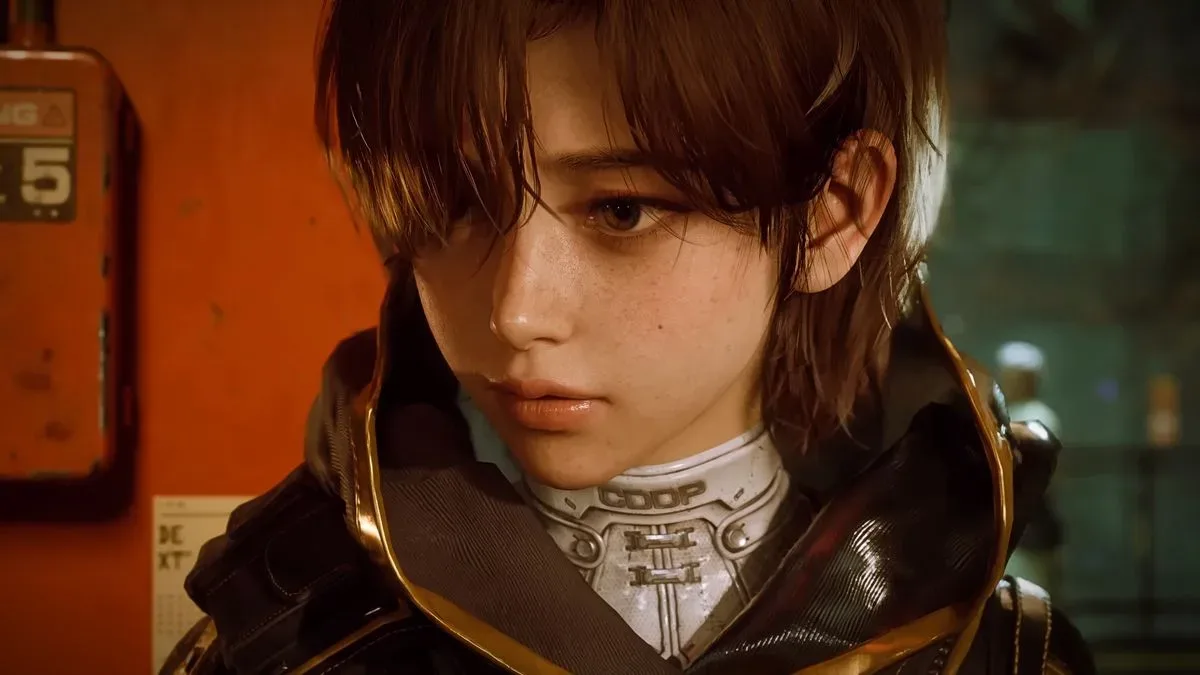
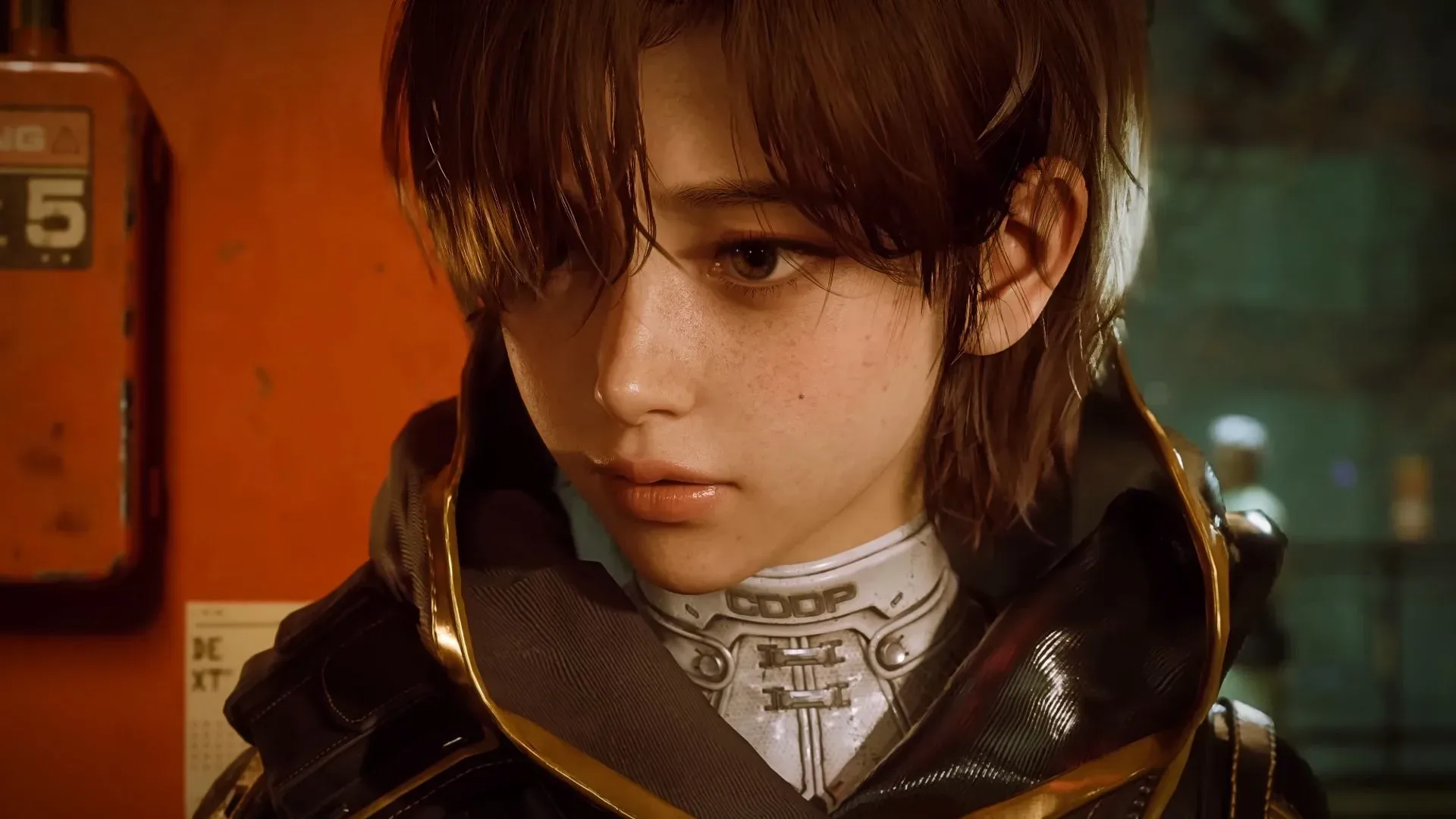
Shift Up is trying to draw a sharper line around how artificial intelligence fits into Stellar Blade: Blood Rain, the follow-up to its action RPG. The studio’s answer is not an all-or-nothing rejection of AI. Instead, CEO Kim Hyung-tae says the project is guided by a “handmade from start to finish” principle, while AI remains in use for selected intermediate development work.
That distinction matters because Blood Rain recently faced a strong negative reaction after a music video containing generative-AI material circulated following the game’s reveal. Kim had previously defended the work by saying protagonist Evie herself had been created entirely by human developers. That did not settle the criticism, however, and Shift Up said it was taking the community’s concerns seriously.
The studio’s newer wording is more specific, if still likely to invite questions: people are expected to retain control over the finished creative work, but AI can assist during parts of production that are technical, iterative, or organizational.
What “handmade” means in this context
“Handmade” can easily sound like a promise that no automated tool touches a game. Kim’s description does not mean that here. Shift Up’s position is that human developers refine the work at the end of the process, with the goal of making the final game distinct from projects generated wholesale by AI.
That is a meaningful, but narrower, claim. It describes who has final creative responsibility rather than declaring an AI-free production pipeline. In practice, it frames AI as an assistive tool used within a human-led workflow, not as the author of the game’s characters, assets, or final presentation.
Whether that language satisfies players is a separate matter. The original backlash focused on a public-facing music video that visibly employed generative AI. When audiences object to generative material, their concern often is not limited to whether someone later edited or approved it. They may care about the tool’s presence in the first place, what it was used to create, and whether a studio communicates that use clearly.
For Shift Up, the phrase therefore carries an obligation beyond a slogan: it needs to explain, consistently and plainly, where the studio sees a boundary between AI assistance and the work it calls handmade.
The tasks Shift Up says AI can assist with
Kim identified several areas where AI can be used during development: texture weathering, polygon reduction, lighting tests, organization, quality assurance, and debugging. These are not all the same kind of task, and understanding the difference helps explain the studio’s argument.
Related coverage includes Shift Up Says Stellar Blade: Blood Rain Is 'Handmade,' While Keeping AI in Its Development Workflow.
Texture weathering
A texture is the surface artwork applied to a 3D object. It provides visual details such as color, scratches, dirt, rust, wear, fabric patterns, or other material cues. Weathering refers to adding signs of exposure and age: chipped paint, grime, fading, abrasion, and similar effects.
An AI-assisted weathering application would, in this description, help with an intermediate visual process. The important unresolved detail is how much creative content such a tool produces versus how much it simply helps developers apply or adjust visual effects. Kim’s broader account stresses human refinement at the end, but it does not turn every possible use of AI into the same thing. Generating a public music video and assisting with a weathering step plainly sit at different points in a workflow, even if both can provoke legitimate questions about methods and standards.
Reducing polygon counts
Polygons are the small geometric pieces used to build a 3D model. A character, environment object, or prop is made from many of them. More polygons can allow finer shapes and detail, but they also increase the computational work required to render an object.
Polygon reduction, sometimes called optimization, seeks to lower that cost while preserving an acceptable appearance. It is especially relevant when a game needs to keep scenes performing reliably while rendering numerous objects, visual effects, and characters. AI-assisted reduction could help identify or simplify geometry, while human artists and technical teams decide whether the resulting model still meets visual requirements.
This is the clearest example of the distinction Shift Up is trying to make. The stated purpose is performance-related technical support rather than substituting a machine-generated creative centerpiece for work by artists. But it also illustrates why “no AI” and “AI does everything” are incomplete labels for modern development pipelines: a tool may contribute to one technical stage while people remain responsible for the artistic target and approval process.
Lighting tests and production organization
Lighting is a core part of a game’s mood, readability, and visual direction. Testing lighting can involve evaluating how scenes, characters, surfaces, and effects look under different setups. Organization, meanwhile, can cover the management of assets and information across a project. These are both broad categories, and Shift Up has not detailed exactly which AI systems are used or how much authority they have.
That lack of granular detail is worth keeping in mind. “AI” describes a wide set of technologies and uses. A studio’s disclosure that it employs AI for organization or testing answers part of the question, not all of it. Players seeking more certainty will reasonably want to know what kinds of outputs are generated, how they are checked, and where the human team makes the final call.
Quality assurance and debugging
Quality assurance, usually shortened to QA, is the work of finding, documenting, reproducing, and helping teams resolve problems before release. Debugging is the process of identifying why a technical issue happens and correcting it. These jobs can include repetitive checks, complex investigation, and communication between many teams.
Kim’s view is that operating completely without AI is no longer realistic, in part because the technology can be involved in everything from basic QA work to deeper debugging. That is a statement of the studio leader’s perspective, not a promise that every developer has to adopt AI in the same way. Still, it establishes Shift Up’s practical position: the company does not see a total ban as feasible for its own production work.
Efficiency is not the stated goal
Kim argues that a development strategy centered only on efficiency and productivity can lead to games players dismiss as “slop.” In this context, that term is a criticism of work perceived as low-effort, undifferentiated, or mass-produced. His stated alternative is to use AI in pursuit of quality rather than merely quicker output or faster release schedules.
That is an appealing principle, but it is also one that will be judged by results rather than vocabulary. A production tool can be used to save time, to improve quality, or both. Those motivations often overlap in actual game development. Shift Up’s key claim is not that AI provides no efficiency benefits; it is that efficiency should not be the sole priority and that the final work requires deliberate human refinement.
The real test for Blood Rain will be whether players can see a clear, authored identity in its final art, technical polish, and presentation—and whether the studio’s explanations of AI use feel candid rather than carefully semantic. The music-video episode has already made the subject more sensitive than it might otherwise have been.
Why public-facing generative content changes the conversation
There is a practical difference between behind-the-scenes assistance on technical tasks and generative content placed directly in promotional material. A music video is part of the public identity of a game. It is meant to be watched, shared, and associated with the project’s style. As a result, visible generative AI can become a much larger issue than an internal tool used to test lighting or assist with debugging.
That does not mean technical AI use is automatically uncontroversial. It means the reaction can depend on context. Players may evaluate a visible promotional work as a statement of the studio’s creative values, while viewing a narrowly described optimization tool through a different lens. Shift Up’s “handmade” language appears designed to address precisely that concern: the studio wants the audience to understand that its final creative work is not simply generated and shipped.
Yet the wording also creates a higher bar for transparency. If the company keeps using AI, then a broad handmade label may leave room for confusion unless it is paired with specifics. What is used for internal assistance? What is used to generate material? What is subject to direct artist revision? The available comments establish some categories, but not a complete policy.
A wider industry argument, with no easy binary
AI’s place in game development is increasingly debated in terms that can flatten important differences. It is possible to be skeptical of generative content in marketing while also recognizing that studios use automation and machine-assisted processes in technical workflows. It is also possible to accept a limited technical use while wanting clearer disclosure and human accountability.
That broader tension is also visible in discussion around the scale of future blockbuster development. The debate over what AI could mean for major game productions is not solely about speed; it is also about who makes creative decisions, how work is evaluated, and whether new tools strengthen or dilute a game’s individual character.
Shift Up is staking out a middle position. Its leadership says it recognizes the concerns raised by the generative-AI music video. It is also saying, just as plainly, that the studio will continue to use AI in areas it considers appropriate. The promise is that human developers will take the final responsibility for the work, refining it until it can stand apart from fully AI-generated projects.
For now, that is the clearest reading of “handmade from start to finish”: not an AI-free declaration, but a commitment to a human-led finish line. After the response to the music video, the distinction is likely to remain under close scrutiny as Stellar Blade: Blood Rain takes shape.