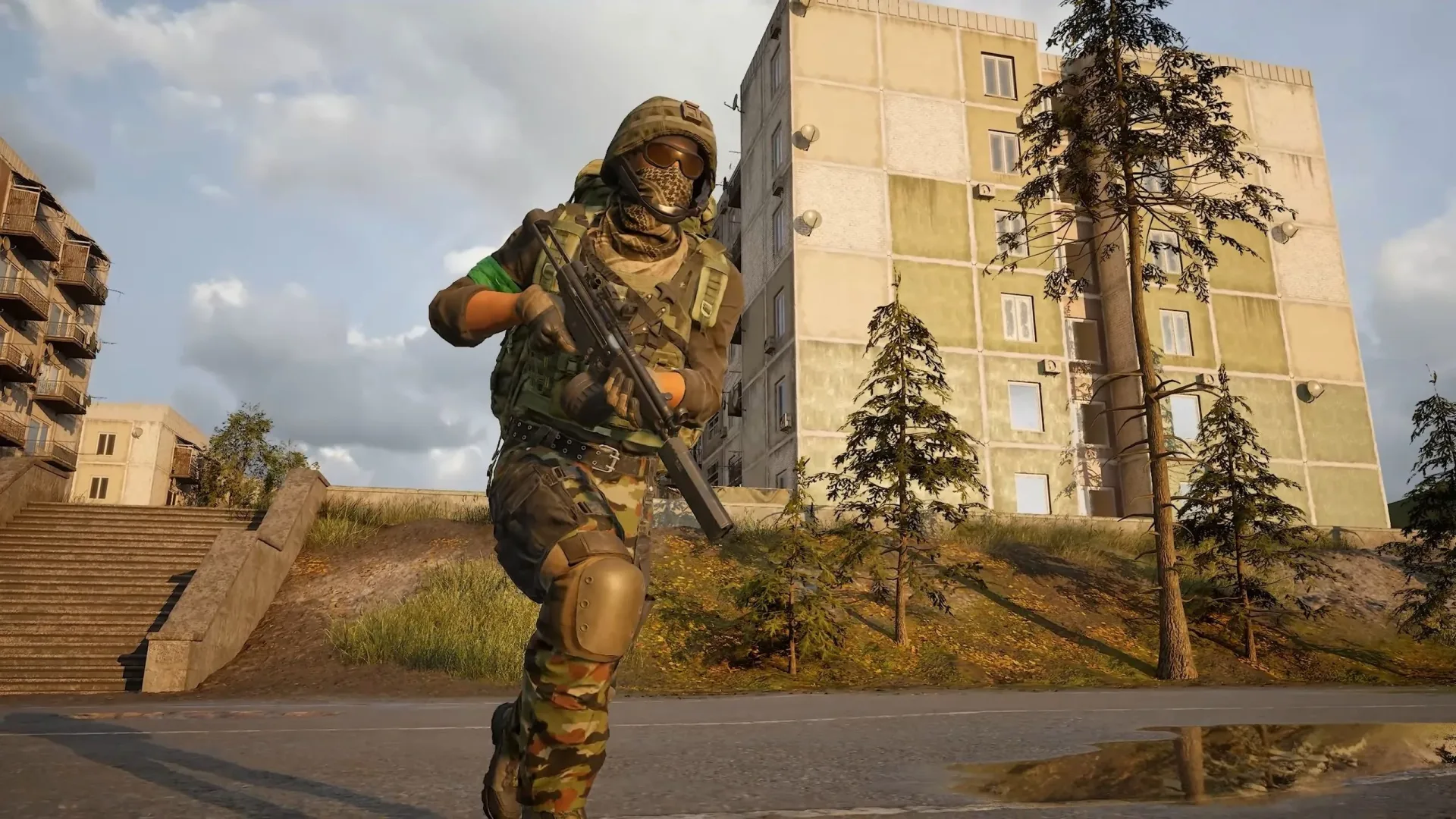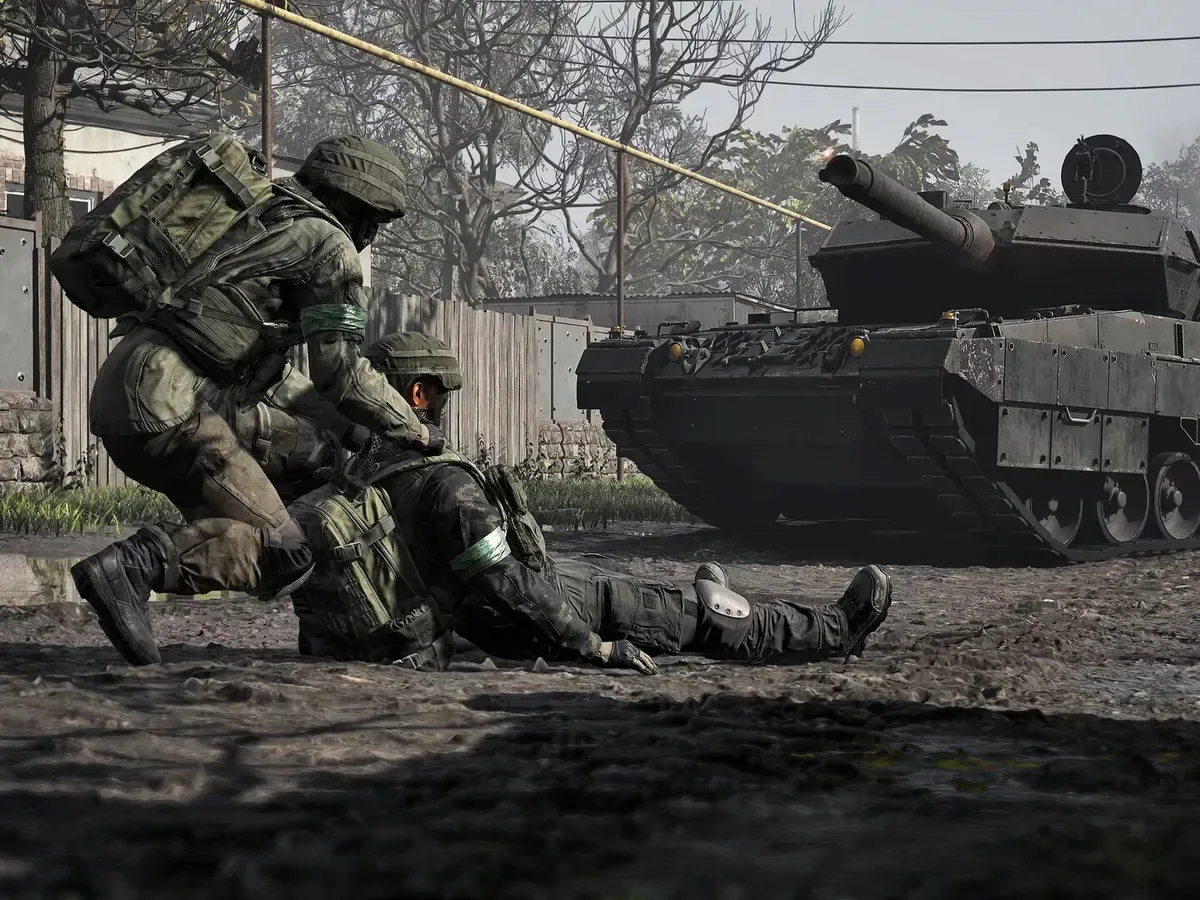
Wardogs has produced a multiplayer mystery with the subtlety of a helicopter hitting a tree at spawn: Lonestar, the game’s blue faction, reportedly wins only about 15% of matches. That is an improvement over its low point of roughly 10%, but it remains dramatically behind Valkyra (Red) at around 36% and Manticore (Green) at about 49%.
On paper, this should not be a story about balance between differently armed factions. Wardogs is a sandbox military game in which three teams fight over a shifting central zone across a huge map. Red, Green and Blue have distinct visual identities, but access to the same equipment and nominally equal opportunities to win. In practice, Lonestar has become the community’s designated chaos department: the team associated with missed shots, friendly fire, doomed flights and very confident players who have not yet met a button they cannot press at the wrong time.
The numbers do not prove that every blue player is doomed to drive directly into a ditch. They do, however, indicate that the meme has attached itself to a real competitive imbalance. And the most convincing explanation is less “blue is cursed” than a feedback loop in which perceptions alter player choices, those choices change the average strength of each team, and the resulting losses make the original perception feel true.
The scoreboard is awful, even after a recovery
The reported figures matter because they put the joke in context. A 15% win rate is not merely a faction falling a little behind in a three-team game. With Red taking approximately 36% of wins and Green approximately 49%, Lonestar is not close to either rival’s result. Its comeback from around 10% is meaningful in percentage-point terms, but it has not erased the gap.
Community members have reportedly made a concerted effort to improve Lonestar’s fortunes. That alone is revealing. A faction needs more than one excellent tank crew or a heroic mortar operator to shift aggregate results. It needs enough players to choose it consistently, coordinate around the objective and stay with it when the lobby fills up. A team’s win rate is an outcome across many matches, not a permanent skill rating stamped onto everyone wearing a blue uniform.
That distinction is worth preserving amid the jokes. A faction can have a poor win rate without every individual on it being poor. Conversely, excellent players can be trapped in a weak team composition if the most experienced regulars routinely choose elsewhere. The statistic describes the team’s results, not a biological inability to operate a helicopter.
How an alpha-era imbalance became a present-day habit
The roots of the issue reportedly stretch back to Wardogs’ alpha period. Lonestar’s Western private-military aesthetic and limited lore made it an attractive choice to newer players early on. At the same time, early builds had a genuine map advantage that encouraged more competitive players to move toward Red and Green.
That is a plausible starting point for a durable player-distribution problem. Newer players choosing one side is not inherently bad; every multiplayer game needs somewhere for newcomers to land. But if skilled or highly competitive players learn that the other two teams give them a better chance of winning, their departure can make the beginner-heavy faction perform even worse. New arrivals then encounter a team with poorer outcomes and less reliable coordination, rather than one simply marked by a certain color.
Related coverage includes Wardogs' Blue Team Has a 15% Win Rate, and Color Psychology Is Not to Blame.
What began as a real map consideration can therefore survive after conditions change. Players often make team selections from social knowledge rather than a fresh reading of the current map. A short message from a friend, a running gag in a community, or a montage of catastrophic friendly fire can be more influential than a faction’s listed equipment. Once “avoid Blue” becomes accepted lobby wisdom, it can steer capable players away before the match begins.
This is the central practical problem: perceptions are not outside the game system. In a game where players can select teams, perception changes the teams themselves.
Spawn geography is still part of the conversation
Players have also raised the placement of team spawns as a possible factor. Lonestar has been positioned in the middle of the map, while Red and Green begin on opposite sides. The concern is intuitive: a central spawn can make Blue look exposed to pressure from two directions, while the side factions appear to have a simpler approach to the middle and fewer angles demanding attention.
That does not establish that the spawn layout alone caused the 15% figure. The available information does not separate losses by map, player experience, time period or spawn location, so it cannot show how much each factor contributes. Still, it is a concrete design concern, rather than a mystical property of cobalt pixels.
For Season 2, the development team plans to move team spawns on the Bakuriani map in response to the issue. The team is also framing its attempt to shift views of Lonestar as a social experiment. That is an unusually direct acknowledgment that multiplayer balance can be behavioral as well as mechanical. Changing terrain and changing expectations may both be necessary if the same players keep sorting themselves into the same pecking order.
Spawn changes are especially meaningful in a game built around a moving central objective. In that kind of mode, the routes to the zone, the directions from which opponents can arrive, and the ease of regrouping after a loss can shape the entire rhythm of a round. A team that feels trapped or perpetually late may lose confidence as well as territory. That confidence can influence whether players regroup, coordinate, or decide their best contribution is an experimental helicopter landing on somebody else’s transport.
Color psychology gets acquitted
Color behavioral design and color psychology specialist Karen Haller was asked whether blue itself might help explain the phenomenon. Her response was essentially a politely baffled no. Looking at the selection screen, she noted that people would ordinarily be expected to pick the first option rather than skip past it. If Lonestar is being passed over, the behavior is more likely driven by what players believe about that team than by the color attached to its name.
Haller suggested a useful test rather than a verdict: change Lonestar to a darker blue, orange or another color, then compare player perception and performance. Such a test could identify whether the team’s presentation contributes to the stigma. But the existing account offers a simpler explanation: players avoid Blue because they expect Blue to lose, and that avoidance concentrates stronger or more coordinated players on the alternatives.
It is important not to confuse color associations with causation. People may associate red with speed or aggression, green with calmness, and blue with thoughtfulness or intellect. Those are broad cultural ideas, not evidence that a colored team marker makes players tactically better. In Wardogs, the relevant force seems to be groupthink: a shared belief that becomes more powerful because people act on it together.
In multiplayer terms, this is a self-fulfilling prophecy. Players hear Lonestar is bad. Better players avoid it, friends follow one another to Red or Green, and Blue’s remaining population is more likely to include newcomers or people unconcerned with winning. Blue loses more often. The community gets fresh evidence for the original joke. Nobody needs to be intentionally sabotaging the faction for the pattern to continue.
Why this matters beyond one very unlucky faction
Wardogs’ Blue Team is a particularly funny example because the game’s scale encourages spectacular failure: tanks, artillery, mortars, proximity chat and aircraft create ample room for a bad decision to become a communal event. But the underlying problem is serious game-design territory. Team choice, map layout and community reputation can all alter competitive outcomes even when weapons and formal rules are identical.
For players who care about more competitive matches, the lesson is to treat team reputation as a variable, not gospel. Joining the supposedly doomed side may produce a more difficult match, but it may also be the only way its player pool improves. For groups of friends, splitting across teams or choosing an underpopulated faction can be a modest way to resist the pile-on—assuming the game’s match rules allow it.
For developers, transparent results are useful, but raw win rate is only the beginning. The relevant questions include whether a specific map drives the discrepancy, whether one faction attracts more inexperienced players, how frequently friends stack onto the same side, and whether the perceived two-front problem translates into measurable pressure. The planned Bakuriani spawn relocation is a testable intervention: if Lonestar improves afterward, geography may have been a meaningful contributor. If the gap remains despite a fairer layout, the social stigma deserves even more scrutiny.
There is a related multiplayer lesson in the way players shape each other’s experience. Games can remove or limit direct routes to team damage, yet social behavior can still cause disruption, bad coordination and lopsided lobbies. That broader design challenge is also visible in an experimental PvE mode examining how griefing can persist without friendly fire. Rules can reduce a problem; they cannot automatically erase the incentives and expectations people bring into a match.
Blue’s actual enemy is the lobby screen
Lonestar’s predicament is not evidence that blue is an inferior competitive color, nor that every player who clicks it is secretly practicing a sophisticated form of 3D chess while everyone else captures the objective. The supported explanation is much messier and more believable: early conditions helped create an imbalance, competitive players migrated, the community turned that migration into a meme, and the meme encouraged further migration.
The coming Bakuriani spawn adjustment provides a chance to see whether the game can break part of that cycle through map design. The larger social experiment will be harder. It requires players to stop treating Blue as a punchline long enough for its roster to become something other than the lobby’s default destination for rookies, accidents and people who have just discovered that helicopters possess downward momentum.
Until then, the 15% figure remains both a balance concern and a warning about online certainty. A community joke can be harmless right up until it starts choosing the teams for everyone.