Wardogs will eventually receive custom loadouts, but Bulkhead is intentionally making players wait. CEO Joe Brammer has confirmed that the feature is planned, while explaining that the studio sees fast access to a favorite kit as a potential obstacle to weapon experimentation, player progression, and the balance data used to tune the game.
The promise is straightforward: when loadouts arrive, players will be able to acquire them using in-game cash through Wardogs’ metagame. They will be optional, and Brammer says players can buy as many as they want or skip them altogether. What has not been confirmed is a release date.
That leaves Wardogs in an unusual position. A feature commonly viewed as a basic quality-of-life convenience is being treated as something with wider consequences for how people play. Bulkhead’s concern is not merely that players will save a few clicks between rounds. It is that a saved setup can turn an early preference into a permanent habit before players have meaningfully explored the rest of the arsenal.
Why Bulkhead delayed saved kits
A loadout is a saved combination of equipment that lets a player quickly select the same weapons and gear again. In a game where players buy or assemble a kit before returning to combat, the practical appeal is obvious: less time reconstructing a familiar build and fewer opportunities to make an unwanted selection under pressure.
Bulkhead’s view is that this convenience has a cost during a period when it still needs broad feedback on the game’s tools. Brammer said the studio deliberately withheld loadouts internally because testers would otherwise gravitate toward their preferred setup. Without that shortcut, the team had to spend more time using a wider selection of weapons, creating a broader testing base.
The same logic is being applied to the live player population. If most people quickly settle on one or two comfortable builds, the studio may receive much stronger evidence about those items than about less-used alternatives. That can make it harder to tell whether a rarely selected weapon is genuinely weak, difficult to understand, poorly placed in progression, or simply being ignored because players have already found something familiar.
In this context, balance data means information derived from how equipment is selected and performs across matches. The supplied details do not specify the exact data Bulkhead tracks, so it would be premature to assume it is judging weapons by any one statistic. The core point is simpler: the studio wants players to circulate through more of the available gear before saved builds make repeated selection nearly automatic.
The rebuy test shaped the decision
Bulkhead’s thinking was also influenced by pre-alpha testing of Wardogs’ rebuy system. Rebuy allows a player to purchase the same gear they had before dying. Initially, the option was presented as a pop-up, making it particularly hard to miss at the moment a player was preparing to re-enter play.
Related coverage includes Wardogs Loadouts Confirmed, but Bulkhead Wants Players to Keep Experimenting First.
That visibility produced behavior the team did not expect. Brammer said some players repeatedly bought the same equipment even while losing, rather than looking for another weapon that might better suit them. Some then stopped playing relatively quickly.
Bulkhead tested the game without rebuy and found that feedback from newer players improved. The studio could see players moving through unlock paths as intended, while overall sentiment also became more positive. Rebuy has not been removed, but it has been relocated to a less prominent button in the bottom-left area of the interface.
That distinction matters. Bulkhead is not arguing that repeating a kit should be impossible; rebuy remains available. Instead, it has changed the interface so that repeating the prior choice is no longer the most conspicuous action. The planned loadout system follows a similar philosophy, though on a longer timeline: provide convenience eventually, but do not immediately make it the dominant route through the equipment screen.
What “metagame” means for Wardogs loadouts
Brammer described loadouts as an in-game-cash unlock in the metagame. A metagame is the layer of progression, unlocking, and decision-making that sits around individual matches rather than within the moment-to-moment action of one round. Here, it means players would spend money earned through Wardogs to unlock a smoother way to prepare their equipment.
That makes the feature more than a plain settings toggle. Loadout slots are intended to be a reward or spending option within progression. Players who value quick preparation can invest their earned currency in it; players who do not see value in saved kits will not be required to spend on them.
What remains unknown is equally important. There is no confirmed timing, no stated cost per loadout, no confirmed limit on the number a player can own, and no detailed explanation of how the slots will be presented. Brammer’s “buy as many as you like, or none at all” comments establish player choice in principle, but they do not supply those implementation details.
Players should therefore treat the broad feature as confirmed and the specifics as pending. It is reasonable to expect an option that reduces pre-round setup friction; it is not yet possible to say precisely how much progression it will require or when it will arrive.
The tension between player convenience and useful feedback
There is an understandable counterargument from players: removing a loadout button does not force experimentation. Anyone determined to use one build can manually recreate it every time. From that perspective, no-loadout design mostly adds repetition for committed players while failing to change their actual choices.
That criticism identifies a real limitation of the approach. A manual process does not prevent a player from sticking with their preferred weapon. It only makes the repetition slower. And for players who already know what they want, the additional steps may feel like interface friction rather than an invitation to learn.
Bulkhead’s position is still more nuanced than a claim that friction can completely dictate behavior. The rebuy test suggests the studio has observed that interface prominence changes what at least some players do, especially newer ones. A pop-up encourages immediate repetition; a quieter button may leave more room for a player to notice other options. Delaying dedicated loadouts applies that observation at the system level.
Analysis: the success of this strategy will depend on whether Wardogs gives players convincing reasons to experiment while loadouts are unavailable. If weapons, unlock paths, and gear choices are legible enough for players to understand why trying something else could help, a little friction may lead to productive variety. If not, the same friction could simply make them rebuild the same kit or leave without discovering a better alternative.
The information available supports Bulkhead’s desire for less-skewed data, but it does not establish that the delay is the only way to obtain it. Nor does it establish how long the studio believes this experimental period needs to last. Those are future questions for Wardogs’ updates and its community.
What players can take from the confirmation
- Loadouts are planned: Bulkhead has confirmed the feature rather than merely acknowledging player requests.
- They are not dated: there is no announced release window.
- They will use in-game cash: the system is intended as a metagame purchase and a convenience upgrade.
- Rebuy still exists: it was moved to a less noticeable location after pre-alpha testing, not removed.
- Experimentation is the priority: Bulkhead wants more players using more weapons before saved kits make one setup effortless to repeat.
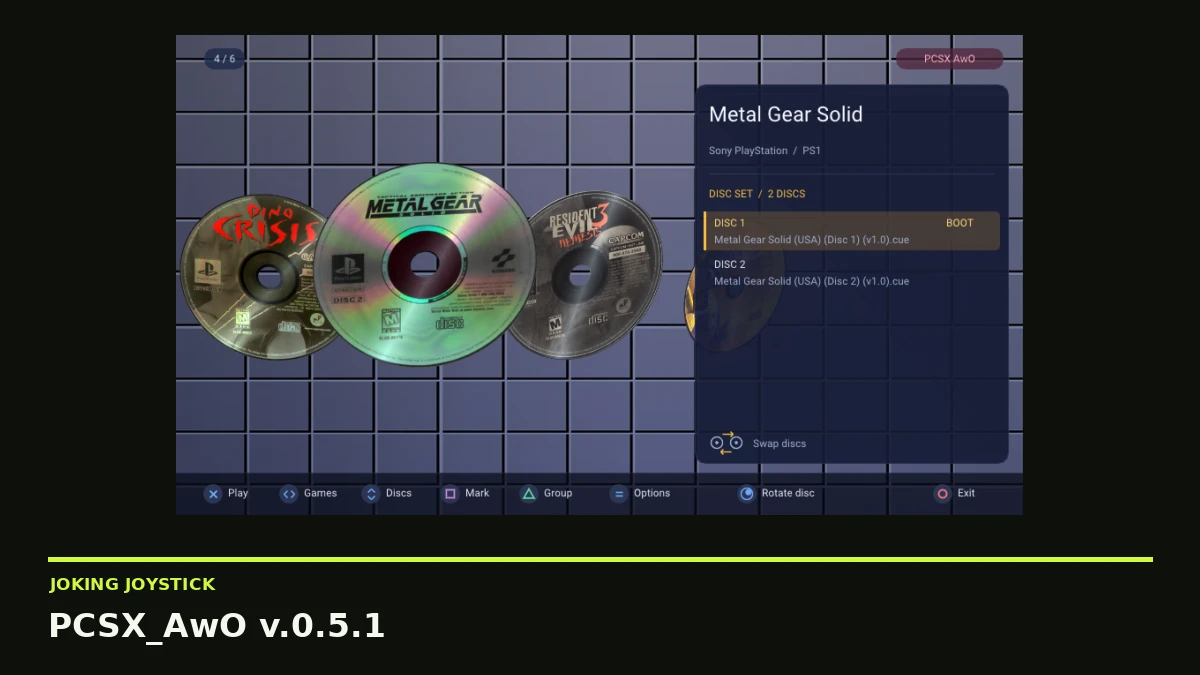
There is a broader interface lesson here as well. The placement and persistence of a button can shape play just as surely as a weapon’s numerical tuning. A prominent rebuy prompt favors continuity; saved kits favor speed and consistency; reduced prominence can create a pause in which another option is considered. For a related example of how game-specific settings can make software behavior more tailored and manageable, see PCSX AwO 0.5.1’s per-game settings update.
For now, Wardogs players who want a cleaner route between rounds have a clear answer: the feature is coming, but it is being held back deliberately. Bulkhead wants the current period to generate experimentation, expose the strengths and weaknesses of different equipment, and provide a less distorted picture of weapon balance. Whether players see that as careful stewardship or an unnecessary delay, the eventual loadout rollout will be the point at which the studio decides that convenience can take priority without sacrificing the information it needs.