Kirk Cousins becoming the Minnesota Vikings’ starting quarterback is the biggest new variable in this week’s NFL card-market conversation. Minnesota reportedly acquired him for a 2027 third-round pick, a modest cost for a team whose defense has set a far higher competitive bar than its quarterback play had allowed.
That does not make a Vikings Super Bowl run inevitable, nor does it instantly turn every player in purple into a card-market breakout. It does, however, give collectors a clearer reason to monitor Minnesota. Playoff relevance has a way of concentrating attention on quarterbacks, star receivers and long-tenured veterans alike—particularly when a team has spent much of the season operating below its apparent defensive ceiling.
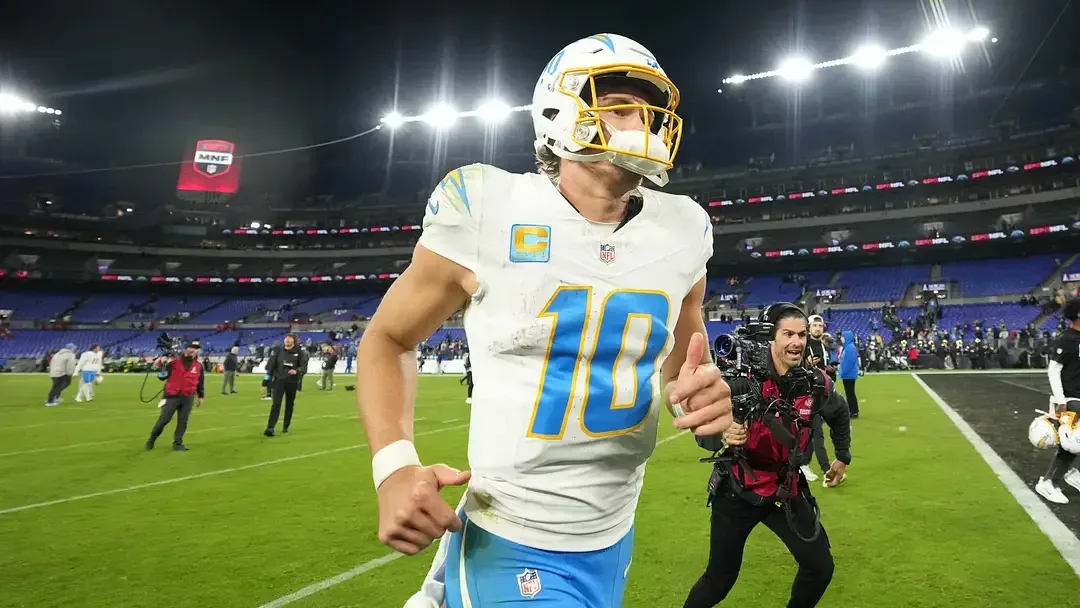
Elsewhere, the Los Angeles Chargers have a possible chance to stabilize after a disastrous opening stretch, but Justin Herbert’s market has already absorbed a brutal correction. In the NFC South, no club sits above .500, leaving several quarterbacks with plausible paths to the postseason and radically different card-market risk profiles.
The common thread is simple: cards are reacting not merely to season-long production, but to changing opportunity. A quarterback trade, a favorable schedule, returning health or a division title can alter the conversation quickly. None of those developments guarantees lasting value.
For more context, explore Jennifer Hale Envisions a Fan-Funded Mass Effect Collective After BioWare’s Closure.
Minnesota Has a New Ceiling—and New Expectations
Cousins arrives in Minnesota with the Vikings still facing a difficult route to the playoffs. The immediate backdrop is encouraging, though: Minnesota’s emphatic win over Green Bay offered a strong first sign, and Cousins did it at the site where he tore his Achilles three years earlier.
The emotional angle is easy to understand, but the football case matters more to collectors. Minnesota’s defense, coordinated by Brian Flores, has performed at an elite level through a group built from free-agent additions and less-heralded draft picks. Great defense can keep a team viable, but championships in the modern NFL usually demand enough quarterback play to capitalize on that advantage. Cousins is expected to change that calculation.
For card collectors, a catalyst is an event that changes how buyers picture a player’s near future. Cousins gives the Vikings several possible catalysts at once: meaningful late-season games, a potential playoff push and a chance for established offensive players to receive more national attention. The trade is therefore less about declaring Minnesota a favorite than about acknowledging that a compelling postseason story is now possible.
Related coverage includes NFL Card Market Watch: Cousins, Herbert and the NFC South.
Cousins cards may not move instantly
There is a practical reason not to expect an immediate surge in 2012 Kirk Cousins rookie-card sales. His rookie cards have low population counts. In hobby language, a card’s population, or “pop,” is the number of examples recorded by a grading company at a given grade. Low-pop cards can be scarce, but scarcity alone does not create an active market.
When few graded copies exist and comparatively few change hands, price discovery can be slow. One sale might be unusually strong or weak without representing broad demand. That makes short-term conclusions hazardous. A deeper Vikings run could bring more attention to Cousins, but collectors would need more public sales before determining whether a genuine market reset had occurred.
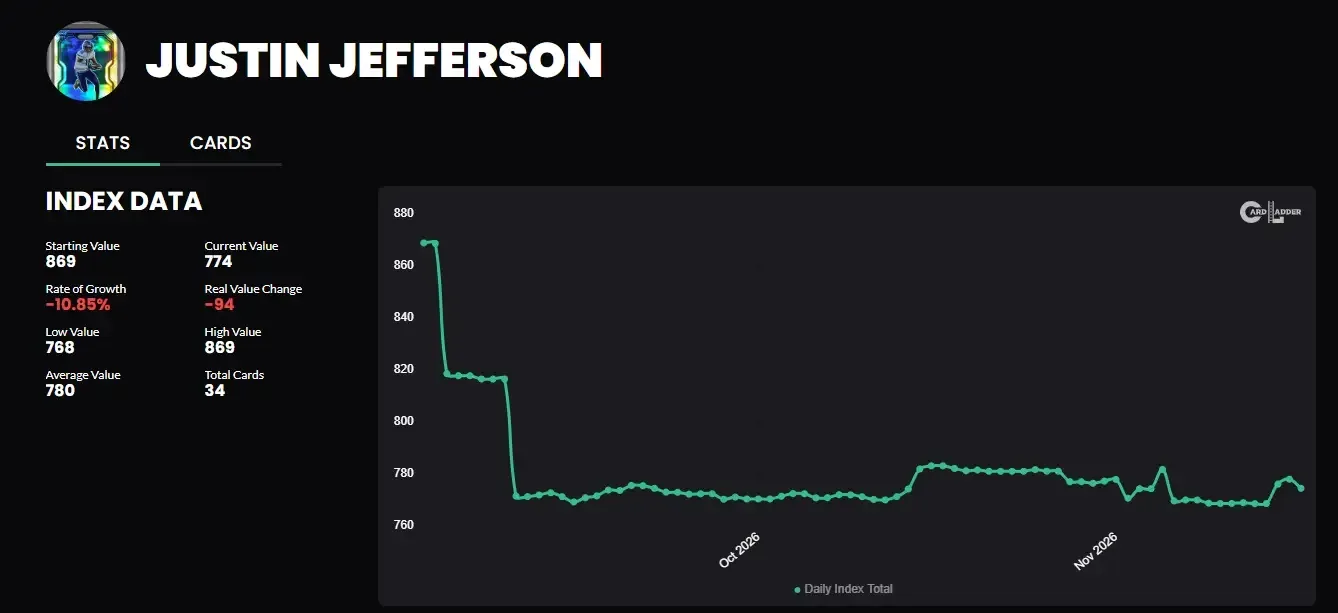
The more immediate Minnesota name to watch may be Justin Jefferson. His card market has reportedly been mostly flat while poor quarterback play reduced his production. Cousins does not erase that lost production, and Jefferson’s cards are not automatically inexpensive simply because the narrative improves. But competent, stable passing offense is the sort of development that can restore the weekly spotlight around an elite receiver.
That distinction matters. Quarterbacks often attract the largest speculative rush, especially in playoff season. Receivers can benefit differently: their cases tend to strengthen when their output, visibility and place in an offense become clearer. Jefferson’s market outlook is tied to whether Minnesota converts its new quarterback situation into sustained offense—not just one attention-grabbing game.
The veteran ripple effect
Harrison Smith, Aaron Jones and T.J. Hockenson could also receive short-lived attention if Minnesota becomes a serious playoff team. These are not necessarily the same type of hobby play as a quarterback or an All-Pro receiver. Their appeal would be connected to milestone pursuits, team momentum and the possibility of memorable postseason moments.
That is a reminder that a momentary bump is not the same as durable value. A veteran’s card can rise around a major game or an achievement, then cool once the news cycle turns. Collectors who already value those players’ careers may welcome more interest; anyone acting only on a playoff headline should recognize how dependent the premise is on Minnesota continuing to win.
The Vikings’ outlook has unquestionably changed. The team now has a quarterback capable of making its defensive performance matter in January. But the hobby conclusion should remain proportional: the trade creates a watchlist, not a guarantee.
Justin Herbert’s Price Drop Shows the Cost of a Lost Season
The Chargers offer the stark counterexample. After losses to Arizona and Las Vegas to begin the season, Los Angeles spiraled into one of the league’s worst starts. The damage extended well beyond the standings.
Herbert’s player index has reportedly fallen by nearly 35 percent since the season began. One specific benchmark illustrates the slide: his 2020 Prizm Silver PSA 10 rookie card was selling near $1,600 at the beginning of the season and is now around $711.
A PSA 10 is a card graded Gem Mint by Professional Sports Authenticator, while a Prizm Silver is a recognizable parallel from the Prizm product line. Collectors often follow prominent graded rookie cards because they are easier to compare across sales than obscure one-of-one cards or lightly traded inserts. That does not mean every PSA 10 Prizm Silver behaves identically, but the change in this example signals a major shift in buyer confidence.
It would be simplistic to say that a few wins fix that decline. The Chargers have upcoming games against the Jets, the Patriots without Drake Maye, Tampa Bay and Las Vegas, creating a reasonable chance for a more respectable run. Better play could reduce the sense of freefall around Herbert. Yet a late stretch of wins is not equivalent to a full repair of a season that has already damaged the franchise’s outlook.
Los Angeles also faces a tension familiar to struggling teams: improvement may hurt draft position. The Chargers had appeared well placed to select Ohio State receiver Jeremiah Smith, one of the most anticipated prospects in the upcoming draft, as a potential answer for a limited passing attack. More victories may brighten the immediate mood while making that outcome harder to reach.
For Herbert collectors, the practical point is that price movement and player evaluation need not move in lockstep. A declining card price can reflect disappointment, uncertainty and fewer buyers rather than a permanent ruling on a player’s talent. Conversely, a short winning streak can bring a bounce without establishing that the longer-term concerns are resolved. The question is not whether the Chargers can beat a favorable portion of their schedule; it is whether the team can give Herbert a credible foundation for the future.
The NFC South Is a Playoff Route, Not a Clean Investment Thesis
No NFC South team is above .500 past the midpoint of the season, but one will still reach the playoffs as division champion under the current format. That is awkward for competitive balance and fascinating for a card market that frequently rewards postseason visibility.
It is important not to confuse access with excellence. Winning a weak division can create a playoff story and another nationally visible game, but collectors still assess how a player performed, how sustainable the team appears and whether the player’s role is secure. The NFC South offers opportunity precisely because there is so little certainty.
Tampa Bay: Mayfield’s health is the hinge
Tampa Bay has been carried by its defense after a poor start, while Baker Mayfield has dealt with repeated injuries. The remaining schedule appears favorable on paper, with only two opponents currently above .500. For anyone tracking Mayfield cards, his eventual return is the pivotal factor.
Schedule-based optimism is inherently conditional. It requires the quarterback to be available and effective, and it assumes the team can translate a softer slate into wins. Still, in a division without a dominant club, even a gradual recovery can place a veteran quarterback back in the playoff conversation. That could invite renewed interest, although it would remain a bet on health as much as football.
Tyler Shough: production meets a tougher test
Tyler Shough’s market has cooled substantially after his fast start. The second-year quarterback is expected to keep producing, but games against the Bears, Bengals and Packers present a more difficult three-week stretch than the hobby would prefer for a clean postseason narrative.
This is the difference between a hot start and a durable market case. Early numbers can generate excitement, particularly for a younger player, but stronger opponents test whether the story has substance. A market cool-down does not decide the matter either way. It simply means future performance carries greater weight than the initial rush of attention.
Bryce Young has the clearest dividing line
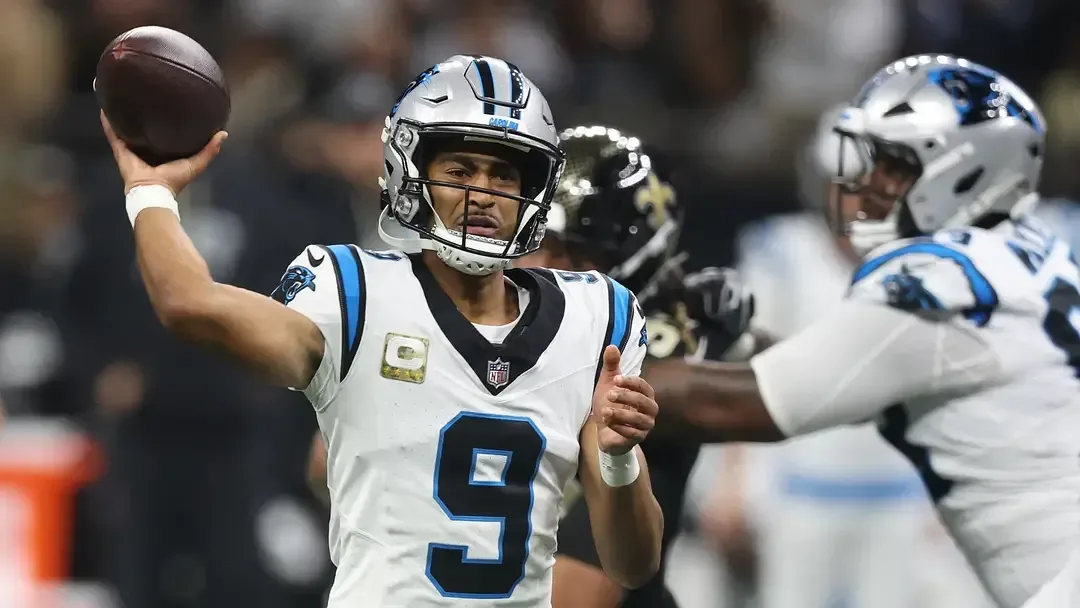
Bryce Young and Carolina may be the division’s most interesting card-market situation. Young led the NFL in passing yards early in the season before injuries hit most of his offensive line. The Panthers’ offense subsequently became far less dynamic, but improving health and an exploitable upcoming schedule leave room for a turnaround.
Carolina closes the 2026 campaign against the Bengals, Steelers and Seahawks. That creates a useful line between optimism and proof. If Young and the Panthers improve before that closing run, the final stretch would offer a meaningful test of whether the team’s earlier limitations were primarily injury-driven. If the offense stays flat, the case for a late hobby revival weakens.
Collectors should view the Panthers as a scenario with identifiable checkpoints rather than a simple buy-or-sell declaration. Offensive-line health, Young’s return to earlier passing volume and Carolina’s position in the division all matter. The NFC South’s lack of direction makes a playoff appearance realistic, but it also means the eventual winner may be defined as much by who avoids mistakes as by who becomes a genuine contender.
What These Storylines Mean for Collectors
The Cousins trade, Herbert’s drop and the NFC South race all point to the same discipline: separate a new narrative from confirmed results. There is nothing wrong with tracking cards because a player’s situation has improved. The mistake is treating attention as proof of lasting demand.
- Watch liquidity as well as price. Low-pop Cousins rookies may have limited sales, so individual transactions can be noisy.
- Identify the actual driver. Jefferson’s outlook depends on Minnesota sustaining better offense; Mayfield’s depends heavily on health; Young’s depends on protection and performance.
- Respect the schedule without overrating it. Favorable opponents can help create momentum, but teams still have to win.
- Distinguish a bounce from a rebuild. Herbert’s market could stabilize if the Chargers improve, yet a few wins would not automatically undo the concerns created by the season’s first two and a half months.
November and December regularly compress a season’s worth of hobby judgment into a handful of games. Minnesota has gained a meaningful new reason for attention. The Chargers may get a chance to stop the bleeding. And the NFC South remains open enough that a quarterback who looks overlooked today could be playing a playoff game later. The outcomes are uncertain; the reasons to watch are not.