Four weeks is enough time for an NFL card market to get noisy, but not necessarily enough time for it to become clear. A quarterback can lead the league in passing yards, a receiver can post a career-best afternoon, and an unbeaten team can still leave collectors unconvinced. The early 2026 season is supplying examples of all three.
The biggest hobby developments center on Bryce Young’s dramatic production in Carolina, the Dallas Cowboys’ increasingly potent Dak Prescott-to-CeeDee Lamb connection, and a Minnesota Vikings team whose winning record has not translated into much excitement around its major card names. The common thread is simple: card prices respond to performance, but they also react to narrative, injury concern, expectations and the perceived sustainability of what happens on Sunday.
That distinction matters for anyone looking at the headline numbers. A fast-rising card is not automatically a bargain, and a player whose cards have been quiet is not automatically overlooked. Week 4 provides a useful snapshot of why collectors should separate a player's on-field result from the story the market believes comes next.
Bryce Young’s production has changed the conversation
Young has begun 2026 in the kind of form that would have been difficult to forecast during the middle of the 2024 season. The 2023 first overall selection had been benched for Andy Dalton as Carolina moved toward a 5-12 season in Dave Canales’ first year as head coach. Dalton’s subsequent minor car accident, which sidelined the veteran, became an unexpected part of the route back to Young taking control of the offense.
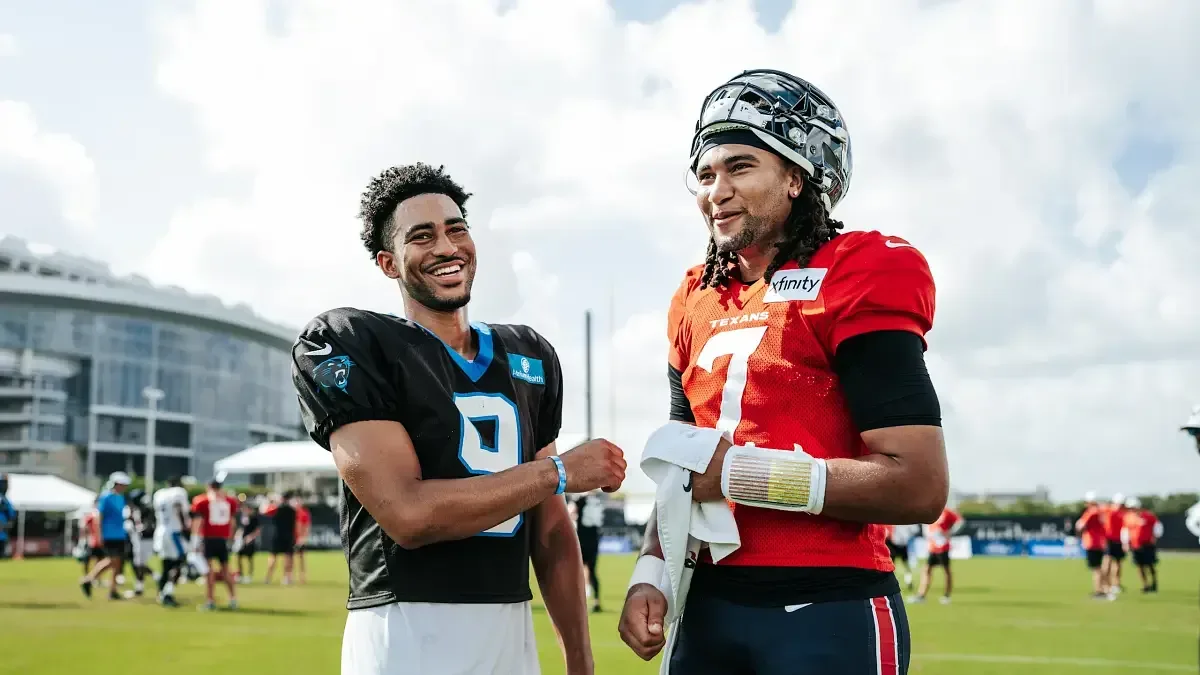
Carolina then reached the playoffs at 8-9 last season. Through four weeks of 2026, Young has moved beyond a simple redemption narrative and into a production-based one: he leads the NFL in passing yards and is tied for third in passing touchdowns. Those are the kind of league-table placements that can pull a player into the attention of collectors who may not have been following every Panthers game.
The supporting cast has helped make those statistics more credible as an offensive trend rather than a collection of isolated plays. Tetoria McMillan, Carolina’s 2025 first-round pick, ranks sixth in receiving yards over the same opening stretch. Jalen Coker, an undrafted third-year player, has added 222 receiving yards despite missing Sunday’s contest. A quarterback’s card market usually benefits when buyers can see more than one functional connection in the passing game; it suggests the offense has multiple ways to generate volume.
There is, however, an important caveat to the early surge. Carolina is 2-2, and some of Young’s massive totals were accumulated against two NFC North defenses that struggled to stop the pass. That does not erase the production. It does mean collectors should avoid treating four games as definitive evidence that every early benchmark will hold through an entire schedule.
Why the Silver Prizm move matters
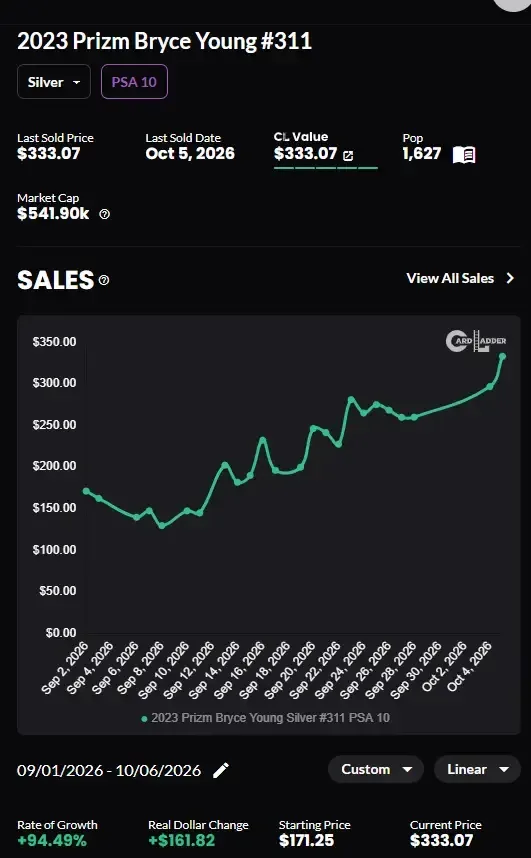
Young’s 2023 Silver Prizm PSA 10 has nearly doubled in price since the season started. That is a sharp movement for a modern graded card in a short period, and it reflects how quickly the market can reprice a young quarterback once the production and comeback narrative align.
Silver Prizm refers to a parallel version of a Prizm card rather than the standard base issue. In broad collecting terms, parallels are variations within a release that can differ through finish, color or numbering. PSA 10 is a top grade assigned by Professional Sports Authenticator, and the grade is central to the comparison here: prices for a PSA 10 should not be casually treated as prices for raw, ungraded copies or cards with lower grades.
The practical implication is that the near-doubling describes a particular card in a particular condition, not a universal percentage increase across every Bryce Young card. Collectors considering a purchase should identify the exact year, set, parallel and grade before comparing values. Using completed-sale data is generally more informative than treating an asking price as proof of market value; the same logic applies when evaluating games and other collectibles, as explored in this guide to using sold listings without inventing a fair price.
The Buccaneers and Packers are Carolina’s upcoming pre-Halloween tests. They matter less as guaranteed price catalysts than as opportunities to test whether Young’s current pace can travel into a tougher stretch. If production remains high, the market has a stronger basis for continued confidence. If it cools, the speed of the earlier rise becomes a reminder that modern quarterback cards can move both directions quickly.
Dallas has supplied the cleanest offensive case
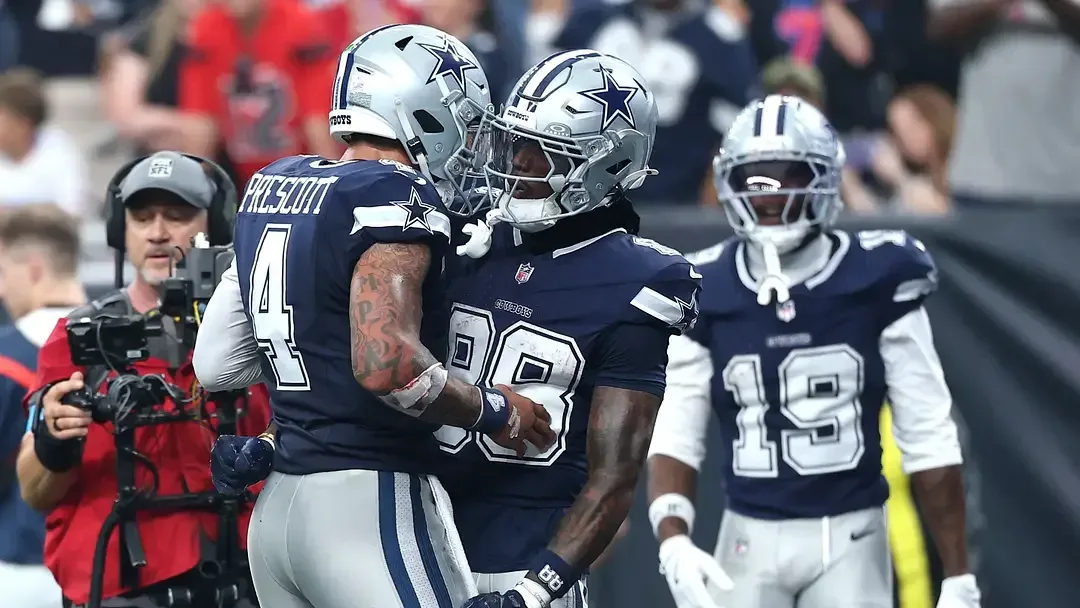
The Cowboys’ 34-30 win over Houston delivered an enormous game for CeeDee Lamb and extended a productive run for Prescott. Lamb caught 17 passes, a single-game career high, for 189 yards, his third-highest single-game yardage total. He now has three consecutive 100-yard receiving games.
Prescott’s recent line is just as relevant to the card conversation. Across the past three weeks, he has thrown for 890 yards with a 6:0 touchdown-to-interception ratio against difficult opponents. The notation means six passing touchdowns and zero interceptions. It is a compact indicator of both scoring output and ball security, two attributes that can fuel confidence in a quarterback-led offense.
For Lamb collectors, there is an obvious connection: remarkable receiving totals are helped by steady quarterback play. For Prescott collectors, Lamb’s ability to repeatedly dominate targets and yardage makes the quarterback’s numbers easier to contextualize. The two markets need not rise at the same rate, but the on-field relationship makes them closely connected.
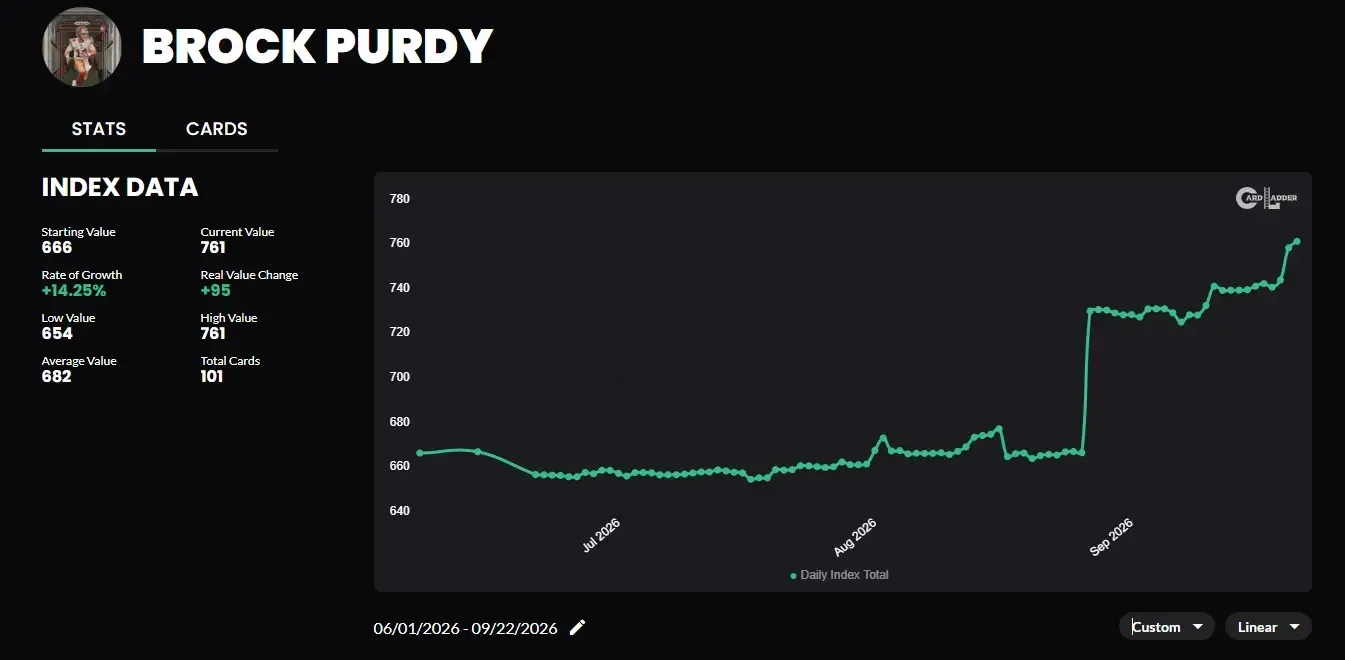
The market has already responded. Prescott’s 2016 Silver Prizm PSA 10 has sold for more than $325 after beginning the season around $270. Lamb’s broader card market is up roughly 15 percent since the start of September. Those are meaningful early increases, though they also illustrate why the phrase “buy low” can be misleading with high-profile Cowboys players.
Popularity can already be in the price
Dallas players arrive with a large built-in audience. That does not prevent further growth when performance improves, but it can make a sudden leap harder to capture after the fact. An increase following a 17-catch, 189-yard performance is a market response to information everyone can see. It is not automatically a signal that comparable gains are still waiting.
The Packers, Buccaneers, Cardinals and Colts are next on Dallas’ slate, while the Giants face a more difficult second half after their 3-1 start. Those schedules create a plausible route for the Cowboys to improve their postseason position, but schedule-based projections are still projections. The useful collecting takeaway is narrower: monitor whether the passing volume, Prescott’s efficiency and Lamb’s target production remain intact as the opponents change.
Collectors weighing Prescott should also keep the product-year distinction in mind. His referenced card is a 2016 issue; Lamb’s market movement is described across his cards more generally. A rise for one flagship graded Prescott parallel does not establish a matching value for every Prescott rookie, autograph or insert, just as Lamb’s overall increase does not establish a uniform price for every one of his releases.
Minnesota proves winning alone is not a card-market engine
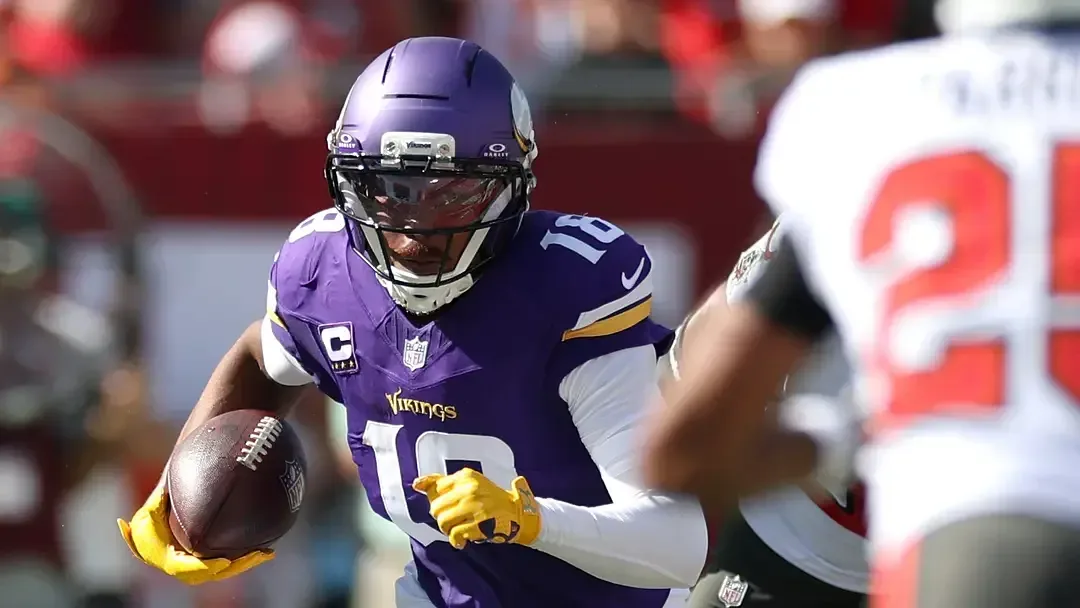
The Vikings offer a useful contrast. Minnesota is unbeaten, but its offense has scored only 48 points across the last three weeks. Those victories came against weaker opposition, including a Bears team without Caleb Williams in a monsoon. Wins count in the standings, but they have not yet created the highlight-rich offensive case that often prompts a broad hobby surge.
Injuries have complicated the picture. Kyler Murray and Justin Jefferson each missed a game during that stretch. Murray has just one passing touchdown in two games, while Jefferson’s base 2020 Prizm rookie has softened after an ankle injury in the Week 3 win. Jordan Addison and T.J. Hockenson have also not received much apparent market lift despite producing at different points.
The lack of movement is not necessarily a verdict on Minnesota’s season. It is a reaction to uncertainty. The team has beaten the opponents in front of it, yet the offense has not produced a sustained statistical story to match an unbeaten record. For a roster with established names, collectors may be waiting for health, volume and more convincing performance to coincide.
Kevin O’Connell’s team will next meet the Saints and Colts before games against the Lions and Bills later in October. Those later contests loom as more informative measures of whether Minnesota can pair its winning record with an offense that turns player markets. Until then, the Vikings demonstrate that a team result and an individual-card catalyst are not the same thing.
A practical checklist for following early-season NFL card swings
- Match the price to the exact card. Confirm the set, year, parallel and grade. A PSA 10 sale should not be used as a shortcut for the value of a raw card.
- Look at the cause of the performance. Young’s league-leading yardage is notable, but the quality of the defenses involved adds context. Volume, opponent and repeatability all matter.
- Track the quarterback-receiver relationship. Prescott and Lamb show how connected production can support more than one player market.
- Do not treat a winning record as a complete argument. Minnesota’s start shows that card buyers may want exciting individual output and clarity on health, not merely victories.
- Recognize when attention is already high. Well-followed stars and teams can react rapidly to a strong performance, leaving less room for an easy “undervalued” thesis.
- Keep uncertainty visible. Upcoming games can validate an early run or complicate it. Neither outcome is guaranteed by a four-week sample.
Young has supplied the season’s most striking reappraisal, Prescott and Lamb have made Dallas’ passing game a major market watch, and Minnesota’s subdued card response has added needed skepticism to the idea that winning fixes everything. The next few weeks should provide more evidence. For now, the smarter read is not that every hot player must rise or every quiet player must be cheap. It is that the hobby is weighing performance against what it thinks can last.