The final 2010s-era licensed Topps Football flagship releases before the brand regained its license in 2025 have a surprisingly broad appeal. The 2014 and 2015 sets sit at an intersection collectors tend to enjoy: recognizable modern designs, players whose legacies are much clearer now than they were on release, and entry points that remain comparatively modest.
Four cards illustrate that mix especially well. The 2014 base rookie cards of Aaron Donald, Mike Evans and Davante Adams give one set a defensive superstar and two elite wide receivers. The 2015 Pat McAfee card is a different kind of chase altogether: a first Topps issue for an established punter whose public profile later expanded far beyond the field.
None of these examples should be treated as a promise of future value. Recent sales and asking prices can change quickly, and a player’s career narrative is only one part of what determines demand. Still, they offer practical case studies in how position, condition, grading and cultural visibility shape a card’s appeal.
Why 2014 Topps has so much to offer
For collectors assembling one affordable football set with multiple notable names, 2014 Topps has an unusually persuasive checklist. Donald, Evans and Adams do not represent the same kind of hobby proposition, but each adds a distinct route into the product.
For more context, explore Why an iPhone-to-USB Printer Cable Usually Goes Nowhere.
Donald is the reminder that defensive greatness can carry lasting collector interest, even if defensive cards often do not receive the same attention as quarterbacks and skill-position stars. Evans provides established production at wide receiver, while Adams brings another major receiving name whose best-known NFL years helped elevate recognition of his early cards.
That concentration matters. A collector can pursue individual player cards, build a graded trio, or work on the broader 2014 set without treating every purchase as a high-stakes investment. It is also a useful lesson in differentiating a card’s importance from its price: a comparatively inexpensive base rookie can still be a meaningful item in a player collection.
Aaron Donald: elite defense at a comparatively accessible level
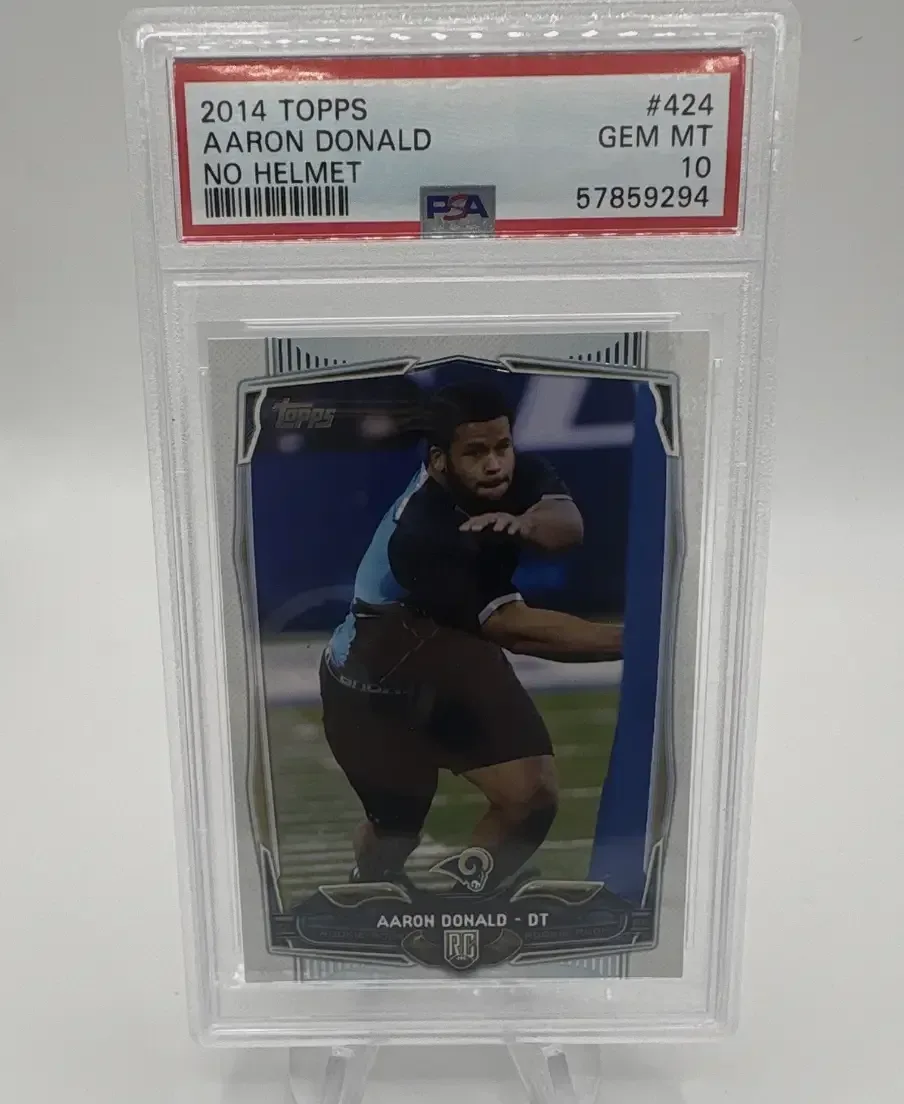
Aaron Donald spent his NFL career with the Rams and is identified with a level of defensive play that makes him an unusual focal point for a mainstream rookie-card discussion. Defensive linemen rarely command the same automatic hobby premium as prominent offensive players. That does not make their cards unimportant; rather, it can create a more approachable way to collect an all-time-caliber résumé.
Donald’s 2014 Topps rookie card reportedly flew under the radar for years, in part because his reputation was not fully formed when the set first arrived. That is a familiar pattern with non-quarterbacks. A player may be excellent from the start yet only become a major collecting target after accolades, longevity and a clearer place in the sport’s conversation accumulate.
A PSA 10 copy has been available around $81. PSA 10 means Professional Sports Authenticator assigned the card its highest numeric grade, indicating an example judged to be in gem-mint condition. It does not mean every copy looks identical, nor does it guarantee a fixed resale value. It does, however, place the card in a condition tier that many collectors use as a standardized target.
For a buyer, the Donald card makes the strongest case as a player-and-era collectible. It pairs a recognizable flagship rookie issue with a defensive star, while the cited price suggests that high-grade entry can remain within reach compared with many marquee offensive rookie cards.
Mike Evans: production, recognition and the 2014 rookie class
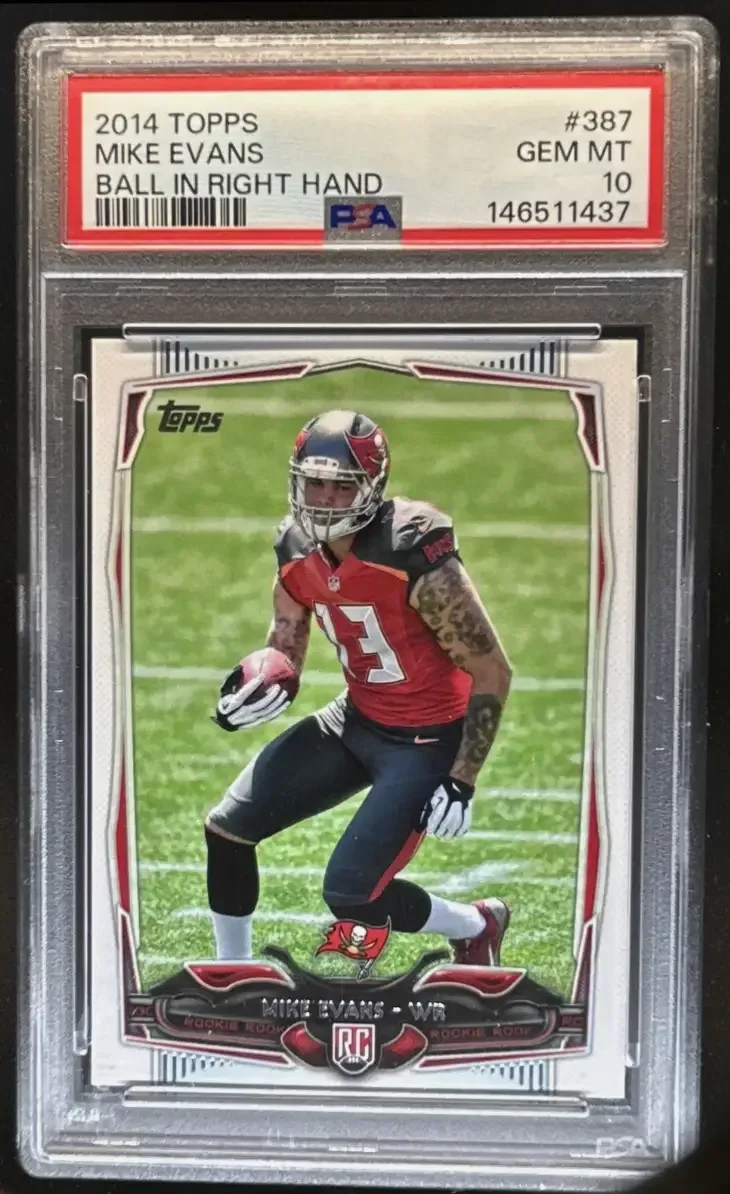
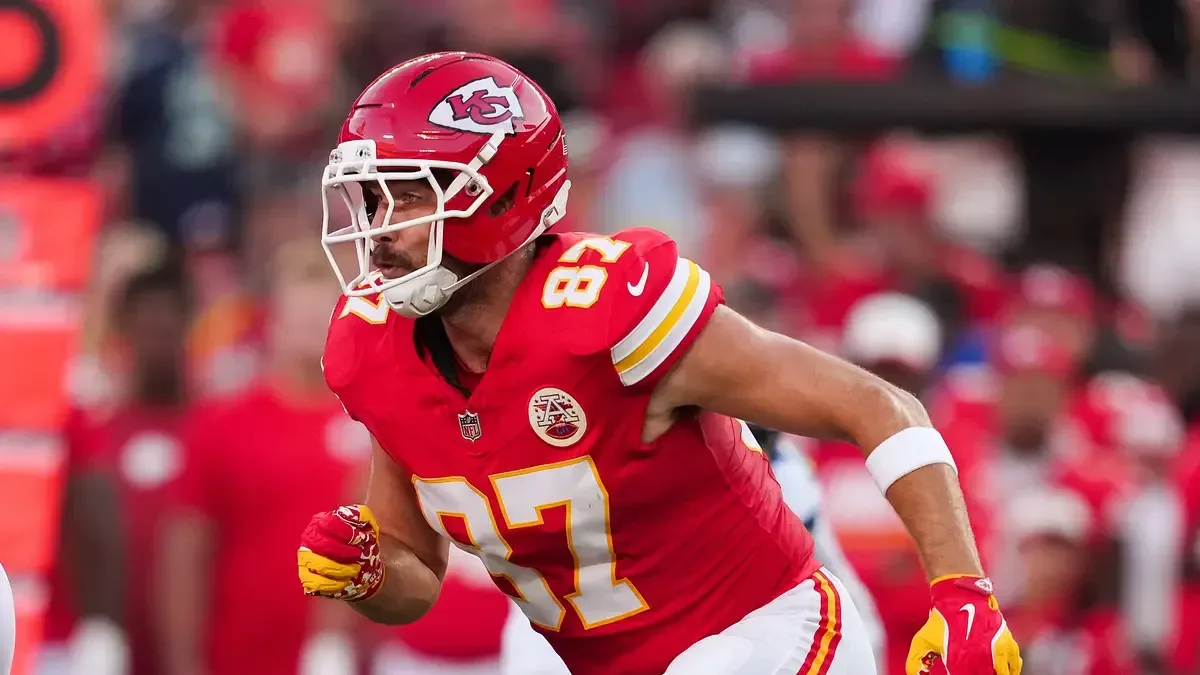
Mike Evans gives the same 2014 Topps release a very different collecting argument. He is credited with 13,155 receiving yards and 109 touchdowns to this point in his career, numbers that underpin his Hall of Fame conversation. The source material also places him with the San Francisco 49ers this season.
Wide receivers have a clearer traditional pathway to hobby attention than defensive linemen, but player-card demand still varies enormously. Team following, current visibility, career milestones, supply and the popularity of a particular issue can all matter. A strong stat line does not mechanically determine a card price.
That distinction is what makes the cited recent $44 sale for a PSA 10 Evans rookie notable. The card represents a productive, still-active receiver in a flagship set, yet it has remained a comparatively low-cost option for collectors seeking a graded rookie card. A buyer looking specifically for Evans may see that as an attractive balance of player significance and cost; someone focused on short-term market movement should avoid assuming one sale sets a permanent benchmark.
It is worth comparing like with like when checking listings. A raw card, an authenticated card and a graded PSA 10 are not interchangeable products. Even within one numeric grade, sale timing and buyer competition can produce different outcomes.
Davante Adams: the lowest-cost entry of the group
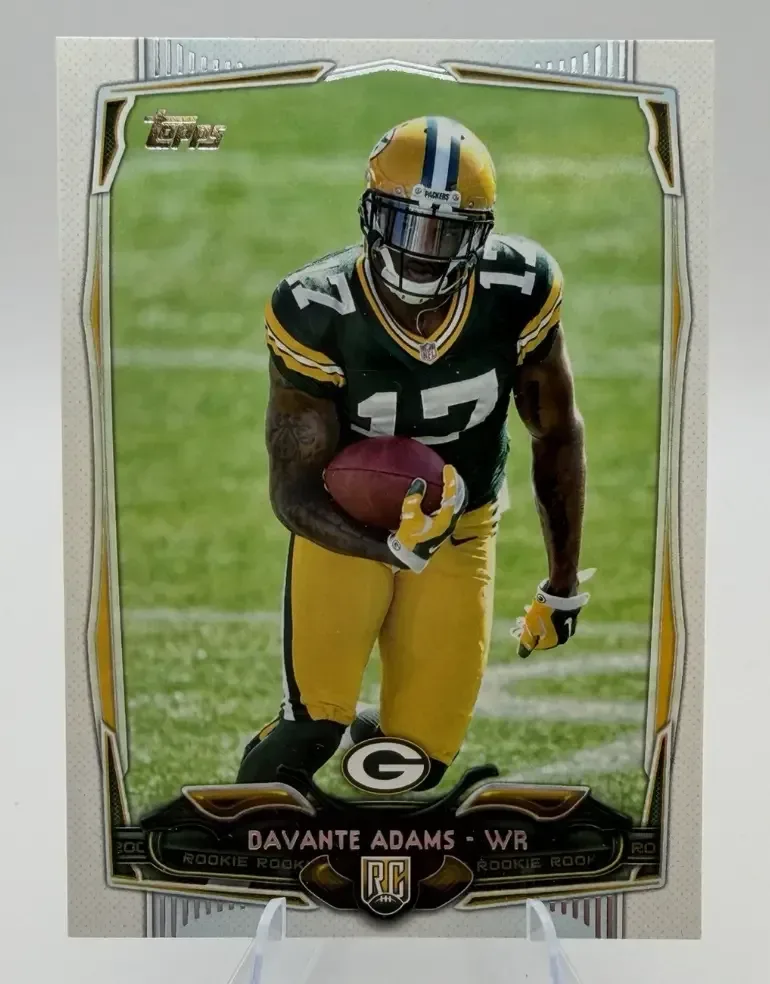
Davante Adams is another major name from 2014 Topps. His rise as Aaron Rodgers’ leading target in Green Bay cemented his profile, and he remains active, now joining Donald on the Los Angeles Rams.
His card demonstrates why collectors should not equate low raw prices with low significance. An ungraded Adams rookie card can be found for about $1, while PSA-graded copies are said to bring roughly $30. That spread is not mysterious: raw cards have not undergone third-party condition review, and the best-preserved examples are generally more desirable to collectors who want display-ready cards or registry-oriented graded collections.
Raw simply means ungraded. It does not automatically mean damaged, just as a graded card is not automatically the best fit for every collection. Raw copies can be ideal for a binder, a team collection or a low-cost player run. They also require buyers to judge the card themselves, paying particular attention to the elements that grading companies scrutinize: centering, corners, edges and surface.
For Adams collectors, the inexpensive raw card offers an uncomplicated way to own an early flagship issue. The graded version creates a second lane for those who value condition verification. That choice should begin with collecting goals, not a reflex that every card must be slabbed.
Pat McAfee’s 2015 Topps card is an unconventional rookie-card story
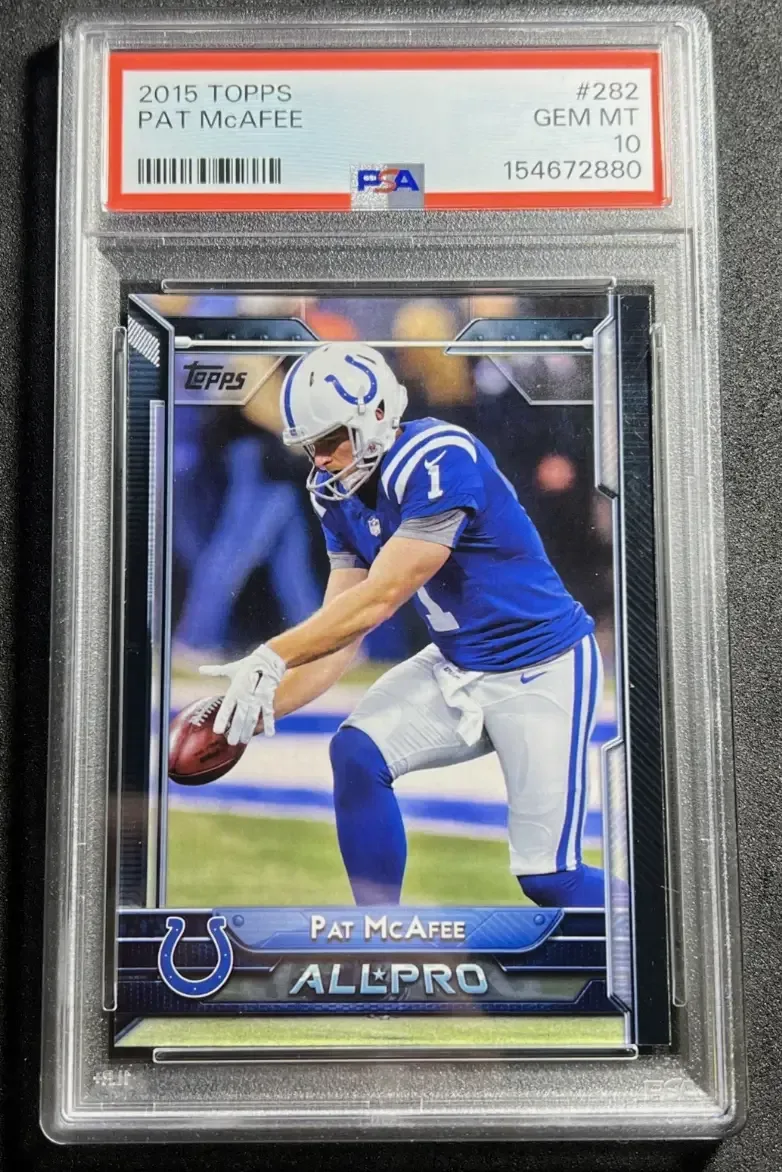
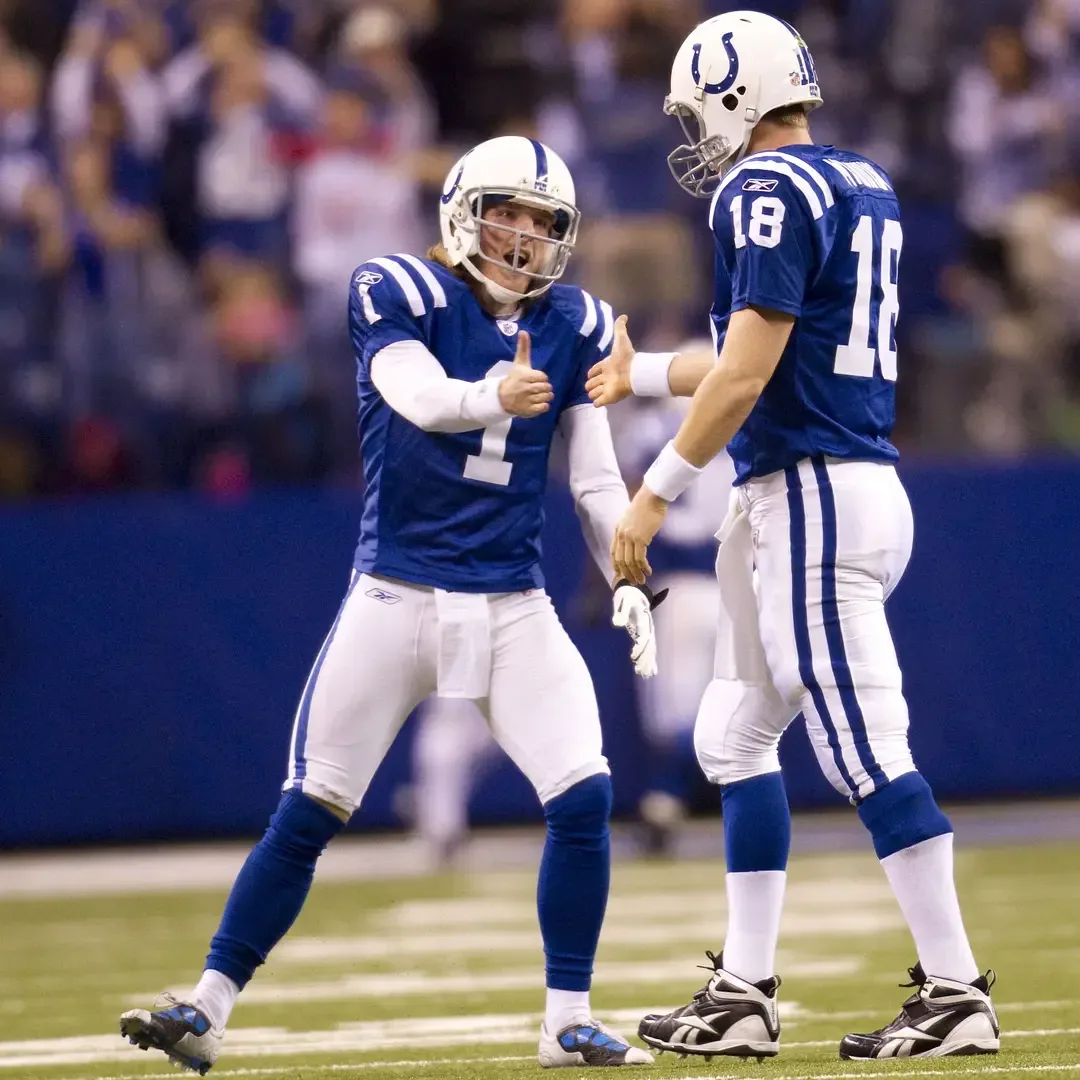
Pat McAfee is the outlier of this group. His first Topps Football card appears in 2015, even though he was already a veteran player. It has no rookie-card logo, but it is considered his rookie card because it is his first Topps issue.
That is an important piece of hobby vocabulary. A rookie card is often shorthand for a player’s key early-career card, but collectors also use the term more broadly for a player’s first card in a given brand or product context. McAfee’s case shows why it is useful to inspect the card and checklist rather than relying solely on the presence of an RC emblem.
Punters generally do not attract substantial card demand, which makes the reported $150 recent sale for a PSA 10 McAfee particularly striking. The 2015 card’s black borders and centering are described as difficult, making pristine-looking copies harder to locate. In card grading, dark borders can make whitening along the edges more visible, while poor centering is often immediately noticeable on a front-facing design. Those issues can increase the appeal of truly high-grade specimens.
McAfee’s stature in sports broadcasting is another plausible part of the card’s interest. The key point is not that every punter card will suddenly become a premium item. It is that demand can expand when a former player becomes a major personality beyond playing career statistics. McAfee’s card is therefore less a conventional rookie-card bet than a crossover collectible tied to football and sports-media recognition.
What to check before buying
The reported figures—around $81 for a PSA 10 Donald, $44 for a PSA 10 Evans, about $1 raw or roughly $30 graded for Adams, and a $150 PSA 10 McAfee sale—are snapshots, not price guides. Before committing, collectors should make a direct comparison among recent completed sales for the same card, grade and variation.
- Confirm the exact year and set. “Topps Football” alone is not enough when searching across multiple releases.
- Separate raw and graded results. A low-cost ungraded listing does not establish the value of a PSA 10.
- Study condition in raw listings. Centering, corners, edges and surface can materially affect both enjoyment and grading potential.
- Do not let one sale define the market. A single completed transaction may reflect timing, scarcity or two determined bidders.
- Buy the version that matches the collection. A clean raw Adams may be more satisfying for a player binder than a slab; a difficult black-bordered McAfee may make grade especially important to another buyer.
The larger appeal of these two Topps releases is their range. Donald offers defensive greatness, Evans and Adams supply sustained receiving excellence, and McAfee adds a first-Topps-card wrinkle shaped by his later broadcasting prominence. That is ample variety for collectors who want recognizable football names without making affordability an afterthought.
Shop the products
Check current price, model and availability at the retailer.