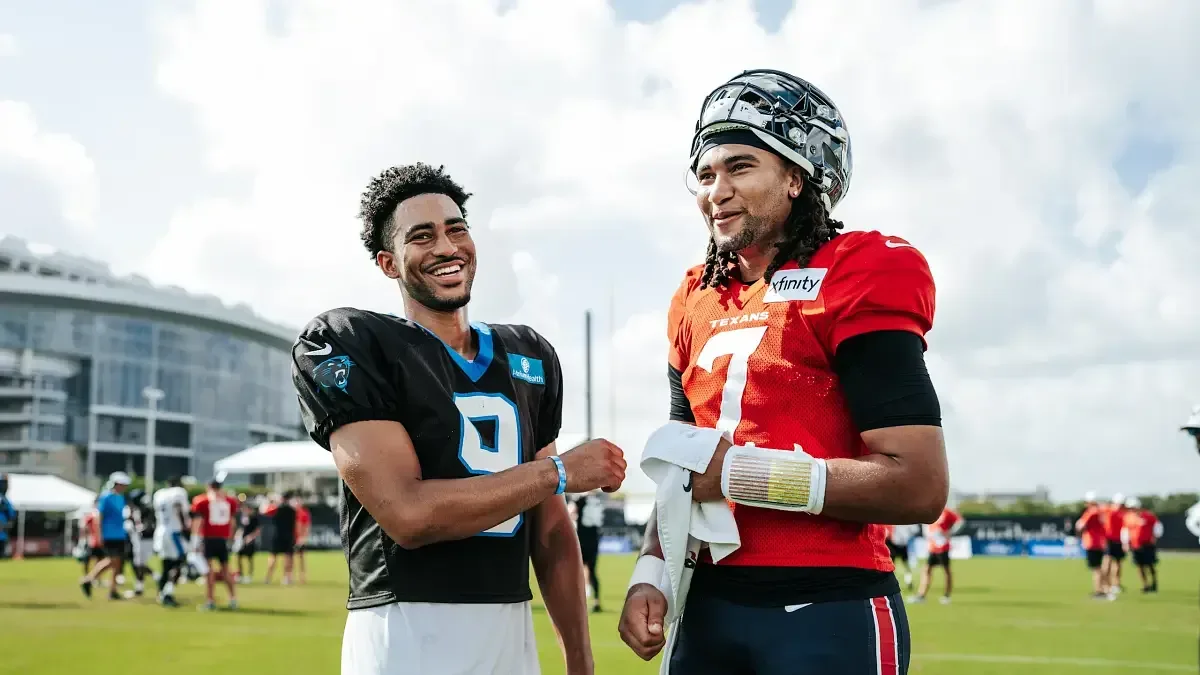
Caleb Williams started the NFL season with the sort of box score that makes hobby-watchers reach for saved searches before the final whistle has fully faded. In Chicago’s 59-37 Week 1 victory over the Carolina Panthers, the Bears quarterback completed 21 of 29 passes for 269 yards and two touchdowns. He also rushed for 65 yards and added two more scores on the ground as Chicago posted 59 points, described as an opening-day record.
That is a four-touchdown opening statement, and the recent market activity around Williams cards reflects the attention. A group of notable completed eBay auctions has placed several of his scarce cards in five-figure territory. The sales span different manufacturers, years, card styles, serial-numbered parallels, memorabilia pieces, and grading companies, but they share the traits collectors routinely prize: limited supply, recognizable brands, strong grades, signatures, and a player whose on-field visibility has suddenly become impossible to ignore.
Williams was not entirely satisfied after the win, saying the team had played sloppily and had not executed to its desired standard. For collectors, that response is almost as notable as the production. A huge Week 1 game creates immediate excitement; the suggestion that the quarterback sees room to improve creates the broader narrative that usually sustains interest beyond one Sunday.
A six-card snapshot of Caleb Williams demand
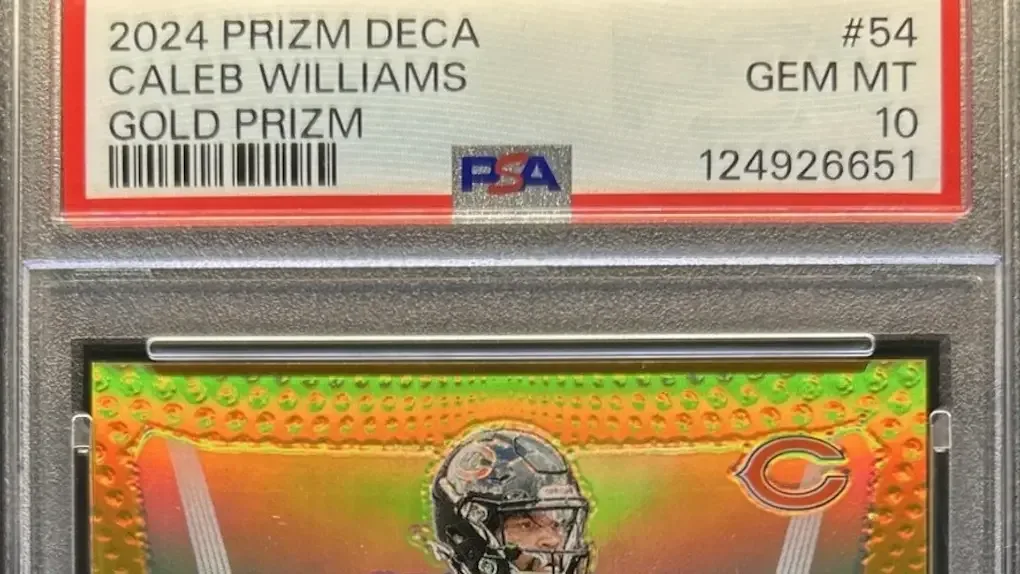
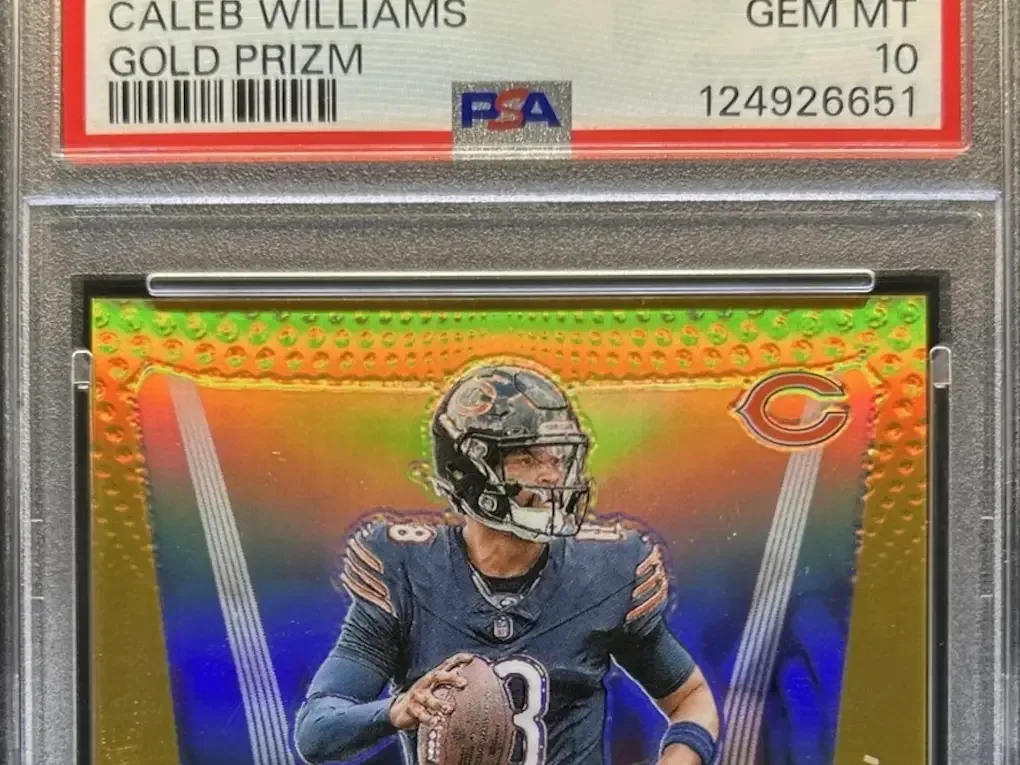
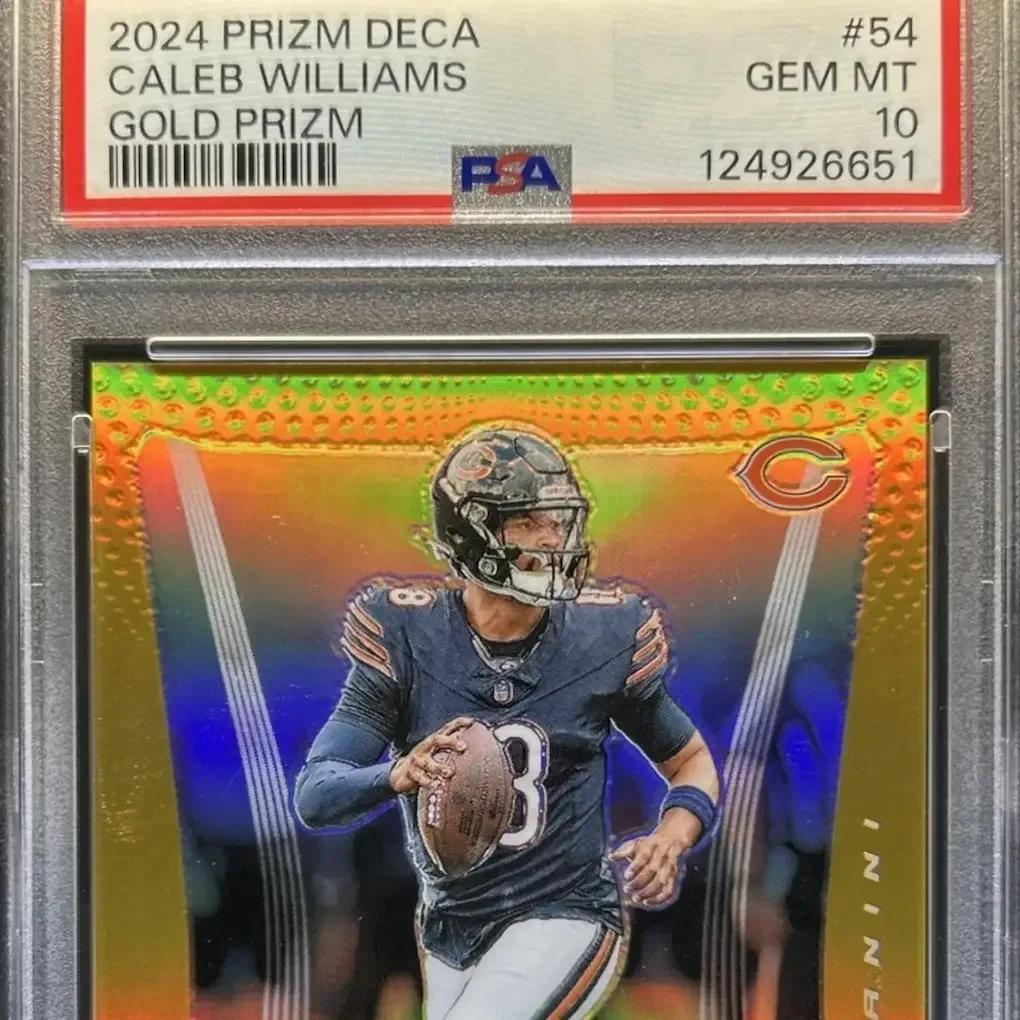
The highest reported sale in this recent batch was a 2024 Panini Prizm Deca Gold card that brought $25,600 after 61 bids. The card received a PSA 10 grade and is one of only 10 made. A Deca Gold parallel combines a tiny stated population with the visual recognition of Prizm, and a gem-mint grade gives bidders another layer of scarcity to weigh. Not every low-numbered card becomes a market centerpiece, but this one had the checklist of attributes that can draw aggressive competition.
For more context, explore ICO vs Shadow of the Colossus: Which PS2 Adventure Fits Your Tolerance for Companions, Scale and Control Friction?.
Second in the group was a 2024 Topps Now Orange patch autograph, numbered 3 of 5, which sold for $15,102 across 96 bids. It is graded PSA 10, includes a patch, and carries Williams’ autograph with the inscription “CW #1 pick.” The appeal here is less about one isolated feature than a pileup of them: an extremely low serial number, a signature, memorabilia content, a top grade, and writing that ties the card directly to his draft status.
A 2024 Donruss Optic Downtown Black Pandora, numbered 21 of 25 and graded BGS 9, reached $12,823 on 27 bids. Downtown cards are particularly distinct in the modern-card landscape because of their bold, highly stylized designs. The Black Pandora version adds a numbered parallel layer to that already prominent insert identity. Its BGS 9 grade is different from the PSA 10 examples in the list, a useful reminder that collectors do not value every card solely through the same grading label or numerical threshold.
The most visually peculiar card among the group may be the 2025 Topps Chrome Kaiju, graded PSA 10, which realized $11,600 after 42 bids. Artist Yellowfly is credited for its scene of Williams throwing a football while bears eat hot dogs in the background. In a market full of chrome finishes, action photography, and familiar rookie-card templates, unusual artwork can give a card its own collector identity. The sale does not establish what every Kaiju card should be worth, but it does show that an unconventional design can command a serious result when paired with a major quarterback and a PSA 10 grade.
Another 2024 Prizm entry, a Choice Cherry Blossom parallel numbered 11 of 15 and graded PSA 9, sold for $11,225 on 27 bids. Its result sits close to the Kaiju sale despite the different product approach. That proximity illustrates an important reality of high-end modern football cards: scarcity has several expressions. Some buyers prefer a recognized parallel in a flagship-style release; others may chase artistic inserts, autographs, or patch cards. The market is not a single ladder with one universally agreed best card at every rung.
Rounding out the notable sales is a signed 2025 Topps Resurgence Superfractor, an ungraded one-of-one featuring a patch from a Williams rookie jersey. It sold for $10,101 in 39 bids. A Superfractor’s 1/1 designation is the obvious centerpiece, while the rookie-jersey patch and autograph add direct player-linked components. Unlike several other cards in the group, it was ungraded. Its five-figure outcome underscores that grading is a major factor for many cards, but it is not the only route to a premium result when a card has singular scarcity and multiple high-end features.
What the bidding totals actually reveal
It is tempting to turn a hot opening game and a sequence of big auctions into a simple declaration that every Caleb Williams card is rising. That would be too broad. These are elite examples: low-numbered issues, a 1/1, graded copies, autographs, patches, and chase inserts. Their results say far more about demand for premium Williams material than they do about every base card, raw card, or higher-print parallel bearing his name.
Even so, the individual bid counts are meaningful context. The $15,102 Topps Now Orange patch autograph drew 96 bids, while the Deca Gold sale brought 61. The Kaiju received 42, and the Superfractor drew 39. Multiple bidders participating in auctions does not tell collectors the identities, budgets, or long-term intentions of those bidders. But it does indicate that the closing prices were formed through visible competitive activity rather than a single unchallenged offer.
The product mix also matters. Panini Prizm appears twice in the six highlighted outcomes, with Deca Gold and Choice Cherry Blossom examples. Topps appears three times through Topps Now, Topps Chrome, and Topps Resurgence. Donruss Optic contributes the Downtown Black Pandora. Rather than one release monopolizing attention, Williams’ upper-end activity is appearing across several major modern football-card formats.
For anyone tracking the developing football-card market, it is worth separating the player story from the exact-card story. Williams’ Week 1 production can increase attention on his entire ecosystem, but the price of a PSA 10 card numbered to 10 cannot simply be applied to a card numbered to 99, a base rookie, or an ungraded copy. Autograph placement, patch type, condition, serial numbering, set popularity, visual appeal, and timing all affect a result. The distinction becomes especially important when a quarterback’s national profile is moving quickly.
Why Week 1 can be such a hobby accelerant
Football card markets live on a weekly rhythm. A standout game can put a player into highlight packages, fantasy discussions, team conversations, and hobby feeds at the same time. Quarterbacks are especially exposed to that cycle because their statistics and wins are often treated as shorthand for a team’s direction. Williams’ performance supplied passing efficiency, touchdown production, rushing value, and a lopsided team total in a single game.
There is still a long season ahead, which is exactly why collectors should treat a Week 1 spike as information rather than a verdict. The exciting case is clear: Chicago’s quarterback delivered a major opener, the team scored 59 points, and premium cards have recently produced substantial auction figures. The uncertainty is equally clear: football seasons change rapidly, and six high-end auction outcomes are not a full market index.
Collectors considering Williams cards may get the most useful signal by monitoring comparable sales over time. Look for the same card, the same serial-number range, the same grade, and the same authentication or grading company before drawing comparisons. A PSA 10 Deca Gold numbered to 10 belongs in a very different conversation from a PSA 9 Cherry Blossom numbered to 15, even though both are 2024 Prizm parallels. A BGS 9 Downtown Black Pandora has its own collector audience and supply profile. A raw signed Superfractor with a rookie-jersey patch is, by definition, a unique item.
Those distinctions are not the boring part of the hobby; they are the game inside the game. A player’s performance may be the boss battle that brings everyone into the room, but the card’s exact build decides what they are fighting over. Recent auction coverage similarly highlights the immediate connection between Williams’ Week 1 showing and increased attention on his card market.
The cards at a glance
- 2024 Panini Prizm Deca Gold, PSA 10, one of 10: $25,600 on 61 bids.
- 2024 Topps Now Orange patch autograph, PSA 10, 3/5: $15,102 on 96 bids.
- 2024 Donruss Optic Downtown Black Pandora, BGS 9, 21/25: $12,823 on 27 bids.
- 2025 Topps Chrome Kaiju, PSA 10: $11,600 on 42 bids.
- 2024 Panini Prizm Choice Cherry Blossom, PSA 9, 11/15: $11,225 on 27 bids.
- 2025 Topps Resurgence signed Superfractor with rookie-jersey patch, ungraded, 1/1: $10,101 on 39 bids.
Williams’ season is only one game old, but the premium end of his card catalog has already delivered a clear message: when rare construction, desirable presentation, and a breakout quarterback performance overlap, collectors are willing to bid like the scoreboard is still running.