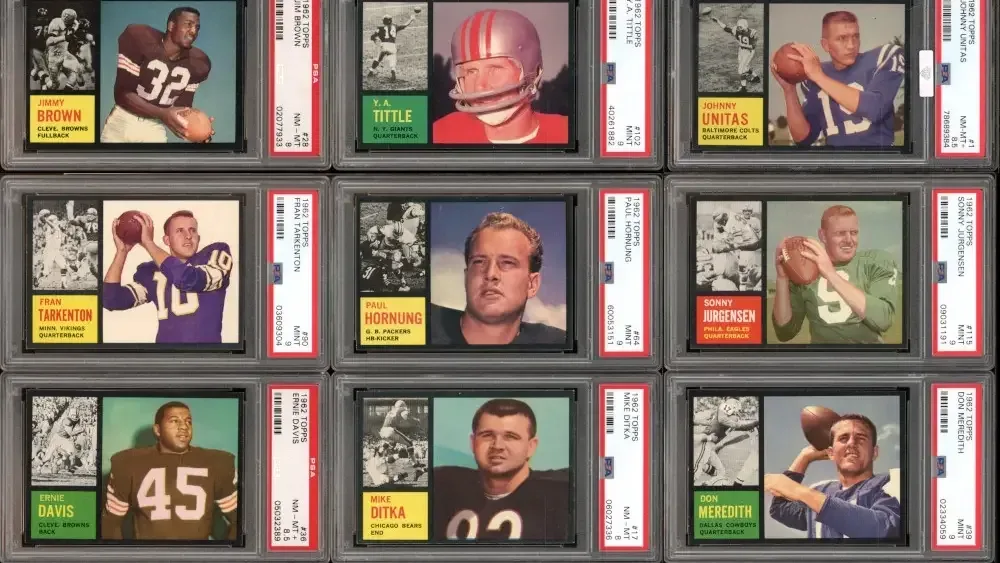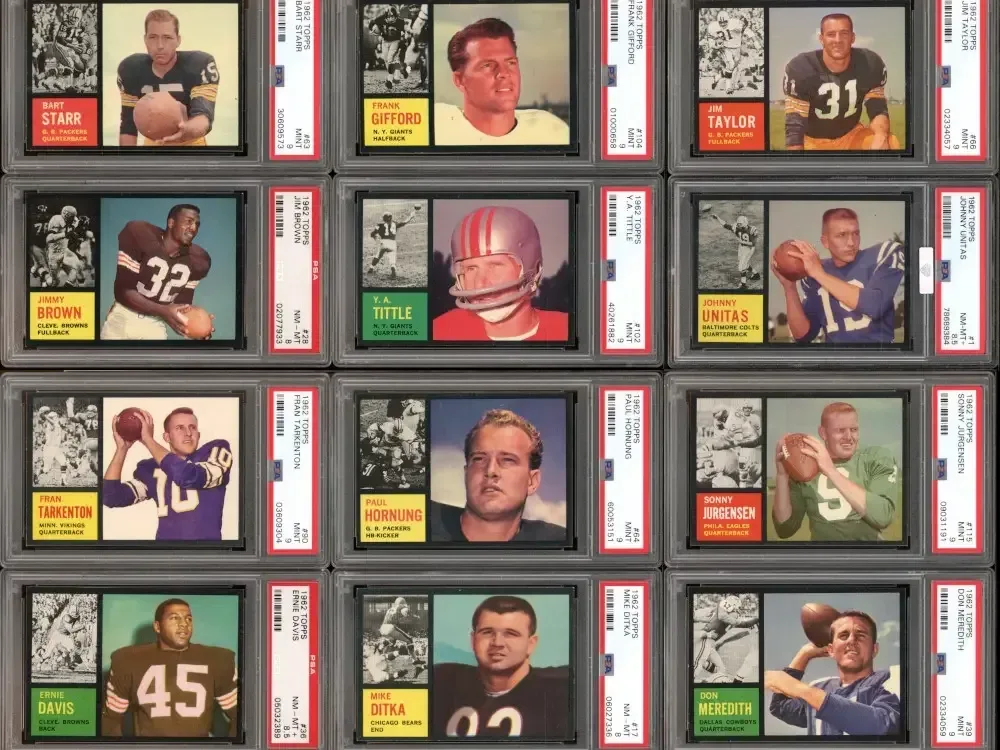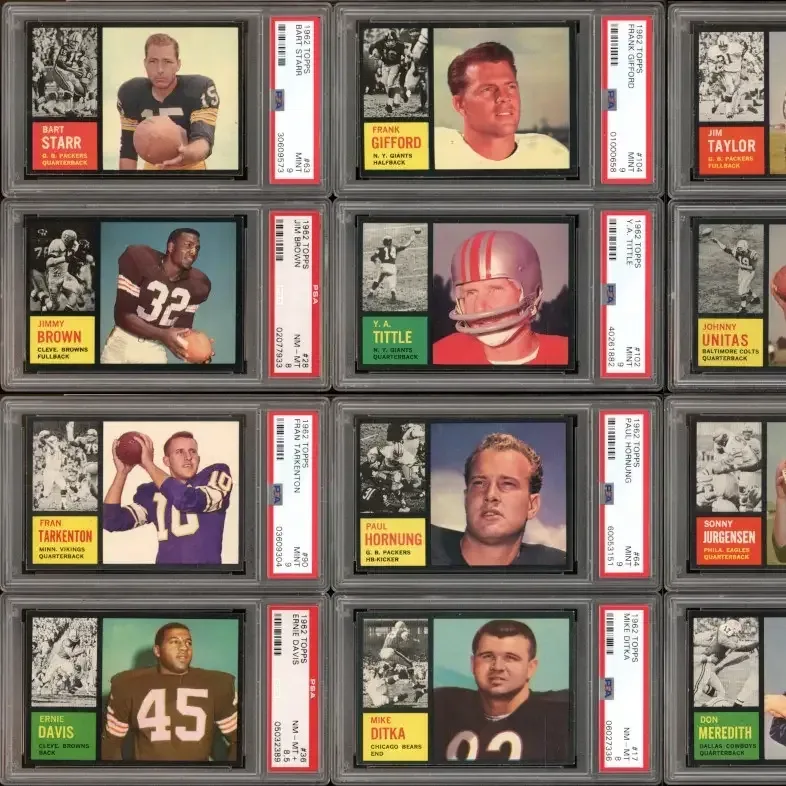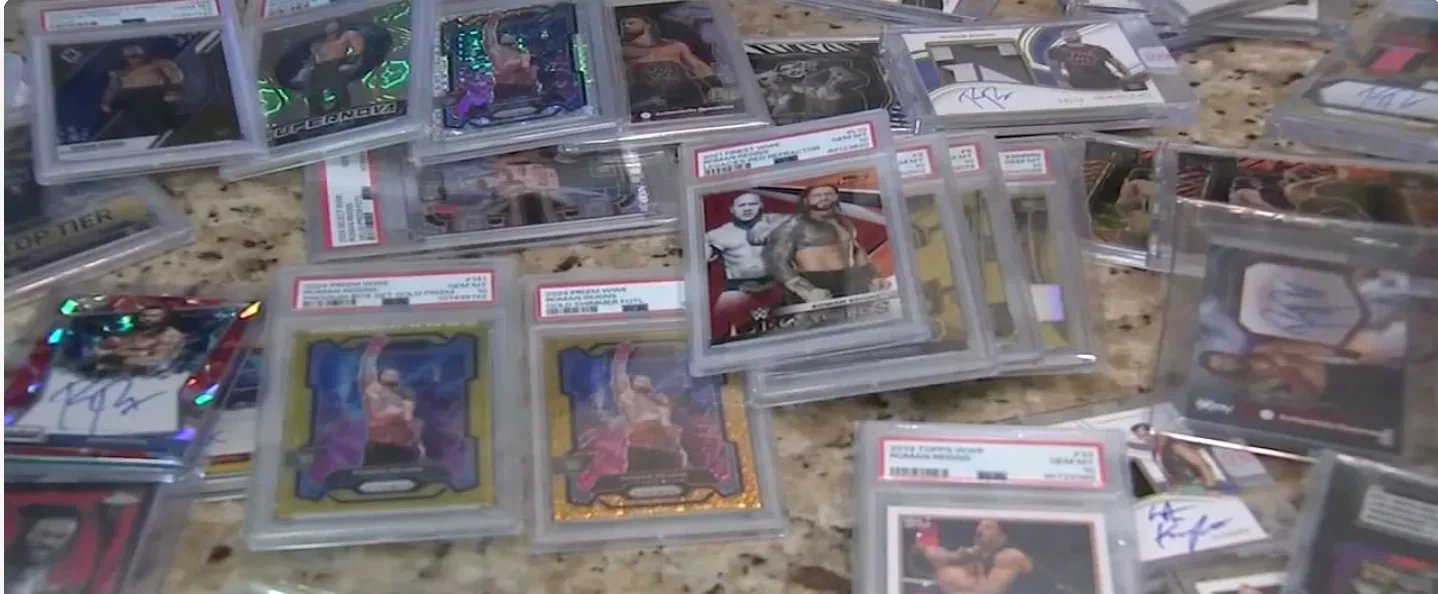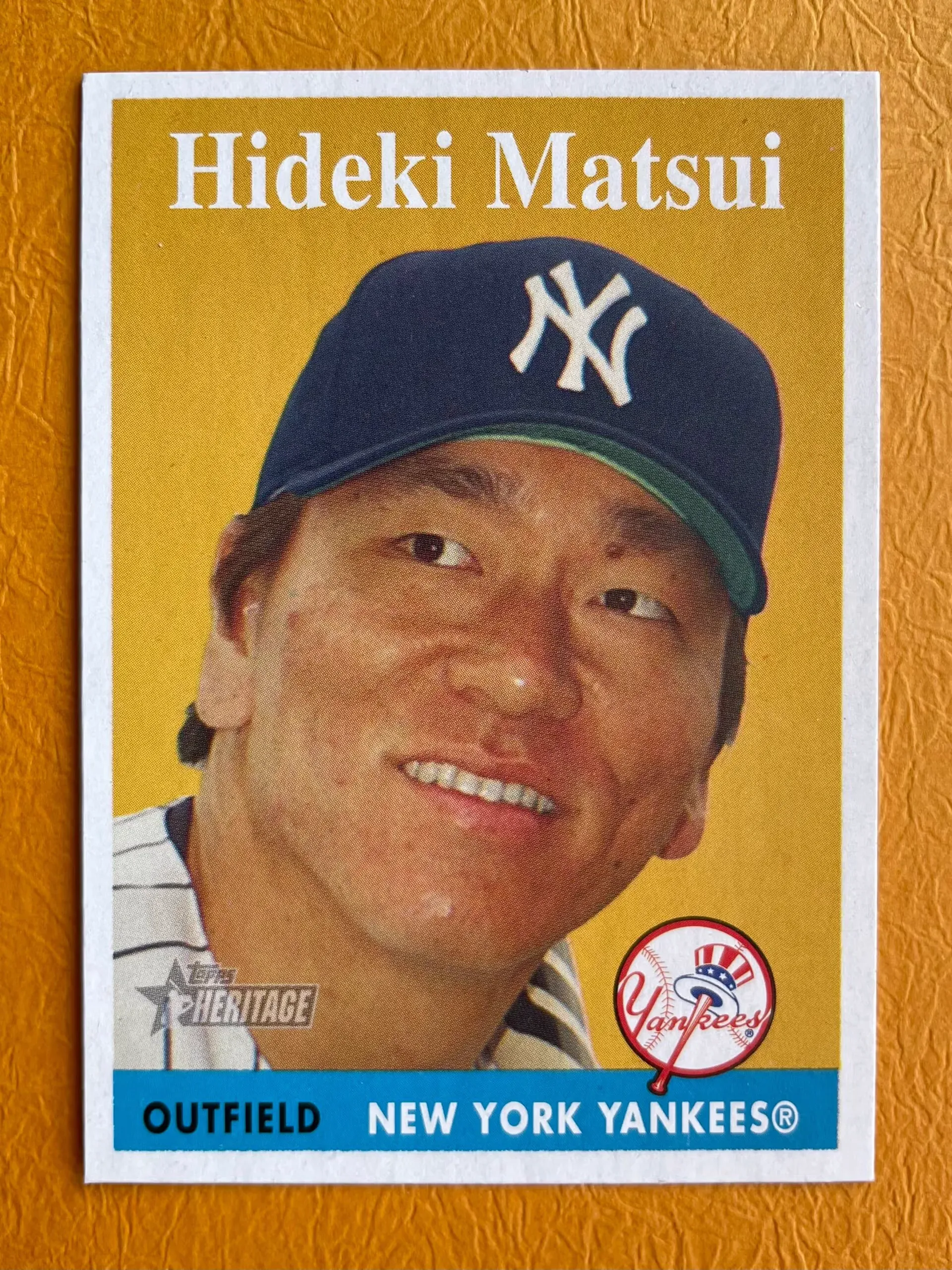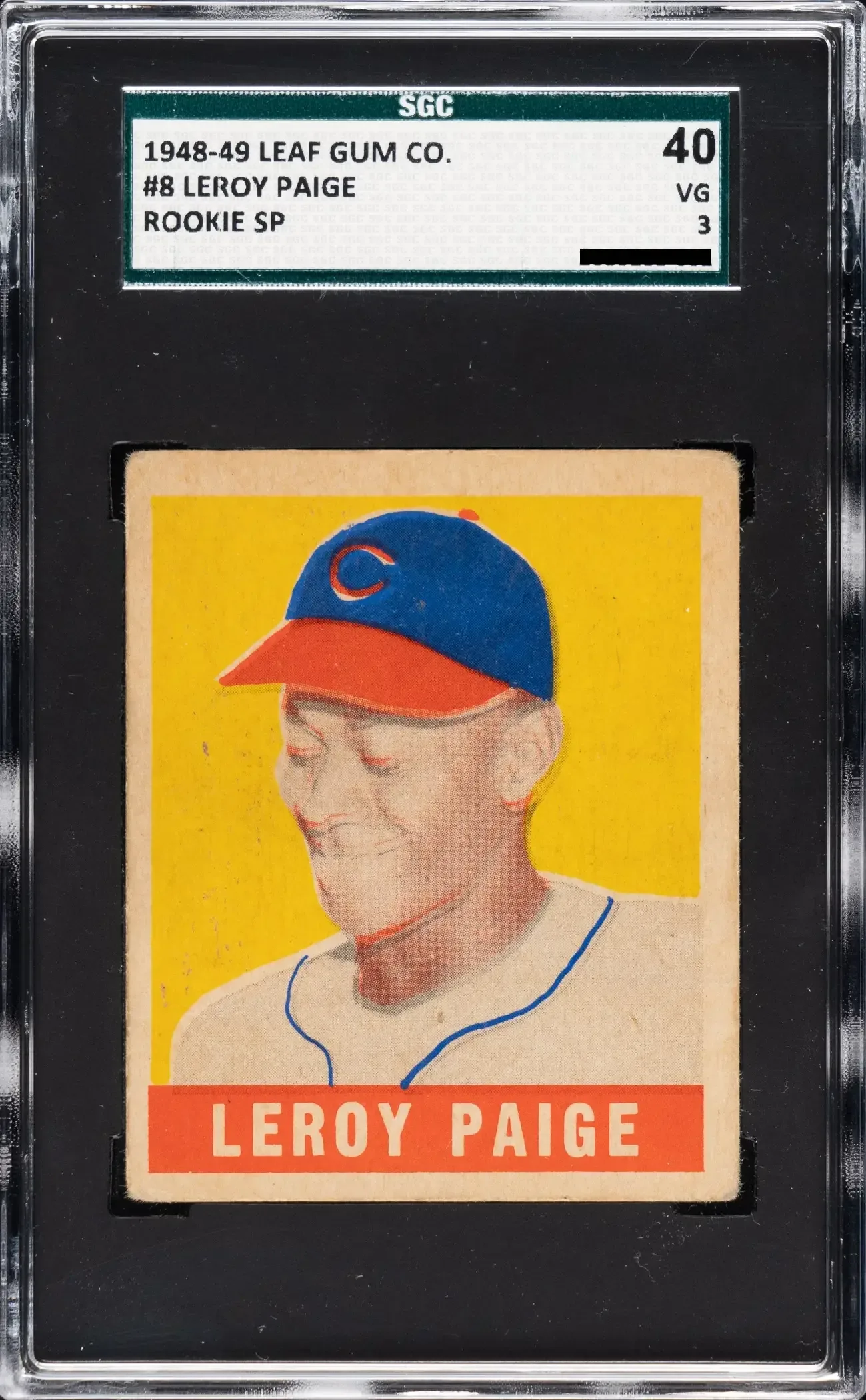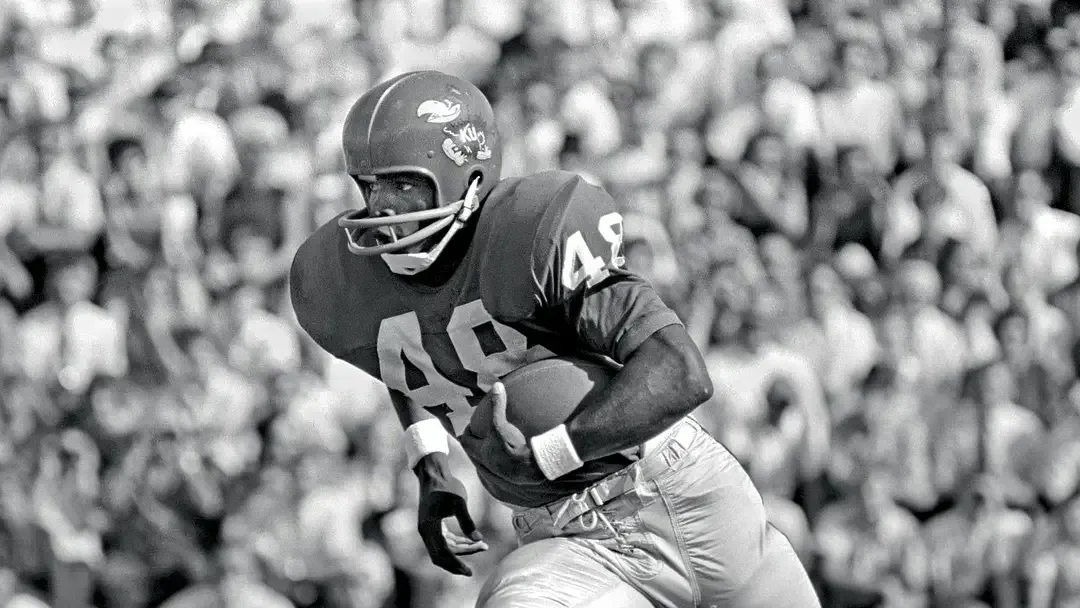
A near-complete 1962 Topps Football set has sold for $1.47 million, establishing a new high-water mark for a football-card set at public sale. The 175-of-176-card group was the No. 1-ranked entry on PSA’s All-Time Finest Set Registry, carrying a reported grade-point average, or GPA, of 9.337. It drew 54 bids in Mile High Card Company’s Fall Auction.
The price is notable on more than sheer scale. Set collecting asks buyers to assess something broader than a single superstar card: condition across hundreds of separate pieces, the difficulty of finishing the checklist, the credibility of the grading record, and the appeal of the players represented. In this case, the set is just one card short of complete while featuring a roster of NFL greats including Jim Brown, Bart Starr, Johnny Unitas and Mike Ditka.
That combination made the lot a rare convergence of vintage football history and elite registry-set quality. A million-dollar result does not mean every 1962 Topps Football card has suddenly become a seven-figure collectible, of course. Rather, it demonstrates the premium buyers may place on an unusually high-grade, extensively assembled set when it reaches a competitive auction setting.
Why the registry ranking matters
PSA’s Set Registry is a collector-facing system that tracks graded cards entered into a particular set and compares sets using their card grades. Its All-Time Finest rankings focus on the strongest registered examples rather than merely the most complete groups. A GPA, in this context, is a numerical snapshot of the grades across the cards in the registered set. The reported 9.337 GPA puts this 1962 Topps group in exceptionally lofty condition territory.
That does not eliminate the importance of examining individual cards, nor does it turn a registry position into a universal appraisal. Different grading companies, eye appeal, centering, scarcity and buyer preferences can all affect market outcomes. But registry placement gives bidders a standardized shorthand for the scale of the achievement: this was not simply a long-held run of old football cards, but a near-complete set that had been built to an unusually demanding grade standard.
The missing card is equally worth keeping in perspective. “Near-complete” means precisely that: the lot was 175 cards deep in a 176-card issue, not a finished 176-card master set. At this price level, the single absence is part of the story, not a trivial footnote. Yet the final result indicates bidders still judged the aggregate quality and historical importance of the assembled cards to be extraordinary.
A record within a broad record-setting auction
The football-set sale was the headline result in a 3,100-lot auction that produced several other high prices for graded sets and individual cards. Auction house president and CEO Brian Drent said the level of interest and number of world-record results surpassed expectations.
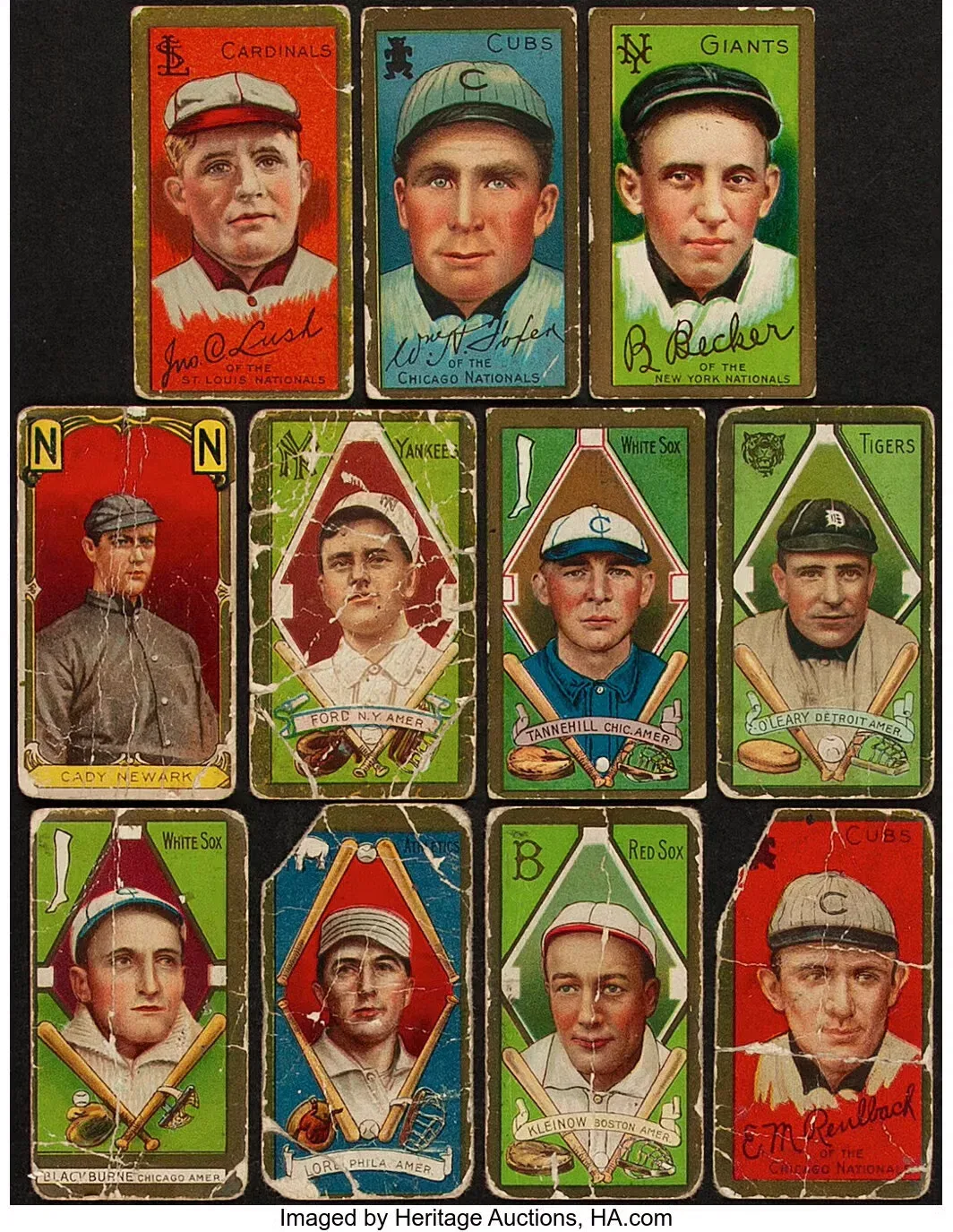
One of the most revealing companion results came from the break-up of a 1909–11 T206 Polar Bear Back near-complete set. Instead of selling the collection only as one intact object, the cards were offered individually or in smaller groupings, producing a combined $529,913. The Ray Demmitt card, graded PSA 6, realized $176,385, while a PSA 4 Bill O’Hara reached $33,906. Both were reported as record prices.
Related coverage includes 1962 Topps Football Set Sells for Record $1.47 Million.
The T206 outcome illustrates an important distinction for collectors: an intact set and a dismantled set can each have a market logic. A top registry football set can command attention because it is an achievement in its assembled form. Conversely, a pre-war collection can sometimes unlock demand card by card, particularly when rare names or difficult backs attract specialists with narrowly focused checklists.
Neither route is automatically superior. Selling a set intact preserves its story, composition and registry identity. Breaking it apart potentially puts its strongest components in front of more specialized bidders, but it also ends the collection as a single historical unit. The auction’s results show that both forms of value were in play.
Six-figure set sales show depth beyond football
Several other complete and near-complete offerings cleared six figures:
- A 1958 Topps Complete Master Set, ranked No. 3 on the PSA Set Registry, sold for $360,913.
- A 1975 Topps PSA-graded near-complete set, ranked No. 4, sold for $184,587.
- A 1963 Post Cereal hand-cut, PSA-graded complete set, ranked No. 2, realized $161,390.
- A 1965 Topps complete PSA-graded set, ranked No. 12, brought $138,459.
- A 1934 Batter-Up complete set, ranked No. 1, sold for $111,343.
These results span conventional card issues, a hand-cut cereal-card set and a pre-war set. Their shared trait is not a single sport or manufacturer but the combination of completion, grading and high-end registry standing. For anyone following vintage cards, that is the practical takeaway: the market at this level rewards specificity. “Old” and “complete” are not enough descriptions on their own; the precise issue, grading company, numerical grades, completeness and registry context all materially shape how a lot is understood.
For recent vintage-baseball context, readers can also see five vintage baseball cards that set new public-sale highs in one week.
Individual cards: Ruth leads, with Mays, Mantle and Starr also posting major figures
Among single-card results, a 1933 Sport Kings Gum No. 2 Babe Ruth graded SGC 9 sold for $833,138. It was described as SGC’s only Mint 9 example. The supplied auction information also referred to PSA population in an unclear, apparently incomplete phrase, so the precise PSA comparison should not be inferred from that wording alone.
Other significant prices included a 1952 Topps No. 261 Willie Mays, graded SGC 8 with an MBA Silver Diamond designation, at $194,831; a 1961 Topps All Star No. 578 Mickey Mantle in PSA 10 at $111,343; and a 1952 Topps No. 311 Mickey Mantle, MBA 2.5 GOOD+, at $100,991.
The grade spread between the two Mantle results is a useful reminder that condition is powerful but not the only element buyers consider. A PSA 10 example of a 1961 All Star card brought more than $111,000, while a much lower-grade 1952 Topps Mantle still crossed $100,000. Those are different cards from different issues and should not be treated as a direct grade-for-grade comparison. What they do show is that landmark player-card combinations can retain major demand across widely different condition levels.
A Goudey No. 149 Babe Ruth graded PSA 5.5 with an MBA Silver designation brought $98,212. A 1960 Topps No. 300 Hank Aaron in PSA 8.5 achieved $55,163, reported as more than twice the preceding record. Other record results listed in the sale included a 1957 Topps No. 119 Bart Starr, MBA 9 Silver Diamond, for $61,197; a 1954 Parkhurst No. 65 Johnny Bowers, PSA 9 MBA Silver Diamond, for $33,861; a 1975 Topps Mini No. 228 George Brett, MBA 10 Silver Diamond, for $31,306; and a 1948 Leaf No. 79 Jackie Robinson, MBA 4, at $31,230.
What the labels mean—and what they do not
Grading labels can be dense, and the auction includes examples from PSA, SGC, Beckett and MBA. The number on a label is the familiar headline, but the service and any accompanying designation matter to buyers because they describe different opinions, standards or added evaluation layers.
- PSA and SGC are third-party graders whose numeric grades describe a card’s assessed condition.
- Beckett also grades cards and, for autograph cards, can assign a separate autograph grade. The Tom Brady result included an 8.5 card grade and a 10 autograph grade.
- MBA designations such as Silver and Silver Diamond appeared alongside several listings. The auction results identify those designations, but buyers should read the individual label and grading documentation rather than assuming a designation means exactly the same thing as a numeric grade from another company.
The separation between card grade and autograph grade is especially relevant to the signed 1976 Topps No. 148 Walter Payton rookie card. It sold for $89,080 with a PSA 6 card grade and Auto 9. That tells bidders the physical card and the signature received different evaluations. A 2000 Playoff Contenders No. 144 Tom Brady autograph card graded Beckett 8.5 with a 10 autograph realized $49,597, another example of a two-part assessment.
Additional notable sales included a 1954 Bowman No. 89 Willie Mays in PSA 9 at $69,846. The auction therefore reached across eras, from early 20th-century tobacco issues to a Brady card from 2000, but the $1.47 million 1962 Topps Football result remains the central marker: sophisticated set collecting, especially at the very top of the registry ladder, can compete with the hobby’s most famous individual-card lots.
Practical reading of the $1.47 million result
Collectors should resist treating one extraordinary auction price as a blanket value guide for an entire issue. This set had attributes most copies do not: 175 of 176 cards, elite average condition, the No. 1 All-Time Finest Registry ranking and active competition that extended to 54 bids. Those traits collectively created the result.
Still, the sale offers a clear lesson about documentation. For collectors building vintage football or baseball sets, keeping accurate inventories, recording grades and certification details, identifying missing cards and understanding whether a group is eligible for registry competition can make its quality easier for future bidders to evaluate. That does not promise a record sale, but it reduces ambiguity around what a collection actually contains.
At the auction’s top end, the condition census, the set’s architecture and the quality of its presentation can matter as much as the famous names on the cardboard. The 1962 Topps Football group had all three—and it now owns a $1.47 million benchmark to prove it.