The NFL card market often wants a clean story: win streak equals quarterback spike, a new starter equals prospect rush, and a legendary player’s apparent farewell equals a retirement-card scramble. Week 11 offers all three setups at once, yet the available sales and circumstances point to a messier reality.
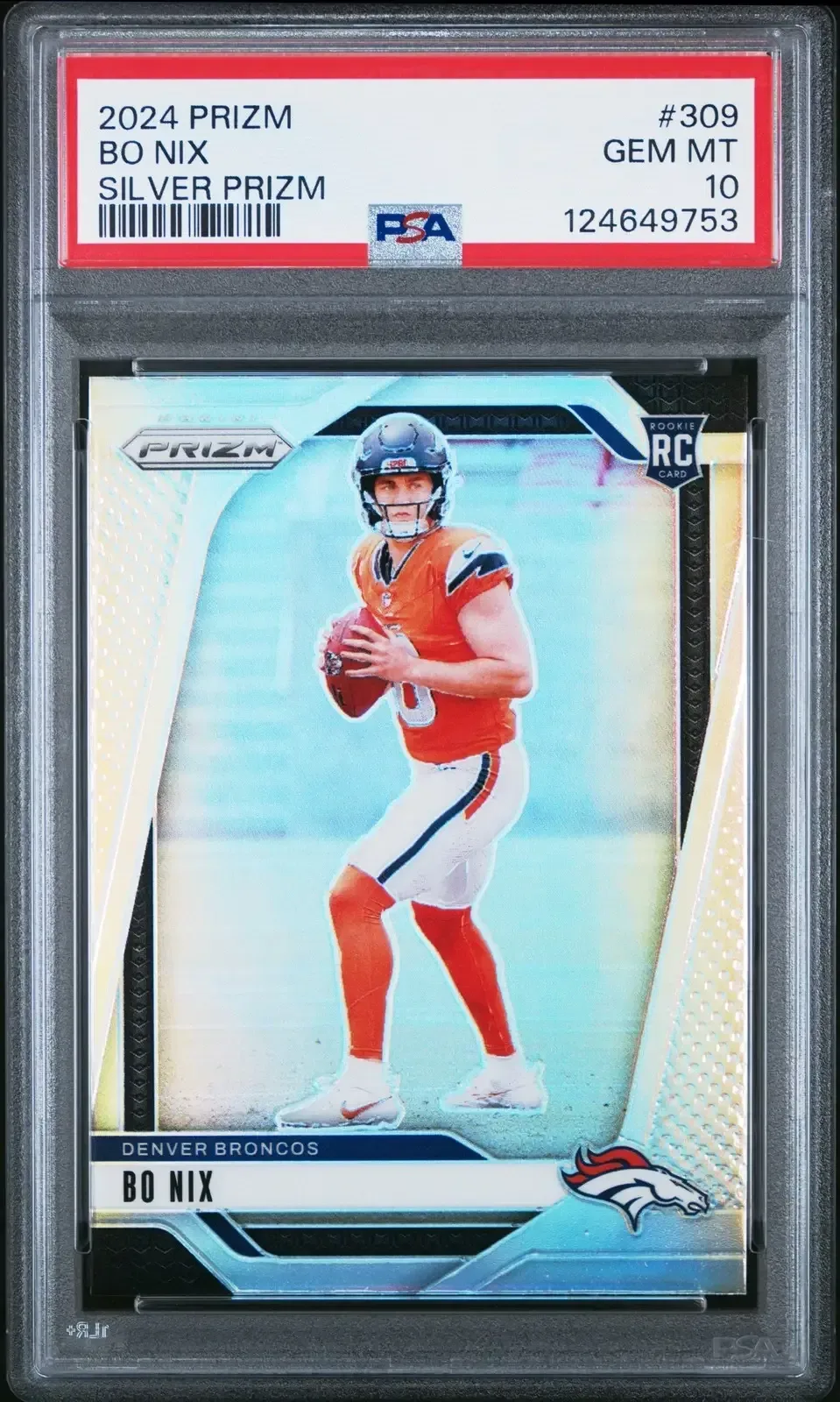
Bo Nix’s Denver Broncos have put together six consecutive wins and are in the race for the AFC’s top seed, but his 2024 Prizm Silver rookie card in PSA 10 condition has stayed near $525, with several sales below $510. In Indianapolis, Anthony Richardson is back in line for an extended opportunity after Daniel Jones was released, but the market has priced his cards with deep skepticism. In Pittsburgh, Aaron Rodgers has been benched despite the Steelers being 6-4 and one game out of the AFC North lead, turning attention toward both his long-term legacy cards and a murky quarterback depth chart.
For collectors, that disconnect is the point. Team momentum, player performance, role security, card scarcity, and grade all matter—but they do not move together on a fixed schedule. A weekly headline can change the conversation before it changes completed-sale prices, and neither is a substitute for deciding what card someone actually wants to own.
Bo Nix and the difference between a team story and a card story
Denver’s six-game streak includes wins over the Seahawks, Chiefs, and Panthers. Four of those victories came after trailing in the fourth quarter or went to overtime. The Broncos have averaged 27 points over roughly the past month and a half, an outcome that looks even stranger beside an offense that ranks in the bottom third of the league in both passing and rushing yardage through 11 weeks.
That gap helps explain why the Nix market has not automatically reacted as it might to a dazzling individual breakout. Denver is winning games, and head coach Sean Payton and rookie running back Jonah Coleman have been prominent parts of that resilience. But Nix has not supplied the kind of broadly dominant quarterback production that makes collectors rapidly revalue a modern flagship rookie card.
His 2024 Prizm Silver PSA 10 was around $800 at the beginning of the season, then roughly $525 in mid-October. After the winning streak, it remains essentially at that later level. That does not mean the team’s success is irrelevant. A playoff run, favorable seeding, or a major performance in a high-stakes game could still sharpen attention. It does mean collectors have, so far, treated the streak as an incomplete case rather than a final verdict on the quarterback.
What “Prizm Silver PSA 10” actually tells a buyer
Prizm Silver refers to a chromium-style parallel of a player’s card rather than the most basic base version. It is a major modern football-card reference point, but it is not automatically rare in the way a serial-numbered parallel is. Its appeal comes from brand recognition, visual finish, and the way collectors commonly use it as a liquid benchmark for a player’s modern card market.
PSA 10 is a top grade from Professional Sports Authenticator. It signals a card judged to be in gem-mint condition, a designation that can materially separate the price from raw, PSA 9, or lower-graded copies. Yet a PSA 10 label should not be mistaken for permanent price protection. Demand for the player, the card’s supply in that grade, and the number of buyers competing at a given moment can all change.
Related coverage includes NFL Week 11 Card Market: Bo Nix Prices Hold as Richardson and Rodgers Trade Places on the Depth Chart.
For Nix, the useful takeaway is not that the market has “missed” Denver. It is that collectors appear to be waiting for evidence that the winning is driven by a durable quarterback case. That is a very different proposition from buying after a single dramatic comeback or selling because a team’s record looks better than its offensive rankings.
Denver’s upcoming schedule keeps the story open. The Broncos have a Black Friday matchup with Pittsburgh and a Week 16 game against Buffalo among only two remaining contests against teams above .500. Buffalo, at 9-1, still holds the inside track to the No. 1 AFC seed but has games remaining against the Chiefs, Packers, Bears, and Broncos. Seeding matters because postseason exposure can bring a player’s cards in front of casual buyers as well as committed collectors. It does not guarantee that the player’s benchmark card will rise.
Anthony Richardson’s price is an audition price
Richardson’s situation is nearly the reverse of Nix’s. The Colts are viewed as one of the league’s worst teams, but Richardson now has a chance to show why he was selected fourth overall in the 2023 draft. Indianapolis releasing Daniel Jones two weeks after keeping him through the trade deadline puts Richardson in position for an extended audition over the remaining weeks.
The obstacles are substantial. Richardson has dealt with legal troubles and suffered an orbital-bone injury in a workout accident since his last start for Indianapolis. The team also lacks a first-round selection in a 2027 quarterback draft regarded as strong, creating uncertainty rather than an obvious long-term plan. These weeks could help decide whether Richardson is retained as a potential starter next year or merely remains in the mix for a future quarterback competition.
That uncertainty is visible in card prices. A 2023 Silver Prizm PSA 10 recently sold for $100, while PSA 10 rookie autographs have sold below $80. The graded Silver is above several $65-to-$75 transactions from early in the season, but the overall pricing still reflects a market that sees a low probability of a successful reset.
There is an important distinction between a card being cheap and a card being undervalued. A low price can reflect a real risk: Richardson may not establish himself as Indianapolis’ answer at quarterback. It can also make a small stretch of competent or exciting play disproportionately important, because expectations are already so low. That is why this is an audition price. Buyers are not simply buying past draft status; they are buying the possibility that a new opportunity produces enough evidence to revive a long-term case.
Autographs are not interchangeable with “upside”
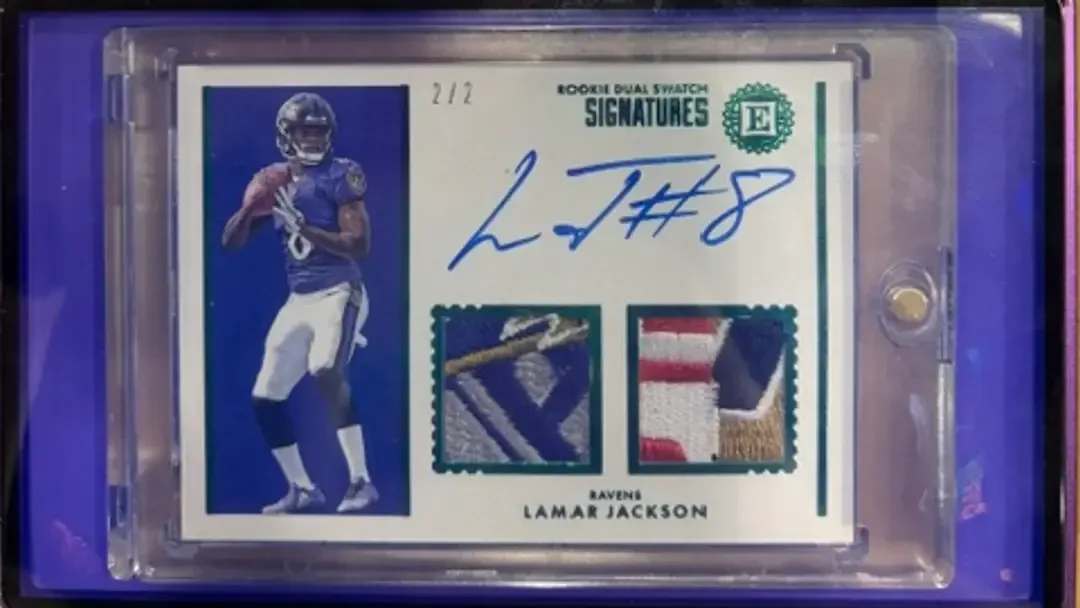
A signed rookie card can feel like the more obvious choice when a player is trying to reclaim attention. Autographs are personal, generally more limited than standard flagship cards, and often sit in a different collector lane than a widely traded Silver parallel. But “autographed” alone does not determine value. The card’s design, numbering, set, authentication, print run where known, grade, and collector demand all shape the outcome.
The sub-$80 PSA 10 rookie-auto sales are therefore not proof that every Richardson autograph is comparable. They are a reminder to identify the exact card before using any completed sale as a benchmark. A sale for one product, variation, or signature format should not be casually applied to another.
Collectors weighing Richardson’s market have a simple practical job: separate the football bet from the card-selection decision. The football bet is whether his extended run can materially change his standing. The card decision is whether a liquid, recognizable 2023 Silver Prizm PSA 10 or a more specialized signed rookie better matches the collector’s interest and budget. Neither route removes the player’s risk.
Aaron Rodgers’ benching creates a legacy-market question
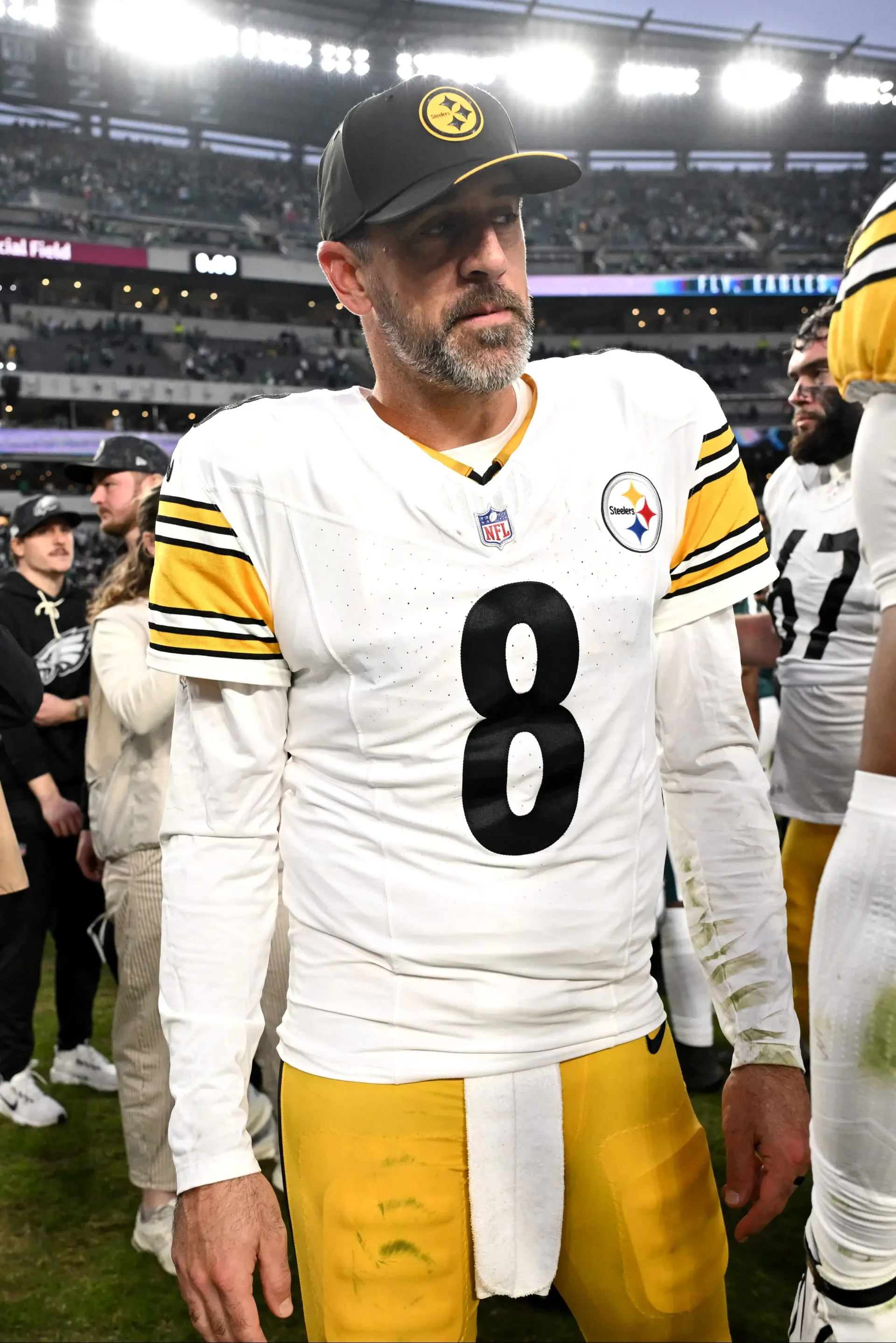
Pittsburgh’s move is the most immediate jolt. The Steelers have benched Rodgers in what is described as his final season, with Mason Rudolph taking over. The timing was notable: head coach Mike McCarthy had reaffirmed Rodgers as the starter a day earlier, and the decision emerged after Rodgers practiced on Wednesday. The reason has invited speculation, but the on-field explanation is direct enough: Rodgers was not playing well by advanced measures, and there were apparent frustrations around him checking out of a running game that had helped fuel Pittsburgh’s 6-4 record.
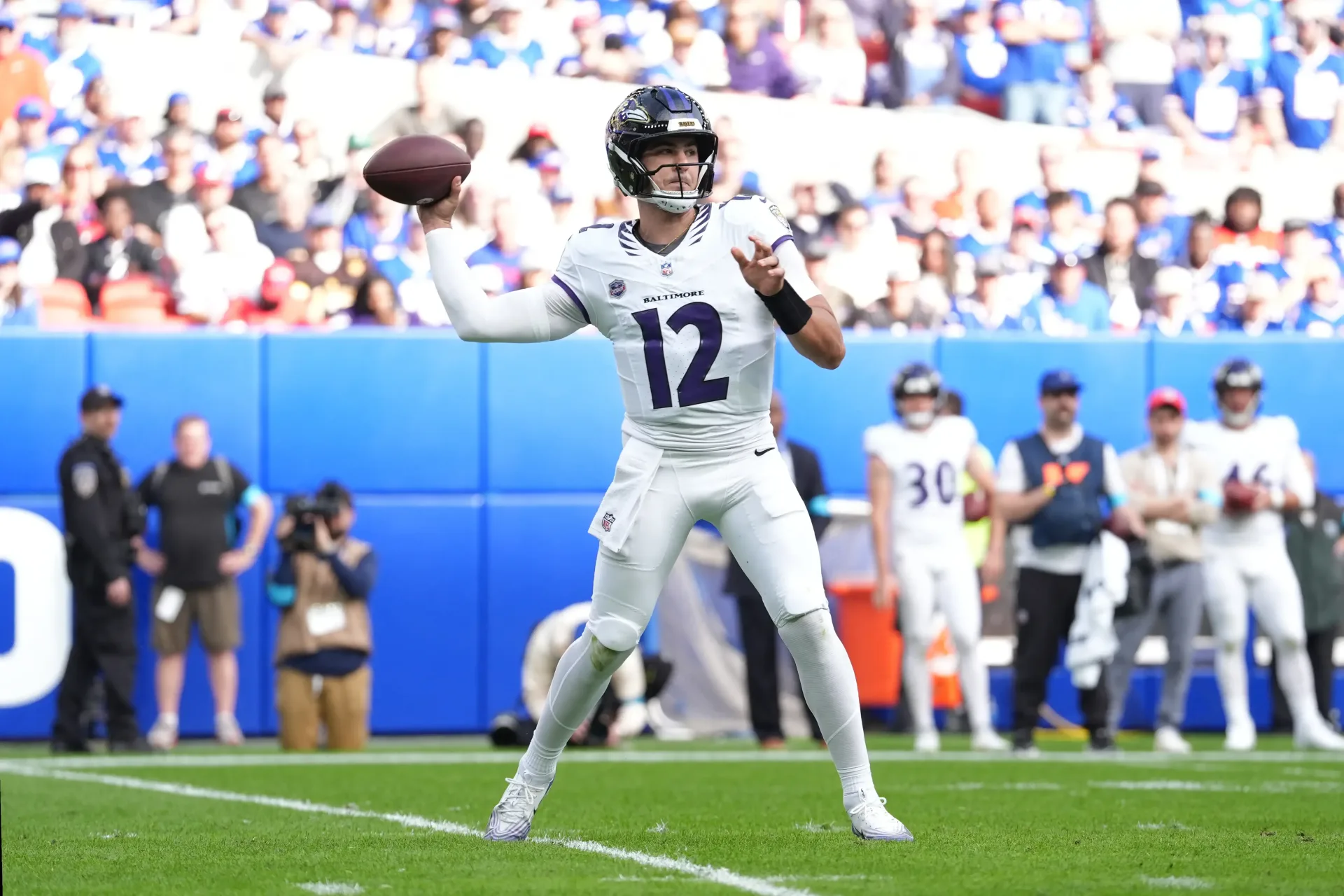
Rudolph is 31 and has not shown much over seven professional seasons to suggest an automatic turnaround. That creates a second layer of hobby intrigue. Pittsburgh selected Penn State product Drew Allar in the fourth round this year and has continued to value Will Howard, the Ohio State product drafted in the sixth round in 2025. Either—or both—could see the field before the season ends, though that remains an inference rather than a certainty.
For Rodgers collectors, the central question is not whether he needs another strong start to validate his career. His legacy is already established at a very different level from a young quarterback prospect. His overall market is up about 7% since the start of the season, and a possible final exit can encourage collectors to pursue personal grails: cards that hold special significance to the buyer, often because of scarcity, imagery, autograph status, or connection to a favorite era.
Still, a retirement narrative is not a guaranteed windfall. Hall of Fame anticipation can lift prices in the year leading into eligibility, but Rodgers has been a major figure in football for two decades. Many collectors who wanted his key cards may already own them; many cards associated with him have long been recognized as desirable. A sudden rush is possible, particularly around iconic cards, but a broad and lasting increase across every Rodgers issue should not be assumed.
Practical ways to read a volatile weekly market
These three quarterback stories point to a discipline that is more useful than chasing the loudest development: define what changed, then check whether the card market has actually confirmed it.
- Track completed sales, not only asking prices. An unsold listing shows a seller’s ambition. A completed transaction is stronger evidence of what a buyer paid at that moment.
- Compare the same card. Match year, product, parallel, grade, autograph status, and where applicable serial numbering. “A Nix rookie” or “a Richardson auto” is too broad to establish a useful comp.
- Respect the grade gap. A PSA 10 price should not be used to value a raw copy or a lower grade without accounting for condition and the population of graded copies.
- Separate short-term catalysts from permanent status. A playoff game, a starting opportunity, or an apparent final season may create attention. Long-term collecting demand needs more than attention.
- Set a reason for buying before setting a target price. A personal collection, a player bet, and a search for a specific grail can all be valid reasons—but they call for different risk tolerance.
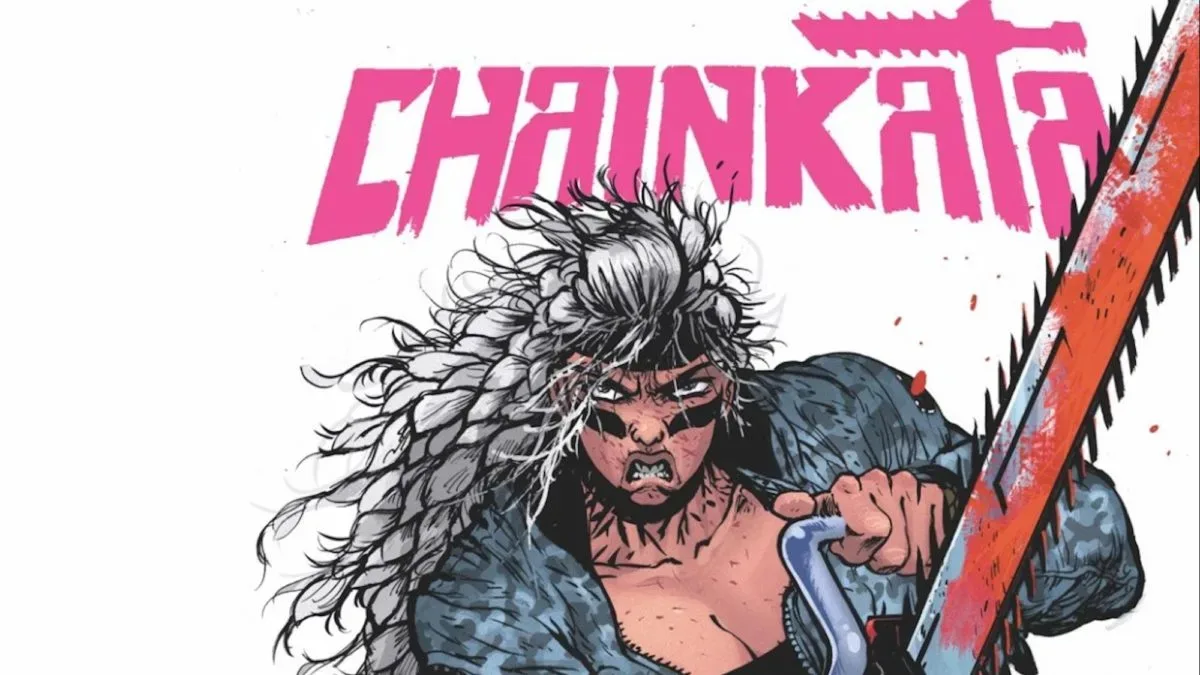
The broader collectible market is not limited to one sport or one kind of speculation. For another example of how projected demand becomes part of a collectible conversation, see the report on Chainkata’s projected comic-shop orders.
Week 11 does not offer a tidy buy-or-sell verdict on any of these players. Nix has team success without a matching card-price surge. Richardson has an opportunity without market confidence. Rodgers has legacy demand without a clear reason to expect every card to move the same way. The useful response is to resist treating a changing depth chart or a winning streak as a grading label. Football creates the catalyst; collectors still have to decide which specific card, at which specific price, makes sense for them.