The 2026 NFL rookie-card conversation began with the attention naturally fixed on quarterback Fernando Mendoza after his undefeated, national championship season at Indiana. Ten games into the NFL calendar, however, two defenders selected near the very top of that draft have supplied a different collecting story. New York Jets edge defender David Bailey and New York Giants linebacker Arvell Reese have each paired immediate production with notable sales of scarce, autographed cards.
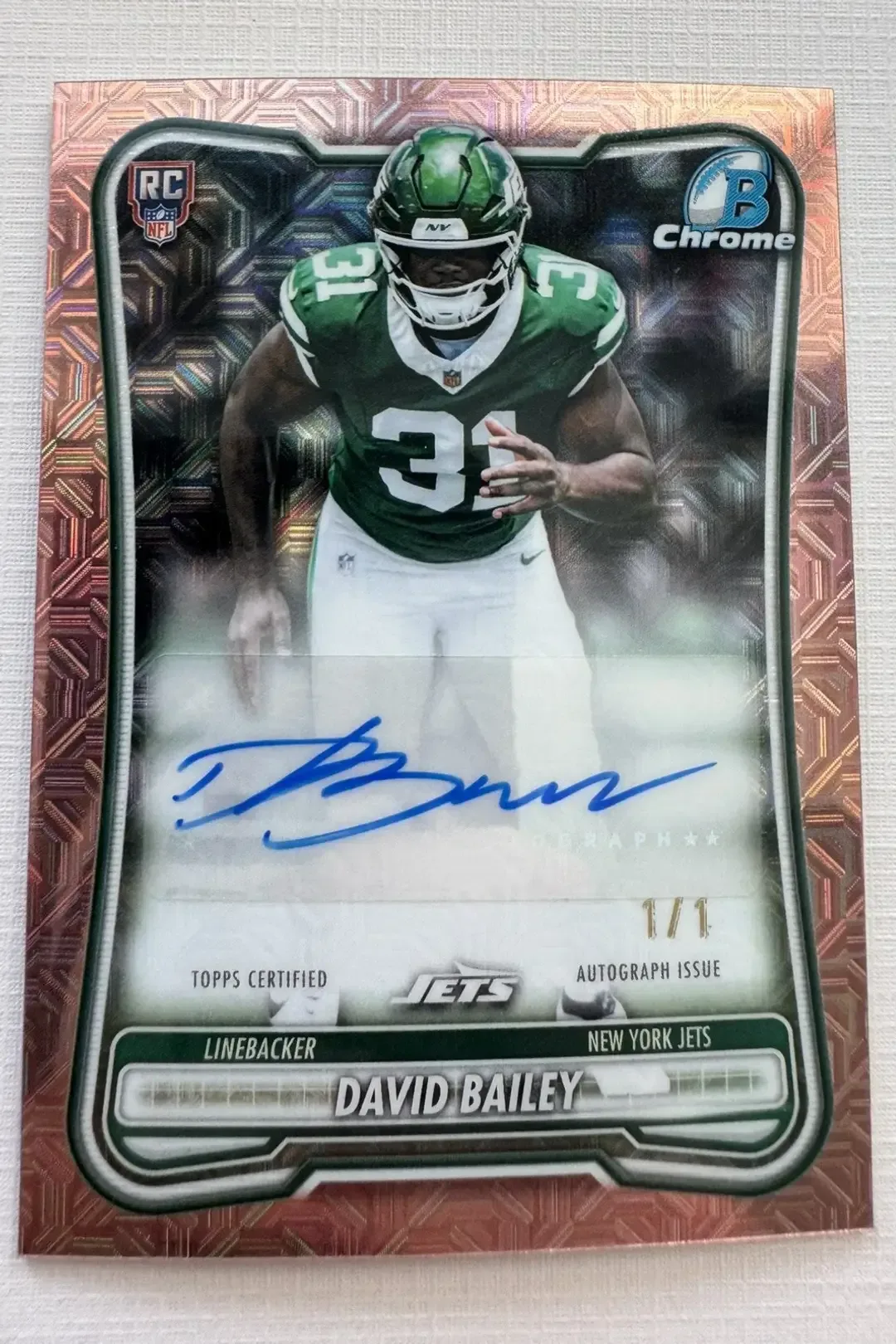
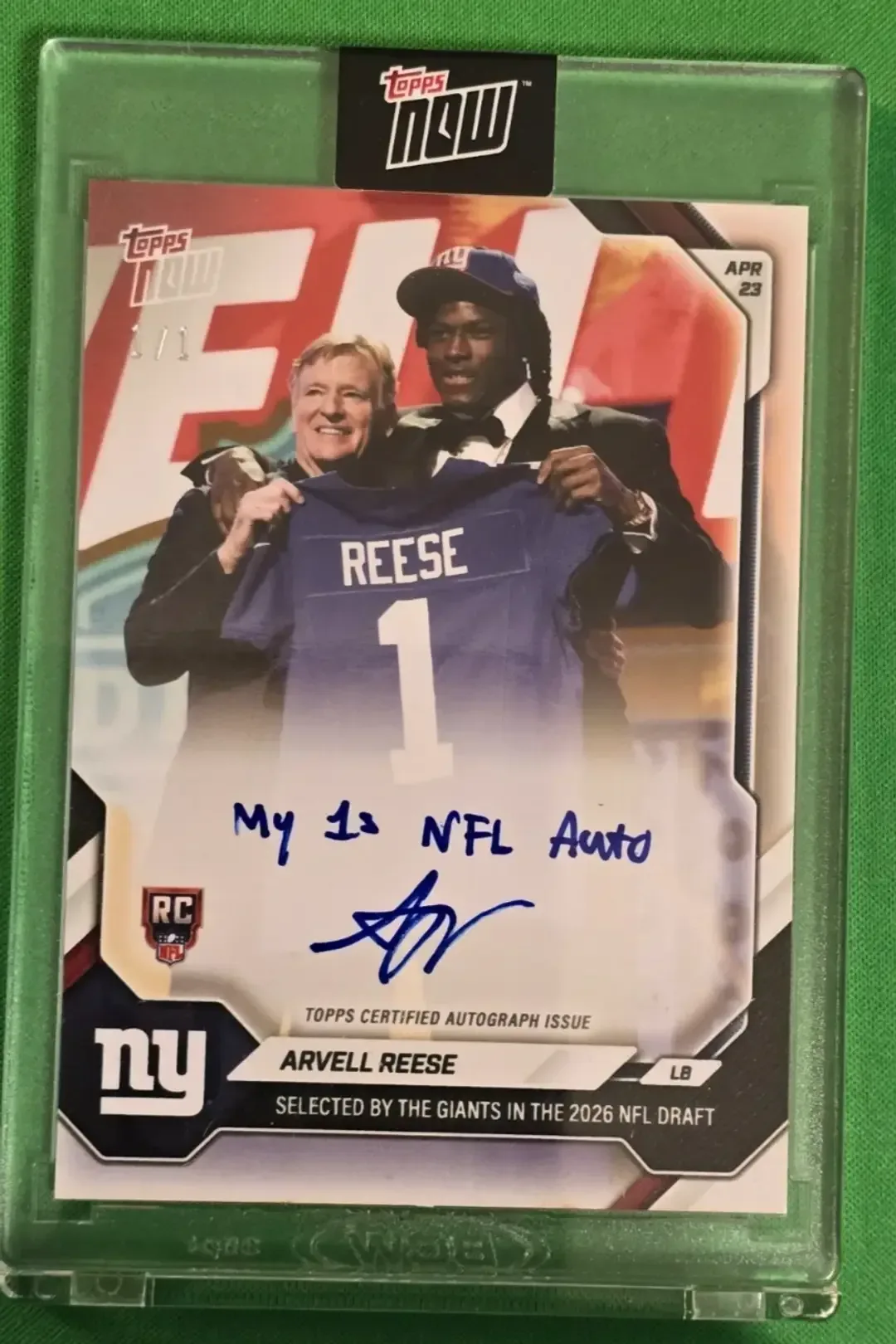
Reese has established the larger reported high-end benchmark: an autographed and inscribed 2026 NFL Topps Now Draft Day Superfractor sold for $7,500 on August 25, 2026. Bailey’s best reported result is a 2026 Bowman Chrome Rose Gold Mojo autograph, a one-of-one, at $1,600 on October 17, 2026.
The gap is substantial, but it does not settle a simple question of which rookie is “better” or which market will ultimately be stronger. These are different cards sold on different dates, with different product identities and varying forms of scarcity. What the available sales do show is that collectors have put real four-figure money behind two defensive rookies whose on-field starts have been unusually productive.
Arvell Reese sets the early headline price
Reese, the fifth overall selection by the Giants, has 88 tackles and 4.5 sacks through his first 10 NFL games. Those totals give his cards a performance-based narrative beyond draft position alone: he is contributing frequently as a tackler while also producing as a pass rusher.
For more context, explore Fitbit Edge’s Replaceable Battery Is a Repair Win, but It’s Not a Casual DIY Job.
His highest reported transaction belongs to Topps Now. A Superfractor is generally the singular top parallel of a particular card, commonly designated as a one-of-one. In this case, the card also carries an autograph and an inscription. An inscription is additional writing by the player beyond a standard signature, and it can make an already singular card more individually distinctive. Those stacked attributes—one-of-one scarcity, signature, inscription, draft-day theme and an early sale date—help explain why the card is the biggest price cited for either player.
The available reported Reese sales are:
- 2026 NFL Topps Now Draft Day Superfractor autograph with inscription: $7,500 on August 25, 2026.
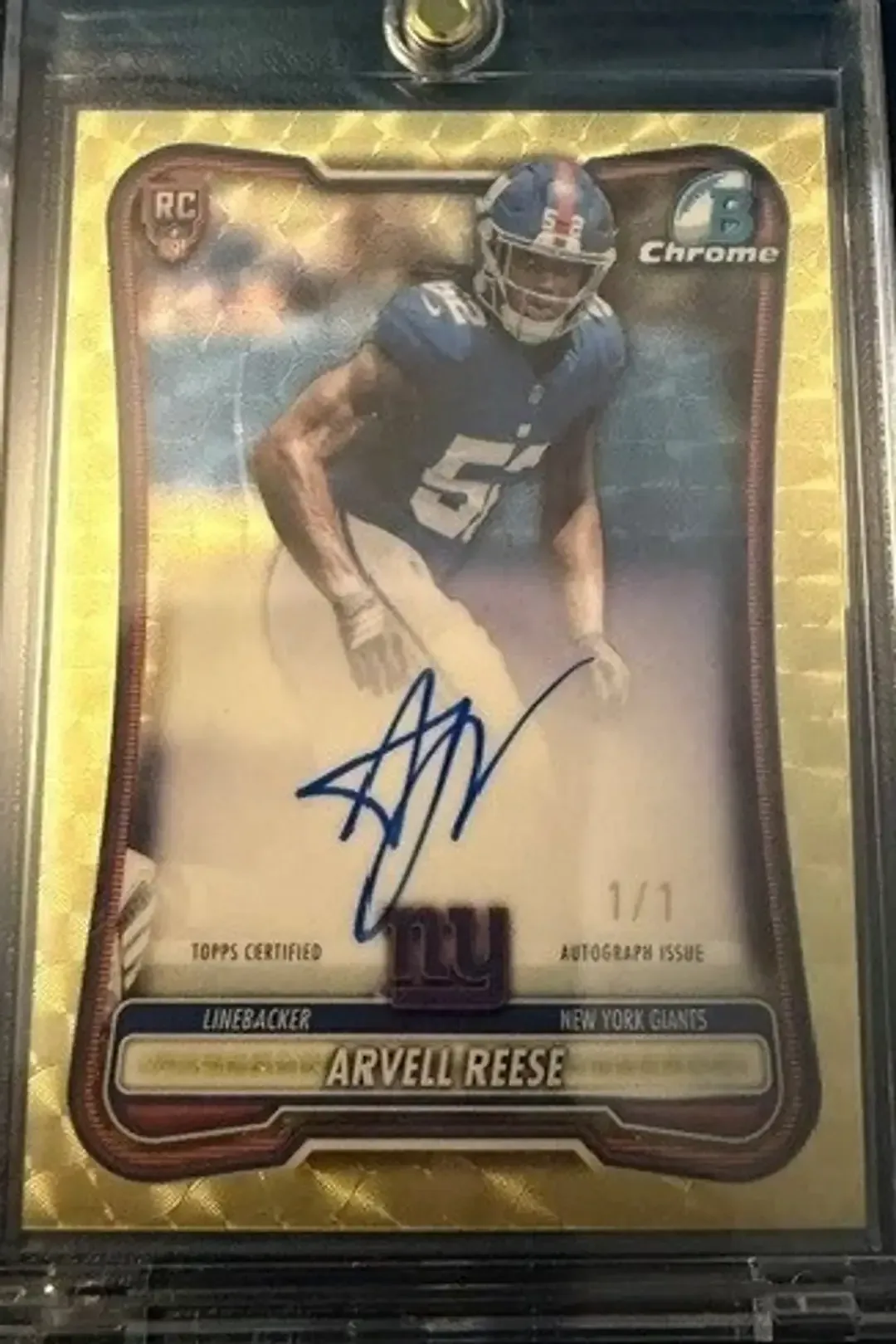
- 2026 Bowman Chrome autographed Superfractor 1/1: $4,000 on October 15, 2026.
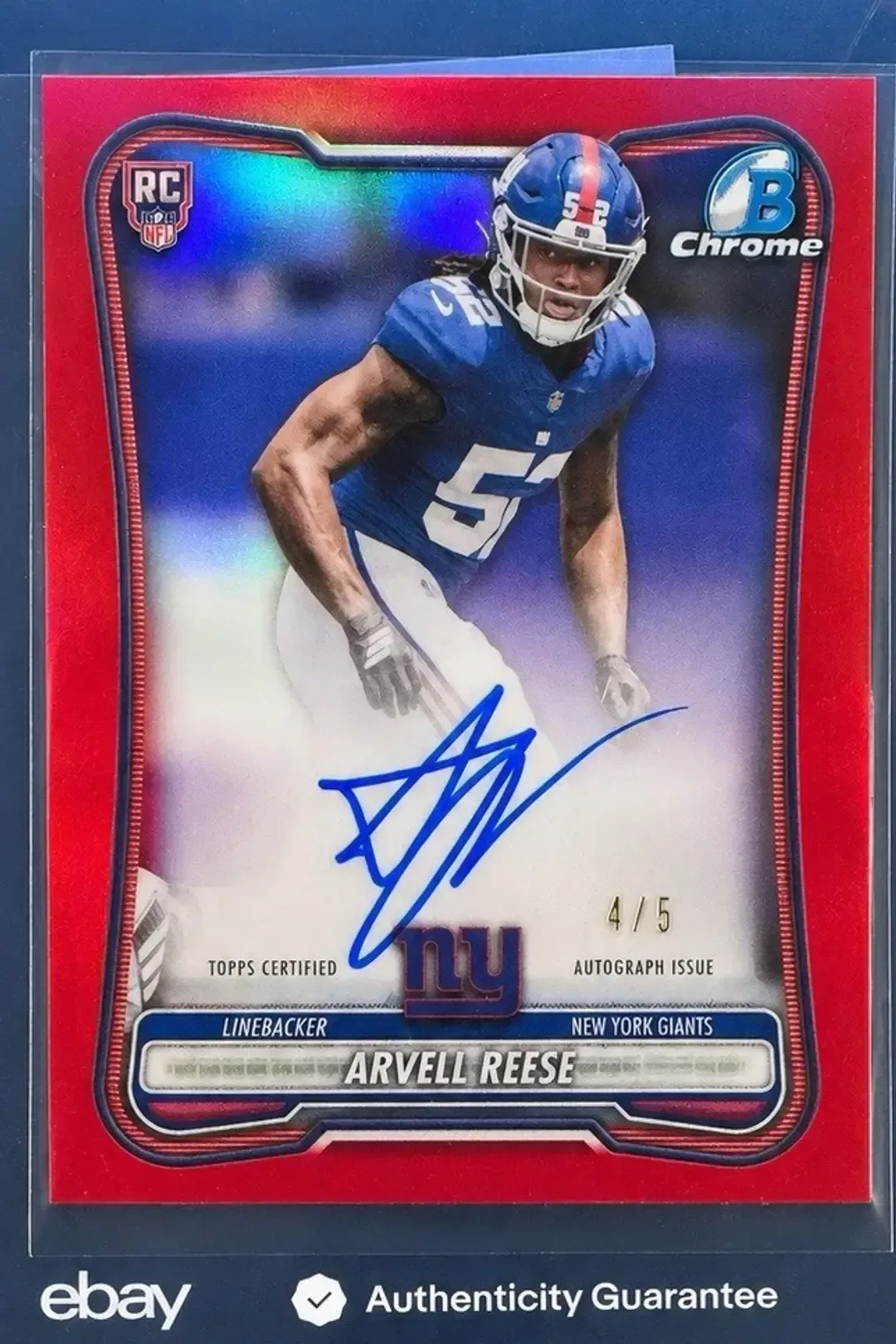
- 2026 Bowman Football Rookie Auto True Red Refractor /5: $3,500 on November 16, 2026.
The latter two sales are particularly useful as a small snapshot because both are autographed Bowman Chrome-style rookie issues and both are at the sharp end of the print run. A Refractor is a parallel card with a distinct reflective finish and color treatment; “/5” means the card is serial-numbered to five copies. Neither a /5 nor a one-of-one is interchangeable with the other, and neither result alone sets a universal price for every Reese card. Still, $4,000 for a signed Superfractor and $3,500 for a signed True Red limited to five indicate demand at the premium end rather than a single isolated headline transaction.
The $500 difference between those two sales should be interpreted carefully. The True Red sale came a month later, but it was also a different parallel and had a five-card print run instead of one. A lower price for a /5 relative to a one-of-one is not, by itself, evidence of weakening demand. It is more accurately a record of how buyers valued two distinct pieces of the same rookie’s card portfolio.
Reese arrived in the NFL after playing his whole college career at Ohio State, where he recorded 112 tackles and seven sacks across 38 games. That full collegiate résumé, a top-five draft selection and a central role on a Giants club sitting first in the NFC East give collectors several clear reference points. The Giants also face a season-ending injury to quarterback Jaxson Dart, a reminder that team narratives can change quickly even when a defender continues to play at a high level.
David Bailey’s production gives Jets collectors a focal point
Bailey was drafted second overall by the Jets and has 9.5 sacks over his first 10 NFL games. That places him in rare company for an opening stretch: he is tied with Von Miller and Derrick Thomas at that point, while only Reggie White, with 10, and Julius Peppers, with 11, had more sacks through 10 games.
For a defensive player, a stat line that immediately connects to names such as Miller, Thomas, White and Peppers is a powerful collecting catalyst. Sacks are a highly visible counting stat, and Bailey’s total creates an easy measure of his early impact. It does not predict a career outcome, but it makes the first 10 games materially meaningful rather than merely promising.
Bailey’s top three reported sales are:
- 2026 Bowman Chrome Rose Gold Mojo autograph 1/1: $1,600 on October 17, 2026.
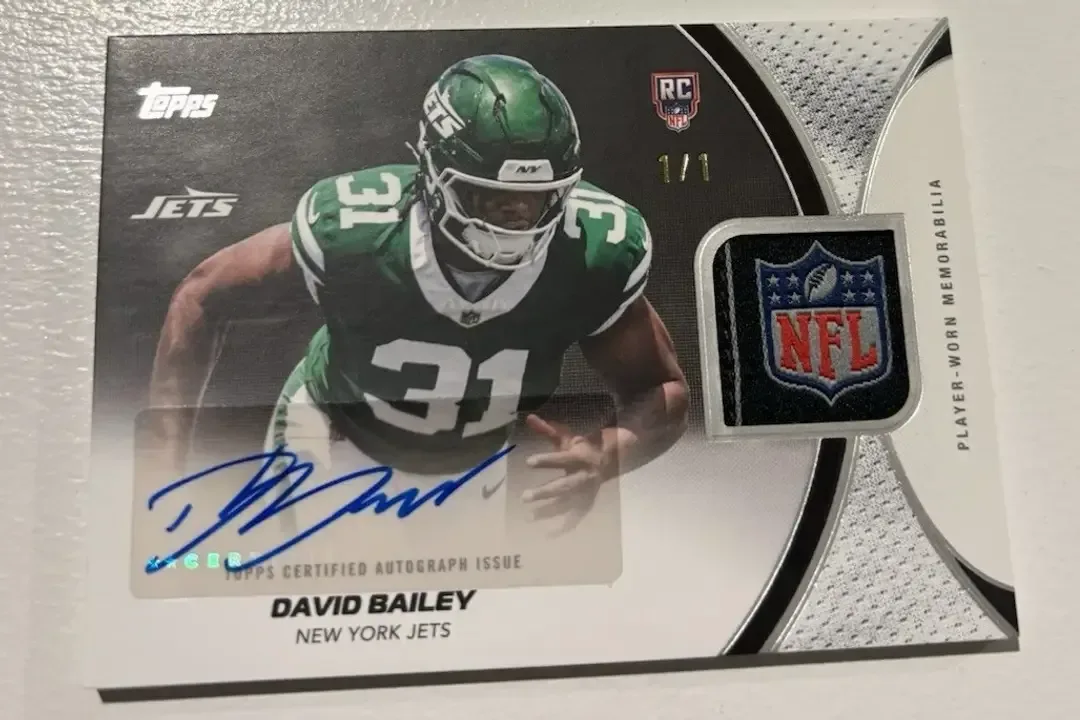
- 2026 Topps Rookie Materials autograph 1/1: $1,250 on September 27, 2026.
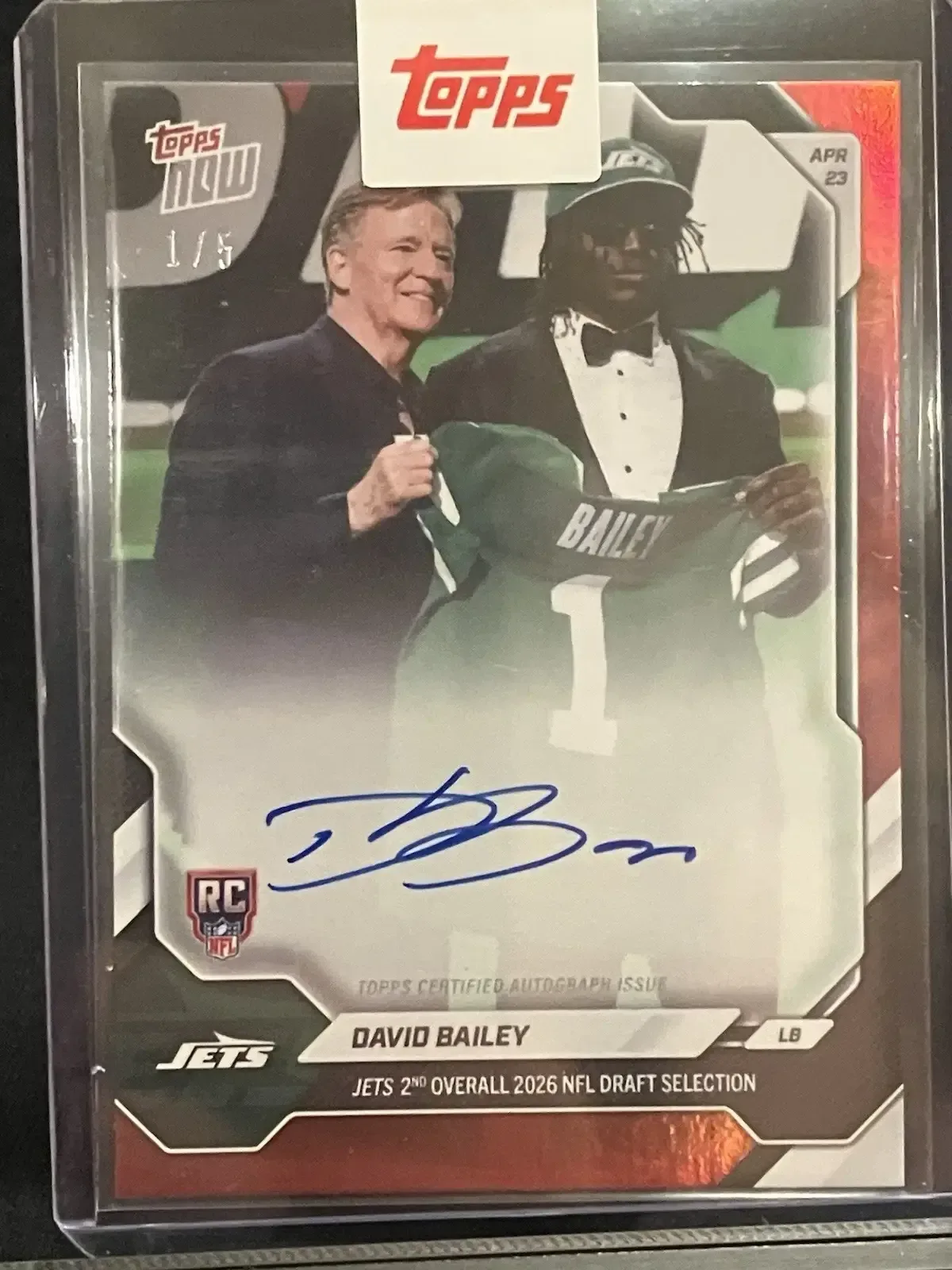
- 2026 NFL Topps Now Draft Day Red Foil autograph /5: $1,000 on September 27, 2026.
A patch autograph combines a player signature with a piece of material, often described as a patch, embedded in the card. Bailey’s Topps Rookie Materials one-of-one is therefore not simply scarce; it uses a construction collectors commonly treat as a premium rookie-card format. His Rose Gold Mojo is also a one-of-one, while the signed Red Foil has a stated run of five copies.
These results create a relatively coherent top-end range: $1,000 for the /5 Topps Now card, $1,250 for the one-of-one patch autograph, and $1,600 for the one-of-one Bowman Chrome Rose Gold Mojo autograph. That is not enough information to determine a definitive market value for Bailey. Card condition, the exact visual appeal of a parallel, timing, buyer competition and the product’s audience can all affect a sale. But the pattern supports a straightforward conclusion: the early Bailey market has buyers for scarce signed cards across more than one brand and format.
Bailey played three seasons at Stanford before finishing his college career at Texas Tech. His NFL situation also adds a different kind of context. The Jets are third in the AFC East with three wins and remain in search of a franchise quarterback, even though they own three first-round selections in the upcoming draft. For collectors, that means Bailey’s card story is not solely tied to a dominant team record. His individual pass-rushing start is doing much of the work.
How to read these sales without overstating them
High-end rookie sales are most useful when treated as specific transactions, not as broad price guides. A one-of-one sale reflects a single card that cannot be replicated. It establishes that a buyer paid that amount for that exact combination of player, product, design and autograph, but it does not mean every one-of-one or every base rookie card should command a comparable figure.
Collectors following Bailey and Reese should separate the elements that are known from the conclusions that remain uncertain:
- Known: Reese’s listed $7,500 Superfractor sale is the highest reported sale among these cards; Bailey’s listed high is $1,600.
- Known: Both players have multiple reported four-figure sales involving autographs and extremely limited print runs.
- Known: Reese’s $4,000 Superfractor and $3,500 True Red /5 were not identical cards, so the $500 spread cannot independently measure market movement.
- Uncertain: The provided transactions do not establish the value of unsigned cards, more widely available parallels, or future sales.
- Uncertain: Ten NFL games are a compelling early sample, not a complete basis for evaluating either player’s long-term career or card market.
That distinction matters especially in a rookie market. Scarcity terms can sound similar while describing dramatically different items. “1/1” identifies a single numbered copy of a specific parallel. “/5” identifies five copies. An autograph adds a signed element, while a patch autograph adds material as well. Topps Now draft-day cards and Bowman Chrome cards are different product concepts, so comparing them requires more than lining up the numbers on the price tags.
For anyone tracking future transactions, the practical approach is to log the full card description, serial number, autograph or memorabilia status, sale date and price. Compare like with like where possible: another signed Reese True Red /5 is a much more informative reference for the November sale than an unrelated one-of-one; another Bailey Bowman Chrome signed parallel will usually provide more targeted context than a different product with a patch. The early reported results can be reviewed in this sale roundup.
Two defenders, two distinct collecting narratives
Reese currently owns the eye-catching dollar figure and is producing on a division-leading Giants team. Bailey owns a sack pace that places him alongside historically notable early-career pass-rushing benchmarks, even as the Jets navigate a more unsettled season. Both were drafted inside the top five, both are producing immediately, and both have already appeared on premium, autographed, low-numbered cards.
The sensible takeaway is not that the market has chosen a permanent winner. Rather, 2026’s early football-card picture includes two defensive stars in the same city, each giving collectors a reason to pay attention. Reese’s $7,500 Superfractor is the current summit among the listed results. Bailey’s trio of $1,000-and-up sales confirms that elite early sack production can command a meaningful premium, particularly when attached to a one-of-one or a signed card limited to five copies.