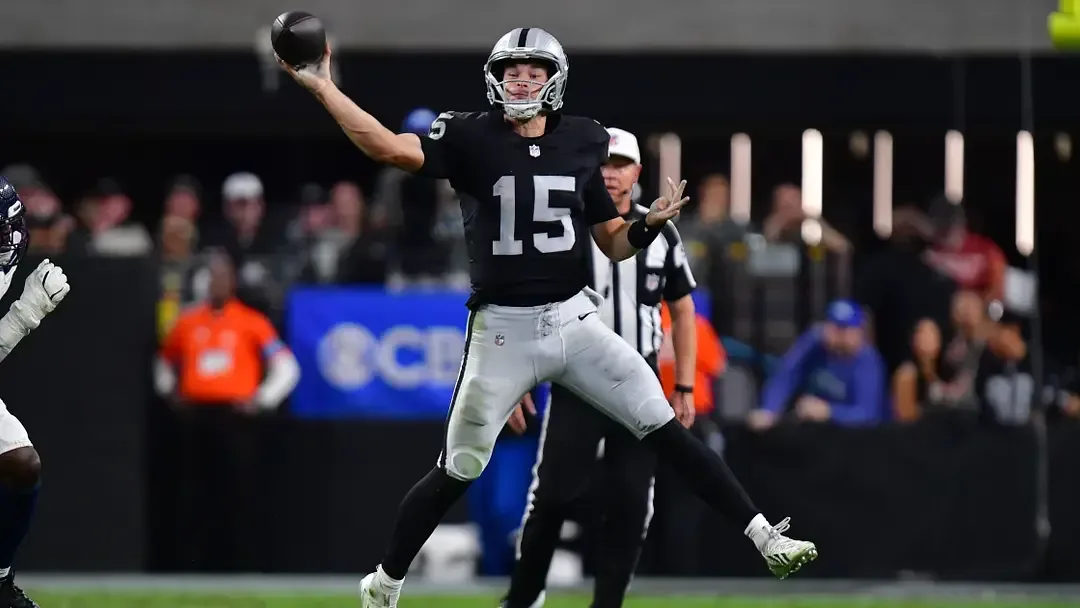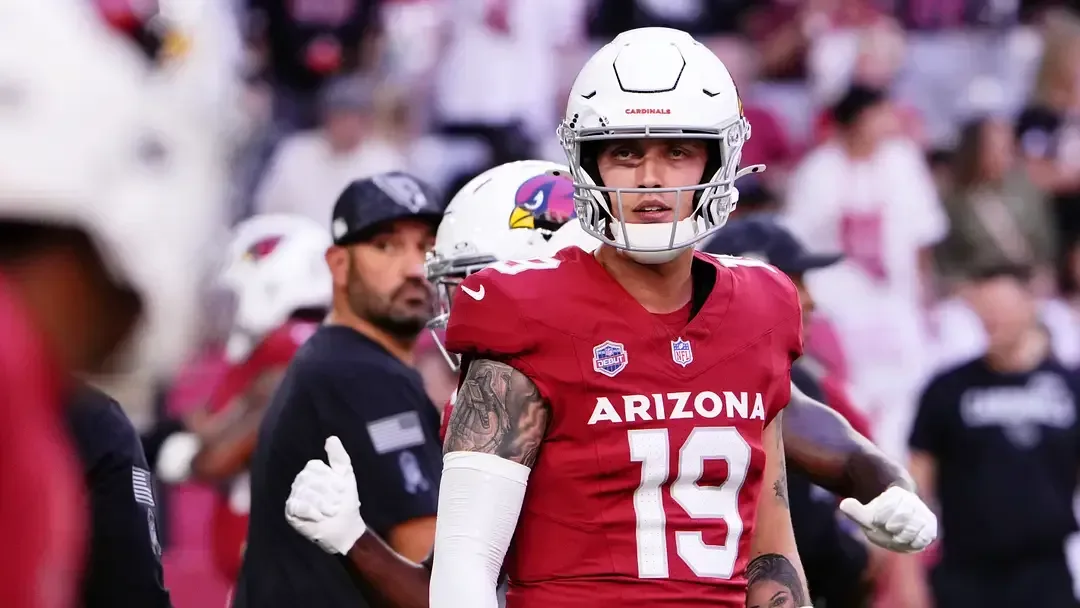
Week 10 was supposed to give the 2026 NFL rookie-card market a jolt. Two rookie quarterbacks, Las Vegas Raiders starter Fernando Mendoza and Arizona Cardinals starter Carson Beck, made their first career starts. Quarterback debuts can rapidly focus collector attention, because the position naturally concentrates narratives around opportunity, winning and future franchise status.
Neither debut supplied an easy, uncomplicated breakout case. Mendoza opened with two Raiders scoring drives, then watched the offense manage only three points across the remaining 45 minutes against Seattle. Beck finished his first start against the Los Angeles Rams with 108 passing yards and two interceptions. The statistical headlines are modest, but the context around each player matters more than a single box score when evaluating a rookie season.
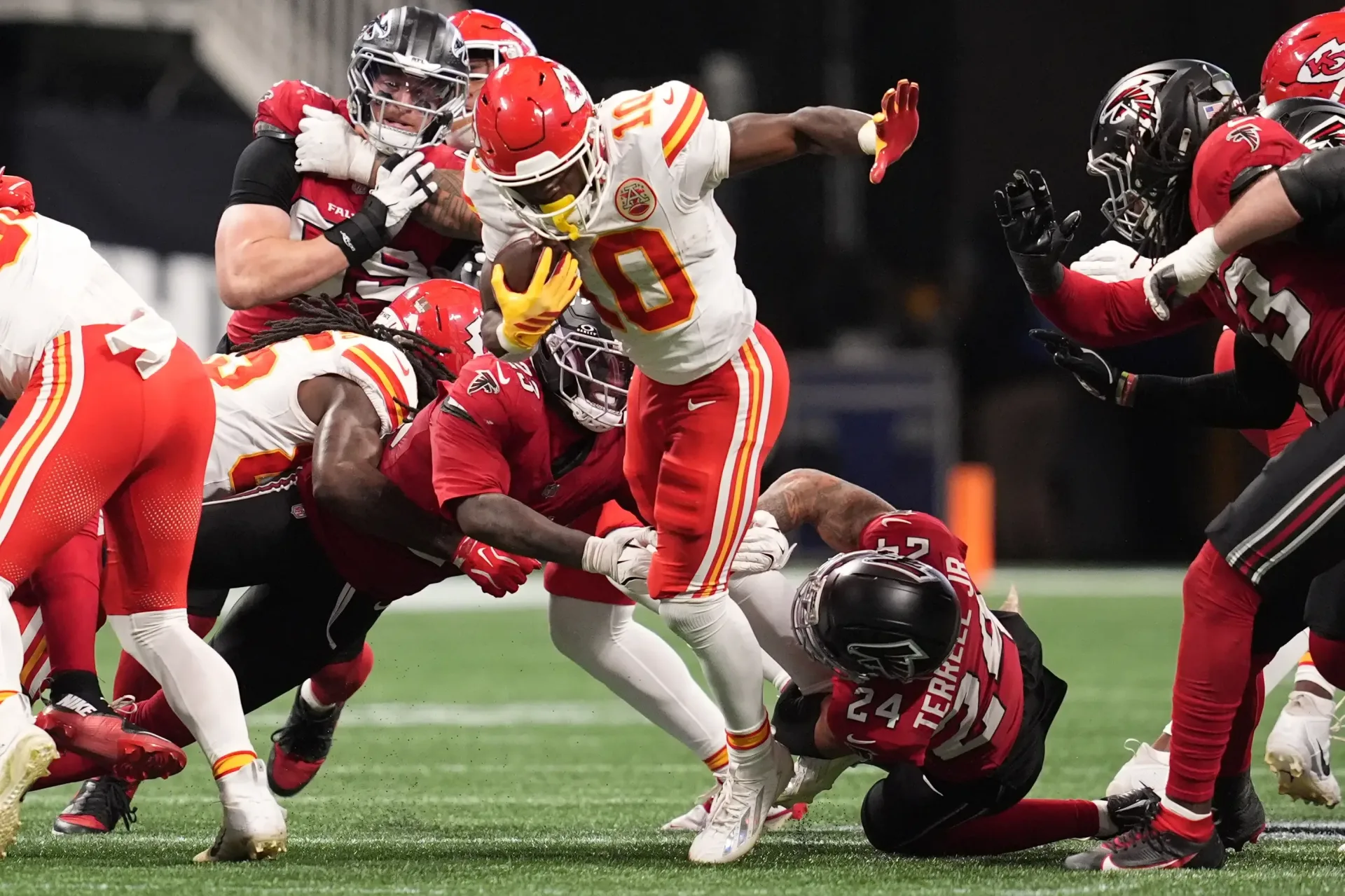
Elsewhere, the week’s clearest on-field momentum belonged to Kansas City Chiefs running back Emmett Johnson. His 171 yards and two touchdowns against Atlanta coincided with Kenneth Walker’s absence because of a late-week groin injury. Johnson’s jump does not establish him as Kansas City’s permanent preferred starter, but it creates precisely the kind of near-term workload question that can make collectors pay attention.
For collectors, the central lesson is not that every new starter is automatically a buy or that every quiet debut invalidates a prospect. It is that the rookie class now has sharper divisions: established names retaining their standing, players with difficult surroundings, performance-driven risers and backups whose value depends almost entirely on the next opportunity.
What Week 10 clarified about the rookie quarterback picture
Fernando Mendoza remains the class’s top-ranked name, with a difficult test ahead
Mendoza stays at No. 1 in the rookie hierarchy despite a rougher second half against Seattle. The Raiders’ opening possessions offered a glimpse of an offense operating from a prepared script under head coach Klint Kubiak. Once Seattle began creating free rushers with blitzes, the transition became much more difficult for the rookie.
That distinction is useful. A scripted opening series refers to plays planned in advance rather than calls selected in response to the changing flow of the game. Early success on those plays can show how a staff intends to help a new quarterback settle in, but it should not be confused with evidence that the entire offense has been solved. Seattle’s pressure changed the environment Mendoza had to process.
His immediate runway is not especially forgiving. Games against Denver and Cleveland arrive before Las Vegas’ Week 13 bye. That means Mendoza’s ranking is resting more on his place in the class and the significance of his starting opportunity than on a polished debut performance. Collectors following his market should separate those two ideas. A player can remain the leading long-term rookie-card subject while still facing short-term volatility from difficult defenses and uneven team results.
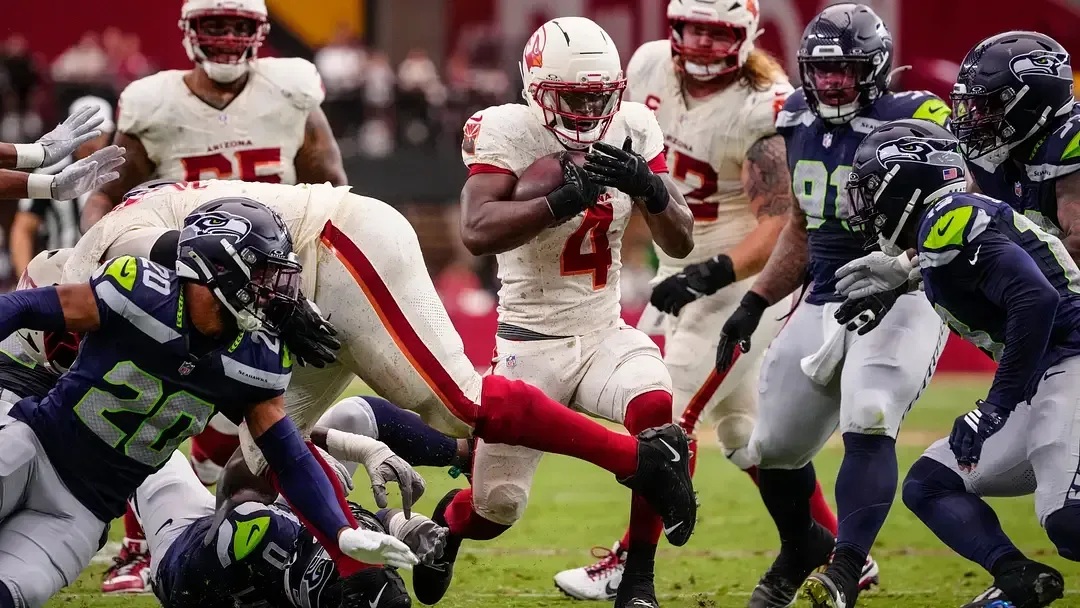
Carson Beck’s situation is as important as his 108-yard line
Beck climbed one position to No. 8 after Arizona’s loss to the Rams, even though his numbers were not flashy. The two interceptions are a warning on the stat sheet, but they were not presented as throws that were clearly the rookie’s fault. That does not erase them, nor does it guarantee better results next week. It does mean a collector should avoid turning a two-interception debut into a complete judgment of the player.
Related coverage includes 2026 NFL Rookie Card Report: Week 10 Rankings, QB Debuts and the Biggest Movers.
The greater concern is Arizona’s offensive environment. Wide receiver Michael Wilson has been placed on injured reserve with a season-ending neck injury. Marvin Harrison Jr., Arizona’s top selection in the 2024 draft, had already been traded. Running back Jeremiyah Love, the No. 3 overall selection in 2026, is expected to be out for the foreseeable future with a high-ankle sprain.
Those absences leave Beck with limited offensive support and a schedule populated by teams still pursuing playoff spots. For a quarterback card, opportunity alone is not necessarily enough. Quarterbacks draw enormous attention, but sustained enthusiasm usually needs a path to visible production, wins or an increasingly secure organizational future. Arizona’s potential position near the top of the 2027 draft, in a class described as having possible first-round quarterbacks, adds another layer of uncertainty.
That makes Beck a useful example of why collectors should distinguish player evaluation from market timing. A collector may believe Beck has talent and still conclude that the surrounding conditions make short-term appreciation difficult. Conversely, a stronger showing despite those conditions could be meaningful because it would occur without a healthy, fully stocked supporting cast. Neither interpretation requires pretending Week 10 settled the issue.
Emmett Johnson has the strongest new performance case
Johnson rose from No. 15 to No. 13 after producing 171 yards and two touchdowns against the Falcons. It was the biggest movement among the ranked players near the top 20, and it came with an obvious reason: Walker was unavailable. The key question now is whether Johnson’s performance earns a more stable role if Walker misses additional time, or whether it remains a standout game in a temporary opening.
In card-market terms, a speculative option is a player whose appeal depends heavily on a future event that is not yet certain. Johnson fits that label. His Week 10 output is real production, while the potential expansion of his role remains a projection. The distinction protects collectors from treating one huge game and a lingering injury question as a permanent depth-chart verdict.
The Chiefs’ standing also matters. Kansas City holds the fifth-best Super Bowl odds, and contenders can elevate interest in younger contributors simply because postseason games increase visibility. That is not a guarantee of lasting value, and it is not proof that Johnson has displaced Walker. It is a practical explanation for why a rookie running back on a contender can attract more attention than one with comparable production on a less prominent team.
Collectors considering Johnson should watch for information that addresses the actual thesis: Walker’s availability, Johnson’s role when Walker is active, and whether the rookie continues to receive meaningful work as the postseason approaches. Those indicators are more useful than assuming that a two-touchdown performance must immediately redefine the backfield.
The top tier holds steady, but Jordyn Tyson added evidence
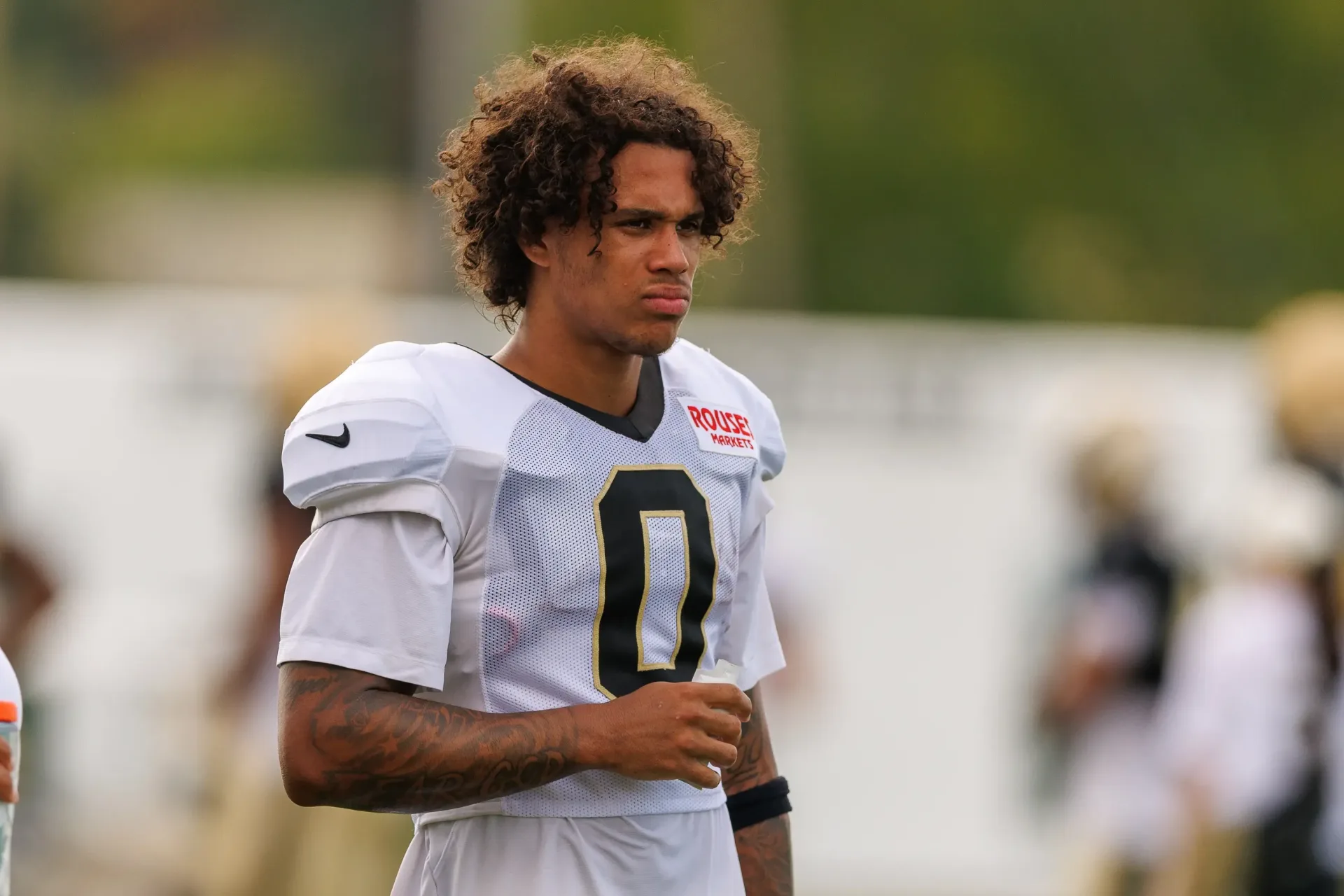
The top four did not move: Mendoza is first, followed by Cardinals running back Jeremiyah Love, Titans wide receiver Carnell Tate and Saints wide receiver Jordyn Tyson. Love’s injury makes his near-term outlook more complicated, but his No. 2 position shows that Week 10 did not fully rewrite the class’s existing order.
Tyson, meanwhile, supplied the week’s most encouraging receiver stat line among the leading names. In his second professional start, he caught 11 passes for 83 yards in New Orleans’ loss to Carolina. Eleven catches provide a concrete sign of involvement, even if 83 yards is not the kind of explosive total that ends all debate about ceiling.
His outlook is connected to New Orleans’ shrinking playoff chances after the Panthers loss. That matters because team context can affect how much meaningful late-season exposure a player receives. Tyson may have room to challenge Love for the class’s No. 2 collectible asset, but that possibility relies on factors beyond his receiving line: the Saints’ remaining stakes, his continuing role and whether the production becomes repeatable.
The remainder of the comfortable-value group is unchanged or only slightly adjusted: Browns wideout Denzel Boston stays fifth, Broncos running back Jonah Coleman sixth, Browns receiver KC Concepcion seventh, Beck eighth, Seahawks runner Jadarian Price ninth and Eagles receiver Makai Lemon 10th. The list is a reminder that collecting attention is not restricted to the loudest Week 10 story. Stable ranking can be valuable information when a week does not supply a definitive reason to change a view.
Jalon Daniels is a short-window quarterback watch
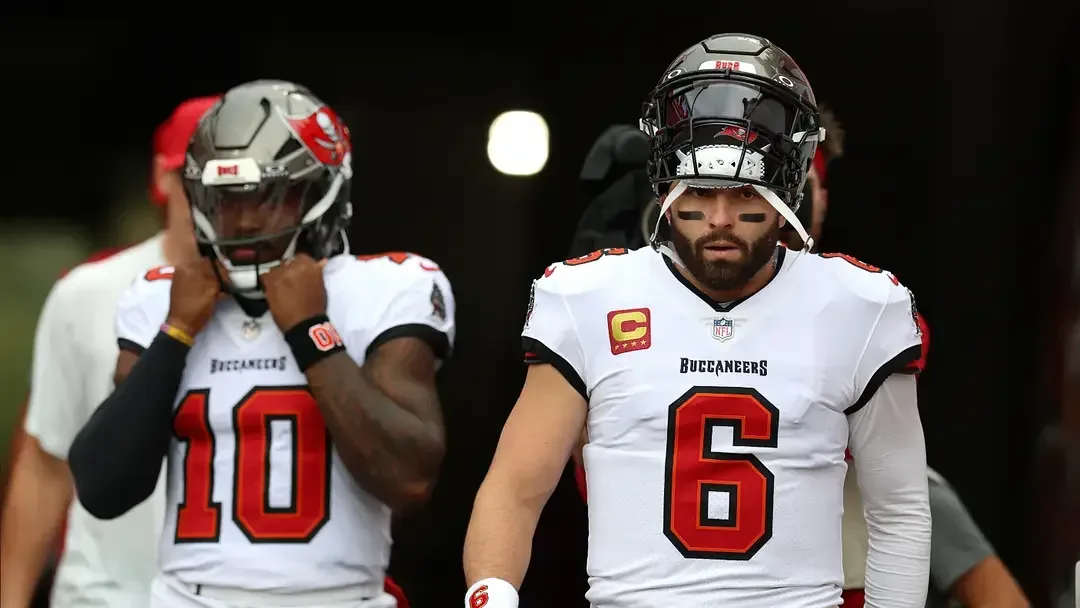
Buccaneers quarterback Jalon Daniels enters at No. 16 after being unranked a week earlier. The reason is potential opportunity rather than a newly established body of NFL success. Baker Mayfield’s possible foot/ankle injury could create another opening for Daniels, an undrafted rookie free agent.
Daniels already started three games earlier in the season, producing 624 total yards, a 3:5 touchdown-to-interception ratio and a 1-2 record. Those numbers explain why this is not a broad long-term endorsement. They also establish that there is game tape and prior NFL production for collectors to weigh instead of treating him as an entirely unknown reserve.
Tampa Bay faces Detroit in Week 11. If Mayfield’s issue extends beyond that game, Carolina and the Los Angeles Chargers follow. Backup-quarterback card interest can move rapidly when a reserve suddenly has starts, especially if a strong performance arrives in a prominent matchup. That dynamic is opportunity-driven, not the same thing as durable long-term security.
Daniels therefore belongs in a separate bucket from Mendoza and Beck. His possible value catalyst is immediate playing time caused by injury; theirs is the possibility of becoming central young quarterbacks for their respective franchises. Recognizing the difference can help keep a collection plan proportional to the risk.
The full Week 10 top 20
- Fernando Mendoza, QB, Raiders
- Jeremiyah Love, RB, Cardinals
- Carnell Tate, WR, Titans
- Jordyn Tyson, WR, Saints
- Denzel Boston, WR, Browns
- Jonah Coleman, RB, Broncos
- KC Concepcion, WR, Browns
- Carson Beck, QB, Cardinals
- Jadarian Price, RB, Seahawks
- Makai Lemon, WR, Eagles
- Omar Cooper Jr., WR, Jets
- Ty Simpson, QB, Rams
- Emmett Johnson, RB, Chiefs
- Germie Bernard, WR, Steelers
- Kaelon Black, RB, 49ers
- Jalon Daniels, QB, Buccaneers
- Arvell Reese, LB, Giants
- De’Zhaun Stribling, WR, 49ers
- David Bailey, DE, Jets
- Kenyon Sadiq, TE, Jets
A practical way to read the rankings
These rankings are best used as a watch list, not as a command to chase every player at once. The tiers describe different types of cases. Mendoza, Love, Tate and Tyson make up the established top group. Boston through Lemon form a more stable middle band. Cooper through Black are speculative, which means the next change in role, health or performance could matter disproportionately. Daniels, Reese, Stribling, Bailey and Sadiq are players to monitor for a catalyst rather than names supported here by a fully developed market case.
- For quarterback collectors: track Mendoza’s response to pressure, Beck’s ability to function with a depleted offense, and whether Daniels actually receives another starting window.
- For running back collectors: distinguish Love’s injury-driven pause from Johnson’s opportunity-driven ascent. Their questions are different even though both involve health and workload.
- For receiver collectors: Tyson’s 11-catch outing is the most tangible Week 10 development, while Boston, Concepcion, Lemon, Cooper, Bernard and Stribling remain names where sustained role evidence matters.
- For defensive and tight end collectors: Reese, Bailey and Sadiq remain on the board, but the supplied Week 10 picture offers no comparable statistical catalyst for them.
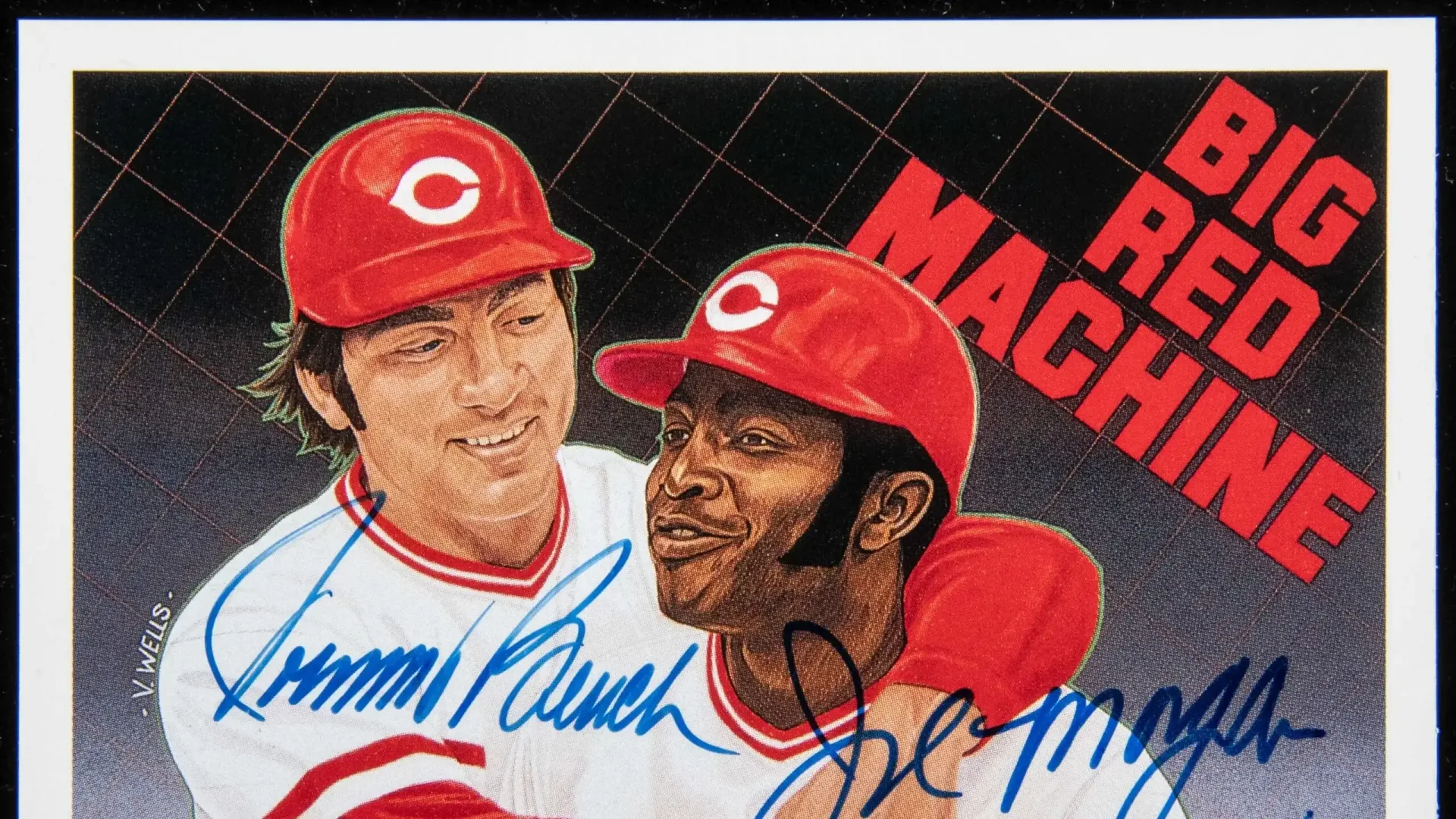
Collecting also benefits from a disciplined approach to the physical item. A player’s changing outlook is only one part of a decision; condition, authenticity, scarcity and the specific card format remain separate considerations. For a related look at how provenance and notable sports artifacts can matter in a different collecting lane, see this report on Joe Morgan’s Reds rings and MVP awards.
Week 10 did not crown a new unanimous leader of the 2026 class. Instead, it made the reasons behind each rookie’s ranking more visible. Mendoza and Beck now have debut context but difficult paths. Johnson has the week’s clearest surge but still needs role confirmation. Tyson has a meaningful reception-volume performance, and Daniels has an injury-dependent chance to re-enter the conversation. The next few games should offer more useful answers than a single debut or one explosive Sunday can provide.